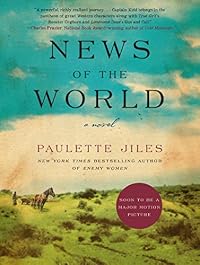
News of the World
by Paulette Jiles
On This Page
Description
"In the aftermath of the Civil War, an aging itinerant news reader agrees to transport a young captive of the Kiowa back to her people in this exquisitely rendered, morally complex, multilayered novel of historical fiction from the author of Enemy Women that explores the boundaries of family, responsibility, honor, and trust. In the wake of the Civil War, Captain Jefferson Kyle Kidd travels through northern Texas, giving live readings from newspapers to paying audiences hungry for news of show more the world. An elderly widower who has lived through three wars and fought in two of them, the captain enjoys his rootless, solitary existence. In Wichita Falls, he is offered a $50 gold piece to deliver a young orphan to her relatives in San Antonio. Four years earlier, a band of Kiowa raiders killed Johanna's parents and sister; sparing the little girl, they raised her as one of their own. Recently rescued by the U.S. army, the ten-year-old has once again been torn away from the only home she knows. Their 400-mile journey south through unsettled territory and unforgiving terrain proves difficult and at times dangerous. Johanna has forgotten the English language, tries to escape at every opportunity, throws away her shoes, and refuses to act "civilized." Yet as the miles pass, the two lonely survivors tentatively begin to trust each other, forming a bond that marks the difference between life and death in this treacherous land. Arriving in San Antonio, the reunion is neither happy nor welcome. The captain must hand Johanna over to an aunt and uncle she does not remember--strangers who regard her as an unwanted burden. A respectable man, Captain Kidd is faced with a terrible choice: abandon the girl to her fate or become--in the eyes of the law--a kidnapper himself"-- show lessTags
Recommendations







































Member Recommendations



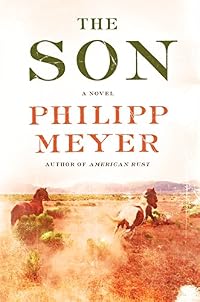
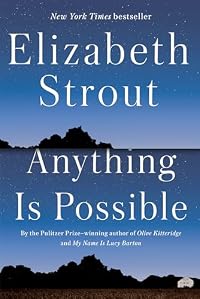
sturlington These are both historical novels about the relationship that forms between an orphan and an adult. Both seem like old-fashioned stories, in a good way, and will warm your heart.

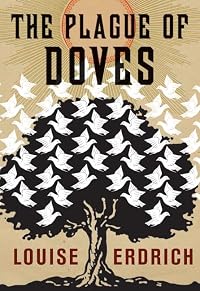
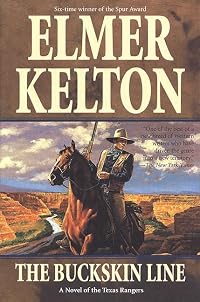
terran Intergenerational relationship in former times
Member Reviews
When I saw Paulette Jiles had a new book I jumped at the chance to read it. Her novels often explore historical periods but with a poetic bent. Her books are unlike any others I have read. She does a great deal of research, and then dramatizes conflicts among people in the era about which she is reporting with an unstinting yet lyrical eye. She also employs a distinctive style of showing dialogue without any distinguishing punctuation, which makes it more a part of the narrative flow.
This novel takes place in Texas in 1870. In 1870, the population of Texas was 818,579 (ten years later, it would almost double, approaching 1.5 million people). Oddly, there was something of a line at the 100th meridian between the Texas with newspapers and show more the Texas without newspapers. [The 100th meridian is approximately down the vertical middle of the United States and so also down the middle of Texas.]
The main protagonist of this novel is Captain Jefferson Kyle Kidd, 71, who lived through three wars, and now travels around North Texas reading newspapers to any comers who pay a dime a piece to hear the news. Originally, he had a vague hope that by spreading “true knowledge” about the world, he might in some way help make the world a more peaceful place. By age 65, he gave up that illusion, but he knew he did add something to people’s lives: in that time without television or movies, “he took them away to far places and strange peoples. Into mythic forms of thought and the structures of fairy tales.”
The author shares much of what the Captain would have read to his audiences, from the search for Ancient Troy in Turkey to the attempts of explorers to get to the North Pole, to tales of shipwrecks, inventions, and natural disasters. He tried to avoid news about anything that might start fighting among the listeners, especially in the volatile political atmosphere of the post-Civil War South. [From May 1865 to March 1870 before Texas was readmitted to the Union, there was an occupying army from the North in Texas. Even so, in the state elections in this time, many from the prewar power structure were reinstated, and got into bitter conflict with Unionists.]
On one such trip through northern Texas doing readings, the Captain is asked to deliver a ten-year-old girl named Johanna back to her relatives near San Antonio. She had been abducted by the Kiowa when she was six, and a man named Britt Johnson was hired to retrieve her. But while Johnson managed to get Johanna from the tribe, he did not want to take the risk of traveling through Texas with a small blond girl because he was black; the Captain would be trusted because not only was he white, but he was an old man.
The Captain agreed, and so began the odyssey of the Captain and Johanna across Texas, with the Captain doing occasional newspaper readings to pay for the trip. The two of them faced a number of perils, because in 1870, lawlessness was rampant in much of Texas, with bands of brigands roaming through the state.
There was also a constant threat of raids by tribes of Native Americans, in particular the Comanches. The 1867 Treaty of Medicine Lodge Creek established a reservation for the Comanches, Kiowas, and Kiowa Apaches, but the southwestern natives were not interested in staying penned in on reservations. [The U.S. Army fought them and their cultural values and beliefs, and by 1875 the Comanche population had been reduced to just over 1,500.]
Johanna, sullen and sad and quiet at first, comes to understand that the Captain is on her side and wants to protect her from all the various dangers. She begins to call him Kontah, the Kiowa name for grandfather. But Johanna in some ways was not like other captives. As the author explains in an Afterword about child captives from the Texas frontier:
“They apparently became Indian in every way and rarely readjusted when returned to their non-native families. They always wished to return to their adoptive families, even when they had been with their Indian families for less than a year.”
[It is possible Jiles was inspired by the story of a 9-year-old pioneer girl named Cynthia Ann Parker who was kidnapped during a Comanche raid in North Texas in 1836. She became a ward of the chief and eventually, a full member of the Comanches. She married a highly respected Comanche chief and gave birth to three children, including Quanah Parker — who would grow up to become the last and greatest Comanche leader.]
Indeed, Johanna often thinks about her life before, when her people “followed water, lived with every contingency, were brave in the face of enemies, who could go without food or water or money or shoes or hats and did not care that they had neither mattresses nor chairs nor oil lamps.”
The Captain knew that Johanna would never again be like other white people, and he found himself adopting Johanna’s worldview rather than trying to force her to conform to non-native ways. Neither fashionable dresses nor bank accounts, he learns from her, are what matters. Rather, “the baseline of human life was courage.”
Courage and character are consistent themes in Jiles’ books. Here, both come into play not only during their trip to San Antonio, but also when the time comes for the Captain to deliver Johanna to her aunt and uncle.
Evaluation: Jiles is an adept writer who improbably describes scenes of violence and destruction with a poetic eloquence that somehow adds to the horror rather than “beautifying” it. But she also lends her poetic hand to the pain, naivety, and hope of love, resulting in an unforgettable stories. This short novel is no exception. show less
This novel takes place in Texas in 1870. In 1870, the population of Texas was 818,579 (ten years later, it would almost double, approaching 1.5 million people). Oddly, there was something of a line at the 100th meridian between the Texas with newspapers and show more the Texas without newspapers. [The 100th meridian is approximately down the vertical middle of the United States and so also down the middle of Texas.]
The main protagonist of this novel is Captain Jefferson Kyle Kidd, 71, who lived through three wars, and now travels around North Texas reading newspapers to any comers who pay a dime a piece to hear the news. Originally, he had a vague hope that by spreading “true knowledge” about the world, he might in some way help make the world a more peaceful place. By age 65, he gave up that illusion, but he knew he did add something to people’s lives: in that time without television or movies, “he took them away to far places and strange peoples. Into mythic forms of thought and the structures of fairy tales.”
The author shares much of what the Captain would have read to his audiences, from the search for Ancient Troy in Turkey to the attempts of explorers to get to the North Pole, to tales of shipwrecks, inventions, and natural disasters. He tried to avoid news about anything that might start fighting among the listeners, especially in the volatile political atmosphere of the post-Civil War South. [From May 1865 to March 1870 before Texas was readmitted to the Union, there was an occupying army from the North in Texas. Even so, in the state elections in this time, many from the prewar power structure were reinstated, and got into bitter conflict with Unionists.]
On one such trip through northern Texas doing readings, the Captain is asked to deliver a ten-year-old girl named Johanna back to her relatives near San Antonio. She had been abducted by the Kiowa when she was six, and a man named Britt Johnson was hired to retrieve her. But while Johnson managed to get Johanna from the tribe, he did not want to take the risk of traveling through Texas with a small blond girl because he was black; the Captain would be trusted because not only was he white, but he was an old man.
The Captain agreed, and so began the odyssey of the Captain and Johanna across Texas, with the Captain doing occasional newspaper readings to pay for the trip. The two of them faced a number of perils, because in 1870, lawlessness was rampant in much of Texas, with bands of brigands roaming through the state.
There was also a constant threat of raids by tribes of Native Americans, in particular the Comanches. The 1867 Treaty of Medicine Lodge Creek established a reservation for the Comanches, Kiowas, and Kiowa Apaches, but the southwestern natives were not interested in staying penned in on reservations. [The U.S. Army fought them and their cultural values and beliefs, and by 1875 the Comanche population had been reduced to just over 1,500.]
Johanna, sullen and sad and quiet at first, comes to understand that the Captain is on her side and wants to protect her from all the various dangers. She begins to call him Kontah, the Kiowa name for grandfather. But Johanna in some ways was not like other captives. As the author explains in an Afterword about child captives from the Texas frontier:
“They apparently became Indian in every way and rarely readjusted when returned to their non-native families. They always wished to return to their adoptive families, even when they had been with their Indian families for less than a year.”
[It is possible Jiles was inspired by the story of a 9-year-old pioneer girl named Cynthia Ann Parker who was kidnapped during a Comanche raid in North Texas in 1836. She became a ward of the chief and eventually, a full member of the Comanches. She married a highly respected Comanche chief and gave birth to three children, including Quanah Parker — who would grow up to become the last and greatest Comanche leader.]
Indeed, Johanna often thinks about her life before, when her people “followed water, lived with every contingency, were brave in the face of enemies, who could go without food or water or money or shoes or hats and did not care that they had neither mattresses nor chairs nor oil lamps.”
The Captain knew that Johanna would never again be like other white people, and he found himself adopting Johanna’s worldview rather than trying to force her to conform to non-native ways. Neither fashionable dresses nor bank accounts, he learns from her, are what matters. Rather, “the baseline of human life was courage.”
Courage and character are consistent themes in Jiles’ books. Here, both come into play not only during their trip to San Antonio, but also when the time comes for the Captain to deliver Johanna to her aunt and uncle.
Evaluation: Jiles is an adept writer who improbably describes scenes of violence and destruction with a poetic eloquence that somehow adds to the horror rather than “beautifying” it. But she also lends her poetic hand to the pain, naivety, and hope of love, resulting in an unforgettable stories. This short novel is no exception. show less
It's 1870, and Jefferson Kyle Kidd ("Captain" Kidd) needs money. His traveling gig, reading the news from multiple newspapers to crowds who pay a dime a head, is barely keeping him alive these days. The Texas economy is in ruins, the Blue Coats are in charge of everything, and some in the audiences are more interested in stirring up trouble than in being entertained by news from New York, Philadelphia or London. So reluctantly he agrees to take on the task of transporting a white child, who was orphaned and abducted by a Kiowa band years ago, 400 miles to an aunt and uncle. The US government pays well for such undertakings. Captain Kidd very quickly regrets agreeing to the job, gold coin notwithstanding. The girl does not remember any show more English, has fully assimilated into Kiowa ways, and shows no inclination to adapt to living within walls; she might just be dangerous, and the journey certainly will be with. She turns out to have some useful skills, however, and the two travelers begin to develop a fondness for each other under treacherous conditions. The whole question of the appropriateness of trying to re-introduce an assimilated white captive to "civilized" society is subtly explored in the context of a darned good adventure story. show less
News of the World happens in post-Civil War Texas, in a time when journeying from North Texas down to San Antonio is a long, perilous journey. 72 year old Captain Jefferson Kidd is a former soldier and newspaper publisher who agrees to take a 10 year old girl, ransomed from the Kiowa Indians, back to her aunt and uncle. Unfortunately, her four years as a Kiowa have made her one of them, and part of the challenge is acclimating her to the quite different non-Indian life, something that has proved difficult with other kidnapped children rescued from Indians.
The captain is an honorable man, determined to fulfill his promise. The journey they take together is epic and vivid. The girl, Johanna, is exasperating in her divergent views and show more practices, but the captain does all he can to protect her and help her. He purchases an old green wagon which has "Curative Waters" on its side, and sets off on the journey many others question.
There's lots of dry western humor, and the two eventually learn to trust each other. Johanna, who struggles with English and thinks stealing chickens is perfectly sensible, turns out to be both brave and clever. Although feeling his years, Captain Kidd is learned and capable of dealing with difficult situations. Their relationship is one of the delights of the book. There are plenty of villains to overcome, and occasional unexpected help.
More than once I thought of the stellar Lonesome Dove. The author, Paulette Jiles, apparently is a rancher herself, and it shows in the striking world into which the reader is drawn.
"Britt smoked and turned to lean on the wagon tailgate and looked back into the dark spaces of the stable with the noise of horses and mules eating, eating, their teeth like grindstones moving one on another and the occasional snort as hay dust got up their noses, the shifting of their great cannonball feet."
“Above and behind them the Dipper turned on its great handle as if to pour night itself out onto the dreaming continent and each of its seven stars gleamed from between the fitful passing clouds.”
This short book packs in a lot of living, and is one of my favorite reads of the year. show less
The captain is an honorable man, determined to fulfill his promise. The journey they take together is epic and vivid. The girl, Johanna, is exasperating in her divergent views and show more practices, but the captain does all he can to protect her and help her. He purchases an old green wagon which has "Curative Waters" on its side, and sets off on the journey many others question.
There's lots of dry western humor, and the two eventually learn to trust each other. Johanna, who struggles with English and thinks stealing chickens is perfectly sensible, turns out to be both brave and clever. Although feeling his years, Captain Kidd is learned and capable of dealing with difficult situations. Their relationship is one of the delights of the book. There are plenty of villains to overcome, and occasional unexpected help.
More than once I thought of the stellar Lonesome Dove. The author, Paulette Jiles, apparently is a rancher herself, and it shows in the striking world into which the reader is drawn.
"Britt smoked and turned to lean on the wagon tailgate and looked back into the dark spaces of the stable with the noise of horses and mules eating, eating, their teeth like grindstones moving one on another and the occasional snort as hay dust got up their noses, the shifting of their great cannonball feet."
“Above and behind them the Dipper turned on its great handle as if to pour night itself out onto the dreaming continent and each of its seven stars gleamed from between the fitful passing clouds.”
This short book packs in a lot of living, and is one of my favorite reads of the year. show less
Author: Paulette Jiles;
Genre: Historical Novel/Western;
Format: Ebook;
Publisher: William Morrow (2016).
Once in a while, a novel comes along that really surprises me. Perhaps I read too many books authored by inexperienced writers, and when a great one crosses my path, I’m shocked by how well it’s done. That happened with this book. Not only is the story wonderful, but the writing is almost poetic.
The plot is very simple. In 1870, Captain Kidd, a widower and veteran of several wars, roams the state of Texas, reading news from domestic and foreign newspapers for residents who pay a dime for the pleasure of keeping up on current events. He reluctantly takes on the daunting task of returning a young girl, Johanna, captured by the Kiowa show more years earlier, to her white relatives in Castroville, near San Antonio.
The girl has forgotten her previous life and is a handful, to put it mildly. The long trip by wagon includes a shoot-out using some inventive ammo, political feuds, chicken stealing, and English lessons. The story doesn’t end when they reach Castroville, either.
The author chose to write without using quotation marks, which takes a little getting used to. The language seems very authentic, the characters are fascinating, and the descriptions are terrific. Not a long book but one that will stay with you. I laughed, I cried, I was sorry it ended.
Highly recommended, especially for those who like Texas or western history and good character studies. show less
Genre: Historical Novel/Western;
Format: Ebook;
Publisher: William Morrow (2016).
Once in a while, a novel comes along that really surprises me. Perhaps I read too many books authored by inexperienced writers, and when a great one crosses my path, I’m shocked by how well it’s done. That happened with this book. Not only is the story wonderful, but the writing is almost poetic.
The plot is very simple. In 1870, Captain Kidd, a widower and veteran of several wars, roams the state of Texas, reading news from domestic and foreign newspapers for residents who pay a dime for the pleasure of keeping up on current events. He reluctantly takes on the daunting task of returning a young girl, Johanna, captured by the Kiowa show more years earlier, to her white relatives in Castroville, near San Antonio.
The girl has forgotten her previous life and is a handful, to put it mildly. The long trip by wagon includes a shoot-out using some inventive ammo, political feuds, chicken stealing, and English lessons. The story doesn’t end when they reach Castroville, either.
The author chose to write without using quotation marks, which takes a little getting used to. The language seems very authentic, the characters are fascinating, and the descriptions are terrific. Not a long book but one that will stay with you. I laughed, I cried, I was sorry it ended.
Highly recommended, especially for those who like Texas or western history and good character studies. show less
from Deborah:
News of the World is an ode to decency. Fittingly, it is written by a poet, Paulette Jiles, who sets brilliant little jewels of scenes in a lyrical, flowing story that is part True Grit and part The Odyssey. I took on this book to push my genre limits a bit. This book collapsed any limits that the description of “Western” ever held for me.
This is a story of a worn man, past his prime whose “life seemed to him thin and sour.” He’s led a life that has had its challenges which he’s met, but he is seventy-two now, and done. He’s done with his profession of “carrying the news,” publicly reading newspapers in far-flung towns in Texas. He’s done with the audiences which range too much between the savage, the show more petty, and the ignorant. He no longer finds meaning in dispersing content that mirrors the dissension and ugliness found in much of those listening. He is longing to be done with family dilemmas, all the gouges left by the Civil War which are further irritated by personal folly. He is completely done with a humanity that seems intent on bringing both nature and civilization down.
At this point in his life, he is asked to return a recently retrieved former Indian captive to her aunt and uncle. She is a ten year old, maize haired Kiowa warrior, fiercely loyal to her tribe and their ways. Being a decent man, he takes on this job too. The story details their journey and the results of being the people they decide to be.
I haven’t come across a book so rich in symbolism and imagery in a long time. The protagonist, Captain Kidd, and his charge, Johanna, sail across the choppy terrain of Texas in a promotionally slogan-ed excursion wagon, Curative Waters. He has crossed the desert, hill country, and flatlands before, but knows them as still unknown, vulnerable to weather, bandits, and detritus of people left dangling by all of the wars raged on these grounds. He views the history of his life and America’s by the remnants of Indian, Spanish, and European civilizations he encounters. Kidd struggles to become someone he recognizes and approves of. Johanna struggles to find an identity amid the mingled shards of her German settler/Indian native lives. Through the course of the book, they learn to read themselves and each other as well as the news of the world.
Just a few passages to show the poetic nature of this novel:
“...the smell of mesquite and the palms of Resaca de la Palma and even the smoke of the cannon those long years ago, almost thirty years. “
“She stood holding the lantern, and in its light motes of hay sifted around her like fireflies.”
“He seemed half asleep or he was dreaming of some other world, a place fragmented and without illumination.”
A beautiful novel in every way. show less
News of the World is an ode to decency. Fittingly, it is written by a poet, Paulette Jiles, who sets brilliant little jewels of scenes in a lyrical, flowing story that is part True Grit and part The Odyssey. I took on this book to push my genre limits a bit. This book collapsed any limits that the description of “Western” ever held for me.
This is a story of a worn man, past his prime whose “life seemed to him thin and sour.” He’s led a life that has had its challenges which he’s met, but he is seventy-two now, and done. He’s done with his profession of “carrying the news,” publicly reading newspapers in far-flung towns in Texas. He’s done with the audiences which range too much between the savage, the show more petty, and the ignorant. He no longer finds meaning in dispersing content that mirrors the dissension and ugliness found in much of those listening. He is longing to be done with family dilemmas, all the gouges left by the Civil War which are further irritated by personal folly. He is completely done with a humanity that seems intent on bringing both nature and civilization down.
At this point in his life, he is asked to return a recently retrieved former Indian captive to her aunt and uncle. She is a ten year old, maize haired Kiowa warrior, fiercely loyal to her tribe and their ways. Being a decent man, he takes on this job too. The story details their journey and the results of being the people they decide to be.
I haven’t come across a book so rich in symbolism and imagery in a long time. The protagonist, Captain Kidd, and his charge, Johanna, sail across the choppy terrain of Texas in a promotionally slogan-ed excursion wagon, Curative Waters. He has crossed the desert, hill country, and flatlands before, but knows them as still unknown, vulnerable to weather, bandits, and detritus of people left dangling by all of the wars raged on these grounds. He views the history of his life and America’s by the remnants of Indian, Spanish, and European civilizations he encounters. Kidd struggles to become someone he recognizes and approves of. Johanna struggles to find an identity amid the mingled shards of her German settler/Indian native lives. Through the course of the book, they learn to read themselves and each other as well as the news of the world.
Just a few passages to show the poetic nature of this novel:
“...the smell of mesquite and the palms of Resaca de la Palma and even the smoke of the cannon those long years ago, almost thirty years. “
“She stood holding the lantern, and in its light motes of hay sifted around her like fireflies.”
“He seemed half asleep or he was dreaming of some other world, a place fragmented and without illumination.”
A beautiful novel in every way. show less
Book on CD performed by Grover Gardner
4****
Captain Jefferson Kidd is a 70-year-old widower who travels the small towns of Post-Civil-War Texas, reading the news to a paying audience hungry for information from foreign lands. In Wichita Falls, he’s approached by a man who has helped rescue a young girl – Johanna Leonberger – from the Kiowa tribe that has held her captive for some years. Kidd is asked to take Johanna with him, and return her to her relatives in the San Antonio area. Reluctantly, he agrees, though he knows the 400-mile journey will be fraught with peril.
Oh, I loved this tale, and the way Jiles portrayed these two central characters. Kidd is a principled man, a veteran of war, who may be elderly but still has his show more wits about him. Johanna is a wild child, who has forgotten English (and German), and speaks in the tonal language of her adopted tribe. She refuses to wear shoes, keeps trying to run away, is fearful and obstinate. But as they travel through this wild country, they come to trust one another. Kidd teaches her some English, and she carefully calls him “Kep-Dun” and comes to understand – and believe – him when he assures her that things are “all right.”
The decisions they must make are sometimes heart-breaking. The ways they support one another when facing various dangers and come to simply enjoy one another when things are going smoothly, paint a picture of love. There are some scenes that are quite comical, many that are tender, and quite a few that had me on the edge of my seat.
I particularly enjoyed the landscape of their journey. I’ve traveled many of these areas in my many trips to/from Texas to visit family. Oh, how I long to see the bluebonnets and Indian paintbrush that color the hills come spring each year! This is the second book by Jiles that I’ve read, and I think I need to read more.
Grover Gardner did a marvelous job performing the audio. His somewhat gravelly voice was perfect for Captain Kidd, and he did a passable job of voicing Johanna as well. show less
4****
Captain Jefferson Kidd is a 70-year-old widower who travels the small towns of Post-Civil-War Texas, reading the news to a paying audience hungry for information from foreign lands. In Wichita Falls, he’s approached by a man who has helped rescue a young girl – Johanna Leonberger – from the Kiowa tribe that has held her captive for some years. Kidd is asked to take Johanna with him, and return her to her relatives in the San Antonio area. Reluctantly, he agrees, though he knows the 400-mile journey will be fraught with peril.
Oh, I loved this tale, and the way Jiles portrayed these two central characters. Kidd is a principled man, a veteran of war, who may be elderly but still has his show more wits about him. Johanna is a wild child, who has forgotten English (and German), and speaks in the tonal language of her adopted tribe. She refuses to wear shoes, keeps trying to run away, is fearful and obstinate. But as they travel through this wild country, they come to trust one another. Kidd teaches her some English, and she carefully calls him “Kep-Dun” and comes to understand – and believe – him when he assures her that things are “all right.”
The decisions they must make are sometimes heart-breaking. The ways they support one another when facing various dangers and come to simply enjoy one another when things are going smoothly, paint a picture of love. There are some scenes that are quite comical, many that are tender, and quite a few that had me on the edge of my seat.
I particularly enjoyed the landscape of their journey. I’ve traveled many of these areas in my many trips to/from Texas to visit family. Oh, how I long to see the bluebonnets and Indian paintbrush that color the hills come spring each year! This is the second book by Jiles that I’ve read, and I think I need to read more.
Grover Gardner did a marvelous job performing the audio. His somewhat gravelly voice was perfect for Captain Kidd, and he did a passable job of voicing Johanna as well. show less
News of the World by Paulette Jiles turned out to be a perfect read for me. I had previously read a book by this author so I knew that it would be beautifully written, but it also turned out that the story-line was one that truly spoke to me and carried me away to a different place and time.
This is a story of two unlikely companions bonding and growing together as they travel through Texas in 1870. One is an older man, Captain Kidd, a man who has already lived a very full life and now travels and reads various newspapers to the settlers living on this vast frontier. The other, is a young girl of 10 years, Johanna, who has been bought back from the Kiowa who took her four years ago. The Captain has been entrusted to take her back to her show more relatives who live in Southern Texas. Johanna is a reluctant traveller, she has become a Kiowa and has no desire to be returned to the white world. The Captain is an honorable man and he accepts that he has been chosen for this difficult mission, while the little girl puzzles over her fate, her language and her strong feelings that develop for her “Kep-dun”. Together they travel towards an unknown future and learn to totally trust one another.
This is a touching story that the author manages to keep from becoming overly sentimental. Her facts and research about children that were taken by Indians and then returned are accurate and interesting. Ultimately, News of the World is a story about the joys of freedom and the spiritual bonding that love and trust can bring. The author has delivered a first class story where each word fits perfectly into the next, creating a powerful and moving narrative. show less
This is a story of two unlikely companions bonding and growing together as they travel through Texas in 1870. One is an older man, Captain Kidd, a man who has already lived a very full life and now travels and reads various newspapers to the settlers living on this vast frontier. The other, is a young girl of 10 years, Johanna, who has been bought back from the Kiowa who took her four years ago. The Captain has been entrusted to take her back to her show more relatives who live in Southern Texas. Johanna is a reluctant traveller, she has become a Kiowa and has no desire to be returned to the white world. The Captain is an honorable man and he accepts that he has been chosen for this difficult mission, while the little girl puzzles over her fate, her language and her strong feelings that develop for her “Kep-dun”. Together they travel towards an unknown future and learn to totally trust one another.
This is a touching story that the author manages to keep from becoming overly sentimental. Her facts and research about children that were taken by Indians and then returned are accurate and interesting. Ultimately, News of the World is a story about the joys of freedom and the spiritual bonding that love and trust can bring. The author has delivered a first class story where each word fits perfectly into the next, creating a powerful and moving narrative. show less
Members
- Recently Added By
Lists

Best Contemporary Literary Fiction (Around the Last 30 Years)
388 works; 124 members

Best Historical Fiction
620 works; 261 members

ALA The Reading List
490 works; 28 members

Recommend the 20 best books you've read in the last five years
2,168 works; 601 members

Top Five Books of 2017
757 works; 230 members

Historical Fiction
889 works; 91 members

Five star books
1,755 works; 108 members

Top Five Books of 2020
982 works; 350 members

Books Set in Texas
34 works; 8 members
National Book Award Finalists - Fiction
377 works; 12 members
Top Five Books of 2018
802 works; 265 members

Top Five Books of 2021
604 works; 180 members

Contemporary Fiction
109 works; 7 members

Books Read in 2017
4,249 works; 129 members

Books Read in 2023
5,547 works; 145 members
Kirkus Starred Fiction Reviews of Books Published in 2016
63 works; 3 members
Book Club 2017
8 works; 2 members

Books Read in 2016
4,666 works; 197 members

Reading Group 2017
4 works; 1 member

Books Read in 2022
5,164 works; 111 members

Novels without quotation marks
25 works; 1 member

2023 Christmas Gifts
39 works; 11 members

LitHub's Best Novels of the Decade 2010-2019
39 works; 1 member

Top Five Books of 2023
767 works; 317 members

Novels featuring Orphans
76 works; 10 members

Great Films Based on Books
319 works; 140 members

Books We'd Want on a Desert Island
203 works; 131 members

Books Read in 2021
5,361 works; 113 members

To Read
617 works; 7 members

Historical Fiction
8 works; 1 member

Found Family
32 works; 1 member
Author Information

21+ Works 6,840 Members
Paulette Jiles is a poet, memoirist, and novelist, born in 1943, and based in San Antonio, Texas. She is the author of a memoir entitled, Cousins. Her novels include Enemy Woman, Stormy Weather, The Color of Lightning, Lighthouse Island, and News of the World. (Bowker Author Biography)
Some Editions
Awards and Honors
Awards
Distinctions
Notable Lists
Series
Belongs to Publisher Series
Gallimard, Folio (6632)
Common Knowledge
- Original title
- News of the World
- Original publication date
- 2016
- People/Characters
- Captain Jefferson Kyle Kidd; Johanna Leonberger; Kiowa
- Important places
- Texas, USA; American West
- Important events
- American Civil War
- Related movies
- News of the World (2020 | IMDb)
- Dedication
- For friends on the long trails:
Susan, June, April, Nancy, Caroline, Wanda,
Evelyn, and Rita Wightman Whippet - First words
- Captain Kidd laid out the Boston Morning Journal on the lectern and began to read from the article on the Fifteenth Amendment.
- Quotations
- Britt's own wife and two children had been taken captive six years ago, in 1864, and he had gone out and got them back. Nobody knew quite how he had done it. He seemed to have some celestial protection about him when he rode ... (show all)out alone on the Red Rolling Plains, a place which seemed to invite both death and dangers. Britt had taken on the task of rescuing others, a dark man, cunning and strong and fast like a nightjar in the midnight air.
Long bright crawls of water slid across the livery stable floor and took up the light of the lantern like a luminous stain and the roof shook with the percussion of drops as big as nickels.
A light drizzle drifted through the landscape of cranky post oak trees whose limbs did not have six inches of straight any of in them.
Then she seemed to struggle with a tangled thing inside her head, something knotted that would not unknot.
Above and behind them the Dipper turned on its great handle as if to pour night itself out onto the dreaming continent and each of its seven stars gleamed from between the fitful passing clouds.
Some people were born unsupplied with a human conscience and those people needed killing.
Well speak up, then, said the Captain. Stop your goddamn dithering. I hate dithering.
No. Absolutely not. No. No scalping. He lifted her up and swung her over the ledges of stone and then followed. He said, It is considered very impolite.
Captain Kidd looked up and enviously considered the chickens—so daft, so stupid, so uninformed.
Leaf shadows like laughter ran over their faces.
Cultures were mine fields.
He said, Old people cry easily, my dear. One of the afflictions of age.
Whatever woman had raised these five boys must now be in the county asylum, if Lampasas County had one, and if they did not, they had best build one soon.
He looked as if he had combed his stiff yellow hair with a skillet.
He had decided to avoid the Horrell brothers at all cost, but the Horrell brothers found them.
The hills fell away behind them until they were nothing more than an uneven blue line on the horizon.
Somewhere ahead were strange white people she could only remember as if in poorly lit lantern slides called aunt and uncle and that they were going to them.
Springtime birds shot up out of the tall grass and to his right lay that long blue serrated line of the hills they had just left, distant and somehow safe.
The girl had become blank again, blank as bone.
He handed over the papers and stood in silence as if in a winter blizzard.
His hands looked as bony and wrinkled as those of a catacomb mummy. - Last words
- (Click to show. Warning: May contain spoilers.)He said he had a message to deliver, contents unknown.
- Publisher's editor
- Brehl, Jennifer
- Blurbers
- Frazier, Charles; Pearl, Nancy; Chevalier, Tracy
Classifications
- Genres
- Historical Fiction, General Fiction, Fiction and Literature
- DDC/MDS
- 813.54 — Literature & rhetoric American literature in English American fiction in English 1900-1999 1945-1999
- LCC
- PR9199.3 .J54 .N49 — Language and Literature English English Literature English literature: Provincial, local, etc.
- BISAC
Statistics
- Members
- 3,416
- Popularity
- 4,866
- Reviews
- 254
- Rating
- (4.13)
- Languages
- 9 — Chinese, Dutch, English, French, Hungarian, Italian, Polish, Spanish, Portuguese (Portugal)
- Media
- Paper, Audiobook, Ebook
- ISBNs
- 32
- UPCs
- 1
- ASINs
- 6
