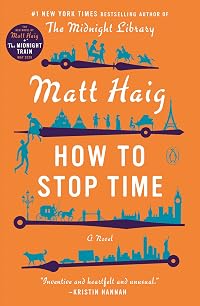
How to Stop Time
by Matt Haig
On This Page
Description
"A quirky romcom dusted with philosophical observations....A delightfully witty...poignant novel." --The Washington Post "She smiled a soft, troubled smile and I felt the whole world slipping away, and I wanted to slip with it, to go wherever she was going... I had existed whole years without her, but that was all it had been. An existence. A book with no words." Tom Hazard has just moved back to London, his old home, to settle down and become a high school history teacher. And on his show more first day at school, he meets a captivating French teacher at his school who seems fascinated by him. But Tom has a dangerous secret. He may look like an ordinary 41-year-old, but owing to a rare condition, he's been alive for centuries. Tom has lived history--performing with Shakespeare, exploring the high seas with Captain Cook, and sharing cocktails with Fitzgerald. Now, he just wants an ordinary life. Unfortunately for Tom, the Albatross Society, the secretive group which protects people like Tom, has one rule: Never fall in love. As painful memories of his past and the erratic behavior of the Society's watchful leader threaten to derail his new life and romance, the one thing he can't have just happens to be the one thing that might save him. Tom will have to decide once and for all whether to remain stuck in the past, or finally begin living in the present. How to Stop Time tells a love story across the ages--and for the ages--about a man lost in time, the woman who could save him, and the lifetimes it can take to learn how to live. It is a bighearted, wildly original novel about losing and finding yourself, the inevitability of change, and how with enough time to learn, we just might find happiness. Soon to be a major motion picture starring Benedict Cumberbatch. show lessTags
Recommendations

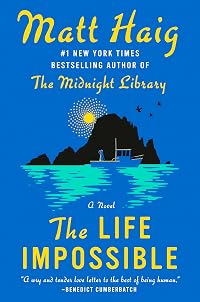
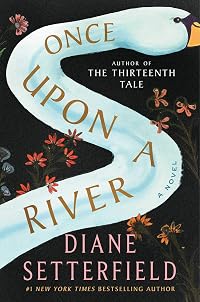
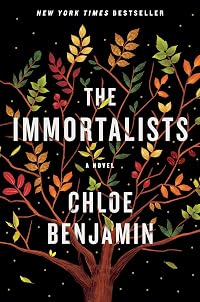
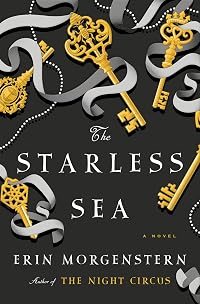

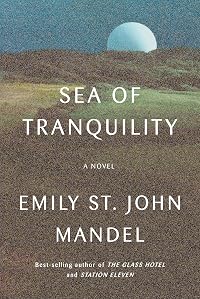
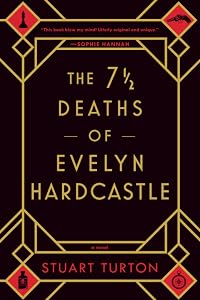
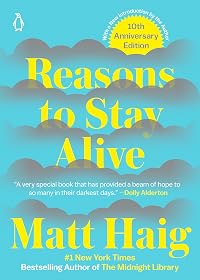
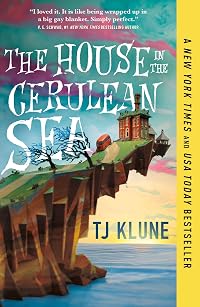


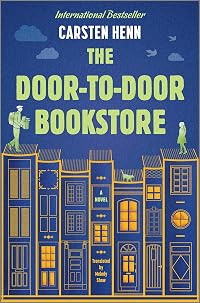
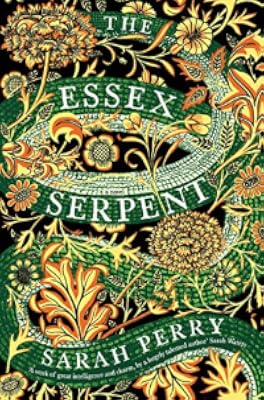
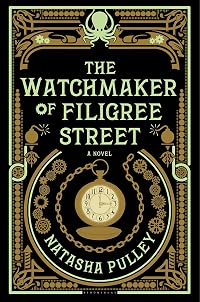
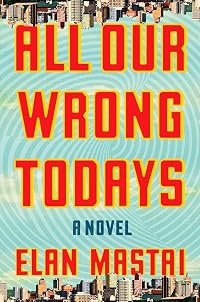
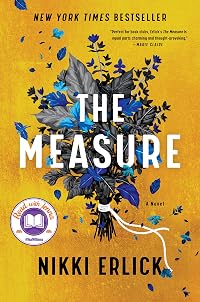
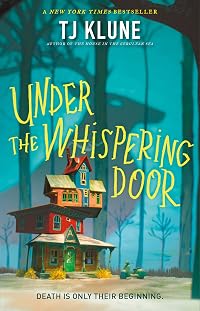
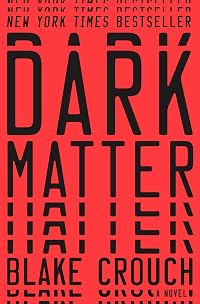
Member Recommendations
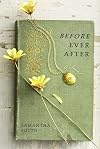
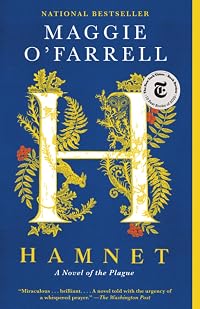
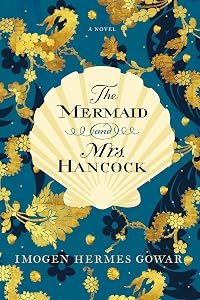
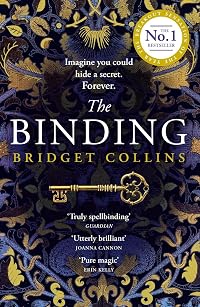
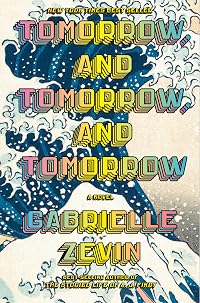
BookshelfMonstrosity For another take on immortality, try Before Ever After, in which a woman learns that her supposedly late husband is actually alive -- and centuries older than she thought. A wealth of obscure historical lore makes events come alive.
Member Reviews
One of the most magnificent works of fiction I have yet read, Matt Haig's latest novel is a glorious inward reflection on the brevity of life by a protagonist who lives for centuries beyond the rest of us. That central irony is very clearly a fear-facing experiment by Haig himself, having struggled for many years with a deep anxiety and depression that almost ended his life. This is not a book about time travel; it is a celebration of the sanctity of the Now – something we very much need amidst the assault of terrifying political threats, lack of meaningful interpersonal connection, and landslide glut of media with which we are constantly barraged.
Challenging his own proclamation that "time heals" from 2015's Reasons to Stay Alive, show more How to Stop Time asserts that, given far more of it for us to experience, time really only makes things worse unless the ghosts which haunt us are actively put down. Haig's prose is accessible, life-affirming philosophy for the everyperson, but it certainly helps to know a bit about the author's own experiences, which only enriched the read-through for me. As an historian who has likewise struggled with anxiety and depression, as well as temporal dread from both directions, the story and its lessons especially reverberated with me, and I recognize the tale as a kind of exercise of exorcism for the author as much as instructive fiction written for an outside audience.
Haig's delicacy with his characters and subjects is never too precious or saccharine, and they are rarely obvious or one-noted. The first-person story is punctuated with staccato blurbs of wisdom and reflections on the current state of society and how modern life might be seen by someone who has been alive since the sixteenth century. This is a character with ennui, having experienced some personal horrors early in life and now consigned to live out decades and centuries suffering from the pain of those losses. But he learns, however glacially, that both the past and the future are traps when the Now is disregarded. This is Humanity 101, and I believe it should be required reading for the unquiet id.
I must reiterate that there is no time-travel in this book. The jumps forward and backward to and from place and time serve as the protagonist's memories and experiences, and for the most part the segues are masterfully calibrated to flow cleanly within the narrative. On a couple of occasions, however, it appears that Haig has fallen victim to his own time-hopping, confusing the months and years of the continuity:
• pp. 255-6 - The memory explicitly begins in March 1768 but a later paragraph describes the "June sunlight", though seemingly no time had passed in the scene.
• p. 268 - The memory occurs in 1767, but the events in the chapter happen after the memories noted above.
That these were missed by the editors is not surprising, as they are subtle cracks in an otherwise seamless tableau. (I admit that my obsessive scrutiny, fostered by my experience as a historical scholar, might be considered abnormal.)
In closing, to offer a sense of the value with which I regarded this story, one can look to the dozens of post-its carefully placed throughout my copy of the book, marking passages and musings that I hope will have lasting effect on my thoughts and, ergo, my life. This is how I usually treat the historical non-fiction that I spend so much of my time referencing. For fiction to compel the same measures, it has to be something special. And it is. show less
Challenging his own proclamation that "time heals" from 2015's Reasons to Stay Alive, show more How to Stop Time asserts that, given far more of it for us to experience, time really only makes things worse unless the ghosts which haunt us are actively put down. Haig's prose is accessible, life-affirming philosophy for the everyperson, but it certainly helps to know a bit about the author's own experiences, which only enriched the read-through for me. As an historian who has likewise struggled with anxiety and depression, as well as temporal dread from both directions, the story and its lessons especially reverberated with me, and I recognize the tale as a kind of exercise of exorcism for the author as much as instructive fiction written for an outside audience.
Haig's delicacy with his characters and subjects is never too precious or saccharine, and they are rarely obvious or one-noted. The first-person story is punctuated with staccato blurbs of wisdom and reflections on the current state of society and how modern life might be seen by someone who has been alive since the sixteenth century. This is a character with ennui, having experienced some personal horrors early in life and now consigned to live out decades and centuries suffering from the pain of those losses. But he learns, however glacially, that both the past and the future are traps when the Now is disregarded. This is Humanity 101, and I believe it should be required reading for the unquiet id.
I must reiterate that there is no time-travel in this book. The jumps forward and backward to and from place and time serve as the protagonist's memories and experiences, and for the most part the segues are masterfully calibrated to flow cleanly within the narrative. On a couple of occasions, however, it appears that Haig has fallen victim to his own time-hopping, confusing the months and years of the continuity:
• pp. 255-6 - The memory explicitly begins in March 1768 but a later paragraph describes the "June sunlight", though seemingly no time had passed in the scene.
• p. 268 - The memory occurs in 1767, but the events in the chapter happen after the memories noted above.
That these were missed by the editors is not surprising, as they are subtle cracks in an otherwise seamless tableau. (I admit that my obsessive scrutiny, fostered by my experience as a historical scholar, might be considered abnormal.)
In closing, to offer a sense of the value with which I regarded this story, one can look to the dozens of post-its carefully placed throughout my copy of the book, marking passages and musings that I hope will have lasting effect on my thoughts and, ergo, my life. This is how I usually treat the historical non-fiction that I spend so much of my time referencing. For fiction to compel the same measures, it has to be something special. And it is. show less
I read the hardcover and Overdrive audio editions simultaneously.
This story is a perfect mix of historical fiction and speculative fiction! But even though many have shelved it as such this is technically not a time travel book. The main character and some other characters do not time travel. They merely live long enough to experience many eras/years/decades/centuries.
I wasn’t expecting the humor and I loved it. For me there were many laugh out loud moments.
I was expecting the heartbreak but a few parts were heart wrenching and one part in particular was very difficult to read and then to remember. That one scene was incredibly upsetting though it did seem perfectly authentic and I’m glad it was included. It definitely helps show more understand the main character’s point of view about himself and about life.
One major pet peeve: Even though it makes the story so fascinating, and it’s all too common in many of these historical fiction/speculative fiction stories that the characters know famous people throughout the ages because most real people do not know many or often any famous people.
In addition to Tom there are so many memorable characters including Omei (spelling? – I’ve already returned my copies to the library) and Hendrich, Camille, Rose, Marion, and others including some of the characters based on known people.
I’m not sure that I liked how everything was resolved in the very final sections but overall I liked how it ended, though I do have a main question. Only a couple days after finishing this do I realize that maybe the ending as it is has left room for a sequel. If there is one I will read it. Some of what happened toward the end I definitely wasn’t expecting but I guess I kind of appreciate that.
My favorite parts were the philosophical musings about life and time and especially the slice of life moments & periods in various times and places and lives, the historical fiction parts even more than the speculative fiction parts. The speculative fiction parts (aside from how that affected the alba characters, was only a way to tell the story. (Albas: people know live an unnaturally long time; mayflies: humans who have normal time lifepans.)
There is a lovely start to acknowledgements section in the back.
The ratings for this book are all over the place and it seems most I know on Goodreads didn’t like it or didn’t like it as much as I did but this was a solid 4 star book for me and the premise and some things about it are 5 star worthy.
I considered my main edition to the hardcover book, but I was reading the audio too so: the narration was okay and at times great, and at times over dramatized. One quibble I had was when the singing parts were sung anyway I wish the lute had also been played. I love the lute and would have loved to hear it. And there was one weird thing, the words in both editions were identical but at the end of page 314 in the hardcover the audio seemed to have an additional full paragraph that wasn’t on the page(s) of the hardcover edition and it was sort of important too though the book’s text got enough of its meaning across. It was fairly long; otherwise I’d have written it down and included it in my review.
This is a highly quotable book and couldn’t even start to list all those I loved.
There were also quite a few lines that came unexpectedly and gave me laugh out loud moments, but there would not be much point in sharing most of those because out of context they’d lose their humor. I also had to stop making particular note of quotes. Too many! Wise things about life. Things about music. Etc. Etc. Etc. Also quotes from other authors.
Just some of the quotes that were meaningful for me:
“Whenever I see someone reading a book, especially if it is someone I don't expect, I feel civilisation has become a little safer.”
“Nothing fixes a thing so firmly in the memory as the wish to forget it”
“Human beings, as a rule, simply don't accept things that don't fit their worldview.”
“But this is how I remember these things, and all we can ever be is faithful to our memories of reality, rather than the reality itself, which is something closely related but never precisely the same thing.”
“To talk about memories is to live them a little.”
“It made me lonely. And when I say lonely, I mean the kind of loneliness that howls through you like a desert wind. It wasn't just the loss of people I had known but also the loss of myself. The loss of who I had been when I had been with them.”
“That's the thing with time, isn't it? It's not all the same. Some days - some years - some decades - are empty. There is nothing to them. It's just flat water. And then you come across a year, or even a day, or an afternoon. And it is everything. It is the whole thing.”
“Places don't matter to people any more. Places aren't the point. People are only ever half present where they are these days. They always have at least one foot in the great digital nowhere.”
“That is what history is, the teaching and telling of it. It is a way to control it and order it. To turn it into a pet. But history you have lived is different to history you read in a book or on a screen. And some things in the past can’t be tamed.”
“This is so often the way with life. You spend so much time waiting for something – a person, a feeling, a piece of information – that you can’t quite absorb it when it is in front of you. The hole is so used to being a hole it doesn’t know how to close itself.”
The longer you live, the harder it becomes. To grab them. Each little moment as it arrives. To be living in something other than the past or the future. To be actually here.
Forever, Emily Dickinson said, is composed of nows. But how do you inhabit the now you are in? How do you stop the ghosts of all the other nows from getting in? How, in short, do you live?”
“The key to happiness wasn't being yourself, because what did that even mean? Everyone had many selves. No. The key to happiness is finding the lie that suits you best.”
“You need to learn the art of discretion. Of speaking about a thing without actually speaking of it. Truth is a straight line you sometimes need to curve,-”
“I have bemoaned people who say they feel old, but I now realize it is perfectly possible for anyone to feel old. All they need to do is become a teacher.”
I’d recommend this book to most readers who enjoy historical fiction or speculative fiction books. show less
This story is a perfect mix of historical fiction and speculative fiction! But even though many have shelved it as such this is technically not a time travel book. The main character and some other characters do not time travel. They merely live long enough to experience many eras/years/decades/centuries.
I wasn’t expecting the humor and I loved it. For me there were many laugh out loud moments.
I was expecting the heartbreak but a few parts were heart wrenching and one part in particular was very difficult to read and then to remember. That one scene was incredibly upsetting though it did seem perfectly authentic and I’m glad it was included. It definitely helps show more understand the main character’s point of view about himself and about life.
One major pet peeve: Even though it makes the story so fascinating, and it’s all too common in many of these historical fiction/speculative fiction stories that the characters know famous people throughout the ages because most real people do not know many or often any famous people.
In addition to Tom there are so many memorable characters including Omei (spelling? – I’ve already returned my copies to the library) and Hendrich, Camille, Rose, Marion, and others including some of the characters based on known people.
I’m not sure that I liked how everything was resolved in the very final sections but overall I liked how it ended, though I do have a main question. Only a couple days after finishing this do I realize that maybe the ending as it is has left room for a sequel. If there is one I will read it. Some of what happened toward the end I definitely wasn’t expecting but I guess I kind of appreciate that.
My favorite parts were the philosophical musings about life and time and especially the slice of life moments & periods in various times and places and lives, the historical fiction parts even more than the speculative fiction parts. The speculative fiction parts (aside from how that affected the alba characters, was only a way to tell the story. (Albas: people know live an unnaturally long time; mayflies: humans who have normal time lifepans.)
There is a lovely start to acknowledgements section in the back.
The ratings for this book are all over the place and it seems most I know on Goodreads didn’t like it or didn’t like it as much as I did but this was a solid 4 star book for me and the premise and some things about it are 5 star worthy.
I considered my main edition to the hardcover book, but I was reading the audio too so: the narration was okay and at times great, and at times over dramatized. One quibble I had was when the singing parts were sung anyway I wish the lute had also been played. I love the lute and would have loved to hear it. And there was one weird thing, the words in both editions were identical but at the end of page 314 in the hardcover the audio seemed to have an additional full paragraph that wasn’t on the page(s) of the hardcover edition and it was sort of important too though the book’s text got enough of its meaning across. It was fairly long; otherwise I’d have written it down and included it in my review.
This is a highly quotable book and couldn’t even start to list all those I loved.
There were also quite a few lines that came unexpectedly and gave me laugh out loud moments, but there would not be much point in sharing most of those because out of context they’d lose their humor. I also had to stop making particular note of quotes. Too many! Wise things about life. Things about music. Etc. Etc. Etc. Also quotes from other authors.
Just some of the quotes that were meaningful for me:
“Whenever I see someone reading a book, especially if it is someone I don't expect, I feel civilisation has become a little safer.”
“Nothing fixes a thing so firmly in the memory as the wish to forget it”
“Human beings, as a rule, simply don't accept things that don't fit their worldview.”
“But this is how I remember these things, and all we can ever be is faithful to our memories of reality, rather than the reality itself, which is something closely related but never precisely the same thing.”
“To talk about memories is to live them a little.”
“It made me lonely. And when I say lonely, I mean the kind of loneliness that howls through you like a desert wind. It wasn't just the loss of people I had known but also the loss of myself. The loss of who I had been when I had been with them.”
“That's the thing with time, isn't it? It's not all the same. Some days - some years - some decades - are empty. There is nothing to them. It's just flat water. And then you come across a year, or even a day, or an afternoon. And it is everything. It is the whole thing.”
“Places don't matter to people any more. Places aren't the point. People are only ever half present where they are these days. They always have at least one foot in the great digital nowhere.”
“That is what history is, the teaching and telling of it. It is a way to control it and order it. To turn it into a pet. But history you have lived is different to history you read in a book or on a screen. And some things in the past can’t be tamed.”
“This is so often the way with life. You spend so much time waiting for something – a person, a feeling, a piece of information – that you can’t quite absorb it when it is in front of you. The hole is so used to being a hole it doesn’t know how to close itself.”
The longer you live, the harder it becomes. To grab them. Each little moment as it arrives. To be living in something other than the past or the future. To be actually here.
Forever, Emily Dickinson said, is composed of nows. But how do you inhabit the now you are in? How do you stop the ghosts of all the other nows from getting in? How, in short, do you live?”
“The key to happiness wasn't being yourself, because what did that even mean? Everyone had many selves. No. The key to happiness is finding the lie that suits you best.”
“You need to learn the art of discretion. Of speaking about a thing without actually speaking of it. Truth is a straight line you sometimes need to curve,-”
“I have bemoaned people who say they feel old, but I now realize it is perfectly possible for anyone to feel old. All they need to do is become a teacher.”
I’d recommend this book to most readers who enjoy historical fiction or speculative fiction books. show less
“Who wants to live forever?” asked Queen, after reading this book certainly not me. Our protagonist Tom is not in fact an immortal, he merely ages slower than everyone else, much slower. Born in the closing decades of the sixteenth century Tom suffers from Anageria, he will live for between 800 to 1000 years, we meet him at midlife looking in his 40’s but in fact over 400 years old.
The book is set predominately in the present day but there are frequent flash backs to earlier important events from his life., particularly when events trigger memories. Our hero has to undergo the pain of loss, isolation from close relationships, paranoia, and fear. He learns not to trust people with the knowledge of his condition, accusations of show more witchcraft in his younger days moving on to charges of hysteria and insanity and eventually the risk of becoming a scientific experiment in the lab of a biotech company.
He does learn that there are other people with the same condition, his daughter for one, and later on a society dedicated to finding and protecting those with protracted lifespans. The dislocation between the work of the society and the necessity of never staying in one place, for fear of discovery, is acute and builds the sense of overwhelming loneliness to the point where you wonder how he can keep living; the answer of course is his search for his daughter, to find and protect her.
There are a few moments in the book which make you cringe, mainly when false historical tropes are repeated, people in the past never washed as an example, which do detract from the story slightly. It is however beautifully written and you cannot help yourself willing Tom on and waiting to see what happens next.
This is the third book by Matt Haig I have read and I have found in each a lesson to be learnt. The lesson here is never to give up hope, work on minimising the impact negative events in your past have on your present, and be on your guard for those who would use your vulnerabilities for their own ends. The book concludes with Tom having the courage to acknowledge his past but also to embrace his future, pain and all.
9/10 Highly Recommended. show less
The book is set predominately in the present day but there are frequent flash backs to earlier important events from his life., particularly when events trigger memories. Our hero has to undergo the pain of loss, isolation from close relationships, paranoia, and fear. He learns not to trust people with the knowledge of his condition, accusations of show more witchcraft in his younger days moving on to charges of hysteria and insanity and eventually the risk of becoming a scientific experiment in the lab of a biotech company.
He does learn that there are other people with the same condition, his daughter for one, and later on a society dedicated to finding and protecting those with protracted lifespans. The dislocation between the work of the society and the necessity of never staying in one place, for fear of discovery, is acute and builds the sense of overwhelming loneliness to the point where you wonder how he can keep living; the answer of course is his search for his daughter, to find and protect her.
There are a few moments in the book which make you cringe, mainly when false historical tropes are repeated, people in the past never washed as an example, which do detract from the story slightly. It is however beautifully written and you cannot help yourself willing Tom on and waiting to see what happens next.
This is the third book by Matt Haig I have read and I have found in each a lesson to be learnt. The lesson here is never to give up hope, work on minimising the impact negative events in your past have on your present, and be on your guard for those who would use your vulnerabilities for their own ends. The book concludes with Tom having the courage to acknowledge his past but also to embrace his future, pain and all.
9/10 Highly Recommended. show less
Born 1581, protagonist Tom Hazard has lived through centuries, since he ages at an extremely slow rate. He witnesses important historical events and encounters iconic figures, such as James Cook, William Shakespeare, F. Scott Fitzgerald, and Charlie Chaplin. In present day, he hides his condition and works as a history teacher, trying to maintain a low profile (trying, in effect, to “stop time.”) Tom is recruited into a secret society with others who share the same rare condition. This society enforces strict rules to protect their members from exposure. One of the primary rules is to “never fall in love.” Tom has already broken this rule, and the primary storyline follows his search for a daughter he lost centuries ago.
Themes show more include time, the cyclical nature of mistakes throughout history, and the desire for connection. It portrays how bleak life can become without the continuity of ongoing personal relationships. The tone is reflective. Haig examines time as both an abstract concept and a key factor in shaping human destinies. I tend to appreciate Haig’s style. I think he tries to help people through his writings, though it never comes across as forced or didactic. I found this one a well-crafted blend of history, fantasy, and contemporary fiction. show less
Themes show more include time, the cyclical nature of mistakes throughout history, and the desire for connection. It portrays how bleak life can become without the continuity of ongoing personal relationships. The tone is reflective. Haig examines time as both an abstract concept and a key factor in shaping human destinies. I tend to appreciate Haig’s style. I think he tries to help people through his writings, though it never comes across as forced or didactic. I found this one a well-crafted blend of history, fantasy, and contemporary fiction. show less
In Matt Haig‘s wildly original new novel, How to Stop Time, there is a secret society that does not want you to know they exist. They call themselves the Albatross Society because back in the day, albatrosses were thought to have an unusually long lifespan. The members of this secret society age at a fraction of the rate normal humans do, which means they tend to live for hundreds and hundreds of years, but you will never know them. They don’t fall in love; they don’t form close relationships with anyone, and they disappear every eight years to avoid detection.
With rules like that, it is no wonder that Tom Hazard is tired. After four hundred years of living a fairly isolated life with no close friends or family, he questions his show more very existence and hopes that returning to the scenes of his early 20s will help him recall what it is like to live like everyone else. Except, once there, the proximity to his past brings it even closer than he ever thought, blurring the line between past and present, making him question his sanity, and forcing him to reevaluate everything he thought was important to him.
We enter Tom’s life at the time he is having a true crisis of faith. He is tired of life and tired of the restraints and obligations set upon him by the Society. He hopes his move to London and his position as a history teacher will bring some much-need focus to his life. We see his exhaustion and learn about his growing apathy towards everything and everyone. Most of all, we see him scoff at us regular humans for our misplaced obsession with technology and things.
With a description about a man who has lived for centuries, I was expecting a novel with a bit more adventure and action. Instead, it is almost a character study of humanity at large. It is definitely a character-driven novel in which Tom takes us through his past to the point where he joins the Society and through his present as he struggles with what to do about the endless years still facing him. Through this, we not only learn from his observances about humans over the last four centuries, we also get an intimate look at what life was like during the Elizabethan era.
Mr. Haig minces no words during the historic scenes. Nor does he beautify history. He shows what was in all its filthy, unregulated glory. Mud is the least of the issues. People setting up markets on main streets next to animal waste. Drinking beer because it was the one thing guaranteed not to kill you since no one knew if the water was safe. Abject poverty. Crime. Brutality. Bigotry. Sure, this was at the same time Shakespeare was writing and performing his plays, but there was nothing glorious about the era. Because of his unusual genetics, Tom faces the worst of humanity as people always fear what they do not understand, and during that age fear and not understanding went hand-in-hand with cries of witchcraft. Mr. Haig does not present a pretty picture because there was none to be had.
What he does do with these scenes, though, is shows us how to find the good within the bad. How to hold close love and comfort and warmth when it is available to you. Tom learns this at an early age because he understands how fleeting it is for him given his condition. Yet it is something we humans tend to repeatedly forget until it is way too late.
In How to Stop Time, Mr. Haig capitalizes on society’s fascination with living forever to show us what it might be like to truly do so. This is not a vampire story or a werewolf story or any other mythical creature who lives forever story. Tom is as human as you and me; he just happens to age very, very, very slowly. While it would be easy for Mr. Haig to focus on the negative aspects about today’s lust for the latest and greatest technology, our short attention spans, and our addictions to social media/our phones/the Internet, he does not do so. Instead, just as in his previous novel, Mr. Haig uses the outsider to observe and remember the human connections that bind us together and make us truly immortal. He reminds us to stop and rest and to enjoy life. He shows us that wishing for what we cannot have is just as bad as not paying attention to what we do have.
Tom struggles most with regret, and that is a lesson of which we all need reminding. He regrets giving up on his wife and daughter. He regrets certain decisions which put him on his current path. He regrets not being stronger when he needed to be so. Through his regrets, we are reminded that life is too short to have regrets. No one wants to look back on your life and wish you had done things differently. Even a man who has been alive for four hundred years needs a reminder that life is more than our phones and our Instagram account and that an unhappy life is one that is squandering the blesses this life provides. We just have to know where to look and not be afraid to grab it when happiness appears. show less
With rules like that, it is no wonder that Tom Hazard is tired. After four hundred years of living a fairly isolated life with no close friends or family, he questions his show more very existence and hopes that returning to the scenes of his early 20s will help him recall what it is like to live like everyone else. Except, once there, the proximity to his past brings it even closer than he ever thought, blurring the line between past and present, making him question his sanity, and forcing him to reevaluate everything he thought was important to him.
We enter Tom’s life at the time he is having a true crisis of faith. He is tired of life and tired of the restraints and obligations set upon him by the Society. He hopes his move to London and his position as a history teacher will bring some much-need focus to his life. We see his exhaustion and learn about his growing apathy towards everything and everyone. Most of all, we see him scoff at us regular humans for our misplaced obsession with technology and things.
With a description about a man who has lived for centuries, I was expecting a novel with a bit more adventure and action. Instead, it is almost a character study of humanity at large. It is definitely a character-driven novel in which Tom takes us through his past to the point where he joins the Society and through his present as he struggles with what to do about the endless years still facing him. Through this, we not only learn from his observances about humans over the last four centuries, we also get an intimate look at what life was like during the Elizabethan era.
Mr. Haig minces no words during the historic scenes. Nor does he beautify history. He shows what was in all its filthy, unregulated glory. Mud is the least of the issues. People setting up markets on main streets next to animal waste. Drinking beer because it was the one thing guaranteed not to kill you since no one knew if the water was safe. Abject poverty. Crime. Brutality. Bigotry. Sure, this was at the same time Shakespeare was writing and performing his plays, but there was nothing glorious about the era. Because of his unusual genetics, Tom faces the worst of humanity as people always fear what they do not understand, and during that age fear and not understanding went hand-in-hand with cries of witchcraft. Mr. Haig does not present a pretty picture because there was none to be had.
What he does do with these scenes, though, is shows us how to find the good within the bad. How to hold close love and comfort and warmth when it is available to you. Tom learns this at an early age because he understands how fleeting it is for him given his condition. Yet it is something we humans tend to repeatedly forget until it is way too late.
In How to Stop Time, Mr. Haig capitalizes on society’s fascination with living forever to show us what it might be like to truly do so. This is not a vampire story or a werewolf story or any other mythical creature who lives forever story. Tom is as human as you and me; he just happens to age very, very, very slowly. While it would be easy for Mr. Haig to focus on the negative aspects about today’s lust for the latest and greatest technology, our short attention spans, and our addictions to social media/our phones/the Internet, he does not do so. Instead, just as in his previous novel, Mr. Haig uses the outsider to observe and remember the human connections that bind us together and make us truly immortal. He reminds us to stop and rest and to enjoy life. He shows us that wishing for what we cannot have is just as bad as not paying attention to what we do have.
Tom struggles most with regret, and that is a lesson of which we all need reminding. He regrets giving up on his wife and daughter. He regrets certain decisions which put him on his current path. He regrets not being stronger when he needed to be so. Through his regrets, we are reminded that life is too short to have regrets. No one wants to look back on your life and wish you had done things differently. Even a man who has been alive for four hundred years needs a reminder that life is more than our phones and our Instagram account and that an unhappy life is one that is squandering the blesses this life provides. We just have to know where to look and not be afraid to grab it when happiness appears. show less
Loved this. Properly loved it.
Tom Hazard, now over 400 years old, ages slowly. Very slowly. Currently working as a history teacher and looking like he's in his early 40s, Tom has a lot of past, a troubled relationship with the present, and quite a few uncertainties over the future.
The concept is intriguing: what is life like when you live much longer than other people? How do you look at the present and the future, when you've seen generation after generation making the same mistakes? How does history - yours and the world's - shape your present? How do you live when everyone you know will get old and die before you do - when you know that you will inevitable grieve? All of which, of course, are questions for everyone - just on a show more smaller scale. show less
Tom Hazard, now over 400 years old, ages slowly. Very slowly. Currently working as a history teacher and looking like he's in his early 40s, Tom has a lot of past, a troubled relationship with the present, and quite a few uncertainties over the future.
The concept is intriguing: what is life like when you live much longer than other people? How do you look at the present and the future, when you've seen generation after generation making the same mistakes? How does history - yours and the world's - shape your present? How do you live when everyone you know will get old and die before you do - when you know that you will inevitable grieve? All of which, of course, are questions for everyone - just on a show more smaller scale. show less
Matt Haig writes high-concept fiction: abstaining vampires ([b:The Radleys|7989160|The Radleys|Matt Haig|https://images.gr-assets.com/books/1271413639s/7989160.jpg|12458845]), an alien hitman impersonating a human ([b:The Humans|16130537|The Humans|Matt Haig|https://images.gr-assets.com/books/1353739654s/16130537.jpg|21955852]), and, here, a man with a very rare condition that causes him to age very slowly (about 1 year for every 15 actual years).
Tom Hazard has gone through many different identities in the past 400 years. When you age so much more slowly than everyone around you, people notice, and those who know your secret may be in danger. It's best to keep moving. Tom has been a musician, a sailor, a blacksmith, a musician again, show more and various other jobs (meeting various historical figures -- Shakespeare, James Cook, F. Scott Fitzgerald, etc. -- during their briefer lifetimes). Along the way, he was drafted into a secret society of people with the same condition, so called "albatrosses," who work together to protect their secret and assume new identities. Currently, he's a high school history teacher in London, trying to make the history he lived through come alive for his students, and battling the memories from his earlier stints in London, including the death of his wife and disappearance of his daughter, who apparently inherited his condition.
Something about this one doesn't quite live up to its potential -- slow/inconsistent pacing, too many jumps in plot line, characters that didn't really come to life -- but is still an entertaining read, if you can suspend your disbelief. show less
Tom Hazard has gone through many different identities in the past 400 years. When you age so much more slowly than everyone around you, people notice, and those who know your secret may be in danger. It's best to keep moving. Tom has been a musician, a sailor, a blacksmith, a musician again, show more and various other jobs (meeting various historical figures -- Shakespeare, James Cook, F. Scott Fitzgerald, etc. -- during their briefer lifetimes). Along the way, he was drafted into a secret society of people with the same condition, so called "albatrosses," who work together to protect their secret and assume new identities. Currently, he's a high school history teacher in London, trying to make the history he lived through come alive for his students, and battling the memories from his earlier stints in London, including the death of his wife and disappearance of his daughter, who apparently inherited his condition.
Something about this one doesn't quite live up to its potential -- slow/inconsistent pacing, too many jumps in plot line, characters that didn't really come to life -- but is still an entertaining read, if you can suspend your disbelief. show less
Members
- Recently Added By
Lists

Best Contemporary Literary Fiction (Around the Last 30 Years)
388 works; 124 members

Contemporary Fiction
109 works; 7 members

Amazon best fictional genre picks monthly for 2018
418 works; 9 members

Publishers Weekly Best Books of the Week / Starred Reviews 2018
78 works; 2 members

KayStJ's to-read list
1,616 works; 11 members

Books Read in 2018
4,360 works; 110 members

To Read
617 works; 7 members

Gelesen
1 work; 1 member

READ in 2024
262 works; 1 member
Author Information

42+ Works 34,528 Members
Matt Haig was born on July 3, 1975 in Sheffield. He attended the University of Hull where he studied English and History. He has since become a British novelist and journalist. He has authored both fiction and non-fiction for children and adults. His non-fiction title "Reasons to Stay Alive" became a Sunday Times bestseller. His bestselling show more children's novel, A Boy Called Christmas is now being adapted for film. His other works include: The Last Family in England, The Dead Fathers Club, Shadow Forest, The Possession of Mr. Cave, How to Stop Time and Runaway Troll. (Bowker Author Biography) show less
Some Editions
Awards and Honors
Common Knowledge
- Canonical title*
- Het eeuwige leven
- Original title
- How to Stop Time
- Original publication date
- 2017-07-06
- People/Characters
- Tom Hazard; Rose; Camille Guerin; Marion Hazard; Hendrich
- Important places*
- Londen, Engeland, Verenigd Koninkrijk
- Dedication
- For Andrea
- First words
- I often think of what Hendrich said to me, over a century ago, in his New York apartment.
- Quotations
- "It's strange, isn't it? All the things that we have lived to see.... spectacles, the printing press, newspapers, rifles, compasses, the telescope, the pendulum clock, the piano, Impressionist paintings, photography, Napoleon... (show all), champagne, semi-colons, billboards, the hot dog."
Every man takes the limits of his own field of vision for the limits of the world.
The key to happiness wasn’t being yourself, because what did that even mean? Everyone had many selves. No. The key to happiness is finding the lie that suits you best.
There comes a time when the only way to start living is to tell the truth. To be who you really are, even if it is dangerous. - Last words
- (Click to show. Warning: May contain spoilers.)The future is you.
- Blurbers
- Gaiman, Neil; Winterson, Jeanette; Keyes, Marian; Harkness, Deborah; Simsion, Graeme; Williams, Kate
- Original language
- English
*Some information comes from Common Knowledge in other languages. Click "Edit" for more information.
Classifications
Statistics
- Members
- 3,960
- Popularity
- 3,957
- Reviews
- 162
- Rating
- (3.77)
- Languages
- 15 — Arabic, Danish, Dutch, English, Finnish, French, German, Hungarian, Italian, Polish, Romanian, Spanish, Swedish, Turkish, Portuguese (Portugal)
- Media
- Paper, Audiobook, Ebook
- ISBNs
- 67
- ASINs
- 18