
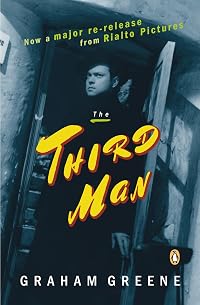
The Third Man
by Graham Greene 
On This Page
Description
Somewhere in shadowy post-war Vienna, where everyone has something to sell on the black market, lurks the third man who witnessed the murder of Harry Lime. Novelist Holly Martins is haunted by the death of his friend. His search for the killer makes electrifying drama, in this witty and sophisticated audio adaptation of the Graham Greene classic. An L.A. Theatre Works full-cast performance featuring Ian Abercrombie, Rosalind Ayres, Ethan Glazer, Kelsey Grammer, John Mahoney, Wolf Muser, show more Barry Philips, Andreas Renell, Bettina Spier, Slav Troyan, John Vickery, Tom Virtue and Nobert Weisser. show lessTags
Recommendations

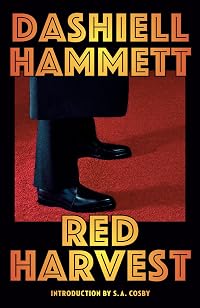
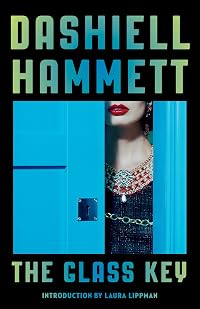
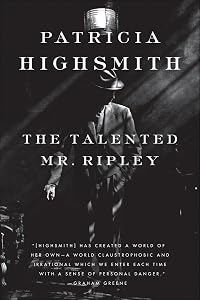
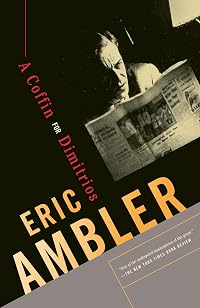


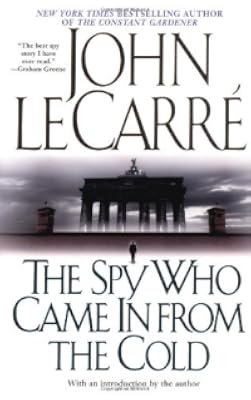
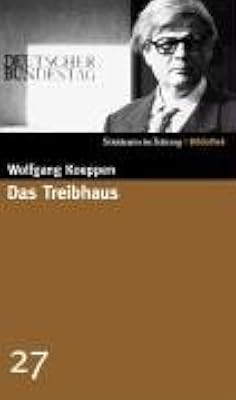
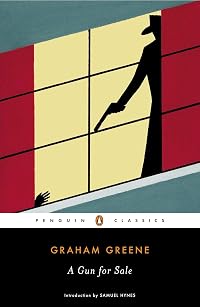
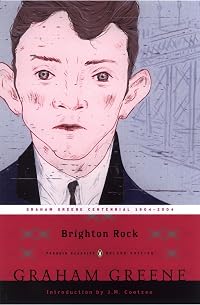








Member Recommendations

Queenofcups Bayard treats Greene's book discussion group scene in this very amusing little book.
Utz by Bruce Chatwin
anonymous user Bruce Chatwin's tribute to Greene, it follows a similar plot.
Member Reviews
"What about views on the American novel?"
"I don't read them," Martins said. (17-8)
Even though this is probably a novella, I knew I wanted to teach it in my class on The Modern Novel. Like many novels I am obsessed with, it is itself about novels: the protagonist is Rollo Martins, a writer of paperback westerns who discovers that actual conflicts between good and evil are not so much like the ones he writes about every day. As a result, there's a lot of meditation here on knowledge: how do we know things and where does our knowledge come from? I see a lot of resonance between The Third Man and the later Justine; I guess it's no coincidence I read them in the same course as an undergraduate, or I taught them together show more myself.
Martins's emotional knowledge conflicts with the well-researched factual knowledge of Cab Calloway. Martins says, "I don't suppose anyone knows Harry [Lime] the way I do," causing Calloway to meditate, "I thought of the thick file of agents' reports in my office, each claiming the same thing" (27). Martins means 'as well as I do,' but there's a second sense you could take it in: that Martins's way of knowing Lime is distinct from all other ways of knowing Lime, and two pages later, Calloway thinks, "It was odd how like the Lime he knew was to the Lime I knew: it was only that he looked at Lime's image from a different angle or in a different light" (29). Martins is always meeting people whose views of Lime conflict with his, and he doesn't know how to deal with this. Lime's girlfriend Anna suggests to Martins, "There are always so many things one doesn’t know about a person, even a person one loves—good things, bad things. We have to leave plenty of room for them.… [S]top making people in your image. Harry was real. He wasn’t just your hero and my lover. He was Harry. He was in a racket. He did bad things. What about it? He was the man we knew.… [A] man doesn’t alter because you find out more about him. He’s still the same man" (114-15).
Some would say that the detective story—especially in its quintessential, Sherlock Holmes style—suggests that truth is a findable, achievable, objective phenomenon, but that’s not what’s up in The Third Man: all truth is mediated, through time, through personality, and we can never have access to the whole thing. Anna argues this is okay, but Martins seems to believe it’s something to be mourned. And, indeed, Martins doesn't solve his epistemological dilemma by reconciling or even acknowledging his way of knowing was unsophisticated; rather, he kills Lime, allowing him to return to his old paperback-style worldview. Lime threatened it, but Lime has been destroyed.
A subplot concerns Crabbin, a literary snob who accidentally invites Martins (whose pen name is "Buck Dexter") to speak to his literary society instead of the literary novelist he meant to bring (Benjamin Dexter). It's a source of good jokes, but it means more; Calloway closes the novel with a reflection on Crabbin, of all people: "Poor Crabbin. Poor all of us when you come to think of it" (157). No one is ever who you think they are. The story is mediated through Calloway to make sure we get this, to make sure we understand that the world is vastly more complicated than we can ever understand. Most of the characters in The Third Man, like Crabbin and Anna, know that they do not have the world solved, that any way of understanding life is only a fiction-- except for the one who writes fiction.
What a strange world unknown to most of us lies under our feet. (148) show less
"I don't read them," Martins said. (17-8)
Even though this is probably a novella, I knew I wanted to teach it in my class on The Modern Novel. Like many novels I am obsessed with, it is itself about novels: the protagonist is Rollo Martins, a writer of paperback westerns who discovers that actual conflicts between good and evil are not so much like the ones he writes about every day. As a result, there's a lot of meditation here on knowledge: how do we know things and where does our knowledge come from? I see a lot of resonance between The Third Man and the later Justine; I guess it's no coincidence I read them in the same course as an undergraduate, or I taught them together show more myself.
Martins's emotional knowledge conflicts with the well-researched factual knowledge of Cab Calloway. Martins says, "I don't suppose anyone knows Harry [Lime] the way I do," causing Calloway to meditate, "I thought of the thick file of agents' reports in my office, each claiming the same thing" (27). Martins means 'as well as I do,' but there's a second sense you could take it in: that Martins's way of knowing Lime is distinct from all other ways of knowing Lime, and two pages later, Calloway thinks, "It was odd how like the Lime he knew was to the Lime I knew: it was only that he looked at Lime's image from a different angle or in a different light" (29). Martins is always meeting people whose views of Lime conflict with his, and he doesn't know how to deal with this. Lime's girlfriend Anna suggests to Martins, "There are always so many things one doesn’t know about a person, even a person one loves—good things, bad things. We have to leave plenty of room for them.… [S]top making people in your image. Harry was real. He wasn’t just your hero and my lover. He was Harry. He was in a racket. He did bad things. What about it? He was the man we knew.… [A] man doesn’t alter because you find out more about him. He’s still the same man" (114-15).
Some would say that the detective story—especially in its quintessential, Sherlock Holmes style—suggests that truth is a findable, achievable, objective phenomenon, but that’s not what’s up in The Third Man: all truth is mediated, through time, through personality, and we can never have access to the whole thing. Anna argues this is okay, but Martins seems to believe it’s something to be mourned. And, indeed, Martins doesn't solve his epistemological dilemma by reconciling or even acknowledging his way of knowing was unsophisticated; rather, he kills Lime, allowing him to return to his old paperback-style worldview. Lime threatened it, but Lime has been destroyed.
A subplot concerns Crabbin, a literary snob who accidentally invites Martins (whose pen name is "Buck Dexter") to speak to his literary society instead of the literary novelist he meant to bring (Benjamin Dexter). It's a source of good jokes, but it means more; Calloway closes the novel with a reflection on Crabbin, of all people: "Poor Crabbin. Poor all of us when you come to think of it" (157). No one is ever who you think they are. The story is mediated through Calloway to make sure we get this, to make sure we understand that the world is vastly more complicated than we can ever understand. Most of the characters in The Third Man, like Crabbin and Anna, know that they do not have the world solved, that any way of understanding life is only a fiction-- except for the one who writes fiction.
What a strange world unknown to most of us lies under our feet. (148) show less
Rollo Martins, who writes Westerns under a pseudonym, arrives in post-war occupied Vienna to visit his old school chum, Harry Lime. Sadly, the larger-than-life Lime has just been killed in an accident, and Martins arrives just in time for the funeral. Discrepancies in the eyewitness stories soon have Martins suspecting that his old friend has been murdered, and the chief suspect is the third man who was present at the scene.
The novella is every bit as atmospheric as the film, with a strong sense of place and the undercurrent of rising Cold War tension. The audio version’s use of the film’s theme music is a nice touch. The narrative technique is similar to Conrad’s Heart of Darkness, with a British police officer narrating in first show more person, repeating what he was told by Martins and filling in some details from his own experience. I would be hard-pressed to say which version I like best – the book or the film. They’re both excellent. show less
The novella is every bit as atmospheric as the film, with a strong sense of place and the undercurrent of rising Cold War tension. The audio version’s use of the film’s theme music is a nice touch. The narrative technique is similar to Conrad’s Heart of Darkness, with a British police officer narrating in first show more person, repeating what he was told by Martins and filling in some details from his own experience. I would be hard-pressed to say which version I like best – the book or the film. They’re both excellent. show less
Rollo Martins has just arrived in post-war Vienna in time to learn that the friend who invited him, Harry Lime, has been killed in an accident and his funeral is that afternoon. Through his grief, Martins recognizes that there are an unusual number of strangers offering him money, a bed and help getting back home, but not a lot of believable information about the day Harry died. All these things make novelist Martins suspicious that Harry's death wasn't an accident.
A slim book, this noir story of espionage was written by Greene in order to give him a feel for his characters before writing the script for the movie of the same name. There are some changes between the two, but if you enjoyed the movie (which is why I bought this book), show more you'll enjoy reading what's going on inside Martins head as he slinks around looking for a killer. show less
A slim book, this noir story of espionage was written by Greene in order to give him a feel for his characters before writing the script for the movie of the same name. There are some changes between the two, but if you enjoyed the movie (which is why I bought this book), show more you'll enjoy reading what's going on inside Martins head as he slinks around looking for a killer. show less
The beauty of Greene is that he baffles us chapter after chapter until he doesn't, then all is so clear we are dumbfounded that we didn't notice earlier. We are also intrigued by his characters. Rollo Martins seems to have two selves, according to Colonel Calloway: Martins who dismisses the women in his life as "incidents," and Rollo who sometimes finds himself "mixing his drinks:" "Rollo looked at every woman that passed, and Martins renounced them forever." Anna Schmidt, Harry Lime's girl, an actress who acted very badly. And Harry Lime, of course, who still believes in God and Mercy, and who is "... not hurting anybody's soul by what I do. The dead are happier dead. They don't miss much here, poor devils.' "
I have tried to watch The Third Man more times than I care to remember. Tried and failed. I know it is considered a classic but the only effect it ever had on me was to put me to sleep.
As part of my self-imposed Greene-land challenge, this is one of the two books that I have looked forward to least. The other, btw, is Greene's other cinematic "classic" Brighton Rock.
So, there I was starting The Third Man having made a huge pot of coffee in full expectation that slumber would befall me at anytime.
And what happens? Greene brings to life the dreariness of post-war Vienna much more effectively on page than the film ever could in moving images. Who'd have thought it?!
"I never knew Vienna between the wars, and I am too young to remember show more the old Vienna with its Strauss music and its bogus easy charm; to me it is simply a city of undignified ruins which turned that February into great glaciers of snow and ice. The Danube was a grey flat muddy river a long way off across the Second Bezirk , the Russian zone where the Prater lay smashed and desolate and full of weeds, only the Great Wheel revolving slowly over the foundations of merry-go-rounds like abandoned millstones, the rusting iron of smashed tanks which nobody had cleared away, the frost-nipped weeds where the snow was thin. I haven’t enough imagination to picture it as it had once been, any more than I can picture Sacher’s Hotel as other than a transit hotel for English officers or see the Kärntnerstrasse as a fashionable shopping street instead of a street which exists, most of it, only at eye level, repaired up to the first storey. A Russian soldier in a fur cap goes by with a rifle over his shoulder, a few tarts cluster round the American Information Office, and men in overcoats sip ersatz coffee in the windows of the Old Vienna."
The other aspect I enjoyed about The Third Man was that this wasn't so much of a thriller which was meant to be taken seriously anymore. Greene found his touch as a writer of political spoofs - only later to be surpassed of course by Our Man in Havanna.
"There is a lot of comedy in these situations if you are not directly concerned. You need a background of Central European terror, of a father who belonged to a losing side, of house -searches and disappearances, before the fear outweighs the comedy. The Russian, you see, refused to leave the room while Anna dressed: the Englishman refused to remain in the room: the American wouldn’t leave a girl unprotected with a Russian soldier, and the Frenchman – well, I think the Frenchman must have thought it was fun. Can’t you imagine the scene? The Russian was just doing his duty and watched the girl all the time, without a flicker of sexual interest; the American stood with his back chivalrously turned, but aware, I am sure, of every movement; the Frenchman smoked his cigarette and watched with detached amusement the reflection of the girl dressing in the mirror of the wardrobe; and the Englishman stood in the passage wondering what to do next."
Review originally posted on BookLikes: http://brokentune.booklikes.com/post/1009421/the-third-man show less
As part of my self-imposed Greene-land challenge, this is one of the two books that I have looked forward to least. The other, btw, is Greene's other cinematic "classic" Brighton Rock.
So, there I was starting The Third Man having made a huge pot of coffee in full expectation that slumber would befall me at anytime.
And what happens? Greene brings to life the dreariness of post-war Vienna much more effectively on page than the film ever could in moving images. Who'd have thought it?!
"I never knew Vienna between the wars, and I am too young to remember show more the old Vienna with its Strauss music and its bogus easy charm; to me it is simply a city of undignified ruins which turned that February into great glaciers of snow and ice. The Danube was a grey flat muddy river a long way off across the Second Bezirk , the Russian zone where the Prater lay smashed and desolate and full of weeds, only the Great Wheel revolving slowly over the foundations of merry-go-rounds like abandoned millstones, the rusting iron of smashed tanks which nobody had cleared away, the frost-nipped weeds where the snow was thin. I haven’t enough imagination to picture it as it had once been, any more than I can picture Sacher’s Hotel as other than a transit hotel for English officers or see the Kärntnerstrasse as a fashionable shopping street instead of a street which exists, most of it, only at eye level, repaired up to the first storey. A Russian soldier in a fur cap goes by with a rifle over his shoulder, a few tarts cluster round the American Information Office, and men in overcoats sip ersatz coffee in the windows of the Old Vienna."
The other aspect I enjoyed about The Third Man was that this wasn't so much of a thriller which was meant to be taken seriously anymore. Greene found his touch as a writer of political spoofs - only later to be surpassed of course by Our Man in Havanna.
"There is a lot of comedy in these situations if you are not directly concerned. You need a background of Central European terror, of a father who belonged to a losing side, of house -searches and disappearances, before the fear outweighs the comedy. The Russian, you see, refused to leave the room while Anna dressed: the Englishman refused to remain in the room: the American wouldn’t leave a girl unprotected with a Russian soldier, and the Frenchman – well, I think the Frenchman must have thought it was fun. Can’t you imagine the scene? The Russian was just doing his duty and watched the girl all the time, without a flicker of sexual interest; the American stood with his back chivalrously turned, but aware, I am sure, of every movement; the Frenchman smoked his cigarette and watched with detached amusement the reflection of the girl dressing in the mirror of the wardrobe; and the Englishman stood in the passage wondering what to do next."
Review originally posted on BookLikes: http://brokentune.booklikes.com/post/1009421/the-third-man show less
When asked to write a screenplay for a movie about the occupation of Vienna following World War II, Graham Greene considered it best to start by writing a story. In this way, he reasoned, the film would be more likely to capture the mood and atmosphere that he (as author) intended. Thus, as Greene notes in his introduction to the novelette, The Third Man "was never intended to be read but only to be seen," and was meant to be no more than raw material for the movie. Nonetheless, following the success of the 1949 film (which starred Orson Welles as the unforgettable Harry Lime), the text was published the following year as a novelette.
Despite its uncertain origins, The Third Man is an engaging story, one that visits themes familiar show more to readers of Greene's fiction, including the conflicts of friendship, self-interest, and social responsibility in the face of human evil. Its one incongruous element is that it is told in the first person by a secondary character (the police detective). In order to give the reader insight into the mind of Rollo Martins (the actual protagonist), the policeman recounts extended passages of dialogue in which Martins reveals his thoughts and feelings, and details of events that the narrator never witnessed.
The story line of the film follows the novelette fairly closely, although Martins' character is changed from British to American, and the ending (as well as a few episodes) differ markedly. The dialogue in many scenes is very similar to what emerged in the film, including the unforgettable scene between Martins and Harry Lyme at the top of the ferris wheel.
The film deservedly is a classic, and widely available. Both it and the novelette are worth seeking out, for a step into a past world of political intrigue and danger. show less
Despite its uncertain origins, The Third Man is an engaging story, one that visits themes familiar show more to readers of Greene's fiction, including the conflicts of friendship, self-interest, and social responsibility in the face of human evil. Its one incongruous element is that it is told in the first person by a secondary character (the police detective). In order to give the reader insight into the mind of Rollo Martins (the actual protagonist), the policeman recounts extended passages of dialogue in which Martins reveals his thoughts and feelings, and details of events that the narrator never witnessed.
The story line of the film follows the novelette fairly closely, although Martins' character is changed from British to American, and the ending (as well as a few episodes) differ markedly. The dialogue in many scenes is very similar to what emerged in the film, including the unforgettable scene between Martins and Harry Lyme at the top of the ferris wheel.
The film deservedly is a classic, and widely available. Both it and the novelette are worth seeking out, for a step into a past world of political intrigue and danger. show less
Graham Greene was a prolific writer whose best work has stood the test of time. He liked to divide his fiction between novels with serious themes (The Heart of the Matter, The Power and the Glory, The Quiet American) and lighter fare that he labeled as “entertainments” (Travels With My Aunt, Our Man In Havana). Whatever the form, I have always found his writing to be compelling and frequently brilliant.
As one of his entertainments, the novella The Third Man has an interesting history. Greene wrote the story as the preliminary treatment of a screenplay for a film of the same name, although the book did not actually appear in print until after the movie came out. In fact, Greene himself thought that film version of the story (for show more which he also received a co-screenwriter credit) was much better than the novella. Regardless, it still works as a stand-alone book and entertaining it definitely is.
The story is set in a post-World War II Vienna that is split into four zones by occupying forces. There is a thriving black-market economy to fill the gaps for shortages in goods ranging from food to tires to medicine. Rollo Martins has come to town at the request of his life-long friend Harry Lime, but arrives just in time for a funeral. Lime, it seems, was the victim of a random car accident, although Martins refuses to accept the situation at face value and pursues the truth at whatever the personal cost happens to be. He soon learns the truth—which involves an unnamed third man who witnessed the apparent accident—which changes everything.
While it does not rank among the best of the author’s considerable catalog of work, The Third Man is nevertheless an atmospheric and highly satisfying reading experience. Greene was equally adept at writing both serious novels as well as thrillers and this novella should be included near the top of the latter category. It is also much shorter in length than most of the author’s other work, which makes it a brief commitment for which the reader will be well rewarded. show less
As one of his entertainments, the novella The Third Man has an interesting history. Greene wrote the story as the preliminary treatment of a screenplay for a film of the same name, although the book did not actually appear in print until after the movie came out. In fact, Greene himself thought that film version of the story (for show more which he also received a co-screenwriter credit) was much better than the novella. Regardless, it still works as a stand-alone book and entertaining it definitely is.
The story is set in a post-World War II Vienna that is split into four zones by occupying forces. There is a thriving black-market economy to fill the gaps for shortages in goods ranging from food to tires to medicine. Rollo Martins has come to town at the request of his life-long friend Harry Lime, but arrives just in time for a funeral. Lime, it seems, was the victim of a random car accident, although Martins refuses to accept the situation at face value and pursues the truth at whatever the personal cost happens to be. He soon learns the truth—which involves an unnamed third man who witnessed the apparent accident—which changes everything.
While it does not rank among the best of the author’s considerable catalog of work, The Third Man is nevertheless an atmospheric and highly satisfying reading experience. Greene was equally adept at writing both serious novels as well as thrillers and this novella should be included near the top of the latter category. It is also much shorter in length than most of the author’s other work, which makes it a brief commitment for which the reader will be well rewarded. show less
Members
- Recently Added By
Lists

1001 Books You Must Read Before You Die
1,448 works; 1,133 members

The Guardian's 1000 Novels Everyone Must Read
1,005 works; 550 members

Read the book and saw the movie
1,170 works; 195 members

Recommend the 20 best books you've read in the last five years
2,168 works; 601 members

The Top 100 Crime Novels of All Time
100 works; 15 members
1940s
221 works; 25 members

Books Read in 2014
2,343 works; 89 members

1950s
340 works; 22 members

Watched the Movie, Probably Won't Read the Book
185 works; 34 members

Top 100 Mystery Novels of All Time
98 works; 9 members

Undiscovered Classics to Read
70 works; 15 members

Books Read in 2017
4,249 works; 130 members

The 100 Best Crime Novels and Thrillers since 1945
100 works; 6 members

Mustich's 1000 Books to Read Before You Die: A Life Changing List
1,001 works; 19 members

Books Read in 2018
4,360 works; 110 members

Blue Pyramid 1,276 Best Books of All Time
1,248 works; 32 members

Global Reads: Books Set in Western Europe
186 works; 10 members

Art Bourgeau's Favorites [Mystery Lovers Companion, 1986]
124 works; 2 members
Author Information

356+ Works 87,436 Members
Born in 1904, Graham Greene was the son of a headmaster and the fourth of six children. Preferring to stay home and read rather than endure the teasing at school that was a by-product of his father's occupation, Greene attempted suicide several times and eventually dropped out of school at the age of 15. His parents sent him to an analyst in show more London who recommended he try writing as therapy. He completed his first novel by the time he graduated from college in 1925. Greene wrote both entertainments and serious novels. Catholicism was a recurring theme in his work, notable examples being The Power and the Glory (1940) and The End of the Affair (1951). Popular suspense novels include: The Heart of the Matter, Our Man in Havana and The Quiet American. Greene was also a world traveler and he used his experiences as the basis for many books. One popular example, Journey Without Maps (1936), was based on a trip through the jungles of Liberia. Greene also wrote and adapted screenplays, including that of the 1949 film, The Third Man, which starred Orson Welles. He died in Vevey, Switzerland in 1991. (Bowker Author Biography) show less
Graham Greene has a Legacy Library. Legacy libraries are the personal libraries of famous readers, entered by LibraryThing members from the Legacy Libraries group.
Some Editions
Awards and Honors
Awards
Notable Lists
Series
Belongs to Publisher Series
Work Relationships
Is contained in
The Heart of the Matter / Stamboul Train / A Burnt-Out Case / The Third Man / The Quiet American / Loser Takes All / The Power and the Glory by Graham Greene
Has the adaptation
Is abridged in
Inspired
Has as a student's study guide
Common Knowledge
- Canonical title*
- Der dritte Mann
- Original title
- The Third Man
- Original publication date
- 1949 (script) (script); 1950 (novella) (novella)
- People/Characters
- Rollo Martins; Harry Lime; Anna Schmidt; Calloway
- Important places
- Vienna, Austria; Austria
- Related movies
- The Third Man (1949 | IMDb)
- Dedication
- To Carol Reed in admiration and affection and in memory of so many early morning Vienna hours at Maxim's, the Casanova, the Oriental
- First words
- One never knows when the blow may fall.
- Quotations
- For the first time Rollo Martins looked back through the years without admiration, as he thought, He's never grown up. Marlowe's devils wore squids attached to their tails: evile was like Peter Pan--it carried with it the hor... (show all)rifying and horrible gift of eternal youth.
- Last words
- (Click to show. Warning: May contain spoilers.)Poor all of us, when you come to think of it.
- Original language
- English
- Disambiguation notice
- This entry represents those editions containing only The Third Man. Please do not combine this work with editions that also contain other stories.
*Some information comes from Common Knowledge in other languages. Click "Edit" for more information.
Classifications
Statistics
- Members
- 2,328
- Popularity
- 8,474
- Reviews
- 72
- Rating
- (3.79)
- Languages
- 20 — Basque, Catalan, Danish, Dutch, English, Finnish, French, German, Galician, Greek, Hungarian, Italian, Norwegian (Bokmål), Norwegian, Farsi/Persian, Portuguese, Slovenian, Spanish, Swedish, Turkish
- Media
- Paper, Audiobook, Ebook
- ISBNs
- 108
- UPCs
- 1
- ASINs
- 41