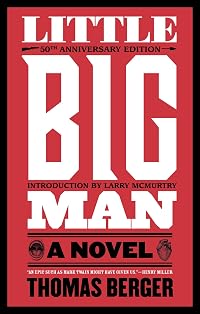
On This Page
Description
The story of Jack Crabbe, raised by both a white man and a Cheyenne chief. As a Cheyenne, Jack ate dog, had four wives and saw his people butchered by General Custer's soldiers. As a white man, he participated in the slaughter of the buffalo and tangled with Wyatt Earp. From the Trade Paperback edition.Tags
Recommendations
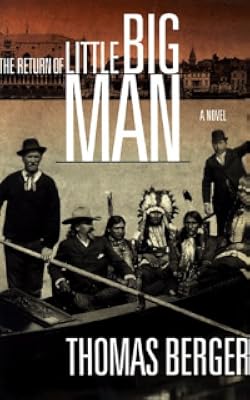

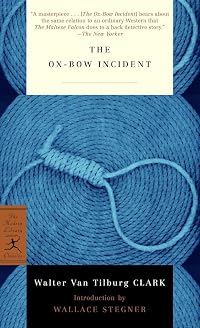
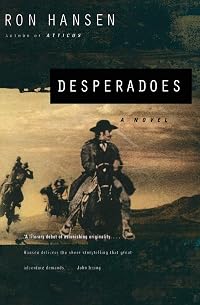

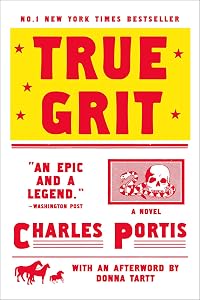
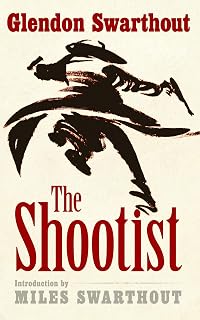

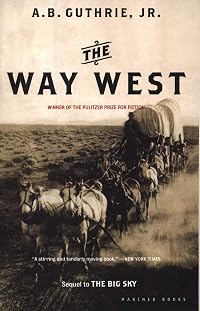
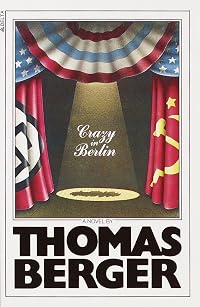
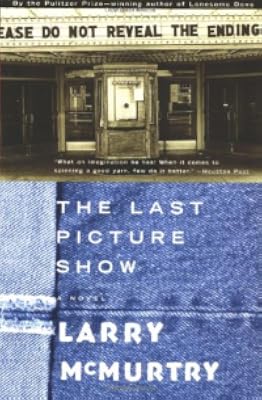

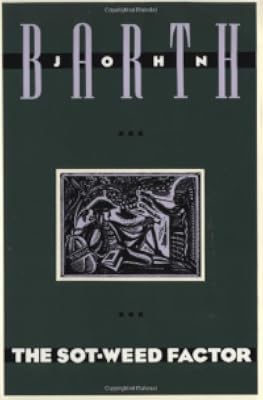











Member Recommendations

mcenroeucsb Books with Delusional/Enlightened Outcast protagonists
40
mcenroeucsb Books with Amusing Rogue protagonists
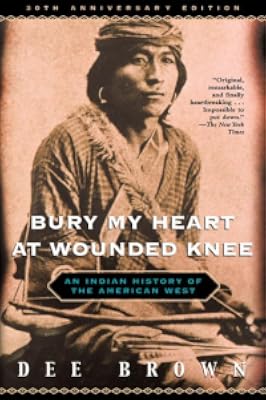
CGlanovsky A different perspective on the tragedy of the American West.
mcenroeucsb Books with Delusional/Enlightened Outcast protagonists
23
mcenroeucsb Books with Delusional/Enlightened Outcast protagonists
13
mcenroeucsb Books with Amusing Rogue protagonists
mcenroeucsb Books with Amusing Rogue protagonists
mcenroeucsb Books with Amusing Rogue protagonists
Member Reviews
This is a romp of a book, like Flashman, though slightly more believable.'
Berger gets to the heart of western language. He's direct, profane, awkwardly pedantic at times, in ways I imagine people were when they tried to be formal. By turns, the book is funny, poignant, and insightful.
A must for anyone who wants to understand the American west, and, indeed, the United States and its protracted genocide against the native peoples could do worse than start with Dee Brown's Bury My Heart at Wounded Knee and Thomas Berger's Little Big Man.
Berger gets to the heart of western language. He's direct, profane, awkwardly pedantic at times, in ways I imagine people were when they tried to be formal. By turns, the book is funny, poignant, and insightful.
A must for anyone who wants to understand the American west, and, indeed, the United States and its protracted genocide against the native peoples could do worse than start with Dee Brown's Bury My Heart at Wounded Knee and Thomas Berger's Little Big Man.
When I was a kid, I read about cowboys and indians. Yeah, I know, I was born a few generations after the big wave of that stuff, but there was still Lucky Luke and Tintin In America and my dad's old 50s adventure books and plastic bows and arrows and toy guns.
Then, just as I was starting to discover newer stories where the white man was the evil colonist and the Native Americans were the innocent, nature-loving philosophers who cried every time someone dropped a gum wrapper, I saw Little Big Man. The movie version starring Dustin Hoffman, that is. And a lot of things changed there.
Little Big Man, both the movie and the novel it was based on (which I've now read for the first time) is about Jack Crabb. Jack is 111 at the beginning of the show more story in the mid-1950s, one of the oldest living Americans, and the last survivor (or so he claims) of the battle of Little Bighorn, where the combined forces of Sioux and Cheyenne soundly defeated the US cavalry for the first and last time. Except he's not just Jack Crabb, he's also Little Big Man; that's the name the Cheyenne gave him after they adopted him as a 10-year-old boy after killing most of the people in the wagon train he was travelling on. For the next 25 years, he spends his life drifting back and forth between his two lives; a Cheyenne brave watching his world disappear, or a white man trying to make a living in the new society that's growing out of the so-called Wild West - as gold digger, poker player, rich dandy, poor drinker, muleskinner, con man, anything. He has one family each by a Mexican woman, a white woman, and a Cheyenne woman. Does Jack Crabb run into every single famous person from Wyatt Earp to General Custer? You bet he does. Does Little Big Man witness racism, marginalisation and massacres of his people? Of course he does. It's almost too much. It's almost so you'd agree with the (fictional) post scriptum: either he's telling the complete truth, or he's lying about all of it.
So far I'd been a great admirer of civilization, but I figured that was because I hadn't come in touch with the process of its creation.
Little Big Man isn't a flawless literary masterpiece in terms of prose - it's not supposed to be, as it's allegedly just a typed interview with an old decrepit man, and probably could have used a ghostwriter (at least try and get him to stick to one tense in each sentense). As a pure adventure novel about the death of one civilisation and the rise of another it's excellent, thrilling, horrifying, hilarious and moving in equal parts, but there are a lot of those around too. Its greatest strength, what struck me so hard about the movie and works just as well here, is the fantastic detail in the description of life both on the prairie and in the frontier towns, and the fairness. (Allegedly, the native American actors in the movie refused to believe that the book was written by a white man.) Here, neither Cheyenne nor Americans are presented as exclusively good or bad - if anything, they're all a bit foolish, including Jack himself and possibly the reader, if we believe everything he tells us. They're all just human beings, prone to violence and irrationality, with a ton of history on their shoulders, hung up on honour and pride, blind to their own prejudices and all too willing to see the other side's. (This goes for our narrator too - even after all he's gone through, Jack Crabb remains a bit of a racist, a product of his time.) Berger, born three generations after all of this happened, brings both people and time to proud, foolish life. And, as a final reminder of the times, the novel ends by somewhat clumsily pointing at something that was just starting to happen in East Asia. Oh well, you can't have everything.
Now, all the above should be read with a caveat. See, I read this in translation, which normally isn't a problem, but the new Swedish translation is so atrociously bad you'd think the translator thought this was just one of my dad's 50s boy's adventures about whitehats and redskins - so bad that I find it difficult to say just how good this novel would be in English. show less
Then, just as I was starting to discover newer stories where the white man was the evil colonist and the Native Americans were the innocent, nature-loving philosophers who cried every time someone dropped a gum wrapper, I saw Little Big Man. The movie version starring Dustin Hoffman, that is. And a lot of things changed there.
Little Big Man, both the movie and the novel it was based on (which I've now read for the first time) is about Jack Crabb. Jack is 111 at the beginning of the show more story in the mid-1950s, one of the oldest living Americans, and the last survivor (or so he claims) of the battle of Little Bighorn, where the combined forces of Sioux and Cheyenne soundly defeated the US cavalry for the first and last time. Except he's not just Jack Crabb, he's also Little Big Man; that's the name the Cheyenne gave him after they adopted him as a 10-year-old boy after killing most of the people in the wagon train he was travelling on. For the next 25 years, he spends his life drifting back and forth between his two lives; a Cheyenne brave watching his world disappear, or a white man trying to make a living in the new society that's growing out of the so-called Wild West - as gold digger, poker player, rich dandy, poor drinker, muleskinner, con man, anything. He has one family each by a Mexican woman, a white woman, and a Cheyenne woman. Does Jack Crabb run into every single famous person from Wyatt Earp to General Custer? You bet he does. Does Little Big Man witness racism, marginalisation and massacres of his people? Of course he does. It's almost too much. It's almost so you'd agree with the (fictional) post scriptum: either he's telling the complete truth, or he's lying about all of it.
So far I'd been a great admirer of civilization, but I figured that was because I hadn't come in touch with the process of its creation.
Little Big Man isn't a flawless literary masterpiece in terms of prose - it's not supposed to be, as it's allegedly just a typed interview with an old decrepit man, and probably could have used a ghostwriter (at least try and get him to stick to one tense in each sentense). As a pure adventure novel about the death of one civilisation and the rise of another it's excellent, thrilling, horrifying, hilarious and moving in equal parts, but there are a lot of those around too. Its greatest strength, what struck me so hard about the movie and works just as well here, is the fantastic detail in the description of life both on the prairie and in the frontier towns, and the fairness. (Allegedly, the native American actors in the movie refused to believe that the book was written by a white man.) Here, neither Cheyenne nor Americans are presented as exclusively good or bad - if anything, they're all a bit foolish, including Jack himself and possibly the reader, if we believe everything he tells us. They're all just human beings, prone to violence and irrationality, with a ton of history on their shoulders, hung up on honour and pride, blind to their own prejudices and all too willing to see the other side's. (This goes for our narrator too - even after all he's gone through, Jack Crabb remains a bit of a racist, a product of his time.) Berger, born three generations after all of this happened, brings both people and time to proud, foolish life. And, as a final reminder of the times, the novel ends by somewhat clumsily pointing at something that was just starting to happen in East Asia. Oh well, you can't have everything.
Now, all the above should be read with a caveat. See, I read this in translation, which normally isn't a problem, but the new Swedish translation is so atrociously bad you'd think the translator thought this was just one of my dad's 50s boy's adventures about whitehats and redskins - so bad that I find it difficult to say just how good this novel would be in English. show less
An irreverant tiki-tour through the Wild West, where the lead character meets every other famous character and is present at the key events reaching the climax of the Battle of Little Big Horn. He weaves his way between the White and Native American cultures and point out the values and foibles of both. It is a very refreshing take on the Cheyenne, they are neither noble or ignorant savages, nor are their practices and beliefs simply translated into a white context. Ultimately though it has the greatest feeling for the Native American existence and what is being lost to colonianism. The text is vibrant and the book is great fun.
I only discovered Thomas Berger’s 1964 novel Little Big Man after watching its 1970 movie version starring Dustin Hoffman in the title role. But coincidentally, this second reading of the book coincided almost perfectly with the fiftieth anniversary of the first time I read it — and it turned out to be as entertaining as ever.
The novel’s main character, Jack Crabb, is the Forrest Gump of the second half of the nineteenth century. Despite dying at 34 years of age before he could complete his memoir, Crabb tells of his experiences and/or friendships with the likes of George Armstrong Custer, Wild Bill Hickok, Calamity Jane, Wyatt Earp, and others. Much like the fictional Forrest Gump would do in his own part of the country decades show more later via novel and film, Jack was everywhere out West where anything of consequence seemed to be happening, including the Battle of the Little Big Horn.
The fictional editor responsible for getting Little Big Man’s memoir into print put it this way:
“It is of course unlikely that one man would have experienced even a third of Mr. Crabb’s claim. Half? Incredible! All? A mythomaniac! But you will find, as I did, that if any one part is accepted as truth, then what precedes and follows has a great lien on our credulity. If he knew Wild Bill Hickok, then why not General Custer as well?”
Jack Crabb’s big adventure begins when his father converts to Mormonism and decides to move the family cross country to Salt Lake City. Unfortunately for Mr. Crabb and his family, an Indian raid on the wagon train the family was a part of ended their move well before its intended destination. The good news is that not everyone in the family was killed in that raid; the bad news is that Jack and his older sister were carried away by the raiders. Jack’s sister, who had talked the Indians into taking Jack along in the first place, manages to escape early on, but she does so without including Jack in her escape plan. And that’s how Jack became the adopted son of an Indian chief and survived to have all the adventures captured in Little Big Man.
For the next quarter of a century, Jack will move between the white world and the Native American world each time he needs to save his life from one side or the other. Whenever he finds himself on the losing side of any battle between the Americans and the Indians, Jack manages to switch sides just in the nick of time in order to survive and begin a new set of adventures. He is so good at saving his own neck, in fact, that by the time his memoirs have attracted some interest, Jack Crabb is 111 years old and still feisty as ever.
Bottom Line: Little Big Man is great fun despite the tragic events the novel vividly portrays as Jack Crabb negotiates the two very different cultures he spends time in. It is the story of America’s westward expansion and the simultaneous near elimination of a race of people who already called this country home. It is a farcical view of American history that still manages the kind of emotional impact that serious, nonfiction history books do not always achieve. Little did they expect it, but fans of Little Big Man were to be rewarded 35 years later with the publication of Berger’s The Return of Little Big Man. How did Jack manage to tell the rest of his story? I’ll leave that up to you to find out because it’s all part of the fun. show less
The novel’s main character, Jack Crabb, is the Forrest Gump of the second half of the nineteenth century. Despite dying at 34 years of age before he could complete his memoir, Crabb tells of his experiences and/or friendships with the likes of George Armstrong Custer, Wild Bill Hickok, Calamity Jane, Wyatt Earp, and others. Much like the fictional Forrest Gump would do in his own part of the country decades show more later via novel and film, Jack was everywhere out West where anything of consequence seemed to be happening, including the Battle of the Little Big Horn.
The fictional editor responsible for getting Little Big Man’s memoir into print put it this way:
“It is of course unlikely that one man would have experienced even a third of Mr. Crabb’s claim. Half? Incredible! All? A mythomaniac! But you will find, as I did, that if any one part is accepted as truth, then what precedes and follows has a great lien on our credulity. If he knew Wild Bill Hickok, then why not General Custer as well?”
Jack Crabb’s big adventure begins when his father converts to Mormonism and decides to move the family cross country to Salt Lake City. Unfortunately for Mr. Crabb and his family, an Indian raid on the wagon train the family was a part of ended their move well before its intended destination. The good news is that not everyone in the family was killed in that raid; the bad news is that Jack and his older sister were carried away by the raiders. Jack’s sister, who had talked the Indians into taking Jack along in the first place, manages to escape early on, but she does so without including Jack in her escape plan. And that’s how Jack became the adopted son of an Indian chief and survived to have all the adventures captured in Little Big Man.
For the next quarter of a century, Jack will move between the white world and the Native American world each time he needs to save his life from one side or the other. Whenever he finds himself on the losing side of any battle between the Americans and the Indians, Jack manages to switch sides just in the nick of time in order to survive and begin a new set of adventures. He is so good at saving his own neck, in fact, that by the time his memoirs have attracted some interest, Jack Crabb is 111 years old and still feisty as ever.
Bottom Line: Little Big Man is great fun despite the tragic events the novel vividly portrays as Jack Crabb negotiates the two very different cultures he spends time in. It is the story of America’s westward expansion and the simultaneous near elimination of a race of people who already called this country home. It is a farcical view of American history that still manages the kind of emotional impact that serious, nonfiction history books do not always achieve. Little did they expect it, but fans of Little Big Man were to be rewarded 35 years later with the publication of Berger’s The Return of Little Big Man. How did Jack manage to tell the rest of his story? I’ll leave that up to you to find out because it’s all part of the fun. show less
Jack Crabb is 111 years old. He was born in 1842 in Evansville, Indiana and lived a full life. An adventuresome life although he might say it was the only thing it could have been, what it was.
It’s been compared to a Twain story and i definitely can see that it soundin’ a good deal like Huckleberry Finn in its telling mixing race and low culture and historical events and everyday people of all kinds. It could even be said to resemble a kind of wild west Forest Gump. They say people nowadays end up having an average of 6 different careers or jobs in their lives. Jack Crabb -known to the Cheyenne as Little Big Man- had as many and more.
His life is captivating in the way he tells it. He has a unique voice and character that brings you show more in close from curiosity over all the nooks and crannies of the details of his reality then when you’re in, he gives you a dutch rub on your head (the only kind of scalping not frowned upon now) and cackles. His vision puts him at the forefront of all this, describing his younger self in clear, unvarnished terms with a wry sense of irony about the whole mess. His very stoic philosophy spills over and sloshes into your brain tainting it in just the right way.
To think about meeting someone like this in person. Someone who was born and lived a lot of their life before the railroad opened the west, saw the US civil war, the legal end of slavery, hunted buffalo, took indian wives, watched the coming of electric light and radio, saw the Great War and WWII, etc., etc. i think speaking with a WWII veteran would not have the same deep feeling since they would have been born firmly in the twentieth century with all its modern nation-states and lack of uncivilized frontier. Mr. Crabb saw and lived on the cusp of the filling in the blanks the great western “wilderness.” The age of exploration was coming to an end. The planet had been circumnavigated and circumgraphed and Europeans were fleeing their problems by pushing them into the non-white void in front of them but that came to an end within the lifetime of Mr. Crabb.
The narrator and recorder of Mr. Crabb’s tale says in the end that he isn’t sure how many of the stories related to him were true but that the historical accuracy when checked was frightening. I think if history classes were taught with this kind of book at the center, the subject would be received very differently than it usually is. Jack Crabb is a myth among myths. An alternative US history survey course in and of himself. I wish i could hear this fictional character tell me his life in person to be able to see the twinkle in his eye, hear him cuss, and understand what it must be like to spin yarns like his, true or no. show less
It’s been compared to a Twain story and i definitely can see that it soundin’ a good deal like Huckleberry Finn in its telling mixing race and low culture and historical events and everyday people of all kinds. It could even be said to resemble a kind of wild west Forest Gump. They say people nowadays end up having an average of 6 different careers or jobs in their lives. Jack Crabb -known to the Cheyenne as Little Big Man- had as many and more.
His life is captivating in the way he tells it. He has a unique voice and character that brings you show more in close from curiosity over all the nooks and crannies of the details of his reality then when you’re in, he gives you a dutch rub on your head (the only kind of scalping not frowned upon now) and cackles. His vision puts him at the forefront of all this, describing his younger self in clear, unvarnished terms with a wry sense of irony about the whole mess. His very stoic philosophy spills over and sloshes into your brain tainting it in just the right way.
To think about meeting someone like this in person. Someone who was born and lived a lot of their life before the railroad opened the west, saw the US civil war, the legal end of slavery, hunted buffalo, took indian wives, watched the coming of electric light and radio, saw the Great War and WWII, etc., etc. i think speaking with a WWII veteran would not have the same deep feeling since they would have been born firmly in the twentieth century with all its modern nation-states and lack of uncivilized frontier. Mr. Crabb saw and lived on the cusp of the filling in the blanks the great western “wilderness.” The age of exploration was coming to an end. The planet had been circumnavigated and circumgraphed and Europeans were fleeing their problems by pushing them into the non-white void in front of them but that came to an end within the lifetime of Mr. Crabb.
The narrator and recorder of Mr. Crabb’s tale says in the end that he isn’t sure how many of the stories related to him were true but that the historical accuracy when checked was frightening. I think if history classes were taught with this kind of book at the center, the subject would be received very differently than it usually is. Jack Crabb is a myth among myths. An alternative US history survey course in and of himself. I wish i could hear this fictional character tell me his life in person to be able to see the twinkle in his eye, hear him cuss, and understand what it must be like to spin yarns like his, true or no. show less
I loved this book from beginning to end, there was never a time where I felt slowed down, stuck in any dull part. This is framed as the first hand account of Jack Crabb, who claims to be 111-years old and the only White survivor of the Battle of the Little Big Horn. The first line of his narrative starts: I am a white man and never forgot it, but I was brought up by the Cheyenne Indians from age ten. That first line telegraphs the rest of the story. Jack, whose Cheyenne name translates to Little Big Man, is caught between the two cultures--more than I think he even admits to in old age. It's part of what makes his story so fascinating, as he is witness both to the massacre by Custer of peaceful Cheyenne in Washita, including members of show more his own Cheyenne family, and the slaughter of Custer's troops by Cheyenne and Sioux at Little Big Horn.
The back of this book describes this as a "picaresque" tale--which is how another book I recently read, Kunzru's The Impressionist was described on the flyleaf. That book also dealt with a man caught between two cultures, in that case Hindu Indian and Anglo-English. Yet that book couldn't hold me while this one absolutely engrossed me. Part of that was a matter of differences in style, and because in this book a wry, ironic dark sense of humor was to the forefront--but the biggest reason is Jack, who manages to capture my sympathies--despite the fact he's by no means heroic--is something of a scoundrel--but a survivor and someone who does care about the family he makes along the way.
And along the way he's taught gun-fighting by Wild Bill Hickok, has a run-in with Wyatt Earp and encounters Calamity Jane. He's a mule train driver, a professional gambler, a buffalo hunter--oh, and yeah manages to inveigle himself as a scout for Custer. That alone, that depiction of Custer, is an interesting characterization. This was published in 1964. Way back then, I think Custer was still a hero to most Americans, a cultural icon of the West. So Berger's portrayal then of Custer as a "hard ass" a slaughterer of innocents and a fool was irreverent and brave on his part even if he also allows Custer an admirable quality or two. The book doesn't show one whit of its age despite being nearly 50 years old. It's an irreverent, funny and myth-busting look at the old West that makes me want to read more about the real historical figures featured in it. show less
The back of this book describes this as a "picaresque" tale--which is how another book I recently read, Kunzru's The Impressionist was described on the flyleaf. That book also dealt with a man caught between two cultures, in that case Hindu Indian and Anglo-English. Yet that book couldn't hold me while this one absolutely engrossed me. Part of that was a matter of differences in style, and because in this book a wry, ironic dark sense of humor was to the forefront--but the biggest reason is Jack, who manages to capture my sympathies--despite the fact he's by no means heroic--is something of a scoundrel--but a survivor and someone who does care about the family he makes along the way.
And along the way he's taught gun-fighting by Wild Bill Hickok, has a run-in with Wyatt Earp and encounters Calamity Jane. He's a mule train driver, a professional gambler, a buffalo hunter--oh, and yeah manages to inveigle himself as a scout for Custer. That alone, that depiction of Custer, is an interesting characterization. This was published in 1964. Way back then, I think Custer was still a hero to most Americans, a cultural icon of the West. So Berger's portrayal then of Custer as a "hard ass" a slaughterer of innocents and a fool was irreverent and brave on his part even if he also allows Custer an admirable quality or two. The book doesn't show one whit of its age despite being nearly 50 years old. It's an irreverent, funny and myth-busting look at the old West that makes me want to read more about the real historical figures featured in it. show less
Designed to mock and satirize the Western, Little Big Man is one of the best of the genre anyway. It keeps the reader off balance by way of a quick wit, gross exaggeration, and then out-of-nowhere: insight. Maybe not on the very top shelf of greatest novels of all-time, but not too far off either.
Members
- Recently Added By
Published Reviews
ThingScore 75
A successful, serious but, crack-brained burlesque of Indian mores and frontier life, this tells the story of Jack Crabb, the 111-year-old lone survivor of Custer's last stand at Little Bighorn. (Berger is the author of Crazy in Berlin and Reinhart in Love, both of which had patches of unorthodox brilliance.)
added by Richardrobert
Lists

Best Historical Fiction
620 works; 257 members

D.G. Meyers's List of Minor Classic Fiction of the 1960s
4 works; 1 member

Books about Frontier Life and Pioneers
55 works; 7 members

Read These Too
458 works; 9 members

Michael Dirda's Desert Island Books
62 works; 5 members

Books Read in 2025
4,091 works; 97 members
School Made Us Read It
380 works; 196 members
Author Information

28+ Works 4,323 Members
Thomas Berger was born in Cincinnati, Ohio on July 20, 1924. During World War II, he enlisted in the Army and served in England and Germany as part of the Medical Corps. He received a baccalaureate degree with honors from the University of Cincinnati in 1948 and pursued graduate work in English at Columbia University until 1951. He worked as a show more librarian at the Tamiment Institute and Library in New York and as a summary writer for The New York Times Index. His first novel, Crazy in Berlin, was published in 1958. He wrote numerous books during his lifetime including Killing Time, Who Is Teddy Villanova?, Adventures of the Artificial Woman, Sneaky People, The Houseguest, Meeting Evil, Suspects, Best Friends, and The Feud. Several of his novels were adapted into films including Little Big Man starring Dustin Hoffman and Neighbors starring John Belushi and Dan Aykroyd. He died on July 13, 2014 at the age of 89. (Bowker Author Biography) show less
All Editions
Some Editions
Awards and Honors
Awards
Series

Belongs to Publisher Series
Work Relationships
Is contained in
Has the adaptation
Common Knowledge
- Canonical title*
- Little Big Man. Mémoires d'un visage pâle
- Original title
- Little Big Man
- Alternate titles*
- Little Big Man : Mémoires d'un visage pâle
- Original publication date
- 1964 (1e édition originale américaine) (1e édition originale américaine); 1965 (1e traduction par France-Marie Watkins et édition française, Stock) (1e traduction par France-Marie Watkins et édition française, Stock); 1974 (Réédition française avec un avant-propos de Ralph Fielding Snell, Le livre de poche) (Réédition française avec un avant-propos de Ralph Fielding Snell, Le livre de poche); 1991-09-06 (Réédition française, Nuage Rouge, Editions du Rocher, Monaco) (Réédition française, Nuage Rouge, Editions du Rocher, Monaco); 1992 (Réédition française, Nuage Rouge, Roman, J'ai lu) (Réédition française, Nuage Rouge, Roman, J'ai lu); 2014 (Réédition française, Frontières, Editions SW Télémaque) (Réédition française, Frontières, Editions SW Télémaque) (show all 7); 2022-02-03 (Nouvelle traduction par Marc Boulet et édition française, Totem, Gallmeister) (Nouvelle traduction par Marc Boulet et édition française, Totem, Gallmeister)
- People/Characters
- Jack Crabb
- Important places
- Little Bighorn, Montana, USA
- Related movies
- Little Big Man (1970 | IMDb)
- Epigraph*
- /
- Dedication*
- Pour Mary Redpath
- First words
- It was my privilege to know the late Jack Crabb—frontiersman, Indian scout, gunfighter, buffalo hunter, adopted Cheyenne—in his final days upon this earth.
- Last words
- (Click to show. Warning: May contain spoilers.)In either case, may the Everywhere Spirit have mercy on his soul, and yours, and mine.
- Original language
- English
- Disambiguation notice*
- Problem CK
Date de première publication :
1964 (1e édition originale américaine)
- 1965 (1e traduction par France-Marie Watkins et édition française, Stock)
- 1974 (Réédition française avec ... (show all)un avant-propos de Ralph Fielding Snell, Le livre de poche)
- 1991-09-06 (Réédition française, Nuage Rouge, Editions du Rocher, Monaco)
- 1992 (Réédition française, Nuage Rouge, Roman, J'ai lu)
- 2014 (Réédition française, Frontières, Editions SW Télémaque)
- 2022-02-03 (Nouvelle traduction par Marc Boulet et édition française Totem, Gallmeister)
*Some information comes from Common Knowledge in other languages. Click "Edit" for more information.
Classifications
Statistics
- Members
- 1,349
- Popularity
- 17,725
- Reviews
- 35
- Rating
- (4.14)
- Languages
- 13 — Czech, Danish, Dutch, English, French, German, Hungarian, Italian, Polish, Portuguese, Spanish, Swedish, Turkish
- Media
- Paper, Audiobook, Ebook
- ISBNs
- 47
- UPCs
- 1
- ASINs
- 27