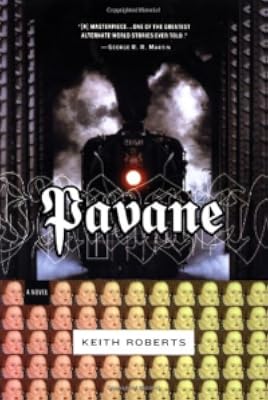
Pavane
by Keith Roberts
On This Page
Description
1588: Queen Elizabeth is felled by an assassin's bullet. Within the week, the Spanish Armada had set sail, and its victory changed the course of history. 1968: England is still dominated by the Church of Rome. There are no telephones, no television, no nuclear power. As Catholicism and the Inquisition tighten their grip, rebellion is growing.Tags
Recommendations


















Member Recommendations
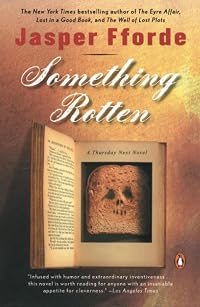
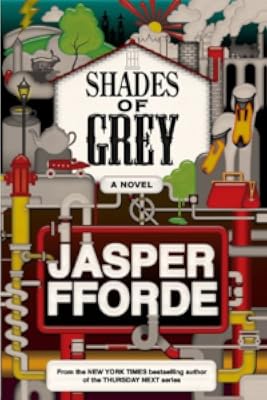
ed.pendragon Another fantasy involving an alternate Britain where the author's love of mechanical transport features strongly, also told in separate but related episodes.
30
LamontCranston Both very much to do with "Englishness"
20

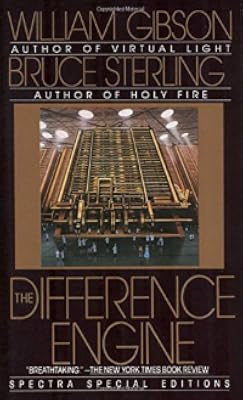
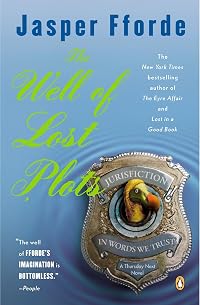
ed.pendragon Another alternate history set in Britain, but in the 19th century, which was then followed by a dozen equally imaginative sequels.
Member Reviews
Pavane is a classic alternate history tale. The novel is essentially a series, lightly interwoven, of novelettes and a novella, and most of the chapters were published individually in magazines in 1966, and then the novel was created and published in 1968 in the UK and 1969 in the United States. There are six primary stories as well as a prologue and coda. Each chapter gives us a different view of the alternate world beginning in 1968 when the story begins. The stories told are personal stories of lives lived in this alternate world, subtly interwoven.
The basic setup premise here is that the Protestant reformation didn't succeed and the Catholic Church's allies captured England and overturned things in mainland Europe. There are quite a show more few detailed reviews here on LT and elsewhere that cover various aspects of this novel in more detail then I would or could. The stories in this book are very good and put the reader fully into an imagined history that never was. Each segment pulls the reader into different lives and stories that are both heartbreaking and heartwarming to varying degrees. All in all a very satisfying read. A good knowledge of English places (which I lack) would probably have heightened my enjoyment. It would be difficult to not think there was an anti-catholic agenda or bias behind this, because the message is that papal supremacy would consciously hold the English/European world back from progress. At least for a long time. Oh, let us not forget the inquisition because the book does not let us forget it. One of mankind's finest moments to be sure.
"The Signaller" is a terrific chapter in the book. In this tale, the story of the early life and early death of a young boy who joins the signal corps, one becomes immersed in this imaginary England and this story alone is a 5 star read with a touch of magic that breaks your heart.
Another chapter, "Brother John", moves us forward to the alternate 1985 in which the inquisition still reigns and witnessing it drives Brother John into madness and yet it ignites in him a rage that spreads and we get the first hints that the people are going to actively rebel against the papist overlords. Another heartbreaking story. In fact I can say that every chapter is full of heartbreak.
In a very unique way this is a magnificent book. Recommended and I would especially recommend this to readers of historical fiction. show less
The basic setup premise here is that the Protestant reformation didn't succeed and the Catholic Church's allies captured England and overturned things in mainland Europe. There are quite a show more few detailed reviews here on LT and elsewhere that cover various aspects of this novel in more detail then I would or could. The stories in this book are very good and put the reader fully into an imagined history that never was. Each segment pulls the reader into different lives and stories that are both heartbreaking and heartwarming to varying degrees. All in all a very satisfying read. A good knowledge of English places (which I lack) would probably have heightened my enjoyment. It would be difficult to not think there was an anti-catholic agenda or bias behind this, because the message is that papal supremacy would consciously hold the English/European world back from progress. At least for a long time. Oh, let us not forget the inquisition because the book does not let us forget it. One of mankind's finest moments to be sure.
"The Signaller" is a terrific chapter in the book. In this tale, the story of the early life and early death of a young boy who joins the signal corps, one becomes immersed in this imaginary England and this story alone is a 5 star read with a touch of magic that breaks your heart.
Another chapter, "Brother John", moves us forward to the alternate 1985 in which the inquisition still reigns and witnessing it drives Brother John into madness and yet it ignites in him a rage that spreads and we get the first hints that the people are going to actively rebel against the papist overlords. Another heartbreaking story. In fact I can say that every chapter is full of heartbreak.
In a very unique way this is a magnificent book. Recommended and I would especially recommend this to readers of historical fiction. show less
An exquisitely crafted alternate history of England. A set of six linked stories set up as a dance,or pavane, if you will. Not anything really profound but a delight in itself as a work of fiction. Deliciously written and craftily plotted to a most satisfying ending.
I'm not a big alternate history fan but throughly enjoyed this.
Roberts takes some pretty mighty swings at the Romish church and his main message may be how religion keeps progressive humanity back with a superstitious spear of fear and intimidation.
I'm not a big alternate history fan but throughly enjoyed this.
Roberts takes some pretty mighty swings at the Romish church and his main message may be how religion keeps progressive humanity back with a superstitious spear of fear and intimidation.
SPOILERS
First read forty years ago; picked up recently in a used bookstore “FREE” bin and reread. Pavane wears well on rereading, although some aspects lose a little. There had been other alternate histories before Pavane, but most (at least the ones I can think of) were alternate histories, instead of alternate history novels. Author Keith Roberts uses a series of interconnected short stories (I think they were originally published that way, then collected) to recount the lives of people living in a southwest England where Queen Elizabeth I was assassinated in 1588 and the Spanish Armada was successful. The totalitarian Catholic Church is dominant, and has banned most technology (railroads, internal combustion engines larger than show more 150cc, telegraphy, radio, anesthetics, antibiotics) and insured that the feudal system remains intact and the Inquisition still prospers. Long distance hauling is done by steam road tractors; communication is by semaphore, and military technology remains in the muzzle-loading musket and crossbow stage. “Old Ones”, presumably fairies or elves, still exist in out-of-the way places. The class system is reinforced by language divisions, with the nobility speaking Norman French, the merchant class English, and the peasants Gaelic, Cornish, Welsh or Middle English. After a prologue setting out the alternate timeline following the assassination of Elizabeth I, the first story is set in 1968, and subsequent ones cover perhaps 50 years (only the first story has a specific date).
Three of the stories trace the lineage of the Strange family, from Jesse Strange, a steam traction engine operator, through his niece Margaret who marries into the nobility, and his grandniece Eleanor, Lady of Purbeck (she’s never given a more specific title but her seat is at Corfe and her territories run as far as Sarum and Dorchester, so she’s roughly Duchess of Dorset, Somerset, and Wiltshire). An apprentice Signaler (semaphore operator), a monk who becomes disillusioned with the Inquisition (here the Court of Spiritual Welfare), and a fisher girl who becomes involved with smugglers make up the other three protagonists. The characters and their lives are all well-drawn and believable, and the description of the countryside and its inhabitants is evocative.
SPOILERS FOLLOW.
All the stories contain subtle hints that the actual timeline is not quite as it is represented. Towns have their Roman names – Durnovaria and Londinium – which were no longer in use at the putative divergence date of 1588. Animals that had been extinct since medieval times (bears and wolves) or never existed in the British Isles at all (mountain lions and dire wolves) turn up. The Papal flag is described as cobalt blue with a yellow eagle. And, of course, there are the Old Ones, who seem more in place in a fantasy novel than an alternate history. A coda seems to explain this; a young man who may or may not be related to Lady Eleanor visits the ruins of Corfe Castle, years after the Papal government has finally collapsed, and reads a letter of explanation from an “Old One” who posed as a human retainer to the Lords of Purbeck. The letter seems to explain the world of Pavane not as an alternate history but as a sort of repeated time line; there had been a previous world where the Reformation had succeeded and the Armada failed, but where there had been an Armageddon (implied to be nuclear war). In the Pavane world the Old Ones and the Popes deliberately slowed the development of human knowledge to allow the world to “reach toward reason” and that thus although there was oppression there was “…no Belsen. No Buchenwald. No Passchendaele”. Further, the Church has apparently held all the suppressed science and invention “in trust” and it was quickly released after the world threw off the Church’s dominion.
The coda is perhaps the most unsatisfactory part of Pavane, reflecting as it does the author’s own time (the book was written in 1966), and perhaps the desire to give the book a happy ending. The idea that there was a Golden Age and that we would all be happier if we reverted to it is one of the most pernicious themes of human history – especially recent history. Of course, when I first read Pavane I was sort of a fan of that idea myself, only to be disabused by continued reading of actual history rather than the imagined history that delights the Golden Agers. Still, this is a fine book – perhaps because it reminds me of the way I thought when I first encountered it - and I’m glad I read it again. show less
First read forty years ago; picked up recently in a used bookstore “FREE” bin and reread. Pavane wears well on rereading, although some aspects lose a little. There had been other alternate histories before Pavane, but most (at least the ones I can think of) were alternate histories, instead of alternate history novels. Author Keith Roberts uses a series of interconnected short stories (I think they were originally published that way, then collected) to recount the lives of people living in a southwest England where Queen Elizabeth I was assassinated in 1588 and the Spanish Armada was successful. The totalitarian Catholic Church is dominant, and has banned most technology (railroads, internal combustion engines larger than show more 150cc, telegraphy, radio, anesthetics, antibiotics) and insured that the feudal system remains intact and the Inquisition still prospers. Long distance hauling is done by steam road tractors; communication is by semaphore, and military technology remains in the muzzle-loading musket and crossbow stage. “Old Ones”, presumably fairies or elves, still exist in out-of-the way places. The class system is reinforced by language divisions, with the nobility speaking Norman French, the merchant class English, and the peasants Gaelic, Cornish, Welsh or Middle English. After a prologue setting out the alternate timeline following the assassination of Elizabeth I, the first story is set in 1968, and subsequent ones cover perhaps 50 years (only the first story has a specific date).
Three of the stories trace the lineage of the Strange family, from Jesse Strange, a steam traction engine operator, through his niece Margaret who marries into the nobility, and his grandniece Eleanor, Lady of Purbeck (she’s never given a more specific title but her seat is at Corfe and her territories run as far as Sarum and Dorchester, so she’s roughly Duchess of Dorset, Somerset, and Wiltshire). An apprentice Signaler (semaphore operator), a monk who becomes disillusioned with the Inquisition (here the Court of Spiritual Welfare), and a fisher girl who becomes involved with smugglers make up the other three protagonists. The characters and their lives are all well-drawn and believable, and the description of the countryside and its inhabitants is evocative.
SPOILERS FOLLOW.
All the stories contain subtle hints that the actual timeline is not quite as it is represented. Towns have their Roman names – Durnovaria and Londinium – which were no longer in use at the putative divergence date of 1588. Animals that had been extinct since medieval times (bears and wolves) or never existed in the British Isles at all (mountain lions and dire wolves) turn up. The Papal flag is described as cobalt blue with a yellow eagle. And, of course, there are the Old Ones, who seem more in place in a fantasy novel than an alternate history. A coda seems to explain this; a young man who may or may not be related to Lady Eleanor visits the ruins of Corfe Castle, years after the Papal government has finally collapsed, and reads a letter of explanation from an “Old One” who posed as a human retainer to the Lords of Purbeck. The letter seems to explain the world of Pavane not as an alternate history but as a sort of repeated time line; there had been a previous world where the Reformation had succeeded and the Armada failed, but where there had been an Armageddon (implied to be nuclear war). In the Pavane world the Old Ones and the Popes deliberately slowed the development of human knowledge to allow the world to “reach toward reason” and that thus although there was oppression there was “…no Belsen. No Buchenwald. No Passchendaele”. Further, the Church has apparently held all the suppressed science and invention “in trust” and it was quickly released after the world threw off the Church’s dominion.
The coda is perhaps the most unsatisfactory part of Pavane, reflecting as it does the author’s own time (the book was written in 1966), and perhaps the desire to give the book a happy ending. The idea that there was a Golden Age and that we would all be happier if we reverted to it is one of the most pernicious themes of human history – especially recent history. Of course, when I first read Pavane I was sort of a fan of that idea myself, only to be disabused by continued reading of actual history rather than the imagined history that delights the Golden Agers. Still, this is a fine book – perhaps because it reminds me of the way I thought when I first encountered it - and I’m glad I read it again. show less
***SPOILERS***
The book repeats the structure of the dance: six moves of the pavane and coda.
I loved the moves and hated the coda, hated it for real.
The six moves are six different, somewhat interlinked stories, that describe a future, where there the Roman Catholic Church held its power into the twentieth century and kept its Dark ages views and practices including inquisition, feudal society and veto on science advances. A simple yet powerful narration successfully describes such a future singling out individuals that can't find answers to various "why" questions. It seems, that the book is full of humanism, that is pro-science and in general states that stagnation is never a good thing.
However, the coda reverses this impression, as it show more justifies the actions of the church by saying that they were justified. Were the church not acting in such a way, there would be all sorts of atrocities caused by the rapid advance of science and not sufficient advance of philosophy and morals. The coda claims that the Holocaust, the entire WWII, among other terrible event were prevented by withholding technological advance till the moment when morals became adequate.
I will spare my breath and won't argue that the Holy Inquisition was no better, than Holocaust, or that women dying in childbirth for centuries are as much victims as those killed in WWII bombings. Instead I'll refer you to one of the books that guides me when it comes to looking for the moral ground: [b:Hard to Be a God|759517|Hard to Be a God|Arkady Strugatsky|https://images.gr-assets.com/books/1425850190s/759517.jpg|41364467]. It says something very basic: even if you think you know better, and you're in position to enforce your decision on others without their knowledge and without asking for their opinion or without giving them a chance to act on their own behalf, you're clearly in the wrong. You may be doing some good, but you're doing a lot of evil by denying people their choice and turning them to puppets. show less
The book repeats the structure of the dance: six moves of the pavane and coda.
I loved the moves and hated the coda, hated it for real.
The six moves are six different, somewhat interlinked stories, that describe a future, where there the Roman Catholic Church held its power into the twentieth century and kept its Dark ages views and practices including inquisition, feudal society and veto on science advances. A simple yet powerful narration successfully describes such a future singling out individuals that can't find answers to various "why" questions. It seems, that the book is full of humanism, that is pro-science and in general states that stagnation is never a good thing.
However, the coda reverses this impression, as it show more justifies the actions of the church by saying that they were justified. Were the church not acting in such a way, there would be all sorts of atrocities caused by the rapid advance of science and not sufficient advance of philosophy and morals. The coda claims that the Holocaust, the entire WWII, among other terrible event were prevented by withholding technological advance till the moment when morals became adequate.
I will spare my breath and won't argue that the Holy Inquisition was no better, than Holocaust, or that women dying in childbirth for centuries are as much victims as those killed in WWII bombings. Instead I'll refer you to one of the books that guides me when it comes to looking for the moral ground: [b:Hard to Be a God|759517|Hard to Be a God|Arkady Strugatsky|https://images.gr-assets.com/books/1425850190s/759517.jpg|41364467]. It says something very basic: even if you think you know better, and you're in position to enforce your decision on others without their knowledge and without asking for their opinion or without giving them a chance to act on their own behalf, you're clearly in the wrong. You may be doing some good, but you're doing a lot of evil by denying people their choice and turning them to puppets. show less
I’ve had this book for years – I collected the original SF Masterworks series as they were published – and was fairly sure I’d read it many years before. But having now read it (again?) I’m not so sure. I think I may have read a part of it as a short story – it’s a fix-up, after all. The central conceit has made it a touchstone work for an entire genre – alternate history or counterfactual stories. In Pavane, Queen Elizabeth I was assassinated and the Duke of Medina Sidonia successfully invaded England. The book is set at the time of writing in a Catholic Britain which is technologically far behind the real 1968 – obviously because of the Roman Catholic Church. It’s handled well – society seems to be stuck in the show more late 1600s, and some areas of science and technology not much past then. The first chapter, for example, is about a steam-powered road train. There is also a chain of great semaphore stations stretching the length and breadth of the country, as electricity has not been discovered nor radio invented. I’ve certainly heard it said that the Catholic Church set back science in Europe by about a thousand years, but I’ve never seen it argued with any degree of intellectual rigour. True, Hero of Alexandria had his aeolipile in the first century CE, and all the work done by Islamic medics, mathematicians and astronomers was completely ignored by the Church… But Roberts’s premise needs to be taken with a pinch of salt, since quite a few places – like the Holy Roman Empire – remained under Roman Catholic influence for a long period and progressed pretty much at the same pace as everywhere else. Still, Roberts was one of British sf’s better writers, and if Pavane isn’t his best book, it’s still a good one. ‘The White Boat’ is worth the price of entry alone. Worth reading. show less
What if Elizabeth I had been assassinated in 1588 by a Catholic rebel? How would history have been different? That is the premise that opens this quite wonderful novel. The prologue sets the scene and then we jump to 1968, to a world where Rome has ruled with an iron fist for 400 years. Technology has been limited, Papal edicts permitting or forbidding inventions as the Church sees fit. The Reformation was quashed and Cathlocism has been the dominant force across the world. No Industrial Revolution, no American or French Revolutions, no World Wars. No television, no telephones, no internal combustion engine.
The book is divided into "measures", interlinked stories that move us forward through time. They are set in the South West of show more England around Corfe Castle and Roberts paints a vivid picture of a feudal society complete with Norman aristocracy, peasants and steam power as the most advanced form of transport. The world building is superb, the prose lyrical. It is a world where fear of The Old Ones, or faeries, still haunts the countryside, where giant semaphore stations dot the landscape and road trains are hauled by steam traction engines. Warfare is still the province of horse soldiers, cannon and siege engines. The Inquisition keeps the flock in check.
But rebellion is brewing and slowly the authority of Rome is questioned. Slowly change creeps across the land. This novel is one of the best dystopian futures I have read and the twist in the Coda at the end is one you don't see coming. Wonderful stuff. show less
The book is divided into "measures", interlinked stories that move us forward through time. They are set in the South West of show more England around Corfe Castle and Roberts paints a vivid picture of a feudal society complete with Norman aristocracy, peasants and steam power as the most advanced form of transport. The world building is superb, the prose lyrical. It is a world where fear of The Old Ones, or faeries, still haunts the countryside, where giant semaphore stations dot the landscape and road trains are hauled by steam traction engines. Warfare is still the province of horse soldiers, cannon and siege engines. The Inquisition keeps the flock in check.
But rebellion is brewing and slowly the authority of Rome is questioned. Slowly change creeps across the land. This novel is one of the best dystopian futures I have read and the twist in the Coda at the end is one you don't see coming. Wonderful stuff. show less
How to describe Pavane? Two things are simple to say: first, it's a fix-up novel, or a mosaic. A collection of stories set in the same universe that are brought together and presented as a novel.
Second, it's an alternate history. In 1588, says the prologue, Queen Elizabeth I was assassinated, which set into motion a series of events that prevented the Protestant Reformation. The Catholic Church (the political, militant Catholic Church) ended up controlling half the world. These stories take place over a few generations in the late 20th century.
The things that are more difficult to convey about the book are how beautifully it's written and how vivid and moving the stories are.
Also difficult are my mixed feelings about the presentation of show more the Catholic Church, which is not really the Catholic Church at all. The world is very different under its stifling power, the most obvious thing being that the Church has prevented the use of many technological advances. The Pope issues papal bulls with titles like "Petroleum Veto" that forbid the use of internal combustion engines. The remnant of the Inquisition (called the Court of Spiritual Welfare) is present, too.
Yet the 20th century feudal world presented is a fascinating setting, and the stories are very moving, like I said. And then there's The Coda - the last short story in the book - which is thought provoking.
This is a book that I'm not likely to forget.
Neil Gaiman Presents did an audio version of this over on Audible. Stephen Crossley narrates. I listened to a couple of stories and it was excellent. I also enjoyed Gaiman's introduction.
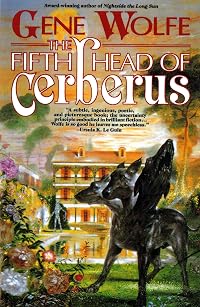
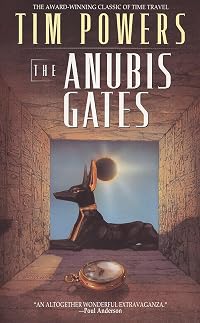
Added: I would compare Keith Roberts (this book, anyway) to Gene Wolfe, Jack Vance, Tim Powers. show less
Second, it's an alternate history. In 1588, says the prologue, Queen Elizabeth I was assassinated, which set into motion a series of events that prevented the Protestant Reformation. The Catholic Church (the political, militant Catholic Church) ended up controlling half the world. These stories take place over a few generations in the late 20th century.
The things that are more difficult to convey about the book are how beautifully it's written and how vivid and moving the stories are.
Also difficult are my mixed feelings about the presentation of show more the Catholic Church, which is not really the Catholic Church at all. The world is very different under its stifling power, the most obvious thing being that the Church has prevented the use of many technological advances. The Pope issues papal bulls with titles like "Petroleum Veto" that forbid the use of internal combustion engines. The remnant of the Inquisition (called the Court of Spiritual Welfare) is present, too.
Yet the 20th century feudal world presented is a fascinating setting, and the stories are very moving, like I said. And then there's The Coda - the last short story in the book - which is thought provoking.
This is a book that I'm not likely to forget.
Neil Gaiman Presents did an audio version of this over on Audible. Stephen Crossley narrates. I listened to a couple of stories and it was excellent. I also enjoyed Gaiman's introduction.
Added: I would compare Keith Roberts (this book, anyway) to Gene Wolfe, Jack Vance, Tim Powers. show less
Members
- Recently Added By
Published Reviews
ThingScore 100
Roberts evokes this imaginary England with a persuasive attention to detail and a grandeur of vision that I find irresistible.
added by Shortride
The idea of lyrical storytelling - something that doesn't exactly tell a concrete story, but keeps dancing around its point long enough for you to get the idea... is both the great joy and great frustration of Pavane. It's entirely appropriate for it to take its name from the dance, as it is stately, complex, and somewhat obscure. This is a book to read once, get stuck, return to with a clear show more head, blast through, and then read again in search of deeper meanings. They are definitely there, and they are definitely worth finding. show less
added by megacoupe
Lists

Best Alternate History
111 works; 60 members

Survey of Classic Science Fiction
171 works; 48 members

Bibliography for Among Others
159 works; 15 members

Favourite Steampunk Books
80 works; 16 members

S.F. Masterworks (Complete)
229 works; 15 members

SF Masterworks
193 works; 8 members

Religious Science Fiction
70 works; 20 members

What if... a speculative history list
25 works; 2 members

Pleasant Surprises: Books That Exceeded Our Expectations
418 works; 143 members

Top Five Books of 2019
387 works; 111 members

David Pringle's Science Fiction: The 100 Best Novels
101 works; 9 members

Anthony Burgess 99 Post War Novels
99 works; 7 members

Alternate History Stories
11 works; 1 member

Best Sellers / Popular 1968
237 works; 5 members

Fiction With Familiar Settings
280 works; 94 members
Favorite Science Fiction
457 works; 223 members
Author Information

73+ Works 3,009 Members
Some Editions
Awards and Honors
Series
Belongs to Publisher Series
Work Relationships
Contains
Common Knowledge
- Canonical title
- Pavane
- Original title
- Pavane
- Original publication date
- 1968; 1987-06-25 (Japanese) (Japanese)
- Important places
- Londinium; Durnovaria (Dorchester)
- Epigraph
- This aye night, this aye night,
The aye night and all,
Fire and Beet and candle-light,
And Christ receive they saule...
-The Lyke Wake Dirge - First words
- On a warm July evening of the year 1588, in the royal palace of Greenwich, London, a woman lay dying, an assassin's bullets lodged in abdomen and chest. Her face lined, her teeth blackened, and death lent her no dignity; but ... (show all)her last breath started echoes that ran to shake a hemisphere. For the Faery Queen, Elizabeth the First, paramount rule of England, was no more... -Prologue
Durnovaria, England, 1968.
The appointed morning came, and they buried Eli Strange. The coffin, black and purple drapes twitched aside, eased down into the grave; the white webbings slid through the hands of the bearer... (show all)s in nomine Patris, et Filii, et Spiritus Sancti... The earth took back her own. And miles away Iron Margaret cried cold and wreathed with steam, drove her great sea-voice across the hills. -First Measure, The Lady Margaret - Last words
- (Click to show. Warning: May contain spoilers.)She was waiting for him by the brook, a scented shadow in the night. As she moved forward he saw her cupped palm gleam. She'd collected glow-worms on the walk back down the path, carried them 'along of her' as the locals would have said.
- Blurbers
- Aldiss, Brian W.; Burgess, Anthony; Martin, George R.R.
Classifications
Statistics
- Members
- 1,541
- Popularity
- 14,971
- Reviews
- 47
- Rating
- (3.69)
- Languages
- 11 — Dutch, English, French, German, Hungarian, Italian, Japanese, Polish, Portuguese, Spanish, Swedish
- Media
- Paper, Audiobook, Ebook
- ISBNs
- 33
- ASINs
- 20