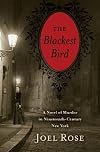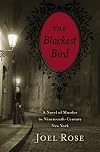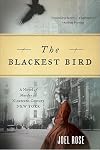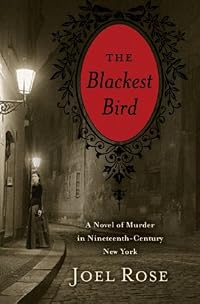
The Blackest Bird: A Novel of Murder in Nineteenth-Century New York
by Joel Rose
On This Page
Description
In the New York City summer of 1841, 'Segar Girl' Mary Rogers is brutally murdered. Popular amongst the city's journalistic and publishing elite, the task of finding her killer falls to High Constable Jacob Hays, already embroiled in establishing law and order over the gangs who run rampant through the Five Points.Tags
Recommendations


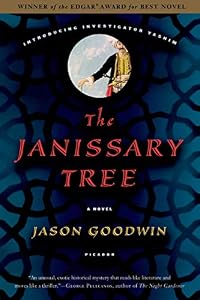
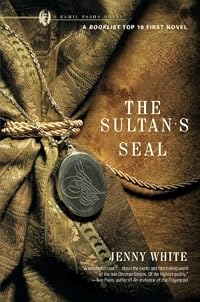
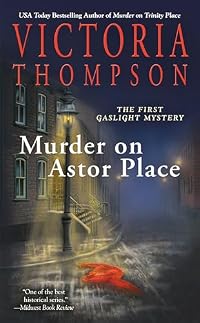
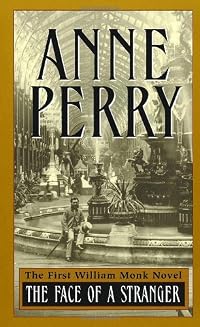
Member Recommendations
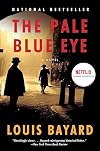
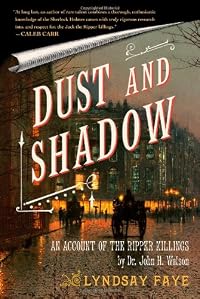
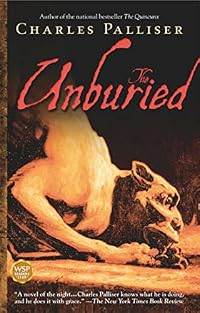
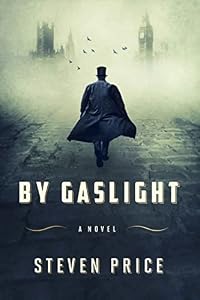
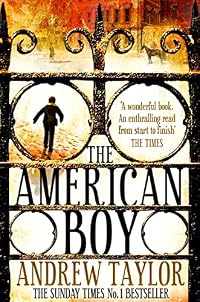
rbtanger In the Poe genre. The Pale Blue Eye is the better overall work.
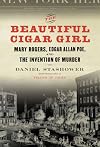
The Beautiful Cigar Girl: Mary Rogers, Edgar Allan Poe, and the Invention of Murder by Daniel Stashower
retropelocin The non-fiction form of this story
Member Reviews
Summary: In the summer of 1841, the brutally murdered corpse of Mary Rogers - "the beautiful segar girl" - is found floating along the shores of the Hudson River. High constable Jacob Hays makes it his duty to bring the murderer to justice, but in nineteenth-century New York, that's easier said than done. No one is being particularly forthcoming, and Old Hays also has to deal with rival gang factions, the execution of John Colt, the brother of the famous arms manufacturer, and the political machinations of his city, as his investigation leads him inexorably towards the works of Edgar Allan Poe. Poe certainly writes of morbid topics, including a fascination with the Mary Rogers case, has many enemies in the literary and publishing world, show more and is known to be carried away in strange fits of passionate temper... but could he really be a murderer?
Review: The cover blurb on this book is great. 1840s New York City! Brutal murder! Detective work! Edgar Allan Poe! Gang wars! Grave robbers! "A gripping and atmospheric historical thriller"! Sounds good, right? While it does contain murder and gangs and Mr. Poe, as promised, that last quotation overshoots the mark. "Historical" it certainly was, and I'll give it "atmospheric", but there were few if any thrills to be had, and its degree of "gripping"-ness (gripitude?) can be deduced from the fact that it took me over two weeks to read, despite not being particularly chunky.
Okay. I'll start with the good points: Mr. Rose has obviously done his homework. This books contains elements of a number of true stories that are (for the most part) cleverly woven together, as well as pretty accurate depictions of Edgar Allan Poe's life, 1840s New York City, and the state of American literature and publishing at the time. The author also is clearly making a conscious effort to write in 1840s style, and the result is certainly evocatively atmospheric. The effect wasn't entirely to my taste - too wordy and effusive, too hard to keep track of a single thought, and the random shifts into present tense were distracting - but I can see how people who enjoy the literature of that time more than I do might have a different opinion.
On the other hand... Ye gods, was this book slow! The ostensible center of the story - the investigation of the murder of Mary Rogers - drags on for years with little to no headway, and the ultimate conclusion comes out of nowhere and isn't particularly satisfying. I think its main problem was that it was overambitious, trying to tie in too many elements and too many historical persons and too many plot threads to ever deal with one satisfactorily before moving on to the next. Combined with the rambling style of the writing, that resulted in one very draggy reading experience, even once I got adept at skimming. 2 out of 5 stars.
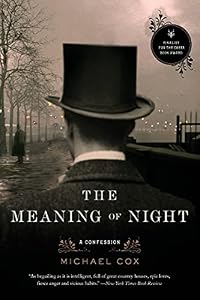
Recommendation: Erm... maybe if you're really into Poe, or really enjoyed the setting and the language of Mark Helprin's Winter's Tale, then The Blackest Bird might work for you better than it did for me. If you're looking for a good contemporary historical mystery in Gothic style, I'd recommend Michael Cox's The Meaning of Night instead. show less
Review: The cover blurb on this book is great. 1840s New York City! Brutal murder! Detective work! Edgar Allan Poe! Gang wars! Grave robbers! "A gripping and atmospheric historical thriller"! Sounds good, right? While it does contain murder and gangs and Mr. Poe, as promised, that last quotation overshoots the mark. "Historical" it certainly was, and I'll give it "atmospheric", but there were few if any thrills to be had, and its degree of "gripping"-ness (gripitude?) can be deduced from the fact that it took me over two weeks to read, despite not being particularly chunky.
Okay. I'll start with the good points: Mr. Rose has obviously done his homework. This books contains elements of a number of true stories that are (for the most part) cleverly woven together, as well as pretty accurate depictions of Edgar Allan Poe's life, 1840s New York City, and the state of American literature and publishing at the time. The author also is clearly making a conscious effort to write in 1840s style, and the result is certainly evocatively atmospheric. The effect wasn't entirely to my taste - too wordy and effusive, too hard to keep track of a single thought, and the random shifts into present tense were distracting - but I can see how people who enjoy the literature of that time more than I do might have a different opinion.
On the other hand... Ye gods, was this book slow! The ostensible center of the story - the investigation of the murder of Mary Rogers - drags on for years with little to no headway, and the ultimate conclusion comes out of nowhere and isn't particularly satisfying. I think its main problem was that it was overambitious, trying to tie in too many elements and too many historical persons and too many plot threads to ever deal with one satisfactorily before moving on to the next. Combined with the rambling style of the writing, that resulted in one very draggy reading experience, even once I got adept at skimming. 2 out of 5 stars.
Recommendation: Erm... maybe if you're really into Poe, or really enjoyed the setting and the language of Mark Helprin's Winter's Tale, then The Blackest Bird might work for you better than it did for me. If you're looking for a good contemporary historical mystery in Gothic style, I'd recommend Michael Cox's The Meaning of Night instead. show less
I wonder if The Blackest Bird, "a novel of history and murder", by Joel Rose would be more intriguing for someone well-versed in the time and place of its setting (New York in the 1840s)? As a murder mystery, a genre in which I am better read, it drags along in a desultory manner.
The book starts in a gripping fashion, with a scene of murder and then the introduction High Constable Jacob Hays. Unfortunately, "Old Hays" has no forensic anthropology or DNA matching to turn to and relies instead on his trusted methods such as the study of "criminal physiognomy" for his role as detective-protagonist.
The story meanders along, opening more bags than it closes, with plenty exposure given to the book's major historical personage, Edgar Allan show more Poe. Poe is not presented sympathetically and repeatedly finds himself near the heart of the mystery. Another historical figure who features in the plot is Samuel Colt, arms manufacturer, along with numerous other names that the historically well-read will have heard of and may recognise.
The book struggles because it puts such famous people near centre stage. The scents and stinks of Old Gotham create a marvellous backdrop but the close involvement of characters based on real people, like Poe, prevent the mystery having the freedom to develop a life of its own. While interesting at the start, the novel felt increasingly drawn-out and unsatisfying.
So, quoth the raven, "Nevermore". show less
The book starts in a gripping fashion, with a scene of murder and then the introduction High Constable Jacob Hays. Unfortunately, "Old Hays" has no forensic anthropology or DNA matching to turn to and relies instead on his trusted methods such as the study of "criminal physiognomy" for his role as detective-protagonist.
The story meanders along, opening more bags than it closes, with plenty exposure given to the book's major historical personage, Edgar Allan show more Poe. Poe is not presented sympathetically and repeatedly finds himself near the heart of the mystery. Another historical figure who features in the plot is Samuel Colt, arms manufacturer, along with numerous other names that the historically well-read will have heard of and may recognise.
The book struggles because it puts such famous people near centre stage. The scents and stinks of Old Gotham create a marvellous backdrop but the close involvement of characters based on real people, like Poe, prevent the mystery having the freedom to develop a life of its own. While interesting at the start, the novel felt increasingly drawn-out and unsatisfying.
So, quoth the raven, "Nevermore". show less
 This review was written for LibraryThing Early Reviewers.
New York, the sweltering summer of 1841: Mary Rogers, a beautiful counter girl at a popular Manhattan tobacco shop, is found brutally murdered in the Hudson River. John Colt, scion of the firearm fortune, beats his publisher to death with a hatchet. And young Irish gang leader Tommy Coleman is accused of killing his daughter, his wife, and his wife's former lover. Charged with solving it all is High Constable Jacob Hays, the city's first detective. Capping a long and distinguished career, Hays's investigation will involve gang wars, grave robbers, and clues hidden in poems by that master of dark tales, Edgar Allen Poe.
This book sounds as if it had everything going for it, a true life murder and a connection to a famous person. Then I show more started to read it and gave up after 70 pages. Maybe I haven’t given it a fair go but I felt like I was reading a documentary or a newspaper report. The book had no flow and the characters were flat due to very little dialogue. I really didn’t fancy a whole book in this fashion, so I have given up and googled about the murder instead. show less
This book sounds as if it had everything going for it, a true life murder and a connection to a famous person. Then I show more started to read it and gave up after 70 pages. Maybe I haven’t given it a fair go but I felt like I was reading a documentary or a newspaper report. The book had no flow and the characters were flat due to very little dialogue. I really didn’t fancy a whole book in this fashion, so I have given up and googled about the murder instead. show less
This is an intriguing, if flawed book, and it's certainly not for everyone. If you're looking for a murder mystery (and that sort of plot pacing) look elsewhere. If you enjoy languorous period character pieces, full of somewhat squalid details and a good bit of depravity, this one's for you. As inspiration for the book, Rose looks to one of the famous unsolved murders in NYC history, the killing of The Beautiful Cigar Girl, Mary Rogers in 1841. In real life, the case was chockablock with drama, and Rose doesn't manage to quite capture it, in part, I suspect, because the novel focusses on 69-year old High Constable Jacob Hays, known as Old Hays. He isn't a terribly dynamic character, although not without his plodding charm. Mary Rogers, show more a tobacconist clerk was a somewhat famous (notorious?) Professional Beauty. Her admiring customers included authors such as James Fenimore Cooper, Washington Irving and Edgar Allan Poe. When her mutilated body is discovered, Old Hays begins to investigate.
It is a meandering, somewhat aimless plot which never, alas, quite coalesces, and without giving anything away, the ending is unsatisfying. Throughout the novel are old, and seemingly pointless tense shifts -- some chapters in present tense, others in past -- as well as intermittent passages mimicking newspaper reports of the era. Such prose manipulation draws attention to itself, and I couldn't help but wonder what effect the author was trying to achieve. The newspaper report passages were often dull and I found myself losing interest. Whatever the author's intention, for this reader, he didn't succeed.
The portrait of NYC during this period -- that of Gangs of New York -- full of opium dens and marauding thugs such as the Short Tails and the Forty Little Thieves, is quite fascinating, and it's clear Rose has done his research (perhaps even a bit too much of it). Poe, who is center stage, for much of the novel, is a pathetic, somewhat enigmatic figure. Those seeking a novel based on Poe's life will be, I fear, disappointed. Old Hays, as noted above, is not altogether engaging.
I wish the novel had been 100 pages shorter and with a tighter focus. I think the pacing would have been much improved. Having said that, however, there were parts of the novel, such as the prison scenes with Mr. Colt (of the gun fame) and gang leader Tommy Coleman, deeply engrossing. It's clear the author has considerable talent. This may well be a case where a good writer needed a firmer, and more experienced, editor. show less
It is a meandering, somewhat aimless plot which never, alas, quite coalesces, and without giving anything away, the ending is unsatisfying. Throughout the novel are old, and seemingly pointless tense shifts -- some chapters in present tense, others in past -- as well as intermittent passages mimicking newspaper reports of the era. Such prose manipulation draws attention to itself, and I couldn't help but wonder what effect the author was trying to achieve. The newspaper report passages were often dull and I found myself losing interest. Whatever the author's intention, for this reader, he didn't succeed.
The portrait of NYC during this period -- that of Gangs of New York -- full of opium dens and marauding thugs such as the Short Tails and the Forty Little Thieves, is quite fascinating, and it's clear Rose has done his research (perhaps even a bit too much of it). Poe, who is center stage, for much of the novel, is a pathetic, somewhat enigmatic figure. Those seeking a novel based on Poe's life will be, I fear, disappointed. Old Hays, as noted above, is not altogether engaging.
I wish the novel had been 100 pages shorter and with a tighter focus. I think the pacing would have been much improved. Having said that, however, there were parts of the novel, such as the prison scenes with Mr. Colt (of the gun fame) and gang leader Tommy Coleman, deeply engrossing. It's clear the author has considerable talent. This may well be a case where a good writer needed a firmer, and more experienced, editor. show less
The problem with this book is that it's trying too hard to be too many things at once. The murder supposedly at the core of the story gets sidelined for an eternity while we are shown a different (and frankly uninteresting) murder or two, the politics of the publishing of the day, the neuroses of Edgar Allen Poe, and oh, look - there's a touch more very late-breaking 'evidence' in the murder you first thought of - though by the time this turns up I had pretty much forgotten all about the victim, and put the matter down to an inaccurate blurb.
This is a book that very badly needs to decide what it's about. It could be a history of early New York, but it needs more detail and a broader scope, or it could be a murder mystery, in which case show more the supposedly central crime needs to be less like something the author put down and forgot about for several chapters, or it could be a biography of Edgar Allen Poe, in which case it would need to drop the murder entirely and possibly try for a slightly more sympathetic treatment of the subject.
In all, this was a fairly unexceptional read - it wasn't a compulsive page-turner, but nor did it make me want to throw the book across the room. show less
This is a book that very badly needs to decide what it's about. It could be a history of early New York, but it needs more detail and a broader scope, or it could be a murder mystery, in which case show more the supposedly central crime needs to be less like something the author put down and forgot about for several chapters, or it could be a biography of Edgar Allen Poe, in which case it would need to drop the murder entirely and possibly try for a slightly more sympathetic treatment of the subject.
In all, this was a fairly unexceptional read - it wasn't a compulsive page-turner, but nor did it make me want to throw the book across the room. show less
This review was written for LibraryThing Early Reviewers.The British edition of "The Blackest Bird" is subtitled "A Novel of History and Murder," and this sums it up nicely: it is a detective novel set in the New York of the 1840s, with the historical detail providing much of the enjoyment.
The events of the novel are set in action by the murder of Mary Rogers, an assistant in a cigar shop frequented by New York's publishing and literary fraternity, which provides a convenient means to include various historical characters in the novel. Chief of these is Edgar Allen Poe, who acts both as a chronicler of the murder (in a short story) and as one of the suspects. There are also brief appearances by Samuel Colt (of revolver fame) whose brother is standing trial for murdering his publisher, Charles show more Dickens, and the publisher Harper (not murdered, but mayor of New York). Rose paints a good picture of both the literary and criminal fraternities of New York; there is an enteratining subplot involving one of the famous gangs of the time.
Overall, the book is highly enjoyable; my one criticism is that the writer tries overly hard to adopt a nineteenth-century style (including nineteenth-century spelling, such as "segar" for "cigar" and "kerrect" for "correct") but occasionally slips out of it ("and/or" first appears a little after the time the novel is set in, and then only in mercantile documents, not normal prose). show less
The events of the novel are set in action by the murder of Mary Rogers, an assistant in a cigar shop frequented by New York's publishing and literary fraternity, which provides a convenient means to include various historical characters in the novel. Chief of these is Edgar Allen Poe, who acts both as a chronicler of the murder (in a short story) and as one of the suspects. There are also brief appearances by Samuel Colt (of revolver fame) whose brother is standing trial for murdering his publisher, Charles show more Dickens, and the publisher Harper (not murdered, but mayor of New York). Rose paints a good picture of both the literary and criminal fraternities of New York; there is an enteratining subplot involving one of the famous gangs of the time.
Overall, the book is highly enjoyable; my one criticism is that the writer tries overly hard to adopt a nineteenth-century style (including nineteenth-century spelling, such as "segar" for "cigar" and "kerrect" for "correct") but occasionally slips out of it ("and/or" first appears a little after the time the novel is set in, and then only in mercantile documents, not normal prose). show less
This review was written for LibraryThing Early Reviewers.I wanted to like this book. The description sounded so positive, and there are so many potentially good elements in it: a gruesome murder, a well researched setting, historical figures making appearances, and a plot that could have worked really well.
Sadly, Rose appears to suffer from adjectivitis, adding excessive description to every sentence, making the whole read feel like wading through treacle. The research backfires on the author too, as the details clog up the prose, rather than helping to set the scene.
The plot idea is fine, but it drags along as Rose wanders off down irrelevant side-plots, lets his lead character take a leisurely approach to crime solving, and concludes with a code that even Dan Brown would consider beneath show more him.
Sadly, the best part of this book is a slightly mangled version of Edgar Allan Poe's "The Raven", am I'm not even a massive Poe fan...
I suspect this story would work better as a novella, trimmed ruthlessly, with far less description, and a much improved pace, but as it stands, it fails to grip. show less
Sadly, Rose appears to suffer from adjectivitis, adding excessive description to every sentence, making the whole read feel like wading through treacle. The research backfires on the author too, as the details clog up the prose, rather than helping to set the scene.
The plot idea is fine, but it drags along as Rose wanders off down irrelevant side-plots, lets his lead character take a leisurely approach to crime solving, and concludes with a code that even Dan Brown would consider beneath show more him.
Sadly, the best part of this book is a slightly mangled version of Edgar Allan Poe's "The Raven", am I'm not even a massive Poe fan...
I suspect this story would work better as a novella, trimmed ruthlessly, with far less description, and a much improved pace, but as it stands, it fails to grip. show less
This review was written for LibraryThing Early Reviewers.Members
- Recently Added By
Published Reviews
ThingScore 25
"Prodigious detail and period speech overwhelm this slow-moving tale, while the constant shifting between present and past tense is disconcerting."
added by bookfitz
Lists

Lives of the Poets (and Philosophers)
110 works; 5 members

Authors from the United States
245 works; 3 members
Author Information
21 Works 1,182 Members
Work Relationships
Contains
Common Knowledge
- Alternate titles
- The Blackest Bird: A Novel of Murder in Nineteenth-Century New York
- Original publication date
- 2007-03
- People/Characters
- Tommy Coleman; John Colt; Jacob Hays; Edgar Allan Poe; Samuel Colt; Mary Rogers (show all 11); Olga Hayes; Charles Dickens; John Gordon Bennett; G P Putnam; John Harper
- Important places
- New York, New York, USA; Hoboken, New Jersey, USA
- Epigraph
- Who drinks the deepest? - here's to him!
--Edgar Allan Poe - First words
- Make no mistake, the task at hand affects him deeply.
- Last words
- (Click to show. Warning: May contain spoilers.)Old Hays, Jacob Hays, high constable of the great metropolis, the city of New York, reaches for the matched Colt revolvers sepulchred on the sideboard, his steadfast image etched on the oiled blue steel of each cylinder, knowing full well his daughter, his Olga, his Mary Olga, could not be returned home so soon.
Forever the bells. - Blurbers
- McGrath, Patrick; Bourdain, Anthony
Classifications
Statistics
- Members
- 211
- Popularity
- 154,071
- Reviews
- 16
- Rating
- (2.48)
- Languages
- English, French, German, Polish
- Media
- Paper, Ebook
- ISBNs
- 18
- ASINs
- 1