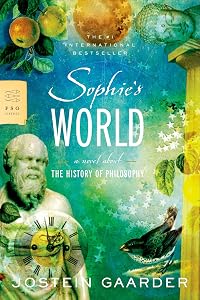
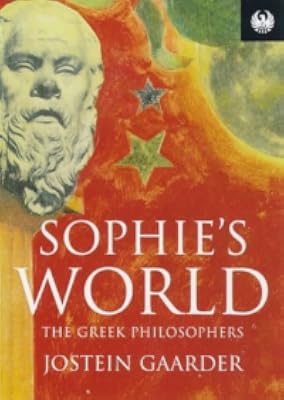
Sophie's World: A Novel About the History of Philosophy
by Jostein Gaarder
On This Page
Description
"One day fourteen-year-old Sophie Amundsen comes home from school to find in her mailbox two notes, each with a question: "Who are you?" and "Where does the world come from?" From this irresistible beginning, Sophie becomes obsessed with questions that take her far beyond what she knows of her Norwegian village. Through successive letters, she enrolls in a kind of correspondence course, covering Socrates to Sartre, with a mysterious philosopher, while also receiving letters addressed to show more another girl. Who is Hilde? And why does her mail keep turning up? To unravel this riddle, Sophie must use the philosophy she is learning--but the truth turns out to be far more complicated than she could have imagined."--Page 4 of cover. show lessTags
Recommendations





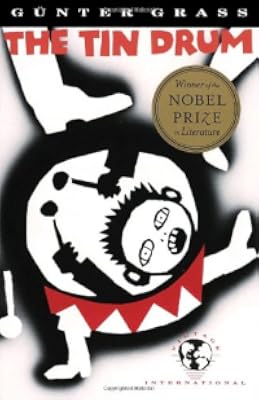



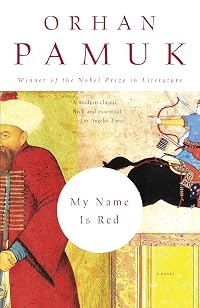
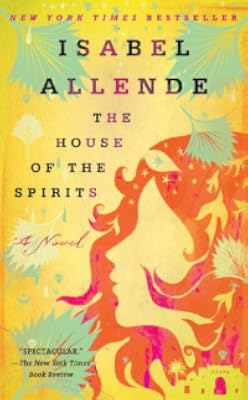
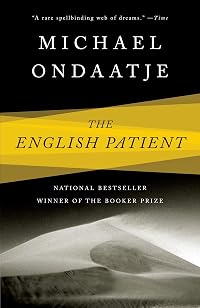
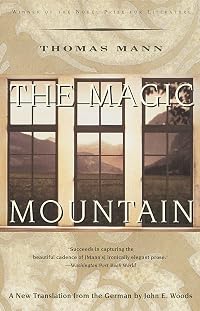



Member Recommendations

missmaddie As the main characters develop, they also uncover fascinating mysteries with philosophical/psychological significance. Very intellectual reads with twisted, intense plots!
31

missmaddie Both books contain letter correspondence, and they also both have supernatural/fantasy elements. Likable girls as the main characters.
03
weeksj10 Their both lecture style novels which use fiction to present a variety of different thoughts and philosophies.
11
Cecrow Another fun introduction to philosophy from a former professor. "Does the Centre Hold?" is also very good.
beyondthefourthwall Experimental metafiction that looks like a bit of a gimmick from afar but up close manages to pull it off.
Member Reviews
Have you ever heard me say "Man! Philosophy is boring!" Well, if you have, I'm scared, because either you've met my evil twin, or you're stalking me when I'm in a particularly sarcastic mood.
Whichever the reason, please cease your activities as soon as possible.
If you, though, have ever uttered that phrase, I suggest you stop immediately before you pick up House and Philosophy, or even Popular Philosophy and Philosophy, and instead get Sophie's World.
When you read philosophical texts that appeal to the masses, you're usually going to get something watered down and easy for you to digest. Sophie's World, however, it a little different. It combines a story with philosophical teachings, and actually makes it more interesting than other show more authors who try to write philosophical novels and end up writing a 1000 page tome about relative objectivism and how we need to let capitalism run unhindered and how we need a gold standard and how we need less government interference, and well, a 1000 page book is pretty intimidating. Sophie's Wold is about half that size, and takes you on a journey through the ages of philosophy, showing how it influenced things like science and religion, and vice versa.
Sophie's a girl who mysteriously receives letters featuring philosophy lessons. Each day, the mysterious stranger introduces her to a new page in the annals of philosophy, and later that day, she sees it somehow applied in her every day life.
There is a layer of metafiction in this story, and if you know me, you know I love metafiction (if you thought you knew me, and knew that I hated it, you're dealing with my evil twin. Try to break that connection without letting him know you're on to him. He's pretty crafty).
Nevertheless, if you love philosophy, or want to start loving it but just can't wrap your mind around Atlas Shrugged or Republic, then the best place to start is in Sophie's world. Recommended for all fans and wannabe fans of philosophy (and metafiction). show less
Whichever the reason, please cease your activities as soon as possible.
If you, though, have ever uttered that phrase, I suggest you stop immediately before you pick up House and Philosophy, or even Popular Philosophy and Philosophy, and instead get Sophie's World.
When you read philosophical texts that appeal to the masses, you're usually going to get something watered down and easy for you to digest. Sophie's World, however, it a little different. It combines a story with philosophical teachings, and actually makes it more interesting than other show more authors who try to write philosophical novels and end up writing a 1000 page tome about relative objectivism and how we need to let capitalism run unhindered and how we need a gold standard and how we need less government interference, and well, a 1000 page book is pretty intimidating. Sophie's Wold is about half that size, and takes you on a journey through the ages of philosophy, showing how it influenced things like science and religion, and vice versa.
Sophie's a girl who mysteriously receives letters featuring philosophy lessons. Each day, the mysterious stranger introduces her to a new page in the annals of philosophy, and later that day, she sees it somehow applied in her every day life.
There is a layer of metafiction in this story, and if you know me, you know I love metafiction (if you thought you knew me, and knew that I hated it, you're dealing with my evil twin. Try to break that connection without letting him know you're on to him. He's pretty crafty).
Nevertheless, if you love philosophy, or want to start loving it but just can't wrap your mind around Atlas Shrugged or Republic, then the best place to start is in Sophie's world. Recommended for all fans and wannabe fans of philosophy (and metafiction). show less
I've actually only read one other book like this in my life. _Ishmael_ by Daniel Quinn. As a textbook of philosophy, this is a work that would easily satisfy any course of Philosophy 101 in college. Gaarder takes the river of thought from the beginning of human thought to almost the present day (as present day thought is not easily seen through the minds of historians) in a flowing narrative of examples, reality-bending tricks, and metaphor.
As a novel, the characters are vividly constructed, and while the reality of the situation is odd, at best, the realization that it's "just a book" plays wonderfully into the ideas of Berekly in that, reality, and the world as a whole is "just a dream." The interplay of book and reality, of book show more being reality, and the "Neverending Story" effect of stories and realities within realities, makes the book one to be read multiple times. As indeed, the facts and ideas in this book cannot be understood in just one reading. It is a book that investigates the totality of life, and finding more questions than answers, cannot help but leave, at the end, you wondering about reality itself. show less
As a novel, the characters are vividly constructed, and while the reality of the situation is odd, at best, the realization that it's "just a book" plays wonderfully into the ideas of Berekly in that, reality, and the world as a whole is "just a dream." The interplay of book and reality, of book show more being reality, and the "Neverending Story" effect of stories and realities within realities, makes the book one to be read multiple times. As indeed, the facts and ideas in this book cannot be understood in just one reading. It is a book that investigates the totality of life, and finding more questions than answers, cannot help but leave, at the end, you wondering about reality itself. show less
***NO SPOILERS***
(Full disclosure: Book abandoned on page 234 [out of 394 pages].)
The premise for Sophie's World is ingenious. It's a story about Sophie Amundsen, a sweet fourteen-year-old Norwegian girl who one day begins receiving mysterious letters. The letters are addressed to a girl named Hilde, a girl who sounds just like Sophie, right down to age--yet they come to Sophie's house and are meant for her.
These are highly unusual letters. They're about philosophy and the history of philosophy, each letter focusing on a different philosopher such as Aristotle, Sophocles, and Plato.
Jostein Gaarder's idea--of nonfiction philosophy lessons embedded in fictional mystery--is unique and clever, but it was all that impressed me about Sophie's show more World. The philosophy lessons overshadow Sophie's story to the point that Sophie's World is really just a philosophy textbook masquerading as a magical-realist mystery. This could be forgiven if the lessons were engaging, but they're dry as dust. This book has its fans, so clearly some disagree; however, even I, someone who looked forward to her philosophy classes in high school and college, was bored during most of each philosophy lesson.
The best parts of Sophie's World are the fictional parts--Sophie's actual world: the time spent with her friend, her reading of the letters in her garden hideout, her interactions with her mom. That is a story. Gaarder was a philosophy teacher, so it isn't really surprising that Sophie's World is so heavy on philosophy. It's just a shame, because the mystery and magical realism elements are smart and are deserving of at least as many pages.
This was such a missed opportunity that I feel disappointed for Gaarder. Philosophy is like history; it needs to be brought to life to be fully appreciated. In the case of philosophy in particular, it's helpful to find a connection to one's own life in some way.
By grounding the lessons in the story of an everyday girl, that's what Gaarder was going for, but he didn't integrate and connect the lessons to the main character's life successfully. The lessons remain a separate entity from the mystery so that Sophie's World feels like someone ripped chapters out of a textbook and inserted them between chapters of a mystery story. What I wanted to see, what I was hoping for, was a book that was mostly a mystery with a sprinkling of philosophy--philosophy that then interacted with the mystery in ways that add dimension and pleasant surprise.
Although I read more than half of Sophie's World, I was so bored I couldn't bear reading another page. I was, however, curious enough to know how it ended that I looked up a plot summary. It looks like Gaarder finally connected all the philosophy lessons in a whirlwind at the end and that this is when the story is at its best. If only he'd connected throughout, Sophie's World would be a much better book.
I don't recommend this widely, and I don't know who its ideal audience is. I think Sophie's World is best suited to die-hard philosophy lovers only; however, with its child protagonist (and a child protagonist who's unwittingly drawn into philosophy lessons at that), Sophie's World seems aimed at teens, as an educational mystery.
In addition to being dull, though, the philosophy is dense and obscure at times. Those teens who do read and enjoy Sophie's World may not fully grasp its various philosophies. High school philosophy teachers could have students read it as a supplement (or maybe not, as it's not so different from a straight textbook).
Adult readers could enjoy this, but that's unlikely if they're not interested in philosophy. Adapted as a graphic novel--a format I think would work beautifully for Sophie's World--it might attract a wider variety of readers, and actually be fun to read.
The fact that it's hard to pin down Sophie's World’s intended audience is further proof to me that Gaarder began writing his book more on the fly than with fully thought-out deliberation. Sadly, what he ended up with is a dull textbook with a half-hearted mystery tossed in for palatability. show less
(Full disclosure: Book abandoned on page 234 [out of 394 pages].)
The premise for Sophie's World is ingenious. It's a story about Sophie Amundsen, a sweet fourteen-year-old Norwegian girl who one day begins receiving mysterious letters. The letters are addressed to a girl named Hilde, a girl who sounds just like Sophie, right down to age--yet they come to Sophie's house and are meant for her.
These are highly unusual letters. They're about philosophy and the history of philosophy, each letter focusing on a different philosopher such as Aristotle, Sophocles, and Plato.
Jostein Gaarder's idea--of nonfiction philosophy lessons embedded in fictional mystery--is unique and clever, but it was all that impressed me about Sophie's show more World. The philosophy lessons overshadow Sophie's story to the point that Sophie's World is really just a philosophy textbook masquerading as a magical-realist mystery. This could be forgiven if the lessons were engaging, but they're dry as dust. This book has its fans, so clearly some disagree; however, even I, someone who looked forward to her philosophy classes in high school and college, was bored during most of each philosophy lesson.
The best parts of Sophie's World are the fictional parts--Sophie's actual world: the time spent with her friend, her reading of the letters in her garden hideout, her interactions with her mom. That is a story. Gaarder was a philosophy teacher, so it isn't really surprising that Sophie's World is so heavy on philosophy. It's just a shame, because the mystery and magical realism elements are smart and are deserving of at least as many pages.
This was such a missed opportunity that I feel disappointed for Gaarder. Philosophy is like history; it needs to be brought to life to be fully appreciated. In the case of philosophy in particular, it's helpful to find a connection to one's own life in some way.
By grounding the lessons in the story of an everyday girl, that's what Gaarder was going for, but he didn't integrate and connect the lessons to the main character's life successfully. The lessons remain a separate entity from the mystery so that Sophie's World feels like someone ripped chapters out of a textbook and inserted them between chapters of a mystery story. What I wanted to see, what I was hoping for, was a book that was mostly a mystery with a sprinkling of philosophy--philosophy that then interacted with the mystery in ways that add dimension and pleasant surprise.
Although I read more than half of Sophie's World, I was so bored I couldn't bear reading another page. I was, however, curious enough to know how it ended that I looked up a plot summary. It looks like Gaarder finally connected all the philosophy lessons in a whirlwind at the end and that this is when the story is at its best. If only he'd connected throughout, Sophie's World would be a much better book.
I don't recommend this widely, and I don't know who its ideal audience is. I think Sophie's World is best suited to die-hard philosophy lovers only; however, with its child protagonist (and a child protagonist who's unwittingly drawn into philosophy lessons at that), Sophie's World seems aimed at teens, as an educational mystery.
In addition to being dull, though, the philosophy is dense and obscure at times. Those teens who do read and enjoy Sophie's World may not fully grasp its various philosophies. High school philosophy teachers could have students read it as a supplement (or maybe not, as it's not so different from a straight textbook).
Adult readers could enjoy this, but that's unlikely if they're not interested in philosophy. Adapted as a graphic novel--a format I think would work beautifully for Sophie's World--it might attract a wider variety of readers, and actually be fun to read.
The fact that it's hard to pin down Sophie's World’s intended audience is further proof to me that Gaarder began writing his book more on the fly than with fully thought-out deliberation. Sadly, what he ended up with is a dull textbook with a half-hearted mystery tossed in for palatability. show less
Ho ascoltato l'audiolibro letto da Alessandra Casella e Gabriele Parrillo. La Casella assolutamente eccezionale, sembrava di vederla recitare, una lettura viva, animata. Bravissima. Il testo è veramente bello, alternando capitoli di compendio filosofico in cui si racconta la storia della filosofia dall'antichità ad oggi, a capitoli in cui viene intrecciata una storia che alla fine ho trovato un po' assurda e forse un po' leziosa. Ed è il motivo per cui non metto cinque stelle. All'inizio sia i capitoli "tecnici" che quelli di racconto vero e proprio della trama ti tengono in attesa di saperne di più. Alla fine invece il pretesto ormai è chiaro e ho fatto un po' di fatica a finirlo. La valutazione per questo motivo è doppia. La show more parte filosofica merita un voto molto molto alto. I concetti vengono esposti in modo semplice, comprensibile, con tanti esempi, in un continuo contrappunto tra allieva e insegnante, che permette all'autore di attualizzare determinati messaggi. La parte dell'intreccio, del racconto, della trama è all'inizio carica di aspettative, per poi scadere nell'assurdo una volta vicini alla fine. Non che questo secondo livello di scrittura non abbia senso... Anche questo meccanismo alla fine serve per dare una sorta di quadro della vita dello spirito, del contatto tra due mondi, quello finito e quello infinito, ma mi ha messo un po' di malinconia. Un capolavoro il discorso finale sul cosmo, sulla grandezza infinita dell'universo, sulle ipotesi di universo in perenne espansione e un universo invece visto come cicli di contrazione ed espansione: il cosmo come enorme cuore che batte. Veramente consigliato, ma ahimé non per tutti. Può essere un buonissimo compendio per uno studente che si avvicina alla materia, e per chi come me la materia l'ha studiata bene è un testo veramente bello ed efficace. Ma per chi non ha passione per questi argomenti diventa un testo pesante e la cui trama "giocosa" diventa evanescente. Non credo lo possa affrontare chiunque. show less
Fantastic! A good, comprehensive 101 course to philosophy, ranging from Democritus to Sartre, with scientists, political theorists and others put in the mix.
Besides that the book has a light but gripping metafictional plotline, two enjoyable protagonists, and some interesting writing along the way.
Perhaps Gaarder's greatest accomplishment in this book is that he manages to explain philosophical thinking while making it the center of the story's plot at the same time.
Besides that the book has a light but gripping metafictional plotline, two enjoyable protagonists, and some interesting writing along the way.
Perhaps Gaarder's greatest accomplishment in this book is that he manages to explain philosophical thinking while making it the center of the story's plot at the same time.
Quite good, if cursory, overview of the history of Western philosophy, at least for younger readers who know nothing about. Unfortunately the story is rubbish, the characters wooden (to say the very least) and the conclusion pathetic.
Worse still, the book propagates several historical myths, indeed when it relates history any deeper than birth and death dates, it usually does this wrong.
Several examples:
In the book: The Church was troubled with heliocentric theory because it deprived the Earth and humanity of its central place in the universe
For real: The central place was nothing to be guarded, as it was the basest place anywhere, not in any way honoured. This is e.g. why Bellarmine writes about the theory as having the Earth in the show more "third heaven".
In the book: The Church protested against heliocentric and evolutionary theories because they deprived God of his omnipotence.
For real: The Church had always seen the world as created by God together with natural laws that could be discovered and described by a rational mind. Thus, the Church encouraged science instead of hampering it. The only science the Church did work to thwart was textual analysis of the Bible, and this only for a period of time, completely in vain.
In the book: The Turks, having conquered Constantinople, renamed the city to Istanbul
For real: The Turks were not as obsessed with names as we are. The name Istanbul, from Greek "eis tin polin" meaning "to the city", was used by the Turks both before and after the conquest, sometimes even officially, but they didn't bother to have this, or any other, name officially adopted until 1930.
This last point, while admittedly a minor one, could be used to tell something interesting about both Westerners and non-Westerners, but Gaarder missed the opportunity. Not the only one.
The overview of philosophy, as said above, is only cursory, and good but for an introduction. This holds, but even there, it would be much better with more detailed description of historical realities that the philosophers described lived in. That is, had Gaarder had any grasp of history which he hadn't.
Still, this book severely lacks, and I am still looking for a good intro to philosophy for young readers. show less
Worse still, the book propagates several historical myths, indeed when it relates history any deeper than birth and death dates, it usually does this wrong.
Several examples:
In the book: The Church was troubled with heliocentric theory because it deprived the Earth and humanity of its central place in the universe
For real: The central place was nothing to be guarded, as it was the basest place anywhere, not in any way honoured. This is e.g. why Bellarmine writes about the theory as having the Earth in the show more "third heaven".
In the book: The Church protested against heliocentric and evolutionary theories because they deprived God of his omnipotence.
For real: The Church had always seen the world as created by God together with natural laws that could be discovered and described by a rational mind. Thus, the Church encouraged science instead of hampering it. The only science the Church did work to thwart was textual analysis of the Bible, and this only for a period of time, completely in vain.
In the book: The Turks, having conquered Constantinople, renamed the city to Istanbul
For real: The Turks were not as obsessed with names as we are. The name Istanbul, from Greek "eis tin polin" meaning "to the city", was used by the Turks both before and after the conquest, sometimes even officially, but they didn't bother to have this, or any other, name officially adopted until 1930.
This last point, while admittedly a minor one, could be used to tell something interesting about both Westerners and non-Westerners, but Gaarder missed the opportunity. Not the only one.
The overview of philosophy, as said above, is only cursory, and good but for an introduction. This holds, but even there, it would be much better with more detailed description of historical realities that the philosophers described lived in. That is, had Gaarder had any grasp of history which he hadn't.
Still, this book severely lacks, and I am still looking for a good intro to philosophy for young readers. show less
It's an international bestseller which for some reason I had never heard of until suddenly I found it on my library holds list (I don't remember placing it there but I guess one night I was cruising the library website half asleep). It's translated into English from Norwegian so that might be why it caught my eye (Remember my obsession with Swedish translations? I'm branching out.) or it could be because it's a book on philosophy. I had little to no knowledge about the great philosophers of the past or even what it meant to be a philosopher. I can happily say that is no longer the case. Not only did I learn about it but I experienced what it means to think philosophically...and I may have had an existential crisis as a result. The book show more starts out with Sophie who discovers a letter in her mailbox asking her questions such as "Who are you?". It snowballs into packets of lecture notes and suddenly she finds herself enrolled in a philosophy course with a professor who prefers to remain hidden. I don't want to give any more away because it's better to experience it for yourself. I guarantee you'll be scratching your head and asking "Who am I?" by the end. show less
Members
- Recently Added By
Published Reviews
ThingScore 50
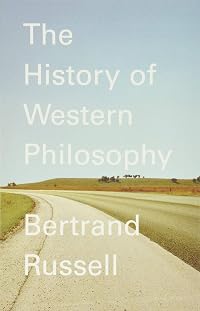
As philoso-narrative, "Sophie's World" is a world above "Jonathan Livingston Seagull" but a universe below "The Magic Mountain." In my view, literate readers would do better to try Bertrand Russell's "History of Western Philosophy," which is shorter on magic but longer on wit, intelligence and curmudgeonly skepticism.
added by Shortride
Lists

BBC Big Read
191 works; 46 members
501 Must-Read Books
529 works; 72 members

Philosophical Fiction
97 works; 26 members

Magic Realism
371 works; 52 members

Best books about books
209 works; 106 members

20th Century Literature
1,161 works; 55 members
Books That Changed Me
158 works; 47 members

Best School Stories
219 works; 22 members

Favorite Long Books
330 works; 42 members
Female Protagonist
1,056 works; 57 members

Favourite Books
1,820 works; 316 members

Nineties
43 works; 10 members

1990s
309 works; 17 members
Best Fantasy Novels
821 works; 361 members
Didactic Fiction
29 works; 3 members

1001 Children's Books You Must Read Before You Grow Up
774 works; 101 members

Top Five Books of 2015
811 works; 241 members

Story Within a Story
65 works; 17 members

Books that contain themselves
12 works; 4 members

Epistolary Books
105 works; 27 members

Mind Expanding Books by hackerkid
581 works; 8 members

Fiction with Women's Names in the Title
378 works; 15 members

I Can't Finish This Book
189 works; 22 members

SHOULD Read Books!
354 works; 9 members

Literature in Translation
113 works; 5 members

Books I've read
87 works; 2 members

Eton's list - the books every bright 16 year-old should read
40 works; 6 members
Books to Reread Someday
53 works; 7 members

Favorite Kids Books (chapter, middle grade)
170 works; 4 members

Philosophy Reading List
9 works; 1 member

Books We Loved As Children
610 works; 254 members
Books We Love to Reread
695 works; 298 members

el
1,139 works; 1 member

BBC World Book Club
267 works; 5 members

World Book Club (BBC World Service)
212 works; 1 member

ENTENDIENDO LA FILOSOFÍA
16 works; 1 member
Ambleside Books
459 works; 18 members

Simulated Reality in Fiction
124 works; 7 members

GreatBooks Worldview Academy Lists
133 works; 4 members

Books About Girls
219 works; 17 members

Best Fantasy Originally Published in a Language Other Than English
84 works; 26 members

Expand Your Reading Demographics!
47 works; 15 members

Unread books
1,063 works; 83 members

Best of World Literature
437 works; 52 members
Author Information

Jostein Gaarder was born in Olso, Norway on August 8, 1952. A former high school philosophy teacher, he now writes numerous novels for children and adults. His best known work is Sophie's World. He has received numerous awards including the Deutscher Jugendliteraturpreis in 1994 for Sophie's World, the Buxtehude Bulle in 1997, and the show more Willy-Brandt-Award in 2004. (Bowker Author Biography) show less
Some Editions
Awards and Honors
Awards
Distinctions
Series
Belongs to Publisher Series
Empúries Narrativa (47)
Work Relationships
Is contained in
Contains
Has the adaptation
Is abridged in
Inspired
Has as a student's study guide
Has as a teacher's guide
Common Knowledge
- Canonical title
- Sophie's World: A Novel About the History of Philosophy
- Original title
- Sofies verden
- Alternate titles*
- El mundo de Sofia; Sofies Welt; Mundo de Sofia; Le monde de Sophie; Sofian maailma; Il Mono Di Sofia (show all 11); Świat Zofii; Sofies värld; De wereld van Sofie; Sofijin svijet; Sofiin svět
- Original publication date
- 1991
- People/Characters
- Sophie Amundsen; Alberto Knox; Hilde Møller Knag; Albert Knag; Socrates; Plato (show all 28); Aristotle; Augustine of Hippo (354-430); Thomas Aquinas; Thomas Hobbes; Baruch Spinoza; John Locke; David Hume; George Berkeley; Immanuel Kant; Friedrich Wilhelm Joseph Schelling; Georg Wilhelm Friedrich Hegel; Søren Kierkegaard; Karl Marx; Sigmund Freud; Jean-Paul Sartre; Sherekan; Simone de Beauvoir; Galileo Galilei; Isaac Newton; Nicolaus Copernicus; Johannes Kepler; René Descartes
- Important places*
- Noorwegen
- Related movies*
- Sofies verden (1999 | IMDb); Sofies verden (2000 | IMDb); Bak Sofies verden (1999 | IMDb)
- Epigraph
- He who cannot draw on three thousand years
is living from hand to mouth.
Goethe - Dedication*
- Este libro no habría nacido sin el alentador apoyo de Siri Dannevig. También quiero agradecer a Maiken Ims su revisión del manuscrito y sus valiosos comentarios. Mi gran agradecimiento también a Trond Berg Eriksen por sus... (show all) cariñosas observaciones y sólido apoyo profesional durantes muchos años.
- First words
- Sophie Amundsen was on her way home from school.
--Paulette Møller translation - Quotations
- . . . at some point something must have come from nothing . . .
- Last words
- (Click to show. Warning: May contain spoilers.)"We'll both go, Dad."
--Paulette Møller translation - Blurbers
- L'Engle, Madeleine; Sullivan, Scott; Ferguson, Niall
- Original language
- Norwegian
*Some information comes from Common Knowledge in other languages. Click "Edit" for more information.
Classifications
- Genres
- Fiction and Literature, General Fiction
- DDC/MDS
- 839.82374 — Literature & rhetoric German & related literatures Other Germanic literatures Danish and Norwegian literatures Norwegian literature Norwegian Bokmål fiction 1900–2000 Late 20th century 1945–2000
- LCC
- PT8951.17 .A17 .S6413 — Language and Literature German, Dutch and Scandinavian literatures Norwegian literature Individual authors or works 1961-2000
- BISAC
Statistics
- Members
- 20,850
- Popularity
- 272
- Reviews
- 318
- Rating
- (3.78)
- Languages
- 39 — Arabic, Bulgarian, Catalan, Chinese, Czech, Danish, Dutch, English, Estonian, Finnish, French, German, Greek, Hindi, Hungarian, Icelandic, Indonesian, Italian, Japanese, Kalaallisut, Korean, Latvian, Lithuanian, Norwegian (Bokmål), Norwegian, Farsi/Persian, Polish, Romanian, Russian, Serbian, Croatian, Slovak, Slovenian, Spanish, Swedish, Tigrinya, Turkish, Ukrainian, Portuguese (Brazil)
- Media
- Paper, Audiobook, Ebook
- ISBNs
- 230
- ASINs
- 108