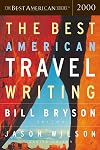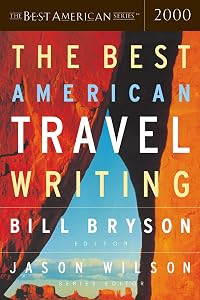
The Best American Travel Writing 2000
by Bill Bryson, Jason Wilson (Series Editor)
The Best American Travel Writing (2000), Best American (2000)
On This Page
Description
The extraordinary popularity of books and magazines dedicated to travel comes as no surprise, given that more and more Americans are traveling each year for business, pleasure, and especially adventure. Our fascination with travel has never been so well represented as in this new addition to the Best American series: a wide-ranging compendium of the best travel writing published in 1999, culled from more than three hundred magazines, newspapers, and Web sites.Tags
Recommendations






Member Reviews
I chose to read this book as we were travelling from Winnipeg to Colorado and Utah for our 2011 annual vacation. The twenty-five short pieces were chosen from all the travel writing published in 1999 to represent the interesting field of writing about journeys. Reading these pieces from the perspective of 12 years later some of them seem dated. The one piece set in Canada is about Nunavut, the new territory created from the Northwest Territory in 1999. The writer, William T. Vollmann, worries about the future of the territory and how the Inuit will adapt to increasing tourism. Twelve years later I can assure him that Nunavut is doing quite well although I’m sure it has changed from what he saw then and in the years previous. I can’t show more be sure because, like many Canadians, I’ve never been in any of our territories even though I’ve been through each province.
The concern about how tourism changes the country it seeks to explore was expressed by a number of the writers. Tony Perrottet, in Zoned on Zanzibar, talked about Zanzibar’s government “banking on balmy weather, tropical reefs and mile after mile of heartbreakingly beautiful beaches” to “fix …its development blues.” In the Two Faces of Tourism Jonathan Tourtellot muses about how tourism will change the Copper Canyon in Mexico. Patrick Symmes wanders through Cambodia looking for the Khmer Rouge Tourism Minister and considers how “The Wonderful People who Brought you the Killing Fields” will market the country for tourism. (Several years ago my nephew was in Cambodia and did actually tour the killing fields so it has come to pass.)
Interestingly, although there are a number of articles set in Africa, Asia and Europe, several in North America and Central America, and one in Australia, there are none from South America. Maybe no-one was travelling to South America then or maybe there were no well-written pieces about South America but it seems a strange lack. Certainly lots of people I know have been to South America and there are lots of exotic places to visit there. It would be interesting to know if the next year South America received the overdue attention it deserves.
I would recommend many but not all of the pieces in this book. Nantucket on my Mind by David Halberstam was no more than a complaint about the “new” people who were buying up property on the island and despoiling it. Seems to me that several decades ago other people probably would have made the same complaint about him.
There’s bound to be some articles other readers will like in this compilation. I hope you enjoy! show less
The concern about how tourism changes the country it seeks to explore was expressed by a number of the writers. Tony Perrottet, in Zoned on Zanzibar, talked about Zanzibar’s government “banking on balmy weather, tropical reefs and mile after mile of heartbreakingly beautiful beaches” to “fix …its development blues.” In the Two Faces of Tourism Jonathan Tourtellot muses about how tourism will change the Copper Canyon in Mexico. Patrick Symmes wanders through Cambodia looking for the Khmer Rouge Tourism Minister and considers how “The Wonderful People who Brought you the Killing Fields” will market the country for tourism. (Several years ago my nephew was in Cambodia and did actually tour the killing fields so it has come to pass.)
Interestingly, although there are a number of articles set in Africa, Asia and Europe, several in North America and Central America, and one in Australia, there are none from South America. Maybe no-one was travelling to South America then or maybe there were no well-written pieces about South America but it seems a strange lack. Certainly lots of people I know have been to South America and there are lots of exotic places to visit there. It would be interesting to know if the next year South America received the overdue attention it deserves.
I would recommend many but not all of the pieces in this book. Nantucket on my Mind by David Halberstam was no more than a complaint about the “new” people who were buying up property on the island and despoiling it. Seems to me that several decades ago other people probably would have made the same complaint about him.
There’s bound to be some articles other readers will like in this compilation. I hope you enjoy! show less
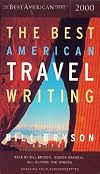
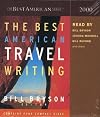
This is a review of the audiobook version released by Houghton in 2000, it is abridged with 10 of the original 25 essays. Each piece has a different narrator, including Bill Bryson for a number of them (he is great to listen to even when he is reading a different author). A couple stood out including "From The Wonderful People Who Brought You The Killing Fields" (Outside) about a trip to a Khmer Rouge village with the guy who wrote the chapter in the travel guidebook World's Most Dangerous Places - the article is classic dark tourism complete with allusions to Heart of Darkness. The essay "Lions and Tigers and Bears" is an entertaining piece about spending the night in central park, where the author discovers most people are more afraid show more of him, except the random homeless person who offers him free food. This was a twist on the dark tourism theme made humorous. "Lard is Good For You" is a cute piece by a young American woman working in a rural Guatemalan village where they grow coffee, her favorite thing, but the household she is staying in refuses to brew any for health reasons, but eat lard in every dish. "Hitchhikers Cuba" by Dave Eggers is very well done, about driving around Cuba and picking up hitchhikers, one of the primary means of transportation in the country. "Exiled Beyond Kilometer 101" is about the zone outside major Russian cities, at 101 km or about 60 miles, which was established in Soviet times and defines the border between rural and urban Russia and respective cultures. show less
Read for a Bingo challenge. Mostly forgettable, except for one horrifying essay and one that I did do further research on (felt compelled to see if the two decades of development have totally spoiled Copper Canyon, Mexico). Common theme is looming despoilment. More 'anthropology' than travel... but maybe that's natural... I'm not an experienced reader of travel books and I despise most of Bryson's own works, so, I dunno.
Ratings
Members
- Recently Added By
Author Information

70+ Works 136,293 Members
Bill Bryson was born in Des Moines, Iowa on December 8, 1951. In 1973, he went backpacking in England, where he eventually decided to settle. He wrote for the English newspapers The Times and The Independent, as well as supplementing his income by writing travel articles. He moved back to the United States in 1995. His first travel book, The Lost show more Continent: Travels in Small-Town America, was published in 1989. His other books include I'm a Stranger Here Myself, In a Sunburned Country, Bill Bryson's Dictionary of Troublesome Words, Neither Here nor There: Travels in Europe, Made in America, The Mother Tongue, Bill Bryson's African Diary, A Short History of Nearly Everything, At Home: A Short History of Private Life, Walk About, and Seeing Further: The Story of Science, Discovery, the Genius of the Royal Society. A Walk in the Woods was adapted into a movie starring Robert Redford and Nick Nolte. Bryson's titles, The Road to Little Dribbling: Adventures of an American in Britain, Notes from a Small Island and Neither Here Nor There made the New York Times bestseller list in 2016. (Bowker Author Biography) show less

Jason Wilson is the author of Boozehound and The Cider Revival, and the series editor of The Best American Travel Writing. A regular contributor to the Washington Post, he has written for the New York Times, the New Yorker, the San Francisco Chronicle, AFAR Preservation, and many other magazines and newspapers.
All Editions
Series


Common Knowledge
- Canonical title
- The Best American Travel Writing 2000
Classifications
- Genres
- Travel, Nonfiction
- DDC/MDS
- 818.5408 — Literature & rhetoric American literature in English American miscellaneous writings in English 20th Century 1945-1999 Prose
- LCC
- PS648 .T73 — Language and Literature American literature American literature Collections of American literature Prose (General)
- BISAC
Statistics
- Members
- 370
- Popularity
- 85,148
- Reviews
- 4
- Rating
- (3.51)
- Languages
- English
- Media
- Paper, Audiobook
- ISBNs
- 4
- UPCs
- 4
- ASINs
- 2