On This Page
Description
By winning the annual Hunger Games, District 12 tributes Katniss Everdeen and Peeta Mellark have secured a life of safety and plenty for themselves and their families, but because they won by defying the rules, they unwittingly become the faces of an impending rebellion.Tags
Recommendations

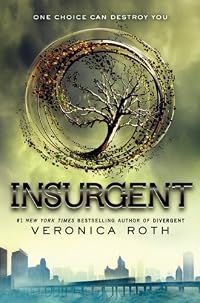

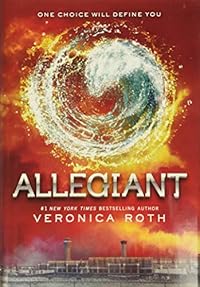
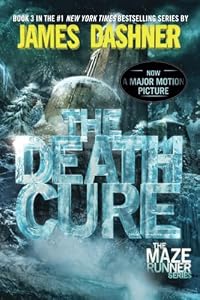


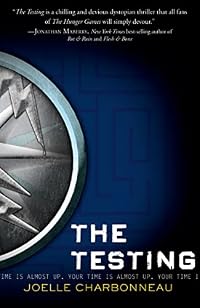





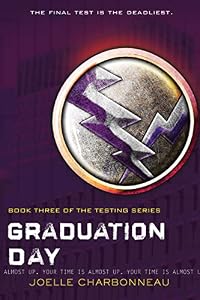
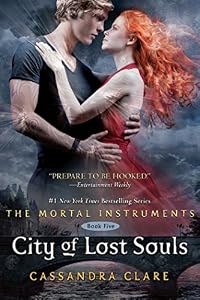
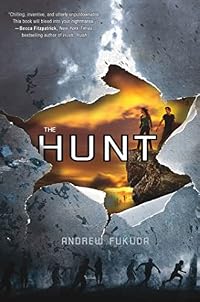
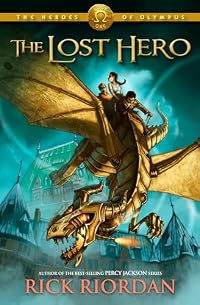
Member Recommendations
anonymous user Fans of the Hunger Games might enjoy Marsden's tale of action, survival and growing up.
142

Member Reviews
I seem to have acquired a knack for choosing all the wrong books, when it comes to those I read in German. Obviously, this resulted in being almost constantly grumpy. Finally reaching her whine-listening limit, my best friend suggested I try reading translations of well-known books, instead.
I was understandably horrified at the prospect.
If I did that, I would have to get off my high horse... and possibly admit that not practicing a language for over 10 years does tend to make my knowledge way more than rusty (INCONCEIVABLE!). But it also occurred to me that for someone who loves reading, I appeared to be spending way too much time resenting said activity. So I picked The Hunger Games as my first choice.
I had seen the first two movies, show more liked Jennifer Lawrence's performance, noted that the story and characters were better than Twilight (the other HYPED UP series of the moment, as far as I was concerned), but was ultimately not too keen on the genre... or the overall hype about Katniss' choice for a boyfriend.
That said, I was pleasantly surprised to find myself actually enjoying the book: our heroine's monologues, her plans for survival, memories of meeting various secondary characters, and most of all the entire world-building.
I even remarked how I didn't dislike Katniss, despite her constant bickering. I was totally sympathizing with the 16-year-old, who was plucked out from her tiny universe of her family's caretaker, and dropped into a world of the hunters and hunted. As if that weren't enough, she had to do all this in a certain manner, lest she pissed off the wrong people... ironically enough, those who put her in the life-and-death situation in the first place.
So of course she's going to be confused, and thinking of what to do next, and how to survive, and not really about someone else's sudden love declaration. Which reminds me, why do so many people reduce this book to the love triangle? Doesn't Katniss herself say it over and over again that it's all for survival?! But there you have it, 10 pages of possible romance, and the rest of the book gets forgotten...
Speaking of her egoism, I never really noticed that many "I"s or "my"s, during Katniss' narration. I suppose this could very well be due to having read a translation. Wouldn't it be ironic for the translation to be better written than the original?
On the other hand, lots of people complained about the mistreatment of commas in the Harry Potter series, which I found (still do) such a weird thing to notice.
I was probably just too busy concentrating on reading in an unfamiliar language, to notice the more subtle language sins.
The aftermath of the games is what stands out most clearly to me. I can't say I was "shocked" to hear it, after all I had watched the first 2 movies. And yet it still left such a lasting impression to see Katniss have to start all over again, but this time wearing a dress, high heels and a love-struck attitude.
There's also the totally clueless make-up crew, who prepares Katniss for her post-war press conference, all while discussing THEIR feelings/reactions of the games. I could totally sympathize with Katniss' disbelief (and subsequent surrender of this particular battle).
Score: 4/5 stars.
Surprisingly good, and I love the German covers way more than the originals.
============================================
Review of the 2nd book: Catching Fire
Review of the 3rd book: Mockingjay show less
I was understandably horrified at the prospect.
If I did that, I would have to get off my high horse... and possibly admit that not practicing a language for over 10 years does tend to make my knowledge way more than rusty (INCONCEIVABLE!). But it also occurred to me that for someone who loves reading, I appeared to be spending way too much time resenting said activity. So I picked The Hunger Games as my first choice.
I had seen the first two movies, show more liked Jennifer Lawrence's performance, noted that the story and characters were better than Twilight (the other HYPED UP series of the moment, as far as I was concerned), but was ultimately not too keen on the genre... or the overall hype about Katniss' choice for a boyfriend.
That said, I was pleasantly surprised to find myself actually enjoying the book: our heroine's monologues, her plans for survival, memories of meeting various secondary characters, and most of all the entire world-building.
I even remarked how I didn't dislike Katniss, despite her constant bickering. I was totally sympathizing with the 16-year-old, who was plucked out from her tiny universe of her family's caretaker, and dropped into a world of the hunters and hunted. As if that weren't enough, she had to do all this in a certain manner, lest she pissed off the wrong people... ironically enough, those who put her in the life-and-death situation in the first place.
So of course she's going to be confused, and thinking of what to do next, and how to survive, and not really about someone else's sudden love declaration. Which reminds me, why do so many people reduce this book to the love triangle? Doesn't Katniss herself say it over and over again that it's all for survival?! But there you have it, 10 pages of possible romance, and the rest of the book gets forgotten...
Speaking of her egoism, I never really noticed that many "I"s or "my"s, during Katniss' narration. I suppose this could very well be due to having read a translation. Wouldn't it be ironic for the translation to be better written than the original?
On the other hand, lots of people complained about the mistreatment of commas in the Harry Potter series, which I found (still do) such a weird thing to notice.
I was probably just too busy concentrating on reading in an unfamiliar language, to notice the more subtle language sins.
The aftermath of the games is what stands out most clearly to me. I can't say I was "shocked" to hear it, after all I had watched the first 2 movies. And yet it still left such a lasting impression to see Katniss have to start all over again, but this time wearing a dress, high heels and a love-struck attitude.
There's also the totally clueless make-up crew, who prepares Katniss for her post-war press conference, all while discussing THEIR feelings/reactions of the games. I could totally sympathize with Katniss' disbelief (and subsequent surrender of this particular battle).
Score: 4/5 stars.
Surprisingly good, and I love the German covers way more than the originals.
============================================
Review of the 2nd book: Catching Fire
Review of the 3rd book: Mockingjay show less
Ah yes. What a good week to be stuck at home after a surgery! Just finished this in time for the last book to be at my door. In the second installment of The Hunger Games trilogy, Katniss and Peeta have returned to District 12, but now the time has come for the Victory Tour and they must resume their pretend love affair in order to prevent disaster (read : revolution and death) from landing on their families. I love the story, the characters, the whole deal. However, I still find the pretend love affair between Katniss and Peeta to be absolutely unbelievable. Perhaps it's just me and I'm too cynical to simply be able to accept it, but I honestly don't see how something so...silly could prevent an entire world from uprising against their show more tyrannical overseers. All in all a great book, though. show less
SPOILER ALERT re: The Hunger Games – I discuss key elements of the plot of The Hunger Games in the following review.
Living in Manhattan I usually do my reading on the subway, but having already finished The Hunger Games, I knew better than to start Catching Fire on the train. The desire to see what happens next in Suzanne Collins’ trilogy is so intense I realized I’d end up in the rail yard still turning pages while the cleaners mopped the floor of the subway car around my feet.
Each year for nearly three quarters of a century, young people from each of Panem’s twelve Districts had fought to the death in a sadistic contest designed to remind the population of their powerlessness in the face of the central authority of the show more Capital. But Katniss’s ability to think for herself leads her to choose the possibility of death on her own terms rather than life and “victory” on the Capital’s terms.
In this volume the clues that allow us (and Katniss) to understand just exactly what is “catching fire” are pieced out during the novel so the realization doesn’t happen at all at once. That means the narrative must wander geographically and introduce many more characters and situations. Still very satisfying, but an altogether different reading experience than The Hunger Games.
My heart fell with disappointment about two thirds of the way through Catching Fire when I realized where Collins was taking us. “No author can pull off that tour de force twice,” I thought, “can’t Collins come up with a different twist?” But I found myself once again with my heart pounding (literally, not metaphorically) as the events unfolded.
The plot of Catching Fire is less unified than that of The Hunger Games, messier and with more digressions, but also with deeper character development and the type of ambiguity of which real life is filled. Katniss finds she can’t go back to things as normal after the Hunger Games, and she’s not entirely sure of her own emotions or how to deal with this. Many reviews have felt disappointed with Katniss’s attachment to both Gale and Preeta, but it rings true to me. Our emotions and ties to other people are inherently complicated and sometimes contradictory. The only thing that seems a bit strained is Katniss’s charisma, almost no one seems immune. But that may be part of Collins’s point – Katniss doesn’t realize her own power. The last few pages do seem a hurried rush to explain elements of the story that have happened behind the scenes and to set up the next book. A minor annoyance and one I’m certainly willing to overlook given the rich enjoyment the rest of the book offers. I’ve already ordered Mockingjay and it’s pure delight knowing that I have the final installment of this great series yet to come. show less
Living in Manhattan I usually do my reading on the subway, but having already finished The Hunger Games, I knew better than to start Catching Fire on the train. The desire to see what happens next in Suzanne Collins’ trilogy is so intense I realized I’d end up in the rail yard still turning pages while the cleaners mopped the floor of the subway car around my feet.
Each year for nearly three quarters of a century, young people from each of Panem’s twelve Districts had fought to the death in a sadistic contest designed to remind the population of their powerlessness in the face of the central authority of the show more Capital. But Katniss’s ability to think for herself leads her to choose the possibility of death on her own terms rather than life and “victory” on the Capital’s terms.
In this volume the clues that allow us (and Katniss) to understand just exactly what is “catching fire” are pieced out during the novel so the realization doesn’t happen at all at once. That means the narrative must wander geographically and introduce many more characters and situations. Still very satisfying, but an altogether different reading experience than The Hunger Games.
My heart fell with disappointment about two thirds of the way through Catching Fire when I realized where Collins was taking us. “No author can pull off that tour de force twice,” I thought, “can’t Collins come up with a different twist?” But I found myself once again with my heart pounding (literally, not metaphorically) as the events unfolded.
The plot of Catching Fire is less unified than that of The Hunger Games, messier and with more digressions, but also with deeper character development and the type of ambiguity of which real life is filled. Katniss finds she can’t go back to things as normal after the Hunger Games, and she’s not entirely sure of her own emotions or how to deal with this. Many reviews have felt disappointed with Katniss’s attachment to both Gale and Preeta, but it rings true to me. Our emotions and ties to other people are inherently complicated and sometimes contradictory. The only thing that seems a bit strained is Katniss’s charisma, almost no one seems immune. But that may be part of Collins’s point – Katniss doesn’t realize her own power. The last few pages do seem a hurried rush to explain elements of the story that have happened behind the scenes and to set up the next book. A minor annoyance and one I’m certainly willing to overlook given the rich enjoyment the rest of the book offers. I’ve already ordered Mockingjay and it’s pure delight knowing that I have the final installment of this great series yet to come. show less
I was a little worried about this book going in. I didn't have good memories of the film, where I felt the first half was rushed and the second half repeated the first film over again. Plus, I've recently read a lot of contemporary YA that had the same style the Hunger Games books do (first-person present-tense narration) and really bounced off most of them.
Well, I needn't have worried. The movie's first half is actually the novel's first two-thirds, as Katniss tries to navigate her new post-game life, balancing her personal needs with the needs of everyone around her. In the films, it's hard to care about the character I could only ever remember as not-Peeta, but in the books you see her struggle over Gale much more clearly because show more you're always in her thoughts, so even though Gale isn't actually there very much, you see her thinking about him. There are a lot of nice bits that didn't make it into the films, like Katniss and Peeta watching footage of Haymitch's games. The other tributes in the Quarter Quell feel more like real people, too.
The actual Hunger Game doesn't feel repetitive, either, mostly because Katniss's mindset is completely different. In the first book, it was mostly about keeping herself alive. Here, it's about keeping Peeta alive, and working with a team. Back when I read The Hunger Games, I argued that the point of the novel was to reveal that cooperation is our natural way of being, but oppressors disrupt that: "'Survival of the fittest' isn't a natural ethos, it's imposed on human beings by a small subset. The natural inclination of human beings, we are shown multiple times throughout the novel, is actually to cooperate with one another. It's only when a powerful force compels them that they fight with one another." The thing is, I'm not sure that Katniss really learned that lesson. She wants to look out for Peeta, but is bad at doing it; she is really bad at imagining that other people could possibly be looking out for her, and why. Catching Fire is about how far she has to go to learn about cooperation, because the Capitol has done such a good job of forcing its subjects to prioritize survival of the self above all other considerations. During the Games, she is constantly learning that other people want to help her, and underestimating them anyway. I look forward to seeing how Collins develops this in the final book; I saw the third film but not the fourth, so I don't know how it all ends.
Also: I kind of feel like Peeta is a wet blanket in the movies. In the books, his steadfastness quickly made him into my favorite character. I'm Team Peeta all the way. Not in the sense that I want Katniss to be with him romantically (she should pick whoever she wants), but in the sense that he is clearly a stand-up guy that deserves happiness. show less
Well, I needn't have worried. The movie's first half is actually the novel's first two-thirds, as Katniss tries to navigate her new post-game life, balancing her personal needs with the needs of everyone around her. In the films, it's hard to care about the character I could only ever remember as not-Peeta, but in the books you see her struggle over Gale much more clearly because show more you're always in her thoughts, so even though Gale isn't actually there very much, you see her thinking about him. There are a lot of nice bits that didn't make it into the films, like Katniss and Peeta watching footage of Haymitch's games. The other tributes in the Quarter Quell feel more like real people, too.
The actual Hunger Game doesn't feel repetitive, either, mostly because Katniss's mindset is completely different. In the first book, it was mostly about keeping herself alive. Here, it's about keeping Peeta alive, and working with a team. Back when I read The Hunger Games, I argued that the point of the novel was to reveal that cooperation is our natural way of being, but oppressors disrupt that: "'Survival of the fittest' isn't a natural ethos, it's imposed on human beings by a small subset. The natural inclination of human beings, we are shown multiple times throughout the novel, is actually to cooperate with one another. It's only when a powerful force compels them that they fight with one another." The thing is, I'm not sure that Katniss really learned that lesson. She wants to look out for Peeta, but is bad at doing it; she is really bad at imagining that other people could possibly be looking out for her, and why. Catching Fire is about how far she has to go to learn about cooperation, because the Capitol has done such a good job of forcing its subjects to prioritize survival of the self above all other considerations. During the Games, she is constantly learning that other people want to help her, and underestimating them anyway. I look forward to seeing how Collins develops this in the final book; I saw the third film but not the fourth, so I don't know how it all ends.
Also: I kind of feel like Peeta is a wet blanket in the movies. In the books, his steadfastness quickly made him into my favorite character. I'm Team Peeta all the way. Not in the sense that I want Katniss to be with him romantically (she should pick whoever she wants), but in the sense that he is clearly a stand-up guy that deserves happiness. show less
Since putting down Suzanne Collins' Catching Fire, the second installment of her brilliant Hunger Games Trilogy - and yes, since I refuse to even consider the possibility that Mockingjay won't be just superb as the first two installments, I think it acceptable to describe the entire trilogy in such a way - a little more than a week ago, I have been floundering about, struggling for something to say about it, other than "I loved it," which should be fairly obvious, given my five star rating. As I've considered how to "approach" my review, these last few days, and what, if anything, I wanted to say in it, the same thought has surfaced, again and again, until finally (yes, sometimes I need repetition, for things to sink in) it occurred to show more me that this was what I wanted to say: Everything has its price. By which I decidedly do not mean that everything is for sale. What I do mean is that everything - everything we do and don't do, as individuals and as a group; everything we want to have, or to give away, or to keep others from having; everything that we want to accomplish or become, everything that we are - costs something, in the long run. Be that cost hard work (our own or others), or suffering (great or small); be it loss (of choice, of comfort, of safety), or be it surrender (to that which we loathe, or to some other terrible fate, for opposing what we loathe); be it death (of enemy or friend), or destruction (of love, of pride, of civilization as we know it); everything - every choice we make, every breath we take - costs something. It is one of the inescapable realities of our world, that everything has its price.
Naturally, like anything else that is inescapable, this can be a very, very difficult reality to accept, at times. So difficult, in fact, that we have evolved entire ways of speaking that circumnavigate our discomfort at the idea, and allow us to pretend that it isn't so. "I can't help you," after all, sounds so much better than "I could help you, but then I'd have less for myself (or my family), and I don't want to pay that price." It certainly sounds better than "I could help you, but I can't be bothered/don't want to invest the time and effort/don't think you deserve it." You see the difference? The first option denies choice - the choice of whether or not to pay the price, be it in personal hardship or effort - while the second acknowledges it. Needless to say, the denial of this choice is itself something that comes with its own (rather high) price-tag.
As someone who is usually a champion and defender of children's literature, it pains me to admit that children's authors often do something similar, in their stories, setting up all sorts of difficult choices for their characters, seeming to require some sacrifice of them, and then relenting, allowing them to escape from the consequences of their decision. To use a well-known example: do Harry and his friends, in some of the early Harry Potter books, have to choose between the good of their house and the good of the wider wizarding world? Not at all! Their conscious choice to break the rules, their decision to put the larger good first, won't result in any real consequences: the benevolent Dumbledore will step in, allowing Gryffindor to triumph, and the main characters to revel in a completely happy ending. Of course, as the characters in the series age, they find that Dumbledore is no longer able to set all to rights, so perhaps these early books speak to our need, especially as young children, to be protected from the true reality of choice, to be shielded from its harshness. Perhaps such stories, such fantasies, are necessary sometimes, even to adults?
But whatever the case may be, whatever motivates this kind of subterfuge, these are not the sort of stories and characters that Suzanne Collins writes. No, in Collins' world, the choices are always for real, and, given the nature of that world, they are almost always heartbreaking. This is especially true here, in this second installment, as Katniss Everdeen, the "girl on fire," confronts the consequences of her actions in The Hunger Games. Thinking only to stay alive, her unprecedented gesture of defiance - televised live to all of Panem - had been transformed into a symbol of rebellion. Now, the sinister President Snow, threatening Katniss and all she holds dear, is demanding that she play his game, a game which will lead her back to a place she never expected to see again...
Like her creator, Katniss is not one to hide herself in comforting half or un-truths - indeed, she is her own harshest critic - and is fully aware that, much as she saved Prim, and her family, by volunteering for the Hunger Games, she has also endangered them, and all of District 12. She has made choices, and those choices - as is so often the case - have consequences, not just for herself, but for all those around her. This knowledge goes with her, whatever she does, giving her character a kind of bleakly triumphant realism and strength, and her story a power that is unforgettable! And while our heroine has no way of foreseeing the result of her actions, during the Quarter Quell - a horrifying, heartbreaking result that left me feeling physically ill - it is an outcome entirely in keeping with the truth-telling that Collins is doing here, through Katniss' story.
Catching Fire is all about choice, and Katniss isn't alone, in facing consequences. Other characters too must "pay the price" for their decisions, one of them - in a horrifying scene midway through - being beaten and hauled away before her very eyes. Collins just never seems to take the easy path! Even the love triangle involving Katniss, Peeta and Gale, which some readers have so decried, offers a realistic depiction of the dilemma of making decisions, of choosing, and paying the price for that choice. Somebody is going to get hurt (probably more than one somebody), and Collins never tries to smooth over that uncomfortable truth. This isn't a [book:Twilight|41865] style love-triangle, after all, with the "loser" getting to imprint (whatever that means) on the unborn child of his beloved, as a consolation prize.** No, I strongly suspect that there are few consolation prizes to be had, in Collins' world.
It's hard to imagine a more devastating finale, than the one which the reader confronts, at the close of Catching Fire. As I said above, Collins really ripped my heart out, and I suspect that she's going to do it again. That's OK. As long as she keeps telling the truth, I'm going to keep reading - onward to Mockingjay!
** Can I just mention, for the record, that I find any mention of "Team Peeta" and "Team Gale," utterly absurd? This is a story about an exploitative society that gets its kicks from watching and betting upon a horrific reality TV show, in which the lives of others are put on display for their amusement. Sort of like turning a human tragedy (even a fictional one) into a competition with teams... show less
Naturally, like anything else that is inescapable, this can be a very, very difficult reality to accept, at times. So difficult, in fact, that we have evolved entire ways of speaking that circumnavigate our discomfort at the idea, and allow us to pretend that it isn't so. "I can't help you," after all, sounds so much better than "I could help you, but then I'd have less for myself (or my family), and I don't want to pay that price." It certainly sounds better than "I could help you, but I can't be bothered/don't want to invest the time and effort/don't think you deserve it." You see the difference? The first option denies choice - the choice of whether or not to pay the price, be it in personal hardship or effort - while the second acknowledges it. Needless to say, the denial of this choice is itself something that comes with its own (rather high) price-tag.
As someone who is usually a champion and defender of children's literature, it pains me to admit that children's authors often do something similar, in their stories, setting up all sorts of difficult choices for their characters, seeming to require some sacrifice of them, and then relenting, allowing them to escape from the consequences of their decision. To use a well-known example: do Harry and his friends, in some of the early Harry Potter books, have to choose between the good of their house and the good of the wider wizarding world? Not at all! Their conscious choice to break the rules, their decision to put the larger good first, won't result in any real consequences: the benevolent Dumbledore will step in, allowing Gryffindor to triumph, and the main characters to revel in a completely happy ending. Of course, as the characters in the series age, they find that Dumbledore is no longer able to set all to rights, so perhaps these early books speak to our need, especially as young children, to be protected from the true reality of choice, to be shielded from its harshness. Perhaps such stories, such fantasies, are necessary sometimes, even to adults?
But whatever the case may be, whatever motivates this kind of subterfuge, these are not the sort of stories and characters that Suzanne Collins writes. No, in Collins' world, the choices are always for real, and, given the nature of that world, they are almost always heartbreaking. This is especially true here, in this second installment, as Katniss Everdeen, the "girl on fire," confronts the consequences of her actions in The Hunger Games. Thinking only to stay alive, her unprecedented gesture of defiance - televised live to all of Panem - had been transformed into a symbol of rebellion. Now, the sinister President Snow, threatening Katniss and all she holds dear, is demanding that she play his game, a game which will lead her back to a place she never expected to see again...
Like her creator, Katniss is not one to hide herself in comforting half or un-truths - indeed, she is her own harshest critic - and is fully aware that, much as she saved Prim, and her family, by volunteering for the Hunger Games, she has also endangered them, and all of District 12. She has made choices, and those choices - as is so often the case - have consequences, not just for herself, but for all those around her. This knowledge goes with her, whatever she does, giving her character a kind of bleakly triumphant realism and strength, and her story a power that is unforgettable! And while our heroine has no way of foreseeing the result of her actions, during the Quarter Quell - a horrifying, heartbreaking result that left me feeling physically ill - it is an outcome entirely in keeping with the truth-telling that Collins is doing here, through Katniss' story.
Catching Fire is all about choice, and Katniss isn't alone, in facing consequences. Other characters too must "pay the price" for their decisions, one of them - in a horrifying scene midway through - being beaten and hauled away before her very eyes. Collins just never seems to take the easy path! Even the love triangle involving Katniss, Peeta and Gale, which some readers have so decried, offers a realistic depiction of the dilemma of making decisions, of choosing, and paying the price for that choice. Somebody is going to get hurt (probably more than one somebody), and Collins never tries to smooth over that uncomfortable truth. This isn't a [book:Twilight|41865] style love-triangle, after all, with the "loser" getting to imprint (whatever that means) on the unborn child of his beloved, as a consolation prize.** No, I strongly suspect that there are few consolation prizes to be had, in Collins' world.
It's hard to imagine a more devastating finale, than the one which the reader confronts, at the close of Catching Fire. As I said above, Collins really ripped my heart out, and I suspect that she's going to do it again. That's OK. As long as she keeps telling the truth, I'm going to keep reading - onward to Mockingjay!
** Can I just mention, for the record, that I find any mention of "Team Peeta" and "Team Gale," utterly absurd? This is a story about an exploitative society that gets its kicks from watching and betting upon a horrific reality TV show, in which the lives of others are put on display for their amusement. Sort of like turning a human tragedy (even a fictional one) into a competition with teams... show less
I was a blabbering, foam-flecked, crazy-eyed fan of The Hunger Games by Suzanne Collins. I literally walked around the bookstore where I work carrying a stack of copies with me, challenging myself to sell every copy in my arms before I had to set them down. I carried them to the registers with me and snuck them on every display I could find (they looked funny in Gardening). I accosted fellow booksellers with it, demanding they read it rightthissecond. I pressed that book to people’s chests and told them, “Trust me. Just. Trust. Me.”
I waited for the sequel. I waited patiently, albeit with a hollowness inside, as if I was quietly starving for more from this series. So, when my advance copy of Catching Fire arrived, you can imagine show more my histrionics as I opened the envelope.
Oh, Suzanne Collins. Your Highness. May I call you Highness? We’ve never met, but if we ever do, I will fall to my knees and wrap my arms tight around your ankle, never letting you leave the room. At least until you’ve coughed up the third book in the trilogy. As much as I loved The Hunger Games, did I have doubts that Catching Fire could possibly live up to my lofty expectations? Yes, I admit it. I wondered how it was possible to keep up such a frenzied pace—such a delicate dance of character and action, tenderness and terror—all balanced on a needle’s point of pitch-perfect world building. Where could Catching Fire possibly take us?
I never could have imagined. Fears of a sophomore slump need not apply. Where Book One conjured images of The Giver sprinkled liberally with reality TV ala Survivor, Catching Fire hit me a little differently. While those elements are certainly still there, I was reminded more of Orson Scott Card’s Ender’s Game and George Orwell’s 1984. This volume ventures deeper into post-apocalyptic territory and has more emphasis on the Capitol, where its citizens are little more than sheep, pacified by shiny objects and rich foods, while the leaders slam down their fattened fists on the Districts, like a cruel child smashing ants with his thumb. Like Ender’s Game, things are not always as they seem, and the people of Panem need a hero, even a reluctant, confused, damaged one. The embers of unrest are quickly smothered by omnipresent face of the Capitol—like 1984, “Big Brother is watching.” This novel defies its pages—there is way more story than the number of pages would seem to allow. It just keeps getting better, and I can’t imagine what Ms. Collins has in store for us in Book Three. I think I’ll be holding my breath until then. show less
I waited for the sequel. I waited patiently, albeit with a hollowness inside, as if I was quietly starving for more from this series. So, when my advance copy of Catching Fire arrived, you can imagine show more my histrionics as I opened the envelope.
Oh, Suzanne Collins. Your Highness. May I call you Highness? We’ve never met, but if we ever do, I will fall to my knees and wrap my arms tight around your ankle, never letting you leave the room. At least until you’ve coughed up the third book in the trilogy. As much as I loved The Hunger Games, did I have doubts that Catching Fire could possibly live up to my lofty expectations? Yes, I admit it. I wondered how it was possible to keep up such a frenzied pace—such a delicate dance of character and action, tenderness and terror—all balanced on a needle’s point of pitch-perfect world building. Where could Catching Fire possibly take us?
I never could have imagined. Fears of a sophomore slump need not apply. Where Book One conjured images of The Giver sprinkled liberally with reality TV ala Survivor, Catching Fire hit me a little differently. While those elements are certainly still there, I was reminded more of Orson Scott Card’s Ender’s Game and George Orwell’s 1984. This volume ventures deeper into post-apocalyptic territory and has more emphasis on the Capitol, where its citizens are little more than sheep, pacified by shiny objects and rich foods, while the leaders slam down their fattened fists on the Districts, like a cruel child smashing ants with his thumb. Like Ender’s Game, things are not always as they seem, and the people of Panem need a hero, even a reluctant, confused, damaged one. The embers of unrest are quickly smothered by omnipresent face of the Capitol—like 1984, “Big Brother is watching.” This novel defies its pages—there is way more story than the number of pages would seem to allow. It just keeps getting better, and I can’t imagine what Ms. Collins has in store for us in Book Three. I think I’ll be holding my breath until then. show less
This was such an incredible book. I read it out loud to my 9 year old and we both were riveted to it. Every night we have reading time and usually I can't get my daughter off the computer to come in on time to read. While we read *this* book she was often in early--"Mommy, can we start reading *now?*
I won't go into the specifics of the story-line except to say that while it is a story with some very violent and horrible themes, it is also a story about bravery, individualism, being true to one's self and love. (Love of family, friends and the romantic love.) It is also very much a cautionary tale about government and the responsibility of the people to keep themselves free.
This book was all the more disturbing to me though as an adult show more reading it because so many of the political machinations are so very real and possible in the "real world." A child may read it as fantasy but this dystopian world Ms. Collins has created is frighteningly possible--which make the book all the more relevant and thought provoking.
Excellent book and highly recommended! show less
I won't go into the specifics of the story-line except to say that while it is a story with some very violent and horrible themes, it is also a story about bravery, individualism, being true to one's self and love. (Love of family, friends and the romantic love.) It is also very much a cautionary tale about government and the responsibility of the people to keep themselves free.
This book was all the more disturbing to me though as an adult show more reading it because so many of the political machinations are so very real and possible in the "real world." A child may read it as fantasy but this dystopian world Ms. Collins has created is frighteningly possible--which make the book all the more relevant and thought provoking.
Excellent book and highly recommended! show less
Members
- Recently Added By
Published Reviews
ThingScore 100
Collins has done that rare thing. She has written a sequel that improves upon the first book. As a reader, I felt excited and even hopeful: could it be that this series and its characters were actually going somewhere?
added by Shortride
Lists

Best Dystopias
280 works; 277 members

Best Science Fiction Novels
816 works; 430 members

Best Young Adult
399 works; 101 members

Read the book and saw the movie
1,170 works; 195 members

Best Post-Apocalyptic Stories
143 works; 88 members

Favorite Science Fiction by Women Authors
737 works; 202 members

NPRs your favorites: 100 Best Ever Teen Novels
237 works; 49 members

Recommended Apocalyptic Novels
53 works; 24 members

Top-Rated Books on LibraryThing
272 works; 116 members

Books That Made Me Cry
199 works; 105 members

Dystopian and Apocalyptic Literature
350 works; 74 members

Recommend the 20 best books you've read in the last five years
2,167 works; 602 members

Top Five Books of 2013
1,564 works; 722 members
Recommended books
6 works; 4 members

SLJ's 100 Must-Have YA books
36 works; 2 members

Female Protagonist
1,056 works; 56 members

An End of the World Reading List
63 works; 4 members
Female Author
1,235 works; 67 members

Best Survival Stories
97 works; 15 members

Most Popular Young Adult Lit on LT
100 works; 4 members

Speculative Fiction to Read
706 works; 31 members

Most popular YA Fiction in Charles City
25 works; 1 member

Leseliste
21 works; 1 member

Movie Adaptations
111 works; 4 members
Books tagged favorites
390 works; 30 members

Hazel & Katniss & Harry & Starr Podcast
195 works; 1 member

Elaina's
183 works; 1 member

Books Read in 2025
4,090 works; 97 members

Read in 2011
81 works; 1 member

Have read
18 works; 1 member

H
177 works; 2 members

Young Adult Books Ranked
12 works; 1 member

Top Five Books of 2023
767 works; 317 members

Books Read in 2023
5,547 works; 145 members
Overdue Podcast
803 works; 9 members

Books Read in 2010
631 works; 11 members

Books Read in 2012
815 works; 34 members

Allie's List of Books I Want To Read
93 works; 1 member
Fiction on Fire
22 works; 2 members

2000s decade
85 works; 7 members

Books Read in 2013
1,629 works; 51 members

2000s (the decade, not the century)
184 works; 11 members
Books Read in 2011
684 works; 20 members

Books on my Kindle
162 works; 3 members
Read on.... from Kwame Alexander's book \ BOOKED
31 works; 1 member

Books Read in 2016
4,666 works; 197 members

Read in 2016
107 works; 7 members
Books Read in 2015
3,298 works; 126 members

Books About Girls
219 works; 17 members

American Lit for Eng 11 Research Project
368 works; 6 members
KayStJ's to-read list
1,616 works; 11 members

Best books I read in 2013
152 works; 3 members

Favorite Kids Books (chapter, middle grade)
168 works; 4 members
Talk Discussions
Past Discussions
Catching Fire - what will happen in the second book of the Hunger Games? in Read YA Lit (August 2009)
Author Information

Suzanne Collins was born on August 10, 1962. She was born in Hartford, Connecticut and graduated from Indiana University with a double major in Drama and Telecommunications. Collins went on to receive an M.F.A. from New York University in dramatic writing. Since 1991, she has been a writer for children's television shows. She has worked on the show more staffs of several shows including Clarissa Explains it All, The Mystery Files of Shelby Woo, Little Bear and Oswald. She also co-wrote the Rankin/Bass Christmas special, Santa, Baby! and was the head writer for Scholastic Entertainment's Clifford's Puppy Days. Her books include When Charlie McButton Lost Power, The Underland Chronicles, and the Hunger Games Trilogy. Book one of this trilogy, The Hunger Games, became a major motion picture in 2012 with Oscar-winning actress Jennifer Lawrence portraying the main character of Katniss Everdeen. Catching Fire, book 2 of the trilogy, became a major motion picture in 2013. Mockingjay - Part One was released as a film in 2014 and Part Two in 2015. (Bowker Author Biography) show less
Some Editions
Awards and Honors
Awards
Distinctions
Notable Lists
Series

Belongs to Publisher Series
Via Láctea (90)
Work Relationships
Is contained in
Contains
Has the adaptation
Is abridged in
Has as a study
Has as a student's study guide
Common Knowledge
- Canonical title
- Catching Fire
- Original title
- Catching Fire
- Alternate titles
- The Hunger Games: Catching Fire (T.p. of Scholastic edition, 2013) (T.p. of Scholastic edition, 2013)
- Original publication date
- 2009-09-01
- People/Characters
- Katniss Everdeen; Peeta Mellark; Gale Hawthorne; Coriolanus Snow; Haymitch Abernathy; Effie Trinket (show all 43); Cinna; Primrose Everdeen; Finnick Odair; Mags Flanagan; Johanna Mason; Portia; Venia; Octavia; Plutarch Heavensbee; Asterid Everdeen; Hazelle Hawthorne; Buttercup; Cray; Darius; Flavius; Purnia; Leevy; Romulus Thread; Bristel; Thom; Twill; Bonnie; Maysilee Donner; Chaff; Cecelia; Gloss; Cashmere; Brutus; Enobaria; Wiress; Beetee Latier; Blight; Woof; Seeder; Annie Cresta; Lavinia; Silka Sharp
- Important places
- District 12; The Capitol; Panem (fictional place); The Arena; The Seam, District 12; The Hob, District 12 (show all 11); Victor's Village, District 12; District 11; Justice Building, District 11; Training Center, the Capitol; Mayor's House, District 12
- Important events
- 75th Annual Hunger Games; Quarter Quell
- Related movies
- The Hunger Games: Catching Fire (2013); The Hunger Games: Catching Fire (2013 | IMDb)
- Dedication
- For my parents,
Jane and Michael Collins,
and my parents-in-law,
Dixie and Charles Pryor - First words
- I clasp the flask between my hands even though the warmth from the tea has long since leached into the frozen air.
- Quotations
- As far as I can tell, they never get up before noon unless there's some sort of national emergency, like my leg hair.
- Last words
- (Click to show. Warning: May contain spoilers.)"Katniss, there is no District Twelve."
- Original language
- American English
- Canonical DDC/MDS
- 813.6
- Canonical LCC
- PZ7.C6837
Classifications
- Genres
- Young Adult, Teen, Fiction and Literature, Science Fiction
- DDC/MDS
- 813.6 — Literature & rhetoric American literature in English American fiction in English 2000-
- LCC
- PZ7 .C6837 — Language and Literature Fiction and juvenile belles lettres Fiction and juvenile belles lettres Juvenile belles lettres
- BISAC
Statistics
- Members
- 59,212
- Popularity
- 24
- Reviews
- 1,901
- Rating
- (4.18)
- Languages
- 32 — Arabic, Basque, Bosnian, Catalan, Chinese, Czech, Danish, Dutch, English, Estonian, Finnish, French, German, Hebrew, Hungarian, Icelandic, Indonesian, Italian, Korean, Lithuanian, Malay, Norwegian (Bokmål), Norwegian, Polish, Romanian, Russian, Serbian, Slovak, Spanish, Swedish, Turkish, Portuguese (Portugal)
- Media
- Paper, Audiobook, Ebook
- ISBNs
- 228
- UPCs
- 1
- ASINs
- 77