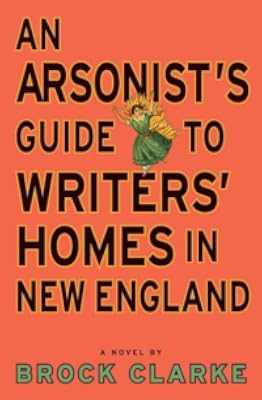
An Arsonist's Guide to Writers' Homes in New England
by Brock Clarke
On This Page
Description
"Funny, profound . . . a seductive book with a payoff on every page."—PeopleA lot of remarkable things have happened in the life of Sam Pulsifer, the hapless hero of this incendiary novel, beginning with the ten years he spent in prison for accidentally burning down Emily Dickinson's house and unwittingly killing two people. emerging at age twenty-eight, he creates a new life and identity as a husband and father. But when the homes of other famous New England writers suddenly go up in show more smoke, he must prove his innocence by uncovering the identity of this literary-minded arsonist.
In the league of such contemporary classics as A Confederacy of Dunces and The World According to Garp, An Arsonist's Guide to Writers' Homes in New England is an utterly original story about truth and honesty, life and the imagination. show less
Tags
Recommendations






Member Recommendations
Member Reviews
Every so often, a book grabs your attention with the opening sentence and holds you all the way to the last period. Unfortunately, this isn’t one of those books. Brock Clarke’s attempt at a quirky, humorous series of misfortunes simply fails to achieve the most important goal of any story – making the reader care about the story.
An Arsonist’s Guide to Writers’ Homes in New England is the rambling diatribe of a hapless – in fact, clueless – self described ‘everyman’ who can’t help being railroaded for crimes he didn’t commit. Clarke foreshadows almost everything that is going to happen to Sam Pulsifer within the first 30 pages, so there is no mystery or tension to propel the reader along. There is an inevitability show more to everything that happens to Sam and he has no interest in even participating in his own life, blind to what is going on around him only because he has his hand over his own eyes. The entire plot is such a quagmire it prevents the story from being anything other than a bore. In addition to the entire story being uninteresting, the prose is grating. Told from Sam’s perspective, it is an annoying internal dialog where he consistently demonstrates that he is incapable of completing a full sentence without wandering off to some other topic. After about two chapters of this I was not only frustrated with reading it, I didn’t care about what happened to any of the characters, especially Sam. Listening to him tell his story I quickly understood why he didn’t have any friends and nobody wanted to talk to him about anything. Even Sam is uninterested in himself, which leaves anyone reading his story wondering why we should be interested in him either.
I’m not sure if Clarke was attempting to paint a picture of what it is like inside the mind of a hopeless victim of life. But whether it was or not, the story really missed the mark and only succeeded in making me wish I had purchased something else to read. show less
An Arsonist’s Guide to Writers’ Homes in New England is the rambling diatribe of a hapless – in fact, clueless – self described ‘everyman’ who can’t help being railroaded for crimes he didn’t commit. Clarke foreshadows almost everything that is going to happen to Sam Pulsifer within the first 30 pages, so there is no mystery or tension to propel the reader along. There is an inevitability show more to everything that happens to Sam and he has no interest in even participating in his own life, blind to what is going on around him only because he has his hand over his own eyes. The entire plot is such a quagmire it prevents the story from being anything other than a bore. In addition to the entire story being uninteresting, the prose is grating. Told from Sam’s perspective, it is an annoying internal dialog where he consistently demonstrates that he is incapable of completing a full sentence without wandering off to some other topic. After about two chapters of this I was not only frustrated with reading it, I didn’t care about what happened to any of the characters, especially Sam. Listening to him tell his story I quickly understood why he didn’t have any friends and nobody wanted to talk to him about anything. Even Sam is uninterested in himself, which leaves anyone reading his story wondering why we should be interested in him either.
I’m not sure if Clarke was attempting to paint a picture of what it is like inside the mind of a hopeless victim of life. But whether it was or not, the story really missed the mark and only succeeded in making me wish I had purchased something else to read. show less
I had high hopes for this one. The book begins with a man getting out of prison after serving 20 years for burning down the Emily Dickens house (accidentally killing two people inside). Of course, this rips his current family apart. When he gets out he goes to school, gets married, has kids, etc. But then other famous authors homes start burning up! Is he doing it? How can he clear his name? It's a GREAT plot and story thread.
Unfortunately, for me, there are so many characters involved that we spend time tying to get to know via the narrator's quirky voice and attention span, that it got tiresome.
I think some people may enjoy the "anxious" thinking of the character, but it just got old to me.
If the middle third could have been trimmed show more down, allowing the great premise and plot to carry me along, I think I would have been a lot happier. show less
Unfortunately, for me, there are so many characters involved that we spend time tying to get to know via the narrator's quirky voice and attention span, that it got tiresome.
I think some people may enjoy the "anxious" thinking of the character, but it just got old to me.
If the middle third could have been trimmed show more down, allowing the great premise and plot to carry me along, I think I would have been a lot happier. show less
An Arsonist's Guide to Writers' Homes in New England
Rating: 5/5 stars
Brock Clarke's "An Arsonist's Guide to Writers' Homes in New England" is a masterfully crafted novel that seamlessly blends humor and tragedy. The story follows Sam Pulsifer, a complex and endearing protagonist, as he navigates a life forever changed by a fateful and devastating event.
*A Unique and Engaging Plot*
The novel's premise is both intriguing and unsettling. Sam, the protagonist, accidentally burns down Emily Dickinson's house, killing two people in the process. As he rebuilds his life after serving a ten-year prison sentence, a mysterious arsonist begins targeting the homes of famous New England writers. Sam's quest to uncover the truth behind these crimes show more leads him down a dangerous and unexpected path.
*Well-Developed Characters*
Sam's character is expertly crafted, eliciting both sympathy and frustration. His struggles to redeem himself and find a sense of purpose are deeply relatable. The supporting cast is equally well-written, adding depth and nuance to the narrative.
*Humor and Heartbreak*
Clarke's writing is both humorous and poignant, often simultaneously. The novel tackles themes of guilt, redemption, and the power of literature, all while maintaining a witty and engaging tone.
*A Must-Read*
"An Arsonist's Guide to Writers' Homes in New England" is a standout novel that will appeal to fans of literary fiction, mystery, and humor. Clarke's unique voice and style make this book a true gem. I highly recommend it to anyone looking for a compelling and unforgettable read.
*Recommendation*
If you enjoy books with complex characters, intriguing plots, and a dash of humor, then "An Arsonist's Guide to Writers' Homes in New England" is a must-read. Fans of authors like John Irving and Michael Chabon will appreciate Clarke's writing style and the novel's blend of literary fiction and mystery. show less
Rating: 5/5 stars
Brock Clarke's "An Arsonist's Guide to Writers' Homes in New England" is a masterfully crafted novel that seamlessly blends humor and tragedy. The story follows Sam Pulsifer, a complex and endearing protagonist, as he navigates a life forever changed by a fateful and devastating event.
*A Unique and Engaging Plot*
The novel's premise is both intriguing and unsettling. Sam, the protagonist, accidentally burns down Emily Dickinson's house, killing two people in the process. As he rebuilds his life after serving a ten-year prison sentence, a mysterious arsonist begins targeting the homes of famous New England writers. Sam's quest to uncover the truth behind these crimes show more leads him down a dangerous and unexpected path.
*Well-Developed Characters*
Sam's character is expertly crafted, eliciting both sympathy and frustration. His struggles to redeem himself and find a sense of purpose are deeply relatable. The supporting cast is equally well-written, adding depth and nuance to the narrative.
*Humor and Heartbreak*
Clarke's writing is both humorous and poignant, often simultaneously. The novel tackles themes of guilt, redemption, and the power of literature, all while maintaining a witty and engaging tone.
*A Must-Read*
"An Arsonist's Guide to Writers' Homes in New England" is a standout novel that will appeal to fans of literary fiction, mystery, and humor. Clarke's unique voice and style make this book a true gem. I highly recommend it to anyone looking for a compelling and unforgettable read.
*Recommendation*
If you enjoy books with complex characters, intriguing plots, and a dash of humor, then "An Arsonist's Guide to Writers' Homes in New England" is a must-read. Fans of authors like John Irving and Michael Chabon will appreciate Clarke's writing style and the novel's blend of literary fiction and mystery. show less
I sort of like the idea of a novel that's unafraid to take on some of the canon's sacred cows, and this novel's admittedly terrific title promises exactly that. The book does do an intermittently excellent job of skewering some genuinely annoying features of the literary landscape. Oprah's Book Club readers, pedantic, self-involved Southern writers, theory-obsessed literary bomb throwers, and shallow would-be memoir writers all get what's coming to them. The book can't keep it up, though, and most of the blame, I think, can be attributed to the book's main character. I can understand why the author chose to build his narrative around an outsider to the literary world, in this case, the son of an English teacher and editor who'd spent a show more decade in prison and twenty years away from the world of books, Still, you would have thought he might have picked up some life lessons during this time, even if they aren't the sort you find in novels. Instead, he's a completely guileless, rather blank Rip van Winkle type whose job it is to stumble through the plot and coin pithy aphorisms that a smarter, or more realistic, character couldn't get away with. Reading this novel is like watching Forrest Gump teach a survey course in literature, it's often more uncomfortable than entertaining. What's worse, despite his character's perennial poker face, Clarke's take on the uncultured exurbs comes off as pretty condescending, which is pretty fatal to effective satire, and I say that as a person who probably shares many of the author's cultural tastes and political views. I can only imagine how someone who doesn't might read it.
I'm not quite ready to say that "An Arsonist's Guide to Writer's Homes in New England" is a terrible book. After all, literature can always use another discussion about what its purpose is; I think that asking this question is something that all really good novels do. There's a lot of heartache on display in this book behind it's wacky plot machinations, and some of it, I think, rings true. And I'd have to be a real grump to claim it wasn't genuinely funny in places. Still, this one only gets a couple of stars. A shame, really, since, as other reviewers have mentioned here, the premise seems to have a good deal of potential. show less
I'm not quite ready to say that "An Arsonist's Guide to Writer's Homes in New England" is a terrible book. After all, literature can always use another discussion about what its purpose is; I think that asking this question is something that all really good novels do. There's a lot of heartache on display in this book behind it's wacky plot machinations, and some of it, I think, rings true. And I'd have to be a real grump to claim it wasn't genuinely funny in places. Still, this one only gets a couple of stars. A shame, really, since, as other reviewers have mentioned here, the premise seems to have a good deal of potential. show less
An Arsonist’s Guide to Writers’ Homes in New England proved to be one of those book titles I could not resist forever. As an avowed book lover and one who has enjoyed visiting author homes for a long time, I shuddered at the very thought of what might be inside the covers of this one – and what I found was even stranger than I expected it would be. An Arsonist’s Guide is not for everyone, but if you enjoy books about books and writing, humorous novels combining farce and satire, or characters so unrealistic that they start to seem real to you, you will probably enjoy it.
Sam Pulsifer, whose father is an editor and whose mother is an English professor, accidentally burned down Emily Dickinson’s historic home. His parents show more probably could not visualize a crime more devastating and embarrassing than that one, but it gets worse: the fire also claimed the lives of the two people still inside the old house. Now, after serving ten years in prison, Sam is returning to Amherst, the scene of his crime, because he has no place else to go. He just wants to hide while he figures out what to do with the rest of his life.
The past decade has not been kind to Sam’s parents. His crime and ensuing imprisonment have taken such a toll on his mother and his father, both physically and mentally, that Sam barely recognizes them or their new lifestyle. But even then, it is only when the historic homes of other famous authors begin to go up in smoke all around New England that Sam understands that his chances of maintaining a low profile while he regroups are gone. Due to the timing and proximity of the fires, Sam is, of course, the most logical suspect. He gets it – and he knows that if he doesn’t prove his innocence, he is likely headed back to prison for a long, long time.
The problem is that Sam Pulsifer is a chronic “bungler,” something that was first pointed out rather gleefully to him by a group of white collar criminals he met in prison. As he moves from one crime scene to the next, interviewing people and observing the physical evidence, managing to implicate himself in one fire after the other, Sam proves their assessment to be an astute one. He is indeed a “bungler.”
Brock Clarke’s utterly absurd characters and far-fetched plot are a perfect match for the satirical look at life (and the literary lifestyle) that he presents in An Arsonist’s Guide to Writers’ Homes in New England. Ironically, the book is filled with literary allusions and observations that will be most appreciated by the very folks whose lifestyle is being lampooned. Clarke has something to say about the complexities of life, love, and marriage, and he says it well. This may very well be one of those love-it-or-hate-it books with little opinion between the two extremes, but book lovers should give it the shot it deserves. show less
Sam Pulsifer, whose father is an editor and whose mother is an English professor, accidentally burned down Emily Dickinson’s historic home. His parents show more probably could not visualize a crime more devastating and embarrassing than that one, but it gets worse: the fire also claimed the lives of the two people still inside the old house. Now, after serving ten years in prison, Sam is returning to Amherst, the scene of his crime, because he has no place else to go. He just wants to hide while he figures out what to do with the rest of his life.
The past decade has not been kind to Sam’s parents. His crime and ensuing imprisonment have taken such a toll on his mother and his father, both physically and mentally, that Sam barely recognizes them or their new lifestyle. But even then, it is only when the historic homes of other famous authors begin to go up in smoke all around New England that Sam understands that his chances of maintaining a low profile while he regroups are gone. Due to the timing and proximity of the fires, Sam is, of course, the most logical suspect. He gets it – and he knows that if he doesn’t prove his innocence, he is likely headed back to prison for a long, long time.
The problem is that Sam Pulsifer is a chronic “bungler,” something that was first pointed out rather gleefully to him by a group of white collar criminals he met in prison. As he moves from one crime scene to the next, interviewing people and observing the physical evidence, managing to implicate himself in one fire after the other, Sam proves their assessment to be an astute one. He is indeed a “bungler.”
Brock Clarke’s utterly absurd characters and far-fetched plot are a perfect match for the satirical look at life (and the literary lifestyle) that he presents in An Arsonist’s Guide to Writers’ Homes in New England. Ironically, the book is filled with literary allusions and observations that will be most appreciated by the very folks whose lifestyle is being lampooned. Clarke has something to say about the complexities of life, love, and marriage, and he says it well. This may very well be one of those love-it-or-hate-it books with little opinion between the two extremes, but book lovers should give it the shot it deserves. show less
Clarke's success in this novel is the creation of not only a character you cannot sympathize, but a whole cast of them. You read because you love to hate the parties involved; Sam's bumbling is a standard comedy-of-errors, and as such is the antithesis to the feel-good memoir. And it's not wrapped up to be a work that improves your life, as so many memoirs try to angle in their marketing. No, the success here is how disgracefully these characters act, how repulsed and reviled you are by their behavior that you can't help but notice the echoes of your own failings in the failings of the Pulsifer family.
I expect to see this in 'if they liked x they'll love y' piles with Chuck Phulack novels in Christmas gift-buying lists. (This is a good thing.)
Clarke has created such a strong voice for his protagonist – Sam – that even though Sam is a convicted arsonist with the social skills of someone who missed out on Human Interaction 101, you can’t help but get sucked into his story. The first-person voice is dry, wry, and honest, as events expose the gaps between the truth as we tell it and the truth that we get. The combination manages to raise a smile while being quite unsettling.
Clarke has created such a strong voice for his protagonist – Sam – that even though Sam is a convicted arsonist with the social skills of someone who missed out on Human Interaction 101, you can’t help but get sucked into his story. The first-person voice is dry, wry, and honest, as events expose the gaps between the truth as we tell it and the truth that we get. The combination manages to raise a smile while being quite unsettling.
Members
- Recently Added By
Published Reviews
ThingScore 100
Eighty pages into this, his second novel, Brock Clarke takes a seeming swipe at his first. His narrator, Sam Pulsifer, is wandering through a bookstore when he begins to feel bad for fiction and poetry, those “obsolete states” that have been “mostly gobbled up” by the store’s memoir section, “the Soviet Union of literature.”
added by paradoxosalpha
“An Arsonist’s Guide” contains sentences and images that could stand beside the works of the former owners of the literary residences put to flame.
added by khuggard
Lists

Best Laugh Out Loud Books
143 works; 49 members

New England Books
101 works; 10 members

2008-2012 Notable Books for Adults
127 works; 10 members
Books Set in Massachusetts
41 works; 8 members

Houses and Buildings as Characters in Fiction
182 works; 29 members

Books Read in 2009
464 works; 11 members

Reading Group 2009 Summer
7 works; 1 member

2000s (the decade, not the century)
184 works; 11 members

Fiction For Men
142 works; 11 members

Books With Place Names in the Title
215 works; 10 members

Fiction on Fire
22 works; 2 members

Favorite Book Titles
35 works; 1 member

Author Information

12+ Works 2,365 Members
Brock Clarke teaches creative writing at the University of Cincinnati.
Awards and Honors
Awards
Distinctions
Notable Lists
Common Knowledge
- Canonical title
- An Arsonist's Guide to Writers' Homes in New England
- Original title
- An Arsonist's Guide to Writers' Homes in New England
- Original publication date
- 2007
- People/Characters
- Sam Pulsifer; Thomas Coleman; Anne Marie Pulsifer
- Important places
- Amherst, Massachusetts, USA; New England, USA
- Epigraph
- At the end of an hour we saw a far-away town sleeping in a valley by a winding river; and beyond it on a hill, a vast gray fortress, with towers and turrets, the first I had ever seen out of a picture.
"Bridgeport?" said I... (show all), pointing.
"Camelot," said he.
--Mark Twain, A Connecticut Yankee in King Arthur's Court
The memoirs written by the members of the Autobiographical Association...already had a number of factors in common. One of them was nostalgia, another was paranoia, a third was a transparent craving on the part of the author... (show all)s to appear likeable. I think they probably lived out their lives on the principle that what they were, and did, and wanted, should above all look pretty. Typing out and making sense out of these compositions was an agony to my spirit until I hit on the method of making them expertly worse; and everyone concerned was delighted with the result.
--Muriel Spark, Loitering with Intent - First words
- I, Sam Pulsifer, am the man who accidentally burned down the Emily Dickinson House in Amherst, Massachusetts, and who in the process killed two people, for which I spent ten years in prison and, as letters from scholars of Am... (show all)erican literature tell me, for which I will continue to pay a high price long into the not-so-sweet hereafter.
- Quotations
- It is better to be wounded than to wound.
- Last words
- (Click to show. Warning: May contain spoilers.)And maybe, then, I'll be able to tell that story.
- Blurbers
- Lipsyte, Sam; Parkhurst, Carolyn; Julavits, Heidi
Classifications
Statistics
- Members
- 1,728
- Popularity
- 12,789
- Reviews
- 94
- Rating
- (2.99)
- Languages
- 6 — Dutch, English, French, German, Italian, Spanish
- Media
- Paper, Audiobook, Ebook
- ISBNs
- 22
- ASINs
- 11