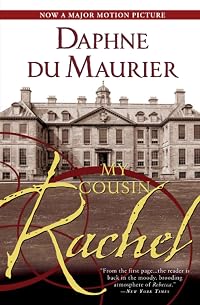
My Cousin Rachel
by Daphne Du Maurier
On This Page
Description
Daphne du Maurier's classic novel of lust, suspicion, and obsession that inspired major motion picture starring Rachel Weisz and Sam Claflin.Orphaned at an early age, Philip Ashley is raised by his benevolent older cousin, Ambrose. Resolutely single, Ambrose delights in Philip as his heir, and Philip grows to love Ambrose's grand estate as much as he does. But the cozy world the two construct is shattered when Ambrose sets off on a trip to Florence. There he falls in love and marries a show more mysterious distant cousin named Rachel — and there he dies suddenly.
Jealous of his marriage, racked by suspicion at the hints in Ambrose's letters, and grief-stricken by his death, Philip prepares to meet his cousin's widow with hatred in his heart. But when she arrives at the estate, Rachel seems to be a different woman from the one described in Ambrose's letters. Beautiful, sophisticated, and magnetic, Philip cannot help but feel drawn to Rachel.
And yet, questions still linger: might she have had a hand in Ambrose's death? And how, exactly, did Ambrose die? As Philip pursues the answers to these questions, he realizes that his own fate could hang in the balance.
. show less
Tags
Recommendations






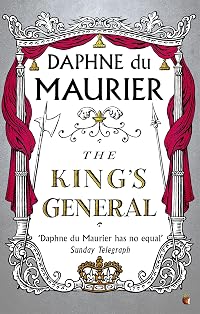
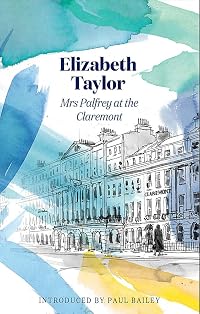
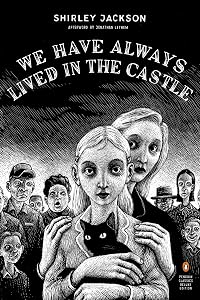
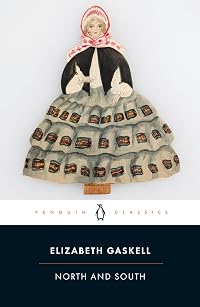







Member Recommendations


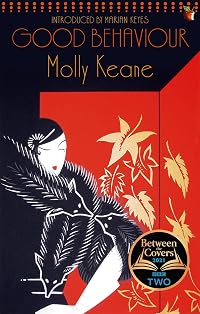
Bookmarque Now I've read MCR, I wonder if R's character influenced Hart when she wrote Anna's character. Both women are catalysts for disaster. Damage is much more stark a tale and not gothic, but there is still victim and perpetrator and reading them together is a great comparison.
Member Reviews
Philip Ashley, orphaned at a very young age, has been raised by his older cousin, Ambrose, on his farm estate in Cornwall. The two of them have a strong bond and a cosy lifestyle. When Philip is in his early 20s, Ambrose goes abroad for the winter for his health and, much to Philip’s shock, sends news that he has married. His new wife is Rachel, a distant cousin of both of them. Philip is jealous, and the jealousy turns to hatred when he learns that Ambrose has taken ill and died. Did Rachel have something to do with his death? Philip means to find out.
This is a wonderfully written book. Du Maurier excels at describing Philip’s conflicted feelings — jealousy, resentment, denied infatuation, hero-worship and more. And because we show more only ever see Rachel from his point of view, we’re left to try to figure out from her actions and speech whether Philip has the right idea. In some lights she is a sinister murderess; in others she is an innocent, grieving widow. In a way this somewhat reminded me of the first tale from A Monster Calls, in which the lesson is that everyone is a mixture of good and bad, not unremittingly evil or wholly good.
I borrowed this from the library but might have to buy my own copy (or give it to my mother and borrow it from her). show less
This is a wonderfully written book. Du Maurier excels at describing Philip’s conflicted feelings — jealousy, resentment, denied infatuation, hero-worship and more. And because we show more only ever see Rachel from his point of view, we’re left to try to figure out from her actions and speech whether Philip has the right idea. In some lights she is a sinister murderess; in others she is an innocent, grieving widow. In a way this somewhat reminded me of the first tale from A Monster Calls, in which the lesson is that everyone is a mixture of good and bad, not unremittingly evil or wholly good.
I borrowed this from the library but might have to buy my own copy (or give it to my mother and borrow it from her). show less
An absorbing, slow-burn amalgam of psychology and mystery; might have earned five stars if Philip had any redeeming qualities whatsoever. Being in his head lamed my enjoyment of the whole thing. But of course it's not an "enjoyable" story per se, and du Maurier made that decision for a reason. One of those stories that makes me wish I could ask the author about every tiny thing going on behind the events.
Oh, and I haven't seen the de Havilland/Burton film yet, but the Weisz/Claflin version does not do the book justice. Then again, so much of du Maurier's stories takes place within the narrator, I'm not sure any film can do her work justice (though I love Hitchcock's Rebecca).
Oh, and I haven't seen the de Havilland/Burton film yet, but the Weisz/Claflin version does not do the book justice. Then again, so much of du Maurier's stories takes place within the narrator, I'm not sure any film can do her work justice (though I love Hitchcock's Rebecca).
My Cousin Rachel - Du Maurier
Audio performance by Jonathan Pryce
4 stars
The writing is wonderful, atmospheric, suspenseful, evocative. The writing is frustrating, overly descriptive, soo slow. Jonathan Pryce gave a terrific performance, but if I’d had a physical copy of this book, only my inability to stop turning pages would have prevented me from throwing the book across the room. I didn’t like Ambrose. I disliked Rachel. I absolutely hated Phillip; he was such a naive, spiteful, idiot.
If Agatha Christie was the Queen of plot twists, Daphne Du Maurier was the Empress of twisty endings. I acknowledge the genius, but I still feel like throwing the book at a wall.
Audio performance by Jonathan Pryce
4 stars
The writing is wonderful, atmospheric, suspenseful, evocative. The writing is frustrating, overly descriptive, soo slow. Jonathan Pryce gave a terrific performance, but if I’d had a physical copy of this book, only my inability to stop turning pages would have prevented me from throwing the book across the room. I didn’t like Ambrose. I disliked Rachel. I absolutely hated Phillip; he was such a naive, spiteful, idiot.
If Agatha Christie was the Queen of plot twists, Daphne Du Maurier was the Empress of twisty endings. I acknowledge the genius, but I still feel like throwing the book at a wall.
What an idiot I am.
Over the last few years I’ve been reading more of du Maurier’s work and coming to consider her a favorite writer. I’ve read Jamaica Inn, The House on the Strand, The Flight of the Falcon, The Scapegoat, Rebecca and Frenchman’s Creek, plus a collection of short stories. At some point I read a negative review of MCR that said it was basically a warmed-over Rebecca. What? Did we read the same book? MCR is most assuredly NOT a warmed-over Rebecca. It’s a deliberately-crafted psychological thriller dripping with atmosphere.
So that’s my first instance of idiocy over MCR. There is another. While reading I took notes about Rachel’s character and how if she’s playing a game, she’s playing it awfully close to show more the vest. There was nothing overtly furtive or misleading in her actions and so I wondered just how du Maurier would check this up with whatever she wrote as the denouement. I had suspicions of a weak ending that just wouldn’t jibe and some behavior or action would seem out of the blue.
I should have known to trust du Maurier and that the way she wrote Rachel would serve a purpose. Only at the very end, literally the last few pages, is the brilliance of the subdued portrait of Rachel, made clear.
Spoilers.
Like any good novelist, du Maurier gives us bits of foreshadowing that work really well to set tension. What did R spend her allowance on and why is she so overdrawn at the bank? The incident with the pearls and how poor, backward Philip couldn’t see their significance. Ambrose’s mysterious letters (which all get destroyed in one way or another) and what they really mean. The similar illnesses that befall both Ambrose and Philip. The way the staff, previously unsympathetic to R, start calling her the mistress. Just what are R & Rainaldi talking about in their whispered conversations in Italian? So much to savor and wonder about.
Interspersed with these cryptic moments are Philips completely stupid inner monologues, lies and disastrous decisions. Monumentally disastrous decisions. As a character he’s the strongest. Sheltered, backward and almost completely ignorant of women he falls under a spell with regard to Rachel. I can’t really say whether the spell is hers in the sense that she has cast it and that’s one of the glorious ambiguities you will be left with at the end. If R was deliberately ensnaring poor, sappy Philip, she did it with such subtlety that as readers we don’t really know if it was deliberate. Philip is a perfect mark if it is a con, he’s so sheltered and ignorant that it wouldn’t have been hard to convince him to part with his fortune, estate and legacy.
Like a little kid who is anxious to show how grown up he is, Philip is always declaring that he is a man, master of his estate and has reached the ripe old age of nearly five and twenty. He even laments the loss of his beard that grows during his illness because it made him look older. He’s pathetic and I didn’t have a lot of sympathy if she did screw him out of his estate. He had good advice and warnings about R, but ignored all of them thinking he knew better. Oh and he is quite the liar when he needs to be.
The warning about Rachel put me in mind of Anna Barton in the novel Damage by Josephine Hart. Compare -
“There are some women, Philip,” he observed, “good women very possibly, who through no fault of their own impel disaster. Whatever they touch somehow turns to tragedy. I don’t know why I say this to you, but I feel I must.” (Philip’s godfather and guardian Mr. Kendall to Philip, MCR, p 212.)
“Anna has brought a great deal of pain to a number of people. She is completely blameless, in my opinion. But she is a catalyst for disaster. [...] So you, my friend, should heed what I say. It’s clearly too late for the only advice that could save you. Stay away from Anna.” (Anna’s step-father Wilbur to the unnamed victim of her thrall, her fiance’s father, Damage, p 80 of my nook book)
Rachel’s personality is much more shrouded. She’s so opaque and enigmatic that I initially counted this as a flaw in the novel. I wanted her actions and motivations to be more clear. This was because I expected a definitive ending falling on one side or the other; was R guilty or innocent? An ambiguous ending didn’t occur to me simply because in many gothic novels the ending is solid. I should have prepared myself for ambiguity.
The ending is pitch perfect and the way it’s foreshadowed fills you with dread and foreboding. The bridge in the garden is clearly the means and we (well at least I) want her to fall victim to it. By this time with the seeds in the drawer and her coldness and control of the money, we want her dead and Philip restored to his prior existence. Then there is the letter. The letter that spooked Philip, but that he couldn’t subvert and prevent its delivery. And the note about returning the Ashley family jewels to the bank so that Philip can inherit them like he would if he hadn’t foolishly given them to R. Oh how quickly our feelings change and we want him to catch up with her on the bridge and save her. In our heart of hearts though, we know this story cannot have a happy ending. That much has already been made clear by du Maurier’s narrative framing; Philip relates this incident from the distant future, his life a shell of its former happiness and contentment. The way he talks about how they used to hang murderers at the crossroads. No, this story cannot end well and it doesn’t.
It is a great ending though and both appropriate and satisfying. Rachel’s opacity as a character has full meaning as well as all those little clues of condemnation; are they really showing her as guilty or are they innocent? We will never know. And that’s ok. show less
Over the last few years I’ve been reading more of du Maurier’s work and coming to consider her a favorite writer. I’ve read Jamaica Inn, The House on the Strand, The Flight of the Falcon, The Scapegoat, Rebecca and Frenchman’s Creek, plus a collection of short stories. At some point I read a negative review of MCR that said it was basically a warmed-over Rebecca. What? Did we read the same book? MCR is most assuredly NOT a warmed-over Rebecca. It’s a deliberately-crafted psychological thriller dripping with atmosphere.
So that’s my first instance of idiocy over MCR. There is another. While reading I took notes about Rachel’s character and how if she’s playing a game, she’s playing it awfully close to show more the vest. There was nothing overtly furtive or misleading in her actions and so I wondered just how du Maurier would check this up with whatever she wrote as the denouement. I had suspicions of a weak ending that just wouldn’t jibe and some behavior or action would seem out of the blue.
I should have known to trust du Maurier and that the way she wrote Rachel would serve a purpose. Only at the very end, literally the last few pages, is the brilliance of the subdued portrait of Rachel, made clear.
Spoilers.
Like any good novelist, du Maurier gives us bits of foreshadowing that work really well to set tension. What did R spend her allowance on and why is she so overdrawn at the bank? The incident with the pearls and how poor, backward Philip couldn’t see their significance. Ambrose’s mysterious letters (which all get destroyed in one way or another) and what they really mean. The similar illnesses that befall both Ambrose and Philip. The way the staff, previously unsympathetic to R, start calling her the mistress. Just what are R & Rainaldi talking about in their whispered conversations in Italian? So much to savor and wonder about.
Interspersed with these cryptic moments are Philips completely stupid inner monologues, lies and disastrous decisions. Monumentally disastrous decisions. As a character he’s the strongest. Sheltered, backward and almost completely ignorant of women he falls under a spell with regard to Rachel. I can’t really say whether the spell is hers in the sense that she has cast it and that’s one of the glorious ambiguities you will be left with at the end. If R was deliberately ensnaring poor, sappy Philip, she did it with such subtlety that as readers we don’t really know if it was deliberate. Philip is a perfect mark if it is a con, he’s so sheltered and ignorant that it wouldn’t have been hard to convince him to part with his fortune, estate and legacy.
Like a little kid who is anxious to show how grown up he is, Philip is always declaring that he is a man, master of his estate and has reached the ripe old age of nearly five and twenty. He even laments the loss of his beard that grows during his illness because it made him look older. He’s pathetic and I didn’t have a lot of sympathy if she did screw him out of his estate. He had good advice and warnings about R, but ignored all of them thinking he knew better. Oh and he is quite the liar when he needs to be.
The warning about Rachel put me in mind of Anna Barton in the novel Damage by Josephine Hart. Compare -
“There are some women, Philip,” he observed, “good women very possibly, who through no fault of their own impel disaster. Whatever they touch somehow turns to tragedy. I don’t know why I say this to you, but I feel I must.” (Philip’s godfather and guardian Mr. Kendall to Philip, MCR, p 212.)
“Anna has brought a great deal of pain to a number of people. She is completely blameless, in my opinion. But she is a catalyst for disaster. [...] So you, my friend, should heed what I say. It’s clearly too late for the only advice that could save you. Stay away from Anna.” (Anna’s step-father Wilbur to the unnamed victim of her thrall, her fiance’s father, Damage, p 80 of my nook book)
Rachel’s personality is much more shrouded. She’s so opaque and enigmatic that I initially counted this as a flaw in the novel. I wanted her actions and motivations to be more clear. This was because I expected a definitive ending falling on one side or the other; was R guilty or innocent? An ambiguous ending didn’t occur to me simply because in many gothic novels the ending is solid. I should have prepared myself for ambiguity.
The ending is pitch perfect and the way it’s foreshadowed fills you with dread and foreboding. The bridge in the garden is clearly the means and we (well at least I) want her to fall victim to it. By this time with the seeds in the drawer and her coldness and control of the money, we want her dead and Philip restored to his prior existence. Then there is the letter. The letter that spooked Philip, but that he couldn’t subvert and prevent its delivery. And the note about returning the Ashley family jewels to the bank so that Philip can inherit them like he would if he hadn’t foolishly given them to R. Oh how quickly our feelings change and we want him to catch up with her on the bridge and save her. In our heart of hearts though, we know this story cannot have a happy ending. That much has already been made clear by du Maurier’s narrative framing; Philip relates this incident from the distant future, his life a shell of its former happiness and contentment. The way he talks about how they used to hang murderers at the crossroads. No, this story cannot end well and it doesn’t.
It is a great ending though and both appropriate and satisfying. Rachel’s opacity as a character has full meaning as well as all those little clues of condemnation; are they really showing her as guilty or are they innocent? We will never know. And that’s ok. show less
This leans more on a 3.5 but du Maurier's hauntingly ambiguous My Cousin Rachel is a poisonous food for thought. With biting Oedipal implications, young heir Philip's initial hatred of Ambrose's widow (both of which his cousins), Rachel Ashley, turns slow burningly into a feverish, violent, and obsessive infatuation. ** "How simple it must be for a woman of the world, like Mrs Ashley, to twist a young man like yourself around her finger." Philip is very naïve then develops into an annoying lad until he becomes some kind of villain depending on one's perception. And what's more to make this all complicated than the inclusion of money and assets to the matter, Ambrose's suspicious death and letters, and Philip's disturbing likeness with show more Ambrose?
A book difficult to put down with its aggravating ambiance of paranoia and suspense as the plot twists and turns itself all made horrifically charming by the seemingly gold digging, ambivalent, and subduedly promiscuous cousin Rachel until she's just Rachel, my own inability to completely decide who to believe and trust is (magnificently) concerning and (positively) frustrating. du Maurier has gone as far as making a subtle commentary on women's dependency on men most particularly in financial matters and it works brilliantly in this narrative of deceit, doubts, and distractions. My Cousin Rachel is a coup of reverse psychology and scepticism. As soon as you close the book with a gasping thud, the story has just started in your head. show less
A book difficult to put down with its aggravating ambiance of paranoia and suspense as the plot twists and turns itself all made horrifically charming by the seemingly gold digging, ambivalent, and subduedly promiscuous cousin Rachel until she's just Rachel, my own inability to completely decide who to believe and trust is (magnificently) concerning and (positively) frustrating. du Maurier has gone as far as making a subtle commentary on women's dependency on men most particularly in financial matters and it works brilliantly in this narrative of deceit, doubts, and distractions. My Cousin Rachel is a coup of reverse psychology and scepticism. As soon as you close the book with a gasping thud, the story has just started in your head. show less
Philip Ashley can't imagine life unlike it is, living in relative ease with his cousin Ambrose, who has raised him since he was a young orphan and now lives companionably together with him at the age of twenty-five, both bachelors. Then Ambrose goes away for his health and meets his cousin Rachel, who turns both their lives upside down when she and Ambrose marry. Philip is determined to hate her, but when he meets her will she charm him like she charmed Ambrose?
I'm being a little more vague than usual in my plot description because there are some reveals early on that the entire plot hinges on and I don't want to give anything away. Say what you like about Daphne du Maurier, love or hate her books, but she certainly knows how to craft a show more beginning sentence: "They used to hang men at Four Turnings in the old days." The suspense builds slowly from there, and though the story dragged for me in the middle I was on the edge of my seat by the end. Who can you trust? Philip, the narrator, who is young and naive, impulsive and blind to woman who loves him? Or Rachel - is she an Italian vixen who can wrap men around her little finger or an unwitting victim of sad circumstances? Is anyone truly "innocent"? I confess I found Philip really irritating which colored my interpretation of the book tremendously and probably had something to do with why it took me so long to finish it. This would make an excellent book group choice. show less
I'm being a little more vague than usual in my plot description because there are some reveals early on that the entire plot hinges on and I don't want to give anything away. Say what you like about Daphne du Maurier, love or hate her books, but she certainly knows how to craft a show more beginning sentence: "They used to hang men at Four Turnings in the old days." The suspense builds slowly from there, and though the story dragged for me in the middle I was on the edge of my seat by the end. Who can you trust? Philip, the narrator, who is young and naive, impulsive and blind to woman who loves him? Or Rachel - is she an Italian vixen who can wrap men around her little finger or an unwitting victim of sad circumstances? Is anyone truly "innocent"? I confess I found Philip really irritating which colored my interpretation of the book tremendously and probably had something to do with why it took me so long to finish it. This would make an excellent book group choice. show less
Another haunting and unsettling read by Dame du Maurier of the romantic gothic disposition and a fitting counterpart to the transcendental Rebecca. Philip Ashley bubbles over with unreliability here as the cynical teller of this bleak tale, which is made worse in twofold due to his gullibility and inexperience of a sickly sheltered lifestyle. I feel I know even less of the ever-elliptical cousin Rachel having finished the novel than I did before, and it is stunning to think du Maurier was able to pull it off so sleekly in this fashion without any serrated edges. To keep this review spoiler-free, I will say little more, only that I found at times the plot dragged a bit in the middle, but it makes up for it in its exemplary and show more disconcerting denouement. show less
Members
- Recently Added By
Lists

The Guardian's 1000 Novels Everyone Must Read
1,005 works; 551 members

Read the book and saw the movie
1,170 works; 192 members

Recommend the 20 best books you've read in the last five years
2,168 works; 606 members

Top Five Books of 2013
1,562 works; 721 members

Unreliable Narrators
170 works; 43 members

Female Author
1,234 works; 67 members

Favourite Virago Modern Classics
183 works; 38 members

1950s
340 works; 22 members

Anti-heroines in fiction
59 works; 9 members

Top Five Books of 2015
811 works; 241 members

Summer Reads 2014
207 works; 70 members

TML 200 Best Books 1950-1999
202 works; 10 members

Fiction with Women's Names in the Title
378 works; 15 members

Discontinued
19 works; 4 members

Publisher's Weekly Bestsellers - Part II - 1940 - 1979
355 works; 5 members

Carole's List
445 works; 13 members

Books Read in 2020
4,379 works; 124 members

Books set in Firenze (Florence, Italy)
35 works; 1 member

Books We Love to Reread
688 works; 296 members

Read in 1999–2000
24 works; 1 member
el
1,139 works; 1 member

Top Five Books of 2024
795 works; 264 members

Books With Family Relationships in the Title
44 works; 4 members

Books Read in 2025
4,128 works; 98 members

Books Read in 2013
1,630 works; 51 members

Books Read in 2024
4,727 works; 128 members

To Read
29 works; 2 members

Books Read in 2021
5,361 works; 113 members

Books Read in 2018
4,360 works; 110 members

le donne raccontano
116 works; 1 member
KayStJ's to-read list
1,616 works; 11 members

The Modern Library (The Two Hundred Best Novels....
202 works; 1 member
Author Information

206+ Works 57,605 Members
Daphne Du Maurier was born in London on May 13, 1907 and educated in Paris. In 1932, she married Lieutenant-General Sir Frederick Browning. She began writing short stories of mystery and suspense for magazines in 1928, a collection of which appeared as The Apple Tree in 1952. Her first novel, The Loving Spirit, was published in 1931. Her tightly show more woven, highly suspenseful plots and her strong characters make her stories perfect for adaptation to film or television. Among her many novels that were made into successful films are Jamaica Inn (1936), Rebecca (1938), Frenchman's Creek (1941), Hungry Hill (1943), My Cousin Rachel (1952), and The Scapegoat (1957). Her short story, The Birds (1953), was brought to the screen by director Alfred Hitchcock in a treatment that has become a classic horror-suspense film. She died on April 19, 1989 at the age of 81. (Bowker Author Biography) show less
Some Editions
Awards and Honors
Distinctions
Series
Belongs to Publisher Series
Work Relationships
Is contained in
Has the adaptation
Is abridged in
Common Knowledge
- Canonical title
- My Cousin Rachel
- Original title
- My Cousin Rachel
- Original publication date
- 1951
- People/Characters
- Philip Ashley; Ambrose Ashley; Rachel Ashley; Seecombe; Signor Rainaldi; Nick Kendall (show all 7); Louise Kendall
- Important places
- Cornwall, England, UK; Florence, Tuscany, Italy
- Related movies
- My Cousin Rachel (1952 | IMDb); Mi prima Raquel (1964 | IMDb); Mi Prima Raquel (1973 | IMDb); My Cousin Rachel (1983 | IMDb); My Cousin Rachel (2017 | IMDb)
- First words
- My Cousin Rachel is a novel of great technical assurance.
(Introduction)
They used to hang men at Four Turnings in the old days. - Last words
- (Click to show. Warning: May contain spoilers.)They used to hang men at Four Turnings in the old days. Not any more, though.
(Click to show. Warning: May contain spoilers.)And it is typical of du Maurier's bitter venomous wit that she should use poison (famously a female weapon) as the central metaphor for a novel that is clever, cold-eyed, prescient - and unputdownable. (Introduction) - Original language
- English
- Canonical DDC/MDS
- 823.912
- Canonical LCC
- PR6007.U47
Classifications
Statistics
- Members
- 4,722
- Popularity
- 3,044
- Reviews
- 167
- Rating
- (3.98)
- Languages
- 18 — Catalan, Chinese, Czech, Dutch, English, Estonian, Finnish, French, German, Italian, Norwegian (Bokmål), Norwegian, Polish, Portuguese, Romanian, Russian, Spanish, Swedish
- Media
- Paper, Audiobook, Ebook
- ISBNs
- 102
- UPCs
- 4
- ASINs
- 96