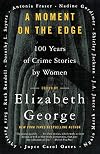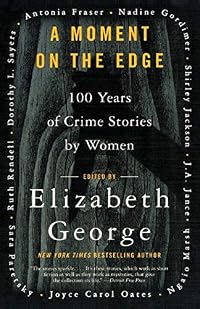
A Moment on the Edge : 100 Years of Crime Stories by Women
by Elizabeth George (Editor)
On This Page
Description
New York Times bestselling author Elizabeth George serves up a century's worth of superb crime fiction penned by women. This veritable all-star team delivers tales of dark deeds that will keep you reading long into the night. Included are these works: "A Jury of Her Peers" by Susan Glaspell The Summer of People" by Shirley Jackson "The Irony of Hate" by Ruth Rendell "Country Lovers" by Nadine Gordimer "Wild Mustard" by Marcia Muller "Murder-Two" by Joyce Carol Oates A Moment on the Edge is a show more rare treat not only for fans of crime fiction but also for anyone who appreciates a skillfully written, deftly told story. show lessTags
Recommendations









Member Reviews
Author Elizabeth George, best known for her Inspector Lynley mysteries, selected 26 crime stories by women authors for the anthology A Moment on the Edge: 100 Years of Crime Stories by Women (2002). In her introduction, George analyzes how and why people have been fascinated with crime stories since ancient times and takes to task those critics of the genre who believe crime writing is a lesser form of literary endeavor. The stories George chose certainly make a strong argument for their inclusion in any anthology of quality short fiction, whether it's crime-themed or not.
The anthology arranges the stories chronologically, starting with the classic "A Jury of Her Peers" by Susan Glaspell from 1917. From there, the timeline progresses to show more stories by Golden Age mystery writers Dorothy L. Sayers and Ngaio Marsh, and then "New Golden Age" authors including Sara Paretsky and Marcia Muller. There are also selections by writers considered to lie outside the genre: Shirley Jackson, Nadine Gordiner, Antonia Fraser and Joyce Carol Oates. Each selection is prefaced with a description by George that includes a brief bio of the author and a tidbit or two about the story, as with "The Man Who Knew How" by Sayers, which was adapted for radio starring Charles Laughton and Hans Conreid.
All the sub-genres in crime fiction are well-represented, from the supernatural in "Death of a Snowbird" by J. A. Jance, where the spirit of a dead Native American girl appears in a retired couple's RV as they spend the winter in Arizona (1994); psychological suspense in "Afraid All the Time" by Nancy Pickard, following a woman who moves to the plains and descends into a nightmare (1989); a police procedural featuring Ngaio Marsh's Inspector Allyn in "I Can Find My Way Out" (1946); a "whydunnit" from Margery Allingham in "Money to Burn" (1957); the noirish "New Moon and Rattlesnakes" by Wendy Hornsby (1994); and even a Sherlock Holmes/Dr. Watson pastiche by Gillian Linscott ("A Scandal in Winter," from 1996).
George's intention was to have the stories illustrate how crime fiction, particularly that written by women about women, has changed in the last hundred years. This is likely one reason she bookends her choices with two tales about the death of abusive husbands, written 80 years apart (the authors' lives span 100 years, but not necessarily the stories). As Elizabeth George notes in her intro: "All of these authors share in common a desire to explore mankind in a moment on the edge. The edge equates to the crime committed. How the characters deal with the edge is the story." show less
The anthology arranges the stories chronologically, starting with the classic "A Jury of Her Peers" by Susan Glaspell from 1917. From there, the timeline progresses to show more stories by Golden Age mystery writers Dorothy L. Sayers and Ngaio Marsh, and then "New Golden Age" authors including Sara Paretsky and Marcia Muller. There are also selections by writers considered to lie outside the genre: Shirley Jackson, Nadine Gordiner, Antonia Fraser and Joyce Carol Oates. Each selection is prefaced with a description by George that includes a brief bio of the author and a tidbit or two about the story, as with "The Man Who Knew How" by Sayers, which was adapted for radio starring Charles Laughton and Hans Conreid.
All the sub-genres in crime fiction are well-represented, from the supernatural in "Death of a Snowbird" by J. A. Jance, where the spirit of a dead Native American girl appears in a retired couple's RV as they spend the winter in Arizona (1994); psychological suspense in "Afraid All the Time" by Nancy Pickard, following a woman who moves to the plains and descends into a nightmare (1989); a police procedural featuring Ngaio Marsh's Inspector Allyn in "I Can Find My Way Out" (1946); a "whydunnit" from Margery Allingham in "Money to Burn" (1957); the noirish "New Moon and Rattlesnakes" by Wendy Hornsby (1994); and even a Sherlock Holmes/Dr. Watson pastiche by Gillian Linscott ("A Scandal in Winter," from 1996).
George's intention was to have the stories illustrate how crime fiction, particularly that written by women about women, has changed in the last hundred years. This is likely one reason she bookends her choices with two tales about the death of abusive husbands, written 80 years apart (the authors' lives span 100 years, but not necessarily the stories). As Elizabeth George notes in her intro: "All of these authors share in common a desire to explore mankind in a moment on the edge. The edge equates to the crime committed. How the characters deal with the edge is the story." show less
This was a decent collection of stories by women but none of them really stuck with me. There was a brief biography of each author before her story. Over all, this book wasn't very impressive. I would not read it again.
Excellent collection of short detective stories. As with all collections, some appeal mre than others as everyone has different tastes in literature. Worth reading.
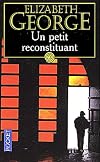
Trois bonnes petites histoires. Mon premier livre d'Elizabeth George. Il m'a donné envie d'en lire d'autres.
Aug 7, 2009 (Edited)French
Elizabeth George, de 'koningin van het misdaadgenre' (Entertainment Weekly), is de auteur van diverse psychologische misdaadromans waarvoor zij de prestigieuze Anthony en Agatha Awards ontving en ook onderscheiden werd met belangrijke prijzen in Frankrijk en Duitsland. Van haar populaire Lynley-mysteries werden miljoenen exemplaren over de hele wereld verkocht en een aantal ervan is door de BBC voor televisie verfilmd. Naast het schrijven van spannende boeken houdt Elizabeth George zich intensief bezig met het geven van workshops creative writing aan diverse hogescholen en universiteiten.
Verhalen over moord en misdaad vormen een belangrijk genre binnen de literaire traditie. Euripides laat Medea haar kinderen doden om zich te wreken op show more haar overspelige echtgenoot: in de bijbel eist Salome het hoofd van Johannes de Doper op een zilveren schaal: Schakespeares Lady MacBeth tracht tevergeefs het bloed van haar handen te wassen.
In veel misdaadverhalen speelt de vrouw een belangrijke rol, maar er zijn uiteraard ook talloze vrouwen die als auteur van misdaadverhalen een bijdrage geleverd hebben aan deze rijke traditie, met name in de achterliggende eeuw.
In dit boek presenteerd Elizabeth George, de meest toonaangevende vrouwelijke misdaadsauteurs van dit moment, haar keuze uit de beste verhalen van die vrouwen. show less
Verhalen over moord en misdaad vormen een belangrijk genre binnen de literaire traditie. Euripides laat Medea haar kinderen doden om zich te wreken op show more haar overspelige echtgenoot: in de bijbel eist Salome het hoofd van Johannes de Doper op een zilveren schaal: Schakespeares Lady MacBeth tracht tevergeefs het bloed van haar handen te wassen.
In veel misdaadverhalen speelt de vrouw een belangrijke rol, maar er zijn uiteraard ook talloze vrouwen die als auteur van misdaadverhalen een bijdrage geleverd hebben aan deze rijke traditie, met name in de achterliggende eeuw.
In dit boek presenteerd Elizabeth George, de meest toonaangevende vrouwelijke misdaadsauteurs van dit moment, haar keuze uit de beste verhalen van die vrouwen. show less
wat kunnen vrouwen toch slecht zijn en zo geraffineerd in hun misdaden.
Feb 11, 2008Dutch
Ratings
Members
- Recently Added By
Author Information

Elizabeth George was born on February 26, 1949, in Warren, Ohio. She received a bachelor's degree in education from the University of California in Riverside and a master's degree in counseling/psychology from California State University at Fullerton. She taught English in high school for about thirteen years before leaving to become a full-time show more writer. She is the New York Times and internationally best selling author of twenty British crime novels featuring Detective Inspector Thomas Lynley and his unconventional partner Detective Sergeant Barbara Havers. Her novel, A Great Deliverance, won the Anthony Award, the Agatha Award, and France's Le Grand Prix de Literature Policiere in 1989. Her crime novels have been translated into 30 languages and featured on television by the BBC. She is also the author of a young adult series set on the island where she lives in the state of Washington. Her title's include Edge of Light, The Edge of the Shadows, The Edge of the Water, I, Richard, and The Punishment She Deserves. (Bowker Author Biography) show less
All Editions
Some Editions
Work Relationships
Contains
Common Knowledge
- Canonical title
- A Moment on the Edge : 100 Years of Crime Stories by Women
- Original publication date
- 2002
Classifications
- Genres
- Fiction and Literature, Mystery
- DDC/MDS
- 808.83 — Literature & rhetoric Literature, rhetoric & criticism Rhetoric and collections of literary texts from more than two literatures Collections of literary texts from more than two literatures Collections of fiction
- LCC
- PN6120.95 .D45 .C75 — Language and Literature Literature (General) Literature (General) Collections of general literature Fiction
- BISAC
Statistics
- Members
- 295
- Popularity
- 108,322
- Reviews
- 6
- Rating
- (3.65)
- Languages
- Dutch, English, French
- Media
- Paper, Ebook
- ISBNs
- 11
- ASINs
- 7