On This Page
Description
A Journey to the Center of the Earth, also translated as A Journey to the Interior of the Earth, follows a man, his nephew and their guide down an Icelandic volcano into the center of the earth. There they encounter an ancient landscape filled with prehistoric animals and natural dangers. There is some discussion as to whether Verne really believed that such things might be found in the center, or whether he shared the alternate view, expressed by another character in the novel, that it was show more not so.. show less
Tags
Recommendations









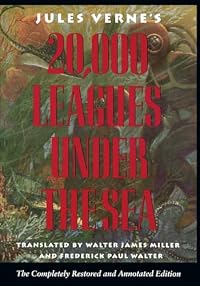
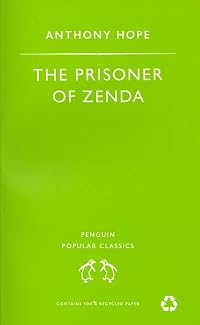


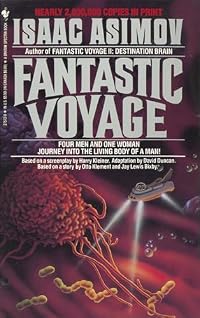
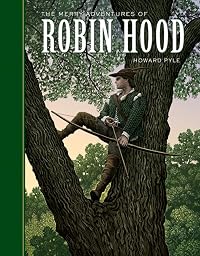



Member Recommendations

Member Reviews
This was one of my most re-read books as a youngster in a poor pulp paperback translation with a picture of James Mason and giant mushrooms on the front cover.
Returning to it over 30 years later in William Butcher's crisper and clearer 1992 translation of the original 1864 text has been a revelation on two counts.
First, it still holds all the excitement of my young years despite the obvious absurdities in the narrative although these are no less or more absurd than the general run of modern science fiction.
The journey is told as if you could follow it on a map - a map which could never exist - and the characterisation of young Axel, the monomaniacal but ultimately kindly Professor Lidenbrock and the imperturbable Icelander Hans is show more superb.
Even the minor characters (Miss Grauben, the servant and cook Martha and the Icelanders who pass through the first third of the story) are well drawn and believable. The wry humour is exquisite.
The moment when Axel thinks that he is left alone to die because he took a wrong turning filled me with the same existential terror as it did all those years ago. The 'sea crossing' and fight between monsters still excites. The setting is imaginatively realistic at all times.
Above all, brought out by Butcher's improved translation, the writing is crisp and functional, just how I like it. It is almost a movie script 'avant la lettre'.
The second revelation is that it is also a mock-educational text under the marketing influence of Verne's publisher Hetzel. When I first read this, I allowed the scientific gobbets of information to pass over my head but they are nothing if not persistent.
Introducing facts to give credibility and inform in a didactic way is now a trope of popular thrillers rather than science fiction but, although no more reliable than any modern popular science journalist, I can see contemporary readers being thrilled by it all.
As someone whose inheritance from his grandfather included an English translation of Figuier's 'World Before the Deluge' (1863), I already had a mental image of the battle of the icthyosaur and the plesiosaurus that matched Verne's own cultural environment.
On both grounds, clarity as an adventure story and insight into the popular scientific culture of mid-nineteenth century Europe, the book remains a work of genius and stands up well 150 or so years later.
Butcher's introduction to this edition is informative. He makes a good case for Verne's importance even if I was not persuaded by some of his more wild and abstruse literary claims.
This is deservedly a classic of European literature but is it fair to claim it as a founding text of contemporary science fiction? It strikes me as an imaginative adventure story set in a stone of contemporary science but not yet making the leap that Wells would make.
The science is part of the story, the McGuffin, but it might be better to see it a novel of industrial era didacticism which has burst its bounds because of the imaginative flair of the literary genius behind it.
One can imagine being a contemporary wanting the next novel even before finishing the first despite the didactic elements, lightly worn though they are. The emotional roller coaster and adventure is what grips, not the science. show less
Returning to it over 30 years later in William Butcher's crisper and clearer 1992 translation of the original 1864 text has been a revelation on two counts.
First, it still holds all the excitement of my young years despite the obvious absurdities in the narrative although these are no less or more absurd than the general run of modern science fiction.
The journey is told as if you could follow it on a map - a map which could never exist - and the characterisation of young Axel, the monomaniacal but ultimately kindly Professor Lidenbrock and the imperturbable Icelander Hans is show more superb.
Even the minor characters (Miss Grauben, the servant and cook Martha and the Icelanders who pass through the first third of the story) are well drawn and believable. The wry humour is exquisite.
The moment when Axel thinks that he is left alone to die because he took a wrong turning filled me with the same existential terror as it did all those years ago. The 'sea crossing' and fight between monsters still excites. The setting is imaginatively realistic at all times.
Above all, brought out by Butcher's improved translation, the writing is crisp and functional, just how I like it. It is almost a movie script 'avant la lettre'.
The second revelation is that it is also a mock-educational text under the marketing influence of Verne's publisher Hetzel. When I first read this, I allowed the scientific gobbets of information to pass over my head but they are nothing if not persistent.
Introducing facts to give credibility and inform in a didactic way is now a trope of popular thrillers rather than science fiction but, although no more reliable than any modern popular science journalist, I can see contemporary readers being thrilled by it all.
As someone whose inheritance from his grandfather included an English translation of Figuier's 'World Before the Deluge' (1863), I already had a mental image of the battle of the icthyosaur and the plesiosaurus that matched Verne's own cultural environment.
On both grounds, clarity as an adventure story and insight into the popular scientific culture of mid-nineteenth century Europe, the book remains a work of genius and stands up well 150 or so years later.
Butcher's introduction to this edition is informative. He makes a good case for Verne's importance even if I was not persuaded by some of his more wild and abstruse literary claims.
This is deservedly a classic of European literature but is it fair to claim it as a founding text of contemporary science fiction? It strikes me as an imaginative adventure story set in a stone of contemporary science but not yet making the leap that Wells would make.
The science is part of the story, the McGuffin, but it might be better to see it a novel of industrial era didacticism which has burst its bounds because of the imaginative flair of the literary genius behind it.
One can imagine being a contemporary wanting the next novel even before finishing the first despite the didactic elements, lightly worn though they are. The emotional roller coaster and adventure is what grips, not the science. show less
What a wonderful thing an imagination is. In Journey to the Center of the Earth we get to appreciate the imagination of Jules Verne in his 1864 novel that follows Professor Otto Lidenbrock, his nephew Axel, and their guide Hans down a volcanic tube in Iceland in a quest to reach the center of the earth.
A little dated and somewhat silly at times, this was still a fun and exciting read that had this group of adventurers encountering many dangers, including prehistoric animals before they discovered themselves back on the surface of the earth. Although many of the scientific “facts” that were used in this book have since been disproved, the author’s vision and his writing style make this book a classic of nineteenth century show more literature.
I read this book in instalment form through Daily Lit and as much as I thoroughly enjoyed my trip to this subterranean world, I can’t help but wish I had discovered this book when I was young as I know it would have fired my own imagination tremendously. Coming to the book at my advanced age, does allow me to understand why this book has been filmed for both movies and television numerous times as the author’s vision of a strange inner earth is vivid and one can see that it would play well on film. show less
A little dated and somewhat silly at times, this was still a fun and exciting read that had this group of adventurers encountering many dangers, including prehistoric animals before they discovered themselves back on the surface of the earth. Although many of the scientific “facts” that were used in this book have since been disproved, the author’s vision and his writing style make this book a classic of nineteenth century show more literature.
I read this book in instalment form through Daily Lit and as much as I thoroughly enjoyed my trip to this subterranean world, I can’t help but wish I had discovered this book when I was young as I know it would have fired my own imagination tremendously. Coming to the book at my advanced age, does allow me to understand why this book has been filmed for both movies and television numerous times as the author’s vision of a strange inner earth is vivid and one can see that it would play well on film. show less
Even in the 1860s, conventional scientific opinion would have ruled out a "journey to the centre of the Earth" quite firmly: from the study of volcanoes and extrapolating measurements made in deep mines, it was clear that it would soon get too hot for humans to survive. Verne has to jump through a few conceptual hoops to have his eccentric professor support a fringe theory (on the authority of Sir Humphrey Davy!) that allows it to cool as you descend further, and he sidesteps a few other obvious problems, like where you get oxygen from, and the logistics of travelling 6300 km vertically (even on the level it would take the best part of a year to walk that far...). Moreover, like so many adventure stories, this one is triggered by the show more flimsiest of pieces of evidence. I'm sure any real professor, finding a crudely enciphered bit of paper left in an old book that purported to give directions for reaching the centre of the earth, would assume it was a practical joke by his students and pin it up on the college noticeboard with the spelling mistakes corrected... Verne's eager professor doesn't even stop to wonder about why anyone would take so much care to encipher such a message, or whom he thought he might be addressing.
All the same, it's a good story, Verne mixes in enough real Icelandic background (including the farrier-priest-innkeeper who later featured in Under the glacier by Halldór Laxness), geoscience and palaeontology to keep us interested, as well as a reasonable amount of peril and suspense. Unsurprisingly, he doesn't quite deliver on the promise in the title, and the ending is just silly, but we knew from the start that (a) the narrator survives to tell the tale and (b) Verne couldn't be planning to make us sit through the reverse of the entire downward journey, so there has to be a quick exit from the subterranean world somewhere... show less
All the same, it's a good story, Verne mixes in enough real Icelandic background (including the farrier-priest-innkeeper who later featured in Under the glacier by Halldór Laxness), geoscience and palaeontology to keep us interested, as well as a reasonable amount of peril and suspense. Unsurprisingly, he doesn't quite deliver on the promise in the title, and the ending is just silly, but we knew from the start that (a) the narrator survives to tell the tale and (b) Verne couldn't be planning to make us sit through the reverse of the entire downward journey, so there has to be a quick exit from the subterranean world somewhere... show less
Journey to the Center of the Earth is the grand adventure story of Professor Lidenbrock's quest to follow a the instructions in a cryptic text that describe how one can descend to the very center of the planet via volcanic tubes originating in an Icelandic volcano. He sets out with his nephew Axel and their hired guide Hans on an extraordinary journey through the bowels of the earth that has them encountering strange phenomena and many dangers. The story is told entirely from Axel's point of view as he writes journal of the trip.
This is my first time reading Jules Verne. It was a lot of fun and reminded me very much of the 1959 movie. The story starts off slow and spends a bit more time in the preparation than on the journey than I'd show more like. I wish there had been more time spent deep within the earth and the discoveries there. Axel is quite over dramatic and probably should never have gone along with his uncle. The science in the story is incredibly out dated so you have to unplug that part of the brain to enjoy the adventure.
I listened to the audio book narrated by Tim Curry. His performance is top notch and fits the work beautifully. I love the emotion he's able to give the characters. show less
This is my first time reading Jules Verne. It was a lot of fun and reminded me very much of the 1959 movie. The story starts off slow and spends a bit more time in the preparation than on the journey than I'd show more like. I wish there had been more time spent deep within the earth and the discoveries there. Axel is quite over dramatic and probably should never have gone along with his uncle. The science in the story is incredibly out dated so you have to unplug that part of the brain to enjoy the adventure.
I listened to the audio book narrated by Tim Curry. His performance is top notch and fits the work beautifully. I love the emotion he's able to give the characters. show less
How do you make a book with giant lizards and cavemen living in a hidden underground world boring? It helps if the first half of the book is spent just getting your characters underground, and the second half of the book is spent with the characters mostly wandering aimlessly through blind tunnels or drifting without direction on a raft. It also helps if your narrator is a whiny coward whose only claim to character "depth" is that he's in love with his cousin. Have his companions be a silent strong man with no hint of internal life and an old egomaniac with shallow motives and you've got an almost perfect recipe for turning your book into a long, tedious slog. Oh, and did I mention to be sure to return your characters to the surface via show more a deus ex machina ending?
Definitely goes on my list of the ten worst books I've ever forced myself to slog through. show less
Definitely goes on my list of the ten worst books I've ever forced myself to slog through. show less
The research must have been extensive to pick up sights like the Thorvaldsen museum in Copenhagen or the Vadmal clothing of the nordics. Similarly the sights of Iceland from their horses to skyr breakfast ring true even though Verne never visited. Really something to consider when modern authors manage to screw this up with access to all the world’s books, pictures and street views at their fingertips.
There’s a recurring theme of these early exploratory books where they need to infodump the reader with a lot of practical understanding of theory and facts, because (seemingly), how can we trust the reader to have any clue how volcanoes work, what lives under the sea, how whaling works, how a balloon functions. There’s no easy way show more to collect any of this information outside of well stocked libraries. Verne is synthesizing travelogue excerpts with geological debates and it’s not trivial for a mass audience to do the same.
Therefore, the "adventure" is somewhat undercut by lengthy geological discussions about whether the Earth is hot or cold on the interior, the newfangled fossil debates and evolution, and ways the subterranean Earth could connect that might seem bizarre or quaint to us, but was the Michael Crichton type "hard" speculative fiction of its day. show less
There’s a recurring theme of these early exploratory books where they need to infodump the reader with a lot of practical understanding of theory and facts, because (seemingly), how can we trust the reader to have any clue how volcanoes work, what lives under the sea, how whaling works, how a balloon functions. There’s no easy way show more to collect any of this information outside of well stocked libraries. Verne is synthesizing travelogue excerpts with geological debates and it’s not trivial for a mass audience to do the same.
Therefore, the "adventure" is somewhat undercut by lengthy geological discussions about whether the Earth is hot or cold on the interior, the newfangled fossil debates and evolution, and ways the subterranean Earth could connect that might seem bizarre or quaint to us, but was the Michael Crichton type "hard" speculative fiction of its day. show less
The last thing Axel wants to do is embark on a potentially life-threatening adventure, but when his uncle Otto, a somewhat eccentric scientist, discovers an old document purporting to show how to travel to the center of the earth, he insists that Axel join him on his journey into the unknown. They gear up with tools, climbing gear and survival supplies, and then head to Iceland, because apparently the route leading to the center of the earth begins inside the dormant volcano Snæfellsjökull.
Subtle humor abounds in this tale of adventure, and Axel's personality makes the story palatable. However, in most other ways it really hasn't aged well. Despite a few moments of danger, overall their journey lacks somewhat in excitement when viewed show more through a modern-day lens, and is at times unintentionally amusing given advances in scientific knowledge. The moment the book jumped the shark for me was when their raft arose on a wave of lava right up out of the volcano Stromboli (I may have laughed aloud at that point). I wouldn't necessarily recommend this book for its entertainment value, but I might recommend it as a peek into the early days of science fiction writing. show less
Subtle humor abounds in this tale of adventure, and Axel's personality makes the story palatable. However, in most other ways it really hasn't aged well. Despite a few moments of danger, overall their journey lacks somewhat in excitement when viewed show more through a modern-day lens, and is at times unintentionally amusing given advances in scientific knowledge. The moment the book jumped the shark for me was when their raft arose on a wave of lava right up out of the volcano Stromboli (I may have laughed aloud at that point). I wouldn't necessarily recommend this book for its entertainment value, but I might recommend it as a peek into the early days of science fiction writing. show less
Members
- Recently Added By
Lists

1001 Books You Must Read Before You Die
1,448 works; 1,131 members

The Guardian's 1000 Novels Everyone Must Read
1,005 works; 546 members

Best Science Fiction Novels
816 works; 430 members
Survey of Classic Science Fiction
171 works; 48 members

Classics you know you should have read but probably haven't
421 works; 407 members
501 Must-Read Books
508 works; 72 members

NPRs your picks: top 100 Sci-Fi/Fantasy books
297 works; 78 members

Best Science Fiction Originally Published in a Language Other Than English
449 works; 34 members
Read the book and saw the movie
1,170 works; 195 members

Best Books About Journeys and Quests
117 works; 30 members
Survey of Science Fiction and Fantasy
101 works; 13 members

Survey of Classic Fantastic Fiction
36 works; 9 members

Stories About Other Worlds
145 works; 12 members
Science Fiction
42 works; 7 members
SF & Fantasy in Translation
95 works; 18 members

Short and Sweet
243 works; 23 members

Speculative Fiction to Read
706 works; 32 members

SFFKit 2016
13 works; 1 member

GeoCAT 2016
15 works; 1 member

Novels Set Underground
28 works; 7 members

1860s
25 works; 4 members

Europe
205 works; 6 members

French Fiction of the 18th and 19th Centuries in English Translation
169 works; 3 members

Livres français
9 works; 1 member
Speculative Fiction
40 works; 2 members

Literature in Translation
113 works; 5 members

1,001 BYMRBYD Concensus
723 works; 27 members

Books available on Open Library
171 works; 4 members

Books Read in 2016
4,666 works; 199 members

Speculative Fiction from around the World
610 works; 17 members

Literary and artistic references in HBO's Lovecraft Country
32 works; 1 member

Overdue Podcast
803 works; 9 members

Before Austen Comes Aesop
318 works; 9 members

Books Read in 2023
5,547 works; 144 members

Favorite Books in Translation
320 works; 133 members
Book Worlds We'd Like To Visit
322 works; 158 members
Vlogbrothers Book Recommendations
307 works; 4 members

AbeBooks: 50 essential science fiction books
50 works; 6 members

GP Fine Illustrated Classics
1 work; 1 member

Books Read in 2026
1,729 works; 62 members
Favorite Science Fiction
452 works; 216 members

Elevenses
316 works; 88 members
Puffin Books 70th anniversary handbook recommendations
537 works; 10 members

Books Set on Islands
190 works; 24 members

Children's Classics Worth Reading
68 works; 9 members

Unread books
1,063 works; 87 members
Best Adventure Stories
66 works; 13 members
Folio Society
831 works; 53 members
Favourite Books
1,817 works; 316 members
Favourite 19th century fiction
257 works; 62 members

Out of Copyright
244 works; 14 members
19th Century
190 works; 16 members

1001 Children's Books You Must Read Before You Grow Up
774 works; 100 members
Geology - Fiction
13 works; 2 members
Survey of Fantasy Classics
111 works; 23 members

Books tagged favorites
390 works; 29 members
Most Popular Penguins
70 works; 5 members

Prehistoric Peoples and Animals
10 works; 3 members

Western World's Greatest Books - Project Gutenberg
295 works; 15 members

Best of French Literature
138 works; 27 members
Best Fantasy Novels
821 works; 357 members

Allie's Favourite 150 Books
145 works; 3 members
Favorite Childhood Books
1,646 works; 517 members
Ambleside Books
459 works; 18 members

Books translated from Romance Languages into English
102 works; 7 members
Honey For a Child's Heart
1,152 works; 25 members

My favourite books
96 works; 3 members

Satori Smiles Children's Book List
262 works; 7 members
Books tagged unread
41 works; 1 member

Global Reads: Books Set in Western Europe
186 works; 10 members

Undiscovered Classics to Read
70 works; 15 members
Works Referenced in The League of Extraordinary Gentlemen
122 works; 6 members

100 knjiga
100 works; 1 member
Author Information

Jules Verne was born on February 8, 1828 in Nantes, France. He wrote for the theater and worked briefly as a stockbroker. He is considered by many to be the father of science fiction. His most popular novels included Journey to the Center of the Earth, Twenty Thousand Leagues Under the Sea, and Around the World in Eighty Days. Several of his works show more have been adapted into movies and TV mini-series. In 1892, he was made a Chevalier of the Legion of Honor in France. He died on March 24, 1905 at the age of 77. (Bowker Author Biography) Jules Verne (1828-1905) is the author of numerous adventure stories grounded in popularizations of science. (Publisher Provided) show less
Some Editions
Awards and Honors
Notable Lists
Series

Belongs to Publisher Series
Taschen Junior (23)
Tus libros (11)
Geração Público (24)
El País Aventuras (36)
Elsevier pockets (JVW05)
Airmont Classics (60)
Vintage Scholastic (T0618)
Corticelli [Mursia] (91)
Science Fiction Book Club (3871)
Work Relationships
Is contained in
Journey to the Center of the Earth / Twenty Thousand Leagues Under the Sea / Round the World in Eighty Days by Jules Verne
Twenty Thousand Leagues Under the Sea / The Mysterious Island / Journey to the Center of the Earth / Around the World in Eighty Days by Jules Verne
The Works of Jules Verne: Twenty Thousand Leagues Under the Sea, A Journey to the Center of the Earth, From the Earth to the Moon, Round the Moon, Around the World in Eighty Days, Short Stories by Jules Verne
Around the World in 80 Days / A Journey to the Centre of the Earth / Twenty Thousand Leagues Under the Sea by Jules Verne
Amazing Journeys: Journey to the Center of the Earth, From the Earth to the Moon, Circling the Moon, 20,000 Leagues Under the Seas, and Around the World in 80 Days by Jules Verne
Collected Novels: Around the World in 80 Days / The Clipper of the Clouds / Journey to the Centre of the Earth / From the Earth to the Moon / Twenty Thousand Leagues Under the Sea by Jules Verne
Jules Verne - Romane (Vier Bände im Schuber): 20.000 Meilen unter den Meeren - In 80 Tagen um die Welt - Reise zum Mittelpunkt der Erde - Von der Erde zum Mond by Jules Verne
90 Masterpieces You Must Read (Vol.1): Novels, Poetry, Plays, Short Stories, Essays, Psychology & Philosophy by Various
The Ultimate Science Fiction Mega Collection: 24 of the Best Sci-Fi Books of All Time: A Journey to the Center of the Earth, 20,000 Leagues Under the Sea, Around the World in 80 Days, John Carter of Mars Trilogy, The War of the Worlds, The Time Machine, Frankenstein, Dr. Jekyll and Mr. Hyde, 3 Ray Bradbury Stories, Flatland, & More by Jules Verne
Classic Tales of Science Fiction & Fantasy (Leather-bound Classics) by Editors of Canterbury Classics
Twenty Thousand Leagues Under the Sea / Journey to the Center of the Earth / Around the World in 80 Days / The Mysterious Island by Jules Verne
Is retold in
Has the adaptation
Is abridged in
Inspired
Common Knowledge
- Canonical title
- Journey to the Centre of the Earth
- Original title
- Voyage au centre de la Terre
- Alternate titles
- Journey to the Center of the Earth; A Journey into the Interior of the Earth
- Original publication date
- 1867
- People/Characters
- Otto Lidenbrock (professor); Axel Lidenbrock (nephew and assistant); Hans Bjelke (guide); Gräuben (17, god-daughter); Martha (servant); Arne Saknussemm
- Important places
- Hamburg, Germany; Copenhagen, Denmark; Reykjavík, Iceland; Iceland; Snæfellsjökull, Iceland; Center of the Earth (show all 7); Stromboli, Sicily, Italy
- Related movies
- Journey to the Center of the Earth (2008 | IMDb); Journey to the Center of the Earth (1959 | IMDb)
- First words
- Looking back to all that has occurred to me since that eventful day, I am scarcely able to believe in the reality of my adventures.
- Quotations
- Large though it is, that asylum is not big enough to contain all Professor Lidenbrock's madness.
- Last words
- (Click to show. Warning: May contain spoilers.)What is the need of adding that the illustrious Otto Liedenbrock, corresponding member of all the scientific, geographical, and mineralogoical societies of all the civilised world, was not her uncle and mine?
- Original language
- French
- Disambiguation notice
- This is the main work for A Journey to the Centre of the Earth by Jules Verne. Please do not combine with any adaptation, abridgement, etc.
Classifications
Statistics
- Members
- 17,489
- Popularity
- 373
- Reviews
- 263
- Rating
- (3.73)
- Languages
- 29 — Arabic, Catalan, Chinese, Czech, Danish, Dutch, English, Finnish, French, German, Galician, Greek, Hungarian, Italian, Japanese, Latvian, Malay, Multiple languages, Norwegian (Bokmål), Norwegian, Polish, Romanian, Russian, Slovak, Slovenian, Spanish, Swedish, Turkish, Portuguese (Portugal)
- Media
- Paper, Audiobook, Ebook
- ISBNs
- 994
- UPCs
- 6
- ASINs
- 389