Why I Am So Wise
by Friedrich Nietzsche 
On This Page
Description
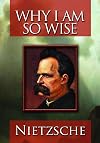
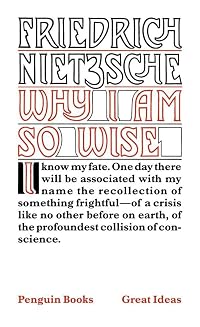
'Why do I know a few more things? Why am I so clever altogether?' Self-celebrating and self-mocking autobiographical writings from Ecce Homo , the last work iconoclastic German philosopher Nietzsche wrote before his descent into madness. One of 46 new books in the bestselling Little Black Classics series, to celebrate the first ever Penguin Classic in 1946. Each book gives readers a taste of the Classics' huge range and diversity, with works from around the world and across the centuries - show more including fables, decadence, heartbreak, tall tales, satire, ghosts, battles and elephants. show lessTags
Recommendations
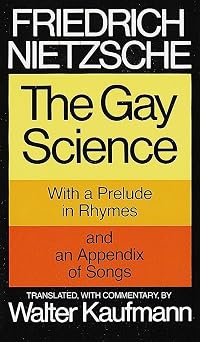
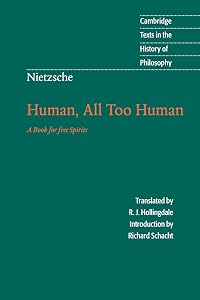
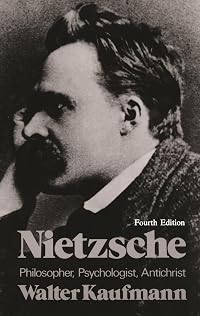
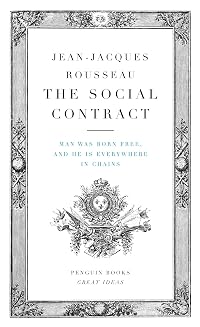

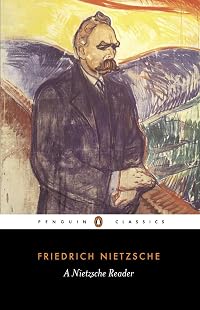

Member Reviews
I now actually own [b:Ecce Homo|479356|Ecce Homo (Penguin Classics)|Friedrich Nietzsche|https://d202m5krfqbpi5.cloudfront.net/books/1387738624s/479356.jpg|560851], the book from which this essay is taken, but this was my introduction to Nietzche when I was fifteen or sixteen and it had a huge effect on my writing and thought at the time. I remember that I experimented with underlining passages and writing in comments, something that I rarely do with books to this day (a habit I have had to change for grad school. Underlining in pencil only, however). I remember that I had certain passages by rote because they stirred me so deeply. I had quite a few books in this "Great Ideas" series because they were inexpensive and a fair introduction show more to someone you've heard of but don't know how to approach. However, I think they're also dangerous given that they run the risk of falsely essentializing the philosophers and writers represented. show less
Excerpts from Nietzsche ‘s last book before descending into madness. Does it feels? I don’t know it, but I found some interesting things about him I didn’t know before. For example, despite everyone thinks, he was very critical about the German culture even about Wagner so much that he didn’t consider himself German at all.
The man had balls! And, intentional or not, he's hilarious.
Ratings
Members
- Recently Added By
Author Information

1,395+ Works 78,481 Members
The son of a Lutheran pastor, Friedrich Wilhelm Nietzsche was born in 1844 in Roecken, Prussia, and studied classical philology at the Universities of Bonn and Leipzig. While at Leipzig he read the works of Schopenhauer, which greatly impressed him. He also became a disciple of the composer Richard Wagner. At the very early age of 25, Nietzsche show more was appointed professor at the University of Basel in Switzerland. In 1870, during the Franco-Prussian War, Nietzsche served in the medical corps of the Prussian army. While treating soldiers he contracted diphtheria and dysentery; he was never physically healthy afterward. Nietzsche's first book, The Birth of Tragedy Out of the Spirit of Music (1872), was a radical reinterpretation of Greek art and culture from a Schopenhaurian and Wagnerian standpoint. By 1874 Nietzsche had to retire from his university post for reasons of health. He was diagnosed at this time with a serious nervous disorder. He lived the next 15 years on his small university pension, dividing his time between Italy and Switzerland and writing constantly. He is best known for the works he produced after 1880, especially The Gay Science (1882), Thus Spake Zarathustra (1883-85), Beyond Good and Evil (1886), On the Genealogy of Morals (1887), The Antichrist (1888), and Twilight of the Idols (1888). In January 1889, Nietzsche suffered a sudden mental collapse; he lived the last 10 years of his life in a condition of insanity. After his death, his sister published many of his papers under the title The Will to Power. Nietzsche was a radical questioner who often wrote polemically with deliberate obscurity, intending to perplex, shock, and offend his readers. He attacked the entire metaphysical tradition in Western philosophy, especially Christianity and Christian morality, which he thought had reached its final and most decadent form in modern scientific humanism, with its ideals of liberalism and democracy. It has become increasingly clear that his writings are among the deepest and most prescient sources we have for acquiring a philosophical understanding of the roots of 20th-century culture. (Bowker Author Biography) show less
Friedrich Nietzsche has a Legacy Library. Legacy libraries are the personal libraries of famous readers, entered by LibraryThing members from the Legacy Libraries group.
Some Editions
Series
Belongs to Publisher Series
Work Relationships
Is contained in
The Philosophy of Nietzsche: Thus Spake Zarathustra; Beyond Good and Evil; The Genealogy of Morals; Ecce Homo; The Birth of Tragedy by Friedrich Nietzsche (indirect)
Sämtliche Werke. Bd 6, Der Fall Wagner ; Götzen-Dämmerung ; Der Antichrist ; Ecce homo ; Dionysos-Dithyramben ; Nietzsche contra Wagner by Friedrich Nietzsche (indirect)
L' anticristo: Crepuscolo degli idoli: Ecce homo: La volonta di potenza by Friedrich Nietzsche (indirect)
The Anti-Christ, Ecce Homo, Twilight of the Idols, and Other Writings by Friedrich Nietzsche (indirect)
Common Knowledge
- Canonical title
- Why I Am So Wise
- Original title
- Warum ich so weise bin (Ecce homo. Wie man wird, was man ist) (Ecce homo. Wie man wird, was man ist)
- First words
- Seeing that I must shortly approach mankind with the heaviest demand that has ever been made on it, it seems to me indispensable to say who I am.
- Last words
- (Click to show. Warning: May contain spoilers.)We deny God; in denying God, we deny accountability: only by doing that do we redeem the world.
- Original language
- German
Classifications
Statistics
- Members
- 904
- Popularity
- 29,823
- Reviews
- 3
- Rating
- (3.57)
- Languages
- English, Greek
- Media
- Paper, Ebook
- ISBNs
- 9
- ASINs
- 7