
In a Glass Darkly
by Sheridan Le Fanu
On This Page
Description
In a Glass Darkly collects together five short stories from gothic horror and mystery writer Sheridan Le Fanu. The book, published in 1872 a year before Le Fanu's death, is named from a passage in Corinthians which speaks of humankind perceiving the world "through a glass darkly." The stories are told from the posthumous writings of an occult detective named Dr Martin Hesselius. In Green Tea a clergyman is being driven mad by an evil demon that takes the ephemeral form of a monkey, but is show more unseen by others as it burdens the victim's mind with psychological torment. In The Familiar, revised from Le Fanu's The Watcher of 1851, a sea captain is stalked by a dwarf, "The Watcher." Is this strange character from captain's past? In Mr Justice Harbottle a merciless court judge is attacked by vengeful spirits, dreaming he is sentenced to death by a horrific version of himself. The story was revised from 1853's An Account of Some Strange Disturbances in Aungier Street. In The Room in the Dragon Volant, a notable mystery which includes a premature burial theme, an innocent young Englishman in France tries to rescue a mysterious countess from her unbearable situation. Lastly, Carmilla tells the tale of a lesbian vampire. It was a huge influence on Bram Stoker's writing of Dracula and the basis for the films Vampyr in 1932 and The Vampire Lovers in 1970.. show less
Tags
Recommendations

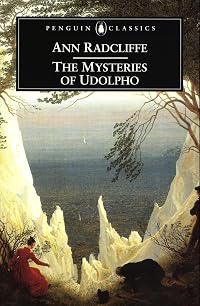

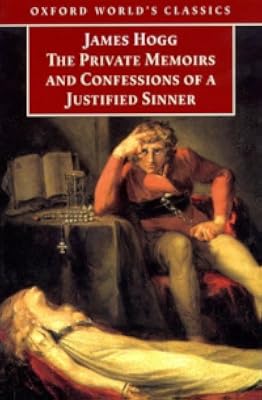
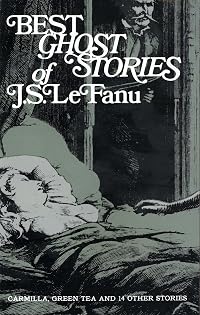

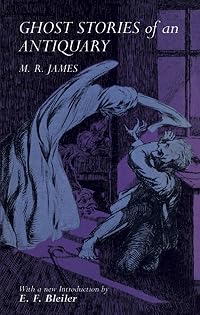














Member Recommendations





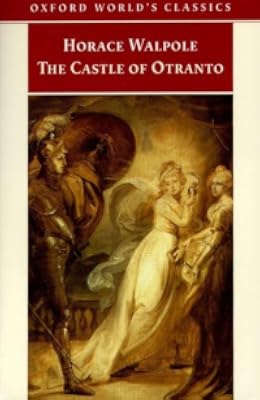
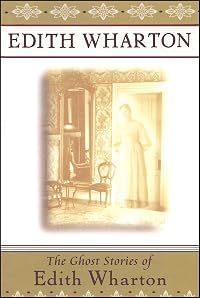
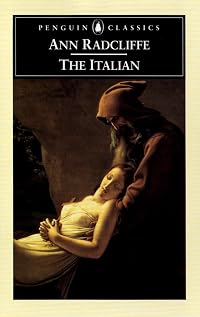
charlie68 Not really ghost stories or dark but also deal with the supernatural.

Member Reviews
If you'd actually heard of Le Fanu prior to stumbling upon this, it's likely that you're either (1) Irish, (2) familiar with Dorothy Sayers' "Gaudy Night," (3) vaguely remembering having read one of his short stories in a literary anthology, or (4) working your way through "1001 Books to Read Before You Die," which has identified this work 'important' ... which goes to show that just because a book is 'important' doesn't mean it can't also be fun!
What makes these tales 'important'? Among other considerations, they capture a time in history when the wildly sensational gothic tales of the 1700s (Walpole's "The Castle of Otranto," Radcliffe's "Mysteries of Udolpho") were colliding with the more rational vibe of the 1800s. Le Fanu's show more solution? Deliver the gothic juiciness that readers still craved (creepy settings, supernatural thrills, ample melodrama), but add an overlay of reason - represented, in this collection, by the eminently sensible medical practitioner Dr. Hesselius, who (we are assured) relates the facts of each case without any hint of bias, presupposition, or fancy. Are the devils in these tales real, or psychological manifestations? Dr. Hesselius has his learned opinions, but Le Fanu builds in just enough uncertainly to make things less than clear.
In the first tale, Green Tea, a clerical gentleman is bedeviled - literally - by the terrifying apparition of a malevolent black monkey with glowing red eyes. In the learned opinion of Dr. Hesselius, called in to provide his expert advice, the whole thing is likely a "vibratory disturbance" brought on by an imbalance of the bodily humors (triggered by an overdose of green tea) ... but are we really buying that?
In the second tale, The Familiar, a solid and sensible ship's captain is bedeviled by ghostly footsteps and a small man in an overcoat who may or may not be the reincarnation of a seaman that he left for dead in a foreign port. You could knock this for being a little too similar to the first tale, but Le Fanu redeems himself by bringing a Jane Austen-esque wit to scenes depicting the captain's engagement to a debutante whose mama is definitely *not* pleased at future son-in-law's fancifications.
The third tale, Mr. Justice Harbottle, presents us with a bullying judge who, frankly, deserves bedeviling - which, this time, comes in the form of a threat: a metaphysical court, having found him guilty of hanging innocent people, has sentenced him to death. The fun comes from waiting to see how justice will be visited upon the deserving victim.
To be honest, it's a stretch to call The Room in the Dragon Volant, tale number four, a ghost story at all. However, it is a quite satisfying "caper" yarn, in which a team of French rogues set up an extremely elaborate con to cheat a naive, chivalric young British lad out of his fortune (and his life). This one includes an evil count, a fortune in diamonds, a masquerade ball, a haunted room, a creepy cemetery, AND a mysterious oriental fortuneteller who turns out to be a corpse - truly a feast of gothic tropes!
Which brings us to Camilla, the final tale in the collection. To appreciate this one, it's useful to appreciate that Bram Stoker's "Dracula" wasn't published until 1897 - which means that this tale about a diabolical female vampire who preys on an innocent young girl precedes the more famous Stoker tale by over 35yrs. Moreover, Le Fanu isn't at all shy about leaning into the sensual elements of the myth. I just assumed that the whole "sexy vampire" thing was a recent invention (Anne Rice - you have much to answer for!), but Camilla's seductive immorality is as carnal as it is creepy.
Consideration needs to be made for the fact that these tales were published in 1860, a time when storytelling was a much more leisurely business. The stories unfold slowly, cushioned by paragraphs of peripheral detail. There's nothing here that's going to make your heart palpitate. But potential readers may enjoy, as I did, this glimpse into the antecedents of modern horror ... and Le Fanu's subtle wit provides an unexpected bonus. show less
What makes these tales 'important'? Among other considerations, they capture a time in history when the wildly sensational gothic tales of the 1700s (Walpole's "The Castle of Otranto," Radcliffe's "Mysteries of Udolpho") were colliding with the more rational vibe of the 1800s. Le Fanu's show more solution? Deliver the gothic juiciness that readers still craved (creepy settings, supernatural thrills, ample melodrama), but add an overlay of reason - represented, in this collection, by the eminently sensible medical practitioner Dr. Hesselius, who (we are assured) relates the facts of each case without any hint of bias, presupposition, or fancy. Are the devils in these tales real, or psychological manifestations? Dr. Hesselius has his learned opinions, but Le Fanu builds in just enough uncertainly to make things less than clear.
In the first tale, Green Tea, a clerical gentleman is bedeviled - literally - by the terrifying apparition of a malevolent black monkey with glowing red eyes. In the learned opinion of Dr. Hesselius, called in to provide his expert advice, the whole thing is likely a "vibratory disturbance" brought on by an imbalance of the bodily humors (triggered by an overdose of green tea) ... but are we really buying that?
In the second tale, The Familiar, a solid and sensible ship's captain is bedeviled by ghostly footsteps and a small man in an overcoat who may or may not be the reincarnation of a seaman that he left for dead in a foreign port. You could knock this for being a little too similar to the first tale, but Le Fanu redeems himself by bringing a Jane Austen-esque wit to scenes depicting the captain's engagement to a debutante whose mama is definitely *not* pleased at future son-in-law's fancifications.
The third tale, Mr. Justice Harbottle, presents us with a bullying judge who, frankly, deserves bedeviling - which, this time, comes in the form of a threat: a metaphysical court, having found him guilty of hanging innocent people, has sentenced him to death. The fun comes from waiting to see how justice will be visited upon the deserving victim.
To be honest, it's a stretch to call The Room in the Dragon Volant, tale number four, a ghost story at all. However, it is a quite satisfying "caper" yarn, in which a team of French rogues set up an extremely elaborate con to cheat a naive, chivalric young British lad out of his fortune (and his life). This one includes an evil count, a fortune in diamonds, a masquerade ball, a haunted room, a creepy cemetery, AND a mysterious oriental fortuneteller who turns out to be a corpse - truly a feast of gothic tropes!
Which brings us to Camilla, the final tale in the collection. To appreciate this one, it's useful to appreciate that Bram Stoker's "Dracula" wasn't published until 1897 - which means that this tale about a diabolical female vampire who preys on an innocent young girl precedes the more famous Stoker tale by over 35yrs. Moreover, Le Fanu isn't at all shy about leaning into the sensual elements of the myth. I just assumed that the whole "sexy vampire" thing was a recent invention (Anne Rice - you have much to answer for!), but Camilla's seductive immorality is as carnal as it is creepy.
Consideration needs to be made for the fact that these tales were published in 1860, a time when storytelling was a much more leisurely business. The stories unfold slowly, cushioned by paragraphs of peripheral detail. There's nothing here that's going to make your heart palpitate. But potential readers may enjoy, as I did, this glimpse into the antecedents of modern horror ... and Le Fanu's subtle wit provides an unexpected bonus. show less
It's been a long time since I read any LeFanu, but I grew up near his childhood home in Abington, so he featured a lot in the class of a particular teacher who placed a lot of stress on local history. This seemed to lead to her taking an interest in things horror, so the class library featured gloriously garish books on the subject, covering topics like Dracula, Edgar Allan Poe, Hack The Ripper (Hack The Ripper? That's a typo but I don't want to edit it out... ) complete with bloodcurdling illustrations.
Of the stories in this collection, I'm sure I read the first three - Mr Justice Harbottle in particular struck a chord as I think it was the first in a subgenre of ghost stories featuring wicked judges I ever encountered. They're great show more stories, though they can be a bit involved in terms of getting to the central narrator, with introductions by the guy who found the journals of the guy who wrote the letters to the guy who once met this fellow with a peculiar tale to relate, and so on. Green Tea in particular seems almost archetypal in terms of chilling ghostly encounter.
The Room At The Dragon Volant I don't think I ever read before, though I do remember one of the teacher's books going into detail about Victorian terror of premature burial, so chances are it was discussed. I wonder if there was a whole genre of sensational novels and novellas about callow but good-hearted but headstrong youths going to the continent and being lead elaborately astray by rogues both beautiful and foul, all in league. Certainly it's an entertaining romp and a precursor of certain types of noir, I would think. Our hero is fortunate to escape with his life and a lesson in the excesses of sin - a modern hero might find himself corrupted to the point of destruction. Though maybe they had that sort of instructive fable, too.
Carmilla I definitely never read, though I've certainly heard of it. Deliciously creepy and sinister tale of vampirism in a remote mountain schloss, Carmilla herself is a compelling creation with her naked lust for the young heroine, feeding off her vitality as much as her blood, an emotional parasite as well a a bloodsucking one.
Great to be reminded why LeFanu is regarded as such an influential writer in the gothic/ghost/horror genre. Wonderfully written stories of atmosphere and unease. show less
Of the stories in this collection, I'm sure I read the first three - Mr Justice Harbottle in particular struck a chord as I think it was the first in a subgenre of ghost stories featuring wicked judges I ever encountered. They're great show more stories, though they can be a bit involved in terms of getting to the central narrator, with introductions by the guy who found the journals of the guy who wrote the letters to the guy who once met this fellow with a peculiar tale to relate, and so on. Green Tea in particular seems almost archetypal in terms of chilling ghostly encounter.
The Room At The Dragon Volant I don't think I ever read before, though I do remember one of the teacher's books going into detail about Victorian terror of premature burial, so chances are it was discussed. I wonder if there was a whole genre of sensational novels and novellas about callow but good-hearted but headstrong youths going to the continent and being lead elaborately astray by rogues both beautiful and foul, all in league. Certainly it's an entertaining romp and a precursor of certain types of noir, I would think. Our hero is fortunate to escape with his life and a lesson in the excesses of sin - a modern hero might find himself corrupted to the point of destruction. Though maybe they had that sort of instructive fable, too.
Carmilla I definitely never read, though I've certainly heard of it. Deliciously creepy and sinister tale of vampirism in a remote mountain schloss, Carmilla herself is a compelling creation with her naked lust for the young heroine, feeding off her vitality as much as her blood, an emotional parasite as well a a bloodsucking one.
Great to be reminded why LeFanu is regarded as such an influential writer in the gothic/ghost/horror genre. Wonderfully written stories of atmosphere and unease. show less
First things first, Wordsworth Classics is just the worst for evidently having zero editors on staff. They produce books cheaply, but it's because they seem to have pulled a free and poor-quality Project Gutenberg text and just printed it off in book form without even a cursory glance at whether their exclamation points have become the number "1" or if the "TH" in "the" has been read as a lower-case "B" somehow. It makes for a very frustrating read and I need to always remember this and never ever buy their books.
That major frustration aside, I chipped away at this book for quite awhile. I got through the first three stories mainly because I had a lot of time to kill in the repair shop lounge while getting our car ready for a show more cross-Canada trip that it never ended up taking. Then I skipped on to "Carmilla" because that was the real draw, and there I was not disappointed.
"Carmilla" deserves its fame and fascination. It persists as one of the greatest vampire stories, and that's after more than a century of imitations and derivations. I always meant to read it and wish I hadn't waited so long because it's such a maddeningly perfect Gothic tale. I knew about the "lesbian vampires" reputation before reading it, but that only made me expect it would be way more of an undertone. I thought I'd have to read pretty deeply into the text. I thought I'd have to rely on my knowledge of 19th-century inferences to sexual deviance. I didn't expect it to be as blatant, as passionate, as... endearing? I loved it.
I was also surprised at how much I liked "The Room in the Dragon Volant," which I read a bit later. I thought it would be work the way "Green Tea" or "The Familiar" was, but I ended up really enjoying the naive narrator, self-absorbed and utterly human for it, and even without a trace of the supernatural it was still the most shiver-inducing of all the stories in its climax.
I feel I've got to read [b:Uncle Silas|49190|Uncle Silas|Joseph Sheridan Le Fanu|https://d.gr-assets.com/books/1367864839s/49190.jpg|2847087] still, and then likely feel done with Le Fanu for the time being. Maybe in the lead-up to Hallowe'en next year. show less
That major frustration aside, I chipped away at this book for quite awhile. I got through the first three stories mainly because I had a lot of time to kill in the repair shop lounge while getting our car ready for a show more cross-Canada trip that it never ended up taking. Then I skipped on to "Carmilla" because that was the real draw, and there I was not disappointed.
"Carmilla" deserves its fame and fascination. It persists as one of the greatest vampire stories, and that's after more than a century of imitations and derivations. I always meant to read it and wish I hadn't waited so long because it's such a maddeningly perfect Gothic tale. I knew about the "lesbian vampires" reputation before reading it, but that only made me expect it would be way more of an undertone. I thought I'd have to read pretty deeply into the text. I thought I'd have to rely on my knowledge of 19th-century inferences to sexual deviance. I didn't expect it to be as blatant, as passionate, as... endearing? I loved it.
I was also surprised at how much I liked "The Room in the Dragon Volant," which I read a bit later. I thought it would be work the way "Green Tea" or "The Familiar" was, but I ended up really enjoying the naive narrator, self-absorbed and utterly human for it, and even without a trace of the supernatural it was still the most shiver-inducing of all the stories in its climax.
I feel I've got to read [b:Uncle Silas|49190|Uncle Silas|Joseph Sheridan Le Fanu|https://d.gr-assets.com/books/1367864839s/49190.jpg|2847087] still, and then likely feel done with Le Fanu for the time being. Maybe in the lead-up to Hallowe'en next year. show less
"In a Glass Darkly" is a collection of some of Sheridan Le Fanu's best known works including: the volume or "casebooks" for which the collection is named, the novella "The Room in Le Dragon Volant," and of course, the fan-favorite, "Carmilla."
"In a Glass Darkly," Le Fanu uses the epistolary technique, that is, a way of telling a story through found documents or a journal. These stories are the cases of Dr. Martin Hesselius, a philosopher and practitioner of "metaphysical medicine." In "Green Tea," Rev. Jennings is stalked by a demonic monkey that no one else can see. Sounds laughable at first, but imagine the incubus from Fuseli's "The Nightmare." In stages, like a sickness, the demon convinces the Reverend to end his life. In "The show more Familiar," brave Capt. Barton of the King's navy, is also pursued by the unseen. Although not as unnerving, the suspense and build up exceeds the first. You'll find yourself questioning whether the familiar is supernatural or a real individual. The last, "Justice Harbottle," is my favorite. It's vivid, grim yet morbidly satisfying. It's a perfect mix of psychological torment and a classic descent into hell.
"Le Dragon Volant" is a tale of mystery, chivalry and romance. The only element that makes it Gothic is the supposedly "haunted" room that our narrator, wealthy Englishman Richard Beckett, is staying in. He's egotistical and shallow, but still entertaining. It's well-written and memorable, but doesn't really fit in. Only the last act is terrifying, but any reader with any sense of comprehension can see it coming. Beckett, a noble Casanova-type deserves a resurrection in a modern meet-cute novel.
"Carmilla" I feel, needs no introduction. It is nearly as popular as Dracula, especially as its predecessor and as one of the earliest examples of LGBTQ horror. Our heroine sets the scene immediately, living in relative isolation, which only heightens the suspense. Carmilla is an example of both a "psychic" and "traditional" vampire, feeding off her victims emotionally before draining them. Spectacular tale!
Averaging them together, it's a 3 1/2 out of 5! show less
"In a Glass Darkly," Le Fanu uses the epistolary technique, that is, a way of telling a story through found documents or a journal. These stories are the cases of Dr. Martin Hesselius, a philosopher and practitioner of "metaphysical medicine." In "Green Tea," Rev. Jennings is stalked by a demonic monkey that no one else can see. Sounds laughable at first, but imagine the incubus from Fuseli's "The Nightmare." In stages, like a sickness, the demon convinces the Reverend to end his life. In "The show more Familiar," brave Capt. Barton of the King's navy, is also pursued by the unseen. Although not as unnerving, the suspense and build up exceeds the first. You'll find yourself questioning whether the familiar is supernatural or a real individual. The last, "Justice Harbottle," is my favorite. It's vivid, grim yet morbidly satisfying. It's a perfect mix of psychological torment and a classic descent into hell.
"Le Dragon Volant" is a tale of mystery, chivalry and romance. The only element that makes it Gothic is the supposedly "haunted" room that our narrator, wealthy Englishman Richard Beckett, is staying in. He's egotistical and shallow, but still entertaining. It's well-written and memorable, but doesn't really fit in. Only the last act is terrifying, but any reader with any sense of comprehension can see it coming. Beckett, a noble Casanova-type deserves a resurrection in a modern meet-cute novel.
"Carmilla" I feel, needs no introduction. It is nearly as popular as Dracula, especially as its predecessor and as one of the earliest examples of LGBTQ horror. Our heroine sets the scene immediately, living in relative isolation, which only heightens the suspense. Carmilla is an example of both a "psychic" and "traditional" vampire, feeding off her victims emotionally before draining them. Spectacular tale!
Averaging them together, it's a 3 1/2 out of 5! show less
Arguably the first great ghost story collection in the Western canon. There is one weaker entry, The Room in the Dragon Volant which is really a gothic mystery not a ghost story, albeit a pretty good one. The chump protagonist Beckett is a classic example of being led by the dick, Victorian sensibilities aside.
Carmilla is the first great vampire story, not to mention having a strong lesbian theme that somehow sneaked right by Victorian censors. Green Tea and The Familiar, the latter a story of supernatural revenge, are still chilling after 150 years. The Familiar is somewhat weakened by Le Fanu giving away the revenge motivation in a postscript.
Harbottle is fine although its edge has been blunted by the billion similar ghost stories show more that have come after it. show less
Carmilla is the first great vampire story, not to mention having a strong lesbian theme that somehow sneaked right by Victorian censors. Green Tea and The Familiar, the latter a story of supernatural revenge, are still chilling after 150 years. The Familiar is somewhat weakened by Le Fanu giving away the revenge motivation in a postscript.
Harbottle is fine although its edge has been blunted by the billion similar ghost stories show more that have come after it. show less
This was wonderful. I enjoyed how each story has a different take on the supernatural occurrences. Some have “scientific” explanations, on the fence between hallucinations and actual spirits. One story only seems to be supernatural to advance the plot. And then, of course, Carmilla is firmly a supernatural story. Spoiler- it’s the best one in this collection. It’s a great example of suspense where the reader knows but the characters don’t. I dropped it down a star for “The Room in the Dragon Volant,” which is not as interesting, is too long and has a clunky and too sudden conclusion
Horror fiction isn't very much my thing, and a lot of early horror fiction especially leaves me cold-- I feel like it's pretty obvious why Dracula took root in the popular consciousness to an extent that "Carmilla" did not. So there are some creepy moments in the five stories collected here, but overall I wasn't too moved. Except in the case of, surprisingly, "The Room in the Dragon Volant," which doesn't have any fantastic elements in it, but is about a young Englishman trying to make his fortune gambling in France who falls in love with the abused wife of a cruel count. This was pretty gripping and creepy in turns, and the characters were very fun.
Members
- Recently Added By
Lists

1001 Books You Must Read Before You Die
1,448 works; 1,134 members

Classics you know you should have read but probably haven't
421 works; 406 members

Favourite 19th century fiction
257 works; 62 members

1,001 BYMRBYD Concensus
723 works; 27 members

Ghosts
278 works; 17 members

Haunted Britain and Ireland
51 works; 7 members

Jones & Newman: Best Horror Books Further Recommended Reading
577 works; 4 members

Evil Lurks Among Us
10 works; 1 member

Lucy's Long List
69 works; 1 member

Internationale Romantik
15 works; 1 member
el
1,139 works; 1 member
Talk Discussions
Past Discussions
Reading Group #6: 'Green Tea' in Gothic Literature (December 2018)
Author Information

The greatest author of supernatural fiction during the nineteenth century was undoubtedly J. Sheridan Le Fanu. Le Fanu was born in Dublin and, as with so many other English popular fiction authors of his time, entered the genre of fiction by way of journalism, working on such publications as the Evening Mail and the Dublin University Magazine. Le show more Fanu came from a middle-class background; his family was of Huguenot descent. He graduated from Trinity College and married in 1844. After his wife died in 1858, until his own death, Le Fanu was known as a recluse, creating his ghost fiction late at night in bed. Probably he began writing ghost fiction in 1838; his earliest supernatural story is often cited as being either "The Ghost and the Bone-Setter" or the "Fortunes of Sir Robert Ardagh," both of which were later collected in the anthology entitled The Purcell Papers (1880). Writing most effectively in the short story form, Le Fanu's tales such as "Carmilla" (a vampire story that is thought possibly to have influenced Bram Stoker's Dracula) and the problematic "Green Tea" are considered by many literary scholars to be classics of the supernatural genre. His lengthy Gothic novels, such as Uncle Silas (1864), though less highly regarded than his shorter fiction, are nonetheless wonderfully atmospheric. Le Fanu's particular brand of literary horror tends toward the refined, subtle fright rather than the graphic sensationalism of Matthew Gregory Lewis. His work influenced other prominent horror fiction authors, including M. R. James. (Bowker Author Biography) show less
Some Editions
Awards and Honors
Series
Belongs to Publisher Series
Work Relationships
Is contained in
Contains
Has the adaptation
Common Knowledge
- Canonical title
- In a Glass Darkly
- Original title
- In a Glass Darkly
- Original publication date
- 1872
- People/Characters*
- Martin Hesselius
- Related movies
- Vampyr (1932 | IMDb); The Vampire Lovers (1970 | IMDb); Et mourir de plaisir (1960 | IMDb); La cripta e l'incubo (1964 | IMDb); La novia ensangrentada (1972 | IMDb)
- Dedication
- TO
BRINSLEY HOMAN, ESQ.
THESE VOLUMES ARE INSCRIBED,
WITH MUCH AFFECTION,
BY HIS OLD FRIEND
THE AUTHOR. - First words
- Though carefully educated in medicine and surgery, I have never practiced either.
- Last words
- (Click to show. Warning: May contain spoilers.)It was long before the terror of recent events subsided, and to this hour the image of Carmilla returns to memory with ambiguous alternations - sometimes the playful, languid, beautiful girl; sometimes the writhing fiend I saw in the ruined church; and often from a reverie I have started, fancying I heard the light step of Carmilla at the drawing room door
- Disambiguation notice
- Oxford World's Classics edition contains short stories: In a Glass Darkly, Green Tea, The Familiar, Mr Justice Harbottle, The Room in the Dragon Volant, Carmilla.
*Some information comes from Common Knowledge in other languages. Click "Edit" for more information.
Classifications
Statistics
- Members
- 1,645
- Popularity
- 13,639
- Reviews
- 31
- Rating
- (3.72)
- Languages
- 6 — Czech, English, French, German, Italian, Polish
- Media
- Paper, Audiobook, Ebook
- ISBNs
- 62
- ASINs
- 29