On This Page
Description
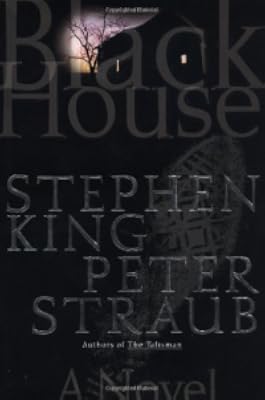
Twenty years ago, a boy named Jack Sawyer travelled to a parallel universe called The Territories to save his mother and her Territories "twinner" from a premature and agonizing death that would have brought cataclysm to the other world. Now Jack is a retired Los Angeles homicide detective living in the nearly nonexistent hamlet of Tamarack, WI. He has no recollection of his adventures in the Territories and was compelled to leave the police force when an odd, happenstance event threatened show more to awaken those memories.When a series of gruesome murders occur in western Wisconsin that are reminiscent of those committed several decades earlier by a real-life madman named Albert Fish, the killer is dubbed "The Fisherman" and Jack's buddy, the local chief of police, begs Jack to help his inexperienced force find him. But is this merely the work of a disturbed individual, or has a mysterious and malignant force been unleashed in this quiet town? What causes Jack's inexplicable waking dreams, if that is what they are, of robins' eggs and red feathers? It's almost as if someone is trying to tell him something. As that message becomes increasingly impossible to ignore, Jack is drawn back to the Territories and to his own hidden past, where he may find the soul-strength to enter a terrifying house at the end of a deserted track of forest, there to encounter the obscene and ferocious evils sheltered within it.
. show less
Tags
Recommendations



Member Recommendations
Member Reviews
King and Straub kick back, let rip and do what they do best. They don;t care. They know they're the masters. They know this stuff inside and out. They know they've influenced about two generations of creators who adore them. they know they're the original and the best. They'll feck around with a chatty loquacious omniscient third person narrator, so it's more like a guided tour than anovel. They'll evoke Dickens - so what? They're part of the same literary pantheon - big wordy potboilers full of a mix of lovable and horrible characters. Multiple personality DJs, decent sheriffs out of their depths, crooked retirement home operators, brutal child killers, intellectual beer-making bikers, brave special kids, sick mothers, and good ol' show more Jack Sawyer. They can bring these people to life with their eyes shut. They probably wrote this blindfolded sitting on top of a radio tower just to prove they could. And they did. show less
So many of King's feature youngsters dealing with adult sized horror, it's easy to wonder what became of these young people when they matured and how they processed the horrors of their youth, whether or not it lingers. And Uncle Stevie has himself wondered, giving us the second half of [It] and [Doctor Sleep]. Jack Sawyer of [The Talisman] is one of those endearing characters, and his journey one that begs for a follow-up. [Black House] focuses much on the lingering effects of the terrors of his young life but is much lighter on the details from that other land where Jack quested. It still features, as the dark force trying to puncture the veil into this world emanates from there. Jack has become a policeman, and the evil making its show more way into ours has taken the form of a killer who preys on children. Though he took an early retirement, Jack is pressed back into service and he soon learns there are elements of the crimes only he can understand, and only if he's willing to remember all the things he's tried to box away in his mind. The police procedural elements of the novel create an intense and readable narrative. But having read [The Talisman] so recently, and it's a favorite, I pined for more from those other lands and those who people them. But it's a small quibble - this is still a solid entry in the King canon.
4 1/2 bones!!!!!
Recommended show less
4 1/2 bones!!!!!
Recommended show less
Black House, the serial killer-themed sequel to King and Straub's 1984 collaboration The Talisman, unfortunately finds the two bestselling authors at their worst. This novel bears little resemblance to its predecessor, a sweeping epic that spanned two worlds and featured a variety of intriguing characters. Not only did King and Straub fail to convince me that the hero of this novel was Jack Sawyer as an adult (young Jack was a vivid, well-drawn character in the first book, but here he's painfully dull and never comes to life), but none of the characters for whom the reader is meant to feel affection is actually likable.
Each author indulges in his most annoying tendencies here. King's weakness, of course, is repetition: I felt a special show more loathing for the trademark exclamation of Henry Leyden's alter ego George Rathbun ("Case closed, game over, zip up your fly! Why, even a blind man could see that blah, blah, blah") after it had appeared about 700 times in the text. Straub's Achilles heel is the radiant-woman-who-shines-with-a-holy-inner-light syndrome; it's what made his most recent novel A Dark Matter an uncharacteristic dud, and here it's applied to a downright repellent character named Judy Marshall. If the authors absolutely insist on making this an element of the story, shouldn't Good Queen So-and-So at least be someone the reader can stand?
To top it all off, Black House is written entirely in the present tense. I don't know who made this baffling decision, but it ensures that the novel is an uphill climb all the way. The Talisman was fascinating: I became embroiled in the story and forgot that I was reading a book. The sequel never lets you forget, not even for a minute. There's you, unfortunate reader, and there's this clunky, laboriously-written tome in which you simply cannot lose yourself. Halfway through it begins to feel like a leaden weight upon the mind; it speeds up a little near the end, but that's not enough. Novella? Sure, it might have worked in a shorter format. Hefty beach book? No way. The premise is not sufficiently interesting to hang an entire novel on, particularly a novel the size of Black House.
I'm a huge fan of Straub, and I like some of King's work, too. I know they can do better, and in the third installment of the Jack Sawyer saga I expect that they will. show less
Each author indulges in his most annoying tendencies here. King's weakness, of course, is repetition: I felt a special show more loathing for the trademark exclamation of Henry Leyden's alter ego George Rathbun ("Case closed, game over, zip up your fly! Why, even a blind man could see that blah, blah, blah") after it had appeared about 700 times in the text. Straub's Achilles heel is the radiant-woman-who-shines-with-a-holy-inner-light syndrome; it's what made his most recent novel A Dark Matter an uncharacteristic dud, and here it's applied to a downright repellent character named Judy Marshall. If the authors absolutely insist on making this an element of the story, shouldn't Good Queen So-and-So at least be someone the reader can stand?
To top it all off, Black House is written entirely in the present tense. I don't know who made this baffling decision, but it ensures that the novel is an uphill climb all the way. The Talisman was fascinating: I became embroiled in the story and forgot that I was reading a book. The sequel never lets you forget, not even for a minute. There's you, unfortunate reader, and there's this clunky, laboriously-written tome in which you simply cannot lose yourself. Halfway through it begins to feel like a leaden weight upon the mind; it speeds up a little near the end, but that's not enough. Novella? Sure, it might have worked in a shorter format. Hefty beach book? No way. The premise is not sufficiently interesting to hang an entire novel on, particularly a novel the size of Black House.
I'm a huge fan of Straub, and I like some of King's work, too. I know they can do better, and in the third installment of the Jack Sawyer saga I expect that they will. show less
Sorry to say, this book sat on my shelf for far too long, a real sin since both Stephen King and Peter Straub are just about my favorite writers ever. King, of course, is the King of Horror, but I think Straub is his equal, if not his better. Straub’s GHOST STORY and FLOATIING DRAGON are among the finest reading experiences of my life. Each man has a distinct style, King is the true populist and master of gore; Straub is the more elegant and subtle writer, but he knows how to deliver a real shock to the reader. And for us horror fans, when these two masters of the genre teamed back in the 80’s to write, THE TALISMAN, an epic fantasy of alternate worlds with great undertones of horror, it was pure heaven.
BLACK HOUSE, a sequel of show more sorts, was written fifteen years later and came out in 2001; in it, the boy hero of that earlier book, Jack Sawyer, is a grown man in his 30’s, a retired cop living in the small Wisconsin town of French Landing, his memories of that childhood adventure (when he traveled across The Territories to save his dying mother) are long forgotten. But the past won’t stay buried, as French Landing is plagued by a child killer reminiscent of the infamous Albert Fish, so much so that he has been nicknamed, The Fisherman, and the harried local police chief calls on Jack to help solve this horrific case. Soon, Jack is on the trail of the killer with the help of blind local Deejay and a motorcycle gang of philosophers, and regaining his memories of his 13 year old self in The Territories. He will need to do so because The Fisherman is a creature of this alternate realm as well, where he serves the will of The Crimson King, a malevolent character from King’s THE DARK TOWER series. In the end, if Jack is to save the young son of a woman he has fallen in love with, Jack Sawyer, will have enter the Black House, a portal to the malign world at the center of the Dark Tower, and save not only The Fisherman’s latest victim, but save a universe of worlds as well.
It has been many a year since I first read THE TALISMAN, and BLACK HOUSE is not a straight up sequel, but any reader who has not read the former book will have trouble getting through the latter. Some people might be put off by the style of the book, where the narrator breaks the fourth wall and speaks directly to the reader; not just any author could pull this off, but I think King and Straub do it expertly. Fans of the writers will try and dissect the book to find out what is King and what is Straub; the Wisconsin setting has been used by Straub in other books (a character from his IF YOU COULD SEE ME NOW is referenced), while the aged monstrous child-killer, Charles Burnside, could easily be a creation of King. Both writers have a incredible talent for creating a fictional place, especially small American towns where evil is rampant just out of sight, and we get know French Landing so well, including its seedy bars and boarding houses, along with a convenience store, a nursing home and the streets that lead into the countryside. And both writer’s uncanny touch at characterization is well in evidence, as even minor characters are vividly realized; among them, Chipper Maxton, the dishonest nursing home owner; Wendell Green, a hateful reporter; Beezer St. Pierre, grieving father and head of the motorcycle gang; Tyler Marshall, one of the bravest little boys anyone will ever meet between the pages of a novel. I think everyone’s favorite will be Henry Leydon, the blind radio man and one cool cat.
A lot of readers will find this book to be overwritten, scenes go on for pages and pages as the writers take their time getting where they are going, but nobody uses words like King and Straub and to such great effect. The plot of a small town overwhelmed by an evil force is a horror story trope by now, but it is one practically invented by King and Straub. Even if the book, which comes in at more than 600 pages, is a little dense and may take some effort to get into, it is well worth it, for BLACK HOUSE is a great horror read. King and Straub have promised a third Jack Sawyer book, after sixteen years of waiting, I think it is about time. show less
BLACK HOUSE, a sequel of show more sorts, was written fifteen years later and came out in 2001; in it, the boy hero of that earlier book, Jack Sawyer, is a grown man in his 30’s, a retired cop living in the small Wisconsin town of French Landing, his memories of that childhood adventure (when he traveled across The Territories to save his dying mother) are long forgotten. But the past won’t stay buried, as French Landing is plagued by a child killer reminiscent of the infamous Albert Fish, so much so that he has been nicknamed, The Fisherman, and the harried local police chief calls on Jack to help solve this horrific case. Soon, Jack is on the trail of the killer with the help of blind local Deejay and a motorcycle gang of philosophers, and regaining his memories of his 13 year old self in The Territories. He will need to do so because The Fisherman is a creature of this alternate realm as well, where he serves the will of The Crimson King, a malevolent character from King’s THE DARK TOWER series. In the end, if Jack is to save the young son of a woman he has fallen in love with, Jack Sawyer, will have enter the Black House, a portal to the malign world at the center of the Dark Tower, and save not only The Fisherman’s latest victim, but save a universe of worlds as well.
It has been many a year since I first read THE TALISMAN, and BLACK HOUSE is not a straight up sequel, but any reader who has not read the former book will have trouble getting through the latter. Some people might be put off by the style of the book, where the narrator breaks the fourth wall and speaks directly to the reader; not just any author could pull this off, but I think King and Straub do it expertly. Fans of the writers will try and dissect the book to find out what is King and what is Straub; the Wisconsin setting has been used by Straub in other books (a character from his IF YOU COULD SEE ME NOW is referenced), while the aged monstrous child-killer, Charles Burnside, could easily be a creation of King. Both writers have a incredible talent for creating a fictional place, especially small American towns where evil is rampant just out of sight, and we get know French Landing so well, including its seedy bars and boarding houses, along with a convenience store, a nursing home and the streets that lead into the countryside. And both writer’s uncanny touch at characterization is well in evidence, as even minor characters are vividly realized; among them, Chipper Maxton, the dishonest nursing home owner; Wendell Green, a hateful reporter; Beezer St. Pierre, grieving father and head of the motorcycle gang; Tyler Marshall, one of the bravest little boys anyone will ever meet between the pages of a novel. I think everyone’s favorite will be Henry Leydon, the blind radio man and one cool cat.
A lot of readers will find this book to be overwritten, scenes go on for pages and pages as the writers take their time getting where they are going, but nobody uses words like King and Straub and to such great effect. The plot of a small town overwhelmed by an evil force is a horror story trope by now, but it is one practically invented by King and Straub. Even if the book, which comes in at more than 600 pages, is a little dense and may take some effort to get into, it is well worth it, for BLACK HOUSE is a great horror read. King and Straub have promised a third Jack Sawyer book, after sixteen years of waiting, I think it is about time. show less
Be forewarned: This is nothing like The Talisman. The only connections to the first book are Jack Sawyer (now an adult) and the Territories. There's nothing cute and there's no adventuresome quest. Black House could easily be placed on the horror shelf due to its copious amounts of graphic gore, violence, and general creepiness. If it can be compared to anything, I would compare it to Stephen King's latest horror novels. It seems to me that Peter Straub's sole influence was manifested in the love story subplot (we all know Stephen King doesn't do "love at first sight").
You'll find Black House a worthwhile read if:
You are a major Stephen King fan (as I am)
You are a fan of the Dark Tower series (as I am)
You find yourself able to get show more some enjoyment out of the latest and not so great works of Stephen King (me again)
If the above does not describe you, then you'd be in for some disappointment.
Jack Sawyer seems promising in the beginning of the book as an atypical hero, with a wealthy background and a serious case of denial and loneliness, but he overcomes his human flaws very quickly and glides through the story from middle to end as easily as Bruce Wayne, impeded only by the stupidity of other characters. Okay, he doesn't have a Batmobile or a cape, but that's all he would have needed to complete the superhero persona.
What set this book slightly apart from others was the narrative voice. The entire story is told in the present tense (which seems like it would get tedious, but actually works here), from the POV of an omniscient narrator with an intimate voice. This anonymous narrator can't resist making little jokes at the expense of the characters, even the protagonists. It greatly spices up what would otherwise be a sort of dull book. The humor is surprisingly witty. I found myself laughing out loud at some of the comments. Reading Black House is like watching a B-movie with a comedian who is giving you a running commentary. The authors all but tell you that this is their intent during the course of the story. Too bad I would have preferred a good movie.
Another little flash of brilliance is the many references to classic literature (Poe and Dickens) that plug into this story with multiple wires. There is some definite homage going on.
There are also enough Dark Tower tidbits to completely clarify what the Beams are, what Breakers are, what the Crimson King is about, how Ted Brautigan from Hearts in Atlantis fits in, and how gunslingers fit in. Brautigan and Roland are mentioned by name. Some critics believe that Stephen King is shamelessly trying to advertise his other works. I doubt this is the case--why on Earth would he need to?--instead, I think that King was concentrating most of his energy on completing his Dark Tower project, and he just loves to weave things together and have favored characters reappear for encore performances. Randall Flagg has appeared in more than one unrelated novel. How many times was the town of Castle Rock mentioned in unrelated stories? King is just having fun!
Back to the review at hand. Black House has its moments, but it also has some extreme corniness, a bit too much adolescent humor (a la Dreamcatcher), enough gore to seem gratuitous, and a plot that meanders like an LSD trip. The characters seem to fall into three categories: 1) amazingly heroic and flawless, 2) good but thoroughly incompetent, and 3) evil and maliciously stupid. They're all rehashed King characters: The single-minded psychotic who creates mayhem until he is faced with something his little brain can't handle. The special little boy who faces the Bad Guy and loses his childhood innocence while (of course) proving to be a hero. The Joe Nobody protagonist who is trying to save the day but has trouble convincing people that he is sane and telling the truth. And the Bad Guy who is actually possessed by a greater evil, but operates under the impression that he is as important as his master. Not much new here in the way of characters.
This review was originally published on my website. show less
You'll find Black House a worthwhile read if:
You are a major Stephen King fan (as I am)
You are a fan of the Dark Tower series (as I am)
You find yourself able to get show more some enjoyment out of the latest and not so great works of Stephen King (me again)
If the above does not describe you, then you'd be in for some disappointment.
Jack Sawyer seems promising in the beginning of the book as an atypical hero, with a wealthy background and a serious case of denial and loneliness, but he overcomes his human flaws very quickly and glides through the story from middle to end as easily as Bruce Wayne, impeded only by the stupidity of other characters. Okay, he doesn't have a Batmobile or a cape, but that's all he would have needed to complete the superhero persona.
What set this book slightly apart from others was the narrative voice. The entire story is told in the present tense (which seems like it would get tedious, but actually works here), from the POV of an omniscient narrator with an intimate voice. This anonymous narrator can't resist making little jokes at the expense of the characters, even the protagonists. It greatly spices up what would otherwise be a sort of dull book. The humor is surprisingly witty. I found myself laughing out loud at some of the comments. Reading Black House is like watching a B-movie with a comedian who is giving you a running commentary. The authors all but tell you that this is their intent during the course of the story. Too bad I would have preferred a good movie.
Another little flash of brilliance is the many references to classic literature (Poe and Dickens) that plug into this story with multiple wires. There is some definite homage going on.
There are also enough Dark Tower tidbits to completely clarify what the Beams are, what Breakers are, what the Crimson King is about, how Ted Brautigan from Hearts in Atlantis fits in, and how gunslingers fit in. Brautigan and Roland are mentioned by name. Some critics believe that Stephen King is shamelessly trying to advertise his other works. I doubt this is the case--why on Earth would he need to?--instead, I think that King was concentrating most of his energy on completing his Dark Tower project, and he just loves to weave things together and have favored characters reappear for encore performances. Randall Flagg has appeared in more than one unrelated novel. How many times was the town of Castle Rock mentioned in unrelated stories? King is just having fun!
Back to the review at hand. Black House has its moments, but it also has some extreme corniness, a bit too much adolescent humor (a la Dreamcatcher), enough gore to seem gratuitous, and a plot that meanders like an LSD trip. The characters seem to fall into three categories: 1) amazingly heroic and flawless, 2) good but thoroughly incompetent, and 3) evil and maliciously stupid. They're all rehashed King characters: The single-minded psychotic who creates mayhem until he is faced with something his little brain can't handle. The special little boy who faces the Bad Guy and loses his childhood innocence while (of course) proving to be a hero. The Joe Nobody protagonist who is trying to save the day but has trouble convincing people that he is sane and telling the truth. And the Bad Guy who is actually possessed by a greater evil, but operates under the impression that he is as important as his master. Not much new here in the way of characters.
This review was originally published on my website. show less
I've always considered Stephen King as the ultimate "Master of Horror". Team the Master up with Peter Straub ...another noteworthy horror writer and you should have a winner..right? Unfortuantly Black House just falls short. The killer is perverse,but not frightening at all. Actually he is more comical than ominous, and his thoughts read more like mischievous adolescent rage than visions in a psychotic mind. The fact that he is not in complete control of the evil occurring throughout the county also diminishes his character’s powers as evil. Overall The plot is predictable and the characters have neither the fear-factor of the clown from "It", nor the sheer evil presence of Tak from "Desperation". Even the dead cat from Pet Sematary show more had more punch. I expected more from these two authors. Worth 3 stars but no more IMO. show less
I absolutely loved this book. It's funny, because I picked it up immediately after reading The Talisman, and at first I was put off by the shift in tone and feel of this one. I wanted more Talisman style fantasy adventure, with the lovable young Jack Sawyer. What I got was a cold, detached, present-tense narrative that watched everything from above and showed a landscape that was totally out of place with the book I had just finished. This is supposed to be a sequel!
But am I ever glad I stuck with it. The present voice grew to become a comfort, and as the narrator became more attached to the characters, so did I. This is still not the same book, but oh my, what a book it is.
I said that The Talisman reminded me somewhat of a blend of show more Lord of the Rings and Tom Sawyer. Well, for this one, throw in some Silence of the Lambs and even a touch of The Good, the Bad, and the Ugly. The villains were delightful in how wicked-evil they could be. The heroes were flawed, yes, but so human and I couldn't help but pull for them all the way. There were even a few times near the end where I wanted to pitch the book out the window. But I couldn't, as I had to keep reading until there was no more.
I've heard that King and Straub are planning a third collaboration. After reading Black House I must say I hope they do. And I won't wait 9 years to read the next one, I can say that much. show less
But am I ever glad I stuck with it. The present voice grew to become a comfort, and as the narrator became more attached to the characters, so did I. This is still not the same book, but oh my, what a book it is.
I said that The Talisman reminded me somewhat of a blend of show more Lord of the Rings and Tom Sawyer. Well, for this one, throw in some Silence of the Lambs and even a touch of The Good, the Bad, and the Ugly. The villains were delightful in how wicked-evil they could be. The heroes were flawed, yes, but so human and I couldn't help but pull for them all the way. There were even a few times near the end where I wanted to pitch the book out the window. But I couldn't, as I had to keep reading until there was no more.
I've heard that King and Straub are planning a third collaboration. After reading Black House I must say I hope they do. And I won't wait 9 years to read the next one, I can say that much. show less
Members
- Recently Added By
Lists

Best 21st Century Books (So Far)
679 works; 86 members

Stephen King Bibliography
77 works; 3 members

Houses and Buildings as Characters in Fiction
182 works; 29 members

Stephen King books
81 works; 1 member

Books Read in 2018
4,360 works; 110 members

Which house?
423 works; 16 members

Sinister AudioTales
65 works; 1 member

Eerie eTales
192 works; 3 members

Ghoulish Book Club
9 works; 1 member

Same Title
115 works; 3 members

Books Read in 2001
199 works; 4 members

A Rainbow of Books: Colors in the Title
570 works; 24 members

I Could Live There
185 works; 12 members

Jarett's Books
86 works; 1 member

Dark Tower Books
47 works; 2 members

Unread books
1,063 works; 87 members

Best Fantasy Novels
821 works; 361 members
Talk Discussions
Past Discussions
Nov./Dec. 2012 SK's Flavor of the Month - Black House in King's Dear Constant Readers (February 2014)
Author Information

Stephen King was born in Portland, Maine, on September 21, 1947. After graduating with a Bachelor's degree in English from the University of Maine at Orono in 1970, he became a teacher. His spare time was spent writing short stories and novels. King's first novel would never have been published if not for his wife. She removed the first few show more chapters from the garbage after King had thrown them away in frustration. Three months later, he received a $2,500 advance from Doubleday Publishing for the book that went on to sell a modest 13,000 hardcover copies. That book, Carrie, was about a girl with telekinetic powers who is tormented by bullies at school. She uses her power, in turn, to torment and eventually destroy her mean-spirited classmates. When United Artists released the film version in 1976, it was a critical and commercial success. The paperback version of the book, released after the movie, went on to sell more than two-and-a-half million copies. Many of King's other horror novels have been adapted into movies, including The Shining, Firestarter, Pet Semetary, Cujo, Misery, The Stand, and The Tommyknockers. Under the pseudonym Richard Bachman, King has written the books The Running Man, The Regulators, Thinner, The Long Walk, Roadwork, Rage, and It. He is number 2 on the Hollywood Reporter's '25 Most Powerful Authors' 2016 list. King is one of the world's most successful writers, with more than 100 million copies of his works in print. Many of his books have been translated into foreign languages, and he writes new books at a rate of about one per year. In 2003, he received the National Book Foundation Medal for Distinguished Contribution to American Letters. In 2012 his title, The Wind Through the Keyhole made The New York Times Best Seller List. King's title's Mr. Mercedes and Revival made The New York Times Best Seller List in 2014. He won the Edgar Allan Poe Award in 2015 for Best Novel with Mr. Mercedes. King's title Finders Keepers made the New York Times bestseller list in 2015. Sleeping Beauties is his latest 2017 New York Times bestseller. (Bowker Author Biography) Stephen King is the author of more than thirty books, all of them worldwide bestsellers. Among his most recent are "Hearts in Atlantis", "The Girl Who Loved Tom Gordon", "Bag of Bones", & "The Green Mile". "On Writing" is his first book of nonfiction since "Danse Macabre", published in 1981. He served as a judge for Prize Stories: The Best of 1999, The O. Henry Awards. He lives in Bangor, Maine with his wife, novelist Tabitha King. King's book, The Bazaar of Bad Dreams: Stories, made the 2015 New York Times bestseller list. (Publisher Provided) show less

Author Peter Straub was born in Milwaukee, Wisconsin in 1943. He earned degrees in English from the University of Wisconsin and Columbia University. He taught English at his former high school for three years and worked for a time on his doctorate in Ireland. He began writing in 1969 and published two books of poetry in 1972. His novel Julia show more (1975) was an attempt to find a successful genre in which to work, after his first novel, Marriages (1973), did not sell well. He found that he had a talent for writing horror thrillers in the Gothic tradition. His stories are complex and well paced, with authentic settings that add to the believability of the plot. He is particularly good at creating grotesque characters and gruesome situations; the eeriness of his work is captivating. He has won numerous awards including the British Fantasy Award, the Bram Stoker Award, and the World Fantasy Award. (Bowker Author Biography) show less
Awards and Honors
Awards
Distinctions
Series

Belongs to Publisher Series
Work Relationships
Is contained in
Is a (non-series) sequel to
Has the adaptation
Common Knowledge
- Canonical title
- Black House
- Original title
- Black House
- Original publication date
- 2001
- People/Characters
- Jack Sawyer; Albert Fish; The Fisherman; Abbalah (The Crimson King); Henry Leyden
- Important places
- Los Angeles, California, USA; French Landing, Wisconsin, USA; Wisconsin, USA; Santa Monica, California, USA
- Epigraph
- You take me to a place I never go, You send me kisses made of gold, I'll place a crown upon your curls, All hail the Queen of the World! -- The Jayhawks
- Dedication
- For David Gernert and Ralph Vicinanza
- First words
- Right here and now, as an old friend used to say, we are in the third present, where clear-sightedness never guarantees perfect vision.
- Quotations
- A kid in this place would stand out like a rose in a patch of poison ivy, if you know what I mean.
- Last words
- (Click to show. Warning: May contain spoilers.)"Welcome back," she says. "My heart, my life, my love: welcome back"
- Original language
- English
- Canonical DDC/MDS
- 813.54
- Canonical LCC
- PS3561.I483
Classifications
Statistics
- Members
- 8,757
- Popularity
- 1,255
- Reviews
- 83
- Rating
- (3.79)
- Languages
- 22 — Czech, Danish, Dutch, English, Finnish, French, German, Greek, Hungarian, Italian, Japanese, Lithuanian, Norwegian (Bokmål), Polish, Portuguese, Russian, Serbian, Croatian, Spanish, Swedish, Turkish, Ukrainian
- Media
- Paper, Audiobook, Ebook
- ISBNs
- 92
- ASINs
- 34