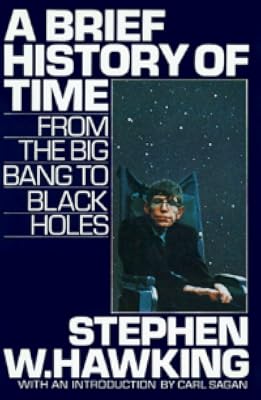
A Brief History of Time: From the Big Bang to Black Holes
by Stephen Hawking
Ciencia y técnica (Alianza)
On This Page
Description
A landmark volume in science writing by one of the great minds of our time, Stephen Hawking's book explores such profound questions as: How did the universe begin-and what made its start possible? Does time always flow forward? Is the universe unending-or are there boundaries? Are there other dimensions in space? What will happen when it all ends? Told in language we all can understand, A Brief History of Time plunges into the exotic realms of black holes and quarks, of antimatter and show more "arrows of time," of the big bang and a bigger God - where the possibilities are wondrous and unexpected. With exciting images and profound imagination, Stephen Hawking brings us closer to the ultimate secrets at the very heart of creation. show lessTags
Recommendations
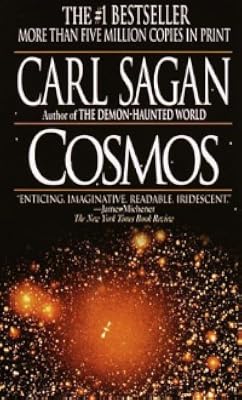
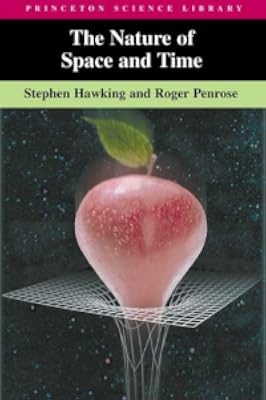

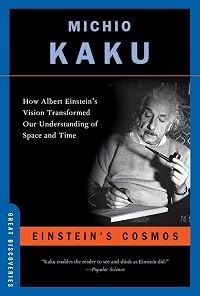
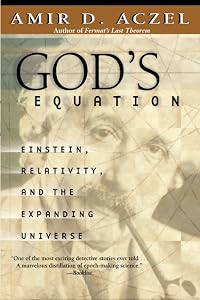
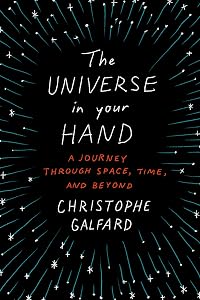
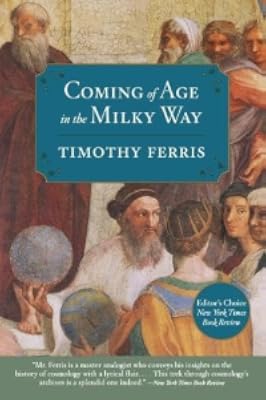
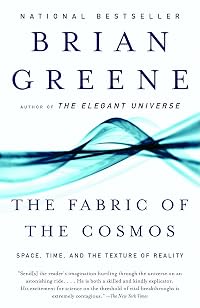
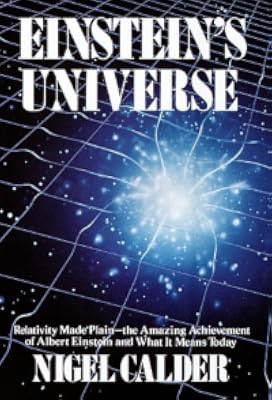
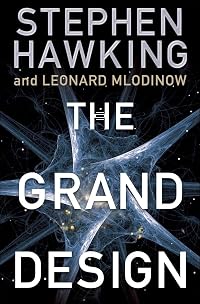
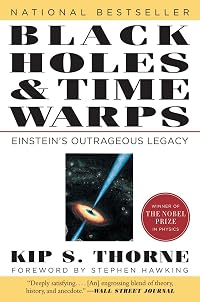
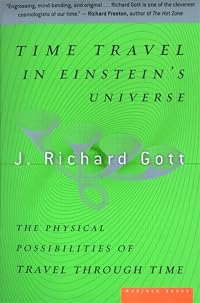
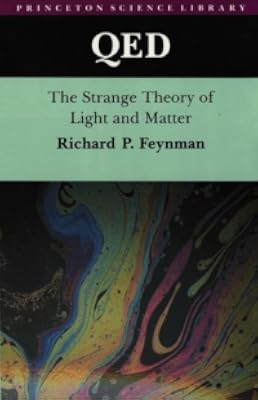


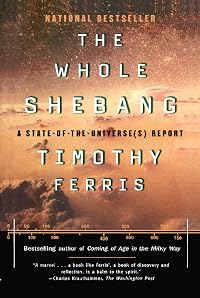
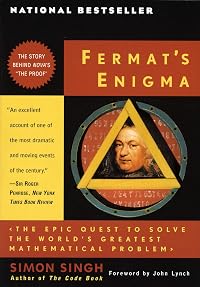
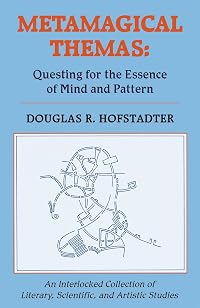

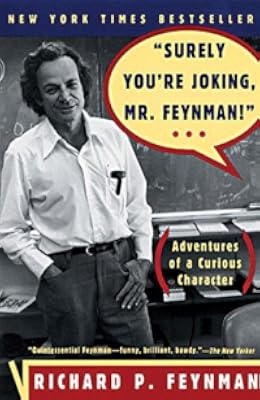
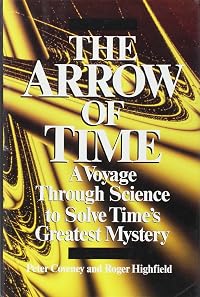
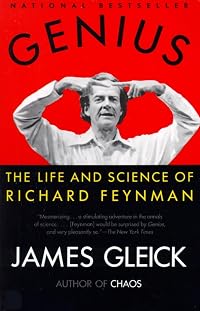
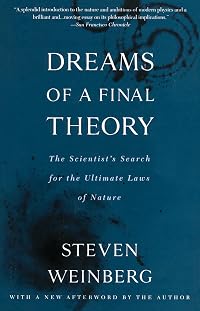
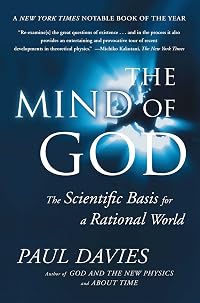
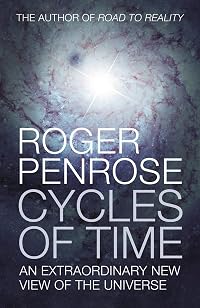


Member Recommendations
anonymous user Although it's longer, Brian Greene's book is much more easily digestible.
Plus, he gives you an idea of what they're hoping to discover at the Large Hadron Collider.

erik_galicki I think Weisskopf strikes a better balance between big picture and detail. Hawking provides more detail on particle physics and cosmology, but I think Weisskopf makes the connections between the two more apparent and clearer.
Member Reviews
As a fairly frequent reader of popular science, I've heard some of the stuff in A Brief History of Time described better elsewhere (particularly string theory), but how could you not want to spend some time in the company of one of the finest intellects of our time? Hawking was (and still is) a pioneer of some of the discoveries unpacked here, and he brings us into his thought process and how he came to make these deductions. This makes it different from many other popular science books, but it is also thrilling in itself.
Some of the deductions made in astronomy are awe-inspiring – just think how impressive an intellect an ancient Greek or Renaissance man must be to overcome the myths of his time and understand the complexities of show more planetary orbits, just from looking through a telescope and doing some maths, let alone a modern astrophysicist conceptualizing black holes, spacetime and string theory. It makes you proud of mankind (even if your brain throbs trying to understand it) that 'we' are discovering this stuff (to this very day, with things like the Higgs boson and gravitational waves). It is exploration not physical, but with pure thought. If you want to map a coastline, you sail along it. If you discover an island, you have to stumble across it. But space doesn't allow that physical contact. This is something else – something even more impressive. It is a fine testament to the logical capabilities of the human mind. show less
Some of the deductions made in astronomy are awe-inspiring – just think how impressive an intellect an ancient Greek or Renaissance man must be to overcome the myths of his time and understand the complexities of show more planetary orbits, just from looking through a telescope and doing some maths, let alone a modern astrophysicist conceptualizing black holes, spacetime and string theory. It makes you proud of mankind (even if your brain throbs trying to understand it) that 'we' are discovering this stuff (to this very day, with things like the Higgs boson and gravitational waves). It is exploration not physical, but with pure thought. If you want to map a coastline, you sail along it. If you discover an island, you have to stumble across it. But space doesn't allow that physical contact. This is something else – something even more impressive. It is a fine testament to the logical capabilities of the human mind. show less
Recently I gave up on Cycles of Time by Roger Penrose, who worked closely with Stephen Hawking, because of the density and opacity of the text. This book doesn’t have that problem; it steps back every few pages to give some analogy or illustration of its implications. I also enjoy Hawking’s sense of humor, which maintains the strangeness of contemplating the origins of the universe from a comfortable couch. Most of the ideas are not new; he is restating the current picture of the universe according to quantum physics. The book therefore becomes a helpful primer on the discoveries of the twentieth century and how scientists are still trying to make sense of them.
A Brief History of Time condensed: It begins (maybe), it exists and goes on and it ends (maybe).
You can understand the tragedy and reason for A Brief History of Time’s existence from the last page of Hawking’s conclusion; that the sum of man’s knowledge is too great for anyone to comprehend. Amidst the bemoaning of Wittgenstein’s reduction of philosophy to linguistic legerdemain there’s a realisation that the limits of the human mind mean an actual grand unified theory is near impossible as no-one can reach the required level of understanding. None of us are God. We are limited by the amount of information we can partake of and our own mortality. So the best we can hope for is an infinite number of theories which explain show more aspects of the universe and, hopefully, eventually link them up via chance and hard work.
Hawking’s book is a remarkable work – it attempts to explain the cutting edge theories of black holes and quantum mechanics to a wide audience. And as garnish, at the end, he explains how modern science functions. In this it’s fairly successful – although he’s not a great prose stylist it’s functional and clear about the concepts he’s talking about. The presence of jokes is a boon amidst the heavy science, lightening the book and making it less frightening. It’s also enlightening to see scientists of the calibre of Hawking and Einstein being unafraid to admit error – this is likely what separates them from the (relative) journeymen who stick to theory in the face of evidence. This doesn’t mean that the book is an easy read; by its nature it can’t be. But it’s as close as you can get to having such a complex branch of science laid out in an understandable way. I’m not convinced about the metaphysics, but it’s fascinating to see the possibility of a god taken into scientific account and neither accepted nor dismissed. A fascinating work then, but one that I’m sure I’m going to need multiple re-reads to fully understand. show less
You can understand the tragedy and reason for A Brief History of Time’s existence from the last page of Hawking’s conclusion; that the sum of man’s knowledge is too great for anyone to comprehend. Amidst the bemoaning of Wittgenstein’s reduction of philosophy to linguistic legerdemain there’s a realisation that the limits of the human mind mean an actual grand unified theory is near impossible as no-one can reach the required level of understanding. None of us are God. We are limited by the amount of information we can partake of and our own mortality. So the best we can hope for is an infinite number of theories which explain show more aspects of the universe and, hopefully, eventually link them up via chance and hard work.
Hawking’s book is a remarkable work – it attempts to explain the cutting edge theories of black holes and quantum mechanics to a wide audience. And as garnish, at the end, he explains how modern science functions. In this it’s fairly successful – although he’s not a great prose stylist it’s functional and clear about the concepts he’s talking about. The presence of jokes is a boon amidst the heavy science, lightening the book and making it less frightening. It’s also enlightening to see scientists of the calibre of Hawking and Einstein being unafraid to admit error – this is likely what separates them from the (relative) journeymen who stick to theory in the face of evidence. This doesn’t mean that the book is an easy read; by its nature it can’t be. But it’s as close as you can get to having such a complex branch of science laid out in an understandable way. I’m not convinced about the metaphysics, but it’s fascinating to see the possibility of a god taken into scientific account and neither accepted nor dismissed. A fascinating work then, but one that I’m sure I’m going to need multiple re-reads to fully understand. show less
Hawking makes the universe feel both vast and (somewhat) comprehensible. A classic introduction to cosmology that blends clear explanations with awe-inspiring ideas—though your brain may feel a little singed by the end
Glad I finally picked this up off the "to-read" shelf. There are a bunch more amusing asides than I expected, which were a nice surprise. I'm not sure Hawking gets the pitch right throughout the book (sometimes the level of technical detail is very low, sometimes it's very high) but overall it's a very interesting book.
Beautifully written, in the sense that I, a mere layperson, could understood a whole book on theoretical physics with minimum eye-glaze or supervision.
I would have loved this book being taught in a non-specialized school course, because this is the kind of stuff that feels really powerful and enlightening to know and yet doesn't mire you non-layperson rigour. It probably increases my literacy in levels beyond loose concepts used in television/movies for plot justification.
I am being mean-spirited by taking off one star for the sole purpose of indicating that this book did not fill me with a great subjective joy; in other ways, given my limited education on the matter, it seemed flawless from my frame of reference. Some of the book's show more 'banter' felt forced or dated. I am thankful the book went out of its way not to go into an anti-god diatribe and be gently charitable on the matter, and I assume the choice to address the possibility of the universe being god's creation was a purposeful one and an aim of the book (but the need for the aim wasn't apparent to me, even if I respect how it was done.) show less
I would have loved this book being taught in a non-specialized school course, because this is the kind of stuff that feels really powerful and enlightening to know and yet doesn't mire you non-layperson rigour. It probably increases my literacy in levels beyond loose concepts used in television/movies for plot justification.
I am being mean-spirited by taking off one star for the sole purpose of indicating that this book did not fill me with a great subjective joy; in other ways, given my limited education on the matter, it seemed flawless from my frame of reference. Some of the book's show more 'banter' felt forced or dated. I am thankful the book went out of its way not to go into an anti-god diatribe and be gently charitable on the matter, and I assume the choice to address the possibility of the universe being god's creation was a purposeful one and an aim of the book (but the need for the aim wasn't apparent to me, even if I respect how it was done.) show less
This is the Folio edition of the 2008 revision of Stephen Hawking's account of theoretical physics and cosmology, describing his contributions to the concept of black holes, especially the mathematical description of Hawking radiation. The writing is clear, and more autobiographical and chatty than I expected. I still struggled to understand and picture the paradoxes of time and space at the edge of black holes, since that is where the general theory of relativity meets quantum mechanics. Virtual particles emerge spontaneously from the vacuum because of quantum fluctuations. Matter particles with a "spin" (rotational symmetry of ½ usually appear as particle and antiparticle, and quickly annihilate each other, but if one is trapped in show more the black hole, the other may be radiated. It was interesting that Hawking spent a good amount of prose on what the physics of the big bang has to say about God. Perhaps his unusually prolonged ALS disability had concentrated his mind on the divine. show less
Members
- Recently Added By
Published Reviews
ThingScore 75
Through his cerebral journeys, Mr. Hawking is bravely taking some of the first, though tentative, steps toward quantizing the early universe, and he offers us a provocative glimpse of the work in progress.
added by Shortride
Lists

BitLife
212 works; 4 members

cosmology
2 works; 1 member

important
24 works; 1 member

current
52 works; 1 member

The Well-Educated Mind, Susan Wise Bauer, 2016
179 works; 3 members

Recommended Reading : 600 Classics Reviewed, Editors of Salem Press, 2015
634 works; 6 members

The Complete Rory Gilmore Reading List
506 works; 5 members

Favourite Books
1,819 works; 308 members
Author Information

135+ Works 54,885 Members
Stephen William Hawking was born in Oxford, England on January 8, 1942. He received a first class honors degree in natural science from Oxford University and a Ph.D. from Cambridge University. He was a theoretical physicist and has held the post of Lucasian Professor of Mathematics at Cambridge University from 1982 until his death. In 1974, he was show more elected a Fellow of the Royal Society, the world's oldest scientific organization. In 1963, he learned he had amyotrophic lateral sclerosis, a neuromuscular wasting disease also known as Lou Gehrig's disease. The disease confined him to a wheelchair and reduced his bodily control to the flexing of a finger and voluntary eye movements, but left his mental faculties untouched. He became a leader in exploring gravity and the properties of black holes. He wrote numerous books including A Brief History of Time: From the Big Bang to Black Holes, Black Holes and Baby Universes, On the Shoulders of Giants, A Briefer History of Time, The Universe in a Nutshell, The Grand Design, and Brief Answers to the Big Questions. In 1982, he was named a commander of the British Empire. A film about his life, The Theory of Everything, was released in 2014 and was based on his first wife Jane Hawking's book Traveling to Infinity: My Life with Stephen. He died on March 14, 2018 at the age of 76. (Bowker Author Biography) show less
Some Editions
Awards and Honors
Awards
Distinctions
Notable Lists
Series

Belongs to Publisher Series
Work Relationships
Is contained in
Is expanded in
Is replied to in
Has as a reference guide/companion
Has as a commentary on the text
Common Knowledge
- Canonical title
- A Brief History of Time: From the Big Bang to Black Holes
- Original title
- A Brief history of time : from the big bang to black holes
- Alternate titles*
- Het heelal : verleden en toekomst van ruimte en tijd
- Original publication date
- 1988-03-07
- People/Characters
- Max Born; Thomas Gold; Mike Green; Edmond Halley; Jonathan Halliwell; Jim Hartle (show all 74); Jane Hawking; Stephen Hawking; Werner Heisenberg; William Herschel; Anthony Hewish; Fred Hoyle; Edwin Hubble; Werner Israel; James Jeans; Samuel Johnson; Kant, Immanuel, 1724-1804; Johannes Kepler; Roy Kerr; Isaac Khalatnikov; Raymond Laflamme; Lev Davidovich Landau; Pierre Simon Laplace; Tsung-Dao Lee; Gottfried Wilhelm von Leibniz; Ray Leigh; Evgenii Lifshitz; Andrei Linde; Hendrick Lorentz; Julian Luttrel; James Clerk Maxwell; John Michell; Albert Michelson; Edward Morley; Ian Moss; Nevill Mott; Isaac Newton; Heinrich Olbers; Robert Oppenheimer; Don Page; Wolfgang Pauli; Jim Peebles; Roger Penrose; Arno Penzias; Max Planck; Henri Poincaré; Karl Popper; Neil Porter; Ptolemy; Howard Robertson; David Robinson; Ole Christensen Roemer; Carlo Rubbia; Bertrand Russell; Ernest Rutherford; Martin Ryle; Abdus Salam; John Schwarz; Karl Schwarzschild; Alexander Starobinsky; Paul Steinhardt; John G. Taylor; J. J. Thomson; Kip Thorne; Simon van der Meer; Arthur Walker; Trevor Weekes; Steven Weinberg; John Wheeler; Robert Wilson; Ludwig Wittgenstein; Chien-Shiung Wu; Chien Ning Yang; Yakov Zeldovich
- Important places
- The universe
- Dedication
- This book is dedicated
to Jane - First words
- We go about our daily lives understanding almost nothing of the world.
Introduction.
A well-known scientist (some say it was Bertrand Russell) once gave a public lecture on astronomy.
1. Our picture of the universe. - Last words
- (Click to show. Warning: May contain spoilers.)However, if we do discover a complete theory, it should in time be understandable in broad principle by everyone, not just a few scientists. Then we shall all, philosophers, scientists, and just ordinary people, be able to take part in discussion of the question of why it is that we and the universe exist. If we find the answer to that, it would be the ultimate triumph of human reason-for then we would know the mind of god.
11. Conclusion.
(Click to show. Warning: May contain spoilers.)Here he used his talents for deviousness and vitriol in a more socially acceptable way, successfully conducting a major campaign against counterfeiting, even sending several men to their death on the gallows.
Isaac Newton.
(Click to show. Warning: May contain spoilers.)white dwarf: A stable cold star, supported by the exclusion principle repulsion between electrons (page 84).
Glossary. - Publisher's editor*
- Várlaki, Tibor; Oláh, Judit
- Blurbers
- Ferris, Timothy
- Original language
- English
*Some information comes from Common Knowledge in other languages. Click "Edit" for more information.
Classifications
Statistics
- Members
- 16,305
- Popularity
- 419
- Reviews
- 147
- Rating
- (3.90)
- Languages
- 28 — Catalan, Chinese, Czech, Danish, Dutch, English, Finnish, French, German, Galician, Greek, Hungarian, Icelandic, Indonesian, Italian, Latvian, Norwegian (Bokmål), Polish, Romanian, Russian, Serbian, Croatian, Slovak, Slovenian, Spanish, Swedish, Turkish, Portuguese (Brazil)
- Media
- Paper, Audiobook, Ebook
- ISBNs
- 233
- UPCs
- 2
- ASINs
- 109