On This Page
Description
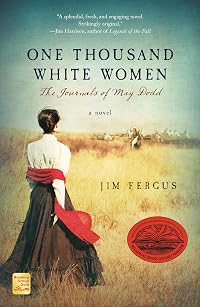
One Thousand White Women is the story of May Dodd and a colorful assembly of pioneer women who, under the auspices of the U.S. government, travel to the western prairies in 1875 to intermarry among the Cheyenne Indians. The covert and controversial "Brides for Indians" program, launched by the administration of Ulysses S. Grant, is intended to help assimilate the Indians into the white man's world. Toward that end May and her friends embark upon the adventure of their lifetime. Author Jim show more Fergus has so vividly depicted the American West that it is as if these diaries are a capsule in time.. show less
Tags
Recommendations
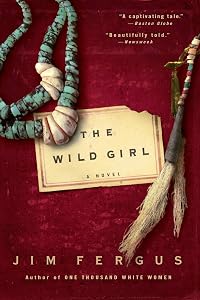
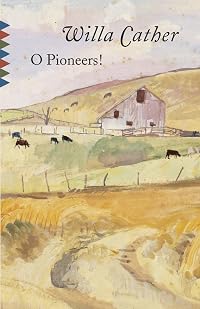
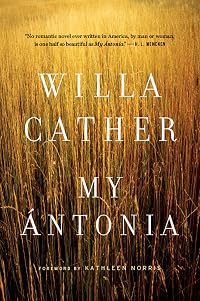
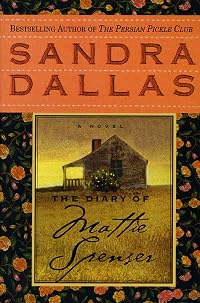








Member Recommendations

thea-block Similar subjects, tone, and picture of relationships between whites and natives.
The.Book.Butler Strong, female characters; western; women traveling west in hopes of a better future or to leave behind the past; fully-realized, individual, female characters with depth and nuanced relationships
Member Reviews
Blown away!
A reader friend recommended the book knowing I enjoy reading historical fiction. I downloaded the title without even reading the blurb. From the first pages of the "Introduction" written by J. Will Dodd, great-grandson of May Dodd and onward to the "Prologue" I was transported back in time to the mid-1870's. Due to a presentation gap of American history in my own education experience I have received no formal education/training of the time period between the end of the Civil War and personal awareness of American history that began on November 22, 2963, identifying that I have only a minuscule knowledge of the creation of American Indian reservations. Reading this book opened a window to the past and as with all historical show more fiction illuminates humanity or the lack thereof not merely the events listed in a nonfiction book.
With unparalleled creativity Jim Fergus presents a tale in journal format of the treatment by the government of indigenous people focusing on a Cheyenne tribe. I was riveted and immersed in the storyline that evoked a roller coaster of emotions that was at different twists haunting, blunt, heartbreaking, sensitive, scary, intriguing, humorous, and tear-jerking.
Blown away all over again in absolute shock at the reveal in the "Author's Note." Even recognizing the author’s disclosure the book brings to light pivotal history of the American West that some would prefer to stay in the past and for some eliminate as though it is not true. show less
A reader friend recommended the book knowing I enjoy reading historical fiction. I downloaded the title without even reading the blurb. From the first pages of the "Introduction" written by J. Will Dodd, great-grandson of May Dodd and onward to the "Prologue" I was transported back in time to the mid-1870's. Due to a presentation gap of American history in my own education experience I have received no formal education/training of the time period between the end of the Civil War and personal awareness of American history that began on November 22, 2963, identifying that I have only a minuscule knowledge of the creation of American Indian reservations. Reading this book opened a window to the past and as with all historical show more fiction illuminates humanity or the lack thereof not merely the events listed in a nonfiction book.
With unparalleled creativity Jim Fergus presents a tale in journal format of the treatment by the government of indigenous people focusing on a Cheyenne tribe. I was riveted and immersed in the storyline that evoked a roller coaster of emotions that was at different twists haunting, blunt, heartbreaking, sensitive, scary, intriguing, humorous, and tear-jerking.
Blown away all over again in absolute shock at the reveal in the "Author's Note." Even recognizing the author’s disclosure the book brings to light pivotal history of the American West that some would prefer to stay in the past and for some eliminate as though it is not true. show less
Alternate history, that literary genre in which an historical event is tweaked, removed, or reversed, can be interesting. It is always great fun to play the “what if game” with the actual events of our shared past: “what if the South had won the Civil War,” “what if the Normandy invasion had failed,” or “what if John Kennedy had not been assassinated?” Much fascinating fiction has originated from those and similar questions. Jim Fergus plays a more subtle version of the game in One Thousand White Women: The Journals of May Dodd.” He wonders what might have happened if, in 1875, President Grant and Little Wolf, chief of the Cheyenne nation, had agreed to exchange one thousand white women for an equal number of Indian show more horses.
Grant is at first shocked and disgusted by Little Wolf’s proposition, but he has to admit that the idea makes sense. Since, in the Cheyenne culture, children belong to the tribes of their mothers, Little Wolf sees the “Brides for Indians” program as the best chance to assimilate his people peacefully into the white culture that seems destined to overwhelm his own. Grant, on his part, hopes that the women can influence their husbands into accepting, or at least tolerating, white ways and religions to the point that open warfare with the tribe can be avoided. Thus is born the secret “Brides for Indians” program, a program that will require Grant’s people to scour mental institutions, debtors’ prisons, and other jails and prisons in search of the one thousand women needed for Grant to meet his part of the bargain.
May Dodd, resident of a Chicago mental institution, is one of the first women recruited to go west to meet her new Indian husband. May has been institutionalized by her father for the unpardonable sin of bearing two children out of wedlock to a man beneath her social status. To her father’s way of thinking, no woman in her right mind could do such a thing – his daughter has to be insane. Rather than spend the rest of her life locked up, May, ever the adventurer, leaps at the chance to regain her freedom by becoming an Indian bride for the required two-year commitment.
One Thousand White Women is told largely in the words of a series of journals May begins to record almost the moment she decides to make her break for a new life. Through these journals, we meet May’s colorful traveling companions and learn of their adventures and hardships as they begin their new lives as wives of men with whom they have so little in common. The women, although they will suffer the hardships of winter encampment, inter-tribal warfare, kidnappings, and one horrible night when their men succumb to the evils of alcohol, find that they are learning as much about what is good and proper in society as they are teaching. But is it all too late to save the Cheyenne from what the army has planned for them?
The audio version of One Thousand White Women is read by Laura Hicks who does a remarkable job with the various accents and languages she has to deal with: two of the characters are Irish, one is Swiss, one is from the Deep South, one is an ex-slave, and some are French. Hicks handles all of these accents well, in addition to voicing a believable version of the Cheyenne language. This one should appeal to a variety of readers, among them: alternate history fans, western fans, and those who enjoy feminist novels with especially strong female characters.
Rated at: 5.0 show less
Grant is at first shocked and disgusted by Little Wolf’s proposition, but he has to admit that the idea makes sense. Since, in the Cheyenne culture, children belong to the tribes of their mothers, Little Wolf sees the “Brides for Indians” program as the best chance to assimilate his people peacefully into the white culture that seems destined to overwhelm his own. Grant, on his part, hopes that the women can influence their husbands into accepting, or at least tolerating, white ways and religions to the point that open warfare with the tribe can be avoided. Thus is born the secret “Brides for Indians” program, a program that will require Grant’s people to scour mental institutions, debtors’ prisons, and other jails and prisons in search of the one thousand women needed for Grant to meet his part of the bargain.
May Dodd, resident of a Chicago mental institution, is one of the first women recruited to go west to meet her new Indian husband. May has been institutionalized by her father for the unpardonable sin of bearing two children out of wedlock to a man beneath her social status. To her father’s way of thinking, no woman in her right mind could do such a thing – his daughter has to be insane. Rather than spend the rest of her life locked up, May, ever the adventurer, leaps at the chance to regain her freedom by becoming an Indian bride for the required two-year commitment.
One Thousand White Women is told largely in the words of a series of journals May begins to record almost the moment she decides to make her break for a new life. Through these journals, we meet May’s colorful traveling companions and learn of their adventures and hardships as they begin their new lives as wives of men with whom they have so little in common. The women, although they will suffer the hardships of winter encampment, inter-tribal warfare, kidnappings, and one horrible night when their men succumb to the evils of alcohol, find that they are learning as much about what is good and proper in society as they are teaching. But is it all too late to save the Cheyenne from what the army has planned for them?
The audio version of One Thousand White Women is read by Laura Hicks who does a remarkable job with the various accents and languages she has to deal with: two of the characters are Irish, one is Swiss, one is from the Deep South, one is an ex-slave, and some are French. Hicks handles all of these accents well, in addition to voicing a believable version of the Cheyenne language. This one should appeal to a variety of readers, among them: alternate history fans, western fans, and those who enjoy feminist novels with especially strong female characters.
Rated at: 5.0 show less
Narrated by Laura Hicks. Chief Little Wolf of the Cheyenne proposes a peace treaty plan to President Ulysses Grant: the tribe will swap 1,000 horses for 1,000 white women who will marry into the tribe and bear children, thus helping the tribe learn the white ways and preserve the dwindling Cheyenne population. Mae Dodd, an outspoken, progressive woman for her time, volunteers for the "Brides for Indians" program and this book is her journal of her experiences. The culture clash is at times distressing, amusing and horrifying for the volunteer wives. This and the details of daily life and survival and the wives' acceptance of Indian culture make for an intriguing read of "what if." The audio version was much more entertaining for me than show more if I had read it; narrator Laura Hicks voices this story with personality and verve, creating memorable pictures of the characters and events. (She presented a very entertaining and hilarious Gretchen, the Swiss.) It would be interesting to hear Native American reader reaction to this book: how accurately is the Cheyenne culture represented? show less
Suppose the U.S. government under President Grant, in order to promote peace with the Indians, traded a thousand white women, all volunteers, to the Cheyenne for a thousand horses. This never happened, but in his 1998 novel “One Thousand White Women” Jim Fergus makes you believe that it could have happened.
The novel takes the form of a journal kept by one of these volunteers, an attractive young woman named May Todd. May comes from a prominent Chicago family, but she makes the mistake of falling in love with the wrong man and having two children. Embarrassed, her family sends her to an insane asylum, where she expects to spend the rest of her life. Volunteering to become an Indian bride offers her a means of escape. Other women have show more their own reasons for volunteering. Their numbers never come close to reaching a thousand, and so the deal is probably doomed from the start.
In a western fort just before she and the other women are turned over to the tribe, May falls in love with the fort's commander, a man already engaged to marry someone else. Their affair is brief, but it colors the rest of the novel.
May is chosen by Little Wolf, the tribe's chief, and she comes to love him, too. Like most of the other white women, she soon finds herself pregnant. Will the many halfbreed children help bring peace between the whites and the Indians? Fat chance, it turns out, especially when gold is discovered in the Black Hills and all the land promised to the Indians forever gets reclaimed by the U.S. government. May's former lover in blue is among those under orders to rid the area of hostile Indians. That term now includes May herself.
This makes riveting reading, and it's easy to see why after more than two decades the novel continues to draw readers. show less
The novel takes the form of a journal kept by one of these volunteers, an attractive young woman named May Todd. May comes from a prominent Chicago family, but she makes the mistake of falling in love with the wrong man and having two children. Embarrassed, her family sends her to an insane asylum, where she expects to spend the rest of her life. Volunteering to become an Indian bride offers her a means of escape. Other women have show more their own reasons for volunteering. Their numbers never come close to reaching a thousand, and so the deal is probably doomed from the start.
In a western fort just before she and the other women are turned over to the tribe, May falls in love with the fort's commander, a man already engaged to marry someone else. Their affair is brief, but it colors the rest of the novel.
May is chosen by Little Wolf, the tribe's chief, and she comes to love him, too. Like most of the other white women, she soon finds herself pregnant. Will the many halfbreed children help bring peace between the whites and the Indians? Fat chance, it turns out, especially when gold is discovered in the Black Hills and all the land promised to the Indians forever gets reclaimed by the U.S. government. May's former lover in blue is among those under orders to rid the area of hostile Indians. That term now includes May herself.
This makes riveting reading, and it's easy to see why after more than two decades the novel continues to draw readers. show less
Jim Fergus's 1998 novel, One Thousand White Women, has much to recommend it.
An even-handed treatment of the Northern Cheyenne, whose culture, leadership, and peoples are consistently admirable and follow a code of conduct that makes sense to them. A strong lead female character, who isn't afraid to challenge the conventions of her age, but who is, in fact, influenced by her upbringing and belief systems and who never stops describing the Cheyenne as savages. And the sickening deviousness of the US government which promises one thing only to ignore its promises when they aren't convenient.
Yes, this is a novel; but its message about the greed of the invading white settlers and their lust for the Cheyenne's land (given to them forever) show more trumps all agreements, which, it may be observed, still is the modus operandi of the United States government and other governments when they deal with indigenous peoples. show less
An even-handed treatment of the Northern Cheyenne, whose culture, leadership, and peoples are consistently admirable and follow a code of conduct that makes sense to them. A strong lead female character, who isn't afraid to challenge the conventions of her age, but who is, in fact, influenced by her upbringing and belief systems and who never stops describing the Cheyenne as savages. And the sickening deviousness of the US government which promises one thing only to ignore its promises when they aren't convenient.
Yes, this is a novel; but its message about the greed of the invading white settlers and their lust for the Cheyenne's land (given to them forever) show more trumps all agreements, which, it may be observed, still is the modus operandi of the United States government and other governments when they deal with indigenous peoples. show less
In a word....Wow! I was utterly blown away by this book. From the opening forward my interest was grabbed and held all the way till the very last page. The writing was so genuine, it was hard for me to keep in mind that this truly was a work of ficiton. May Dodd was an incredibly complex character and very far ahead of her time. She was institutionalized by her upper-crust family for "promiscuity". But her only sin was falling in love with a man that wasn't equal in class. She moved in with him and had 2 children out of wedlock, which for the day WAS pretty scandalous. But insane, she was not. To escape the institution, she signed up for a governemental program that offered white brides to the Cheyenne Indians. Throughout the book, she show more honestly felt like she was doing her duty to try to integrate the Cheyenne people into the world of the white man. This book was so unique, and the format of journal writing actually made you think you were peeking into the lives of real people.
I can't recommend this book enough! Fantastic! show less
I can't recommend this book enough! Fantastic! show less
Beautiful, moving but wish it was longer. Were the women who agreed to the government proposal desperate or adventurous? I think they were both. These women made the best of their new lives; most were content with their unusual life-style, and through hard work they became healthier, stronger, more confident and independent, and felt free to be themselves.They bonded with their new community by learning the customs, and by teaching their culture.
Just wish they had more time to develop the story line; but in the short time they had it was wonderful to see just how much their expectations, perspectives and priorities of life changed. Their feelings of loyalty to their new communities, their acceptance and efforts to understand is show more remarkable despite frightening experiences.
Their new babies create an even tighter bond. But...toward the end of the novel the unfortunate depravity of some of the men in their group to murder innocents within an enemy community believing it will strengthen the new babies shocks and outrages the white women mothers, and virtually undoes the positive emotions they've developed.
But there is no time to protest or react because the United States government has ordered its military to wipe out the remaining Cheyenne natives who have not agreed to move to Fort Fetterman. The American soliders kill with a vengeance: man, woman and child. Wholesale murder of many innocents. Few survive.
A great read pulsating with raw emotions, love and hate, prejudice, stupidity, and wisdom, and humanity both fragile and strong. show less
Just wish they had more time to develop the story line; but in the short time they had it was wonderful to see just how much their expectations, perspectives and priorities of life changed. Their feelings of loyalty to their new communities, their acceptance and efforts to understand is show more remarkable despite frightening experiences.
Their new babies create an even tighter bond. But...toward the end of the novel the unfortunate depravity of some of the men in their group to murder innocents within an enemy community believing it will strengthen the new babies shocks and outrages the white women mothers, and virtually undoes the positive emotions they've developed.
But there is no time to protest or react because the United States government has ordered its military to wipe out the remaining Cheyenne natives who have not agreed to move to Fort Fetterman. The American soliders kill with a vengeance: man, woman and child. Wholesale murder of many innocents. Few survive.
A great read pulsating with raw emotions, love and hate, prejudice, stupidity, and wisdom, and humanity both fragile and strong. show less
Members
- Recently Added By
Lists

Best Historical Fiction
620 works; 261 members

Historical Fiction
889 works; 91 members

Carole's List
445 works; 13 members

KayStJ's to-read list
1,616 works; 11 members

A Rainbow of Books: Colors in the Title
570 works; 24 members

Authors from the United States
245 works; 3 members

Biggest Disappointments
606 works; 163 members

Books Read in 2021
5,361 works; 114 members
Author Information

11+ Works 5,460 Members
Jim Fergus is an author born in 1950 in the U.S. He earned a degree in English from Colorado College. He works as a tennis teacher and freelance writer. He won the 1999 Fiction of the Year Award from the Mountains and Plains Booksellers Association for his first novel, One Thousand White Women: The Journals of May Dodd. His other titles include: show more The Sporting Road: Travels Across America in an Airstream Trailer- With Fly Rod, Shotgun, and a Yellow Lab Named Sweetzer, The Wild Girl, and The Vengeance of Mothers. (Bowker Author Biography) show less
Some Editions
Awards and Honors
Series

Common Knowledge
- Canonical title*
- Mille femmes blanches
- Original title
- One Thousand White Women
- Original publication date
- 1998-03-15
- People/Characters
- May Dodd; Little Wolf; Captain John Bourke; Helen Elizabeth Flight; Ada Ware; Sarah Johnstone (show all 22); Phemie Washington; Daisy Lovelace; Pretty Walker; Narcissa White; Martha Atwood; Lydia Bradley; Gretchen Fathauer; Jules Seminole; Susan Kelly; Maggie Kelly; Tangle Hair; Feather on the Head; Henry Ames; Ulysses S. Grant (General, 18th President of the United States); Julia Dent Grant; Amos Chapman
- Important places
- Chicago, Illinois, USA; Fort Laramie, Wyoming, USA; Omaha, Nebraska, USA; Washington, D.C., USA; Fort Sydney; Camp Robinson, Nebraska (show all 13); Lake Michigan, USA; Fort Supply, Kansas; New York, USA; Boston, Massachusetts, USA; Philadelphia, Pennsylvania, USA; Lake Forest Lunatic Asylum; St. Louis, Missouri, USA
- Epigraph
- Women will love her, that she is a woman
More worth than any man; men that she is
The rarest of all women.
- William Shakespeare, The Winter's Tale, V.1 - Dedication
- To Dillon
- First words
- 23 March 1875: Today is my birthday, and I have received the greatest gift of all - freedom!
- Last words
- (Click to show. Warning: May contain spoilers.)And very carefully May Swallow Wild Plums placed the bundle in my hands, and with long graceful fingers untied the thongs that bound it.
*Some information comes from Common Knowledge in other languages. Click "Edit" for more information.
Classifications
Statistics
- Members
- 4,379
- Popularity
- 3,415
- Reviews
- 207
- Rating
- (3.67)
- Languages
- Czech, English, French
- Media
- Paper, Audiobook, Ebook
- ISBNs
- 31
- UPCs
- 2
- ASINs
- 22