
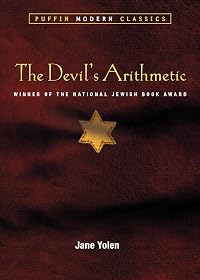
The Devil's Arithmetic
by Jane Yolen
On This Page
Description
Hannah resents the traditions of her Jewish heritage until time travel places her in the middle of a small Jewish village in Nazi-occupied Poland.Tags
Recommendations
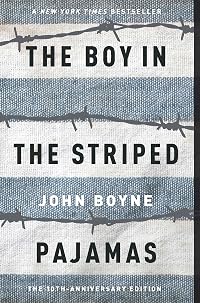
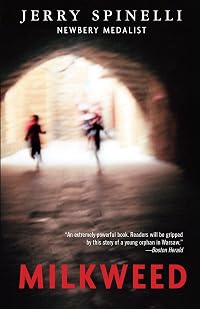
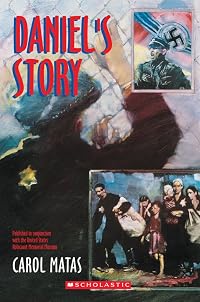
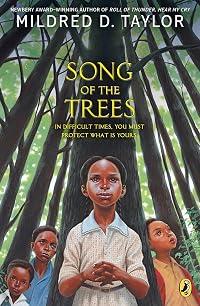
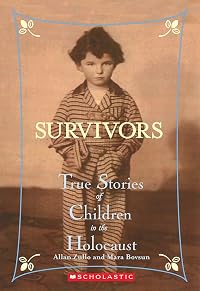
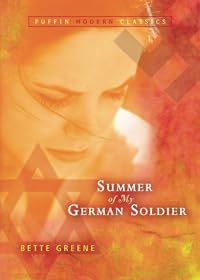
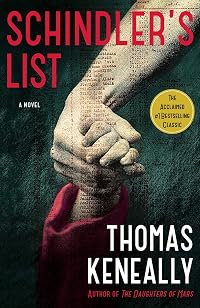
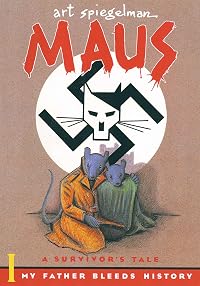
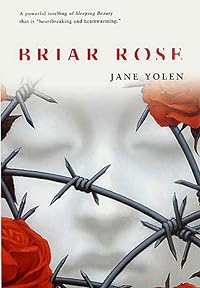
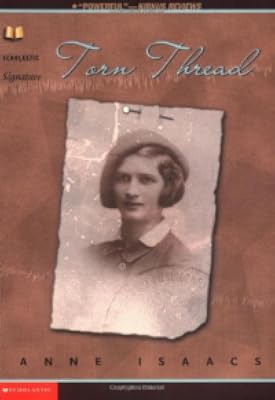
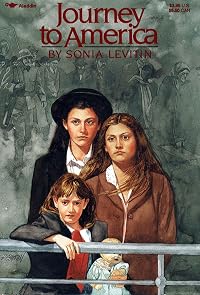
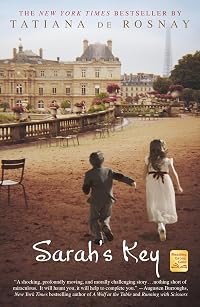
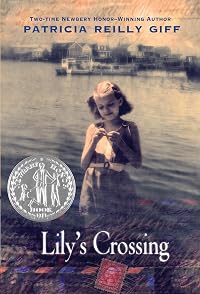
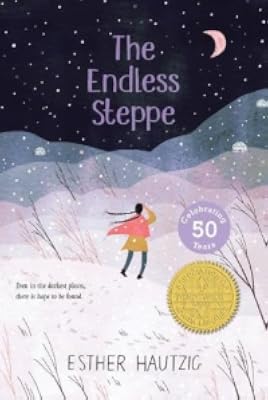
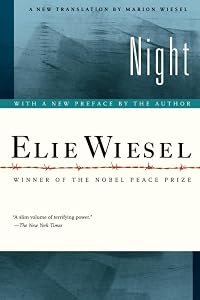

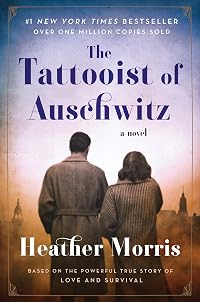
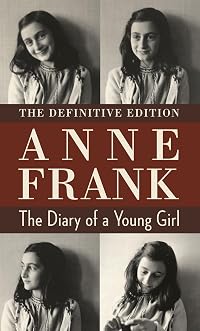

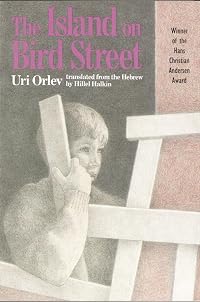
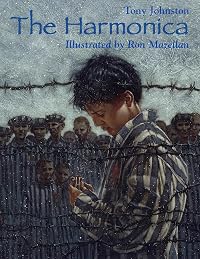
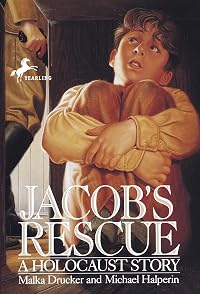





Member Recommendations
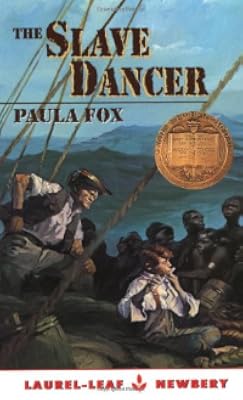
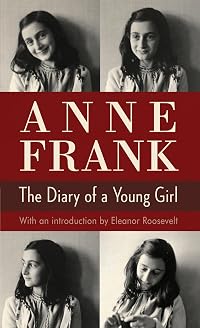
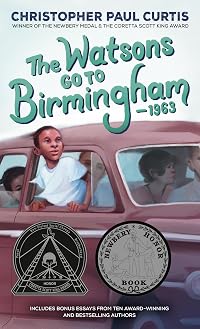
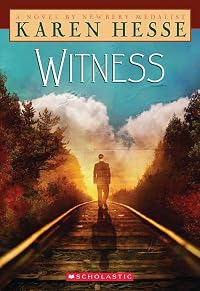
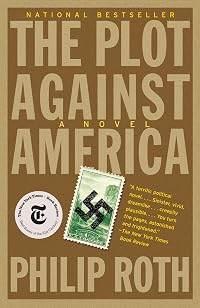
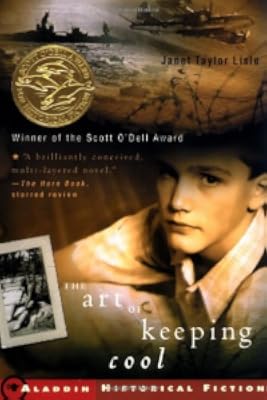
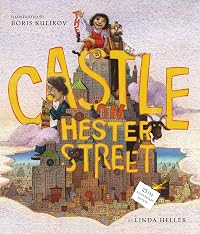
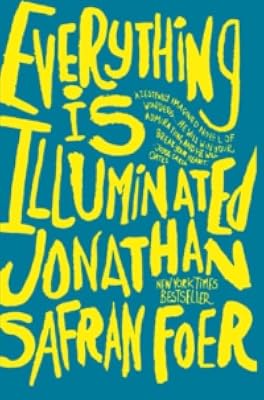
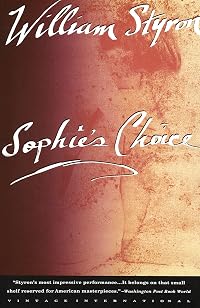
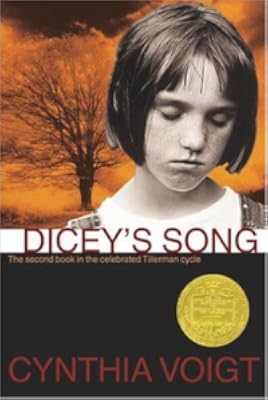
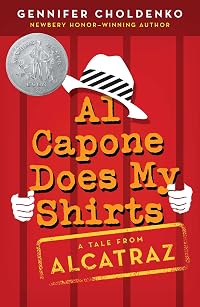
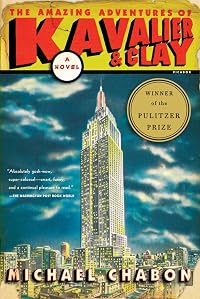
kthomp25 Dutch girl aids an English soldier during battle
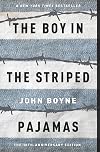
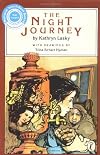
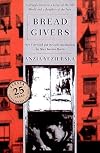
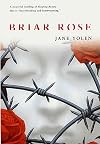
by Cecrow
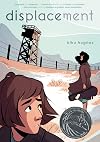
bibliovermis Similar story mechanic to teach about the same period of history
Member Reviews
For me, picking up a book about the Holocaust is a bit like plunging into an icy-cold lake, on a warm summer day. Not because the experience is refreshing - far from it! - but because there is this sense, while standing on the edge, poised to take that fateful step, of drawing back. An instinctive recoiling from what I know will be a sudden and shocking submersion in a different world - one that I'm never entirely prepared to enter, that I fear will swallow me whole, as I sink like a stone, down and down into the cold, dark depths.
Since the day I stumbled across my first Holocaust memoir - Sara Zyskind's Stolen Years, which chronicles the author's time in the Lodz Ghetto, and then the Auschwitz-Birkenau death-camp - the year I was show more eleven, I have had an abiding interest in this terrible episode of history, and a desire to understand what made it, and other genocides, possible. I have, over the years, read numerous survivor testimonies, and devoted much time to considering the nature of human evil, the ubiquity of human suffering, and the historical, cultural, and psychological factors that allow them to flourish. I believe in remembering, in bearing witness, and - to the best of my limited ability - in seeking to oppose and change those factors which facilitate such atrocities.
But no one (amongst the "sane," anyway) can remember all the time. I don't spend every waking hour contemplating these issues, and I don't desire to. Which isn't to say I "forget" them, per se, just that the intimacy of my knowledge, of my remembering, varies greatly. I always "remember" the Holocaust. But the remembering involved in sociological analysis, and the remembering that comes of witnessing - even if only through the printed word - a vulnerable young child, violently separated from his only kin, tossed about in a maelstrom born of adult depravity, depart this world through the doors of the gas chamber, and the smokestacks of those infernal human-powered ovens, are two very different things. To read a book about the Holocaust, be it fact or fiction, is to embrace that second kind of remembering, to become acquainted, once again, with madness.
And that seems like an entirely appropriate jumping-off point to me, because this book, this children's novel, is about nothing so much as memory, and our (very natural) reluctance to embrace it. It is the story of a contemporary Jewish American girl who, reluctantly attending her family's Passover Seder, opens the door for the Prophet Elijah, and finds herself in 1940s Poland. Hannah Stern of New Rochelle (five minutes from where I myself live) is now Chaya Abramowicz of Lublin, and a suburban girl who has always lived a life of privilege and plenty is about to discover a world of unimaginable loss and privation. For the small Jewish shtetl in which she finds herself is about to be liquidated - transported to one of the Nazi death camps...
The Devil's Arithmetic is a powerful argument for the importance - the necessity - of remembering, but it is also a meditation on the difficulty of convincing others of the truth, and the limitations of knowledge itself, when confronting the full power of evil unleashed. Hannah/Chaya knows what is coming - she knows what those Nazis and their trucks in front of the village shul mean, she knows where the cattle cars are headed. But although she attempts to warn the others, tries desperately to convince them to flee, no one will believe her. She is, after all, just a child - a child known to say odd things, because of a recent illness - and what she is saying is so unimaginably terrifying to her listeners, that she is silenced - hushed by her "Aunt" Gitl.
Eventually, she is silenced by the loss of memory itself. Horrified, the first night in camp, by the showers toward which she and the other women are being herded, convinced that they are really the gas chambers about which she had learned, in her other life, Hannah/Chaya once again attempts to warn the others. But finally, perceiving that they cannot hear her words, that she is only robbing them of their last protection, robbing them of hope, she desists, only to find this silence reinforced by a horrifying inability to recall who she really is, and what lies ahead:
When the man came to Hannah, she bit her lip so as not to cry and kept her eyes closed the entire time. She concentrated on what was to happen next - after the showers and the hair-cutting, remembering from the lessons in Holocaust history in school. But as the scissors snip-snapped through her hair and the razor shaved the rest, she realized with a sudden awful panic that she could no longer recall anything from the past. "I cannot remember," she whispered to herself. "I cannot remember." She'd been shorn of memory as brutally as she'd been shorn of her hair, without permission, without reason. Opening her eyes, she stared at the floor. Clots of wet hair lay all about: dark hair, light hair, short hair, long hair, and two pale braids. "Gone, all gone," she thought again wildly, no longer even sure what was gone, what she was mourning."
Hannah, the girl who didn't want to remember the past, has now become Chaya, the girl who cannot remember the future - a future the Nazis are intent on destroying.
Jane Yolen has created a powerful story in The Devil's Arithmetic, one that will draw young readers in, allowing them - through the plot device of a modern child traveling back through time - to experience the terror of the Holocaust in a uniquely intimate way. That it is necessary for them do so - to enter into this strange and horrifying world of the past, and become one with the victims - is borne out, not just by the maxim that "those who forget the past are doomed to repeat it," but by the reality that we are all vulnerable, not just to those forces which might make us victims, but to those which might make us monsters. As Fayge says, at one point, quoting from a story about the Ba'al Shem Tov: "The enemy will always be with you. He will be in the shadow of your dreams and in your living flesh, for he is the other part of yourself."
This "other part" always needs combating. What better way to do this, than to witness the terrible cruelty and suffering that result, when it is unleashed? So... take a deep breath, grab hold of your courage, fix your eyes on the truth, and plunge into that dark water. It has to be done. It always has to be done. And it always has to be done again. show less
Since the day I stumbled across my first Holocaust memoir - Sara Zyskind's Stolen Years, which chronicles the author's time in the Lodz Ghetto, and then the Auschwitz-Birkenau death-camp - the year I was show more eleven, I have had an abiding interest in this terrible episode of history, and a desire to understand what made it, and other genocides, possible. I have, over the years, read numerous survivor testimonies, and devoted much time to considering the nature of human evil, the ubiquity of human suffering, and the historical, cultural, and psychological factors that allow them to flourish. I believe in remembering, in bearing witness, and - to the best of my limited ability - in seeking to oppose and change those factors which facilitate such atrocities.
But no one (amongst the "sane," anyway) can remember all the time. I don't spend every waking hour contemplating these issues, and I don't desire to. Which isn't to say I "forget" them, per se, just that the intimacy of my knowledge, of my remembering, varies greatly. I always "remember" the Holocaust. But the remembering involved in sociological analysis, and the remembering that comes of witnessing - even if only through the printed word - a vulnerable young child, violently separated from his only kin, tossed about in a maelstrom born of adult depravity, depart this world through the doors of the gas chamber, and the smokestacks of those infernal human-powered ovens, are two very different things. To read a book about the Holocaust, be it fact or fiction, is to embrace that second kind of remembering, to become acquainted, once again, with madness.
And that seems like an entirely appropriate jumping-off point to me, because this book, this children's novel, is about nothing so much as memory, and our (very natural) reluctance to embrace it. It is the story of a contemporary Jewish American girl who, reluctantly attending her family's Passover Seder, opens the door for the Prophet Elijah, and finds herself in 1940s Poland. Hannah Stern of New Rochelle (five minutes from where I myself live) is now Chaya Abramowicz of Lublin, and a suburban girl who has always lived a life of privilege and plenty is about to discover a world of unimaginable loss and privation. For the small Jewish shtetl in which she finds herself is about to be liquidated - transported to one of the Nazi death camps...
The Devil's Arithmetic is a powerful argument for the importance - the necessity - of remembering, but it is also a meditation on the difficulty of convincing others of the truth, and the limitations of knowledge itself, when confronting the full power of evil unleashed. Hannah/Chaya knows what is coming - she knows what those Nazis and their trucks in front of the village shul mean, she knows where the cattle cars are headed. But although she attempts to warn the others, tries desperately to convince them to flee, no one will believe her. She is, after all, just a child - a child known to say odd things, because of a recent illness - and what she is saying is so unimaginably terrifying to her listeners, that she is silenced - hushed by her "Aunt" Gitl.
Eventually, she is silenced by the loss of memory itself. Horrified, the first night in camp, by the showers toward which she and the other women are being herded, convinced that they are really the gas chambers about which she had learned, in her other life, Hannah/Chaya once again attempts to warn the others. But finally, perceiving that they cannot hear her words, that she is only robbing them of their last protection, robbing them of hope, she desists, only to find this silence reinforced by a horrifying inability to recall who she really is, and what lies ahead:
When the man came to Hannah, she bit her lip so as not to cry and kept her eyes closed the entire time. She concentrated on what was to happen next - after the showers and the hair-cutting, remembering from the lessons in Holocaust history in school. But as the scissors snip-snapped through her hair and the razor shaved the rest, she realized with a sudden awful panic that she could no longer recall anything from the past. "I cannot remember," she whispered to herself. "I cannot remember." She'd been shorn of memory as brutally as she'd been shorn of her hair, without permission, without reason. Opening her eyes, she stared at the floor. Clots of wet hair lay all about: dark hair, light hair, short hair, long hair, and two pale braids. "Gone, all gone," she thought again wildly, no longer even sure what was gone, what she was mourning."
Hannah, the girl who didn't want to remember the past, has now become Chaya, the girl who cannot remember the future - a future the Nazis are intent on destroying.
Jane Yolen has created a powerful story in The Devil's Arithmetic, one that will draw young readers in, allowing them - through the plot device of a modern child traveling back through time - to experience the terror of the Holocaust in a uniquely intimate way. That it is necessary for them do so - to enter into this strange and horrifying world of the past, and become one with the victims - is borne out, not just by the maxim that "those who forget the past are doomed to repeat it," but by the reality that we are all vulnerable, not just to those forces which might make us victims, but to those which might make us monsters. As Fayge says, at one point, quoting from a story about the Ba'al Shem Tov: "The enemy will always be with you. He will be in the shadow of your dreams and in your living flesh, for he is the other part of yourself."
This "other part" always needs combating. What better way to do this, than to witness the terrible cruelty and suffering that result, when it is unleashed? So... take a deep breath, grab hold of your courage, fix your eyes on the truth, and plunge into that dark water. It has to be done. It always has to be done. And it always has to be done again. show less
This book is a bit like the Chronicles of Narnia, but with a dark twist. A modern, American Jewish girl opens a door and is magically transported back in time into the body of another Jewish girl, just before that girl and her entire village is transported to a Nazi concentration camp. All of a sudden the Holocaust, instead of tiresome stories drummed into her by her older relatives at holiday gatherings, becomes very horrifically real. Having read quite a few nonfiction accounts of the concentration camps and other horrors of the Nazi regime, I found this book very readable, a story that makes the camps and the people in them real, without the story feeling preachy or flat. Yolen does a great job of balancing the horror and show more hopelessness of the situation Holocaust victims found themselves in, while still maintaining a glimmer of hope throughout, since the story is told from the perspective of a descendant of a survivor who somehow not only was not destroyed by the camps and the Nazis, but who went on to have a family and a good life afterwards. show less
I couldn't put this down. It's a stark difference to read Shoah fiction by an actual Jewish author versus one who isn't. See, this book versus "Number the Stars" as an example. This book has time travel as a huge trope and plot point. Usually I dislike time travel, but here--I was going to read the book because I was curious. Hannah being in present time takes up nearly half the novel, but it is a solid foundation to contrast with what's to come. I thought the flipping back and forth in time via memories and how they started to blend was interesting and done in a refreshing way. The way she socialized with others as a result had me intrigued. It didn't feel cheap. It felt set up well and the author was doing something with it. She show more foreshadows well, and uses subtle details to paint a rich picture. The ending was absolutely chilling--the final thing that occurs at the camp. My eyes were huge as I was reading it, the girls walking in, and I was absolutely biting my nails. I had no idea where the author was going to go with it.
I just...want to mention the...title of the book and references that were made to it. I thought it was done well. I like when titles are referred to in books, and especially if it's subtle, as it was here. The devil in Judaism is not the personification of all evil. It's not viewed the way Christianity does at all. Satan is literally a fallen angel, and it's a job description really. "The fallen angel." "The secretary." That sort of thing. MyJewishLearning explains this much better. This is something that was slipped into the book for Christian audiences, and I get why. I set the book down so I could think about this for awhile.
Over and over, I thought of how much violence had been cut out. Yolen cuts right to the aftermath and doesn't spell out a lot of things, and the horror is absolutely there. There's horrid-ness she doesn't explore as this is a children's book, but it permeated the book. I imagined it taking place just right over there, off-page, and was miserable. Hannah goes back to modern time at a point, and I cried when she has a brief conversation with a family member. So this book made me cry. I'm adjusting to my emotions around that. What a journey! What a way to write about this. I'm so glad I got to read it, and the emotions that did come up. It was written in 1988, but could have been written in modern-day. Yolen's a skilled writer. I hope this is widely read. show less
I just...want to mention the...title of the book and references that were made to it. I thought it was done well. I like when titles are referred to in books, and especially if it's subtle, as it was here. The devil in Judaism is not the personification of all evil. It's not viewed the way Christianity does at all. Satan is literally a fallen angel, and it's a job description really. "The fallen angel." "The secretary." That sort of thing. MyJewishLearning explains this much better. This is something that was slipped into the book for Christian audiences, and I get why. I set the book down so I could think about this for awhile.
Over and over, I thought of how much violence had been cut out. Yolen cuts right to the aftermath and doesn't spell out a lot of things, and the horror is absolutely there. There's horrid-ness she doesn't explore as this is a children's book, but it permeated the book. I imagined it taking place just right over there, off-page, and was miserable. Hannah goes back to modern time at a point, and I cried when she has a brief conversation with a family member. So this book made me cry. I'm adjusting to my emotions around that. What a journey! What a way to write about this. I'm so glad I got to read it, and the emotions that did come up. It was written in 1988, but could have been written in modern-day. Yolen's a skilled writer. I hope this is widely read. show less
I've read a few too many of books using the same time travel device to highlight a horrible moment in history, and the plot here is fairly obvious and predictable since it's aimed at children, but even as I cynically held those thoughts in my head the ending still grabbed me by the throat and shook me. Can't argue with results.
I had not heard of this 1988 book previously and only picked it up as homework of sorts for a 2022 book I do want to read, Attack of the Black Rectangles by Amy Sarig King. That book is about censorship and book banning in schools, and apparently The Devil's Arithmetic has been challenged for a variety of reasons over the years since its publication. Having read it, I can't imagine what people are objecting to, show more making me even more curious to get to King's book. show less
I had not heard of this 1988 book previously and only picked it up as homework of sorts for a 2022 book I do want to read, Attack of the Black Rectangles by Amy Sarig King. That book is about censorship and book banning in schools, and apparently The Devil's Arithmetic has been challenged for a variety of reasons over the years since its publication. Having read it, I can't imagine what people are objecting to, show more making me even more curious to get to King's book. show less
I love almost anything from Jane Yolen. This particular book, not fancy and fantasy and fairy tale like many of her others, is deeply serious. At a Passover Seder, a young girl named Hannah opens the door for Elijah and is transported into the shoes of a girl named Chaya, in 1940's Poland. The book is the story of her transported experiences as a victim of the Nazi death camps. It's also about understanding and appreciation, about family, and ultimately about the importance of remembering the horrors of history. Though it is a more traditional narrative than recent treatments of the topic, such as The Book Thief, which I found to be both original in style and extraordinarily emotional, I think that still, today, Yolen's book should be show more read by every child, and every parent, and especially by those whose distance from tragedy makes them unwilling or unable to be tolerant. show less
I wish I could say I liked this book. I thought I would. I know it's critically acclaimed and a well-known story. But it left me with a bad taste in my mouth.
The book is meant to educate young people about the Holocaust, but it had a lot of historical inaccuracies. The idyllic shtetl world at the beginning of Chaya's story would have been long gone by 1942 -- by that time, all the Jews left alive in Poland were in ghettos, in concentration camps or in hiding. Lublin, the place Chaya supposedly came from, was ghettoized and in early 1942, most of its Jewish population was deported to Belzec and killed.
The dialogue was overly didactic (a common flaw in historical novels, especially those for children) and too much was told rather than show more shown. Further, the camp confused me. Yolen says in the end that she created an amalgam fictional camp out of various aspects of real camps, but she used the trademark Auschwitz sign: "Arbeit Macht Frei." I was confused throughout the book: This is Auschwitz? But where are the selections, the band, Mengele? Did she do any research at all, I wondered. Yolen should have revealed her use of a made-up camp at the beginning, and she shouldn't have used the Auschwitz sign.
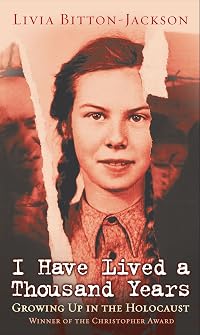
If you want to look for some better books on the Holocaust for children, try any of Uri Orlev's, or Jerry Spinelli's Milkweed, or Livia Bitton-Jackson's memoir I Have Lived a Thousand Years, or...well, quite a few books are better than this one. show less
The book is meant to educate young people about the Holocaust, but it had a lot of historical inaccuracies. The idyllic shtetl world at the beginning of Chaya's story would have been long gone by 1942 -- by that time, all the Jews left alive in Poland were in ghettos, in concentration camps or in hiding. Lublin, the place Chaya supposedly came from, was ghettoized and in early 1942, most of its Jewish population was deported to Belzec and killed.
The dialogue was overly didactic (a common flaw in historical novels, especially those for children) and too much was told rather than show more shown. Further, the camp confused me. Yolen says in the end that she created an amalgam fictional camp out of various aspects of real camps, but she used the trademark Auschwitz sign: "Arbeit Macht Frei." I was confused throughout the book: This is Auschwitz? But where are the selections, the band, Mengele? Did she do any research at all, I wondered. Yolen should have revealed her use of a made-up camp at the beginning, and she shouldn't have used the Auschwitz sign.
If you want to look for some better books on the Holocaust for children, try any of Uri Orlev's, or Jerry Spinelli's Milkweed, or Livia Bitton-Jackson's memoir I Have Lived a Thousand Years, or...well, quite a few books are better than this one. show less
Great story. I cried. My throat is tightening as I think back on it. Great ending. Powerful.
The holocaust and the trail of tears are two events that have affected me for decades - all of my adult life and half of my childhood. I remember, in my 20's, trying to convince a close Jewish friend that he cannot think of the holocaust as just the past and something that cannot happen in current times. I told him it was "yesterday" and people and society have not changed. I'm not sure I've changed my mind about that yet.
I remember sitting on the back patio in my middle teens with my family and guests for a cookout and asking about the numbers tattooed on our friend's arm, That was the first time I learned what that meant.
Anyway, The Devil's show more Arithmetic is an amazing book. And I'm amazed that the same person can write this and also write Owl Moon, one of favorite young children's picture books. I plan on taking a close look at Yolen's other work. show less
The holocaust and the trail of tears are two events that have affected me for decades - all of my adult life and half of my childhood. I remember, in my 20's, trying to convince a close Jewish friend that he cannot think of the holocaust as just the past and something that cannot happen in current times. I told him it was "yesterday" and people and society have not changed. I'm not sure I've changed my mind about that yet.
I remember sitting on the back patio in my middle teens with my family and guests for a cookout and asking about the numbers tattooed on our friend's arm, That was the first time I learned what that meant.
Anyway, The Devil's show more Arithmetic is an amazing book. And I'm amazed that the same person can write this and also write Owl Moon, one of favorite young children's picture books. I plan on taking a close look at Yolen's other work. show less
Members
- Recently Added By
Lists

Children's Books about World War II (1939-1945)
143 works; 12 members

1001 Children's Books You Must Read Before You Grow Up
774 works; 100 members

Time travel -- children's/young adult fiction
231 works; 10 members
Honey For a Child's Heart
1,152 works; 25 members

Children's Literature, Briefly Historical Fiction Reading List
44 works; 4 members
Most Popular Young Adult Lit on LT
100 works; 4 members

Bookriot's 100 Must-Read Sci-Fi Fantasy Novels By Female Authors
100 works; 9 members

Books Read in 2018
4,360 works; 110 members
Favorite Childhood Books
1,646 works; 513 members

Books about World War II
241 works; 22 members
Before Austen Comes Aesop
318 works; 9 members

Books Read in 2024
4,623 works; 126 members

Holocaust
100 works; 13 members

Precious People
119 works; 1 member

Jewish Books
367 works; 24 members
Talk Discussions
Past Discussions
Found: Time travel book with discussion about bread in Name that Book (June 2025)
Author Information

659+ Works 104,032 Members
Jane Yolen was born February 11, 1939 in New York City. She received a bachelor's degree from Smith College in 1960 and a master's degree in education from the University of Massachusetts in 1976. After college, she became an editor in New York City and wrote during her lunch break. She sold her first children's book, Pirates in Petticoats, at the show more age of 22. Since then, she has written over 300 books for children, young adults, and adults. Her other works include the Emperor and the Kite, Owl Moon, How Do Dinosaurs Say Goodnight? and The Devil's Arithmetic. She has won numerous awards including the Kerlan Award, the Regina Medal, the Keene State Children's Literature Award, the Caldecott Medal, two Nebula Awards, two Christopher Medals, the World Fantasy Award, three Mythopoeic Fantasy Awards, the Golden Kite Award, the Jewish Book Award, the World Fantasy Association's Lifetime Achievement Award, and the Association of Jewish Libraries Award. (Bowker Author Biography) show less
Some Editions
Awards and Honors
Awards
Work Relationships
Has the adaptation
Inspired
Common Knowledge
- Canonical title
- The Devil's Arithmetic
- Original publication date
- 1988
- People/Characters
- Hannah Stern (Chaya Abramowicz); Eva Stern (great aunt of Hannah Stern, sister of Will Stern); Will Stern (grandfather of Hannah Stern, father of Hannah Stern's father, brother of Eva Stern); Shmuel Abramowicz (brother of Gitl Abramowicz, uncle of Chaya Abramowicz); Fayge Boruch (fiancée of Shmuel Abramowicz); Gitl Abramowicz (sister of Shmuel Abramowicz, aunt of Chaya Abramowicz) (show all 21); Rivka (friend of Chaya Abramowicz); Mr. Stern (father of Hannah Stern, son of Will Stern); Mrs. Stern (mother of Hannah Stern); Aaron Stern (brother of Hannah Stern); Belle Stern (wife of Will Stern, grandmother of Hannah Stern); Chaya Abramowicz (Hannah Stern); Yitzchak (butcher); Reuven (son of Yitzchak the butcher); Tzipporah (daughter of Yitzchak the butcher); Rachel (friend of Chaya Abramowicz); Shifre (friend of Chaya Abramowicz); Esther (friend of Chaya Abramowicz); Yente "the Cossack" (friend of Chaya Abramowicz); Rabbi Boruch (rabbi, father of Fayge Boruch); Commandant Breuer (Nazi)
- Important places
- Auschwitz concentration camp, Oświęcim, Lesser Poland, Poland; Poland; The Bronx, New York, New York, USA; New Rochelle, New York, USA; Viosk, Poland
- Important events
- Holocaust (1939 | 1945)
- Related movies
- The Devil's Arithmetic (1999 | IMDb)
- Dedication
- To my Yolen grandparents, who brought their family over in the early 1900's, second class, not steerage, and to my Berlin grandparents, who came over close to that same time and settled in Virginia. We were the lucky ones. Th... (show all)is book is a memorial for those who were not.
And for my daughter, Heidi Elisabet Stemple, whose Hebrew name is Chaya -- pronounced with a gutteral ch as Hi'-ya -- which means life.
And with special thanks to Barbara Goldin and Deborah Brodie, who were able to ask questions of survivors that I was unable to ask and pass those devastating answers on to me.
c. 1 In honor of Temple Israel by LJCRS 1990 - First words
- "I'm tired of remembering," Hannah said to her mother as she climbed into the car.
- Quotations
- She has come to love her next bowl of soup more.
- Last words
- (Click to show. Warning: May contain spoilers.)Fiction cannot recite the numbing numbers, but it can be that witness, that memory. A storyteller can attempt to tell the human tale, can make a galaxy out of the chaos, can point to the fact that some people survived even as most people died. And can remind us that the swallows still sing around the smokestacks.
- Original language
- English
- Canonical DDC/MDS
- 813.6
- Canonical LCC
- PZ7.Y78
Classifications
Statistics
- Members
- 5,147
- Popularity
- 2,668
- Reviews
- 129
- Rating
- (4.07)
- Languages
- English, German, Russian, Spanish
- Media
- Paper, Audiobook, Ebook
- ISBNs
- 48
- UPCs
- 2
- ASINs
- 18