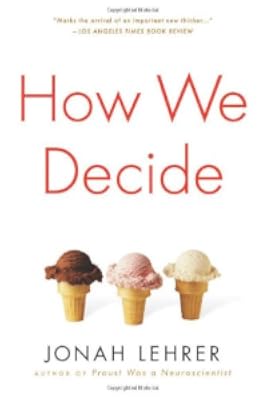
How We Decide
by Jonah Lehrer
On This Page
Description
Offers a fascinating look at the new science of decision-making--and how it can help us make better choices.Tags
Recommendations

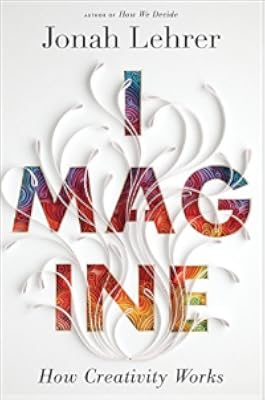
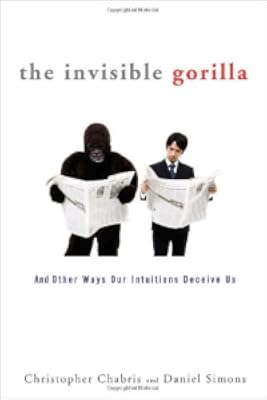
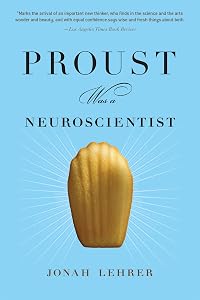
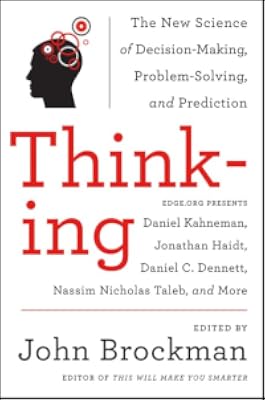
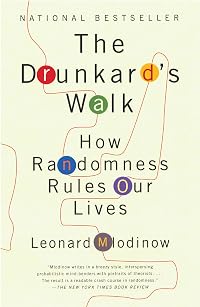
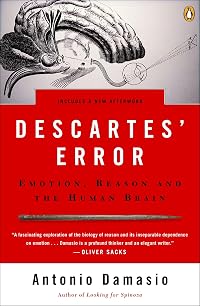
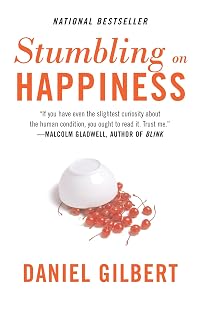

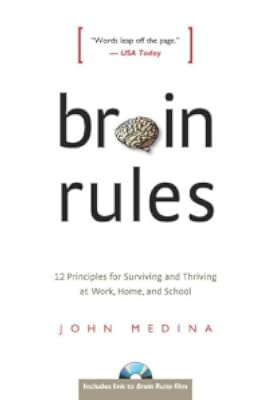


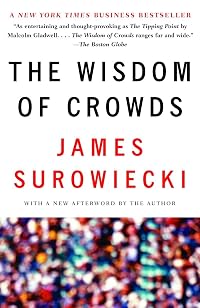
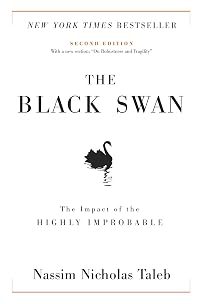
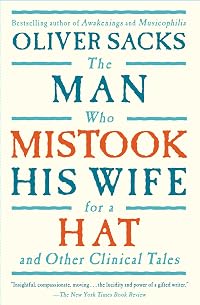
Member Recommendations
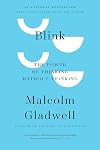
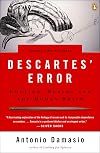
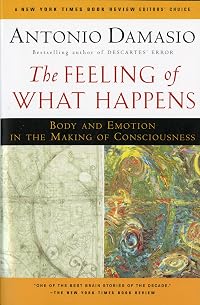
katieinseattle Lehrer discusses a lot of the same ideas that are dealt with at much greater depth in Damasio's book, which is a considerably harder read but well worth it.
20
Member Reviews
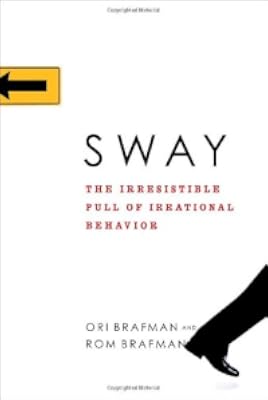
Lehrer's "How We Decide" is yet another book on the apparently quite popular topic of understanding how we make decisions. Having already read Gladwell's "Blink" and Brafman's "Sway", like many reviewers, I did notice a lot of overlap. However, I thought Jonah's more scientific approach to the topic was enough to make it well worth the read.For example, Gladwell mentions the Univeristy of Iowa study where participants played a gambling game with 4 decks of cards (two of which end up being far more likely to yield positive results). He explains that the participants brains recognized the pattern before the participants themselves were aware of it. Lehrer, however, tells you *why* those participants brains picked up on the patterns.In the show more end, I'd recommend this book to anyone interested in neuroscience. Even if you've read some of the other popular books, you'll still find value in Lehrer's more scientific, yet still approachable, discussion of the topic. show less
To say that this book is essential, is putting a great deal of pressure on a slim volume. But if you need a book that can really tell you how to lead a better, happier life, this book is much closer to the mark than all the books filled with cheerful aphorisms.
With the use of fMRI machines, brain scientists can see directly what parts of our brains are active while people are contemplating different puzzles. It is not the simple dichotomy of emotion and reason, but many different systems, such as face recognition subroutines, that form the decision making part of the brain. The best use of the brain's power is knowing when the analytical part needs to be in control (such as calculating the worth of a hand of cards in poker) and when the show more emotional part needs to be in control (telling when another poker player is bluffing). But it is not enough to know when to rely on reason or instinct. Your instinct is best guided by years of unconscious observation. And your reason should be guided by knowing (and being honest about) the parameters that lead you to a decision. Good decisions come from analyzing past mistakes. If we know the errors that human brains are prone to (loss aversion and certainty rewards), we can better allow for these simple mental biases. If we conscientiously watch how our mind works, we can come to better conclusions that will make us happier. show less
With the use of fMRI machines, brain scientists can see directly what parts of our brains are active while people are contemplating different puzzles. It is not the simple dichotomy of emotion and reason, but many different systems, such as face recognition subroutines, that form the decision making part of the brain. The best use of the brain's power is knowing when the analytical part needs to be in control (such as calculating the worth of a hand of cards in poker) and when the show more emotional part needs to be in control (telling when another poker player is bluffing). But it is not enough to know when to rely on reason or instinct. Your instinct is best guided by years of unconscious observation. And your reason should be guided by knowing (and being honest about) the parameters that lead you to a decision. Good decisions come from analyzing past mistakes. If we know the errors that human brains are prone to (loss aversion and certainty rewards), we can better allow for these simple mental biases. If we conscientiously watch how our mind works, we can come to better conclusions that will make us happier. show less
As Ginger Campbell of Brain Science Podcast would say, this book is for everyone who has a brain. It's easy to read and provides many real life examples and situations, exposing what we know now about how the brain works, as opposed to what has been supposed for all time. Fascinating, well written, and a good introduction to the subject matter. The book might just make you see a new perspective regarding some things about yourself or others.
Lest you think this book is dry based on my review or any others, banish that idea. It's about life, not just your brain. You'll learn why some groups of people will never be different than they are. That alone is worth knowing.
Lest you think this book is dry based on my review or any others, banish that idea. It's about life, not just your brain. You'll learn why some groups of people will never be different than they are. That alone is worth knowing.
I had low expectations for this book because I read so many already in this genre. And Jonah Lehrer touched on many of well-traveled ideas and including what I find a well-traveled and boring discussion of MRI and brain activity.
But there were enough new material for me to ponder over. Like, how kids do better over time with the compliment of "You worked hard" over "You are smart" and a whole different take on the definition of a psychopath.
He ties together stories of Tom Brady, an airline pilot who landed a plane without hydraulics, and a smokejumper who survived a blaze by an unorthodox strategy. It could make you think ... and learn to think better by thinking less! Or more depending on the circumstances.
This is a good attempt at explaining why we decide to do the things we do, and how some people seem to be able to make the right decisions and how some people don't. It covered the scientific research in terms that non-medical people can understand without oversimplifying. What I found most interesting were the examples of individuals who managed to conquer the fear of crashing a plane or being burnt by a raging fire, to think of a way to save themselves and at times, people with them. What I didn't enjoy about the book were the descriptions of scientific experiments on monkeys. It was factually presented, but they still made me cringe and I found myself muttering that the scientists should conduct the same brain experiments on their show more own families instead of innocent monkeys. I understand why they did it, but I still didn't like reading about it.
I'm wondering though, if knowing how I make decisions, will now allow me to consciously change the way I think before I make major decisions or even some minor ones. show less
I'm wondering though, if knowing how I make decisions, will now allow me to consciously change the way I think before I make major decisions or even some minor ones. show less
I have mixed feelings about this volume. On one hand, there were sections where I was really enjoying the text and making some notes for myself. On the other, there were yawning chasms of text that seemed formulaic and hardly new. I also had to contend with consecutive chapters that seemed to contradict one another (don't listen to your rational, prefrontal cortex - no wait, do listen). And maybe that was a central point, but I began begging the author to throw me a bone and put some semblance of a framework around all of the studies and examples. Eventually, he did a little of that in the last chapter - giving me a handful of guidelines for how to think about thinking and making decisions.
The book is very readable, and there is more show more than a kernel of interesting information here. But overall I still find it lacking in the "make sense of it all" department. show less
The book is very readable, and there is more show more than a kernel of interesting information here. But overall I still find it lacking in the "make sense of it all" department. show less
This is one of the best non-fiction books I've ever read.
This book, along with others by Freud, Malcom Galdwell, Hawking and Kennedys' Profiles in Courage etc etc, desperately need to be tied into the public school curriculum, along with courses on critical thinking, psychology and sociology, instead of being left for universities.
People need to get a basic understanding of why they make decisions. In the age of entitlement and egos, these subjects will teach people humility, and make them recognize their decisions are made based on so many variables out of their control.
The world would be a better, and a whole a lot safer, place if people understood the underpinnings of their opinions/biases, and truly respected the opinions of others show more by analytically approaching argument and decision making, using critical thinking and scientific fact proved out in books such as Lehrers. show less
This book, along with others by Freud, Malcom Galdwell, Hawking and Kennedys' Profiles in Courage etc etc, desperately need to be tied into the public school curriculum, along with courses on critical thinking, psychology and sociology, instead of being left for universities.
People need to get a basic understanding of why they make decisions. In the age of entitlement and egos, these subjects will teach people humility, and make them recognize their decisions are made based on so many variables out of their control.
The world would be a better, and a whole a lot safer, place if people understood the underpinnings of their opinions/biases, and truly respected the opinions of others show more by analytically approaching argument and decision making, using critical thinking and scientific fact proved out in books such as Lehrers. show less
Members
- Recently Added By
Published Reviews
ThingScore 100
My copy of How We Decide has literally dozens of dogeared pages that I've marked to return to in this reviews as examples of the kind of thing that made me go Wow! and sometimes even buttonhole nearby friends to read them passages.
added by lampbane
As an introduction to the cognitive struggle between the brain’s “executive” rational centers and its more intuitive regions, “How We Decide” succeeds with great panache, though readers of other popular books on this subject (Antonio Damasio’s “Descartes’ Error” and Daniel Goleman’s “Emotional Intelligence,” for example) will be familiar with a number of the classic show more experiments Lehrer describes show less
added by mikeg2
Lists

Books Read in 2013
1,630 works; 51 members
Author Information

9+ Works 4,940 Members
Jonah Lehrer is a Contributing Editor at Wired and the author of How We Decide, Proust Was a Neuroscientist, and Imagine: How Creativity Works. Jonah is also a frequent contributor to The New Yorker, Radiolab, and the Wall Street Journal. (Bowker Author Biography)
Some Editions
Awards and Honors
Distinctions
Common Knowledge
- Canonical title
- How We Decide
- Alternate titles
- The Decisive Moment: How the Brain Makes Up Its Mind
- Original publication date
- 2009
- Epigraph
- Who knows what I want to do? Who knows what anyone wants to do? How can you be sure about something like that? Isn't it all a question of brain chemistry, signals going back and forth, electrical energy in the cortex? How... (show all) do you know whether something is really what you want to do or just some kind of nerve impulse in the brain? Some minor little activity takes place somewhere in this unimportant place in one of the brain hemispheres and suddenly I want to go to Montana or I don't want to go to Montana.
Don Delillo, White Noise - Dedication
- To my siblings,
Eli, Rachel, and Leah - First words
- I was flying a Boeing 737 into Tokyo Narita International Airport when the left engine caught on fire.
- Quotations
- Good decisions rarely emerge from false consensus.
Think about thinking. If you're going to take only one idea away from this book, take this one: Whenever you make a decision, be aware of the kind of decision you are making and the kind of thought process it requires. ... Th... (show all)e best way to make sure that you are using your brain properly is to study your brain at work, to listen to the argument inside your head. - Last words
- (Click to show. Warning: May contain spoilers.)Now we need to put this knowledge to work.
- Blurbers
- Sacks, Oliver; Vanderbilt, Tom; Damasio, Antonio; Ariely, Dan; Anderson, Chris
Classifications
Statistics
- Members
- 2,173
- Popularity
- 9,409
- Reviews
- 61
- Rating
- (3.81)
- Languages
- 12 — Chinese, Czech, Dutch, English, French, German, Indonesian, Italian, Portuguese, Russian, Spanish, Turkish
- Media
- Paper, Audiobook, Ebook
- ISBNs
- 34
- UPCs
- 1
- ASINs
- 15