
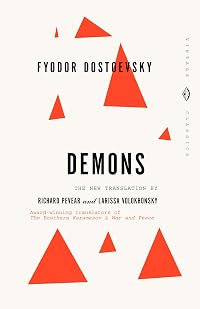
Demons
by Fyodor Dostoyevsky 
On This Page
Description
Russian author Fyodor Dostoyevsky is regarded by scholars and critics as one of the most important writers of the nineteenth century. His deeply philosophical novels present a nuanced look at some of the psychological struggles that men and women face. This novel, set against the backdrop of the initial rumblings of revolution in Imperial Russia, delves into the motivations that inspire extreme political ideologies..
Tags
Recommendations
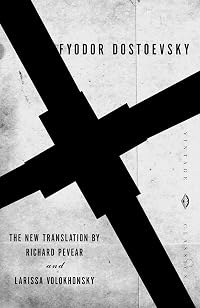








Member Recommendations
JuliaMaria Die allgemein lesenswerte Sammlung von autobiografisch eingefärbten Literatur- und Reiseerfahrungen enthält auch einen Essay zu "The Possessed".
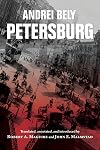
kitzyl "The turbulent late years of the Russian empire produced not one but two novels about terrorist plots that abound in images of carnivalesque horror. Dostoevsky’s Demons (1873) and Andrei Bely’s Petersburg (1913, revised 1922 [!]) both dramatize the activities of radical terrorist groups. Members of terrorist cells engaged in secretly planned and spectacularly performed acts of violence, and both Dostoevsky and Bely employ theatrical imagery to represent the dual nature of terror, as a both private and public phenomenon. This theatricality ranges from Shakespearean allusions to acts of costuming and scripting to images of puppets and clowns." Issue 35 of Hypocrite Reader

Member Reviews
Well, those little stars never seemed more irrelevant. This novel challenged any idea of value I might have wanted to attribute to the reading of it; I knew its politics would be antagonistic to mine, but I didn’t think I’d find it such a painful, absurd mess in so many ways, so full of what seems like amateurishness in both ideas and in style, and still not want to set it aside, because of the absolutely unique and compelling way the contest of ideas is dramatized, even if many of the foundational ideas themselves seemed bizarre, pernicious, or just outright irrelevant to me. In this supposedly thoroughly “political” novel, I never really came to believe the issues Dostoevsky cared so passionately about had anything to do with show more what I understand and what I’ve experienced as political struggle—his portrayal of revolutionaries and revolutionary ideas was about on the experiential and intellectual level of Glenn Beck. And his strongest defenders acknowledge the point by resorting to calling him prescient or prophetic, even though the situation he describes, if it resembles anything in the real world, resembles the onset of fascism more than the rise of authoritarian socialism, which is what it’s always supposed to be prophetic of. Yes, there’s a lot of egotism involved in contests for power, a tremendous amount of hypocrisy, and people do betray one another, but that seems as endemic now in the religious right or even in bland opportunistic liberal capitalism as in any kind of radical left politics.
Because of the novel’s non-stop hysteria, and the absolutely sensationalistic things that happen in it, it was, at one level, a guilty pleasure on the order of reading a tabloid newspaper story, or watching a soap opera, or even reading Stephen King. As either socio-political realism or as metaphysics it fails, but all that said, Dostoevsky is still a masterful writer in his own way; I don’t mean to imply he’s not. (Otherwise he would be impossible to read intelligently, and he isn't). Just look at the characters he creates, the gothic madness, the atmosphere of souls in torment… Those ghastly drawing rooms full of dreadful people screaming and fainting constitute a fully imagined reality as vivid and distinct as Kafka’s, and almost as compelling in the sheer completeness and power of the authorial pessimism they represent. If he is not quite as gnomic or willfully perverse in his belief system as Kafka, he is, as the hipster poet said, “a big pole on a hill on the way there.” He has the crazy-like-a-fox shrewdness to parody his own beliefs almost as relentlessly as those of his straw man opponents. In Demons he is also bold enough not to punish the central character who is the Iago-like, motiveless force of evil, nor to present any character at all as even mostly sympathetic, and certainly not as the ethical center of his moral universe. It’s the closest thing I’ve seen in literature to psycho-pathology as art. show less
Because of the novel’s non-stop hysteria, and the absolutely sensationalistic things that happen in it, it was, at one level, a guilty pleasure on the order of reading a tabloid newspaper story, or watching a soap opera, or even reading Stephen King. As either socio-political realism or as metaphysics it fails, but all that said, Dostoevsky is still a masterful writer in his own way; I don’t mean to imply he’s not. (Otherwise he would be impossible to read intelligently, and he isn't). Just look at the characters he creates, the gothic madness, the atmosphere of souls in torment… Those ghastly drawing rooms full of dreadful people screaming and fainting constitute a fully imagined reality as vivid and distinct as Kafka’s, and almost as compelling in the sheer completeness and power of the authorial pessimism they represent. If he is not quite as gnomic or willfully perverse in his belief system as Kafka, he is, as the hipster poet said, “a big pole on a hill on the way there.” He has the crazy-like-a-fox shrewdness to parody his own beliefs almost as relentlessly as those of his straw man opponents. In Demons he is also bold enough not to punish the central character who is the Iago-like, motiveless force of evil, nor to present any character at all as even mostly sympathetic, and certainly not as the ethical center of his moral universe. It’s the closest thing I’ve seen in literature to psycho-pathology as art. show less
Yana N.
Yana N.'s Reviews > Demons
Demons by Fyodor Dostoyevsky
Demons
by Fyodor Dostoyevsky, Ronald Meyer (Editor), Robert A. Maguire (Translator), Robert Belknap (Introduction)
44823137
Yana N.'s review
Sep 09, 2017 · edit
really liked it
bookshelves: classics, fiction, russian
Dostoyevsky’s Demons – a Christian book review and analysis
Rating: 4.5
There is a surreal quality to Dostoyevsky’s writing that always fascinates me – the rambling wildness of it, the amusing narrator quips, the concrete temporality and physicality of the setting, that is nevertheless inevitably overshadowed by the psychological expanse in which the real action takes place. This is certainly true of Demons.
Demons is about revolution, but a revolution mostly show more present in the minds of its conspirators, more concerned with the intellectual realm of philosophy than that of particular policy. Even when the destructive nihilism of Pyotr Stepanovitch and his motley crew spills over into reality with the fire and the murders, there is never a sense of imminence and urgency to the revolution; it is somehow always abstract and distant, muddled by the lies of Verkhovensky, the reluctance of Stavrogin and the ineptitude of the group of five. Everybody is willing to philosophize, but rarely to live out the implications of their beliefs, e.g. the Fourierist Liputin who nevertheless lives as a nosey home despot or the vile murderer Fedka who passionately expounds from the Apocalypse and reproaches Verhovensky for his unbelief. In this world of hypocrisy, there is an acutely felt distance between the spirit and the flesh, between abstraction and reality – and very few characters are able to bridge that gap.
We have the student Shatov, an ardent nationalist who sees the Russian identity as inextricably bound to Orthodoxy, but who cannot bring himself to actually believe in God. When his wife returns to him and births Stavrogin’s child (the conversation between Shatov and Arina the midwife regarding “the miracle of life” is hilarious, by the way), there appears a glimmer of hope and optimism that might set him on the course to conversion. But, as with all of Dostoyevsky’s fallen sinners, his story is cut off before the fullness of redemption can manifest itself. Of course, the validity of this point is contingent upon one’s doctrine of conversion and soteriology, which is quite muddled and varied in its expressions with Dostoyevsky. Stepan Tromifovitch definitely experiences a redemptive sort of conversion in the apprehension of the purity and loving abnegation of the Bible-seller Sofya Matveevna (probably the most Christian character of them all, and ironically but aptly named after Lady Wisdom, despite her simplicity) – but also undoubtedly influenced by the frenzy of his feverish sickness. The Gospels ostensibly come alive for him in their truths, but his ultimate profession of faith is deistic rather than distinctly Christian. It is Varvara Petrovna who urges Stepan Tromifovitch to make this confession and be instructed by a priest. Stavrogina herself possesses a certain kind of piety – we see her at church, giving alms and showing generosity – but that piety is only demonstrated in a very limited and formal context; it is never a living, active kind of faith with at tangible influence on her life. Christianity is simply assumed and accepted as a prerequisite for propriety in high society, rather than a radical call to self-sacrificial love and holiness.
On the atheistic side we have someone like Kirillov – a fanatical believer in himself and his own deity, attained through the denial of the fear of death and of God. His ideal is not the God-man Christ, but rather the man-god whose ultimate apotheosis is found in suicide. Denying God, he denies also the Giver of life and the sanctity of life itself, which is why suicide is often the demise of Dostoyevsky’s atheist characters. Ironically, Kirillov also functions as a kind of Christ-figure by (somewhat) willingly giving his life to save the revolutionaries – although that is ultimately an unsuccessful salvation. This perspective on suicide also applies to Stavrogin in a certain sense, although his suicide is an effort to expiate his sin or perhaps a desperate act in response to the failure of expiation and redemption. The censored chapter, “At Tikhon’s”, is a must-read for understanding Stavrogin’s psychology; it paints him both as a more sympathetic and more repulsive character. In this chapter, we see a Stavrogin set upon destroying his whole life as a self-inflicted punishment for his rape of a prepubescent girl who subsequently committed suicide for having “killed God” (the sentiment is somewhat correct in its perception of the seriousness of sin, but lacking for the neglect of grace and redemption). At Tikhon’s, Stavrogin gets an opportunity for redemption – the monk implores him to repudiate the vanity of his self-destructive mission and show true humility by forgiving himself and taking up service in the Church. He memorably says that (paraphrasing) “Christ will forgive you [Stavrogin], if you first forgive yourself”. Despite the theological inaccuracy of this statement, it truthfully points to the paradox of a very common conceit in which the Christian somehow judges his sin unforgivable in his heart while seemingly recognizing the redemptive forgiveness of God. Ultimately, Stavrogin’s pride hinders him from accepting Tikhon’s offer. He is unable to fully believe or disbelieve, arguing successfully for both positions and convincing others (Shatov, Kirillov), but not himself, and that uncertainty only leads him to death.
Stavrogin himelf is the enigmatic and magnetic character who forms the axis around which all other characters and events revolve. In conjunction with the apocalyptic atmosphere and references in Demons, Stavrogin has been identified as an antichrist figure for his beast-like amorality and coldblooded ruthlessness. He is supposed to become the tyrant of the revolution, spurred by the “false prophet” (to continue with the apocalyptic imagery) Verkhovensky, whose admiration of and obsession with Stavrogin bears overtones of idolatry. The chaos and uncertainty that the revolutionaries seek to achieve is also reminiscent of the “shaking of the earth and the heavens” (Hag. 2:21, Heb. 12:27). Coupled with the fire and the general decline of morals that results from the silly escapades of the gang of young people who flock around Verkhovensky and Yuliya Mikhailovna, Dostoyevsky also paints an interesting allegory of the end times.
Despite being a truly menacing threat, the revolutionaries are spitefully satirized, but also depicted as sublimely human and contradictory in character. As the murder of Shatov takes place, Shpigalov, of all people, backs out, even though he had earlier preached (quite prophetically, considering Russia’s history) the inevitability of totalitarian repression as the only viable political system, in which the murder of millions might be necessary. The good-natured soldier Erkel who sends half his salary to his poor mother turns out to be fanatically loyal to Verkhovensky, and very willing to go to any lengths to please him and advance “the cause”. Verkhovensky, in his own right, seems to have believed his own lies about the revolution, inheriting that trait from his father. Playing mastermind and manipulating everyone, he hopes to make illusion into reality by the insidious alchemy of polemics. However, when the futility and insanity of the whole affair is quickly uncovered, Verkhovensky’s cleverness is only enough to save his own buttocks, and that only barely.
The petty bourgeoisie do not escape criticism either. The conceit of Karmasinov and his claims to greatness are shown to be hollow, as is Yuliya Mikhailovna’s ambition of improving the morals of the youth through kindness. Stepan Trofimovtich also fancies himself some great intellectual and liberal genius while being a whiny parasite on Varvara Petrovna’s back. The preparations for the ball with its speeches, dances and “literary quadrille” and its inglorious downfall only further emphasize the shallowness and self-delusion of the upper- and middle-class.
The plotting of the novel is quite muddy and confusing, with no clear climax and a rather unsatisfactory ending (why did Verkhovensky get away???). The second half of Part 1 was a bit dull, and the entirety of Part 1 seems only to be setup for the rest and is thus lacking in quality and suspense compared to the other two parts, which are a veritable roller-coaster. The first-person narration through Stepan Trofimovitch’s friend (his name escapes me) functioned well and was very entertaining in its use of uncertainty and second-hand information. Sometimes this perspective was abandoned for a more standard omniscient third-person narrator (which was still supposed to be the same narrator telling the story as a story; yes, thank you, metafiction) that was mostly utilized for the sake of convenience and was slightly implausible. It was highly unlikely that the “friend” character would have such thorough knowledge of certain conversations and events (e.g. “At Tikhon’s”).
Dostoyevsky’s writing is not especially atmospheric, in the sense that there are no thorough and detailed Romanticist descriptions of the setting or lengthy digressions sparked by the melodramatic observation of some element of the environment. Time and space are somehow simply afterthoughts in Demons, despite the realist physicality in every situation – whether Verhovensky eating a meal and smacking his lips, or the very real weight of Shatov’s corpse as his murderers carry him to the dam. If anything is described meticulously, it would be the characters’ appearance and dress – a fact that attests to the centrality of characterization and psychology in Dostoyevsky’s novel(s).
Overall, I am quite taken with this book, despite its chaotic composition and occasionally weak characterizations (Lisa, Praskovya, Virginsky, and others). The rambling dialogues were good, if overly convoluted at times and fraught with hints and implications that I often didn’t catch until a character referenced them later in the story. I quite enjoyed Dostoyevsky’s prose in Demons, which isn’t always a given with him.
I initially gave Demons 5 stars, but I think that 4.5 (rounded down to 4) is a fairer rating. The novel was striking and compelling, populated by interesting (read: insane) characters and a multi-layered handling of themes like faith, atheism, suicide, revolution, et al. Its satire was likewise entertaining and incisive. However, 5 stars are reserved for my most favorite books, and Demons didn’t quite make the cut, although it was certainly brilliant despite its flaws. I highly recommend it if you generally enjoy Dostoyevksy and are acquainted with his style, but I do not think it is a good place to start; Crime and Punishment or The Idiot are more suited for “beginners” in my humble opinion. show less
Yana N.'s Reviews > Demons
Demons by Fyodor Dostoyevsky
Demons
by Fyodor Dostoyevsky, Ronald Meyer (Editor), Robert A. Maguire (Translator), Robert Belknap (Introduction)
44823137
Yana N.'s review
Sep 09, 2017 · edit
really liked it
bookshelves: classics, fiction, russian
Dostoyevsky’s Demons – a Christian book review and analysis
Rating: 4.5
There is a surreal quality to Dostoyevsky’s writing that always fascinates me – the rambling wildness of it, the amusing narrator quips, the concrete temporality and physicality of the setting, that is nevertheless inevitably overshadowed by the psychological expanse in which the real action takes place. This is certainly true of Demons.
Demons is about revolution, but a revolution mostly show more present in the minds of its conspirators, more concerned with the intellectual realm of philosophy than that of particular policy. Even when the destructive nihilism of Pyotr Stepanovitch and his motley crew spills over into reality with the fire and the murders, there is never a sense of imminence and urgency to the revolution; it is somehow always abstract and distant, muddled by the lies of Verkhovensky, the reluctance of Stavrogin and the ineptitude of the group of five. Everybody is willing to philosophize, but rarely to live out the implications of their beliefs, e.g. the Fourierist Liputin who nevertheless lives as a nosey home despot or the vile murderer Fedka who passionately expounds from the Apocalypse and reproaches Verhovensky for his unbelief. In this world of hypocrisy, there is an acutely felt distance between the spirit and the flesh, between abstraction and reality – and very few characters are able to bridge that gap.
We have the student Shatov, an ardent nationalist who sees the Russian identity as inextricably bound to Orthodoxy, but who cannot bring himself to actually believe in God. When his wife returns to him and births Stavrogin’s child (the conversation between Shatov and Arina the midwife regarding “the miracle of life” is hilarious, by the way), there appears a glimmer of hope and optimism that might set him on the course to conversion. But, as with all of Dostoyevsky’s fallen sinners, his story is cut off before the fullness of redemption can manifest itself. Of course, the validity of this point is contingent upon one’s doctrine of conversion and soteriology, which is quite muddled and varied in its expressions with Dostoyevsky. Stepan Tromifovitch definitely experiences a redemptive sort of conversion in the apprehension of the purity and loving abnegation of the Bible-seller Sofya Matveevna (probably the most Christian character of them all, and ironically but aptly named after Lady Wisdom, despite her simplicity) – but also undoubtedly influenced by the frenzy of his feverish sickness. The Gospels ostensibly come alive for him in their truths, but his ultimate profession of faith is deistic rather than distinctly Christian. It is Varvara Petrovna who urges Stepan Tromifovitch to make this confession and be instructed by a priest. Stavrogina herself possesses a certain kind of piety – we see her at church, giving alms and showing generosity – but that piety is only demonstrated in a very limited and formal context; it is never a living, active kind of faith with at tangible influence on her life. Christianity is simply assumed and accepted as a prerequisite for propriety in high society, rather than a radical call to self-sacrificial love and holiness.
On the atheistic side we have someone like Kirillov – a fanatical believer in himself and his own deity, attained through the denial of the fear of death and of God. His ideal is not the God-man Christ, but rather the man-god whose ultimate apotheosis is found in suicide. Denying God, he denies also the Giver of life and the sanctity of life itself, which is why suicide is often the demise of Dostoyevsky’s atheist characters. Ironically, Kirillov also functions as a kind of Christ-figure by (somewhat) willingly giving his life to save the revolutionaries – although that is ultimately an unsuccessful salvation. This perspective on suicide also applies to Stavrogin in a certain sense, although his suicide is an effort to expiate his sin or perhaps a desperate act in response to the failure of expiation and redemption. The censored chapter, “At Tikhon’s”, is a must-read for understanding Stavrogin’s psychology; it paints him both as a more sympathetic and more repulsive character. In this chapter, we see a Stavrogin set upon destroying his whole life as a self-inflicted punishment for his rape of a prepubescent girl who subsequently committed suicide for having “killed God” (the sentiment is somewhat correct in its perception of the seriousness of sin, but lacking for the neglect of grace and redemption). At Tikhon’s, Stavrogin gets an opportunity for redemption – the monk implores him to repudiate the vanity of his self-destructive mission and show true humility by forgiving himself and taking up service in the Church. He memorably says that (paraphrasing) “Christ will forgive you [Stavrogin], if you first forgive yourself”. Despite the theological inaccuracy of this statement, it truthfully points to the paradox of a very common conceit in which the Christian somehow judges his sin unforgivable in his heart while seemingly recognizing the redemptive forgiveness of God. Ultimately, Stavrogin’s pride hinders him from accepting Tikhon’s offer. He is unable to fully believe or disbelieve, arguing successfully for both positions and convincing others (Shatov, Kirillov), but not himself, and that uncertainty only leads him to death.
Stavrogin himelf is the enigmatic and magnetic character who forms the axis around which all other characters and events revolve. In conjunction with the apocalyptic atmosphere and references in Demons, Stavrogin has been identified as an antichrist figure for his beast-like amorality and coldblooded ruthlessness. He is supposed to become the tyrant of the revolution, spurred by the “false prophet” (to continue with the apocalyptic imagery) Verkhovensky, whose admiration of and obsession with Stavrogin bears overtones of idolatry. The chaos and uncertainty that the revolutionaries seek to achieve is also reminiscent of the “shaking of the earth and the heavens” (Hag. 2:21, Heb. 12:27). Coupled with the fire and the general decline of morals that results from the silly escapades of the gang of young people who flock around Verkhovensky and Yuliya Mikhailovna, Dostoyevsky also paints an interesting allegory of the end times.
Despite being a truly menacing threat, the revolutionaries are spitefully satirized, but also depicted as sublimely human and contradictory in character. As the murder of Shatov takes place, Shpigalov, of all people, backs out, even though he had earlier preached (quite prophetically, considering Russia’s history) the inevitability of totalitarian repression as the only viable political system, in which the murder of millions might be necessary. The good-natured soldier Erkel who sends half his salary to his poor mother turns out to be fanatically loyal to Verkhovensky, and very willing to go to any lengths to please him and advance “the cause”. Verkhovensky, in his own right, seems to have believed his own lies about the revolution, inheriting that trait from his father. Playing mastermind and manipulating everyone, he hopes to make illusion into reality by the insidious alchemy of polemics. However, when the futility and insanity of the whole affair is quickly uncovered, Verkhovensky’s cleverness is only enough to save his own buttocks, and that only barely.
The petty bourgeoisie do not escape criticism either. The conceit of Karmasinov and his claims to greatness are shown to be hollow, as is Yuliya Mikhailovna’s ambition of improving the morals of the youth through kindness. Stepan Trofimovtich also fancies himself some great intellectual and liberal genius while being a whiny parasite on Varvara Petrovna’s back. The preparations for the ball with its speeches, dances and “literary quadrille” and its inglorious downfall only further emphasize the shallowness and self-delusion of the upper- and middle-class.
The plotting of the novel is quite muddy and confusing, with no clear climax and a rather unsatisfactory ending (why did Verkhovensky get away???). The second half of Part 1 was a bit dull, and the entirety of Part 1 seems only to be setup for the rest and is thus lacking in quality and suspense compared to the other two parts, which are a veritable roller-coaster. The first-person narration through Stepan Trofimovitch’s friend (his name escapes me) functioned well and was very entertaining in its use of uncertainty and second-hand information. Sometimes this perspective was abandoned for a more standard omniscient third-person narrator (which was still supposed to be the same narrator telling the story as a story; yes, thank you, metafiction) that was mostly utilized for the sake of convenience and was slightly implausible. It was highly unlikely that the “friend” character would have such thorough knowledge of certain conversations and events (e.g. “At Tikhon’s”).
Dostoyevsky’s writing is not especially atmospheric, in the sense that there are no thorough and detailed Romanticist descriptions of the setting or lengthy digressions sparked by the melodramatic observation of some element of the environment. Time and space are somehow simply afterthoughts in Demons, despite the realist physicality in every situation – whether Verhovensky eating a meal and smacking his lips, or the very real weight of Shatov’s corpse as his murderers carry him to the dam. If anything is described meticulously, it would be the characters’ appearance and dress – a fact that attests to the centrality of characterization and psychology in Dostoyevsky’s novel(s).
Overall, I am quite taken with this book, despite its chaotic composition and occasionally weak characterizations (Lisa, Praskovya, Virginsky, and others). The rambling dialogues were good, if overly convoluted at times and fraught with hints and implications that I often didn’t catch until a character referenced them later in the story. I quite enjoyed Dostoyevsky’s prose in Demons, which isn’t always a given with him.
I initially gave Demons 5 stars, but I think that 4.5 (rounded down to 4) is a fairer rating. The novel was striking and compelling, populated by interesting (read: insane) characters and a multi-layered handling of themes like faith, atheism, suicide, revolution, et al. Its satire was likewise entertaining and incisive. However, 5 stars are reserved for my most favorite books, and Demons didn’t quite make the cut, although it was certainly brilliant despite its flaws. I highly recommend it if you generally enjoy Dostoyevksy and are acquainted with his style, but I do not think it is a good place to start; Crime and Punishment or The Idiot are more suited for “beginners” in my humble opinion. show less
Russian literature has a reputation for being overly long, dense and something of a great labour, but Demons, the fourth major work by Fyodor Dostoevsky that I've read, was the first time where, unfortunately, I felt that to be true. I had found Crime and Punishment tough but compelling when I read it a decade ago; Notes from Underground lean and restless, bursting with ideas; and The Brothers Karamazov exacting and illuminating, a seminal work of both literature and philosophy.
Imagine my disappointment then, as I made my way through the highly-regarded Demons with a growing realisation both that the pages were remaining a chore and that there would be scant reward at the end of the journey. Only my steadfast commitment to finish every show more book I start kept me from exorcising Demons after the first two hundred pages of nothing, and even with that iron-clad personal rule it was hard to keep track of what was going on in the burdensome mass of words.
Because the opinion I reached is that, for much of its 700 pages, Demons spins its wheels. It purports to tell the story of a group of political radicals who decide to kill one of their own, fearing he may become a snitch, with Dostoevsky weaving the various characters towards this fateful end in a commentary on the various political ideas that were capturing and corrupting society at that time. Demons was not a novel of the occult or the supernatural or of religion (at least, for the latter, not on the surface), and no demons or devils appear. As one of the translators, Richard Pevear, puts it in his Foreword to my Vintage Classics edition (as ever, the P&V translation is peerless):
"The demons, then, are ideas, that legion of isms that came to Russia from the West: idealism, rationalism, empiricism, materialism, utilitarianism, positivism, socialism, anarchism, nihilism, and, underlying them all, atheism." (pg. xix)
An interesting concept for a literary novel, you would agree, and one that would remain timely in our own era, with Western society, or at least its public discourse, arguably pulled apart by the various isms that the two sides of the culture war continue to blame for our ills (capitalism, feminism, racism, post-modernism, and back and forth it goes…).
The problem is that any concept Dostoevsky had in Demons is washed out by the unnecessary length of the narrative. The author spends 600 pages on a hard-to-follow noodling of his various characters in uninteresting social scenarios, lacking narrative thrust, believable dialogue, thematic coherence or even a tangible worthy literary thread. And yet – fatally – it proves to be replete with exhausting melodrama.
And yet, after said histrionics, when the book does finally reach its end with the murder of one of their own by the group of political radicals, there is no drama to it – not even the melodrama that had characterised the book until that point. It is dealt with passively, in a sort of summary, which is not only scant reward for a reader who has persevered through the long and unrewarding narrative but also robs the deed of any narrative weight or thematic profundity. It is remarkable that when labouring through Demons I kept returning to the same thought: this 700-page tome would have been much more effective as a short story. show less
Imagine my disappointment then, as I made my way through the highly-regarded Demons with a growing realisation both that the pages were remaining a chore and that there would be scant reward at the end of the journey. Only my steadfast commitment to finish every show more book I start kept me from exorcising Demons after the first two hundred pages of nothing, and even with that iron-clad personal rule it was hard to keep track of what was going on in the burdensome mass of words.
Because the opinion I reached is that, for much of its 700 pages, Demons spins its wheels. It purports to tell the story of a group of political radicals who decide to kill one of their own, fearing he may become a snitch, with Dostoevsky weaving the various characters towards this fateful end in a commentary on the various political ideas that were capturing and corrupting society at that time. Demons was not a novel of the occult or the supernatural or of religion (at least, for the latter, not on the surface), and no demons or devils appear. As one of the translators, Richard Pevear, puts it in his Foreword to my Vintage Classics edition (as ever, the P&V translation is peerless):
"The demons, then, are ideas, that legion of isms that came to Russia from the West: idealism, rationalism, empiricism, materialism, utilitarianism, positivism, socialism, anarchism, nihilism, and, underlying them all, atheism." (pg. xix)
An interesting concept for a literary novel, you would agree, and one that would remain timely in our own era, with Western society, or at least its public discourse, arguably pulled apart by the various isms that the two sides of the culture war continue to blame for our ills (capitalism, feminism, racism, post-modernism, and back and forth it goes…).
The problem is that any concept Dostoevsky had in Demons is washed out by the unnecessary length of the narrative. The author spends 600 pages on a hard-to-follow noodling of his various characters in uninteresting social scenarios, lacking narrative thrust, believable dialogue, thematic coherence or even a tangible worthy literary thread. And yet – fatally – it proves to be replete with exhausting melodrama.
And yet, after said histrionics, when the book does finally reach its end with the murder of one of their own by the group of political radicals, there is no drama to it – not even the melodrama that had characterised the book until that point. It is dealt with passively, in a sort of summary, which is not only scant reward for a reader who has persevered through the long and unrewarding narrative but also robs the deed of any narrative weight or thematic profundity. It is remarkable that when labouring through Demons I kept returning to the same thought: this 700-page tome would have been much more effective as a short story. show less
I've loved many Dostoyevsky novels before. I appreciated this novel, especially once I finished it and let it turn over a bit in my mind, but it is definitively more time-consuming and less immediately rewarding than classics like [Crime and Punishment]. While that book started off with a bang, this one has what I would consider to be an inordinate amount of set-up.
If you get through the set up, you're rewarded. This is a stunning philosophical treatise. The revelations about Stavrogin are especially dark given the period this was written, and the way he ends up raises numerous philosophical questions about the theory he averred and what was actually going on in his mind.
All that said, I wouldn't recommend this to Dostoyevsky newbies show more or those who don't care for ponderous Russian literature.
Finally, I should note that this novel is much more French-heavy than Dostoyevsky's other works. In college, I frequently said I know just enough French to read classic Russian literature, but this pushed my limits of comprehension a few times. show less
If you get through the set up, you're rewarded. This is a stunning philosophical treatise. The revelations about Stavrogin are especially dark given the period this was written, and the way he ends up raises numerous philosophical questions about the theory he averred and what was actually going on in his mind.
All that said, I wouldn't recommend this to Dostoyevsky newbies show more or those who don't care for ponderous Russian literature.
Finally, I should note that this novel is much more French-heavy than Dostoyevsky's other works. In college, I frequently said I know just enough French to read classic Russian literature, but this pushed my limits of comprehension a few times. show less
Dostoevsky reminds me of Poirot in that his eclectic range characters love gathering at denouements, speaking out with complete and outrageous honesty, and behaving in melodramatic ways. It's clunky, it's awkward, it's jarring, but ultimately it's saved by the intensive/extensive psychological profiles Dostoevsky builds around his characters with the final aim of the three explosive climaxes.
Part I is mainly an anecdotal introduction of the major characters and occasionally a jolly farce with the intended eye-roll inducing Stepan Trofimovich Verkhovensky, a self-admitted sponger, and his dysfunctional, co-dependent, strictly non-romantic relationship with the power-holder Varvara Petrovna Stavrogina. Part II marked a sudden shift in show more tone and plot (to that of a spy-ish conspiracy regarding an almighty elusive revolutionary sect) due to the spotlight on the youthful fatalistic ideological characters. The slow reveal of Pyotr's character as an evil mastermind was exhilarating, climaxing with the mythology of his powers shattered and his extremely unsettling, pathetic, deranged pawing at Nikolay. That enthralling bit made up for all the long-winded ideology - I'm less interested in the actual ideology but the effects of said ideology on the characters and their actions - that the characters sprouted. Part III concludes with the satisfying falling-dominoes of every character and the scary truth that even the gentlest, most sensitive of man can unhesitatingly render harm to another in the name of a higher ideology which more often than not, turns out to be an illusion.
There are gems about the human condition to be found throughout with some similar bloodshedding and psychotic tendencies of Crime and Punishment, but the reader must be patient and understanding of Dostoevksy's style. One such quirk is the prevalent mental illness throughout which represents the sanity of his worlds. Recommended for repeat-customers of Dostoevsky's works.
Aside: My edition of the book came with the previously censored chapter At Tikhon's as an appendix. It is worth reading it, either according to the order it should have come in the novel or at the end. The important thing is to read it because it is so essential to the characterisation of Stavrogin, much of which remains an enigma - despite the many dropped hints - in the novel. show less
Part I is mainly an anecdotal introduction of the major characters and occasionally a jolly farce with the intended eye-roll inducing Stepan Trofimovich Verkhovensky, a self-admitted sponger, and his dysfunctional, co-dependent, strictly non-romantic relationship with the power-holder Varvara Petrovna Stavrogina. Part II marked a sudden shift in show more tone and plot (to that of a spy-ish conspiracy regarding an almighty elusive revolutionary sect) due to the spotlight on the youthful fatalistic ideological characters. The slow reveal of Pyotr's character as an evil mastermind was exhilarating, climaxing with the mythology of his powers shattered and his extremely unsettling, pathetic, deranged pawing at Nikolay. That enthralling bit made up for all the long-winded ideology - I'm less interested in the actual ideology but the effects of said ideology on the characters and their actions - that the characters sprouted. Part III concludes with the satisfying falling-dominoes of every character and the scary truth that even the gentlest, most sensitive of man can unhesitatingly render harm to another in the name of a higher ideology which more often than not, turns out to be an illusion.
There are gems about the human condition to be found throughout with some similar bloodshedding and psychotic tendencies of Crime and Punishment, but the reader must be patient and understanding of Dostoevksy's style. One such quirk is the prevalent mental illness throughout which represents the sanity of his worlds. Recommended for repeat-customers of Dostoevsky's works.
Aside: My edition of the book came with the previously censored chapter At Tikhon's as an appendix. It is worth reading it, either according to the order it should have come in the novel or at the end. The important thing is to read it because it is so essential to the characterisation of Stavrogin, much of which remains an enigma - despite the many dropped hints - in the novel. show less
Роман Ф.М.Достоевского "Бесы" - одно из наиболее трагических и сложных в идейно-философском отношении произведений писателя. Благодаря историческому опыту XX века роман, искусственно истолкованный ранее как политический памфлет, во многом получил новое прочтение.
A sometimes funny, sometimes dark satire of revolutionary figures in Russian history and the high society that were sucked in by them. Pyotr was the most fascinating character for me, able both to cajole with boundless energy his comrades with threats of a shadowy international socialist order, and also hoodwink the rich liberals of high society into accepting him into their fold. The structure was a bit chaotic, as often is the case with Dostoevsky's major novels, but there were the occasional highly entertaining set pieces involving multiple characters, and wonderful passages of psychological and philosophical insight, which are his trademark.
Members
- Recently Added By
Lists

1001 Books You Must Read Before You Die
1,448 works; 1,131 members

Russian Literature
184 works; 35 members

The 100 Best Books of All Time by Norwegian Book Club (World Library)
104 works; 23 members

Favorite Long Books
330 works; 42 members

Best Political Fiction
92 works; 12 members
The Top Ten: Writers Pick Their Favorite Books
240 works; 31 members

Unread books
1,063 works; 82 members

Western World's Greatest Books - Project Gutenberg
295 works; 15 members

19th Century
190 works; 16 members

Books Featured on Gilmore Girls
307 works; 21 members

Books about Russia and the former USSR
67 works; 12 members

1,001 BYMRBYD Concensus
723 works; 27 members

Favorite World Literature in English Translation
22 works; 5 members

Fake Top 100 Fiction
81 works; 4 members

Shaykh Hamza's Book Recommendations
439 works; 3 members
Jordan B. Peterson's Recommended Books
104 works; 5 members

Revolutions
72 works; 5 members

Existentialism
90 works; 11 members

Russian Literature Sequence
28 works; 1 member

Good, Smart, Clean Fiction
46 works; 4 members

1870s
15 works; 2 members

2021 - List of books read
53 works; 1 member

My TBR
371 works; 3 members
My Favorite Russian Novels
37 works; 2 members
.
396 works; 1 member
Wishlist
99 works; 1 member

.
194 works; 2 members
The Complete Rory Gilmore Reading List
506 works; 5 members

DigitalDreamDoor top 300
300 works; 4 members

Favorite Books in Translation
320 works; 133 members

readingList
38 works; 1 member

The 150 Greatest Novels of All Time
150 works; 6 members

Recommended Reading : 600 Classics Reviewed, Editors of Salem Press, 2015
634 works; 6 members

All Things Russia
459 works; 11 members

Greatest Books, allegedly
484 works; 9 members

Jones & Newman: Best Horror Books Further Recommended Reading
577 works; 4 members

Harold Bloom - The Western Canon: C. The Democratic Age
336 works; 15 members

Books mentioned in Julian Symons’ Bloody Murder
438 works; 6 members

Fyodor Dostoevsky books
17 works; 1 member
Author Information

1,440+ Works 179,740 Members
One of the most powerful and significant authors in all modern fiction, Fyodor Dostoevsky was the son of a harsh and domineering army surgeon who was murdered by his own serfs (slaves), an event that was extremely important in shaping Dostoevsky's view of social and economic issues. He studied to be an engineer and began work as a draftsman. show more However, his first novel, Poor Folk (1846), was so well received that he abandoned engineering for writing. In 1849, Dostoevsky was arrested for being a part of a revolutionary group that owned an illegal printing press. He was sentenced to be executed, but the sentence was changed at the last minute, and he was sent to a prison camp in Siberia instead. By the time he was released in 1854, he had become a devout believer in both Christianity and Russia - although not in its ruler, the Czar. During the 1860's, Dostoevsky's personal life was in constant turmoil as the result of financial problems, a gambling addiction, and the deaths of his wife and brother. His second marriage in 1887 provided him with a stable home life and personal contentment, and during the years that followed he produced his great novels: Crime and Punishment (1886), the story of Rodya Raskolnikov, who kills two old women in the belief that he is beyond the bounds of good and evil; The Idiots (1868), the story of an epileptic who tragically affects the lives of those around him; The Possessed (1872), the story of the effect of revolutionary thought on the members of one Russian community; A Raw Youth (1875), which focuses on the disintegration and decay of family relationships and life; and The Brothers Karamazov (1880), which centers on the murder of Fyodor Karamazov and the effect the murder has on each of his four sons. These works have placed Dostoevsky in the front rank of the world's great novelists. Dostoevsky was an innovator, bringing new depth and meaning to the psychological novel and combining realism and philosophical speculation in his complex studies of the human condition. (Bowker Author Biography) show less
Fyodor Dostoyevsky has a Legacy Library. Legacy libraries are the personal libraries of famous readers, entered by LibraryThing members from the Legacy Libraries group.
Some Editions
Awards and Honors
Distinctions
Notable Lists
Series
Belongs to Publisher Series
Work Relationships
Is contained in
Contains
Inspired
Has as a study
Common Knowledge
- Canonical title*
- Boze geesten
- Original title
- Бесы
- Alternate titles
- The Devils; Demons; The Possessed
- Original publication date
- 1872
- People/Characters
- Nikolai Vsevolodovich Stavrogin; Stepan Trofimovich Verkhovensky; Pyotr Stepanovich Verkhovensky; Alexei Nilych Kirilov; Shigalyov; Ivan Shatov (show all 23); Mavriky Nikolaevich Drozdov; Maria Timofeevna Lebyadkin; Varvara Petrovna Stavrogin; Sergei Vasilievich Liputin; Pavel Pavlovich Gaganov; Praskovya Ivanovna Drozdov; Lizaveta Nikolaevna; Andrei Antonovich von Lembke; Darya Pavlovna Shatov; Ignat Lebyadkin; Artemy Pavlovich Gaganov; Fedka the Convict; Yulia Mikhailovna von Lembke; Arina Prokhorovna Virginsky; Semyon Yegorovich Karmazinov; Marya Ignatievna Shatov; Sofya Matveevna Ulitin
- Important places
- Russia
- Related movies
- The Possessed (1969 | IMDb)
- Epigraph
- The there was there an herd of many swine feeding on the mountain: and they besought him that he would suffer them to enter into them. And he suffered them. Then went the devils out of the man, and entered into the swine: and... (show all) the herd ran violently down a steep place into the lat, and were choked. When they that fed them saw what was done, they fled, and went and told it in the city and in the country. Then they went out to see what was done; and came to Jesus, and found the man out of whom the devils were departed, sitting at the feet to Jesus, clothed, and in his right mind: and they were afraid. They also which saw it told them by what means he that was possessed of the devils was healed. -Luke viii. 32-36
Strike me dead, the track has vanished, Well, what now? We've lost the way, Demons have bewitched our horses, Led us in the wilds astray...What a number? Whither drift they? What's the mournful dirge they sing? Do they hail a... (show all) witch's marriage or a goblin's burying? - A. Pushkin - First words
- Before describing the extraordinary events which took place so recently in our town, hitherto not remarkable for anything in particular, I find it necessary, since I am not a skilled writer, to go back a little and begin with... (show all) certain biographical detains concerning our talented and greatly esteemed Stepan Trofimovich Verkhovensky.
In undertaking to describe the recent and strange incidents in our town, till lately wrapped in uneventful obscurity, I find myself forced in absence of literary skill to begin my story rather far back, that is to say, with c... (show all)ertain biographical details concerning that talented and highly-eseemed gentleman, Stepan Tromfimovitch Verhovensky. (Modern Library 1930 edition)
In a letter written from Dresden, dated 8 October 1870, addressed to his publisher, Fyodor Dostoevsky described the difficulty he was having with the new novel he's begun writing:
For a very long time I had trouble with th... (show all)e beginning of the work. I rewrote it several times. To tell the truth, something happened with this novel that had never happened to me before: week after week, I would keep putting asigne the beginning and work on the ending instead... What I can guarantee is that, as the novel progresses, it will hold the reader's interest. It seems to me that the way I have it now is for the best. (Introduction) - Quotations
- Stavrogin: "Every man has a right to an umbrella."
Lebyatkin: "You've defined the minimum of human rights in one short sentence, sir." - Last words
- (Click to show. Warning: May contain spoilers.)After an autopsy, all our medical experts rejected any possibility of insanity.
(Click to show. Warning: May contain spoilers.)"Cursed psychologist!" he suddenly cut the conversation short in a rage, and, without looking back, left the cell. (Modern Library 1930 edition) - Original language
- Russian
- Canonical DDC/MDS
- 891.733
- Canonical LCC
- PG3326
- Disambiguation notice
- Variant Titles: Demons was also published as The Devils and The Possessed.
*Some information comes from Common Knowledge in other languages. Click "Edit" for more information.
Classifications
- Genres
- General Fiction, Fiction and Literature
- DDC/MDS
- 891.733 — Literature & rhetoric Asian Literature East Indo-European and Celtic literatures Russian and East Slavic languages Russian fiction 1800–1917
- LCC
- PG3326 — Language and Literature Slavic languages and literatures. Baltic languages. Albanian language Slavic. Baltic. Albanian Russian literature Individual authors and works 1800-1870 Dostoyevsky
- BISAC
Statistics
- Members
- 9,450
- Popularity
- 1,104
- Reviews
- 84
- Rating
- (4.16)
- Languages
- 29 — Albanian, Catalan, Chinese, Czech, Danish, Dutch, English, Estonian, Finnish, French, German, Greek, Hebrew, Hungarian, Italian, Japanese, Lithuanian, Malayalam, Norwegian (Bokmål), Norwegian, Polish, Romanian, Russian, Croatian, Slovenian, Spanish, Swedish, Turkish, Portuguese (Portugal)
- Media
- Paper, Audiobook, Ebook
- ISBNs
- 379
- UPCs
- 1
- ASINs
- 183