Complete Poems
by C.P. Cavafy
On This Page
Description
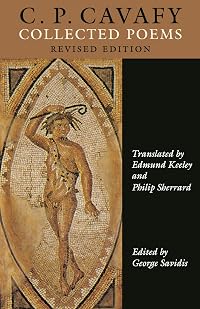
C. P. Cavafy (1863-1933) lived in relative obscurity in Alexandria, and a collected edition of his poems was not published until after his death. Now, however, he is regarded as the most important figure in twentieth-century Greek poetry, and his poems are considered among the most powerful in modern European literature. This revised bilingual edition of Collected Poems offers the reader the original Greek texts facing what are now recognized as the standard English translations of Cavafy's show more poetry. It is this translation that best captures the poet's mixture of formal and idiomatic language and that preserves the immediacy of his increasingly frank treatment of homosexual eroticism, his brilliant re-creation of history, and his astute political ironies. This new bilingual edition also features the notes of editor George Savidis and a new foreword by Robert Pinsky. show lessTags
Recommendations
















Member Reviews
I was required to learn a little Cavafy when I took Modern Greek in school, but he only made a partial impression on me at the time. It was this book which made me fall in love. When I read it, I have the sensation of finding a book I had written myself but somehow never read... I don't have the poetic skill in English or Greek, but the thoughts fit with my thoughts. I'm concerned that if I learned Cavafy's works too well, that feeling might slip away and never be recovered. And so Cavafy became my favorite poet, but I also carefully refrain from becoming too much of an expert. It is a book I pick up again once a year or so, especially if I start to think that I don't enjoy poetry after all. Highly recommended.
So, to be clear, I'm not giving Cavafy's poems 2 stars; my opprobrium is reserved for Daniel Mendelsohn's dishearteningly dead translations. Yes, Cavafy was writing free verse in the modernist vein. Yes, his poetic tone often borders on conversational. But Mendelsohn has decided to ignore the rhythmic torrents of the great poet's work, to select the most mundane word in any situation, to replace the feeling with the cerebral, rather than let the two walk hand in hand. The conversational, perhaps, has become colloquial.
It is certainly impressive for Mendelsohn to have translated all of Cavafy's poems (this edition is a "highlights reel" from the full two-volume collection). This should not be taken as a slight on his lifetime of work or show more his command of Greek! (Who am I to make such judgments?) Yet dedication alone, however admirable, is not achievement. Perhaps it's an American thing - or a generational one! Mendelsohn's collection has been rapturously received by American institutions, and I suspect there is something appealing, to those soaked in the American literary tradition, in the understated ordinariness of this verse.
As one who does not have Greek, it would be folly to discuss the art of translation in this context. So allow me to compare just two lines from Cavafy's most famous poem The City to try and express the intangible something which I find to be missing from DM's translation.
Here is DM:
"You'll always end up in this city. Don't bother to hope
for a ship, a route, to take you somewhere else;
they don't exist."
Here Edmund Keeley:
" You’ll always end up in this city. Don’t hope for things elsewhere:
there’s no ship for you, there’s no road."
Rae Delven:
"Always you will arrive in this city. Do not hope for any other–
There is no ship for you, there is no road."
Theoharis C. Theoharis:
"Always you will end up in this city.
For you there is no boat - abandon hope of that -
no road to other things."
And finally Lawrence Durrell, consciously "transplanting" rather than "translating", in a version from the appendices to his Justine:
"The city is a cage.
No other places, always this
Your earthly landfall, and no ship exists
To take you from yourself."
Four versions of Cavafy I would enjoy reading. And none of them Mendelsohn's. show less
It is certainly impressive for Mendelsohn to have translated all of Cavafy's poems (this edition is a "highlights reel" from the full two-volume collection). This should not be taken as a slight on his lifetime of work or show more his command of Greek! (Who am I to make such judgments?) Yet dedication alone, however admirable, is not achievement. Perhaps it's an American thing - or a generational one! Mendelsohn's collection has been rapturously received by American institutions, and I suspect there is something appealing, to those soaked in the American literary tradition, in the understated ordinariness of this verse.
As one who does not have Greek, it would be folly to discuss the art of translation in this context. So allow me to compare just two lines from Cavafy's most famous poem The City to try and express the intangible something which I find to be missing from DM's translation.
Here is DM:
"You'll always end up in this city. Don't bother to hope
for a ship, a route, to take you somewhere else;
they don't exist."
Here Edmund Keeley:
" You’ll always end up in this city. Don’t hope for things elsewhere:
there’s no ship for you, there’s no road."
Rae Delven:
"Always you will arrive in this city. Do not hope for any other–
There is no ship for you, there is no road."
Theoharis C. Theoharis:
"Always you will end up in this city.
For you there is no boat - abandon hope of that -
no road to other things."
And finally Lawrence Durrell, consciously "transplanting" rather than "translating", in a version from the appendices to his Justine:
"The city is a cage.
No other places, always this
Your earthly landfall, and no ship exists
To take you from yourself."
Four versions of Cavafy I would enjoy reading. And none of them Mendelsohn's. show less
A compelling collection of all the poetry of the early 20th-century Greek 'poet-historian' C. P. Cavafy. Whilst that moniker might sound pretentious at first, it is an accurate description of the Alexandrian; his poems draw on Classical history, both well-known and obscure, and his research is meticulous and comprehensive. This can make some of Cavafy's poetry difficult to approach, as one requires the historical background for many of these poems in order to try and understand the main thrust of the poem. (To this end, editor Daniel Mendelsohn's excellent and exhaustive Notes – which comprise of approximately half of the entire book – are essential in navigating the poetry, rather than just a boon for more scholarly show more readers.)
This may deny the pleasure of Cavafy to many prospective readers, but in my opinion it was well-worth the mental effort it required. There's no poet quite like Cavafy; the muse he taps into is quite different from any other poet's, and consequently has an unspoilt richness that indeed makes it seem, to paraphrase his most famous poem 'Ithaca', like first putting into harbours new to your eyes. It's like entering a whole new world, and unfortunately Cavafy's pioneering work forged a path that has not been entirely explored by subsequent poets. Cavafy just gets the romantic undertones inherent in the study of history: the idea that, as Mendelsohn notes, "the backward glance can, in the end, be a glimpse into the future" (pg. lxxii) and, even more significantly, the idea that problems of emotion and of history both require the same remedy: the realisation that our understanding of events whether personal or historical can only come with the passage of time. For, as Mendelsohn further notes, Cavafy's poetry is:
"… richly coloured by a profound sympathy for human striving in the face of impossible obstacles. (Which could be the armies of Octavian or taboos against forbidden desires.)… That appreciation, that sympathy, that understanding are, of course, made possible only by Time – the medium that makes History possible, too… His poetry returns obsessively to a question that is, essentially, a historian's question: how the passage of time affects our understanding of events – whether the time in question is the millennia that have elapsed since 31 B.C., when the Hellenophile Marc Antony's dreams of an Eastern Empire were pulverized by Rome (the subject of seven poems), or the mere years that, in the poem 'Since Nine –', have passed since those long-ago nights that the narrator spent in bustling cafés and crowded city streets: a space of time that has since been filled with the deaths of loved ones whose value he only now appreciates…" (pg. xxxv – xxxvi)
It is this awareness of the immediacy of history, allowing "the blurring of the ancient and the modern" (pg. xx), which gives Cavafy his durability and integrity. I confess that I was drawn to read Cavafy due to my love of Greek mythology (I was already aware of and impressed by 'Ithaca'), but I found a body of work even more satisfying than just an indulgence of my own pet interests.
Favourites include: 'The God Abandons Antony', 'Ithaca', 'Trojans', 'Far Off', 'Gray', 'The Mirror in the Entrance', 'Candles', 'Thermopylae', 'The Windows', 'Walls', 'Oedipus', 'Azure Eyes', 'Hidden', 'The Rest I Shall Tell in Hades to Those Below', 'That's How', 'Half an Hour' and the prose poem 'Ships'. show less
This may deny the pleasure of Cavafy to many prospective readers, but in my opinion it was well-worth the mental effort it required. There's no poet quite like Cavafy; the muse he taps into is quite different from any other poet's, and consequently has an unspoilt richness that indeed makes it seem, to paraphrase his most famous poem 'Ithaca', like first putting into harbours new to your eyes. It's like entering a whole new world, and unfortunately Cavafy's pioneering work forged a path that has not been entirely explored by subsequent poets. Cavafy just gets the romantic undertones inherent in the study of history: the idea that, as Mendelsohn notes, "the backward glance can, in the end, be a glimpse into the future" (pg. lxxii) and, even more significantly, the idea that problems of emotion and of history both require the same remedy: the realisation that our understanding of events whether personal or historical can only come with the passage of time. For, as Mendelsohn further notes, Cavafy's poetry is:
"… richly coloured by a profound sympathy for human striving in the face of impossible obstacles. (Which could be the armies of Octavian or taboos against forbidden desires.)… That appreciation, that sympathy, that understanding are, of course, made possible only by Time – the medium that makes History possible, too… His poetry returns obsessively to a question that is, essentially, a historian's question: how the passage of time affects our understanding of events – whether the time in question is the millennia that have elapsed since 31 B.C., when the Hellenophile Marc Antony's dreams of an Eastern Empire were pulverized by Rome (the subject of seven poems), or the mere years that, in the poem 'Since Nine –', have passed since those long-ago nights that the narrator spent in bustling cafés and crowded city streets: a space of time that has since been filled with the deaths of loved ones whose value he only now appreciates…" (pg. xxxv – xxxvi)
It is this awareness of the immediacy of history, allowing "the blurring of the ancient and the modern" (pg. xx), which gives Cavafy his durability and integrity. I confess that I was drawn to read Cavafy due to my love of Greek mythology (I was already aware of and impressed by 'Ithaca'), but I found a body of work even more satisfying than just an indulgence of my own pet interests.
Favourites include: 'The God Abandons Antony', 'Ithaca', 'Trojans', 'Far Off', 'Gray', 'The Mirror in the Entrance', 'Candles', 'Thermopylae', 'The Windows', 'Walls', 'Oedipus', 'Azure Eyes', 'Hidden', 'The Rest I Shall Tell in Hades to Those Below', 'That's How', 'Half an Hour' and the prose poem 'Ships'. show less
God, if I could write like this, I would -- well, I wouldn't be me, but I would have an awesome amount of knowledge about Classical, Late Antiquity, and Modern Greece and Egypt. And be a far more generous person. This is the book that reminds me that Alexandria was a Hellenistic city for a damn long time, a book that overflows with compassion and empathy, a book which moves seamlessly between paganism and early Christianity. I wish there were more notes, but I can understand why Keeley, Sherrard, and Savidis decided to limit the text that wasn't Cavafy.
Every time I pick this up, I discover a new favorite, but among the ones which have stuck with me for years are "The City," "The Satrapy," "One of Their Gods," "On Board Ship," and a show more bunch of others. show less
Every time I pick this up, I discover a new favorite, but among the ones which have stuck with me for years are "The City," "The Satrapy," "One of Their Gods," "On Board Ship," and a show more bunch of others. show less
Having only a vague idea of Cavafy's work before picking this up--in Atlantis Books in Ia on Santorini--I was a bit surprised to notice a theme of, erm, amorous language describing the male form, etc. A bit awkward as I was reading it in church, but this is powerful stuff. My favorite piece in this collection is probably Ithaca, which has haunted me over the last few weeks. From near the end:
"Ithaca gave you the beautiful journey;
without her you wouldn't have set upon the road.
But now she has nothing left to give you.
And if you find her poor, Ithaca didn't deceive you.
As wise as you will have become, with so much
experience,
you will understand, by then, these Ithacas,
what they mean."
"Ithaca gave you the beautiful journey;
without her you wouldn't have set upon the road.
But now she has nothing left to give you.
And if you find her poor, Ithaca didn't deceive you.
As wise as you will have become, with so much
experience,
you will understand, by then, these Ithacas,
what they mean."
Cavafy's poetry often strikes a chord with me. I like the form of his poetry as well as the content & felt that Mendelsohn did a good translation. Of course, I am unable to read the original Greek so I can't really judge!
I did skip the prose poems at the end of the volume but spent some time looking at the extensive notes on the historical & mythological persons mentioned or implied in the poems. Having been a fan of all things Greek from an early age (my 11th birthday to be exact!), I was familiar with most of the people from ancient times but the notes were still interesting and informative.
Although I think that the two poems most familiar to me before reading this volume, Ithaca and Waiting for the Barbarians, were the best, I did show more discover several others that I liked almost as much such as As Much As You Can, Second Odyssey and Safe Haven. I was pleasantly surprised by some of Cavafy's pastoral poems such "Rain" and "Morning Sea". I also
The love poems often showed the stigma he felt being homosexual, calling it an "illicit pleasure" among other terms. Poems such a He Asked About the Quality, The 25th Year of His Life and Hidden indicate a life lived "in the closet" as we now call it. While well crafted (and some of the passages about desire were decidedly erotic even to me!), these had less resonance with me. show less
I did skip the prose poems at the end of the volume but spent some time looking at the extensive notes on the historical & mythological persons mentioned or implied in the poems. Having been a fan of all things Greek from an early age (my 11th birthday to be exact!), I was familiar with most of the people from ancient times but the notes were still interesting and informative.
Although I think that the two poems most familiar to me before reading this volume, Ithaca and Waiting for the Barbarians, were the best, I did show more discover several others that I liked almost as much such as As Much As You Can, Second Odyssey and Safe Haven. I was pleasantly surprised by some of Cavafy's pastoral poems such "Rain" and "Morning Sea". I also
The love poems often showed the stigma he felt being homosexual, calling it an "illicit pleasure" among other terms. Poems such a He Asked About the Quality, The 25th Year of His Life and Hidden indicate a life lived "in the closet" as we now call it. While well crafted (and some of the passages about desire were decidedly erotic even to me!), these had less resonance with me. show less
Cavafy's poetry is beautiful, strong, and poignant, but also direct and without tortured wordplay gymnastics. His historical poems, blending figures from classical Greece and Rome as well as later antiquity with fictitious characters and situations, have a good sense of the period. His erotic and love poetry is evocative and human but not languid and heavy--self-indulgent without seeming indulgent. Among my favorite poems are: "The Bandaged Shoulder," "The Rest I Will Tell to Those Down in Hades," "A Prince From Western Libya," "As Much As You Can," "Waiting for the Barbarians, " and "The First Step." I will definitely return to Cavafy's poems in the future.
Members
- Recently Added By
Lists

Pre-1969 LGBTQ Literature
182 works; 69 members

1001 Books You Must Read Before You Die
1,448 works; 1,134 members

Best of World Literature
434 works; 51 members

Favourite Greek Books
97 works; 1 member

In or About the 1930s
198 works; 27 members

Poetry Collections
79 works; 6 members

Poetry Corner
187 works; 15 members

Modernism
140 works; 8 members

Harold Bloom - The Western Canon: D. The Chaotic Age
833 works; 24 members

Favourite Books
1,819 works; 316 members

20th Century Literature
1,161 works; 54 members

Books Read in 2019
4,052 works; 110 members

Books That Changed Our Perspective
423 works; 168 members
Author Information

282+ Works 3,777 Members
Some Editions
Awards and Honors
Awards
Distinctions
Series
Belongs to Publisher Series
Work Relationships
Is contained in
Has as a commentary on the text
Common Knowledge
- Canonical title
- Complete Poems
- Alternate titles
- Cavafy: Poems (Everyman's Library Pocket Poets Series) (Everyman's Library Pocket Poets Series)
- Original publication date
- 1961 (English: Dalven) (English: Dalven); 1975 (English: Keely and Sherrard) (English: Keely and Sherrard); 2009 (English: Mendelsohn) (English: Mendelsohn)
- Important places
- Alexandria, Egypt
- Blurbers
- Forster, E. M.; Hadas, Moses
- Original language*
- Grec
*Some information comes from Common Knowledge in other languages. Click "Edit" for more information.
Classifications
- Genres
- Poetry, Fiction and Literature, LGBTQ+
- DDC/MDS
- 889.132 — Literature & rhetoric Classical & modern Greek literatures Modern Greek literature Poetry 1500-1821
- LCC
- PA5610 .K2 .A23 — Language and Literature Greek language and literature. Latin language and literature Byzantine and modern Greek literature Individual authors
- BISAC
Statistics
- Members
- 1,789
- Popularity
- 12,225
- Reviews
- 26
- Rating
- (4.33)
- Languages
- 14 — Bosnian, Catalan, Dutch, English, French, German, Greek, Italian, Multiple languages, Polish, Portuguese, Russian, Spanish, Turkish
- Media
- Paper, Ebook
- ISBNs
- 84
- ASINs
- 11