On This Page
Description
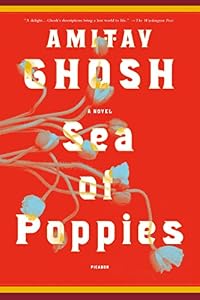
Preparing to fight China's nineteenth-century Opium Wars, a motley assortment of sailors and passengers, including a bankrupt rajah, a widowed tribeswoman, and a free-spirited French orphan, comes to experience family-like ties that eventually span continents, races, and generations.Tags
Recommendations












Member Recommendations
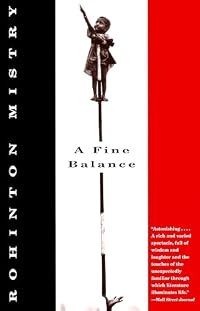
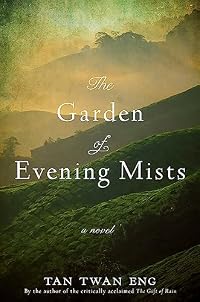
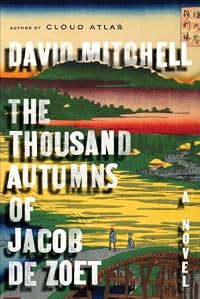
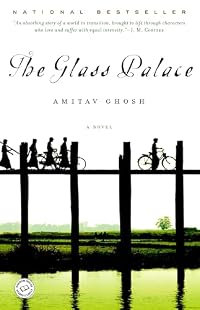
booklove2 Very similar in writing style and general events.
80



Raj by Gita Mehta
by mcenroeucsb
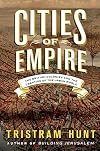

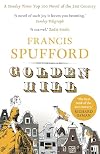

Limelite A panorama of representative characters sail on ocean voyages in allegorical novels set on the eve of great historical events.
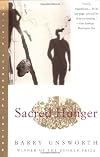
jigarpatel Appreciated by the Booker prize, Sacred Hunger (1992 winner) and Sea of Poppies (2008 finalist) are powerful and well-researched indictments of British imperial trade interests. They explore slave and opium trade routes respectively, combining adventure with multi-threaded plots and sensitive characterisation.
Member Reviews
The use of language in ‘Sea of Poppies’ is beguiling and brilliant. Set in and around the colonial India of the 1830s, the novel cleverly helps the reader immediately identify with the Asian point of view characters by having the colonial occupiers and ship’s officers speak the most extraordinary pidgin. I loved this verging-on-incomprehensible talk, as it demonstrated that these invading foreigners have little understanding of the cultures and societies they’ve imposed themselves upon. An example:
And another:
The whole book has an impressive sense of atmosphere. Indeed, I was surprised by the amount of time spent scene-setting. The blurb implies that the whole book concerns the voyage of the Ibis. This is by no means the case - the ship only sets sail two thirds of the way through. Prior to that, the reader is gradually introduced to the cast of characters travelling aboard and it is explained how and why they came to be there. Although this probably could have been achieved in fewer pages, I found it so well-written and compelling that I blamed only the blurb-writer for mistaking the narrative emphasis. The main characters are all fascinating and well-drawn, their worlds beautifully displayed to the reader. Deeti and Neel are especially sympathetic and appealing. The background of opium production and consumption is carefully woven through the narrative, with the war over it only starting to brew as the book ends. In fact, my only real complaint about this novel is that it ends abruptly on the cliffhanger. I understand that it’s the first in a series, but cliffhangers are frustrating when you’re invested in characters! show less
”Why, look at you, Puggly - you’re flapping about like a titler!” she said. “I’ve never seen you worry about your jumma before. It’s not because of a chuckeroo, is it?”show more
“Why no,” said Paulette quickly. “Of course
not! It is only that I feel I should not let down your family at such an important evenment.”
Annabel was not taken in. “You’re trying to bundo someone, aren’t you?”
And another:
The mate took another sip, watching the convicts over the rim of the mug. “Jack-gagger - ye’re a ready one with the red-rag. Let’s hear it: do y’know why we called yer up on deck?”
“No, sir,” said Neel.
“Here’s the gaff then,” said Mr Crowle. “Me and my good friend Subby-dar Muffin-mug, we was coguing our noses with a nipperkin of the boosey and he says to me…”
The whole book has an impressive sense of atmosphere. Indeed, I was surprised by the amount of time spent scene-setting. The blurb implies that the whole book concerns the voyage of the Ibis. This is by no means the case - the ship only sets sail two thirds of the way through. Prior to that, the reader is gradually introduced to the cast of characters travelling aboard and it is explained how and why they came to be there. Although this probably could have been achieved in fewer pages, I found it so well-written and compelling that I blamed only the blurb-writer for mistaking the narrative emphasis. The main characters are all fascinating and well-drawn, their worlds beautifully displayed to the reader. Deeti and Neel are especially sympathetic and appealing. The background of opium production and consumption is carefully woven through the narrative, with the war over it only starting to brew as the book ends. In fact, my only real complaint about this novel is that it ends abruptly on the cliffhanger. I understand that it’s the first in a series, but cliffhangers are frustrating when you’re invested in characters! show less
A historical novel set in 1838, with the East India Company's lucrative opium trade stalled because of the frivolous objections of the Chinese government to the import of large quantities of addictive drugs. There are rumours that Lord Palmerston may be contemplating firm action to teach them the value of Free Trade, but that's for the later parts of the trilogy.
In this first part, Ghosh sets himself the task of getting a bunch of very diverse characters on to the schooner Ibis, sailing from Calcutta to Mauritius with a cargo of indentured labourers ("coolies", or girmitiyas). But he has a lot of scene-setting to do, and social and historical background to fill in, and after all it is a trilogy, so there's plenty of time, and the ship show more doesn't sail until about three-quarters of the way into the book anyway.
The book picks up a lot of the typical themes of 19th century adventure stories: disguises, rescues, accidents, orphans fending for themselves, people passing as other races or genders, cruel tyrants, pirates, prisons, shipboard floggings, and all the rest of it. There's even a widow rescued from her husband's funeral pyre in the nick of time, although sadly Ghosh forgets that you're supposed to do this from a hot-air balloon... But this isn't a pastiche of Kipling or Jules Verne: there's a hard modern edge to the threats that the characters face, and you know that it isn't necessarily all going to turn out right in the end. And, perhaps more to the point, there's a sharp postcolonial view of life that questions what it sees and doesn't allow the reader to slip automatically into identifying with the European characters.
Ghosh is evidently deeply in love with the languages of the period, from the bizarre Indianised English of the British (what would later be called Hobson-Jobson) and the peculiarities of nautical English and the very specific shipboard pidgin used to communicate between European officers and their multiracial "lascar" crew members. Not to mention Bengali, Hindi, Urdu, Bhojpuri, etc. His exploration of odd words and their origins is perhaps a distraction from the unfolding of the story, but it is a great part of the enjoyment of reading the book.
The only place where he strikes a slightly wrong note linguistically is in the character Paulette, whom he makes to speak an implausible Hercule Poirot sort of Franglais, to remind us how different she is in her background from the British around her. But she's also a clever teenage girl, who has grown up bilingual in Bengali and French, in a city where (Indian) English was being spoken all around her, and has lived in a British family for a year when we first meet her. Young people accommodate to the language around them very fast: there's no way she would still be saying "attend" for "wait" and "regard" for "look", entertaining though that is to read. She'd be much more likely to have picked up "have a dekko..." show less
In this first part, Ghosh sets himself the task of getting a bunch of very diverse characters on to the schooner Ibis, sailing from Calcutta to Mauritius with a cargo of indentured labourers ("coolies", or girmitiyas). But he has a lot of scene-setting to do, and social and historical background to fill in, and after all it is a trilogy, so there's plenty of time, and the ship show more doesn't sail until about three-quarters of the way into the book anyway.
The book picks up a lot of the typical themes of 19th century adventure stories: disguises, rescues, accidents, orphans fending for themselves, people passing as other races or genders, cruel tyrants, pirates, prisons, shipboard floggings, and all the rest of it. There's even a widow rescued from her husband's funeral pyre in the nick of time, although sadly Ghosh forgets that you're supposed to do this from a hot-air balloon... But this isn't a pastiche of Kipling or Jules Verne: there's a hard modern edge to the threats that the characters face, and you know that it isn't necessarily all going to turn out right in the end. And, perhaps more to the point, there's a sharp postcolonial view of life that questions what it sees and doesn't allow the reader to slip automatically into identifying with the European characters.
Ghosh is evidently deeply in love with the languages of the period, from the bizarre Indianised English of the British (what would later be called Hobson-Jobson) and the peculiarities of nautical English and the very specific shipboard pidgin used to communicate between European officers and their multiracial "lascar" crew members. Not to mention Bengali, Hindi, Urdu, Bhojpuri, etc. His exploration of odd words and their origins is perhaps a distraction from the unfolding of the story, but it is a great part of the enjoyment of reading the book.
The only place where he strikes a slightly wrong note linguistically is in the character Paulette, whom he makes to speak an implausible Hercule Poirot sort of Franglais, to remind us how different she is in her background from the British around her. But she's also a clever teenage girl, who has grown up bilingual in Bengali and French, in a city where (Indian) English was being spoken all around her, and has lived in a British family for a year when we first meet her. Young people accommodate to the language around them very fast: there's no way she would still be saying "attend" for "wait" and "regard" for "look", entertaining though that is to read. She'd be much more likely to have picked up "have a dekko..." show less
Sweeping historical saga that tells of the devastating consequences of colonialism through the individual stories of a large cast of characters. It features the crew of the sailing ship Ibis, laborers from small villages in India, opium users, a widow, a French orphan, an ex-Raja, and other members of multiple Indian castes. The storyline switches among groups of characters, and by the end, their independent storylines have converged. The featured people (African, Asian, and westerners) are ordinary people caught in the crossfire of historical forces beyond their control.
I found the first half, which introduces the many characters, extremely slow paced. The text is peppered with various dialects, which occasionally interrupts the flow. show more But the reader’s patience is rewarded in the second half. I’ve read other books by Amitav Ghosh and find him an excellent storyteller. His writing is elegant, and characters are distinctive. The time period is meticulously drawn, including numerous languages, foods, clothing, colloquialisms, religions, funeral rites, cultures, and justice system. This novel’s ending sets up the next book in the trilogy. show less
I found the first half, which introduces the many characters, extremely slow paced. The text is peppered with various dialects, which occasionally interrupts the flow. show more But the reader’s patience is rewarded in the second half. I’ve read other books by Amitav Ghosh and find him an excellent storyteller. His writing is elegant, and characters are distinctive. The time period is meticulously drawn, including numerous languages, foods, clothing, colloquialisms, religions, funeral rites, cultures, and justice system. This novel’s ending sets up the next book in the trilogy. show less
This first installment of the planned Ibis trilogy about, vaguely, the 19th century Opium Wars, seems like it might be a trial initially. To begin with, the novel comes with its own 50-page glossary at the back, what with all the Anglo-Indian, regional Indian, sailor-pidgin, and occasional French and Chinese words thrown in. Somehow, though, the reader manages to pick up the lingo, or at least roll with it, so that it stops being a distraction and instead helps create a unique, vibrant world. Sea of Poppies is a sprawling, picaresque story in which the cast of rich and poor, erudite and ignorant, lofty and deranged cross paths with a charmingly loopy logic. If Dickens had been asked to write a saga for Bollywood, this novel might be the show more result. show less
Usually I hate a book that seems to have been written only as a set up for another book. It just seems commercial and dishonest. Sea of Poppies, however, far before it is over shows itself to be one of these books, and I loved it. Toward the end one oppressed person says to his tormentor, "What did I ever do to you?" and the sadist responds, "It's just who you are." That's pretty much the premise of the book. There are people who, by virtue of their birth think they are deserving of all the best in life, and there are people who are born to serve them with their minds, bodies and souls if it can be forced. The British force the Indians to grow poppies to be made into opium that they believe they have the right to force the Chinese to show more buy. Religion, of course, is always on the side of the oppressor. As a character says, "Free trade is Jesus Christ, and Jesus Christ is free trade." He also believes that the slave trade is the ultimate expression of freedom. Within the confines of this universal caste system there remain people who think their reward should be based on merit. They think if they work hard and effectively, pray to the right gods in the right way, discipline themselves and treat others well, they will be treated fairly. The reader's heart is always with them, and they are so frequently wrong.
This is excellent fiction revolving around the opium trade between Britain, India and China, and the beginning of the opium war. Amazingly, though written by a man, women play the role of normal human beings with lives and actions all their own. Highly recommended. show less
This is excellent fiction revolving around the opium trade between Britain, India and China, and the beginning of the opium war. Amazingly, though written by a man, women play the role of normal human beings with lives and actions all their own. Highly recommended. show less
Whatever the case, he saw now that it was a rare, difficult and improbable thing for two people from worlds apart to find themselves linked by a tie of pure sympathy, a feeling that owed nothing to the rules and expectations of others. He understood also that when such a bond comes into being, its truths and falsehoods, its obligations and privileges, exist only for the people who are linked by it, and then in such a way that only they can judge the honour and dishonour of how they conduct themselves in relation to each other.
Sea of Poppies is a novel about relationships that cross boundaries, such as those of race, caste, class, religion, or crossing the line and "going native". The figurative and literary vehicle that facilitates many show more of these crossings is the Ibis. People of all persuasions are drawn to journey on the Ibis, and at first they seem as unlikely shipmates as could be. But through the course of the book, the first in a trilogy, relationships develop that transcend the social boundaries, conventions, and even laws that separate them. Individuals themselves also change in ways that cross boundaries: a man thought to be Black in America, becomes a white sahib in India; another person undergoes a spiritual transformation that alters his physical body to resemble that of a woman.
The book is characterized by motion and by change. The first character we are introduced to, Deeti, profoundly alters her caste and tribe, as well as her status as a wife and mother, in her journey to the Ibis. Another, Zachary, is a master at creating relationships regardless of his or others' social and racial status. It's almost as though he doesn't see the boundaries which are so apparent to everyone else. As the characters flow together toward the Ibis and out to sea, those who are incapable of change are left behind in some manner.
All this movement and change is also reflected in the setting. India is under British rule, and their entire economy and way of life has been changed by the British desire to trade in opium. Fields of foodstuffs are forcibly converted to growing opium. Villagers starve, and the lucky ones become dependent on the British either by growing and selling opium for them or by working as near slaves in the opium processing plants. Addiction becomes rampant among the Indian workers. The British even manipulate the caste system for their own ends. Things are changing for the British as well. The demand for opium in China is falling, due to recent opium bans by the Chinese, causing a growing financial crisis for the business owners and for the British crown. Inexorably the British move toward a war with China.
I found this book fascinating on so many levels. The author thoroughly researched the hybrid languages of the time and skillfully allows them to wash over the reader without causing the reader to become bogged down. I listened to a portion of the book on audio and enjoyed hearing the accents and cadences, but preferred reading it so that I could savor and reread, which increased my reading enjoyment. I did not use the chrestomathy, purportedly created by one of the characters, at the end of the book as a glossary, although I did read most of it for its own sake. When I unexpectedly reached the end of the book (the chrestomathy takes up the last forty plus pages), I wanted to immediately begin reading [River of Smoke], the second in the trilogy. I am invested in the characters, intrigued by the story, and left wanting more. Amitav Ghosh is an author whose books are now destined for my must-read list. show less
Sea of Poppies is a novel about relationships that cross boundaries, such as those of race, caste, class, religion, or crossing the line and "going native". The figurative and literary vehicle that facilitates many show more of these crossings is the Ibis. People of all persuasions are drawn to journey on the Ibis, and at first they seem as unlikely shipmates as could be. But through the course of the book, the first in a trilogy, relationships develop that transcend the social boundaries, conventions, and even laws that separate them. Individuals themselves also change in ways that cross boundaries: a man thought to be Black in America, becomes a white sahib in India; another person undergoes a spiritual transformation that alters his physical body to resemble that of a woman.
The book is characterized by motion and by change. The first character we are introduced to, Deeti, profoundly alters her caste and tribe, as well as her status as a wife and mother, in her journey to the Ibis. Another, Zachary, is a master at creating relationships regardless of his or others' social and racial status. It's almost as though he doesn't see the boundaries which are so apparent to everyone else. As the characters flow together toward the Ibis and out to sea, those who are incapable of change are left behind in some manner.
All this movement and change is also reflected in the setting. India is under British rule, and their entire economy and way of life has been changed by the British desire to trade in opium. Fields of foodstuffs are forcibly converted to growing opium. Villagers starve, and the lucky ones become dependent on the British either by growing and selling opium for them or by working as near slaves in the opium processing plants. Addiction becomes rampant among the Indian workers. The British even manipulate the caste system for their own ends. Things are changing for the British as well. The demand for opium in China is falling, due to recent opium bans by the Chinese, causing a growing financial crisis for the business owners and for the British crown. Inexorably the British move toward a war with China.
I found this book fascinating on so many levels. The author thoroughly researched the hybrid languages of the time and skillfully allows them to wash over the reader without causing the reader to become bogged down. I listened to a portion of the book on audio and enjoyed hearing the accents and cadences, but preferred reading it so that I could savor and reread, which increased my reading enjoyment. I did not use the chrestomathy, purportedly created by one of the characters, at the end of the book as a glossary, although I did read most of it for its own sake. When I unexpectedly reached the end of the book (the chrestomathy takes up the last forty plus pages), I wanted to immediately begin reading [River of Smoke], the second in the trilogy. I am invested in the characters, intrigued by the story, and left wanting more. Amitav Ghosh is an author whose books are now destined for my must-read list. show less
"Sea of Poppies" was an exciting page-turner with an incredible cast of charming idiosyncratic characters.
I picked this book up because it was listed as an example of Modern Indian Literature written in English, and I expected it to be as difficult as all the Modern American Literature I've encountered. Instead, I was pleasantly surprised. The details and circumstances of a few small parts of India in the 1830's aren't presented didactically, but vividly and effortlessly through the perspective of the book's characters.
I typically like to note any really unusual words that I run into in a book and look them up in a dictionary so I'm sure of their definitions, but I'm not going to do that for "Sea of Poppies". This book had a lot of show more words that were misspelled phonetically to convey an accent, a great many Indian words that were spelled phonetically in English, and an a great deal of early 1800's maritime slang. The book included a very helpful glossary at the back, but even without that it was very easy to follow the story and to get a general impression of what words meant through context. As a part of the story (and often a source of humor) many of the characters misunderstand one another, resulting in rephrasing and clarification that makes the words understandable. In some cases the lack of a clear definition for a word actually becomes an important part of the story.
Here are the words that I had an easy definition on hand for:
hanjes (haunches), younker (young man), pawk (fool), lasking (sailing), meprise (mistake), inhere (invest), maggering (talk), giglet (woman), forelift (robber), timmyknocky (robbed), cognomen (nickname), alkhalla (voluminous unisex robe), charpoy (mattress), gaidis (criminals), butcha (child), elision (lack), shroffing (accounting?), badmashee (sex), puckrow (sex), chuckeroo (young man), cuzzanah (money), langoot (diaper), classy (sailor), dawk (shit), bandobast (business), careened (as a nautical term), kajal (make up), monticule (hill), morceau (morsel), chamar (caste), mussahar (caste), uncroyable (incredible?), chuckeroo (boy), evenment (event), bundo (charm), exage (exxagerate), caranchie (carriage), kewra (tree), tawa (griddle), atta (dough), aluposth (potatoes cooked in poppyseed paste), jahaj (a vision?), beti (word of affection for daughter), roti (flatbread), tukas and tihais (dances), sirdraos (clothing), gup (talk), jin (understand), bunt (a fungal crop disease of wheat), capstan (a windlass rotated in a horizontal plane around a vertical axis; used on ships for weighing anchor or raising heavy sails), saccade (a rapid, jerky movement of the eyes between positions of rest; an abrupt spasmodic movement), jaggery (unrefined brown sugar made from palm sap), bight (the middle part of a slack rope (as distinguished from its ends); a broad bay formed by an indentation in the shoreline; a bend or curve (especially in a coastline); a loop in a rope; verbfasten with a bight), equinoctial (relating to an equinox (when the lengths or night and day are equal); relating to the vicinity of the equator; noun the great circle on the celestial sphere midway between the celestial poles), estuary (the wide part of a river where it nears the sea; fresh and salt water mix), epiphytic (of or related to epiphytes, a plant that grows harmlessly upon another plant), phaeton (large open carriage or car seating four with folding top), ambit (an area in which something acts or operates or has power or control), punkah (a large fan consisting of a frame covered with canvas that is suspended from the ceiling; used in India for circulating air in a room), moot (verb, think about carefully; weigh), purdah (a screen used in India to separate women from men or strangers; the traditional Hindu or Muslim system of keeping women secluded; a state of social isolation), acreocracy (rule by land owners), chokey (prison), binnacle (non-magnetic housing for a ship's compass), solecism (a socially awkward or tactless act), ghat (stairway in India leading down to a landing on the water), dacoity (robbery by a gang of armed dacoits), arrack (any of various strong liquors distilled from the fermented sap of toddy palms or from fermented molasses), garret (floor consisting of open space at the top of a house just below roof; often used for storage), lota (burbot; a globular water bottle used in Asia), munificence (liberality in bestowing gifts; extremely liberal and generous of spirit), obduracy (resoluteness by virtue of being unyielding and inflexible), dhoti (a long loincloth worn by Hindu men), bumboat (a small boat that ferries supplies and commodities for sale to a larger ship at anchor), barque ( a sailing ship with 3 (or more) masts), lascar (a volcano in the Andes in Chile; an East Indian sailor), cuddy (the galley or pantry of a small ship), dal ( a metric unit of volume or capacity equal to 10 liters), arak (any of various strong liquors distilled from the fermented sap of toddy palms or from fermented molasses), sahib (formerly a term of respect for important white Europeans in colonial India; used after the name), lobscouse ( a stew of meat and vegetables and hardtack that is eaten by sailors), kedgeree ( a dish of rice and hard-boiled eggs and cooked flaked fish), luff (the act of sailing close to the wind), etiolated ((especially of plants) developed without chlorophyll by being deprived of light), nautch (an intricate traditional dance in India performed by professional dancing girls), carboy (a large bottle for holding corrosive liquids; usually cushioned in a special container), nainsook (a soft lightweight muslin used especially for babies), sampan (an Asian skiff usually propelled by two oars), lateen ( rigged with a triangular (lateen) sail; noun a triangular fore-and-aft sail used especially in the Mediterranean), godown (a warehouse in the East), tael (a unit of weight used in east Asia approximately equal to 1.3 ounces), nabob (a wealthy man (especially one who made his fortune in the Orient); a governor in India during the Mogul empire), farrago (a motley assortment of things), pucka ( absolutely first class and genuine)
And here are the ones I haven't pulled up a definition for:
isabgol, gordower, choola, halwai, jalebi, jamna, balties, kampung, knockingshop, joskin, sawais, afsar, mirch, balty, blores, bhandari, pintle, kalpas, yugas, lown, ballyragging, blashy, becketed, , tilak, haldi, kohbar, sharab, maza, couing, paratha, tamasha, bojha, pansari, batelo, macareos, kursi, admonitory, pipas, bimbas, tirkaoing, hamar, zanjir, hansil-holes, caramoussals, perikoes, linkisters, shebeens, dhansak, tapori, gollation, azun, machwa, gudge, jugboolaks, zambooras, istingis, rup-yan, seetulpatty, batti, martabans, bunyuk, shokes, cabob, nautcheries, bouleversed, nippering, odure, infructuous, maistries, kubber, chull, daftar, puri, haru, , dekho, kotwal, , sniplouse, paan, mallemarking, hookum, coir, thakur, heeng, kalonji, mela, puja, bhauji, luchha, pykari, kanker, dhobi, chikan, dooputty, titler, jumma, bobotie, muttongosht, Burdum, foogath, solecism, jildee, paltan, birnjaul, gantas, jooties, foozlowing, fuleeta, bhetki, bobachees, munshi, durwaun, khidmutgars, charpoys, tikki, dekho, gawpus, chouteries, ghera, leela, almirah, alkhalla, silahdars, darogas, dacoity, zenana, addlings, doasta, gamahoochie, duffador, girmit, tiffins, xeraphim, puisne, kameeze, achar, puja, sepoy, ghungta, nukha, puja, pateli bange, rudraksha beads, sindoor, ablewhackets, resum, malum, serang, seacunny, darzee, kussab, topas, balwar, paletot, sahib, dumbcow, marrons, dandyfunk, chokedog, karibat, skillygale, caffle, badmash, budzat, fogle, bowlas, halalcore, kubber, lagow, lattee, bysmelas, borakpoke, lollshrub, nalki, dai, ojha, zemindar, jillmilled, sheeshmahal, dupattas, kanchani, choli, tumashers, paltan, khidmutgars, clemijohn, simkin, rankin, mems, buncus, loocher, pootlies, cumra, puckrow, dashy, bandar, samjaoing, clodpill, jildee, gubbow, zubben, chee-chee/lip-lap/mustee/sinjo, challo, luckerbaug, ho-ga, chawbuck, malum, seddity, flumadiddle, pishaches, langot, dargah, almadias, baulias, woolocks, buggalows, bulkats, bankshalls, kothi, chabutra, bara, khichri, duffadar, girmitiyas, hurremzed, chota, launderbuzz, shroff, puckrow, tuncaw, dufter, chabea, dacoits, kippage, jadoo, tihai, thumris, hoga, bania, dasturi, gomusta, burkundazes, ghara, muharir, serishtas, carcoon, malis, ghaskatas, gamchha, calputtee, caique, chalta, silmagoors, calaluzes, proas, pattimers, pulwars, azan, calamander, balty, shanbeff, jooties, zenana, piyada, paik, hoga, gudda, chuntocks, linkister, girmitiya, desturee, chuntock, guddee, bichawnadars, farrashes, matranees show less
I picked this book up because it was listed as an example of Modern Indian Literature written in English, and I expected it to be as difficult as all the Modern American Literature I've encountered. Instead, I was pleasantly surprised. The details and circumstances of a few small parts of India in the 1830's aren't presented didactically, but vividly and effortlessly through the perspective of the book's characters.
I typically like to note any really unusual words that I run into in a book and look them up in a dictionary so I'm sure of their definitions, but I'm not going to do that for "Sea of Poppies". This book had a lot of show more words that were misspelled phonetically to convey an accent, a great many Indian words that were spelled phonetically in English, and an a great deal of early 1800's maritime slang. The book included a very helpful glossary at the back, but even without that it was very easy to follow the story and to get a general impression of what words meant through context. As a part of the story (and often a source of humor) many of the characters misunderstand one another, resulting in rephrasing and clarification that makes the words understandable. In some cases the lack of a clear definition for a word actually becomes an important part of the story.
Here are the words that I had an easy definition on hand for:
hanjes (haunches), younker (young man), pawk (fool), lasking (sailing), meprise (mistake), inhere (invest), maggering (talk), giglet (woman), forelift (robber), timmyknocky (robbed), cognomen (nickname), alkhalla (voluminous unisex robe), charpoy (mattress), gaidis (criminals), butcha (child), elision (lack), shroffing (accounting?), badmashee (sex), puckrow (sex), chuckeroo (young man), cuzzanah (money), langoot (diaper), classy (sailor), dawk (shit), bandobast (business), careened (as a nautical term), kajal (make up), monticule (hill), morceau (morsel), chamar (caste), mussahar (caste), uncroyable (incredible?), chuckeroo (boy), evenment (event), bundo (charm), exage (exxagerate), caranchie (carriage), kewra (tree), tawa (griddle), atta (dough), aluposth (potatoes cooked in poppyseed paste), jahaj (a vision?), beti (word of affection for daughter), roti (flatbread), tukas and tihais (dances), sirdraos (clothing), gup (talk), jin (understand), bunt (a fungal crop disease of wheat), capstan (a windlass rotated in a horizontal plane around a vertical axis; used on ships for weighing anchor or raising heavy sails), saccade (a rapid, jerky movement of the eyes between positions of rest; an abrupt spasmodic movement), jaggery (unrefined brown sugar made from palm sap), bight (the middle part of a slack rope (as distinguished from its ends); a broad bay formed by an indentation in the shoreline; a bend or curve (especially in a coastline); a loop in a rope; verbfasten with a bight), equinoctial (relating to an equinox (when the lengths or night and day are equal); relating to the vicinity of the equator; noun the great circle on the celestial sphere midway between the celestial poles), estuary (the wide part of a river where it nears the sea; fresh and salt water mix), epiphytic (of or related to epiphytes, a plant that grows harmlessly upon another plant), phaeton (large open carriage or car seating four with folding top), ambit (an area in which something acts or operates or has power or control), punkah (a large fan consisting of a frame covered with canvas that is suspended from the ceiling; used in India for circulating air in a room), moot (verb, think about carefully; weigh), purdah (a screen used in India to separate women from men or strangers; the traditional Hindu or Muslim system of keeping women secluded; a state of social isolation), acreocracy (rule by land owners), chokey (prison), binnacle (non-magnetic housing for a ship's compass), solecism (a socially awkward or tactless act), ghat (stairway in India leading down to a landing on the water), dacoity (robbery by a gang of armed dacoits), arrack (any of various strong liquors distilled from the fermented sap of toddy palms or from fermented molasses), garret (floor consisting of open space at the top of a house just below roof; often used for storage), lota (burbot; a globular water bottle used in Asia), munificence (liberality in bestowing gifts; extremely liberal and generous of spirit), obduracy (resoluteness by virtue of being unyielding and inflexible), dhoti (a long loincloth worn by Hindu men), bumboat (a small boat that ferries supplies and commodities for sale to a larger ship at anchor), barque ( a sailing ship with 3 (or more) masts), lascar (a volcano in the Andes in Chile; an East Indian sailor), cuddy (the galley or pantry of a small ship), dal ( a metric unit of volume or capacity equal to 10 liters), arak (any of various strong liquors distilled from the fermented sap of toddy palms or from fermented molasses), sahib (formerly a term of respect for important white Europeans in colonial India; used after the name), lobscouse ( a stew of meat and vegetables and hardtack that is eaten by sailors), kedgeree ( a dish of rice and hard-boiled eggs and cooked flaked fish), luff (the act of sailing close to the wind), etiolated ((especially of plants) developed without chlorophyll by being deprived of light), nautch (an intricate traditional dance in India performed by professional dancing girls), carboy (a large bottle for holding corrosive liquids; usually cushioned in a special container), nainsook (a soft lightweight muslin used especially for babies), sampan (an Asian skiff usually propelled by two oars), lateen ( rigged with a triangular (lateen) sail; noun a triangular fore-and-aft sail used especially in the Mediterranean), godown (a warehouse in the East), tael (a unit of weight used in east Asia approximately equal to 1.3 ounces), nabob (a wealthy man (especially one who made his fortune in the Orient); a governor in India during the Mogul empire), farrago (a motley assortment of things), pucka ( absolutely first class and genuine)
And here are the ones I haven't pulled up a definition for:
isabgol, gordower, choola, halwai, jalebi, jamna, balties, kampung, knockingshop, joskin, sawais, afsar, mirch, balty, blores, bhandari, pintle, kalpas, yugas, lown, ballyragging, blashy, becketed, , tilak, haldi, kohbar, sharab, maza, couing, paratha, tamasha, bojha, pansari, batelo, macareos, kursi, admonitory, pipas, bimbas, tirkaoing, hamar, zanjir, hansil-holes, caramoussals, perikoes, linkisters, shebeens, dhansak, tapori, gollation, azun, machwa, gudge, jugboolaks, zambooras, istingis, rup-yan, seetulpatty, batti, martabans, bunyuk, shokes, cabob, nautcheries, bouleversed, nippering, odure, infructuous, maistries, kubber, chull, daftar, puri, haru, , dekho, kotwal, , sniplouse, paan, mallemarking, hookum, coir, thakur, heeng, kalonji, mela, puja, bhauji, luchha, pykari, kanker, dhobi, chikan, dooputty, titler, jumma, bobotie, muttongosht, Burdum, foogath, solecism, jildee, paltan, birnjaul, gantas, jooties, foozlowing, fuleeta, bhetki, bobachees, munshi, durwaun, khidmutgars, charpoys, tikki, dekho, gawpus, chouteries, ghera, leela, almirah, alkhalla, silahdars, darogas, dacoity, zenana, addlings, doasta, gamahoochie, duffador, girmit, tiffins, xeraphim, puisne, kameeze, achar, puja, sepoy, ghungta, nukha, puja, pateli bange, rudraksha beads, sindoor, ablewhackets, resum, malum, serang, seacunny, darzee, kussab, topas, balwar, paletot, sahib, dumbcow, marrons, dandyfunk, chokedog, karibat, skillygale, caffle, badmash, budzat, fogle, bowlas, halalcore, kubber, lagow, lattee, bysmelas, borakpoke, lollshrub, nalki, dai, ojha, zemindar, jillmilled, sheeshmahal, dupattas, kanchani, choli, tumashers, paltan, khidmutgars, clemijohn, simkin, rankin, mems, buncus, loocher, pootlies, cumra, puckrow, dashy, bandar, samjaoing, clodpill, jildee, gubbow, zubben, chee-chee/lip-lap/mustee/sinjo, challo, luckerbaug, ho-ga, chawbuck, malum, seddity, flumadiddle, pishaches, langot, dargah, almadias, baulias, woolocks, buggalows, bulkats, bankshalls, kothi, chabutra, bara, khichri, duffadar, girmitiyas, hurremzed, chota, launderbuzz, shroff, puckrow, tuncaw, dufter, chabea, dacoits, kippage, jadoo, tihai, thumris, hoga, bania, dasturi, gomusta, burkundazes, ghara, muharir, serishtas, carcoon, malis, ghaskatas, gamchha, calputtee, caique, chalta, silmagoors, calaluzes, proas, pattimers, pulwars, azan, calamander, balty, shanbeff, jooties, zenana, piyada, paik, hoga, gudda, chuntocks, linkister, girmitiya, desturee, chuntock, guddee, bichawnadars, farrashes, matranees show less
Members
- Recently Added By
Lists

Best Historical Fiction
620 works; 261 members

Best Contemporary Literary Fiction (Around the Last 30 Years)
388 works; 124 members

Top Five Books of 2013
1,562 works; 721 members

water on the brain: maritime fiction
74 works; 17 members
Favourite Booker Prize contenders
73 works; 21 members

Best of World Literature
431 works; 51 members
Booker Prize
491 works; 62 members

All Things India
95 works; 21 members

Best Books About Journeys and Quests
117 works; 30 members

Literature About Social Class
134 works; 19 members

Best 21st Century Books (So Far)
670 works; 86 members

Literature by People of Color
81 works; 8 members

Best books read in 2011
200 works; 51 members

Man Booker Prize Longlist 2008
13 works; 2 members

My E-Book Collection - Opinions Welcome
92 works; 10 members

Books Read in 2020
4,379 works; 123 members

Retrospective of Historical Fiction
48 works; 7 members

Booker Prize Shortlist: Titles Not Yet Read
161 works; 4 members

Books Read in 2008
335 works; 7 members

Books Read in 2012
815 works; 31 members

Totally Biased List of Tookie’s Favorite Books
10 works; 1 member
Books With Water Words in the Title
186 works; 12 members

Books With Trees and Plants in the Title
27 works; 2 members

Asia
178 works; 7 members

Global Reads: Books Set in South Asia
30 works; 3 members

Alphabetical Books
211 works; 3 members

2000s (the decade, not the century)
184 works; 11 members
Most Popular Books Tagged India
36 works; 5 members

Best Sea Stories
33 works; 5 members

Top Book of the Year - 2000s
10 works; 1 member
Talk Discussions
Past Discussions
Sea of Poppies Group Read: Week Two in 75 Books Challenge for 2011 (January 2012)
Sea of Poppies Group Read: Week One in 75 Books Challenge for 2011 (January 2012)
Author Information

44+ Works 15,823 Members
Born in Calcutta, and spent his childhood in Bangladesh, Sri Lanka, and Northern India. He studied in Delhi, Oxford, and Egypt and taught at various Indian and American universities. Author of a travel book and three acclaimed novels. Ghosh has also written for GRANTA, THE NEW YORKER, THE NEW YORK TIMES, and THE OBSERVER. He lives in New York City show more with his wife and two children. (Publisher Provided) Amitav Ghosh was born in Calcutta, India on July 11, 1956. He studied in Delhi, Oxford and Alexandria. His first book, The Circle of Reason, won France's Prix Médicis. He has won several other awards including the Sahitya Akademi Award and the Ananda Puraskar for The Shadow Lines, the Arthur C. Clarke award for The Calcutta Chromosome, and the Crossword Book Prize for The Hungry Tide and Sea of Poppies. His other works include In an Antique Land, Dancing in Cambodia, The Glass Palace, and River of Smoke. In 2007, he was awarded the Padma Shri, one of India's highest honors, by the President of India. He made the New Zealand Best Seller List in 2015 with his title Flood of Fire. (Bowker Author Biography) show less
Some Editions
Awards and Honors
Awards
Distinctions
Notable Lists
Series

Belongs to Publisher Series
Work Relationships
Is contained in
Common Knowledge
- Canonical title*
- Mare di papaveri
- Original title
- Sea of Poppies
- Original publication date
- 2008-10
- People/Characters
- Deeti; Zachary Reid; Benjamin Burnham; Neel Rattan Halder; Jodu; Paulette Lambert (show all 10); Baboo Nob Kissin; Serang Ali; Kalua; Ah Fatt
- Important places
- India; Calcutta, India; China
- Important events
- Opium Wars (1839 | 1860)
- Dedication
- To Nayan
For his fifteenth - First words
- The vision of a tall-masted ship, at sail on the ocean, came to Deeti on an otherwise ordinary day, but she knew instantly that the apparition was a sign of destiny, for she had never seen such a vessel before, not even in a ... (show all)dream: how could she have, living as she did in northern Bihar, four hundred miles from the coast?
- Quotations*
- (...) dat de essentie van die transformatie gelegen was in een enkel woord (...)
- Last words
- (Click to show. Warning: May contain spoilers.)Although it was the first time he had seen her face, he knew that he had glimpsed her somewhere, standing much as she was now, in a wet sari, hair dripping, looking at him with startled grey eyes.
- Original language
- English
*Some information comes from Common Knowledge in other languages. Click "Edit" for more information.
Classifications
Statistics
- Members
- 3,473
- Popularity
- 4,776
- Reviews
- 155
- Rating
- (3.96)
- Languages
- 13 — Catalan, Dutch, English, French, German, Hebrew, Hindi, Italian, Marathi, Norwegian (Bokmål), Spanish, Swedish, Turkish
- Media
- Paper, Audiobook, Ebook
- ISBNs
- 57
- UPCs
- 1
- ASINs
- 19
