On This Page
Description
India, 1857 - the year of the Great Mutiny, when Muslim soldiers turned in bloody rebellion on their British overlords. This time of convulsion is the subject of The Siege of Krishnapur, widely considered to the one of the finest British novels of the last fifty years. A witty and individual take on the many traditions and follies of Empire, it is also a gripping account of survival under siege, illuminating how extreme conditions can influence and affect people's behaviour and the human spirit.Tags
Recommendations







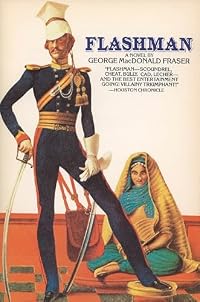



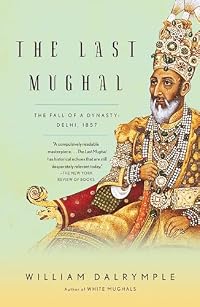

Member Recommendations
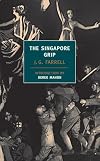
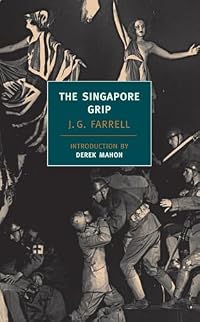
kidzdoc The third novel in Farrell's Empire Trilogy, which is about the fall of the British Empire in 1930s Singapore.
80
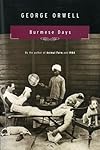
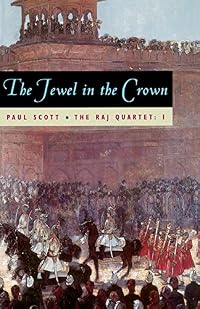
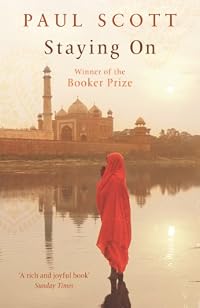
lmichet Another work of biting commentary about the British in India
Also recommended by Philosofiction
60
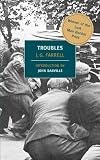
kidzdoc The first novel in Farrell's Empire Trilogy, which was awarded the Lost Man Booker Prize for the best novel of 1970.
60
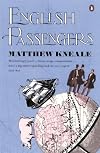
Rynooo English Passengers is an awesome work of historical fiction - it is by turns hilarious, shocking and thought provoking.
30

terrazoon Good satires are hard to find. Although the subject matter is different, if you like one you will probably like the other.
20
chrisschoeters Beautiful, amazingly simple but emotionally complex. I would recommend this book to alle readers older than 14!
13
Member Reviews
When I was 16 or 17 we read Catch-22 in English class and because I was a 16 or 17 year-old boy — and because it's brilliant — I loved it. My enthusiasm must have been palpable because my teacher gave me a copy of J.G. Farrell's The Siege of Krishnapur, set in a fictional colonial outpost during the Indian Rebellion (or "Mutiny" as she would have said) of 1857, and suggested I do a compare-and-contrast on the two novels. I probably wrote about how a rich vein of black-comic absurdity runs through both of them, and how they're both about people going mad in confined spaces — an army base in one, a colonial cantonment in the other — in the midst of death and indecency. I probably didn't make much of Siege's discussion of the show more nature of civilisation and the relative worth of faith and reason, words and deeds, and definitely not of its unflinching post-mortem of the (British) colonial project. (Incidentally I think Catch-22 can also be read through a colonial lens). I don't remember being quite as smitten with Siege as with Catch back then, perhaps because it forwent the cartoon anarchy and balls-to-the-wall yank attitude of the latter in favour of a more phlegmatic, British kind of humour. But I did enjoy it, and doing so made me feel grown-up in a way a book hadn't before.
Since then I've read each of Farrell's so-called "Empire trilogy" — of which Siege is the second and shortest — twice, and I'm convinced that his misadventurous death at 44 (slipped on rocks while angling) deprived English lit. of an unknown but non-zero number of masterpieces. I love his controlled raconteurism, his way of telling a story as if he were sitting by you telling you his story without any intermediate bookish artifice. This isn't to say that his prose is ordinary or plain, just that it's always a medium, never the message itself. It takes courage, I think, to write this kind of prose, but it brings a detachment to the narrative that's essential for its overarching irony, verging on mordancy, to be effective. Irony is Farrell's principal mode; he delights in all kinds of irony, especially unsubtle ones. Troubles and The Singapore Grip both evolve into siege-type situations, too, but it's here that all the glorious gradual disintegrations of dignity — disease, distress, dirt, famine — that go with being besieged are displayed to their fullest.
The broader canvases of Troubles and The Singapore Grip allow for more character development, but even in the course of the relatively punchy Siege we see one character lose his faith in reason (or at least in progress, civilisation, "ideas" as the Collector dismisses it all in the story's coda) while another, the fresh-off-the-boat Fleury, is perversely transformed by the barbarous crucible of the siege from a moon-faced dreamer into an emblem of Victorian (Christian) rationality who tinkers fondly with an experimental 15-barrelled pistol. This is one of the ironies of Empire, and especially of its chief architects the Victorians, that interests Farrell — how its tenet of divine providence, of the White man's dominion over God's creation, was antithetical to the original Garden of Eden setup. Faith trumps reason when the senior of the camp's two doctors, vehement in his erroneous espousal of an airborne vector for cholera, wins most of the population to his side in his debate with the logical, softer-spoken, Scottish, and correct Dr McNab through a combination of his seniority, Englishness, and vehemence. But reason (or at any rate civilisation and "ideas") trumps faith when an electro-metal head of Shakespeare, detached from a statue and shot from a cannon, takes out a swath of besiegers:
"...it had scythed its way through a whole astonished platoon of sepoys advancing in single file through the jungle. The Collector suspected that the Bard's success in this respect might have a great deal to do with the ballistic advantages stemming from its baldness."
Keats's lavishly-coiffured noggin fares less well, and Voltaire's only succeeds in jamming the gun. show less
Since then I've read each of Farrell's so-called "Empire trilogy" — of which Siege is the second and shortest — twice, and I'm convinced that his misadventurous death at 44 (slipped on rocks while angling) deprived English lit. of an unknown but non-zero number of masterpieces. I love his controlled raconteurism, his way of telling a story as if he were sitting by you telling you his story without any intermediate bookish artifice. This isn't to say that his prose is ordinary or plain, just that it's always a medium, never the message itself. It takes courage, I think, to write this kind of prose, but it brings a detachment to the narrative that's essential for its overarching irony, verging on mordancy, to be effective. Irony is Farrell's principal mode; he delights in all kinds of irony, especially unsubtle ones. Troubles and The Singapore Grip both evolve into siege-type situations, too, but it's here that all the glorious gradual disintegrations of dignity — disease, distress, dirt, famine — that go with being besieged are displayed to their fullest.
The broader canvases of Troubles and The Singapore Grip allow for more character development, but even in the course of the relatively punchy Siege we see one character lose his faith in reason (or at least in progress, civilisation, "ideas" as the Collector dismisses it all in the story's coda) while another, the fresh-off-the-boat Fleury, is perversely transformed by the barbarous crucible of the siege from a moon-faced dreamer into an emblem of Victorian (Christian) rationality who tinkers fondly with an experimental 15-barrelled pistol. This is one of the ironies of Empire, and especially of its chief architects the Victorians, that interests Farrell — how its tenet of divine providence, of the White man's dominion over God's creation, was antithetical to the original Garden of Eden setup. Faith trumps reason when the senior of the camp's two doctors, vehement in his erroneous espousal of an airborne vector for cholera, wins most of the population to his side in his debate with the logical, softer-spoken, Scottish, and correct Dr McNab through a combination of his seniority, Englishness, and vehemence. But reason (or at any rate civilisation and "ideas") trumps faith when an electro-metal head of Shakespeare, detached from a statue and shot from a cannon, takes out a swath of besiegers:
"...it had scythed its way through a whole astonished platoon of sepoys advancing in single file through the jungle. The Collector suspected that the Bard's success in this respect might have a great deal to do with the ballistic advantages stemming from its baldness."
Keats's lavishly-coiffured noggin fares less well, and Voltaire's only succeeds in jamming the gun. show less
Drawing upon the history of the Indian Mutiny in 1857, J.G. Farrell once again turns his razor sharp wit upon the British justification of their colonial policy. In [The Siege of Krishnapur] which he loosely based on the sieges of Lucknow and Cawnpore, he gives us a dramatically vivid account of a well mixed group of unique characters as they are trapped in the Company residency for a number of months holding the mutineers at bay.
While these people are plunged into danger and despair, we also are treated to their inner thoughts and justification for being in India and, from missionary zeal to actually believing that the British were improving the life of native Indians through medicine and science, we also see how effortlessly these show more same people hold themselves above the native population, fully confident in their superiority.
Beautifully written with his trademark ironic warmth, this is the middle book of his Empire Trilogy. J.G. Farrell is indeed an author of great skill as he delivers a suspenseful story, yet still manages to convey the political and human consequences of the British Colonial rule. The story is interesting and gut-wrenching while the political background is fascinating, I highly recommend this book. show less
While these people are plunged into danger and despair, we also are treated to their inner thoughts and justification for being in India and, from missionary zeal to actually believing that the British were improving the life of native Indians through medicine and science, we also see how effortlessly these show more same people hold themselves above the native population, fully confident in their superiority.
Beautifully written with his trademark ironic warmth, this is the middle book of his Empire Trilogy. J.G. Farrell is indeed an author of great skill as he delivers a suspenseful story, yet still manages to convey the political and human consequences of the British Colonial rule. The story is interesting and gut-wrenching while the political background is fascinating, I highly recommend this book. show less
I need to preface this review by stating that the conclusion of The Siege of Krishnapur is one of most powerful bits of writing I’ve ever read. I found it oddly moving and deeply affecting. Part Four of this novel forced me to go back and reconsider all of my opinions about the rest of the book. It was almost enough to cause me to write a very different review than what follows.
Of course, the relevant word in that sentence is “almost”...
I had some real trouble getting into this book. It didn’t manage to fully engage me until I was several pages into Part Two – and that's just because I like a good war story. Getting through Part One was a chore. At least Parts Two & Three read quickly.
I think I may be the only person who likes show more Farrell’s novel Troubles better than this one.
Which is strange when you consider how incredibly well written The Siege of Krishnapur is! I completely understand why it won the Booker. It’s a wonderfully accomplished work! In fact, I would go so far as to say that it’s better written than Troubles. Or, maybe more accurately, the contrast between the two novels illustrates what a talented writer Farrell really is. The style, tone, and atmosphere of each is so different! It always impresses me when a writer can command such various authorial voices to great effect.
I think the best way to explain my problem with Siege is to cite one of the reviews from the dust jacket on the copy I read:
“A suggestion made by T. S. Eliot, about the possibility of constructing a work of art on two levels with very different kinds of appeal, has been brilliantly used in The Siege of Krishnapur.” – Julian Symons, The Sunday Times
This novel is absolutely masterful on one level – it’s a brilliant critique of Victorian attitudes and culture during the autumn years of the British Empire. It’s subtle, incisive, unmerciful, and historically apt – just the way I like my satire!
Where it fails for me is on the other level, the level of story. I never cared about any of the characters. I understand that their function is to embody the worldview and culture being criticized – but there’s a fine line between using characters as negative examples and making them largely unsympathetic. Exemplars of the Culture they may be – but they still have to be people living in the world. They still need to function as characters in the story.
I liked Miriam – she seems like the kind of woman who will shortly get the Suffrage Movement underway – but so little of the story is told from her point of view. I suppose the Collector is the most sympathetic character, as he’s the only one who comes to question his previously held imperialistic view of India, as well as his faith in Science and Progress, to any great extent – but he’s still an overbearing, misogynistic, Victorian patriarch. I found the characters in this novel pathetic. I spent the entire book wanting to slap them.
Which is a good thing, insofar as it's a testament to the ultimate effectiveness of Farrell’s cultural criticism – but it didn’t make for an enjoyable reading experience. Victorian attitudes and the culture of British Imperialism have always offended me on a deeply personal level. I don't like spending this much time immersed in them, even if it is in the service of satire. show less
Of course, the relevant word in that sentence is “almost”...
I had some real trouble getting into this book. It didn’t manage to fully engage me until I was several pages into Part Two – and that's just because I like a good war story. Getting through Part One was a chore. At least Parts Two & Three read quickly.
I think I may be the only person who likes show more Farrell’s novel Troubles better than this one.
Which is strange when you consider how incredibly well written The Siege of Krishnapur is! I completely understand why it won the Booker. It’s a wonderfully accomplished work! In fact, I would go so far as to say that it’s better written than Troubles. Or, maybe more accurately, the contrast between the two novels illustrates what a talented writer Farrell really is. The style, tone, and atmosphere of each is so different! It always impresses me when a writer can command such various authorial voices to great effect.
I think the best way to explain my problem with Siege is to cite one of the reviews from the dust jacket on the copy I read:
“A suggestion made by T. S. Eliot, about the possibility of constructing a work of art on two levels with very different kinds of appeal, has been brilliantly used in The Siege of Krishnapur.” – Julian Symons, The Sunday Times
This novel is absolutely masterful on one level – it’s a brilliant critique of Victorian attitudes and culture during the autumn years of the British Empire. It’s subtle, incisive, unmerciful, and historically apt – just the way I like my satire!
Where it fails for me is on the other level, the level of story. I never cared about any of the characters. I understand that their function is to embody the worldview and culture being criticized – but there’s a fine line between using characters as negative examples and making them largely unsympathetic. Exemplars of the Culture they may be – but they still have to be people living in the world. They still need to function as characters in the story.
I liked Miriam – she seems like the kind of woman who will shortly get the Suffrage Movement underway – but so little of the story is told from her point of view. I suppose the Collector is the most sympathetic character, as he’s the only one who comes to question his previously held imperialistic view of India, as well as his faith in Science and Progress, to any great extent – but he’s still an overbearing, misogynistic, Victorian patriarch. I found the characters in this novel pathetic. I spent the entire book wanting to slap them.
Which is a good thing, insofar as it's a testament to the ultimate effectiveness of Farrell’s cultural criticism – but it didn’t make for an enjoyable reading experience. Victorian attitudes and the culture of British Imperialism have always offended me on a deeply personal level. I don't like spending this much time immersed in them, even if it is in the service of satire. show less
Looking at the Prime Minister the Collector was overcome by a feeling of helplessness. He realized that there was a whole way of life of the people in India which he would never get to know and which was totally indifferent to him and his concerns. 'The Company could pack up here tomorrow and this fellow would never notice ... And not only him ... The British could leave and half India wouldn't notice us leaving just as they didn't notice us arriving. All our reforms of administration might be reforms on the moon for all it has to do with them.' The Collector was humbled and depressed by this thought. (p.210)
This is a fictional account of one town held siege during the Indian Rebellion of 1857 show more (http://en.wikipedia.org/wiki/Indian_Rebellion_of_1857), when sepoys from the British East India Company's army staged a mutiny which then spread across a significant portion of the country. As the novel opens, the Collector (head of the British settlement in Krishnapur) is concerned about potential unrest. But author J.G. Farrell takes his time painting a picture of the British colonial lifestyle first, and spares no one. He captures western arrogance and superiority quite well. The Great Exhibition of 1851 (http://en.wikipedia.org/wiki/Great_Exhibition) is cited by many characters as an example of superior British science and intellect. Farrell also pokes fun at the Victorian fondness for possessions, describing the Residency's decor in vivid detail, and the impractical fashions worn by both men and women.
Eventually the inevitable happens and the British settlement finds itself under siege. At first the community tries to maintain some sense of normalcy, holding fast to their class structure and enjoying the odd brandy now and then. But as casualties mount and supplies dwindle, conflict inevitably arises. The Protestant and Roman Catholic clergy debate openly with each other and with certain members of their "flock." The two physicians engage in verbal sparring over the causes and cures of cholera, and members of the community take sides. Through it all the Collector attempts to remain in command, with varying degrees of success. The reader can only watch the situation deteriorate, and try to absorb the tragedy.
I struggled a bit with this book. In the opening portion I was enjoying what I considered a satirical view of British colonials. And then suddenly the satire stopped, and war took over. Yet the characters continued to behave according to the satire. My emotions were very much in conflict, until a friend hit on just the right word: sympathy. Yes, that's it. Farrell presents a very sympathetic portrait of the colonials and a situation gone very, very wrong. It was written at a time when people were beginning to re-examine the importance of empire. I suspect its message hit home, which is why it won the Booker Prize in 1973. So many years later, the impact is not quite the same but it is still an interesting story and a pretty good read. show less
This is a fictional account of one town held siege during the Indian Rebellion of 1857 show more (http://en.wikipedia.org/wiki/Indian_Rebellion_of_1857), when sepoys from the British East India Company's army staged a mutiny which then spread across a significant portion of the country. As the novel opens, the Collector (head of the British settlement in Krishnapur) is concerned about potential unrest. But author J.G. Farrell takes his time painting a picture of the British colonial lifestyle first, and spares no one. He captures western arrogance and superiority quite well. The Great Exhibition of 1851 (http://en.wikipedia.org/wiki/Great_Exhibition) is cited by many characters as an example of superior British science and intellect. Farrell also pokes fun at the Victorian fondness for possessions, describing the Residency's decor in vivid detail, and the impractical fashions worn by both men and women.
Eventually the inevitable happens and the British settlement finds itself under siege. At first the community tries to maintain some sense of normalcy, holding fast to their class structure and enjoying the odd brandy now and then. But as casualties mount and supplies dwindle, conflict inevitably arises. The Protestant and Roman Catholic clergy debate openly with each other and with certain members of their "flock." The two physicians engage in verbal sparring over the causes and cures of cholera, and members of the community take sides. Through it all the Collector attempts to remain in command, with varying degrees of success. The reader can only watch the situation deteriorate, and try to absorb the tragedy.
I struggled a bit with this book. In the opening portion I was enjoying what I considered a satirical view of British colonials. And then suddenly the satire stopped, and war took over. Yet the characters continued to behave according to the satire. My emotions were very much in conflict, until a friend hit on just the right word: sympathy. Yes, that's it. Farrell presents a very sympathetic portrait of the colonials and a situation gone very, very wrong. It was written at a time when people were beginning to re-examine the importance of empire. I suspect its message hit home, which is why it won the Booker Prize in 1973. So many years later, the impact is not quite the same but it is still an interesting story and a pretty good read. show less
Fascinating look at what empire means, in its moral decay, as the "happy native" ideal begins to be stripped away and Britain is faced with violence in India--all told with biting humor and incisive prose. This is the middle book of a loose trilogy, beginning with Troubles (which I loved) and The Singapore Grip (which I've yet to read).
“The British could leave and half India wouldn't notice us leaving just as they didn't notice us arriving. All our reforms of administration might be reforms on the moon for all it has to do with them..”
“India itself was now a different place; the fiction of happy natives being led forward along the road to civilization could no longer be sustained.”
“All our actions and intentions are futile unless animated by warmth of feeling. Without love everything is a desert. Even Justice, Science, and Respectability.”
India, 1857. An isolated British outpost, on the subcontinent. The British here are living a comfortable life, clutching to their noble, old-world principles. There are are hints and rumblings that an uprising is about show more to occur, by Muslim soldiers. The colonists start to prepare for an attack but they are soon surrounded and the siege begins. I like how the tension grows in the story to an almost unbearable pitch and the subtle humor, that permeates the first half of the novel slowly begins to crumble. Based on historical events, Farrell does an incredible job with the writing and the story-telling. He was a genuine talent. Too bad he died at a young age. This is the second book in his Empire Trilogy. show less
“India itself was now a different place; the fiction of happy natives being led forward along the road to civilization could no longer be sustained.”
“All our actions and intentions are futile unless animated by warmth of feeling. Without love everything is a desert. Even Justice, Science, and Respectability.”
India, 1857. An isolated British outpost, on the subcontinent. The British here are living a comfortable life, clutching to their noble, old-world principles. There are are hints and rumblings that an uprising is about show more to occur, by Muslim soldiers. The colonists start to prepare for an attack but they are soon surrounded and the siege begins. I like how the tension grows in the story to an almost unbearable pitch and the subtle humor, that permeates the first half of the novel slowly begins to crumble. Based on historical events, Farrell does an incredible job with the writing and the story-telling. He was a genuine talent. Too bad he died at a young age. This is the second book in his Empire Trilogy. show less
In early 1857, small piles of chapatis mysteriously appear on doorsteps, in homes of British colonial administrators. It signals the beginning of the Sepoy rebellion -- an uprising of the native soldiers against the British. These actual events provide the background for this fictionalized account of a siege in a remote British cantonment called Krishnapur, told from the point of view of the colonial masters.
We are introduced to a cast of characters whose lives in British India seem, on the surface, unremarkable -- officials in far-off districts coping with the tedium of daily administration, wives and mothers more concerned with finding suitable husbands for their daughters, young soldiers who in the absence of military adventure are show more instead in town for fun and flirting, and so on. In their daily routines, we feel their boredom, class consciousness, and most of all, the general displeasure of being in this difficult, searingly hot country.
Krishnapur is attacked, and the community seeks refuge behind the walls of the Residency. The bloody siege goes on for over three months, the defenders heroic in their stand, many dead and injured, stocks of food dwindling fast, medicine and ammunition lacking, and the hot summer taking its toll.
Farell portrays the life in the Residency during the siege as a microcosm of the larger society, highlighting misplaced values and goals of individuals and social relations. He employs dark humor to point out the absurdity of certain beliefs and behavior, which can also be viewed as a criticism of colonialism. We meet with unforgettable characters, all very stubborn and highly opinionated, seemingly difficult to like, but who during the course of the siege, we start to care about. Most unforgettable is the dedicated Collector whose belief in progress and industry seem boundless. We track his inner thoughts, foreboding of trouble and foresight to build ramparts, his doubts, his determination, his extreme sense of duty. We accompany him in his struggle to keep up the leadership, to captain a fast sinking ship. Interestingly, even in an almost hopeless environment, there is plenty of dialogue and debate on philosophy, religion, and morality. It even seems that horror brings out this philosophizing mood in everybody. For example, staring death in the eye, a young man, Fleury, is still concerned with his theories in relation to the operation of the guns.
The themes of the novel are serious, but it is not heavy to read. Combined with wit, he also writes with vivid imagery and his description of the invasions/attacks is so beautifully written it is cinematic. In fact, it's the most striking of any battle imagery i've ever read.
Farell won the Booker for this novel in 1973. It is the second in the Empire trilogy. show less
We are introduced to a cast of characters whose lives in British India seem, on the surface, unremarkable -- officials in far-off districts coping with the tedium of daily administration, wives and mothers more concerned with finding suitable husbands for their daughters, young soldiers who in the absence of military adventure are show more instead in town for fun and flirting, and so on. In their daily routines, we feel their boredom, class consciousness, and most of all, the general displeasure of being in this difficult, searingly hot country.
Krishnapur is attacked, and the community seeks refuge behind the walls of the Residency. The bloody siege goes on for over three months, the defenders heroic in their stand, many dead and injured, stocks of food dwindling fast, medicine and ammunition lacking, and the hot summer taking its toll.
Farell portrays the life in the Residency during the siege as a microcosm of the larger society, highlighting misplaced values and goals of individuals and social relations. He employs dark humor to point out the absurdity of certain beliefs and behavior, which can also be viewed as a criticism of colonialism. We meet with unforgettable characters, all very stubborn and highly opinionated, seemingly difficult to like, but who during the course of the siege, we start to care about. Most unforgettable is the dedicated Collector whose belief in progress and industry seem boundless. We track his inner thoughts, foreboding of trouble and foresight to build ramparts, his doubts, his determination, his extreme sense of duty. We accompany him in his struggle to keep up the leadership, to captain a fast sinking ship. Interestingly, even in an almost hopeless environment, there is plenty of dialogue and debate on philosophy, religion, and morality. It even seems that horror brings out this philosophizing mood in everybody. For example, staring death in the eye, a young man, Fleury, is still concerned with his theories in relation to the operation of the guns.
The themes of the novel are serious, but it is not heavy to read. Combined with wit, he also writes with vivid imagery and his description of the invasions/attacks is so beautifully written it is cinematic. In fact, it's the most striking of any battle imagery i've ever read.
Farell won the Booker for this novel in 1973. It is the second in the Empire trilogy. show less
Members
- Recently Added By
Published Reviews
ThingScore 88
Farrell is the funniest novelist in English since Evelyn Waugh, with the same eye for the absurd as Tom Sharpe. This is the fictitious account, hilarious and horrifying by turns, of a besieged British garrison which held out for four months in the summer of 1857, the year of the Great Indian Mutiny, against a horde of native Sepoys. Despite the omens, the young British cavalry officers show more continue to indulge their taste for galloping into the nearest memsahib's drawing room, jumping over the sofas and then filling their sola topis with champagne instead of water to quench their horses' thirst. It is left to the Governor of Krishnapur, a sensitive, cultured man with a collection of treasures in his residence, to prepare for the siege. By the end of it cholera, starvation and the Sepoys have done for most of the inhabitants, who are reduced to eating beetles and, in the absence of powder and shot, loading their cannons with monogrammed silver cutlery and false teeth. The final retreat of the British, still doggedly stiff-upper-lipped, through the pantries, laundries, music rooms and ballroom of the residency, using chandeliers and violins as weapons, is a comic delight. And so is the usually serious Tim Pigott-Smith, whose repertoire of characters, from petulant maharajas to pink-faced subalterns - "I say, may we come in, we've come to relieve you" - is dazzling. show less
added by kidzdoc
1974-09-30
Farrell can write with a fury to match his theme. As spectacle, The Siege of Krishnapur has the blaze and the agony of a scenario for hell. But as moral commentary, it is overcalculated—and its ironies unsuitably neat.
Farrell can write with a fury to match his theme. As spectacle, The Siege of Krishnapur has the blaze and the agony of a scenario for hell. But as moral commentary, it is overcalculated—and its ironies unsuitably neat.
added by stephmo
Lists

The Guardian's 1000 Novels Everyone Must Read
1,005 works; 549 members

1001 Books You Must Read Before You Die
1,448 works; 1,132 members

Favourite Booker Prize contenders
73 works; 21 members

Recommend the 20 best books you've read in the last five years
2,167 works; 601 members
Booker Prize
491 works; 62 members

All Things India
95 works; 21 members

Historical Fiction
889 works; 89 members

Top Five Books of 2019
387 works; 107 members
Folio Society
831 works; 48 members

Top Five Books of 2016
795 works; 229 members
TML 200 Best Books 1950-1999
202 works; 10 members

Man Booker Prize Longlist 1973
4 works; 1 member

1,001 BYMRBYD Concensus
723 works; 27 members

I Can't Finish This Book
189 works; 22 members

Booker Prize Shortlist: Titles Not Yet Read
161 works; 4 members

History: Asia
103 works; 1 member

THE WAR ROOM
813 works; 24 members

Novels with a city or town in the title
61 works; 1 member
School Made Us Read It
380 works; 196 members

My TBR
371 works; 3 members
Franklit
95 works; 1 member
Harold Bloom - The Western Canon: D. The Chaotic Age
833 works; 24 members

Most Popular Books Tagged India
36 works; 5 members

The Modern Library (The Two Hundred Best Novels....
202 works; 1 member
Author Information

9 Works 5,294 Members
Some Editions
Awards and Honors
Awards
Notable Lists
Series

Belongs to Publisher Series
Work Relationships
Is contained in
Has as a student's study guide
Common Knowledge
- Canonical title
- The Siege of Krishnapur
- Original title
- The Siege of Krishnapur
- Original publication date
- 1973
- People/Characters
- Fleury; Lucy; The Collector; The Magistrate; Doctor Dunstable; Doctor McNab (show all 9); Louise Dunstable; Harry Dunstable; Miriam Lang
- Important places
- Krishnapur (fictional); India
- Important events
- Victorian Era (1837 | 1901); British Raj (1857 | 1947); Indian Mutiny (1857-05 | 1858-06); Indian Rebellion of 1857
- Dedication
- For W.F.F.
- First words
- In 1857, the eighth Earl of Elgin was on his way to punish the Manchu rules of China for daring to close the city of Canton to British opium traders when he heard about the Indian Mutiny. The anti-British insurrections were c... (show all)onfined to North Indian, especially the Gangetic Plain, from where most of the mutinous sepoys, or Indian soldiers, of the British East India Company has been recruited. But they threatened to undo all that the British had gained in Indian in the previous hundred years. Elgin immediately diverted his punitive expedition to Indian and spent a few anxious weeks in Calcutta, waiting for news of British victories, before moving on to deal with the Chinese. -Introduction, Pankai Mishra
Anyone who has never before reached Krishnapur, and who approaches from the east, is likely to think that he has reached the end of his journey a few miles sooner than he expected. While still some distance from Krishnapur he... (show all) begins to ascend a shallow ridge. From here he will see what appears to be a town in the heat-distorted distance. He will see the white flitter of walls and roofs and a handsome grove of trees, perhaps even the dome of what might be a temple. Round about there will be the unending plain still, exactly as it has been for many miles back, a dreary ocean of bald earth, in the immensity of which an occasional field of sugar cane or mustard is utterly lost. -Chapter I - Last words
- (Click to show. Warning: May contain spoilers.)Perhaps, by the very end of his life, in 1880, he had come to believe that a people, a nation, does not create itself according to its own best ideas, but is shaped by other forces, of which it has little knowledge.
- Blurbers
- McCarthy, Mary
- Canonical DDC/MDS
- 823.914
- Canonical LCC
- PR6056.A75 S57
Classifications
Statistics
- Members
- 2,298
- Popularity
- 8,587
- Reviews
- 74
- Rating
- (4.01)
- Languages
- 6 — Danish, English, French, German, Italian, Spanish
- Media
- Paper, Audiobook, Ebook
- ISBNs
- 36
- ASINs
- 20