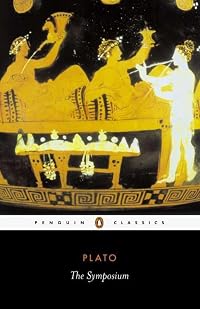
The Symposium
by Plato
On This Page
Description
A group of Athenian aristocrats attend a party held by Agathon to celebrate his victory in the drama festival of the Dionysia. They talk about love until the drunken Alcibiades bursts in, and decides to talk about Socrates instead. 'Symposium' gives a picture of the sparkling society that was Athens at the height of her empire. This classic discussion on love is presented in its ideal medium.Tags
Recommendations



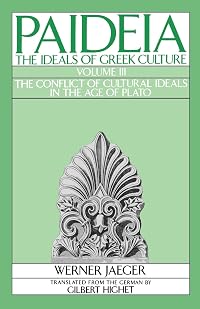
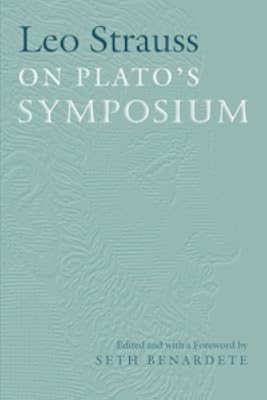
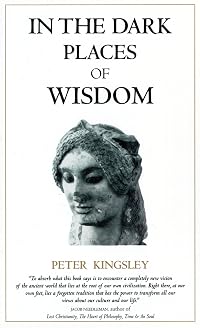
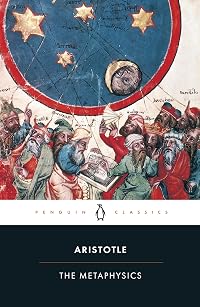




Member Recommendations
Member Reviews
My third Plato, and this is one of the more famous ones, not necessarily so much for its poetry but for its portraits of Athenian figures such as Aristophanes, Socrates and Alcibiades.
But first, we have the introduction. I've remarked before that sometimes the commentary that comes with historic works tells us more about the publisher's own times than those of the original work. In this case, I received a warning that this work contained material "so repugnant" to "the orthodox morality of our own times" that it might destroy any pleasure I might get from reading this work.
The content in question? Male homosexuality.
I flipped to the publication date - 1951. How quickly things change. More telling still, was that the introduction did not show more think to warn me of the content that absolutely would have ruined the work for me - had I not been 2000 years too late to register my complaint with Plato.
You see, Plato's argument for homosexuality is based in part on the idea that true love cannot be had with a women. Women are capable only of "physical" creation (having babies), but not of intellectual, artistic or inventive creativity. Sure, having kids is one way of leaving a legacy after you're gone, but a much better legacy is one of art, writing, philosophy or invention. You need men for that kind of procreation.
Seems our friend from 1951 didn't consider that this aspect of the work (and not the scandalous same-sex shenanigans) might render this work "repugnant" to fully fifty per cent of its potential readers.
But enough about a single paragraph of the intro. The Symposium is about love, and presumably its where our concept of "Platonic Love" originated. The main thrust seems to be that we should first transcend physical attraction by learning to appreciate our lovers' souls and minds, ultimately transcending the love of any individual at all and learning to love wisdom and beauty for itself. "Keeping it Platonic" never sounded so intense.
Unlike the previous two works, I didn't come away with much in the way of new insights. Ascribing a higher purpose to love (beyond physical desire) is not a new concept, but one might argue that "rising above" love for your fellow human is to defeat its purpose entirely - not to mention the height of arrogance!
The most fun in this work is to be had in the portraits of Athenian characters, and the party takes a turn when a drunken Alcibiades crashes it to tell a long story about trying to seduce Socrates. I was concerned the Symposium might turn X-rated, but luckily more party crashers arrive and everyone drinks until they pass out. At least that part is relatable. show less
But first, we have the introduction. I've remarked before that sometimes the commentary that comes with historic works tells us more about the publisher's own times than those of the original work. In this case, I received a warning that this work contained material "so repugnant" to "the orthodox morality of our own times" that it might destroy any pleasure I might get from reading this work.
The content in question? Male homosexuality.
I flipped to the publication date - 1951. How quickly things change. More telling still, was that the introduction did not show more think to warn me of the content that absolutely would have ruined the work for me - had I not been 2000 years too late to register my complaint with Plato.
You see, Plato's argument for homosexuality is based in part on the idea that true love cannot be had with a women. Women are capable only of "physical" creation (having babies), but not of intellectual, artistic or inventive creativity. Sure, having kids is one way of leaving a legacy after you're gone, but a much better legacy is one of art, writing, philosophy or invention. You need men for that kind of procreation.
Seems our friend from 1951 didn't consider that this aspect of the work (and not the scandalous same-sex shenanigans) might render this work "repugnant" to fully fifty per cent of its potential readers.
But enough about a single paragraph of the intro. The Symposium is about love, and presumably its where our concept of "Platonic Love" originated. The main thrust seems to be that we should first transcend physical attraction by learning to appreciate our lovers' souls and minds, ultimately transcending the love of any individual at all and learning to love wisdom and beauty for itself. "Keeping it Platonic" never sounded so intense.
Unlike the previous two works, I didn't come away with much in the way of new insights. Ascribing a higher purpose to love (beyond physical desire) is not a new concept, but one might argue that "rising above" love for your fellow human is to defeat its purpose entirely - not to mention the height of arrogance!
The most fun in this work is to be had in the portraits of Athenian characters, and the party takes a turn when a drunken Alcibiades crashes it to tell a long story about trying to seduce Socrates. I was concerned the Symposium might turn X-rated, but luckily more party crashers arrive and everyone drinks until they pass out. At least that part is relatable. show less
Rereading this again after being mind fucked into obsessing over 'mental procreation' after middle school is so fun. It was a nice little valentines week re-read and I forgot how hilarious this book was until Aristophanes started going off with his human ball centipede situation. I bet all of them would have so much fun on Feeld, queer polycule gathering together at a wine party to talk about beauty and mpreg? So liberal/arts school lolll I need a modern day equivalent of this but lesbians.
[T]he object of love is the permanent possession of goodness for oneself.
As usual, Plato’s arguments in Symposium are profoundly beautiful, strangely compelling, and often absurd. It’s certainly the most entertaining reading experience of his dialogues: drunk speeches, friendly sniping, mock praise, and a lot of talk about how big of a tease Socrates was. Philosophically, there is much to dig into here, but of particular interest to me is the beautiful idea (however implausible) at 211c that there are hierarchal levels to the ways of love: first, one experiences physical attraction to a specific person; then, an appreciation of physical beauty in general; next, the love of the good things people do; fourth, the beauty of show more intellectual endeavors; finally, one ascends to the appreciation of true beauty in itself. If only it were so! show less
As usual, Plato’s arguments in Symposium are profoundly beautiful, strangely compelling, and often absurd. It’s certainly the most entertaining reading experience of his dialogues: drunk speeches, friendly sniping, mock praise, and a lot of talk about how big of a tease Socrates was. Philosophically, there is much to dig into here, but of particular interest to me is the beautiful idea (however implausible) at 211c that there are hierarchal levels to the ways of love: first, one experiences physical attraction to a specific person; then, an appreciation of physical beauty in general; next, the love of the good things people do; fourth, the beauty of show more intellectual endeavors; finally, one ascends to the appreciation of true beauty in itself. If only it were so! show less
“A Timeless and Thought-Provoking Exploration of Love” 5-Stars by Rebecca Raffle
⭐️⭐️⭐️⭐️⭐️
I first read The Symposium in college, and it completely reshaped how I think about love, beauty, and human connection. Plato’s dialogue isn’t just a philosophical text. It’s a mesmerizing conversation that feels surprisingly modern, tackling questions that still define relationships today.
Set during a banquet in ancient Athens, the book is essentially a series of speeches on the nature of love, delivered by some of the most famous figures of Greek philosophy. Each perspective, from physical attraction to divine transcendence, builds upon the last, culminating in Socrates’ unforgettable take on love as a path toward show more wisdom and higher truth.
“Love is the desire for the perpetual possession of the good.”
This book stuck with me because it doesn’t just define love, it dissects it, challenges it, and forces you to think about your own experiences.
Aristophanes’ myth about soulmates? Beautiful and heartbreaking. Socrates’ argument that love is a ladder leading to enlightenment? Mind-expanding. And yet, what I love most is how this book invites interpretation, making every reader’s experience deeply personal.
Why This Book Stands Out 🔥
✔️ Philosophy That Feels Personal – This isn’t just theory, it’s a conversation that makes you examine your own beliefs about love.
✔️ Surprisingly Modern Themes – The discussions on desire, relationships, and the nature of attraction feel just as relevant today.
✔️ Both Intellectual and Poetic – The Symposium is as much about beauty and storytelling as it is about philosophy.
Who Should Read This?
✔️ Anyone Who Loves Thinking About Love – If you’ve ever questioned what love really means, this book is for you.
✔️ Readers Who Enjoy Classical Literature – If you like books that challenge and expand your worldview, Plato delivers.
✔️ Those Interested in the Roots of Western Thought – This book has influenced centuries of philosophy, art, and literature.
Final Thoughts 😍
I’m giving The Symposium 5 stars because it’s one of the few philosophical texts that feels as alive today as it did in ancient Greece. It’s a conversation worth revisiting, a book that grows with you, and an exploration of love that is as timeless as love itself. Every time I read it, I take away something new, and that, to me, is the mark of a masterpiece.
📚 Enjoy my reviews? Let’s connect!
📖 Read more in-depth reviews & essays on Medium: medium.com/@RebeccaRaffle
📷 Follow my Instagram @RebeccaRaffle for book updates & foodie adventures: https://www.instagram.com/rebeccaraffle
🌍 Explore more on my website: https://www.rebeccaraffle.com show less
⭐️⭐️⭐️⭐️⭐️
I first read The Symposium in college, and it completely reshaped how I think about love, beauty, and human connection. Plato’s dialogue isn’t just a philosophical text. It’s a mesmerizing conversation that feels surprisingly modern, tackling questions that still define relationships today.
Set during a banquet in ancient Athens, the book is essentially a series of speeches on the nature of love, delivered by some of the most famous figures of Greek philosophy. Each perspective, from physical attraction to divine transcendence, builds upon the last, culminating in Socrates’ unforgettable take on love as a path toward show more wisdom and higher truth.
“Love is the desire for the perpetual possession of the good.”
This book stuck with me because it doesn’t just define love, it dissects it, challenges it, and forces you to think about your own experiences.
Aristophanes’ myth about soulmates? Beautiful and heartbreaking. Socrates’ argument that love is a ladder leading to enlightenment? Mind-expanding. And yet, what I love most is how this book invites interpretation, making every reader’s experience deeply personal.
Why This Book Stands Out 🔥
✔️ Philosophy That Feels Personal – This isn’t just theory, it’s a conversation that makes you examine your own beliefs about love.
✔️ Surprisingly Modern Themes – The discussions on desire, relationships, and the nature of attraction feel just as relevant today.
✔️ Both Intellectual and Poetic – The Symposium is as much about beauty and storytelling as it is about philosophy.
Who Should Read This?
✔️ Anyone Who Loves Thinking About Love – If you’ve ever questioned what love really means, this book is for you.
✔️ Readers Who Enjoy Classical Literature – If you like books that challenge and expand your worldview, Plato delivers.
✔️ Those Interested in the Roots of Western Thought – This book has influenced centuries of philosophy, art, and literature.
Final Thoughts 😍
I’m giving The Symposium 5 stars because it’s one of the few philosophical texts that feels as alive today as it did in ancient Greece. It’s a conversation worth revisiting, a book that grows with you, and an exploration of love that is as timeless as love itself. Every time I read it, I take away something new, and that, to me, is the mark of a masterpiece.
📚 Enjoy my reviews? Let’s connect!
📖 Read more in-depth reviews & essays on Medium: medium.com/@RebeccaRaffle
📷 Follow my Instagram @RebeccaRaffle for book updates & foodie adventures: https://www.instagram.com/rebeccaraffle
🌍 Explore more on my website: https://www.rebeccaraffle.com show less
What stands out to me about this book is how relatable many of the ideas are. I work at a university and although I have never and will never have sex with my students, I do understand how wonderful a mentoring relationship with a younger person can be. There is a kind of romance in showing a student around an intellectual domain in the same way there's a romance in showing someone around a foreign city you're familiar with. You get to see it through their eyes and when they share your delight it feels like quite a deep meeting of hearts. Of course it's a good thing that this is now mediated by professionalism and structures that enable students to get access to this world without making themselves vulnerable to harm, and it's not show more longer only available from teaching staff - often students share the journey together.
There are many other relatable elements - like the fact that when we experience something of beauty we can't help but think it means something or represents some fundamental good and even just the sense that there must be a rule out there that can tell us how to live. There's relatable elements even in the details, like the stuff at the beginning about how they are absolutely, definitely not going to get drunk tonight because they've been drinking too much lately; they will only drink as much as they feel like. Of course randos turn up and everyone gets pissed and either falls asleep or spends the night talking nonsense.
I read the Cambridge Howatson translation and I found it very enjoyable to read. I read the introduction after the text and found it clarified some of the ideas. There's a bit of the usual nonsense about Gods and so on, but I found that easy to get through. I've always assumed that all ancient philosophy is mostly wrong, but as this was my first time reading an original (translated) work, I was pleased to find that despite being mostly wrong, there was much of value. I felt a real sense of connection to the people who, in one sense or another, are among my intellectual forebears. show less
There are many other relatable elements - like the fact that when we experience something of beauty we can't help but think it means something or represents some fundamental good and even just the sense that there must be a rule out there that can tell us how to live. There's relatable elements even in the details, like the stuff at the beginning about how they are absolutely, definitely not going to get drunk tonight because they've been drinking too much lately; they will only drink as much as they feel like. Of course randos turn up and everyone gets pissed and either falls asleep or spends the night talking nonsense.
I read the Cambridge Howatson translation and I found it very enjoyable to read. I read the introduction after the text and found it clarified some of the ideas. There's a bit of the usual nonsense about Gods and so on, but I found that easy to get through. I've always assumed that all ancient philosophy is mostly wrong, but as this was my first time reading an original (translated) work, I was pleased to find that despite being mostly wrong, there was much of value. I felt a real sense of connection to the people who, in one sense or another, are among my intellectual forebears. show less
What a fun little book!
I'm sure I'm not grasping all of the nuances---I suspect a vindication motivation in the speech Plato gives to Alcibiades about Socrates---but since I'm not a scholar of Ancient Greek art and culture and lack the context necessary for philosophical criticism, I gave myself permission to just enjoy this book as it is.
And there was really a lot I liked about this book. I really enjoyed reading Aristophanes' story of the origin of love, which I first learned about from "Hedwig and the Angry Inch" (and I've had that song stuck in my head since I read that section), and Diotima's speech that Socrates shares (or makes up?) is masterful. My favorite, though, is probably Alcibiades' speech. When he arrived on the scene, show more drunken and supported by a flute girl, I got myself a gluten-free beer and joined the party (if one gluten-free beer even counts in a crowd where people are drinking wine by the half-gallon).
I love the picture of Socrates that Alcibiades paints, as a man who exists in a plane just a tad removed from the physical plane of the rest of us. I can only hope that someone will say about me someday, "But this [wo]man here is so bizarre, [her] ways and [her] ideas are so unusual, that, search as you might, you'll never find anyone else, alive or dead, who's even remotely like [her]."
I don't think I have much hope of that level of bizarre-ness, but it's a pleasant goal. show less
I'm sure I'm not grasping all of the nuances---I suspect a vindication motivation in the speech Plato gives to Alcibiades about Socrates---but since I'm not a scholar of Ancient Greek art and culture and lack the context necessary for philosophical criticism, I gave myself permission to just enjoy this book as it is.
And there was really a lot I liked about this book. I really enjoyed reading Aristophanes' story of the origin of love, which I first learned about from "Hedwig and the Angry Inch" (and I've had that song stuck in my head since I read that section), and Diotima's speech that Socrates shares (or makes up?) is masterful. My favorite, though, is probably Alcibiades' speech. When he arrived on the scene, show more drunken and supported by a flute girl, I got myself a gluten-free beer and joined the party (if one gluten-free beer even counts in a crowd where people are drinking wine by the half-gallon).
I love the picture of Socrates that Alcibiades paints, as a man who exists in a plane just a tad removed from the physical plane of the rest of us. I can only hope that someone will say about me someday, "But this [wo]man here is so bizarre, [her] ways and [her] ideas are so unusual, that, search as you might, you'll never find anyone else, alive or dead, who's even remotely like [her]."
I don't think I have much hope of that level of bizarre-ness, but it's a pleasant goal. show less
Re-reading for the third time for my thesis. The Symposium features lengthy discussions on the topic of love (eros) in the context of a dinner party. This was a society that idealised homoerotic relationships, specifically paederastic ones between a boy & older male. This transactional erotic-educational relationship reveals the gender & power dynamics of Athenian society, & the kind of values they held. Love was seen as something that ideally led to self-improvement in moral & virtuous terms, & relationships with women could never be as idealised because women were seen as lower in status than slaves (Plato's Republic).
Eros was something that described love, & it was also the name of a god. Socrates however broke convention when he show more conceptualised Eros outside the narrow context of interpersonal relationships, & introduced the idea that it is instead a daimon- an intermediary between human & gods. Love is an active force, one that demands your own involvement with your self-improvement. For him, love was to be understood in normative, idealised terms as a force that allowed humans to philosophically contemplate on the nature of Beauty and the Good. Eros, as a manike (madness) is hard to control, & therefore the good lover is one who has to go through a process of ascension before they can finally contemplate the final nature of the Good & “give birth” to good discourses, good arts & works, in order to achieve immortality in that form.
Of course what is most popular in the Symposium is actually the speech of Aristophanes when he said the gods had to split humans in half because together, they were so powerful they threatened the power of the Gods. And since then, humans have roamed, looking for their lost half. Very romantic! But to me, also very revolutionary. They don’t want us to find & love each other. And when we do, we could overthrow them. show less
Eros was something that described love, & it was also the name of a god. Socrates however broke convention when he show more conceptualised Eros outside the narrow context of interpersonal relationships, & introduced the idea that it is instead a daimon- an intermediary between human & gods. Love is an active force, one that demands your own involvement with your self-improvement. For him, love was to be understood in normative, idealised terms as a force that allowed humans to philosophically contemplate on the nature of Beauty and the Good. Eros, as a manike (madness) is hard to control, & therefore the good lover is one who has to go through a process of ascension before they can finally contemplate the final nature of the Good & “give birth” to good discourses, good arts & works, in order to achieve immortality in that form.
Of course what is most popular in the Symposium is actually the speech of Aristophanes when he said the gods had to split humans in half because together, they were so powerful they threatened the power of the Gods. And since then, humans have roamed, looking for their lost half. Very romantic! But to me, also very revolutionary. They don’t want us to find & love each other. And when we do, we could overthrow them. show less
Members
- Recently Added By
Lists

100 Books to Read in a Lifetime (That Are Older Than 200 Years)
415 works; 176 members
Truly old classics
63 works; 6 members

Filosofía - Clásicos
217 works; 1 member

Bibliography for Among Others
159 works; 15 members

College Reads (Lit Edition)
75 works; 5 members

In Our Time books
4,934 works; 2 members

el
1,139 works; 1 member

Books You Read For University
184 works; 3 members

New Lifetime Reading Plan by Fadiman and Major
225 works; 5 members
My List
302 works; 1 member

Recommended Literary Books
111 works; 1 member

Recommended Non-Fiction Books
26 works; 2 members

Little philosophical challang
4 works; 1 member

Greatest Books, allegedly
484 works; 9 members

A Reading List
100 works; 3 members
How to Read a Book's Recommended Reading List
309 works; 10 members

Literature Before the 17th Century
20 works; 5 members

Books You Read During High School (For School)
301 works; 53 members

Literary Works Read in College
316 works; 15 members

LibraryThingers' 1001 Books You Must Read Before You Die
442 works; 30 members

Books Read in 2009
464 works; 11 members

Europe
205 works; 6 members
Folio Society
831 works; 53 members

1001 Books You Must Read Before You Die
1,448 works; 1,137 members

CCE 100 Great Books List
145 works; 8 members

Story Within a Story
65 works; 17 members

Abridged Western Canon
14 works; 1 member
Talk Discussions
Past Discussions
Libanus Press - Symposium, Plato in Fine Press Forum (February 2022)
Author Information

Plato was born c. 427 B.C. in Athens, Greece, to an aristocratic family very much involved in political government. Pericles, famous ruler of Athens during its golden age, was Plato's stepfather. Plato was well educated and studied under Socrates, with whom he developed a close friendship. When Socrates was publically executed in 399 B.C., Plato show more finally distanced himself from a career in Athenian politics, instead becoming one of the greatest philosophers of Western civilization. Plato extended Socrates's inquiries to his students, one of the most famous being Aristotle. Plato's The Republic is an enduring work, discussing justice, the importance of education, and the qualities needed for rulers to succeed. Plato felt governors must be philosophers so they may govern wisely and effectively. Plato founded the Academy, an educational institution dedicated to pursuing philosophic truth. The Academy lasted well into the 6th century A.D., and is the model for all western universities. Its formation is along the lines Plato laid out in The Republic. Many of Plato's essays and writings survive to this day. Plato died in 347 B.C. at the age of 80. (Bowker Author Biography) show less
Some Editions
Awards and Honors
Series
Belongs to Publisher Series
Economica [Laterza] (92)
Penguin Great Ideas (23)
Bernat Metge (223)
ET Tascabili [Einaudi] (1584)
Penguin Classics (L024)
Work Relationships
Is contained in
Has the adaptation
Has as a study
Has as a student's study guide
Common Knowledge
- Canonical title
- The Symposium
- Original title
- Συμπόσιον
- Alternate titles
- Plato's Symposium
- Original publication date
- c. 360 B.C.; 380 BC
- People/Characters
- Socrates (c.&thinsp | 470&ndash | 399 BC); Agathon; Aristophanes; Alcibiades; Diotima; Plato
- Important places
- Ancient Greece; Athens, Greece; Greece
- Important events
- Classical Antiquity; 4th century BCE
- First words*
- APOLLODORO - Credo di non essere impreparato a rispondere sulle cose che volete sapere.
- Quotations*
- Den ed er jo ingen ed hvor Afrodite hører med, heter det jo.
- Last words*
- (Click to show. Warning: May contain spoilers.)E, recatosi al Liceo, Socrate, dopo essersi lavato, vi trascorse tutta la giornata come le altre volte. E dopo aver trascorso così la giornata, verso sera andò a casa per riposare.
- Blurbers
- Vlastos, Gregory
- Original language
- Ancient Greek
- Disambiguation notice
- This is Plato's Symposium in modern translation. Please do not combine with the edition of the dialogue in the Classical Greek text.
*Some information comes from Common Knowledge in other languages. Click "Edit" for more information.
Classifications
Statistics
- Members
- 7,617
- Popularity
- 1,512
- Reviews
- 85
- Rating
- (4.01)
- Languages
- 25 — Catalan, Chinese, Czech, Danish, Dutch, English, Finnish, French, German, Greek (Ancient), Greek, Hungarian, Italian, Japanese, Lithuanian, Multiple languages, Norwegian (Nynorsk), Norwegian (Bokmål), Farsi/Persian, Polish, Russian, Spanish, Swedish, Turkish, Portuguese (Portugal)
- Media
- Paper, Audiobook, Ebook
- ISBNs
- 311
- ASINs
- 101