
Stephen Harrigan
Author of The Gates of the Alamo
About the Author
Stephen Harrigan is the author of numerous works of nonfiction and fiction, including Big Wonderful Thing: A History of Texas and the critically acclaimed novels A Friend of Mr. Lincoln, Remember Ben Clayton, and The Gates of the Alamo. He is a longtime writer for Texas Monthly and an award-winning show more screenwriter who has written many movies for television. show less
Image credit: Matt Lankes
Works by Stephen Harrigan
Sorrowful Mysteries: The Shepherd Children of Fatima and the Fate of the Twentieth Century (2025) 16 copies
Associated Works
A Book of Photographs from Lonesome Dove (Wittliff Gallery of Southwestern and Mexican Photography) (2007) — Introduction, some editions — 39 copies, 1 review
Tagged
Common Knowledge
- Canonical name
- Harrigan, Stephen
- Birthdate
- 1948
- Gender
- male
- Occupations
- journalist
- Organizations
- Texas Monthly
- Nationality
- USA
- Places of residence
- Oklahoma City, Oklahoma, USA
Abilene, Texas, USA
Corpus Christi, Texas, USA
Austin, Texas, USA - Associated Place (for map)
- Texas, USA
Members
Reviews
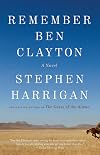
Historical fiction about a West Texas rancher who commissions a statue to commemorate his son Ben, killed in France during WWI, in an attempt to heal the guilt he feels over their contentious relationship. The book is a character study, with all the primary characters and a good number of supporting characters fleshed out to a degree where I sensed their desires, motivations, internal conflicts, ambitions, and regrets.
Both the rancher and the sculptor guard hidden secrets from the past, show more which adversely impact their relationship and respective family dynamics. I selected this book since it features art in a prominent role, and was rewarded by a beautifully detailed description of how to create a bronze sculpture, not only the process but the artistic aspirations.
The plot is wide-ranging in scope, featuring such components as:
• what is was like to be a soldier during WWI on the Western Front
• descriptions of the West Texas ranching life
• an abduction by the Comanche and being assimilated into a tribe
• a daughter living in the shadow of her famous father
• a friend of the dead soldier learning to live with a severe disfigurement
• an artist’s desire to leave a legacy
I appreciated the author including relevant historical elements, such as references to Joske’s department store in San Antonio, or the methods of post-WWI reconstruction of the French countryside. Harrigan’s writing clearly evokes a past time and place.
Highly recommended to readers who appreciate stories of family dynamics, who enjoy historical fiction, who seek out books containing topics related to art, or who favor deeply developed characters. show less
Both the rancher and the sculptor guard hidden secrets from the past, show more which adversely impact their relationship and respective family dynamics. I selected this book since it features art in a prominent role, and was rewarded by a beautifully detailed description of how to create a bronze sculpture, not only the process but the artistic aspirations.
The plot is wide-ranging in scope, featuring such components as:
• what is was like to be a soldier during WWI on the Western Front
• descriptions of the West Texas ranching life
• an abduction by the Comanche and being assimilated into a tribe
• a daughter living in the shadow of her famous father
• a friend of the dead soldier learning to live with a severe disfigurement
• an artist’s desire to leave a legacy
I appreciated the author including relevant historical elements, such as references to Joske’s department store in San Antonio, or the methods of post-WWI reconstruction of the French countryside. Harrigan’s writing clearly evokes a past time and place.
Highly recommended to readers who appreciate stories of family dynamics, who enjoy historical fiction, who seek out books containing topics related to art, or who favor deeply developed characters. show less
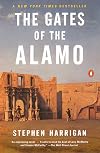
Stephen Harrigan has produced a fine novel centered on the siege of the Alamo, peopled by both fictional and historic characters from both sides. Along the way, he provides an overview of the political situation in Mexico at the time and takes several healthy swipes at some of the most prevalent Alamo myths.
By and large, none of the Texas Pantheon make it through with their historical haloes intact. Travis, Austin, Bowie, and Houston are presented as flawed, even vainglorious men. Of them show more all, Davey Crockett comes off as the most human, though even he is portrayed as driven not so much by a fight for some nebulous political freedom as he is by the opportunity to withdraw from a humiliating political defeat and make a fresh start with headright land in an independent Texas.
The fictional characters tend to come off as much more admirable, and are well-drawn and believable. The description of the final assault on the mission is grimly realistic, and Harrigan extends his story past the iconic battle, painting the aftermath in broad strokes that nevertheless provide a reasonably clear picture of the events that led to Texas independence. show less
By and large, none of the Texas Pantheon make it through with their historical haloes intact. Travis, Austin, Bowie, and Houston are presented as flawed, even vainglorious men. Of them show more all, Davey Crockett comes off as the most human, though even he is portrayed as driven not so much by a fight for some nebulous political freedom as he is by the opportunity to withdraw from a humiliating political defeat and make a fresh start with headright land in an independent Texas.
The fictional characters tend to come off as much more admirable, and are well-drawn and believable. The description of the final assault on the mission is grimly realistic, and Harrigan extends his story past the iconic battle, painting the aftermath in broad strokes that nevertheless provide a reasonably clear picture of the events that led to Texas independence. show less

Just finished the first of my Christmas books, Jacob's Well by Stephen Harrigan. This is a story that is based around a fictionalization of a very real place, the once mysterious Jacob's Well in Wimberly, TX. As a caver I have known about the Well for years, mostly because of the often gruesome accident/fatality reports I would often read. Gruesome events, yes, but they're the sort of things that occasionally inspire someone to write a book, and if we're fortunate, it's a good one and we get show more to read it.
Now as it happens, author Harrigan was one of the divers who had the sad duty to participate on a body recovery in Jacob's Well many moons ago, and he turned the memories of this unfortunate experience into a really remarkable story. In fact, I would go so far as to say that this is just the sort of book that reminds me how much I enjoy reading, and how much I wish I could write so well...it really is that good. That it revolves around diving and particularly cave diving is purely incidental, unlike other such books I've read...I'm thinking David Poyer's Down to a Sunless Sea here, where the locale and the activity is central to the progression of the story. In Harrigan's work the interest is in the characters and their often complex relationship to one another. The characterization is as deep as the well itself, and the primary antagonists are all fascinating and not at all cliche'd. Nicely done.
As to the story itself, I must confess this is one of those works that once you get to the end, you are tempted to rush through it, especially if you're approaching the finish at 11 PM as I did. DON'T DO IT! Trust me, put the book down and finish it when you're lucid! The last thirty or forty pages are as gripping as any contemporary suspense novel you've ever read...this despite the fact that Harrigan's work was originally published in 1984. You're going to want to enjoy this denouement, savor it.
Jacob's Well has aged remarkably well, and maintains its sense of mystery throughout as much as the real Jacob's Well has through the years. Of course the fact is that the Well has been explored rather completely over the course of the past ten to fifteen years...weirdly, that original sense mystery still remains. What's around the next corner? Can we squeeze past that obstruction? Does the passage end, or will it continue for miles and miles? Life can be like that, I suppose.
At any rate, it's marvelous stuff and comes highly recommended. You can purchase the reprint (complete a very appropriate and informative afterword by Harrigan) through Amazon. show less
Now as it happens, author Harrigan was one of the divers who had the sad duty to participate on a body recovery in Jacob's Well many moons ago, and he turned the memories of this unfortunate experience into a really remarkable story. In fact, I would go so far as to say that this is just the sort of book that reminds me how much I enjoy reading, and how much I wish I could write so well...it really is that good. That it revolves around diving and particularly cave diving is purely incidental, unlike other such books I've read...I'm thinking David Poyer's Down to a Sunless Sea here, where the locale and the activity is central to the progression of the story. In Harrigan's work the interest is in the characters and their often complex relationship to one another. The characterization is as deep as the well itself, and the primary antagonists are all fascinating and not at all cliche'd. Nicely done.
As to the story itself, I must confess this is one of those works that once you get to the end, you are tempted to rush through it, especially if you're approaching the finish at 11 PM as I did. DON'T DO IT! Trust me, put the book down and finish it when you're lucid! The last thirty or forty pages are as gripping as any contemporary suspense novel you've ever read...this despite the fact that Harrigan's work was originally published in 1984. You're going to want to enjoy this denouement, savor it.
Jacob's Well has aged remarkably well, and maintains its sense of mystery throughout as much as the real Jacob's Well has through the years. Of course the fact is that the Well has been explored rather completely over the course of the past ten to fifteen years...weirdly, that original sense mystery still remains. What's around the next corner? Can we squeeze past that obstruction? Does the passage end, or will it continue for miles and miles? Life can be like that, I suppose.
At any rate, it's marvelous stuff and comes highly recommended. You can purchase the reprint (complete a very appropriate and informative afterword by Harrigan) through Amazon. show less
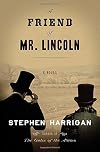
On a recent trip to the nation’s capital, my son and I visited the place where Lincoln died, a boardinghouse across the street from Ford’s Theater. It’s a museum now, as you might expect, whose exhibits testify to the immense power Lincoln’s memory exerts, regardless of political belief.
Conflicting visions of his motives and character roll off the presses year after year. In fact, the museum has built a pile of books two stories high, a brave project, given that sooner or later, the show more historical Babel must punch through the roof. What a fitting metaphor for the man who towered above his contemporaries in more ways than one.
Consequently, it’s fair to ask, “Why another?,” even as the echo rebounds, “Why not?” But Stephen Harrigan has made a strong case with his novel about the political formation of his hero in 1830s and 1840s Illinois. However, for better and worse, the story begins just after his assassination in 1865, as the town of Springfield mourns over the coffin that has made its sad voyage from Washington. Two friends of his—one fictional, one real—talk about setting the record straight about their late friend, a task that Harrigan seems to have zealously taken up. That too, is for better and worse.
Narrating this tale is Micajah (Cage) Weatherby, a Springfield poet and businessman, the author’s brilliant creation, a man who befriends Lincoln during the Black Hawk War of 1832. As a convinced abolitionist, freer with his passions, less concerned with how things look than how they feel, he’s a perfect foil for Lincoln, who’s always looking over his shoulder to see what the electorate thinks and binds his heart to be ruled by law.
It’s not that Lincoln the politico lacks any sense of right and wrong; on the contrary, he’s got a very highly developed one. However, it’s always subservient to his belief in order and justice, which is where he thinks honor lies, and honor means everything to him.
It’s no small task to write Lincoln’s character, but Harrigan does marvelously well, I think, partly by contrast to the young lawyer’s friends, all young men on the make. But to describe A Friend of Mr. Lincoln as a character study, even of such a momentous nature, does the book injustice.
Harrigan has re-created the period and its tensions, whether over slavery, who gets what government contract, or who’s murdered whom. Everyone must take sides, which causes both personal and political animosities. Harrigan offers court cases, romances, near riots, a duel, and, most vividly, Lincoln’s stormy courtship of Mary Todd. Cage helps his friend through terrible bouts of depression and saves his life on at least two occasions, for which, one may argue, he was poorly repaid.
I dislike prologues and retrospective first chapters. I understand why Harrigan begins his story in 1865; he wants to show how the Lincolns, chiefly Mary, have thrust Cage out of their lives when once he was intimate friend to both. But that chapter is entirely unnecessary, and the “set-the-record-straight” talk is a timeworn device for telling a story. This one needs no excuses.
More seriously, I think, is Harrigan’s apparent ax to grind. He seems determined to accent the less attractive parts of Lincoln’s character, and though I like that as an antidote to the legend, I think the author may have gotten too caught up in his cause. What’s more, he often tells you what he wants you to think, when he’s more than capable of showing it. And from time to time, these statements confused me, because the story had led me to a different conclusion entirely.
Nevertheless, I like this novel. As Lincoln himself might have said, it reminds me of a story; this one’s from the museum. When one of the president’s enemies accused him of being two-faced, he replied, “If I had another face, why would I show you this one?” That’s what Stephen Harrigan has done—show Lincoln’s different face. show less
Conflicting visions of his motives and character roll off the presses year after year. In fact, the museum has built a pile of books two stories high, a brave project, given that sooner or later, the show more historical Babel must punch through the roof. What a fitting metaphor for the man who towered above his contemporaries in more ways than one.
Consequently, it’s fair to ask, “Why another?,” even as the echo rebounds, “Why not?” But Stephen Harrigan has made a strong case with his novel about the political formation of his hero in 1830s and 1840s Illinois. However, for better and worse, the story begins just after his assassination in 1865, as the town of Springfield mourns over the coffin that has made its sad voyage from Washington. Two friends of his—one fictional, one real—talk about setting the record straight about their late friend, a task that Harrigan seems to have zealously taken up. That too, is for better and worse.
Narrating this tale is Micajah (Cage) Weatherby, a Springfield poet and businessman, the author’s brilliant creation, a man who befriends Lincoln during the Black Hawk War of 1832. As a convinced abolitionist, freer with his passions, less concerned with how things look than how they feel, he’s a perfect foil for Lincoln, who’s always looking over his shoulder to see what the electorate thinks and binds his heart to be ruled by law.
It’s not that Lincoln the politico lacks any sense of right and wrong; on the contrary, he’s got a very highly developed one. However, it’s always subservient to his belief in order and justice, which is where he thinks honor lies, and honor means everything to him.
It’s no small task to write Lincoln’s character, but Harrigan does marvelously well, I think, partly by contrast to the young lawyer’s friends, all young men on the make. But to describe A Friend of Mr. Lincoln as a character study, even of such a momentous nature, does the book injustice.
Harrigan has re-created the period and its tensions, whether over slavery, who gets what government contract, or who’s murdered whom. Everyone must take sides, which causes both personal and political animosities. Harrigan offers court cases, romances, near riots, a duel, and, most vividly, Lincoln’s stormy courtship of Mary Todd. Cage helps his friend through terrible bouts of depression and saves his life on at least two occasions, for which, one may argue, he was poorly repaid.
I dislike prologues and retrospective first chapters. I understand why Harrigan begins his story in 1865; he wants to show how the Lincolns, chiefly Mary, have thrust Cage out of their lives when once he was intimate friend to both. But that chapter is entirely unnecessary, and the “set-the-record-straight” talk is a timeworn device for telling a story. This one needs no excuses.
More seriously, I think, is Harrigan’s apparent ax to grind. He seems determined to accent the less attractive parts of Lincoln’s character, and though I like that as an antidote to the legend, I think the author may have gotten too caught up in his cause. What’s more, he often tells you what he wants you to think, when he’s more than capable of showing it. And from time to time, these statements confused me, because the story had led me to a different conclusion entirely.
Nevertheless, I like this novel. As Lincoln himself might have said, it reminds me of a story; this one’s from the museum. When one of the president’s enemies accused him of being two-faced, he replied, “If I had another face, why would I show you this one?” That’s what Stephen Harrigan has done—show Lincoln’s different face. show less
Lists
Awards


You May Also Like


Associated Authors
Statistics
- Works
- 21
- Also by
- 1
- Members
- 1,369
- Popularity
- #18,785
- Rating
- 3.9
- Reviews
- 39
- ISBNs
- 83
- Languages
- 1