
Taichi Yamada (1934–2023)
Author of Strangers
About the Author
Works by Taichi Yamada
Associated Works
Tagged
Common Knowledge
- Canonical name
- Yamada, Taichi
- Legal name
- 石坂 太一
Ishizaka Taichi - Other names
- 山田 太一
Yamada Taichi
Ishizaka Taichi - Birthdate
- 1934-06-06
- Date of death
- 2023-11-29
- Gender
- male
- Education
- Waseda University (Department of Education - Japanese Language and Literature, 1958)
- Awards and honors
- Yamamoto Shugoro Prize (best human-interest novel - Strangers, 2005)
- Nationality
- Japan
- Associated Place (for map)
- Japan
Members
Reviews
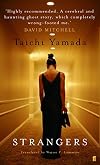
A Japanese Ghost Story that will Haunt you...
One of the things I love about the Japanese Literature I've discovered this year is its ability to weave the present day with the spirits of the past so matter of fact. Spirits are accepted as existing. Strangers by Taichi Yamada is such a story. It's a ghost story, but more than that. There is an underlying layer that makes this a much more complex story, one that will have you questioning your own heart...
Imagine meeting your parents when they show more are a young married couple... The exact age they were the last time you saw them... That is what happens to our main character, Harada, who is 47, recently divorced and pretty jaded. His parents were killed in an automobile accident when he was 12, and he was raised by his grandfather. One night he is compelled to visit the part of Tokyo where he grew up. He visits a theatre there, where he meets a man that looks exactly like his long-dead father... He can't believe his eyes, but he is compelled and soon obsessed to find out who this man is... How could you not be curious? And then as Harada is invited to the man's home and meets his wife, who just so happens to look just like his dead mother, how can you not be compelled to stay... even if you know none of this can be real. Or is real?
Taichi Tamada's prose is sparse but moving. He slowly builds the story around Harada, painting the story with a lost love & his divorce, new love, a demanding job, a son who has distanced himself from his father Harada after his parents divorce, and a strange building where Harada lives now. But it also is a story about the love one has for ones parents. As Harada deals with life as we all know it, there is this other surreal world that is wrapping itself around him, pulling him away from everything else. But how can Harada resist the love of his parents that he was cheated from as a small boy... The story is simply wonderful, with unexpected twists and turns that bring the story to a wonderful ending. It will haunt you after the last page...
I read this book is part of my Japanese Literature Challenge, which ends at the end of this month. I really enjoyed this book! What looked to be a simple story was not, and because of that it kept me turning the pages. Not to mention that Taichi Yamada writes well. It's a great introduction to Japanese Literature if you haven't read any yet, and at only 203 pages it's a reasonable time investment! show less
One of the things I love about the Japanese Literature I've discovered this year is its ability to weave the present day with the spirits of the past so matter of fact. Spirits are accepted as existing. Strangers by Taichi Yamada is such a story. It's a ghost story, but more than that. There is an underlying layer that makes this a much more complex story, one that will have you questioning your own heart...
Imagine meeting your parents when they show more are a young married couple... The exact age they were the last time you saw them... That is what happens to our main character, Harada, who is 47, recently divorced and pretty jaded. His parents were killed in an automobile accident when he was 12, and he was raised by his grandfather. One night he is compelled to visit the part of Tokyo where he grew up. He visits a theatre there, where he meets a man that looks exactly like his long-dead father... He can't believe his eyes, but he is compelled and soon obsessed to find out who this man is... How could you not be curious? And then as Harada is invited to the man's home and meets his wife, who just so happens to look just like his dead mother, how can you not be compelled to stay... even if you know none of this can be real. Or is real?
Taichi Tamada's prose is sparse but moving. He slowly builds the story around Harada, painting the story with a lost love & his divorce, new love, a demanding job, a son who has distanced himself from his father Harada after his parents divorce, and a strange building where Harada lives now. But it also is a story about the love one has for ones parents. As Harada deals with life as we all know it, there is this other surreal world that is wrapping itself around him, pulling him away from everything else. But how can Harada resist the love of his parents that he was cheated from as a small boy... The story is simply wonderful, with unexpected twists and turns that bring the story to a wonderful ending. It will haunt you after the last page...
I read this book is part of my Japanese Literature Challenge, which ends at the end of this month. I really enjoyed this book! What looked to be a simple story was not, and because of that it kept me turning the pages. Not to mention that Taichi Yamada writes well. It's a great introduction to Japanese Literature if you haven't read any yet, and at only 203 pages it's a reasonable time investment! show less

I suddenly had this feeling that I did not want to meet the man's wife. To meet her would be to instantly obliterate the glorious time I was having because of the man's uncanny likeness to my father; I would have to come crashing back to reality. No, wait. That wasn't it. Or at least that wasn't all. A part of me was actually entertaining a secret hope, experiencing a secret terror. It couldn't be, could it? Surely it couldn't be.
A ghost story set in present-day Tokyo. Middle-aged television show more scriptwriter Harada has become dislocated from his friends and family since leaving his wife and is living a solitary existence in the apartment he used to use as an office. But things take a strange turn when he takes a trip to the area he grew up in and meets a man who looks exactly like his father. But Harada was 12 when his father died and this man is younger than Harada is now, so is he a ghost or could the resemblance just be coincidental? show less
A ghost story set in present-day Tokyo. Middle-aged television show more scriptwriter Harada has become dislocated from his friends and family since leaving his wife and is living a solitary existence in the apartment he used to use as an office. But things take a strange turn when he takes a trip to the area he grew up in and meets a man who looks exactly like his father. But Harada was 12 when his father died and this man is younger than Harada is now, so is he a ghost or could the resemblance just be coincidental? show less
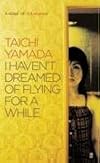
At it's core this is a love story & as in the experience of love/passion itself, you live in a heightened reality that follows it's own logic, sitting outside everyday mundanity.
In this beautiful tale, we have Taura, a 48 year old deputy director in a company that builds pre-fab houses and Mutsuko, a 67 year old grandmother. Both appear to be cast adrift from their own lives. They meet in a hospital & after a series of awkward moments they have a spoken sexual encounter whilst separated by a show more screen. The next morning a nurse moves the screen and Taura sees this wizened grey old lady.
After leaving the hospital, Taura again encounters Mutsuko, she is now physically younger by about 20 years, they then, consumed by passion, embark upon an affair. A sense of dread slowly pervades this relationship as Mutsuko each time they meet is physically younger, although remaining a 67 year old grandmother. As I'm reading this. I start to worry that we are heading into Nabokov territory, as Mutsuko appears as a beautiful teenager.
"I pulled a blanket over her naked shoulder & felt like a father fixing the blanket of his child - even though only a moment before, had been inside her"
Taura, as well as myself, are left wondering what will happen, "will she next be a child & after that?"
This novel by Taichi Yamada is the 2nd book I've read by him and as with the first, (Strangers), there is an interstitial tear between the characters and the real world they would normally inhabit. This device, this heightened magic realism, drives the story forward relying on the conflict between reality and unreality, allowing us to focus on Taura and Mutsuko's tale.
It treads the borderline between the supernatural & reality, never really answering your questions such as, why is this happening to Mutsuko, is it caused by Taura or their relationship & what will happen?
Like Taura, we watch it slip away never really understanding, though still haunted.
http://parrishlantern.blogspot.co.uk/2010/05/i-havent-dreamed-of-flying-for-whil... show less
In this beautiful tale, we have Taura, a 48 year old deputy director in a company that builds pre-fab houses and Mutsuko, a 67 year old grandmother. Both appear to be cast adrift from their own lives. They meet in a hospital & after a series of awkward moments they have a spoken sexual encounter whilst separated by a show more screen. The next morning a nurse moves the screen and Taura sees this wizened grey old lady.
After leaving the hospital, Taura again encounters Mutsuko, she is now physically younger by about 20 years, they then, consumed by passion, embark upon an affair. A sense of dread slowly pervades this relationship as Mutsuko each time they meet is physically younger, although remaining a 67 year old grandmother. As I'm reading this. I start to worry that we are heading into Nabokov territory, as Mutsuko appears as a beautiful teenager.
"I pulled a blanket over her naked shoulder & felt like a father fixing the blanket of his child - even though only a moment before, had been inside her"
Taura, as well as myself, are left wondering what will happen, "will she next be a child & after that?"
This novel by Taichi Yamada is the 2nd book I've read by him and as with the first, (Strangers), there is an interstitial tear between the characters and the real world they would normally inhabit. This device, this heightened magic realism, drives the story forward relying on the conflict between reality and unreality, allowing us to focus on Taura and Mutsuko's tale.
It treads the borderline between the supernatural & reality, never really answering your questions such as, why is this happening to Mutsuko, is it caused by Taura or their relationship & what will happen?
Like Taura, we watch it slip away never really understanding, though still haunted.
http://parrishlantern.blogspot.co.uk/2010/05/i-havent-dreamed-of-flying-for-whil... show less
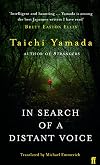
Nobody does crushing loneliness and uncertainty like the Japanese, and of those novelists one of the very best is Yamada Taichi. It’s a real shame his body of work has gone largely untranslated, and an even bigger shame that only one of his three novels in English has received a wide release.
Like his previous works, In Search of a Distant voice is about the loneliness that inhabits even the busiest city-dweller, the emptiness at the bottom of the soul that exists possibly in greater show more quantities when the bearer is entrenched firmly in city life. There’s a combination of hopelessness and nonchalance about the whole thing that is decidedly Japanese. This mix of emotions and reactions could quite possibly exist nowhere else on the planet.
Kasama Tsuneo is twenty-nine and about to get married to a woman he met through his boss. It’s an arranged marriage, loveless and sexless and as formal as formality gets. As an immigrations officer, Tsuneo spends most of his time at work and doesn’t have much opportunity to meet women, so having his boss set him up seems a stroke of luck.
In the predawn hours of what would normally be an average morning, Tsuneo participates in a raid on a residence full of illegal Indonesian residents. One man slips out a window and into a neighboring graveyard. Tsuneo corners the man and is about to arrest him when he is suddenly struck by a wave of emotion that culminates in a body-shaking orgasm. Humiliated and terrified, Tsuneo lets the man escape.
In the days that follow Tsuneo is haunted by a feminine voice asking who and where he is. He responds, sometimes audibly, sometimes internally, until the stress of it all threatens a complete nervous breakdown. Finally, in exchange for an arrangement to meet face-to-face, Tsuneo tells the woman about his time in America in his early twenties, and about a man he once knew named Eric.
Anyone who’s read either of Yamada’s previous works, Strangers and I Haven’t Dreamed of Flying For a While, will know what they’re getting into. I won’t spoil the plot any further, but if you’ve read one Yamada ending you will definitely have a heads up on what’s coming. For anyone else, rid yourself of expectations and you may enjoy it. Perhaps even reading Strangers first would be advisable, as it’s his strongest English work to date.
Yamada’s not for everyone, but his books are incredibly quick, accessible reads. A few hours spent with his characters are easily worth the less than two hundred pages that encompass In Search of a Distant Voice.
http://alookatabook.blogspot.com/2009/06/13-of-2009-in-search-of-distant-voice.h... show less
Like his previous works, In Search of a Distant voice is about the loneliness that inhabits even the busiest city-dweller, the emptiness at the bottom of the soul that exists possibly in greater show more quantities when the bearer is entrenched firmly in city life. There’s a combination of hopelessness and nonchalance about the whole thing that is decidedly Japanese. This mix of emotions and reactions could quite possibly exist nowhere else on the planet.
Kasama Tsuneo is twenty-nine and about to get married to a woman he met through his boss. It’s an arranged marriage, loveless and sexless and as formal as formality gets. As an immigrations officer, Tsuneo spends most of his time at work and doesn’t have much opportunity to meet women, so having his boss set him up seems a stroke of luck.
In the predawn hours of what would normally be an average morning, Tsuneo participates in a raid on a residence full of illegal Indonesian residents. One man slips out a window and into a neighboring graveyard. Tsuneo corners the man and is about to arrest him when he is suddenly struck by a wave of emotion that culminates in a body-shaking orgasm. Humiliated and terrified, Tsuneo lets the man escape.
In the days that follow Tsuneo is haunted by a feminine voice asking who and where he is. He responds, sometimes audibly, sometimes internally, until the stress of it all threatens a complete nervous breakdown. Finally, in exchange for an arrangement to meet face-to-face, Tsuneo tells the woman about his time in America in his early twenties, and about a man he once knew named Eric.
Anyone who’s read either of Yamada’s previous works, Strangers and I Haven’t Dreamed of Flying For a While, will know what they’re getting into. I won’t spoil the plot any further, but if you’ve read one Yamada ending you will definitely have a heads up on what’s coming. For anyone else, rid yourself of expectations and you may enjoy it. Perhaps even reading Strangers first would be advisable, as it’s his strongest English work to date.
Yamada’s not for everyone, but his books are incredibly quick, accessible reads. A few hours spent with his characters are easily worth the less than two hundred pages that encompass In Search of a Distant Voice.
http://alookatabook.blogspot.com/2009/06/13-of-2009-in-search-of-distant-voice.h... show less
Lists
Awards
You May Also Like


Associated Authors
Statistics
- Works
- 25
- Also by
- 3
- Members
- 987
- Popularity
- #26,087
- Rating
- 3.4
- Reviews
- 41
- ISBNs
- 55
- Languages
- 10
- Favorited
- 4