
Nanni Balestrini (1935–2019)
Author of We Want Everything
About the Author
Works by Nanni Balestrini
Le avventure complete della signorina Richmond: Seguite dal Pubblico del labirinto (Letteratura) (Italian Edition) (1999) 3 copies
Nanni Balestrini: Carbonia: 100 Notes, 100 Thoughts: Documenta Series 070 (100 Notes- 100 Thoughts/ 100 Notizen- 100 Gadanken: Documenta 13) (2012) 2 copies
Poesie pratiche: 1954-1969 2 copies
Anche un processo agli intellettuali 2 copies
Come si agisce. Poemi piani 1 copy
Le ballate della signorina Richmond : Primo libro : Commento visivo di Gianfranco Baruchello (1900) 1 copy
Una richiesta alla biennale 1 copy
Come si agisce : poemi piani 1 copy
Associated Works
Tagged
Common Knowledge
- Birthdate
- 1935-07-02
- Date of death
- 2019-05-20
- Gender
- male
- Occupations
- writer
painter
sculptor - Organizations
- Gruppo '63
- Nationality
- Italy
- Birthplace
- Milan, Italy
- Place of death
- Rome, Italy
- Associated Place (for map)
- Italy
Members
Reviews
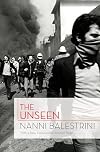
Once I had got in to the rhythm of the un-punctuated prose in this novel, I was drawn in and captivated by the lives of the young, idealistic comrades. I still want to change the world but this novel made me want to be a teenager again and believe that so much is possible. The novel has a strong awareness of the importance of the collective and the group and of discussion, debate and action.
The lack of punctuation gives the novel an energy and a speed that helps this feeling of things show more happening and social change.
The novel is a compelling read and a moving account of the struggle. I found it very emotional. show less
The lack of punctuation gives the novel an energy and a speed that helps this feeling of things show more happening and social change.
The novel is a compelling read and a moving account of the struggle. I found it very emotional. show less
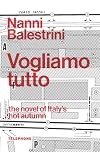
I picked this up from the New Books shelf at the library, I had no idea what I was getting into – it was a simple case of being attracted by its unusual cover and its Italian title. It turned out to be a kind of novelistic call-to-arms for economic reform, and it’s the first book of just two that have been issued by Melbourne micro publisher, Telephone Publishing. But it’s a book that made quite a splash: there is an enthusiastic review by Chris Deti at Readings and it was Cameron show more Woodhead’s Pick of the Week at the SMH. The reason for this turns out to be that Nanni Balestrini is an author of some considerable literary significance, and although the book is decades old (though only just translated into English) it is right now of political significance too.
All those people who think that Booker shortlistee Lincoln in the Bardo is innovative because it consists of a collage of historical sources, well, no, that technique was done before by Balestrini in this novel nearly half a century ago in 1971. In the foreword, Franco Berardi explains that Balestrini’s genius lies in the way he has dealt with the tensions between content and form within postwar Italian writing. His content depicts not individuals but rather social classes in turmoil, as manifested in this novel in protests on the streets of the city. What is unique, Berardi says, is that Balestrini combines this content with a form usually kept separate: his language and style keeps time with the rhythm of the industrial city of this period, and he achieves this by creating a collage from interviews with workers, from flyers and bulletins, and from minutes of workers’ meetings.
So much for George Saunders being ‘experimental’, eh? (And I said so in my review at Goodreads when I abandoned Lincoln in the Bardo, back in August, before ever I read Balestrini. I had, after all, read Nobel Prize winner Svetlana Alexievich, who also predates Saunders’ use of the technique in her ‘novels’.)
In Vogliamo Tutto, Balestrini’s technique comes in for a little bit of criticism at Goodreads, which is worth responding to, IMO. Amongst the enthusiasts for its political message (bear with me, I’m coming to that) a reader complains of repetition of the content, and it is certainly true that there is a great deal of repetition especially in the second part of the book, yes, to the point of tedium. But Berardi says that this repetition arises from the author’s deliberate process:
So, ok, what’s this book with its significant form about, and why is it so relevant now?
To read the rest of my review please visit https://anzlitlovers.com/2017/10/08/vogliamo-tutto-we-want-everything-by-nanni-b... show less
All those people who think that Booker shortlistee Lincoln in the Bardo is innovative because it consists of a collage of historical sources, well, no, that technique was done before by Balestrini in this novel nearly half a century ago in 1971. In the foreword, Franco Berardi explains that Balestrini’s genius lies in the way he has dealt with the tensions between content and form within postwar Italian writing. His content depicts not individuals but rather social classes in turmoil, as manifested in this novel in protests on the streets of the city. What is unique, Berardi says, is that Balestrini combines this content with a form usually kept separate: his language and style keeps time with the rhythm of the industrial city of this period, and he achieves this by creating a collage from interviews with workers, from flyers and bulletins, and from minutes of workers’ meetings.
Balestrini is the first poet who has never written a single word of his own, because for him words are material to recombine. The poet’s gesture consists in gathering words from the boundless verbal territory, in arranging their function, their rhythm and therefore their emotional power. (p.xiv)
So much for George Saunders being ‘experimental’, eh? (And I said so in my review at Goodreads when I abandoned Lincoln in the Bardo, back in August, before ever I read Balestrini. I had, after all, read Nobel Prize winner Svetlana Alexievich, who also predates Saunders’ use of the technique in her ‘novels’.)
In Vogliamo Tutto, Balestrini’s technique comes in for a little bit of criticism at Goodreads, which is worth responding to, IMO. Amongst the enthusiasts for its political message (bear with me, I’m coming to that) a reader complains of repetition of the content, and it is certainly true that there is a great deal of repetition especially in the second part of the book, yes, to the point of tedium. But Berardi says that this repetition arises from the author’s deliberate process:
…the rhythmic emotion that issues from the flux: surges, retreats, eddies, interruptions, jumps. Balestrini’s work is all concentrated on the rhythm. Words are nothing more than blocks of elemental material to collect directly from reality. (p.xiv)
So, ok, what’s this book with its significant form about, and why is it so relevant now?
To read the rest of my review please visit https://anzlitlovers.com/2017/10/08/vogliamo-tutto-we-want-everything-by-nanni-b... show less
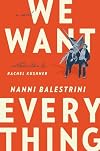
"All the stuff, all the wealth that we make is ours. Enough. We can’t stand it any more, we can’t just be stuff too, goods to be sold. Vogliamo tutto — We want everything. All the wealth, all the power, and no work. What does work mean to us. They’d had it up to here, they wanted to fight not because of work, not because the boss is bad, but because the boss and work exist."

One of my favorite books that remains tragically out of print.
A chronicle of revolt and defeat in late 1970's Italy (the joys of occupying a school and the challenges of feminism, the disaster of 'armed struggle' and the bitter isolation of prison), it is written without punctuation but remains compelling and readable.
Are there any other novels that capture this period of history?
A chronicle of revolt and defeat in late 1970's Italy (the joys of occupying a school and the challenges of feminism, the disaster of 'armed struggle' and the bitter isolation of prison), it is written without punctuation but remains compelling and readable.
Are there any other novels that capture this period of history?
Lists
Awards


You May Also Like


Associated Authors
Statistics
- Works
- 56
- Also by
- 1
- Members
- 737
- Popularity
- #34,455
- Rating
- 3.6
- Reviews
- 14
- ISBNs
- 93
- Languages
- 8