
Ignazio Silone (1900–1978)
Author of Bread and Wine
About the Author
Silone was 15 years old when an earthquake in his native Abruzzi killed his mother and five of his brothers. Before he was 20 he had established himself in Rome as editor of a socialist weekly. In 1921 he went off on the first of many trips to the Soviet Union and became a founding member of the show more Italian Communist party. Under fascism he hid at first, and then, in 1930, he fled to Switzerland, at which time, however, he also broke with the Communist party. The novels that made him world famous as an anti-Fascist were Fontamara (1930) and Bread and Wine, the latter first published in English in 1936 and then in 17 other languages as well as in Italian. Silone was virtually unknown in Italy until after World War II, by which time he had undergone a radical spiritual transformation that is explained in a very moving essay, "Emergency Exit," included in Richard Crossman's The God That Failed (1950). (Bowker Author Biography) show less
Disambiguation Notice:
(ita) Pseudonimo e poi, dagli anni 1960, anche nome legale di Secondino Tranquilli
Series
Works by Ignazio Silone
The Abruzzo Trilogy: Fontamara, Bread and Wine, The Seed Beneath the Snow (v. 1-3) (1931) 104 copies, 1 review
il pane di casa 9 copies
Il dio che è fallito - Sopra le teorie si può costruire una propaganda ma sopra i valori si può fondare un nuovo tipo convivenza tra gli uomini (2019) 2 copies
Living Thought of Giuseppe Mazzini 2 copies
LA ESCUELA DE LOS DICTADORES 2 copies
Simplicio-Letizia 2 copies
Mr. Aristotle 2 copies
The School for Dictators 1 copy
Bread and Wine, new version translated by Harvey Fergusson with a new preface by the author (1962) 1 copy
Leyndarmál Lúkasar 1 copy
L'école des dictateurs 1 copy
Sortie de secours 1 copy
Lukova skrivnost 1 copy
Il segreto di Luca romanzo 1 copy
Pensamiento vivo de Mazzini 1 copy
Prgišče robidnic 1 copy
පාන් සහ වයින් 1 copy
ෆොන්ටමාරා 1 copy
La volpe e le camelie 1 copy
نان و شراب 1 copy
Um punhado de amoras 1 copy
Simplicio 1 copy
חפן תותים : רומן 1 copy
The Travelers 1 copy
Associated Works
New World Writing: Third Mentor Selection - Poetry, Fiction, Drama, Criticism (1953) — Contributor — 8 copies
Tagged
Common Knowledge
- Legal name
- Tranquilli, Secondino
- Other names
- Pasquini
- Birthdate
- 1900-05-01
- Date of death
- 1978-08-22
- Gender
- male
- Occupations
- novelist
essayist
playwright
editor
short story writer
politician - Organizations
- American Academy of Arts and Letters (Foreign Honorary ∙ Literature ∙ 1950)
Italian Socialist Party
Italian Communist Party
Office of Strategic Services
Congress for Cultural Freedom
National Institute of Arts and Letters (show all 10)
PEN
Italian Pen Club (president)
Association for the Freedom of Italian Culture (chairman)
Avanti! (editor) - Awards and honors
- Jerusalem Prize (1969)
Prix mondial Cino Del Duca (1971) - Relationships
- Silone, Darina (wife)
- Short biography
- Ignazio Silone was the pen name of Secondino Tranquilli, who was born in the Abruzzo region of Italy and lost many family members, including his mother, in the 1915 Avezzano earthquake. Silone was a founding member of the Italian Communist Party in 1921, and became one of its clandestine leaders during Mussolini's Fascist regime. Silone was expelled from the party due to his opposition to Stalinism. He went to Switzerland for his health and began to write. His novels Fontamara, Bread and Wine and The Seed Beneath the Snow form the Abruzzo Trilogy. He returned to Italy in 1944 and edited a journal, Tempo Presente.
- Nationality
- Italy
- Birthplace
- Pescina, Italy
- Places of residence
- Geneva, Switzerland
- Place of death
- Geneva, Switzerland
- Associated Place (for map)
- Geneva, Switzerland
Members
Reviews

Silone is nothing if not a writer whose works state his beliefs plainly and directly. Luca has just been released after 40 years in prison because another man’s confession exonerates him. He returns home to his small village where he is unwelcome, despite the fact that his innocence was known at the time he was arrested. He encounters the son of his best friend and the man who was the town’s priest when he was arrested. The conversations between and among these characters comprise much show more of the “action” of the book. The remainder is given over to the story of the friend’s son, now an influential politician, who becomes determined to understand why Luca refused to defend himself. It’s a mystery whose unraveling comes in bits and pieces, allowing Silone to repeatedly preach his message Luca's very existence, exemplified by his arrest, imprisonment, and, above all, by his return, is a reminder that innocence is no more understood or rewarded today than it was in the time of Christ. Society is as subject to hypocrisy and greed as it was 2,000 years ago. Love is what redeems any of us and its power is the only true hope of mankind. Silone delivers these themes with little nuance. That said, Silone is a wonderful writer; his method, which might easily become boring and didactic in lesser hands, is entertaining as well as edifying. show less
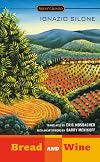
This for me was a 3.5 star read, but I'll round up to 4 Stars considering when it was written, 1936, a time when the events in the book were actually playing out in Mussolini’s Fascist Italy.
The principal character, Pietro Spina or Paulo Spada reflects Silone himself, rejecting Stalinist Communist Party dogma but embracing socialist idealism, criticizing the Church, uncomfortable at first in his ecclesiastic disguise, but eventually warming to it. Silone was an outspoken critic of show more fascism, but struggled with his own identity, as does his character. He recognized the danger of a revolutionary movement outgrowing the needs of the people it professed to serve and eventually becoming totalitarian itself, returning the masses to the servitude it strove to overthrow. Stalin’s dictatorship is no different from Mussolini’s, and the masses in either case become resigned to their fate; “But you can live in the most democratic country on earth, and if you're lazy, obtuse or servile within yourself, you're not free.” This in a way is Silone’s resignation to the eventual death of his socialist ideal; it cannot work without the support of the masses, who are apathetic, nor can it work as part of a broader political framework.
My impression on reading this in 2018 is unfortunately one of predictability and datedness. That said, it is well written, this reader enjoying the descriptions of simple cafoni lifestyle and customs, often comic, often sad. While the novel made quite an impression at the time, it’s not as timeless as Orwell, IMO. I may read [b:Fontamara|143250|Fontamara|Ignazio Silone|https://images.gr-assets.com/books/1172151497s/143250.jpg|2455413] at some point, but I’m not in a great rush to do so. show less
The principal character, Pietro Spina or Paulo Spada reflects Silone himself, rejecting Stalinist Communist Party dogma but embracing socialist idealism, criticizing the Church, uncomfortable at first in his ecclesiastic disguise, but eventually warming to it. Silone was an outspoken critic of show more fascism, but struggled with his own identity, as does his character. He recognized the danger of a revolutionary movement outgrowing the needs of the people it professed to serve and eventually becoming totalitarian itself, returning the masses to the servitude it strove to overthrow. Stalin’s dictatorship is no different from Mussolini’s, and the masses in either case become resigned to their fate; “But you can live in the most democratic country on earth, and if you're lazy, obtuse or servile within yourself, you're not free.” This in a way is Silone’s resignation to the eventual death of his socialist ideal; it cannot work without the support of the masses, who are apathetic, nor can it work as part of a broader political framework.
My impression on reading this in 2018 is unfortunately one of predictability and datedness. That said, it is well written, this reader enjoying the descriptions of simple cafoni lifestyle and customs, often comic, often sad. While the novel made quite an impression at the time, it’s not as timeless as Orwell, IMO. I may read [b:Fontamara|143250|Fontamara|Ignazio Silone|https://images.gr-assets.com/books/1172151497s/143250.jpg|2455413] at some point, but I’m not in a great rush to do so. show less

Powerful, enormously sad book about peasant life in southern Italy. As such, it reminded me of both Carlo Levi’s Christ Stopped at Eboli and Giovanni Verga’s House by the Medlar Tree. It’s different from those works in its unrelenting sadness and, in a way, its terrifying description of the life of the peasant farmers and their families. Corruption permeates society, the poor are ignored at best or trampled on by anyone and everyone else. Like all of Silone’s work, there is a show more constant underlying political theme but part of the success of the book, I think, is that he doesn’t overplay it. I can’t say I “enjoyed” the book but I’m glad I read it and would recommend it: it’s well worth the time. show less

«L'abitato sembra un gregge di pecore scure e il campanile un pastore».
E forse in queste note iniziali c'è tutto il destino estremamente terreno e nefasto di un popolo povero e cafone, destinato a essere sottomesso, senza che l'opportunità di un eroismo autentico e giusto - rappresentato da Berardo Viola, personaggio difficile da dimenticare - possa cambiare le cose. Scritto nel 1930, in esilio e malattia, è libro importantissimo dell'impegno antifascista e della letteratura italiana show more tutta. Lettura che dovrebbe essere proposta nei percorsi scolastici. show less
E forse in queste note iniziali c'è tutto il destino estremamente terreno e nefasto di un popolo povero e cafone, destinato a essere sottomesso, senza che l'opportunità di un eroismo autentico e giusto - rappresentato da Berardo Viola, personaggio difficile da dimenticare - possa cambiare le cose. Scritto nel 1930, in esilio e malattia, è libro importantissimo dell'impegno antifascista e della letteratura italiana show more tutta. Lettura che dovrebbe essere proposta nei percorsi scolastici. show less
Lists
Awards


You May Also Like


Associated Authors
Statistics
- Works
- 55
- Also by
- 12
- Members
- 3,027
- Popularity
- #8,437
- Rating
- 3.8
- Reviews
- 42
- ISBNs
- 171
- Languages
- 13
- Favorited
- 6
