
Wu Ming
Author of Q
About the Author
Disambiguation Notice:
also known as Luther Blissett
Image credit: Wu Ming Foundation
Works by Wu Ming
La Q di Qomplotto. QAnon e dintorni. Come le fantasie di complotto difendono il sistema (2021) 34 copies
Q comme Qomplot: Comment les fantasmes de complot défendent le système (French Edition) (2022) 2 copies
Q: Rönesans Dönemine Dair Son Zamanların En Etkileyici Tarihi Romanı. -The New Republic (2015) 1 copy
Green Apocalypse 1 copy
BLUE 1 copy
Vangelo nichilista 1 copy
The old new thing 1 copy
Tabloid Inferno 1 copy
Associated Works
I'm With the Bears: Short Stories from a Damaged Planet (2011) — Contributor — 105 copies, 4 reviews
The Homecoming of Beorhtnoth Beorhthelm's Son (1953) — Translator, some editions — 37 copies, 2 reviews
Tagged
Common Knowledge
- Canonical name
- Wu Ming
- Legal name
- Wu Ming Foundation
- Other names
- Blissett, Luther
- Birthdate
- 2000
- Gender
- n/a
- Relationships
- Bui, Roberto (Wu Ming 1)
Cattabriga, Giovanni (Wu Ming 2)
Di Meo, Luca (Wu Ming 3)
Guglielmi, Federico (Wu Ming 4)
Pedrini, Riccardo (Wu Ming 5) - Short biography
- Wu Ming (extended name: Wu Ming Foundation) is a pseudonym for a group of Italian authors formed in 2000 from a subset of the Luther Blissett community in Bologna.
- Nationality
- Italy
- Map Location
- Italy
- Disambiguation notice
- also known as Luther Blissett
Members
Reviews
There was no room for the past in America.
There is an irony in that statement, rhetorical as it might be. It is exactly the surfeit of room which allows so much of America to malinger and multiply, to prosper and fester in equal parts. This is an epic book but it is a soft 5 on the GR scale. This is a collection of silences, omissions and unplayed notes: it is a Kind of Blue for the Vollmann set.
They ran to save a clutch of souls from the Apocalypse. They ran, because it was written thus. show more Time was ending, and everything was reaching its conclusion.
(perhaps Sweet Reader one should fashion a list of the novelistic histories, the Seven or so Dreams of our Rabelaisian erudition)
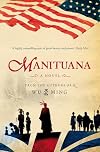
Wu Ming have collectively penned a tale of Destiny -- and Despair. It is the American War of Independence from the perspective of the Native Americans in league with the Loyalists. The novel was published originally in Italian in 2007 and it bears the acerbic awareness of those weary years of Mission Accomplished and the Dick Cheney Rule of International Law. There is even a minor character named Rumsfeld. It doesn't require explanation but this text weeps for loss, the narrative rests and rolls on those salty, muddy tears. Manituana shines when the focus shifts to London and an audience with (mad) King George. The narrative then returns to the New World and its manufacture of hope. There history is reaped in brazen prose. The only complaint is the dearth. This novel should have been twice its length. show less
There is an irony in that statement, rhetorical as it might be. It is exactly the surfeit of room which allows so much of America to malinger and multiply, to prosper and fester in equal parts. This is an epic book but it is a soft 5 on the GR scale. This is a collection of silences, omissions and unplayed notes: it is a Kind of Blue for the Vollmann set.
They ran to save a clutch of souls from the Apocalypse. They ran, because it was written thus. show more Time was ending, and everything was reaching its conclusion.
(perhaps Sweet Reader one should fashion a list of the novelistic histories, the Seven or so Dreams of our Rabelaisian erudition)
Wu Ming have collectively penned a tale of Destiny -- and Despair. It is the American War of Independence from the perspective of the Native Americans in league with the Loyalists. The novel was published originally in Italian in 2007 and it bears the acerbic awareness of those weary years of Mission Accomplished and the Dick Cheney Rule of International Law. There is even a minor character named Rumsfeld. It doesn't require explanation but this text weeps for loss, the narrative rests and rolls on those salty, muddy tears. Manituana shines when the focus shifts to London and an audience with (mad) King George. The narrative then returns to the New World and its manufacture of hope. There history is reaped in brazen prose. The only complaint is the dearth. This novel should have been twice its length. show less
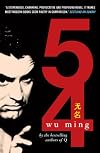
Spring, 1954. Stalin is dead, the cold war is starting to take the shape it would hold for a generation to come, Joe McCarthy is kicking commie ass and taking names, the French are in trouble in Indochina, and in the free territory of Trieste between Italy and Slovenia the big boys are trying to wrap up the last of the unresolved border disputes following WWII. Of course, to do this, it helps if they have Tito on their side. And so the MI6 call in Tito's favourite movie star to convince show more him... yes, it's Cary Grant, secret agent. Meanwhile, Lucky Luciano and his gang are setting up the world's heroin trade, a young Triestean is searching for his father who disappeared into Yugoslavia during the partisan years, a poor American TV set gets stolen and keeps changing owners, and a bunch of old Italians sit around at their local bar solving the world's problems over an espresso.
If this all sounds both confusing and insane, that's because it is... sorry, I meant to say, that's because it is the plot of a very ambitious 550-page novel condensed into a few sentences. Wu Ming, AKA Luther Blissett, the collective pseudonym of no less than five Italian writers, have managed something quite impressive here: it's a novel that almost manages to balance a... I mean several political thriller plots with a wild sense of humour, an underlying metaphor of the beginning US domination of the Western world both in terms of military and culture (if slightly hamfisted - there's an American TV set full of heroin, ferchrissakes, talk about your Trojan horse), a lament for/satire of the failure of democratic socialism in the post-fascist age, an attempt to sketch the outlines of a "post-war" half-century which would start with 20 years of war in Vietnam and end in Iraq and Afghanistan, plus a just all-around entertaining riff on spy and war novels. Basically, they're trying to write V, The Odyssey, Casino Royale, Underworld, Pereira Declares and The Godfather all at once. And have fun with all of them.
And the thing is, they almost manage to keep it together, anchor it just enough in reality and history to make even the more madcap parts believable. Obviously, it sprawls. With five writers working together, you have five people wanting their favourite bits in, so it gets overwritten; and with a bunch of storylines stretching out from Mexico to Dien Bien Phu and from Hollywood to Dubrovnik, with literally dozens of protagonists, they end up working just a little too hard to tie them all together. But damnit, it's flawed, but it works. For one thing, because they keep coming back to their characters and building the plot from them rather than the other way around. Even Cary Grant isn't in it as the movie star, he's in it as the struggling 50-year-old soon-to-be-has-been who's never reconciled himself with the working-class lad Archie Leach who wanted to be an actor, a living embodiment of both class, cultural and personal conflicts. You laugh at them, yes, but you smile with them and wince for them too. For another, it's so much fun that like political or philosophical ideals, it just makes you want to believe in it even when you know it's not practically feasible. In the end, of course, nothing here changes history in any big way (the last scene notwithstanding). Most of the time, individuals - even dozens of individuals working in separate storylines - don't change the world at large. Some of them die, some of them run away, some just stay at home and do their job, and the world marches on towards what we have today. But damnit, it's entertaining. It captures a world on the cusp of something, that wants to go in several different directions, but for reasons that become painfully clear end up going in a direction very few of them actually want to go. Takes out the warmth, leaves in the fire. show less
If this all sounds both confusing and insane, that's because it is... sorry, I meant to say, that's because it is the plot of a very ambitious 550-page novel condensed into a few sentences. Wu Ming, AKA Luther Blissett, the collective pseudonym of no less than five Italian writers, have managed something quite impressive here: it's a novel that almost manages to balance a... I mean several political thriller plots with a wild sense of humour, an underlying metaphor of the beginning US domination of the Western world both in terms of military and culture (if slightly hamfisted - there's an American TV set full of heroin, ferchrissakes, talk about your Trojan horse), a lament for/satire of the failure of democratic socialism in the post-fascist age, an attempt to sketch the outlines of a "post-war" half-century which would start with 20 years of war in Vietnam and end in Iraq and Afghanistan, plus a just all-around entertaining riff on spy and war novels. Basically, they're trying to write V, The Odyssey, Casino Royale, Underworld, Pereira Declares and The Godfather all at once. And have fun with all of them.
And the thing is, they almost manage to keep it together, anchor it just enough in reality and history to make even the more madcap parts believable. Obviously, it sprawls. With five writers working together, you have five people wanting their favourite bits in, so it gets overwritten; and with a bunch of storylines stretching out from Mexico to Dien Bien Phu and from Hollywood to Dubrovnik, with literally dozens of protagonists, they end up working just a little too hard to tie them all together. But damnit, it's flawed, but it works. For one thing, because they keep coming back to their characters and building the plot from them rather than the other way around. Even Cary Grant isn't in it as the movie star, he's in it as the struggling 50-year-old soon-to-be-has-been who's never reconciled himself with the working-class lad Archie Leach who wanted to be an actor, a living embodiment of both class, cultural and personal conflicts. You laugh at them, yes, but you smile with them and wince for them too. For another, it's so much fun that like political or philosophical ideals, it just makes you want to believe in it even when you know it's not practically feasible. In the end, of course, nothing here changes history in any big way (the last scene notwithstanding). Most of the time, individuals - even dozens of individuals working in separate storylines - don't change the world at large. Some of them die, some of them run away, some just stay at home and do their job, and the world marches on towards what we have today. But damnit, it's entertaining. It captures a world on the cusp of something, that wants to go in several different directions, but for reasons that become painfully clear end up going in a direction very few of them actually want to go. Takes out the warmth, leaves in the fire. show less
I smile. No plan can take everything into account. Other people will raise their heads, others will desert. Time will go on spreading victory and defeat among those who pursue struggle.
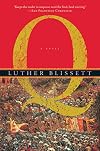
There is a scene in Alan Bennett's History Boys where the instructor tells his students, if you want to know about Stalin you should study Henry VIII. I felt similar illustrations throughout this sprawling epic. Recurring tensions and responses proliferate through history. Well over a month was spent with Q, a show more month occupied otherwise by the World Cup and numerous intrigues into the depths of Derrida and Foucault. The baggy novel concerns millenarianism but in the befogged era of the religious wars and the Reformation. Street Fighting Men battle princes and papal guards, while revolutions orange and velvet give way to failed Springs and betrayed Thaws. The narrative as such concerns two men, equally unknown with protean noms-de-guerre: they act observe and operate for the opposing forces in this weird rethink of early modernity.
Luther Blissett is the pseudonym for four politically radical Italian novelists who will later in another incarnation be known as Wu Ming. This creative endeavor finds its historical subject in a most messy marriage, one that gleams even as it oozes. show less
There is a scene in Alan Bennett's History Boys where the instructor tells his students, if you want to know about Stalin you should study Henry VIII. I felt similar illustrations throughout this sprawling epic. Recurring tensions and responses proliferate through history. Well over a month was spent with Q, a show more month occupied otherwise by the World Cup and numerous intrigues into the depths of Derrida and Foucault. The baggy novel concerns millenarianism but in the befogged era of the religious wars and the Reformation. Street Fighting Men battle princes and papal guards, while revolutions orange and velvet give way to failed Springs and betrayed Thaws. The narrative as such concerns two men, equally unknown with protean noms-de-guerre: they act observe and operate for the opposing forces in this weird rethink of early modernity.
Luther Blissett is the pseudonym for four politically radical Italian novelists who will later in another incarnation be known as Wu Ming. This creative endeavor finds its historical subject in a most messy marriage, one that gleams even as it oozes. show less
Perfect Day
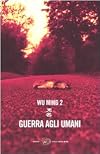
"Perfect Day" è il titolo del secondo capitolo del libro. Ma sono anche due parole permeate di sottile ed amara ironia. Ed anche il titolo di una nota canzone di Lou Reed. Frullare il tutto e leggere. Un concentrato di assoluta (salvifica) disperazione. Si sta male, ma ci si può anche inventare un'alternativa... forse... Verso la fine perde un pò di verve. Ma il concentrato del "Perfect Day" vale comunque tutto il libro.
"Perfect Day" è il titolo del secondo capitolo del libro. Ma sono anche due parole permeate di sottile ed amara ironia. Ed anche il titolo di una nota canzone di Lou Reed. Frullare il tutto e leggere. Un concentrato di assoluta (salvifica) disperazione. Si sta male, ma ci si può anche inventare un'alternativa... forse... Verso la fine perde un pò di verve. Ma il concentrato del "Perfect Day" vale comunque tutto il libro.
Lists
Awards


You May Also Like


Associated Authors
Statistics
- Works
- 88
- Also by
- 5
- Members
- 4,532
- Popularity
- #5,539
- Rating
- 3.8
- Reviews
- 115
- ISBNs
- 197
- Languages
- 16
- Favorited
- 13
