
Ismaïl Kadaré (1936–2024)
Author of Broken April
About the Author
Ismail Kadare is the most prominent of contemporary Albanian writers. He has written poetry, short stories, literary criticism, and seven novels. His works have been translated and published in more than two dozen countries. An internationally known figure, he has visited and lectured in many show more countries. He was also a representative to Albania's People's Assembly. In 1990 Kadare left Albania for Paris where he became openly dissident. (Bowker Author Biography) show less
Image credit: wikimedia commons
Series
Works by Ismaïl Kadaré
Onenigheid aan de top een mysterieus telefoongesprek tussen Stalin en Pasternak (2022) 30 copies, 3 reviews
L'Année noire, suivi de "Le cortège dans la noce s'est figé dans la glace" (1987) 8 copies, 2 reviews
Dante, l'incontournable, ou brève histoire de l'Albanie avec Dante Alighieri : essai (2006) — Author — 6 copies
Mauvaise saison sur l'Olympe: tragédie de Prométhée et d'un groupe de divinités en quatorze tableaux (1998) 2 copies
Kadaré Ismail 1 copy
Mengjeset ne kafe Rostand 1 copy
El ocaso de los dioses 1 copy
KRISTAL 1 copy
Um jantar a mais 1 copy
Cetatea 1 copy
ËNDËRR MASHTRUESE 1 copy
KËSHTJELLA 1 copy
La menace du soleil 1 copy
Vjedhja e gjumit mbreteror 1 copy
Stinë e mërzitshme në Olymp : tragjedia e Prometheut dhe e një grupi hyjnish në 14 dukje (2002) 1 copy
IKJA E SHTERGUT 1 copy
2002 1 copy
La Bambola 1 copy
Breznitë e Hankonatëve 1 copy
Ëndërrime 1 copy
On the Lay of the Knights 1 copy
Coffeehouse Days. 1 copy
MJEGULLAT E TIRANES 1 copy
BISEDE PERMES HEKURAVE 1 copy
KALORESI LAKURIQ 1 copy
KOHE BARBARE 1 copy
Concert La Sfarsit De Iarna 1 copy
Vepra Poetike 1 copy
Umbra 1 copy
ŞENLİK KURULU 1 copy
Associated Works
Description of a Struggle: The Vintage Book of Contemporary Eastern European Writing (1994) — Contributor — 79 copies, 1 review
Tagged
Common Knowledge
- Canonical name
- Kadaré, Ismaïl
- Legal name
- Kadaré, Ismaïl
- Birthdate
- 1936-01-28
- Date of death
- 2024-07-01
- Gender
- male
- Education
- University of Tirane (Languages and Literature)
Gorky Institute of World Literature (Moscow) - Occupations
- novelist
poet
journalist
Member of Parliament - Awards and honors
- Prince of Asturias Prize (2009)
Ovid Prize (2003)
Académie des sciences morales et politiques (1996)
The Order of Legion of Honour (2016)
Jerusalem Prize (2015) - Agent
- Bujar Hudhri (editor)
- Relationships
- Kadare, Helena (wife)
- Short biography
- In the fall of 1990 Ismail Kadare left Albania in a gesture of protest against the actions and policies of the Albanian government and was granted asylum in France.
- Cause of death
- heart attack
- Nationality
- Albania
- Birthplace
- Gjirokastër, Albania
- Places of residence
- Gjirokastër, Albania (birth)
Paris, France - Place of death
- Tirana, Albania
- Associated Place (for map)
- Albania
Members
Discussions
March 2026: Ismail Kadare in Monthly Author Reads (April 2)
Reviews

Kadare looks into the strange world of the High Plateau in the north of Albania, described by one of his characters as the only place which, while being part of a modern European state, has rejected the idea of a modern legal system and adopted a quasi-feudal code, the Kanun, which regulates every aspect of life, but whose most distinctive and destructive component is the blood-feud.
The story, set at some unspecified moment in the 20th century, probably around the 1920s, follows a man show more called Gjorg, who has just, reluctantly, performed the killing that is required of him by custom. He now has an agreed truce-period of thirty days before the designated member of the dead man's family will be allowed to shoot him in turn. Crossing Gjorg's path during this time are a writer from the big city, honeymooning in the "romantic" mountains with his new wife; an expert on Kanun-law, the judge Ali Binak, who travels the country settling disputes; and the Steward of the Blood, the man who is responsible for collecting the murder-tax that is the main source of income of the ruling prince of the region. Each gives us a slightly different perspective on the craziness of the system where feuds can never end until all the men of one or other of the contending families are wiped out, and on the people who have an interest in keeping this system alive.
Concise, clear-sighted, and very strange. show less
The story, set at some unspecified moment in the 20th century, probably around the 1920s, follows a man show more called Gjorg, who has just, reluctantly, performed the killing that is required of him by custom. He now has an agreed truce-period of thirty days before the designated member of the dead man's family will be allowed to shoot him in turn. Crossing Gjorg's path during this time are a writer from the big city, honeymooning in the "romantic" mountains with his new wife; an expert on Kanun-law, the judge Ali Binak, who travels the country settling disputes; and the Steward of the Blood, the man who is responsible for collecting the murder-tax that is the main source of income of the ruling prince of the region. Each gives us a slightly different perspective on the craziness of the system where feuds can never end until all the men of one or other of the contending families are wiped out, and on the people who have an interest in keeping this system alive.
Concise, clear-sighted, and very strange. show less
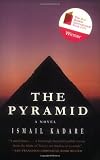
This work is unusual in that it takes place in ancient Egypt, though a reader would have to be exceptionally dull to miss the book-length metaphor—a sharp and penetrating indictment of despotism. The story itself is simple: Cheops has to be convinced to order the creation of a pyramid in his honor and memory. His advisors do so by explaining that only by oppressing his otherwise increasingly contented people can he effectively maintain power: only by making the people miserable can they be show more truly content. Much of the book is given over to a recounting of each day’s progress in the pyramid’s construction and its cost in human lives. The book is a meditation on the paranoia of absolute power. show less
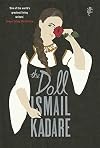
An autobiographical novel, in which Kadare re-imagines his mother - "the Doll"- entering the vast family home in Gjirokastra as a new bride ("this house is eating me up!) Through scenes with others, we glean something of his mother's personality; moments of pride and independence gradually quashed in a glacial home:
"After the first defeats of the Doll's army, as I liked to think of her resources in this battle - flowers, music, gypsies and all the rest - she called upon her secret weapon, show more her last hope: the superiority that came from her wealth. But this too was defeated."
And as her son becomes a successful writer, moving in realms far beyond the comprehension of his mother, we see her frantic efforts to keep a part of him, as he moves on, choosing his own wife and leaving her behind. (This bit so resonated, as a mother of adult sons "yeah, Mum, whatever!" with a smile and roll of the eyes.)
The family move to an apartment in Tirana. I was struck by a description of a journey to fetch the furniture:
"At the Kelcyra Gorge, the copper baklava tray fell out. As I dozed, I heard it clang as it fell into the ravine...In my groggy state, it seems as if I thought that old tray, so loyal to the house, did not want to enter service outside it, and had decided it was better to hurl itself into an abyss than be used in this way."
This won't, I think, leave the lasting impression of Kadare's novels - Broken April and The Traitor's Niche are pretty powerful reads- yet conveys a sense of a family and a place and time. show less
"After the first defeats of the Doll's army, as I liked to think of her resources in this battle - flowers, music, gypsies and all the rest - she called upon her secret weapon, show more her last hope: the superiority that came from her wealth. But this too was defeated."
And as her son becomes a successful writer, moving in realms far beyond the comprehension of his mother, we see her frantic efforts to keep a part of him, as he moves on, choosing his own wife and leaving her behind. (This bit so resonated, as a mother of adult sons "yeah, Mum, whatever!" with a smile and roll of the eyes.)
The family move to an apartment in Tirana. I was struck by a description of a journey to fetch the furniture:
"At the Kelcyra Gorge, the copper baklava tray fell out. As I dozed, I heard it clang as it fell into the ravine...In my groggy state, it seems as if I thought that old tray, so loyal to the house, did not want to enter service outside it, and had decided it was better to hurl itself into an abyss than be used in this way."
This won't, I think, leave the lasting impression of Kadare's novels - Broken April and The Traitor's Niche are pretty powerful reads- yet conveys a sense of a family and a place and time. show less
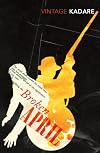
'Broken April' is a short novel examining the Kanun, a set of traditional laws that dominate life in the Albanian mountains. They codify nearly all interpersonal behaviour, including the pretexts for and progression of blood feuds. I've no idea to what extent Kadare fictionalised a set of laws that genuinely existed, but the consequences of the Kanun as depicted are blood-curdling. The narrative gives the perspectives of several characters, whose lives intersect only briefly. The first is show more Gjorg, a man embroiled in a blood feud which started due to no action of his family and has already claimed 44 lives when the book begins. After murdering the man who killed his brother, Gjorg travels to pay the blood tax. He views the Kanun as one trapped by its most brutal dictates and unable to break free. The next perspectives are external, from a couple who have travelled into the mountains for their honeymoon. Both have read about the Kanun, but not seen it in practise before. Despite their social distance from what they observe, both are more moved by practical reality of blood feuds than they can articulate to themselves, let alone each other. The briefest perspective, yet for me the most memorable, is that of Mark Ukacierra, steward of the blood. His role reminded me very much of [b:The Gormenghast Novels|39058|The Gormenghast Novels (Gormenghast, #1-3)|Mervyn Peake|https://i.gr-assets.com/images/S/compressed.photo.goodreads.com/books/1362402890l/39058._SX50_.jpg|38776]. He collects the blood tax and worries that murders and thus revenue have declined. While he attempts to repress awareness of the appalling inhumanity of his job, this emerges via symptoms of physical illness.
The plot of the novel is slender, although it is bookended by violent deaths. There are no twists or surprises, as the Kanun renders events inexorable. Kadare explores with great delicacy how an ostensibly horrific legal system can be understood and upheld. Here, the newly married couple discuss guesthood:
And the steward of the blood contemplating his work:
This is a bleak, haunting, and beautifully written novel. It read to me as a fable, but could be closer to historical fiction than I'd like to think. show less
The plot of the novel is slender, although it is bookended by violent deaths. There are no twists or surprises, as the Kanun renders events inexorable. Kadare explores with great delicacy how an ostensibly horrific legal system can be understood and upheld. Here, the newly married couple discuss guesthood:
"A guest is really a demi-god," he went on after a while, "and the fact that any one at all can suddenly become a guest does not diminish but rather accentuates his divine character. The fact that this divinity is acquired suddenly, in a single night simply by knocking at a door, makes it even more authentic. The moment a humble wayfarer, his pack on his shoulder, knocks at your door and gives himself up to you as your guest, he is instantly transformed into an extraordinary being, an inviolable sovereign, a law-maker, the light of the world. And the suddenness of the transformation is absolutely characteristic of the nature of the divine. Did not the gods of the ancient Greeks make their appearance suddenly and in the most unpredictable manner? That is just the way the guest appears at an Albanian's door. Like the gods he is an enigma, and he comes directly from the realms of destiny or fate - call it what you will. A knock at the door can bring about the survival or extinction of whole generations. That is what the guest is to the Albanians of the mountains."
"But that's terrible," she said.
He pretended not to have heard her and simply smiled, but with the cold smile of someone who intends to skirt what might well be the real subject of discussion.
And the steward of the blood contemplating his work:
At times, Mark had thought of mad things that he dare not confess to anyone. Oh, if only the women as well as the men were subject to the rules of blood-letting. Then he was ashamed, even terrified - but that seldom happened, only sometimes at the end of the month or quarter, when he felt despondent because of the figures in the ledger. Weary as he was, he would try to put those ideas from him, but his mind could find no respite and he went back to them. But this time, in going back to them, it was not to blaspheme the Kanun but simply to give vent to his astonishment. He thought it very strange that weddings, which were usually occasions for joy, often brought about quarrels which led to feuding, while funerals, which were necessarily sad, never led to anything of the kind. That led him to compare the ancient blood-feuds with those of recent times. On both sides of the comparison, there was both good and bad.
This is a bleak, haunting, and beautifully written novel. It read to me as a fable, but could be closer to historical fiction than I'd like to think. show less
Lists
The Trojan War (1)
A Novel Cure (1)
Five star books (1)
Reading Globally (1)
THE WAR ROOM (1)
Schwob Nederland (1)
Evan's Wish List (1)
Awards


You May Also Like


Associated Authors
Statistics
- Works
- 178
- Also by
- 6
- Members
- 7,835
- Popularity
- #3,106
- Rating
- 3.7
- Reviews
- 310
- ISBNs
- 784
- Languages
- 30
- Favorited
- 32