
Ahmed Saadawi
Author of Frankenstein in Baghdad
About the Author
Works by Ahmed Saadawi
Associated Works
Tagged
Common Knowledge
- Other names
- Saʿdāwī, Aḥmad
أحمد سعداوي - Birthdate
- 1973
- Gender
- male
- Occupations
- novelist
poet
screenwriter
documentary film maker - Awards and honors
- International Prize for Arabic Fiction (2014)
Grand Prix de l'Imaginaire (2017) - Nationality
- Iraq
- Birthplace
- Baghdad, Iraq
- Places of residence
- Baghdad, Iraq
- Associated Place (for map)
- Baghdad, Iraq
Members
Reviews
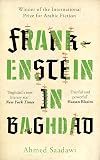
Baghdad, a city torn apart by conflict, where car bombs sow death on a numbingly regular basis. Baghdad, a city where the balance between different cultures and faiths, delicate at the best of times, is jeopardised by covert lobbies and political pressure groups. Baghdad, a city whose sons and daughters are sacrificed – lost or dead in wars, or emigrants in foreign countries, lured by the promise of peace.
These daily horrors are transformed by Ahmed Saadawi into a contemporary Gothic show more novel, in which the violence which stalks the streets of Baghdad is personified in the figure of the monstrous “Whatsisname”. Pieced together by Hadi the Junk Dealer from body parts of car bomb victims, the Whatsisname is animated by the soul of Hasib Mohamed Jaafar, a hotel guard killed in a terrorist attack. The spark which joins body and soul is the constant prayer of old Elishva, who has not yet lost hope of the return of her son Daniel, lost decades before in the Iran-Iraq War. The “Whatsitsname” embarks on a mission of righteous revenge against criminals, only to become himself (itself?) drawn into a vicious cycle of violence.
Frankenstein in Baghdad won its author the International Prize for Arabic Fiction in 2014 and is now available in a brilliant English translation by Jonathan Wright. It was suggested to me by my Goodreads friend Alan as a work of “Iraqi Gothic”. And “Gothic” it certainly is. After all, it features a monster nicknamed by the Baghdadi newspapers as “Frankenstein”, it contains brief but stomach-churning passages of body horror and it recycles and adapts several tropes of the genre. The ruins of old are replaced by bombed-out buildings, the cemeteries substituted by the tragic scenes following the umpteenth terrorist attack. There is also more than a nod to the Gothic in the fragmented narrative and the recurring theme of mistaken identities. Thus, the book opens with a “Final Report” about the shadowy “Tracking and Pursuit Department” which casts doubt on the veracity of the whole story as presented to us. Part of the novel is a transcript of an interview recorded by the monster himself or, possibly, an impostor posing as him. Throughout, there is a sense that “nothing is but what is not”.
Yet, particularly in its initial chapters, what the novel reminded me of were not the classics of the Gothic but, rather, the works of Mikhail Bulgakov. In fact, as in Bulgakov, the fantastical elements often have a whimsical, surreal, fairy-tale tinge quite unlike traditional “supernatural” fiction – saints speak from icons, astrologers assist the army, the souls of the dead meet for chats. There is also a strong streak of dark humour and satire which sometimes had me laughing aloud. Admittedly, the novel becomes increasingly grim as it progresses and the final scene is poignant, bleak and very effective.
It was recently announced that the novel would be turned into a film. I certainly look forward to that. This unusual and striking novel certainly deserves to be well-known. show less
These daily horrors are transformed by Ahmed Saadawi into a contemporary Gothic show more novel, in which the violence which stalks the streets of Baghdad is personified in the figure of the monstrous “Whatsisname”. Pieced together by Hadi the Junk Dealer from body parts of car bomb victims, the Whatsisname is animated by the soul of Hasib Mohamed Jaafar, a hotel guard killed in a terrorist attack. The spark which joins body and soul is the constant prayer of old Elishva, who has not yet lost hope of the return of her son Daniel, lost decades before in the Iran-Iraq War. The “Whatsitsname” embarks on a mission of righteous revenge against criminals, only to become himself (itself?) drawn into a vicious cycle of violence.
Frankenstein in Baghdad won its author the International Prize for Arabic Fiction in 2014 and is now available in a brilliant English translation by Jonathan Wright. It was suggested to me by my Goodreads friend Alan as a work of “Iraqi Gothic”. And “Gothic” it certainly is. After all, it features a monster nicknamed by the Baghdadi newspapers as “Frankenstein”, it contains brief but stomach-churning passages of body horror and it recycles and adapts several tropes of the genre. The ruins of old are replaced by bombed-out buildings, the cemeteries substituted by the tragic scenes following the umpteenth terrorist attack. There is also more than a nod to the Gothic in the fragmented narrative and the recurring theme of mistaken identities. Thus, the book opens with a “Final Report” about the shadowy “Tracking and Pursuit Department” which casts doubt on the veracity of the whole story as presented to us. Part of the novel is a transcript of an interview recorded by the monster himself or, possibly, an impostor posing as him. Throughout, there is a sense that “nothing is but what is not”.
Yet, particularly in its initial chapters, what the novel reminded me of were not the classics of the Gothic but, rather, the works of Mikhail Bulgakov. In fact, as in Bulgakov, the fantastical elements often have a whimsical, surreal, fairy-tale tinge quite unlike traditional “supernatural” fiction – saints speak from icons, astrologers assist the army, the souls of the dead meet for chats. There is also a strong streak of dark humour and satire which sometimes had me laughing aloud. Admittedly, the novel becomes increasingly grim as it progresses and the final scene is poignant, bleak and very effective.
It was recently announced that the novel would be turned into a film. I certainly look forward to that. This unusual and striking novel certainly deserves to be well-known. show less

Hadi is a Junk Dealer in US-occupied Baghdad in early 2000s (we get a dateline from the first chapter but I will get to it in a bit). His job is to buy (or find) things people do not want and sell them to people who do. And while he deals with people's junk, he realizes that human parts are treated as trash - the violence of the street often ends up with human parts all over the place and these are just swept with the rest of the trash. So he decides to start collecting them, making complete show more people out of it and then selling (or giving away) the resulting complete corpse to the hospitals - so they can be properly buried.
He lives in part of the city where you can see everything that the country has to offer - the madwoman Elishva, a Christian widow who lost her son in one of the wars earlier, a coffee shop on the corner, a hotel owner, trying and failing to keep his business afloat, a real estate dealer who seems to be the only one who actually is doing well (how honestly he does that is a different story). But because he is always on the road (his business requires it), he manages to be everywhere else - including close to the US embassy. Add to that a young journalist with his own dark history and his boss (who seems to have his own agenda) and the very driven lead of the Tracking and Pursuit Department. Which brings us back to the beginning of the novel and how the whole book is presented - it starts with a final secret report which orders for the author and the book to be essentially disappeared.
With this opening and the cast of characters, the book would have had enough going. But then there is Whatitsname. Remember the body parts that Hadi was collecting? By some chance, at the moment when the body is complete, a young man dies and his soul ends up in the new body. And Whatitsname is born - and he needs to avenge the death of everyone who had become a part of him. Except that dead parts don't survive long so he needs to repair himself, adding more parts... adding more revenge. And the department responsible for tracking him is the Tracking and Pursuit Department - the guys who deal with the unusual.
The realism of the story of Baghdad at the time merges with the Whatitsname's story to give the whole novel a Gothic feeling with an Eastern flavor. There are two different stories - one rooted into reality and that could have been and one in the speculative realm which if you squint can be dismissed as hallucinations I guess (leaving this as a realistic novel and finding a way to make the fantastical elements as metaphors) but that will be a disservice to the novel. It weaves the two together on purpose and makes them a whole without throwing the story out from reality. And somewhere in there, while Whatitsname starts finding his own humanity, other characters lose theirs (or show that they never had it). At some points Whatitsname is the most humane of all characters in a chapter and that gives you a pause. The title is not random - and not just on the surface.
The story was never going to be a happy one - there are way too many broken people and the constant violence in Iraq does not help much. That beginning already tells you that the powers that be will manage to suppress the knowledge of Whatitsname. But we still get to see the collapsed society and the wounded pride of an old city.
How much one wants to read that as an allegory is up to the reader. It is easy to find parallels if you want to - and even if you do not, the story makes you stop and think more often than not. It has a Scheherazade's quality to it, even in the story of Whatitsname - the same way how she always needs to keep telling stories to live, Whatitsname needs to keep revenging and adding new pieces so he can live. Strip that story and you still have a portrait of a city and its people - at a time where being good is almost dangerous and trust will cause you issues.
It is not an easy novel and it can be disorienting in places - it can feel like it is going on and on in places where you want it to speed and then it speeds through a part where you want it to linger. And yet, I dare you to not finish it (if you do not leave it after the first pages - the style can take somewhat of a getting used to and the initial chapters are almost mundane). Enjoying it is probably not the word I would use for it - the novel is bleak and foreboding. But I would recommend it to anyone who reads cross-genres - I suspect that it won't work very well for people that read only speculative fiction or just realistic one - the mix of them is what makes the novel and what makes it stay in your mind of a long time after you finish it. show less
He lives in part of the city where you can see everything that the country has to offer - the madwoman Elishva, a Christian widow who lost her son in one of the wars earlier, a coffee shop on the corner, a hotel owner, trying and failing to keep his business afloat, a real estate dealer who seems to be the only one who actually is doing well (how honestly he does that is a different story). But because he is always on the road (his business requires it), he manages to be everywhere else - including close to the US embassy. Add to that a young journalist with his own dark history and his boss (who seems to have his own agenda) and the very driven lead of the Tracking and Pursuit Department. Which brings us back to the beginning of the novel and how the whole book is presented - it starts with a final secret report which orders for the author and the book to be essentially disappeared.
With this opening and the cast of characters, the book would have had enough going. But then there is Whatitsname. Remember the body parts that Hadi was collecting? By some chance, at the moment when the body is complete, a young man dies and his soul ends up in the new body. And Whatitsname is born - and he needs to avenge the death of everyone who had become a part of him. Except that dead parts don't survive long so he needs to repair himself, adding more parts... adding more revenge. And the department responsible for tracking him is the Tracking and Pursuit Department - the guys who deal with the unusual.
The realism of the story of Baghdad at the time merges with the Whatitsname's story to give the whole novel a Gothic feeling with an Eastern flavor. There are two different stories - one rooted into reality and that could have been and one in the speculative realm which if you squint can be dismissed as hallucinations I guess (leaving this as a realistic novel and finding a way to make the fantastical elements as metaphors) but that will be a disservice to the novel. It weaves the two together on purpose and makes them a whole without throwing the story out from reality. And somewhere in there, while Whatitsname starts finding his own humanity, other characters lose theirs (or show that they never had it). At some points Whatitsname is the most humane of all characters in a chapter and that gives you a pause. The title is not random - and not just on the surface.
The story was never going to be a happy one - there are way too many broken people and the constant violence in Iraq does not help much. That beginning already tells you that the powers that be will manage to suppress the knowledge of Whatitsname. But we still get to see the collapsed society and the wounded pride of an old city.
How much one wants to read that as an allegory is up to the reader. It is easy to find parallels if you want to - and even if you do not, the story makes you stop and think more often than not. It has a Scheherazade's quality to it, even in the story of Whatitsname - the same way how she always needs to keep telling stories to live, Whatitsname needs to keep revenging and adding new pieces so he can live. Strip that story and you still have a portrait of a city and its people - at a time where being good is almost dangerous and trust will cause you issues.
It is not an easy novel and it can be disorienting in places - it can feel like it is going on and on in places where you want it to speed and then it speeds through a part where you want it to linger. And yet, I dare you to not finish it (if you do not leave it after the first pages - the style can take somewhat of a getting used to and the initial chapters are almost mundane). Enjoying it is probably not the word I would use for it - the novel is bleak and foreboding. But I would recommend it to anyone who reads cross-genres - I suspect that it won't work very well for people that read only speculative fiction or just realistic one - the mix of them is what makes the novel and what makes it stay in your mind of a long time after you finish it. show less
This was a really powerful read, set in Baghdad during the American occupation. A second hand trader and storyteller can't cope with the loss of his friend and makes a monster from the remnants of victims of bombs. Brought to life by the combination of a mother's love and magicians working for the government (!), Saadawi uses the monster to tell stories about uncontrollable violence, colonialism and extremism. In a small neighbourhood with Christian, Jewish as well as Muslim histories, the show more collapse of the city is shown in terms of personal consequences, from the daughters phoning their elderly mother every Sunday to beg her to leave, to the estate agent "persuading" emigrants to expand his property empire. Alongside this is rumour, increasingly crazy but as the death toll rises, increasingly difficult to discount: including a monster who is stalking the streets, committing unknowable, escalating acts of violence with no apparent purpose. show less
Stunning, again. First, this is such a fresh, inventive premise, and the author pulls it off - it's not tacked on to the story, nor does it limit the story-telling. Second, as a narrative it's dynamic, there's action and events to create a good flow, the kind where you suddenly realize you've been reading for hours. And third, there is real depth here, thematically and ethically. Beautiful portraits of a city and neighborhood, individuals, and great questions of what ongoing violence can do show more to the soul of all three. show less
Lists
Diverse Horror (1)
Awards


You May Also Like


Associated Authors
Statistics
- Works
- 4
- Also by
- 2
- Members
- 1,051
- Popularity
- #24,523
- Rating
- 3.5
- Reviews
- 39
- ISBNs
- 24
- Languages
- 8