
Frederic Raphael
Author of List of Books
About the Author
Frederic Raphael has written twenty novels, as well as many story collections, biographies, screenplays, and translations from ancient Greek and Latin.
Image credit: Photograph: Rex Features
Series
Works by Frederic Raphael
Associated Works
The Oresteia: Agamemnon, Women at the Graveside, Orestes in Athens (0458) — Translator, some editions — 11,671 copies, 87 reviews
Literary Genius: 25 Classic Writers Who Define English & American Literature (2007) — Contributor — 96 copies, 2 reviews
Great Tours and Detours: The Sophisticated Traveler Series (1985) — Contributor — 35 copies, 1 review
The Serpent Son: Aeschylus: Oresteia (Translations from Greek and Roman Authors) (1979) — Translator, some editions — 10 copies
Tagged
Common Knowledge
- Canonical name
- Raphael, Frederic
- Legal name
- Raphael, Frederic Michael
- Birthdate
- 1931-08-14
- Gender
- male
- Education
- St John's College, University of Cambridge (MA|1954)
Charterhouse School
Copthorne Preparatory School - Occupations
- novelist
journalist
screenwriter - Awards and honors
- Royal Society of Literature (Fellow, 1964)
Academy Award (Best Original Screenplay, 1966) - Agent
- Deborah Rogers (Coleridge-White)
- Relationships
- Raphael, Sarah (daughter)
- Nationality
- USA (birth)
UK (residence) - Birthplace
- Chicago, Illinois, USA
- Places of residence
- Chicago, Illinois, USA
Putney, London, England, UK - Associated Place (for map)
- Putney, London, England, UK
Members
Reviews
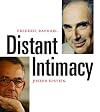
The dust jacket for the hardcover edition of this book (unusually reasonable at $20.29 from Amazon)begins by describing it as a "delightful book of writer-to-writer correspondence ...transacted via the Internet." It closes by saying that "Epstein and Raphael ...invite us into an intimate world where literature, cinema and art are keys to self-discovery and friendship." What it fails to mention--and it's surely intentional because it's impossible to avoid--is the tenor of the show more "correspondence." In an age where "judgmental" is pejorative, these very literate and successful men judge everyone, and many of their critiques are, shall we say, unkind. It's a sort of two-man cafe table at the Algonquin Hotel. Highly entertaining, but not for the faint of heart. show less
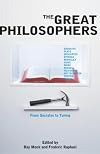
The strength of this book lies equally in its brevity and its authorship. Only a truly informed lover of Russell such as Monk could achieve so concise and elucidatory a review. What's more, by situating Russell's life's work in his early childhood traumas, one gleans so much more than just a clear and accessible panoramic overview of the evolution in his thinking, itself an incredible achievement for subject matter so heavy, but one also appreciates the personal mission in Russell's life's show more work to prove the existence of absolute truth. In this way, [spoiler alert] when one reaches the end of these 58 printed pages, one is able thus to interpret its ending not as a failure of mission but as transcendence. So Russell renounces the search for absolute truth, and in this way, finally is able to accept, integrate and overcome the great loss and uncertainty of his early life. At a spiritual level we come to understand his superficial failure as his most meaningful success. This is a movingly universal and inspirational tale with meaning beyond the history of western philosophical thought. And how charming to by the way come to understand the genealogy of the language of my high school mathematics teachers. This story of a man who largely did his thinking alone and can be said to have achieved nothing in his life, can also so clearly be understood to have created the language and frameworks from which entire field(s) of thinking would arise within a generation. A fantastic introduction to Russell - and Wittgenstein - and very well told. Bravo! show less

The screenplay for Eyes Wide Shut in this volume seems to exactly correspond to the film as released, which makes me suspect that the text was actually conformed to the final cut of the movie. Of course, since Kubrick was the director, he was in a position to "enforce" the screenplay, but in any case, those curious for unscreened ideas from writers Kubrick and Raphael will be disappointed.
The script is bound with Arthur Schnitzler's novel Dream Story, of which it is in fact a rather show more faithful adaptation, transposing the narrative from its original setting of Vienna in the 1920s to New York City in the 1990s. There is no editorial apparatus or commentary to assist the reader in any contextualization or comparison of these two documents.
Schnitzler's novel has been alternately viewed as an precocious piece of Continental modernism, or as an advanced item of Viennese decadence, and it has features to credit either classification. It is certainly informed by the ideas of Freud, with whom Schnitzler had a significant dialogue. The doctor Fridolin (Bill in Eyes Wide Shut) is furnished with ample realism in the details of his medical practice--easily written by Schnitzler who himself had had a career as a physician before dedicating himself to writing.
Schnitzler's story is more explicit about the protagonist's confused hostility toward his wife, whereas the screenplay does a better job of communicating a pervading atmosphere of menace. The endings of the two versions also strike somewhat different notes, with a greater sense of closure in Schnitzler's original--not necessarily to its credit. The dream element is certainly more significant in Schnitzler, and the Freudian tone is overt in the characters' recurrent trepidation that "no dream is altogether a dream": that the play of fantasy always provides evidence of a self which is masked by waking responsibilities. show less
The script is bound with Arthur Schnitzler's novel Dream Story, of which it is in fact a rather show more faithful adaptation, transposing the narrative from its original setting of Vienna in the 1920s to New York City in the 1990s. There is no editorial apparatus or commentary to assist the reader in any contextualization or comparison of these two documents.
Schnitzler's novel has been alternately viewed as an precocious piece of Continental modernism, or as an advanced item of Viennese decadence, and it has features to credit either classification. It is certainly informed by the ideas of Freud, with whom Schnitzler had a significant dialogue. The doctor Fridolin (Bill in Eyes Wide Shut) is furnished with ample realism in the details of his medical practice--easily written by Schnitzler who himself had had a career as a physician before dedicating himself to writing.
Schnitzler's story is more explicit about the protagonist's confused hostility toward his wife, whereas the screenplay does a better job of communicating a pervading atmosphere of menace. The endings of the two versions also strike somewhat different notes, with a greater sense of closure in Schnitzler's original--not necessarily to its credit. The dream element is certainly more significant in Schnitzler, and the Freudian tone is overt in the characters' recurrent trepidation that "no dream is altogether a dream": that the play of fantasy always provides evidence of a self which is masked by waking responsibilities. show less
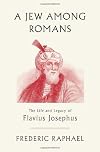
Although this is ostensibly a book about the life of Josephus - and in its first half the author does follow the events in his subject's life, as recounted in his own works - it is in fact a book about the lives of many people, which intersect -thematically, temporally, or literarily but rarely literally - with that of Josephus. Sometimes the author makes explicit the parallels between these lives and that of Josephus; at other times the reader is left to fill in the gaps - often with show more difficulty, because of the breadth of Raphael's scholarship. This is a book which takes time and persistence to fully appreciate; the effort is rewarding.
In a chapter that opens with Josephus' visit to Rome as a young man, the author speculates about what might have resulted from a meeting there between Josephus and Seneca (they did not meet- the dates do not work out). This is the opening for a several page excursus on the Roman writer, which occupies the rest of the chapter. In a chapter about Alexandria , a city that Josephus had never visited, he describes Philo's visit to Rome as a member of a delegation of Alexandrian Jews who were petitioning the emperor Caligula on behalf of their community. This might be relevant background to the Alexandrian Greek, Apion's diatribe against Jews, to which Josephus wrote a response many years later. Equally, we could see Philo as another "Jew among Romans". Elsewhere, starting with the Convivenza in Spain under Muslim rule, we detour through Yehuda HaLevi and the Kuzari, the rationalism of Maimonides, and eventually reach the Reconquista and the expulsion of the Jews from Spain. This takes us to Amsterdam, the place where many of them found refuge, where we finally catch up with Spinoza, apparently the real terminus of this quest. Raphael wants us to understand that here was another Jew who like Josephus was "in a ghetto of one". Other points of similarity are illusive; Spinoza was a philosopher, not a historian; his writing undermined Judaism - and all religion - while Josephus continued to defend his religion; he remained celibate, whereas Josephus married again in Rome and had two sons. Perhaps the fact that they both wrote in an "alien" language - Josephus in Greek, Spinoza in Latin - or that both have been described as "bad Jews" is sufficient convergence ?
That Raphael is an accomplished classical scholar is evident throughout the book. Unfortunately, the fact that his scholarship does not extend so deeply into early Judaism is also evident. He refers to the Judea of Josephus as "Palestine" - an anomaly, as the country was not given this name until some 70 years after the period he is describing - although he is not alone in this perhaps conventional - if incorrect - nomenclature; he mixes up which of the Herod Agrippa's was a friend of the emperor Claudius (it was I not II); most egregiously, he refers to King Zedekiah as the Judean king who had resisted the 8th century BCE Assyrian siege of Jerusalem, and who had diverted the waters of the Gihon spring in anticipation of the siege (any 10 year old who has toured Jerusalem would know that it was King Hezekiah). His dismissal - on the grounds that Jewish belief was too narrowly defined by Mosaic Law to allow diversity - of any parallel between Josephus' early studies of different Jewish philosophies and Greek writers' exposure to alternative schools of philosophy, ignores the profound differences of belief and practice that existed between different Jewish sects of the time. More interestingly, he contradicts Josephus' own statements that the Antonia Fortress was named in honor of Herod's friend and patron Mark Anthony. There may be some merit to Raphael's assertion that it was named after Antonia, Mark Anthony's daughter, and that Josephus was referring to another earlier fortress guarding Jerusalem's Temple; but, in spite of his penchant for long and often marginally relevant footnotes, in this case he makes no attempt to discuss the historical and archaeological issues that might support his contrarian assertion.
At various points throughout the book, Raphael makes reference to a remark that he attributes to the Israeli archaeologist and politician, Yigael Yadin, that Josephus was a "bad Jew". His purpose is to contrast Josephus' move to the Roman camp with that of other individuals whose lives followed similar trajectories. Thus he recounts the story of Themistokles, a 5th century BCE Athenian politician who, once having saved his fellow citizens from defeat by the Persians, subsequently accepted a governorship of a Persian province in western Asia. No one apparently ever accused him of being a bad Greek. This, and other efforts the author makes to defend Josephus from Jewish criticism seem to be part of a polemic against Jewish particularism. The polemic extends both backwards and forwards from the time of Josephus, and sometimes runs afoul of the author's imperfect historical sensibility. His reference, for example, to a succession of empires who were exasperated with Jews' refusal to worship their idols is completely ahistorical ; all the empires that ruled Judea - Persian, Macedonian and Roman until 70 CE - implicitly or explicitly regarded the Jews' "ancient practices" - including both the Temple rites and the exclusivity of the Jewish God - as the "constitution" of the Judean or Jewish people. The policies of the Seleucid king, Antiochus IV Epiphanes should be seen as an exception to this rule, rather than conforming to a pattern. Even after putting down the Great Revolt and destroying the temple, the Romans did not ban the practice of Judaism or persecute Jews because of their religion. The author himself know this, as he spends a whole chapter establishing how it was not pagan Rome, but the early Church - whose tactics included rewriting or adding a gloss to Josephus' words - that set about delegitimizing Judaism.
Much has been written about how Josephus, an exile from his people and country and living in Rome at the pleasure of Vespasian and the two sons who succeeded him as emperor, had to tread carefully in his writing. There has been much speculation about how his objectivity might have been compromised both by the desire to justify his own actions and the need to flatter - or at least not offend - his imperial patrons. Raphael compares him to other Jews , such as Spinoza or Nachmanides, whose opinions had to be expressed circumspectly because of the hostile - usually Christian - environment in which they lived, and he gives Josephus the benefit of the doubt. In his long discussion of the often virulent criticism by Jews of other Jews, he points out that the "self-hate" of the Jew is often a mask for criticism directed at gentile persecutors or anti-Semites. No holds barred may be a safer way to play within the tribe. Might Josephus, with his criticism of the hot-headed zealots and descriptions of the intra-communal violence among the Jews, have been directing his real ire against the larger-scale, state-sponsored violence of the Romans ?
Despite its imperfections, this is a hugely worthwhile book. It is not just a historical biography of Josephus. The author has a distinct agenda, which is to rehabilitate Josephus from the indictment of being a traitor to his people, and to bring his exile to an end. In so doing, he recapitulates a journey that started with the destruction of Jerusalem and the birth of the wandering Jew, and ends with the re-creation of a Jewish homeland in modern Israel. The author too seems to make a journey, from a rather clinical declaration, in the prologue, of his own state of exile from Judaism, to his concluding embrace of the restoration of Jerusalem to Jewish sovereignty. With this, it is as if he succeeds in accompanying Josephus home to rejoin his people. show less
In a chapter that opens with Josephus' visit to Rome as a young man, the author speculates about what might have resulted from a meeting there between Josephus and Seneca (they did not meet- the dates do not work out). This is the opening for a several page excursus on the Roman writer, which occupies the rest of the chapter. In a chapter about Alexandria , a city that Josephus had never visited, he describes Philo's visit to Rome as a member of a delegation of Alexandrian Jews who were petitioning the emperor Caligula on behalf of their community. This might be relevant background to the Alexandrian Greek, Apion's diatribe against Jews, to which Josephus wrote a response many years later. Equally, we could see Philo as another "Jew among Romans". Elsewhere, starting with the Convivenza in Spain under Muslim rule, we detour through Yehuda HaLevi and the Kuzari, the rationalism of Maimonides, and eventually reach the Reconquista and the expulsion of the Jews from Spain. This takes us to Amsterdam, the place where many of them found refuge, where we finally catch up with Spinoza, apparently the real terminus of this quest. Raphael wants us to understand that here was another Jew who like Josephus was "in a ghetto of one". Other points of similarity are illusive; Spinoza was a philosopher, not a historian; his writing undermined Judaism - and all religion - while Josephus continued to defend his religion; he remained celibate, whereas Josephus married again in Rome and had two sons. Perhaps the fact that they both wrote in an "alien" language - Josephus in Greek, Spinoza in Latin - or that both have been described as "bad Jews" is sufficient convergence ?
That Raphael is an accomplished classical scholar is evident throughout the book. Unfortunately, the fact that his scholarship does not extend so deeply into early Judaism is also evident. He refers to the Judea of Josephus as "Palestine" - an anomaly, as the country was not given this name until some 70 years after the period he is describing - although he is not alone in this perhaps conventional - if incorrect - nomenclature; he mixes up which of the Herod Agrippa's was a friend of the emperor Claudius (it was I not II); most egregiously, he refers to King Zedekiah as the Judean king who had resisted the 8th century BCE Assyrian siege of Jerusalem, and who had diverted the waters of the Gihon spring in anticipation of the siege (any 10 year old who has toured Jerusalem would know that it was King Hezekiah). His dismissal - on the grounds that Jewish belief was too narrowly defined by Mosaic Law to allow diversity - of any parallel between Josephus' early studies of different Jewish philosophies and Greek writers' exposure to alternative schools of philosophy, ignores the profound differences of belief and practice that existed between different Jewish sects of the time. More interestingly, he contradicts Josephus' own statements that the Antonia Fortress was named in honor of Herod's friend and patron Mark Anthony. There may be some merit to Raphael's assertion that it was named after Antonia, Mark Anthony's daughter, and that Josephus was referring to another earlier fortress guarding Jerusalem's Temple; but, in spite of his penchant for long and often marginally relevant footnotes, in this case he makes no attempt to discuss the historical and archaeological issues that might support his contrarian assertion.
At various points throughout the book, Raphael makes reference to a remark that he attributes to the Israeli archaeologist and politician, Yigael Yadin, that Josephus was a "bad Jew". His purpose is to contrast Josephus' move to the Roman camp with that of other individuals whose lives followed similar trajectories. Thus he recounts the story of Themistokles, a 5th century BCE Athenian politician who, once having saved his fellow citizens from defeat by the Persians, subsequently accepted a governorship of a Persian province in western Asia. No one apparently ever accused him of being a bad Greek. This, and other efforts the author makes to defend Josephus from Jewish criticism seem to be part of a polemic against Jewish particularism. The polemic extends both backwards and forwards from the time of Josephus, and sometimes runs afoul of the author's imperfect historical sensibility. His reference, for example, to a succession of empires who were exasperated with Jews' refusal to worship their idols is completely ahistorical ; all the empires that ruled Judea - Persian, Macedonian and Roman until 70 CE - implicitly or explicitly regarded the Jews' "ancient practices" - including both the Temple rites and the exclusivity of the Jewish God - as the "constitution" of the Judean or Jewish people. The policies of the Seleucid king, Antiochus IV Epiphanes should be seen as an exception to this rule, rather than conforming to a pattern. Even after putting down the Great Revolt and destroying the temple, the Romans did not ban the practice of Judaism or persecute Jews because of their religion. The author himself know this, as he spends a whole chapter establishing how it was not pagan Rome, but the early Church - whose tactics included rewriting or adding a gloss to Josephus' words - that set about delegitimizing Judaism.
Much has been written about how Josephus, an exile from his people and country and living in Rome at the pleasure of Vespasian and the two sons who succeeded him as emperor, had to tread carefully in his writing. There has been much speculation about how his objectivity might have been compromised both by the desire to justify his own actions and the need to flatter - or at least not offend - his imperial patrons. Raphael compares him to other Jews , such as Spinoza or Nachmanides, whose opinions had to be expressed circumspectly because of the hostile - usually Christian - environment in which they lived, and he gives Josephus the benefit of the doubt. In his long discussion of the often virulent criticism by Jews of other Jews, he points out that the "self-hate" of the Jew is often a mask for criticism directed at gentile persecutors or anti-Semites. No holds barred may be a safer way to play within the tribe. Might Josephus, with his criticism of the hot-headed zealots and descriptions of the intra-communal violence among the Jews, have been directing his real ire against the larger-scale, state-sponsored violence of the Romans ?
Despite its imperfections, this is a hugely worthwhile book. It is not just a historical biography of Josephus. The author has a distinct agenda, which is to rehabilitate Josephus from the indictment of being a traitor to his people, and to bring his exile to an end. In so doing, he recapitulates a journey that started with the destruction of Jerusalem and the birth of the wandering Jew, and ends with the re-creation of a Jewish homeland in modern Israel. The author too seems to make a journey, from a rather clinical declaration, in the prologue, of his own state of exile from Judaism, to his concluding embrace of the restoration of Jerusalem to Jewish sovereignty. With this, it is as if he succeeds in accompanying Josephus home to rejoin his people. show less
Lists
Awards


You May Also Like


Associated Authors
Statistics
- Works
- 71
- Also by
- 14
- Members
- 2,428
- Popularity
- #10,566
- Rating
- 4.0
- Reviews
- 50
- ISBNs
- 180
- Languages
- 10
- Favorited
- 2