
Nicholas Murray (1)
Author of Aldous Huxley: A Biography
For other authors named Nicholas Murray, see the disambiguation page.
About the Author
Nicholas Murray has written biographies of Bruce Chatwin, Matthew Arnold, and Andrew Marvell. Born in Liverpool, he now lives in London and Wales
Works by Nicholas Murray
Tagged
Common Knowledge
- Gender
- male
- Occupations
- biographer
poet
journalist - Nationality
- UK
- Birthplace
- Liverpool, Merseyside, England, UK
- Places of residence
- London, England, UK
Wales, UK - Associated Place (for map)
- England, UK
Members
Reviews
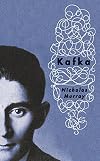
The story is well known: the frail, anxiety-ridden young man in Prague who suffers under an overbearing, uncouth father. Every day he trudges off to his boring job at an insurance company. He is drawn to women yet agonizes about every relationship. At night, he writes away but wins scant recognition. He contracts tuberculosis, and his last, truly miserable years are spent in and out of sanatoriums. His final wish is that all his manuscripts be burned, but his best friend violates the show more request. Within a few years of his death in 1924, Franz Kafka's writings about characters ensnared by the world around them for no apparent reason are recognized as brilliant manifestations of literary modernism. And so mythologized has his life become, it might seem as though there is nothing left to learn. But as adept biographer Murray (his previous subjects include Aldous Huxley and Bruce Chatwin) proves, Kafka's stunningly fabulistic, emotionally intense, and socially discerning fiction yields new revelations with each reading, and Kafka's cruelly abbreviated life (he died of tuberculosis at 40 in 1924) holds fascinating, heretofore unexamined revelations. Clarifying and companionable, Murray portrays the precocious, hypersensitive, curious, and angst-ridden Kafka as a born artist with a "deep ambivalence toward his family," especially his bullying father, and as a successful executive--Kafka was an industrial risk assessor for a workers' insurance institute, the source of his searing vision of the pitiless aberrations of bureaucracies and factories--who despaired suicidally over having too little time to write. Murray judiciously explicates Kafka's obsessive romantic entanglements, illuminates his savvy navigating of Prague's tricky and anti-Semitic cultural politics, and parses Kafka's influences, particularly his love for Yiddish theater.
Murray is an experienced biographer and effectively relates Kafka's brief life, trying valiantly to depict a more normal Kafka, a man who lived in society with good friends, enjoyed sex, had wide-ranging intellectual interests and became enamored of Judaism. In Murray's account, Kafka's employer valued him highly, and under the imprint of no less a figure than Kurt Wolff, he experienced some literary success. show less
Murray is an experienced biographer and effectively relates Kafka's brief life, trying valiantly to depict a more normal Kafka, a man who lived in society with good friends, enjoyed sex, had wide-ranging intellectual interests and became enamored of Judaism. In Murray's account, Kafka's employer valued him highly, and under the imprint of no less a figure than Kurt Wolff, he experienced some literary success. show less
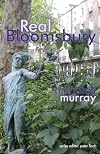
Real Bloomsbury is one of the best books about a neighborhood or city that I've ever read. The author has lived in Bloomsbury for the past dozen years, and it is at once a walking tour, a history of the neighborhood and its people, a short but vivid description of the main members of the Bloomsbury Group, and a personal account of the author's life as a Bloomsbury resident, including the day of the London bombings on 7/7, as he passed by Tavistock Square and Russell Square, the sites of the show more two of the bombings. I felt as if I was walking alongside him as he described what he saw and what he loved about the streets and buildings, and my repeated travels through the neighborhood in the past few years allowed me to appreciate the book that much more. I'm sure that I visibly beamed when he lovingly described the London Review Bookshop, my favorite London bookstore, and I know that I had a smile on my face at the end of the book. There aren't many books that gave me as much delight as this one, and I look forward to reading it again next week as I walk along the streets of Bloomsbury. show less
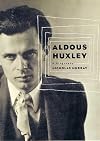
Well researched and fully documented, this is an essential resource for anyone investigating Huxley's life. At a few points, it appears to offer some valid correctives to Sybille Bedford's better-known biography. As a book, however, it's dry as dust, with short, almost cursory-seeming chapters, a prose style so simple as to be boring, and an overall impression of Cliff Notes. The author has contributed significantly to the study of Huxley's classic 20th-century life, but is unlikely to show more excite anyone into wanting to know more. show less
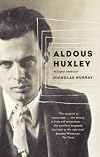
This book goes fairly rapidly through Huxley's life. This may be at least in part because of the loss of Huxley's papers and letters in the fire that destroyed his home in California. But the reader gets a good sense for the goodness of the man (with a few pecadillos), the diversity of his interests (poetry, literature, science, sociology, travel, eastern religion and new ideas) and the challenges posed by his damaged eyes. He was the co-inventor of the term psychedelic. I like his motto, show more aun aprendo ("I am still learning"), and that in his younger days he would take encyclopedias with him to read on his travels. show less
Lists
Awards

You May Also Like


Statistics
- Works
- 12
- Members
- 416
- Popularity
- #58,579
- Rating
- 3.8
- Reviews
- 7
- ISBNs
- 48
- Languages
- 4