
Mark Wright (1) (1971–)
Author of Doctor Who: Who-ology
For other authors named Mark Wright, see the disambiguation page.
Series
Works by Mark Wright
The Official Quotable Doctor Who: Wise Words From Across Space and Time (2014) — Author — 272 copies, 1 review
Blake's 7: The Liberator Chronicles, Volume 6: Incentive, Jenna's Story and Blake's Story (2013) — Author — 9 copies
Blake's 7: The Liberator Chronicles, Volume 9: Defector, Planetfall and Secrets (2014) — Author — 6 copies, 1 review
Shadow of the Moonlight 1 copy
Project Valhalla 1 copy
The Feast Of Stone 1 copy
Associated Works
Doctor Who: Peladon — Author — 6 copies
The Lonely Computer and Other Internet Doctor Who Short Trips, 2004-21 — Contributor — 1 copy
Tagged
Common Knowledge
- Birthdate
- 1971-11-27
- Gender
- male
- Education
- Salford University (Drama)
- Agent
- Michele Milburn (MMB Creative)
- Nationality
- England
UK - Birthplace
- Halifax, West Yorkshire, England, UK
- Places of residence
- Bath, Somerset, England, UK
London, England, UK
Halifax, West Yorkshire, England, UK - Associated Place (for map)
- England, UK
Members
Reviews

Paul Cornell's A Christmas Treasury, Big Finish's first Christmas anthology, remains a high watermark for me-- not just in terms of the Christmas books, but Short Trips in general. On the other hand, their second one, The History of Christmas was kinda disappointing. Still, Doctor Who and Christmas just go together in a way that's right, something I think Paul Cornell realized before even Russell T Davies did, and so I was happily looking forward to this book.
It didn't disappoint. Even at show more its weakest, it still has a sense of joy about it. It's divided into three section, for Christmases Past, Present, and Future, which correspond to when the stories are set. The title and the blurb implies an element of spookiness or horror, and thankfully that's minimal, because in the few cases where it's tried, it doesn't really work. "24 Crawford Street" by Ian Farrington feels more arbitrary than spooky, while Xanna Eve Chown's "Do You Believe in the Krampus?" takes a great premise (the Alpine legend of a demon that eats naughty children) but is completely boring. "The Stars Our Contamination" by Steven Savile is a zombie story that doesn't really click. Most disappointing is Peter Angelhides's "The Somerton Fetch," a saccharine muddle of a story about a character I don't really care about.
But on the whole, the stories really work. This collection includes such joys as:
My favorite was definitely "Far Away in a Manger" by Iain McLaughlin, a quiet tale with no monsters or villains. The Doctor, Peri, and Erimem land on an Earth colony during a snowstorm and help the colonists through their various problems. It's a charming story, clearly meant to be read on a long night during a snowstorm, helping hold back the cold just like a fire in the hearth.
I love Doctor Who, and I love Christmas. Any book with one of those things is good, but this one has both. How can it not be great? Every book should be a Doctor Who Christmas book. Except that that much Christmas would be saccharine, and that's something this book avoids nicely. Not as good as A Christmas Treasury, but that's no black mark; it's still one of the best books the Short Trips series has done.
This collection is also noteworthy for featuring three sequential stories using the term "bobble hat," which I had not previously been aware of. show less
It didn't disappoint. Even at show more its weakest, it still has a sense of joy about it. It's divided into three section, for Christmases Past, Present, and Future, which correspond to when the stories are set. The title and the blurb implies an element of spookiness or horror, and thankfully that's minimal, because in the few cases where it's tried, it doesn't really work. "24 Crawford Street" by Ian Farrington feels more arbitrary than spooky, while Xanna Eve Chown's "Do You Believe in the Krampus?" takes a great premise (the Alpine legend of a demon that eats naughty children) but is completely boring. "The Stars Our Contamination" by Steven Savile is a zombie story that doesn't really click. Most disappointing is Peter Angelhides's "The Somerton Fetch," a saccharine muddle of a story about a character I don't really care about.
But on the whole, the stories really work. This collection includes such joys as:
- "For the Man Who Has Everything" by Dan Abnett: A private secretary to a Cabinet minister spends Christmas with the eighth Doctor after the two of them save the world together.
- "Tell Me You Love Me" by Scott Matthewman: The best TARDIS crew ever (the first Doctor, Ian, Barbara, and Susan) experience Christmas in the London Blitz. Ian and Barbara are both sharply captured in this ominous tale.
- "Do You Dream in Colour?" by Gary Russell: No Doctor, but Ben and Polly after their time in the TARDIS. The story avoids the obvious route of having them romantically involved, and is all the better for it. It's nice to see some post-TARDIS companions who aren't depressed or traumatized, but the Doctor has clearly made his mark.
- "The Nobility of Faith" by Jonathan Clements: A Christmas pantomime where the Doctor meets "Ala Urd-Din."
- "Dear Great Uncle Peter" by Neil Corry: A little boy discovers that he's forgotten his Christmas day! How terrible! Thankfully the Doctor and Leela can set it right. Maybe trying too hard to get the voice of a small child, but fun and worthy of its position in Re:Collections.
- "They Fell" by Scott Handcock: Charley Pollard! What else do you need?
- "The Christmas Presence" by Simon Barnard and Paul Morris: The writers of The Scarifyers tackling Doctor Who? I hadn't even suspected that the world could be this kind.
- "Snowman in Manhattan" by John Binns: Worth it just for the image of the first Doctor as a department store Santa, but it turns out to be a good story beyond that, too.
- "The Crackers" by Richard Salter: Evelyn Smythe discovers that her Christmas memories live within the TARDIS itself.
- "Dr Cadabra" by Trevor Baxendale: The sixth Doctor is mistaken for a clown at an office Christmas party. Naturally.
- "Keeping it Real" by Joseph Lidster: As in The Gathering, Lidster demonstrates that he knows why Tegan is one of the best companions.
- "Christmas Everyday" by Mark Magrs: It's Christmas once a week in a future where the United Kingdom is one giant shopping center.
My favorite was definitely "Far Away in a Manger" by Iain McLaughlin, a quiet tale with no monsters or villains. The Doctor, Peri, and Erimem land on an Earth colony during a snowstorm and help the colonists through their various problems. It's a charming story, clearly meant to be read on a long night during a snowstorm, helping hold back the cold just like a fire in the hearth.
I love Doctor Who, and I love Christmas. Any book with one of those things is good, but this one has both. How can it not be great? Every book should be a Doctor Who Christmas book. Except that that much Christmas would be saccharine, and that's something this book avoids nicely. Not as good as A Christmas Treasury, but that's no black mark; it's still one of the best books the Short Trips series has done.
This collection is also noteworthy for featuring three sequential stories using the term "bobble hat," which I had not previously been aware of. show less

This book bills itself as a Doctor Who "miscellany." That's a marvelous word for it, as it contains a weird, eclectic mix of lists and trivia, including both in-universe and behind-the-scenes information. And while it primarily focuses on the TV series (in both its classic and current incarnations), it often also includes references to various books, comics, audio dramas, stage plays, webisodes, charity specials, and probably several other sources I'm forgetting at the moment. The content show more includes some obvious and expected stuff, such as the mini-bios of each of the Doctor's companions and the actors who played them. Then there's some stuff that's just insane levels of trivial, such as the list of every actor who ever stuffed himself into a Dalek casing. Some of it's scary/impressive in its obsessiveness, like the complete list of every planet the Daleks ever attacked, in any medium, or of everything we've ever seen a sonic screwdriver used for. (Those are long lists.) Some of it is just entertaining, like the list of all the times Rory Williams has died, or interesting, like the complete, chronological-from-her-point-of-view timeline of River Song. In a few cases, the authors seems to be having way too much fun, such as when they list all the Master's evil schemes and rate each one by how nuts they were.
Yeah, OK, it's all the sort of thing that you have to be a crazy Who nerd to enjoy, but, crazy Who nerd that I am, I enjoyed it a lot. It's clearly a labor of crazy Who nerd love, and it's different enough from similar books I've read in the past that it's definitely worth adding to the already crowded Whovian bookshelf. It's got some very nice, stylized black-and-white drawings, too.
My only complaint, really, is that they published this a couple of years too soon. It came out in 2013, and thus only covers up through "The Snowmen," the 2012 Christmas special. Which, given all the developments and revelations there have been in the show since then, means a surprising amount of it is already out of date! show less
Yeah, OK, it's all the sort of thing that you have to be a crazy Who nerd to enjoy, but, crazy Who nerd that I am, I enjoyed it a lot. It's clearly a labor of crazy Who nerd love, and it's different enough from similar books I've read in the past that it's definitely worth adding to the already crowded Whovian bookshelf. It's got some very nice, stylized black-and-white drawings, too.
My only complaint, really, is that they published this a couple of years too soon. It came out in 2013, and thus only covers up through "The Snowmen," the 2012 Christmas special. Which, given all the developments and revelations there have been in the show since then, means a surprising amount of it is already out of date! show less

Access a version of the below that includes illustrations on my blog.
The twelfth Doctor has settled down for a time, stuck in one time and place. His new companion is a young, college-age black woman, to whom he acts as a bit of a teacher. Plus, his oldest enemy is trapped with him.
No, it's not series ten... it's DWM issues #501 to 511! It is a bit amazing how much this is like what would be done on screen a year later. "Great minds," one supposes, but it's a set-up that really works in both show more cases.
Reading the comic, I have come to look forward to those periods where the television programme is off screen for protracted runs. Even though the comic is usually solid when the show is on, the energy of a complete run with its own connections and themes makes it greater than the sum of its parts—and it's most often these sequences that reward rereading in collected form.
The Pestilent Heart
This is the story that has to reunite the twelfth Doctor with Jess Collins from The Highgate Horror, strand the Doctor in the 1970s, and establish a new status quo. Its strength is definitely its first installment, where Jess goes after the enigmatic Doctor she remembers from Highgate Cemetary; the later-era Peter Capaldi Doctor is perfectly presented here, funny and acerbic. Once the plot gets underway I found it all a bit less interesting, to be honest, and when the bird creatures appeared in a grave, I was a bit confused until I realized they were totally different bird creatures to the ones in a grave from Jess's first story!
Moving In
Now this is where this run and its premise begins to sing. This is told in the form of four three-page vignettes, as the Doctor interacts with each member of the Collins household: father Lloyd, mother Devina, son Maxwell, and of course Jess. They're all nicely executed bits of characterization, but the best of all is the Doctor arguing about superheroes with Max. "Detectives aren't clever! What's clever about solving crimes after they happen? 'Ooh, look at my amazing powers of hindsight!'" John Ross is usually tapped as DWM's action man (see last volume for a prime example), but he's amazingly deft with the character work here: good facial expressions, really captures Capaldi's performance and brings the whole family to life. This is the kind of thing only the strip could do, and all the better for it.
Bloodsport
This is a fine story. Solid but unspectacular... alien hunters come to London, the Doctor must persuade them to depart. It's the exact kind of thing that benefits from the overarching set-up, because Jess and Max and the blundering cop are what make the story work, as real people around the Doctor trying to get out.
Be Forgot
I like that Christmas strips have become a thing, but not too regular of a thing so that they don't feel repetitive when the graphic novels are read in quick succession. I am, however, not sure what I think of this one. You think the Collinses' neighbor is being controlled by a monster, but it turns out to be a hallucination brought on by grief. It's trying to say something important... but is this how grief and mental illness work? Feels a bit cheap. But I did like the last page a lot, where Devina throws a Christmas party for the whole street.
Doorway to Hell
It all comes to a (premature, I would claim; more on that soon) end with this story, a nice little epic where the Roger Delgado Master goes after the twelfth Doctor, mistaking him for a new incarnation after the third. There are two great cliffhangers, good character moments, nice dialogue, impressive hellish art from Staz Johnson, and a nice coda. It's all very well done, and DWM makes one of its rare bids for depicting a key tv-continuity moment with the regeneration of the Master. I liked it, and like all the stories, it's better because of its context.
I said above that this run is a lot like series ten. There's another way it's like series ten: its set-up feels like it could have been a storytelling engine for a lot longer than it was. I always think we needed a second series of the Doctor and Bill at St. Luke's; I would have liked to have had at least one more story of the Doctor with the Collinses. It very much seems like there ought to have been at least one more "regular" adventure at least between Be Forgot and Doorway to Hell.
Stray Observations:
The twelfth Doctor has settled down for a time, stuck in one time and place. His new companion is a young, college-age black woman, to whom he acts as a bit of a teacher. Plus, his oldest enemy is trapped with him.
No, it's not series ten... it's DWM issues #501 to 511! It is a bit amazing how much this is like what would be done on screen a year later. "Great minds," one supposes, but it's a set-up that really works in both show more cases.
Reading the comic, I have come to look forward to those periods where the television programme is off screen for protracted runs. Even though the comic is usually solid when the show is on, the energy of a complete run with its own connections and themes makes it greater than the sum of its parts—and it's most often these sequences that reward rereading in collected form.
The Pestilent Heart
This is the story that has to reunite the twelfth Doctor with Jess Collins from The Highgate Horror, strand the Doctor in the 1970s, and establish a new status quo. Its strength is definitely its first installment, where Jess goes after the enigmatic Doctor she remembers from Highgate Cemetary; the later-era Peter Capaldi Doctor is perfectly presented here, funny and acerbic. Once the plot gets underway I found it all a bit less interesting, to be honest, and when the bird creatures appeared in a grave, I was a bit confused until I realized they were totally different bird creatures to the ones in a grave from Jess's first story!
Moving In
Now this is where this run and its premise begins to sing. This is told in the form of four three-page vignettes, as the Doctor interacts with each member of the Collins household: father Lloyd, mother Devina, son Maxwell, and of course Jess. They're all nicely executed bits of characterization, but the best of all is the Doctor arguing about superheroes with Max. "Detectives aren't clever! What's clever about solving crimes after they happen? 'Ooh, look at my amazing powers of hindsight!'" John Ross is usually tapped as DWM's action man (see last volume for a prime example), but he's amazingly deft with the character work here: good facial expressions, really captures Capaldi's performance and brings the whole family to life. This is the kind of thing only the strip could do, and all the better for it.
Bloodsport
This is a fine story. Solid but unspectacular... alien hunters come to London, the Doctor must persuade them to depart. It's the exact kind of thing that benefits from the overarching set-up, because Jess and Max and the blundering cop are what make the story work, as real people around the Doctor trying to get out.
Be Forgot
I like that Christmas strips have become a thing, but not too regular of a thing so that they don't feel repetitive when the graphic novels are read in quick succession. I am, however, not sure what I think of this one. You think the Collinses' neighbor is being controlled by a monster, but it turns out to be a hallucination brought on by grief. It's trying to say something important... but is this how grief and mental illness work? Feels a bit cheap. But I did like the last page a lot, where Devina throws a Christmas party for the whole street.
Doorway to Hell
It all comes to a (premature, I would claim; more on that soon) end with this story, a nice little epic where the Roger Delgado Master goes after the twelfth Doctor, mistaking him for a new incarnation after the third. There are two great cliffhangers, good character moments, nice dialogue, impressive hellish art from Staz Johnson, and a nice coda. It's all very well done, and DWM makes one of its rare bids for depicting a key tv-continuity moment with the regeneration of the Master. I liked it, and like all the stories, it's better because of its context.
I said above that this run is a lot like series ten. There's another way it's like series ten: its set-up feels like it could have been a storytelling engine for a lot longer than it was. I always think we needed a second series of the Doctor and Bill at St. Luke's; I would have liked to have had at least one more story of the Doctor with the Collinses. It very much seems like there ought to have been at least one more "regular" adventure at least between Be Forgot and Doorway to Hell.
Stray Observations:
- Jess remembers the Doctor used to travel with Clara, of course, but as per "Hell Bent," he does not. So when she brings it up, he's confused... but oddly not curious. I guess in some way, he knows it's something he's better off not knowing, but it does read a bit off. That said, there wouldn't be a way to bring Jess back without this bit of awkwardness.
- Staz Johnson is the first new artist to debut in DWM in quite some time, the first since Paul Grist way back in #414, ninety-one issues prior. This is the longest gap between new artists in DWM history, beating out the previous record when Tim Perkins debuted in issue #130, the first new artist since John Ridgway forty-two issues earlier. He is, on the other hand, the first DWM artist not to contribute to the commentaries that I can remember! (At least, since the detailed commentaries were introduced.) He's done some work for DC and such, but I know him best as one of the primary artists of the later, black-and-white years of the Transformers UK comic strip.
- Don't confuse Be Forgot the Christmas comic strip written by Mark Wright with "...Be Forgot," the Christmas short story co-written by Mark Wright. I guess if you have a good title, you can't afford to turn it down even if you've used it before!
- Wright talks about suggesting era-appropriate actors to Staz Johnson to model characters on; Katya, the Master's henchlady in Doorway to Hell, is clearly Jacqueline Pearce!
- "JUST A TRACER" WATCH: The rare DWM graphic novel where everyone who worked on it gets cover credit!
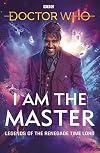
A collection of six stories about Doctor Who's arch-villain, the Master. Each one features a different incarnation, including the often-neglected post-Roger Delgado version, when he was all gross and crispy and mostly dead. More precisely, there are five shorter pieces and one that I think is (or at least closely approaches) novella length. The shorter ones were all readable enough, and generally they each featured at least one reasonably interesting idea: the answer to the question of where show more the Master gets all his amazingly lifelike masks, for instance, or a plot in which the aforementioned undead-ish version partly inspired the novel Dracula. But I can't say any of them stood out, particularly. The longer piece, on the other hand -- "The Master and Margarita" by Matthew Sweet -- was just weird. Even by Doctor Who standards. There's, like, a capitalist mushroom, and the Master appears to be dating a Silurian, and... I don't even know, honestly. I also don't know whether it's ultimately good-weird or bad-weird, but it was certainly interesting, and in its own way entertaining. (I do imagine it's parodying the novel of the same name to some extent, but I couldn't really say. That one's been sitting on my TBR shelves for years, but I still haven't gotten around to reading it, so all I can do is judge the story on its own trippy merits... if I could quite figure out how!) show less
Lists
Awards

You May Also Like


Associated Authors
Statistics
- Works
- 100
- Also by
- 25
- Members
- 1,565
- Popularity
- #16,484
- Rating
- 3.7
- Reviews
- 34
- ISBNs
- 111
- Languages
- 2