
Terri Windling
Author of Snow White, Blood Red
About the Author
Fairy and folklore scholar Terri Windling, five-time winner of the World Fantasy Award, has edited and written numerous fantasy works for both adults and children. She divides her time between Devon, England, and Tucson, Arizona. (Bowker Author Biography)
Image credit: Photo by Beth Gwinn
Series
Works by Terri Windling
The Green Man: Tales from the Mythic Forest (2002) — Editor; Introduction — 1,103 copies, 19 reviews
The Faery Reel: Tales from the Twilight Realm (2004) — Editor; Introduction — 1,088 copies, 15 reviews
A Wolf at the Door and Other Retold Fairy Tales (2000) — Editor; Introduction — 891 copies, 22 reviews
Borderland: Between the Elflands and the World is a Place Where Magic Runs Amok (1986) — Editor — 455 copies, 5 reviews
Queen Victoria's Book of Spells: An Anthology of Gaslamp Fantasy (2013) — Editor — 399 copies, 18 reviews
Sirens and Other Daemon Lovers: Magical Tales of Love and Seduction (1998) — Editor — 374 copies, 7 reviews
The Year's Best Fantasy and Horror: Thirteenth Annual Collection (2000) — Editor & Introduction — 358 copies
The Year's Best Fantasy and Horror: Eighth Annual Collection (1995) — Editor — 329 copies, 6 reviews
The Year's Best Fantasy and Horror: Seventh Annual Collection (1994) — Editor — 283 copies, 3 reviews
The Year's Best Fantasy and Horror: Fifteenth Annual Collection (2002) — Editor — 275 copies, 4 reviews
The Year's Best Fantasy and Horror: Fourteenth Annual Collection (2001) — Editor — 257 copies, 2 reviews
The Armless Maiden and Other Tales for Childhood's Survivors (1995) — Editor; Contributor — 256 copies, 4 reviews
The Year's Best Fantasy and Horror: Sixteenth Annual Collection (2003) — Editor — 240 copies, 2 reviews
Red Rock 1 copy
Snow White, Blood Red; Black Thorn, White Rose; Ruby Slippers, Golden Tears (1995) — Editor — 1 copy
Gray {short story} 1 copy
Briar Rose 1 copy
Associated Works
Briar Rose (1992) — Cover artist, some editions; Introduction, some editions — 3,048 copies, 107 reviews
Mirror, Mirror on the Wall: Women Writers Explore Their Favorite Fairy Tales (1998) — Contributor — 311 copies, 4 reviews
The Poets' Grimm: 20th Century Poems from Grimm Fairy Tales (2003) — Contributor — 70 copies, 1 review
Tagged
Common Knowledge
- Other names
- Windling, T.
Bach, Bellamy (group pseudonym used by others) - Birthdate
- 1958-12-03
- Gender
- female
- Organizations
- Endicott Studios
- Awards and honors
- World Fantasy Award (Life achievement, 2022)
- Nationality
- USA
- Birthplace
- Fort Dix, New Jersey, USA
- Places of residence
- Devon, England, UK
New York, USA
Tucson, Arizona, USA - Associated Place (for map)
- USA
Members
Reviews
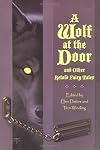
The Wolf at the Door is a collection of fairytales retold by prominent writers in the Young Adult and Fantasy genres—exactly the sort of thing that tends to catch my eye and nag at my mind until I simply cannot resist the prospect of picking it up and reading it. This has happened twice now, and neither time have I been impressed by the entries. I was hoping that I would understand the stories better now I am older, and while that was the case in a few instances, comprehension did not show more necessarily lead to love.
There are a few selections here that I do feel stand out, however. Two of them, Neil Gaiman’s “Instructions” and Gregory Maguire’s “The Seven Stage a Comeback,” are mostly poetic in form: the former is a series of directions on what to do when one stumbles into a fairy tale (“It’s always best to be prepared for these things, after all”), while the latter has the seven dwarves hatching a plan for a reconciliation with Snow White—or is it revenge for her departure that they desire? I’ve often avoided the work of these two authors because of their tendency to utilize unnecessary adult content, but both of their submissions here are perfectly clean, as well as being witty, whimsical, and wildly creative.
Unfortunately, the prose selections are not nearly up to this standard. In terms of content and reading level, they range from Garth Nix’s dark and gruesome “Hansel’s Eyes” to Jane Yolen’s “Cinder Elephant,” which would be better suited to a child in the nursery than an eight- or ten-year-old, I think. This last tale really disappointed me, because I know Yolen is capable of so much more. That said, I did love her description of the skinny stepfamily, with “hearts so thin, you could read a magazine through them.” Also, so many of the retellings were painfully cliché, including—believe it or not—Nix’s. He seems to be the kind of author other readers might find incredibly creative because he makes so many cosmetic changes to the story, but his characters are both inhuman and unoriginal. Blegh.
Nancy Farmer’s “Falada,” Delia Sherman’s “The Months of Manhattan,” and Kathe Koja’s “Becoming Charise” are all passable, but not at all the sort of stories I am likely to remember.
Then Patricia McKillip comes in and blows them all away.
I do not say this because I am campaigning to become her Biggest Fan Ever. (I am, but that’s beside the point.) When I first read this collection years ago, I had no idea who she was, and I still thought her version of “The Twelve Dancing Princesses” incredible. Unlike Nix, she makes relatively few cosmetic changes to the story, merely turning the Grimms’ old soldier into a young one, compressing the visits underground into one night, giving the princesses floral names, and making it explicit that they have pledged themselves to the dead. And yet—and yet, in sixteen brief pages she creates a fascinating interplay of light and shadow, with three-dimensional characters and thematic complexity. That’s it, Patricia. Show ‘em how it’s done.
Though I enjoyed the selections by McKillip, Gaiman, and Maguire, I would not recommend this collection overall. If one of your favorite authors submitted a story, check The Wolf at the Door out at your local library. Otherwise, let it be. show less
There are a few selections here that I do feel stand out, however. Two of them, Neil Gaiman’s “Instructions” and Gregory Maguire’s “The Seven Stage a Comeback,” are mostly poetic in form: the former is a series of directions on what to do when one stumbles into a fairy tale (“It’s always best to be prepared for these things, after all”), while the latter has the seven dwarves hatching a plan for a reconciliation with Snow White—or is it revenge for her departure that they desire? I’ve often avoided the work of these two authors because of their tendency to utilize unnecessary adult content, but both of their submissions here are perfectly clean, as well as being witty, whimsical, and wildly creative.
Unfortunately, the prose selections are not nearly up to this standard. In terms of content and reading level, they range from Garth Nix’s dark and gruesome “Hansel’s Eyes” to Jane Yolen’s “Cinder Elephant,” which would be better suited to a child in the nursery than an eight- or ten-year-old, I think. This last tale really disappointed me, because I know Yolen is capable of so much more. That said, I did love her description of the skinny stepfamily, with “hearts so thin, you could read a magazine through them.” Also, so many of the retellings were painfully cliché, including—believe it or not—Nix’s. He seems to be the kind of author other readers might find incredibly creative because he makes so many cosmetic changes to the story, but his characters are both inhuman and unoriginal. Blegh.
Nancy Farmer’s “Falada,” Delia Sherman’s “The Months of Manhattan,” and Kathe Koja’s “Becoming Charise” are all passable, but not at all the sort of stories I am likely to remember.
Then Patricia McKillip comes in and blows them all away.
I do not say this because I am campaigning to become her Biggest Fan Ever. (I am, but that’s beside the point.) When I first read this collection years ago, I had no idea who she was, and I still thought her version of “The Twelve Dancing Princesses” incredible. Unlike Nix, she makes relatively few cosmetic changes to the story, merely turning the Grimms’ old soldier into a young one, compressing the visits underground into one night, giving the princesses floral names, and making it explicit that they have pledged themselves to the dead. And yet—and yet, in sixteen brief pages she creates a fascinating interplay of light and shadow, with three-dimensional characters and thematic complexity. That’s it, Patricia. Show ‘em how it’s done.
Though I enjoyed the selections by McKillip, Gaiman, and Maguire, I would not recommend this collection overall. If one of your favorite authors submitted a story, check The Wolf at the Door out at your local library. Otherwise, let it be. show less
I originally chose this book from the library shelf because it was edited by Ellen Datlow and Terri Windling, whose collections of very severely twisted fairy tales for grown-ups (starting with Snow White, Blood Red) I adore, though they occasionally leave me slightly horrified or at least unsettled.
I was certainly not disappointed by the tales within, though these are, of course, suitable for a younger demographic than the ones I am accustomed to reading in the anthologies gathered by these show more two.
There are some excellent fairy tales in this book, often told from a strange new perspective - for instance, have you ever more deeply considered the story of Falada, who was The Goose Girl's horse? Nancy Farmer has, and retold it in her own way.
Or perhaps thought of what the giants thought of Jack, or how they came to live in the clouds, only reachable by a magic beanstalk? Michael Cadnum brings their story to life with incredible empathy for such usually neglected characters, and in a truly intriguing way.
Some of the fairy tales are also presented in vastly different settings than the ones we are used to when it comes to this kind of story - I think such things can be terribly effective.
Garth Nix's adaptation of Hansel and Gretel, for instance, is set in something approaching a modern city - and I must agree with his statement that being lost in cities is ever so much more terrifying than being lost in a forest.
The main characters of these fairy tales often think less like, well, something out of a fairy story, and more like someone we can empathise with - someone much like us, for all their fantastical situation or trials.
I greatly enjoyed the book, even wishing it were longer - though despite my occasional wish for more of a particular story, I suspect their teasing length is part of their charm - and will definitely be back to re-read it. show less
I was certainly not disappointed by the tales within, though these are, of course, suitable for a younger demographic than the ones I am accustomed to reading in the anthologies gathered by these show more two.
There are some excellent fairy tales in this book, often told from a strange new perspective - for instance, have you ever more deeply considered the story of Falada, who was The Goose Girl's horse? Nancy Farmer has, and retold it in her own way.
Or perhaps thought of what the giants thought of Jack, or how they came to live in the clouds, only reachable by a magic beanstalk? Michael Cadnum brings their story to life with incredible empathy for such usually neglected characters, and in a truly intriguing way.
Some of the fairy tales are also presented in vastly different settings than the ones we are used to when it comes to this kind of story - I think such things can be terribly effective.
Garth Nix's adaptation of Hansel and Gretel, for instance, is set in something approaching a modern city - and I must agree with his statement that being lost in cities is ever so much more terrifying than being lost in a forest.
The main characters of these fairy tales often think less like, well, something out of a fairy story, and more like someone we can empathise with - someone much like us, for all their fantastical situation or trials.
I greatly enjoyed the book, even wishing it were longer - though despite my occasional wish for more of a particular story, I suspect their teasing length is part of their charm - and will definitely be back to re-read it. show less
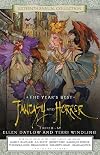
The last annual collection that I read (the eighth, dating back to the mid-1990s) was a pretty big disappointment, but thankfully this sixteenth annual collection had a lot more like-able stories! I guess 2002 was when the fantasy/horror market hit a really good stride with lots of monthly magazines, the web just starting to share materials, and the world taking a turn towards the fantastic even in Hollywood and YA marketing, so it makes sense that this collection would have some excellent show more examples of the fantasy and horror genres (and some which span both). I won’t go into too much detail about the collection as a whole, but one story that stood out for me was Jeffrey Ford’s medieval horror-tinged fantasy “The Green Word.” Ford explores pagan beliefs, woodslore, and the clash of culture when Christianity was introduced to Britain to tell a story of resistance, resurgence, and belief that is captivating even in its more horrific and sad moments. The other two stand-out pieces for me were a set of poems: “The Seven Pairs of Iron Shoes” by Tracina Jackson-Adams and “The Wolf’s Story” by Nan Fry. Both use narrative poetry to re-tell the stories of East of the Sun, West of the Moon and Little Red Riding Hood, respectively, from different and unexpected perspectives, which turn both stories on their heads and make us think more deeply about the traditions and expectations of the world. All three of these authors are new to me (amongst a handful of others who told intriguing tales), so the collection did what it was supposed to and has inspired me to seek out some new reading material! show less
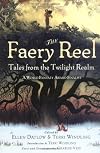
It’s been a long time since I read a collection of short stories, since I tend to aim for full novels instead, but reading this collection was a total pleasure. Like most collections, there were a handful of stories that I skipped over (sorry, Datlow and Windling, but there’s some authors on your pick list that I just can’t seem to get into no matter the medium!), but there were also lots of excellent stories by authors familiar and new to me. Holly Black, Neil Gaiman, and Charles de show more Lint will always be at the top of my list, but I really enjoyed the variety of stories that spanned many cultures (not just European and North American mythology). I was particularly impressed by Gregory Frost’s “Tengu Mountain,” which explored the mountain demons of Japanese mythology. We knew that the aunt was going to turn out to be a tengu and the monk was more powerful than he seemed, but Frost’s simple yet lyrical prose kept the story engaging. I keep meaning to find more stories inspired by Japanese mythology (an understudied area in my folklore background), so I’m hoping that Frost has more goods in store in his other work! I also really enjoyed Steve Berman’s “The Price of Glamour,” since we’re once again tripping the streets of a fantasy-tinged London (my fav!) led by an up to no good (but still sympathetic) protagonist. I’m definitely going to have to track down some of these new to me authors’ work, since there’s clearly some that are worth exploring more! show less
Lists
Gaslamp Fantasy (1)
Awards


You May Also Like


Associated Authors
Statistics
- Works
- 60
- Also by
- 38
- Members
- 22,167
- Popularity
- #963
- Rating
- 3.9
- Reviews
- 343
- ISBNs
- 197
- Languages
- 4
- Favorited
- 31