
Anatol Lieven
Author of Pakistan: A Hard Country
About the Author
Anatol Lieven is a Senior Associate at the Carnegie Endowment in Washington, DC.
Works by Anatol Lieven
The China Choice 1 copy
Associated Works
Tagged
Common Knowledge
- Canonical name
- Lieven, Anatol
- Legal name
- Lieven, Peter Paul Anatol
- Birthdate
- 1960-06-28
- Gender
- male
- Education
- University of Cambridge (Jesus College)
- Occupations
- author
journalist
policy analyst - Relationships
- Lieven, Dominic (brother)
Lieven, Elena (sister) - Nationality
- UK
- Places of residence
- London, England, UK
Washington, D.C., USA - Associated Place (for map)
- UK
Members
Reviews
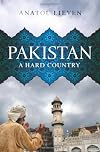
This book is a truly illuminating study of modern Pakistan, a very large country about which far too little seems to be generally understood by U.S. analysts and policymakers. Pakistan is too often dismissed as a "failed state", and/or analyzed purely in terms of its value (or lack of value) to the U.S. as an ally in the "War on Terror". Instead, it is a highly complex amalgam of many different societies, where strong divisive pressures strain against powerful unifying forces. One of those show more is a broad anti-Americanism among the Pakistani people, due in large part to U.S. policies since 2001. In regard to Pakistan, Lieven argues, those policies should be reconsidered, given the long-term risks of increasing Pakistani instability.
Anatol Lieven is admirably qualified to deal with the topic: he is both a journalist (reporting on Pakistan and Afghanistan for the London Times) and an academic/thinktank scholar. His book combines the readability and color of good journalism with the thorough research of scholarly work. It is also based on extensive interviews with many Pakistanis from all walks of life, and all regions of the country, which gives it an engrossing human dimension.
The book starts off with an overview of the Pakistani system, which he describes as "weak state, stong societies". He examines the critical role of kinship and patronage relationships, from an anthropological as well as a political view. And he briefly reviews Pakistan's history since Partition. Here, I found myself turning to Wikipedia etc. to fill in missing links, since the author's review assumed more knowledge than I had -- possibly because I'm an American, a British reader would probably be more familiar with this material.
Next, he turns to the basic structures of modern Pakistan -- justice, religion, politics, and above all the military -- devoting a chapter to each. Then, in a section which I found most useful, he devotes a chapter to each of Pakistan's provinces -- the Punjab, Sindh (and Karachi), Balochistan, and the Pathans (that is, the North West Frontier and the Federally Administered Tribal Areas). In each, he looks at the social and ethnic differences within and between regions, and at how that is reflected politically.
The final section is on the Taleban -- the Afghani Taleban, the Pakistani Taleban, and the attitude of Pakistan's people and government to both.
In his conclusion, Lieven says that "it has been above all the US-led campaign in Afghanistan which has been responsible for increasing Islamist insurgency and terrorism in Pakistan since 2001". Earlier, he has established that insurgency as perhaps the most critical problem facing Pakistan's government. U.S. policy with affect the way in which this plays out.
All in all, I found this a very informative, interesting, and readable book, which I would strongly recommend to anyone interested in South Asia, or, indeed, in US policy. show less
Anatol Lieven is admirably qualified to deal with the topic: he is both a journalist (reporting on Pakistan and Afghanistan for the London Times) and an academic/thinktank scholar. His book combines the readability and color of good journalism with the thorough research of scholarly work. It is also based on extensive interviews with many Pakistanis from all walks of life, and all regions of the country, which gives it an engrossing human dimension.
The book starts off with an overview of the Pakistani system, which he describes as "weak state, stong societies". He examines the critical role of kinship and patronage relationships, from an anthropological as well as a political view. And he briefly reviews Pakistan's history since Partition. Here, I found myself turning to Wikipedia etc. to fill in missing links, since the author's review assumed more knowledge than I had -- possibly because I'm an American, a British reader would probably be more familiar with this material.
Next, he turns to the basic structures of modern Pakistan -- justice, religion, politics, and above all the military -- devoting a chapter to each. Then, in a section which I found most useful, he devotes a chapter to each of Pakistan's provinces -- the Punjab, Sindh (and Karachi), Balochistan, and the Pathans (that is, the North West Frontier and the Federally Administered Tribal Areas). In each, he looks at the social and ethnic differences within and between regions, and at how that is reflected politically.
The final section is on the Taleban -- the Afghani Taleban, the Pakistani Taleban, and the attitude of Pakistan's people and government to both.
In his conclusion, Lieven says that "it has been above all the US-led campaign in Afghanistan which has been responsible for increasing Islamist insurgency and terrorism in Pakistan since 2001". Earlier, he has established that insurgency as perhaps the most critical problem facing Pakistan's government. U.S. policy with affect the way in which this plays out.
All in all, I found this a very informative, interesting, and readable book, which I would strongly recommend to anyone interested in South Asia, or, indeed, in US policy. show less
A very comprehensive and illuminating study of Pakistan, focusing less on its conflicts than on the things that bind it together. In his introduction Lieven states that he was originally going to call the book "Why Pakistan works"; I think he should have done as too often all we hear is of Islamic extremism and its imminent failure. In fact, as Lieven points out, Pakistan is very unlikely to fail apart whilst the glue that holds it together is in place. This is not to brush the many problems show more Pakistan faces aside - from its unsustainable birthrate to ecological challenges as well as the strategic problems of the Pakistan Taliban, Afghanistan, India and US interference in the region - but to place them into a meaningful context.
Lieven has several main themes. 1. Pakistan is bound together by clan and family structures especially in its powerful "feudal" landowning families that are far more influential than those of religion - this is problematic in itself but makes the prospect of increased influence of the Pakistan Taliban beyond the tribal agencies unlikely. 2. Most Pakistani's support the Afghan Taliban as freedom fighters defending their country from invasion, but that doesnt mean they support the Pakistan Taliban 3. The army is what holds the whole country together 4. Central government is weak so local power holds sway and 5. Allegiance to ethnic culture identity (eg being a Pashtun) overides everything
I found the book erudite, readable, exhaustive and occasionally exhausting. Should be read by anyone with an interest in this most strategically vital of countries show less
Lieven has several main themes. 1. Pakistan is bound together by clan and family structures especially in its powerful "feudal" landowning families that are far more influential than those of religion - this is problematic in itself but makes the prospect of increased influence of the Pakistan Taliban beyond the tribal agencies unlikely. 2. Most Pakistani's support the Afghan Taliban as freedom fighters defending their country from invasion, but that doesnt mean they support the Pakistan Taliban 3. The army is what holds the whole country together 4. Central government is weak so local power holds sway and 5. Allegiance to ethnic culture identity (eg being a Pashtun) overides everything
I found the book erudite, readable, exhaustive and occasionally exhausting. Should be read by anyone with an interest in this most strategically vital of countries show less
http://nhw.livejournal.com/193833.html
Anatol Lieven's analysis is basically that the driving force of American politics is nationalism; that this has a good side and a bad side; and that at the moment under Bush the bad side is prevailing. I finished the book with a much better understanding of what is going on than I had before.
I found his second chapter, analysing the "splendour and tragedy of the American Creed", particularly compelling. There are some wonderful things in American show more political culture and history. The words of Jefferson in the Declaration of Independence, or of Lincoln in the Gettysburg Address, are moving for anyone who cares about big political ideas like freedom and equality - however flawed they may have been in implementation, the rest of the English-speaking world hasn't really come up with anything as powerful.
Writing a book that attacks the dark side of American nationalism does carry the risk of drifting into polemic, but he manages to leaven this with shafts of sympathy, compassion and even admiration for America. I found most of it utterly convincing. His last chapter, which addresses the US/Israel relationship as a special case where American nationalism has overridden any sensible policy on the Middle East ("what use is a strategic ally when you actually have to ask them not to help you in a war in a nearby country?") has made me reconsider my own thoughts on the Palestinian issue; on the whole his analysis is pretty sympathetic to Israel (though I doubt if everyone will see it that way) and he makes a good point that Israel's actions in 1948 should be judged by comparison with what Europeans were doing in Europe in 1948, rather than by later standards. show less
Anatol Lieven's analysis is basically that the driving force of American politics is nationalism; that this has a good side and a bad side; and that at the moment under Bush the bad side is prevailing. I finished the book with a much better understanding of what is going on than I had before.
I found his second chapter, analysing the "splendour and tragedy of the American Creed", particularly compelling. There are some wonderful things in American show more political culture and history. The words of Jefferson in the Declaration of Independence, or of Lincoln in the Gettysburg Address, are moving for anyone who cares about big political ideas like freedom and equality - however flawed they may have been in implementation, the rest of the English-speaking world hasn't really come up with anything as powerful.
Writing a book that attacks the dark side of American nationalism does carry the risk of drifting into polemic, but he manages to leaven this with shafts of sympathy, compassion and even admiration for America. I found most of it utterly convincing. His last chapter, which addresses the US/Israel relationship as a special case where American nationalism has overridden any sensible policy on the Middle East ("what use is a strategic ally when you actually have to ask them not to help you in a war in a nearby country?") has made me reconsider my own thoughts on the Palestinian issue; on the whole his analysis is pretty sympathetic to Israel (though I doubt if everyone will see it that way) and he makes a good point that Israel's actions in 1948 should be judged by comparison with what Europeans were doing in Europe in 1948, rather than by later standards. show less
a neat book, Well written. The problem with Levien (as with any lefty writer) is that he agrees with my prejudices. JPH
Love it or hate it -- this book takes a strong view on politically sensitive topics, and is going to infuriate some readers as much as it gratifies others. In my view, it is a thorough and revealing picture of how American patriotism developed, and what strands of patriotism are in play today. The author is particularly incisive on the links between one type of American show more patriotism and fundamentalist Christianity, and on the impact of Israel on US views and politics. But I am approaching the book from a decidedly left of center stance: those who have different views are far less likely to be impressed. For those who like this sort of thing, it will be the sort of thing they like. For those who don't, it won't. APM show less
Love it or hate it -- this book takes a strong view on politically sensitive topics, and is going to infuriate some readers as much as it gratifies others. In my view, it is a thorough and revealing picture of how American patriotism developed, and what strands of patriotism are in play today. The author is particularly incisive on the links between one type of American show more patriotism and fundamentalist Christianity, and on the impact of Israel on US views and politics. But I am approaching the book from a decidedly left of center stance: those who have different views are far less likely to be impressed. For those who like this sort of thing, it will be the sort of thing they like. For those who don't, it won't. APM show less
Lists
Awards


You May Also Like


Associated Authors
Statistics
- Works
- 11
- Also by
- 2
- Members
- 833
- Popularity
- #30,660
- Rating
- 4.1
- Reviews
- 15
- ISBNs
- 46
- Languages
- 3