
Alec Vidler (1899–1991)
Author of The Church in an age of revolution: 1789 to the present day
About the Author
Image credit: From cover of "Scenes from a Clerical Life"
Works by Alec Vidler
Prophecy and papacy : a study of Lamennais, the Church and the Revolution, the Birkbeck lectures 1952-1953 (1954) 13 copies
Windsor sermons 4 copies
Secular despair and Christian faith 2 copies
Christ's Strange Work 1 copy
Conduct and the supernatural 1 copy
Tagged
Common Knowledge
- Canonical name
- Vidler, Alec
- Legal name
- Vidler, Alexander Roper
- Birthdate
- 1899-12-27
- Date of death
- 1991-07-25
- Gender
- male
- Education
- University of Cambridge (Selwyn College)
Wells Theological College - Occupations
- Anglican priest
theologian
ecclesiastical historian - Organizations
- University of Cambridge
Oratory of the Good Shepherd
St Deiniol's Library, Hawarden
Church of England (ordained 1922)
British Army (WWI) - Nationality
- UK
- Birthplace
- Rye, Sussex, England, UK
- Places of residence
- Newcastle upon Tyne, England, UK
Hawarden, Wales
Rye, Sussex, England, UK - Associated Place (for map)
- England, UK
Members
Reviews
The Church in an Age of Revolution (The Penguin History of the Church) (v. 5) by Alexander Roper Vidler
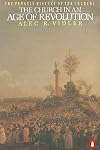
I've been putting off reading this volume of the PHC, because I'd convinced myself that it wouldn't be interesting. That was particularly silly, because 'the' church at this period is fascinating, and Vidler does a wonderful job of writing about it clearly. There are definite problems--there's far too much here about the churches in Britain, which didn't contribute anywhere near as much as those on the continent; and there's almost nothing about the U.S. or the Eastern churches. But Vidler show more does balance social movements, theology, and the ties between churches and states very well. He tells the story, in the main, as one about the ways that Christians responded to, promoted, or rejected modernity, whether that be anti-enlightenment thought (e.g., Kierkegaard), scientific advances (most obviously, Darwin in the U.K.), or modernism as a whole (the pre-Vatican II popes).
One problem is the book's age; there's little on Vatican II, or liberation theology. But I hope that they find a home in the more recent 'Christian Church in the Cold War.'
As I said, Vidler writes very well, and if you have any interest in world history after the French Revolution--even if you don't much care about religion--I can recommend this one. show less
One problem is the book's age; there's little on Vatican II, or liberation theology. But I hope that they find a home in the more recent 'Christian Church in the Cold War.'
As I said, Vidler writes very well, and if you have any interest in world history after the French Revolution--even if you don't much care about religion--I can recommend this one. show less
Most works overlook the Church so this little volume is helpful to fill in gaps in the record. For example, a handy chapter is Liberal Catholicism and Ultramontanism in France which provides background for understanding post-Napoleonic 19th Century revolts and revolutions. Ultramontanism is a religious philosophy within the Catholic Church that places strong emphasis on the prerogatives and powers of the Pope. In particular, ultramontanism may consist in asserting the superiority of Papal show more authority over the authority of local temporal or spiritual hierarchies (including the local bishop). Ultimately, liberal Catholics and the Ultramontanists disagreed over the French government's supervision over religious secondary schools. show less
(Series: The Pelican history of the church ; v.5)

You May Also Like


Associated Authors
Statistics
- Works
- 31
- Members
- 1,165
- Popularity
- #22,061
- Rating
- 3.6
- Reviews
- 10
- ISBNs
- 19
- Languages
- 1