
Irène Némirovsky (1903–1942)
Author of Suite Française
About the Author
Disambiguation Notice:
(yid) VIAF:66484425
(fre) BNF:12039492
(ita) ICCU:CFIV094404
Image credit: Irène Némirovsky vers 1917 à l'âge où elle commence à écrire
Works by Irène Némirovsky
Les mouches d'automne : précédé de la niania et suivi de naissance d'une révolution (2009) — Author — 2 copies
Sırdaş 1 copy
El niño prodigio. El baile 1 copy
Cuentos completos 1 copy
Sortilegio (Italian Edition) 1 copy
Balo – Düşman 1 copy
Les Biens de ce monde 1 copy
Lo Sconosciuto: Nota di lettura di Jean-Louis Ska. Traduzione di Giovanni Ibba (Italian Edition) (2018) 1 copy
La vida de Chejov 1 copy
The Perfect Summer 1 copy
Taken 1 copy
Ardor en la sangre 1 copy
Associated Works
A Very French Christmas: The Greatest French Holiday Stories of All Time (2017) — Contributor — 33 copies, 1 review
Tagged
Common Knowledge
- Canonical name
- Némirovsky, Irène
- Legal name
- Némirovsky, Irène Lvovna
- Other names
- Epstein-Némirovsky, Irène
Nemirovskaya, Irina Lvovna - Birthdate
- 1903-02-11
- Date of death
- 1942-08-17
- Gender
- female
- Education
- Sorbonne
- Occupations
- novelist
biographer
writer - Relationships
- Epstein, Denise (daughter)
Gille, Élisabeth (daughter) - Short biography
- Irène Némirovsky was brought up in St. Petersburg, Russia by a French governess, becoming completely fluent in the French language. She also learned to speak Yiddish, Finnish, Polish, and English. Following the Russian Revolution, the family lived for a year in Finland and then moved to Paris. Irène attended the Sorbonne and started writing fiction at about age 18. In 1926, she married Michel Epstein, a banker, with whom she had two daughters: Denise, born in 1929; and Élisabeth, born in 1937. In 1929, Irène published David Golder, her first novel, which was an immediate success and was adapted into a film in 1930. That same year, her novel Le Bal was published and became a play and a movie.
Today Irène Némirovsky is best-remembered for her unfinished book entitled Suite Française, two novellas written during the start of the German Occupation of France in World War II as it was happening. Despite having converted to Catholicism, Irène Némirovsky was arrested and deported by the Nazis to Auschwitz, where she died of typhus at 39 years of age. Her husband died in the gas chambers of Auschwitz. Their daughter Denise was able to keep the notebook containing the manuscript for Suite Française, but did not read it for 50 years, thinking it was her mother's private journal. However, in the late 1990s, she made arrangements to donate her mother's papers to a French archive and decided to examine the notebook. Upon discovering what it contained, she had it published in France, where it became a bestseller in 2004. - Cause of death
- typhus
- Nationality
- Russian Empire (birth)
France - Birthplace
- Kiev, Ukraine (formerly Russian Empire)
- Places of residence
- Saint Petersburg, Russia
Finland
Paris, Île-de-France, France
Burgundy, France
Issy-l'Evêque, France
Auschwitz, Poland - Place of death
- Auschwitz, Poland
Auschwitz Concentration Camp, Poland - Burial location
- Auschwitz, Poland
- Map Location
- Ukraine
Members
Discussions
WP:List of posthumous publications of Holocaust victims in Collaborative work (April 2012)
MAY Group Read: Suite Française (General Discussion) in The 11 in 11 Category Challenge (May 2011)
Reviews
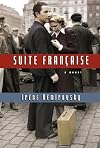
What a wonderful range of people Nemirovsky created, with such depth that even minor figures don’t come across as caricatures or stereotypes. And it must have been a particular challenge to avoid stereotypes when she was writing during the German invasion of France and her own experience of evacuation to what she hoped would be a safe retreat with her children.
The first section of the book shows the chaos of the flight from Paris as the Germans appear ready to occupy the city. Everyone has show more different thoughts about what it means for them, from the wealthy bourgeois packing up to move to their country home, the effete artist worrying about his porcelain collection, but especially the Michauds, left behind by their boss but still expected to find their way to their work in Tour and thinking themselves lucky to at least be together. Although there are elements of satire poking at the venality and self-centredness of the more privileged classes, Nemirovsky still shows their humanity, worrying about a son or a parent. This section covers such a range of people and what they discover about themselves and their comrades under wartime assaults that it made me think of the characters in War and Peace as they contemplate war and its outcomes. Tolstoy, however, doesn’t manage to develop any characters below the nobility except as stereotypes, while Nemirovsky has a wide social range.
The second part of the book focuses mainly on the relationship between an affluent countrywoman and the German officer who boards in her home. Even in this section, though, Nemirovsky succeeds in showing a range of complex characters, French and German, drawn as individuals with families and futures at risk. This section, however, makes a contrast with the chaos and confusion of the first section. Here, village life is orderly, regular and commonplace, even with the German soldiers stationed in the village. The German soldiers who don’t speak French, for example, struggle to buy mementos in the local shops as if they were tourists. The French resent their presence, but can’t help treating them as friendly visitors and customers. It’s ironic that when the Germans arrange a grand celebration on the anniversary of the capture of Paris, they tactfully avoid mentioning the reason, although everyone knows it, and the French turn out to watch the dancing, music and fireworks. Everyone tries to act as normally as possible, even while resisting the situation where they can. This gives an interesting insight to life under enemy occupation, where attempting to live a decent human life can later appear as collaboration.
In the second part of the book, it almost seems as if the characters are all together in the upset of the war, until the killing of a German soldier forces everyone to see that they are on different sides, whether or not they choose to be. Nemirovsky touches on wartime collaboration, but in the book as it exists here, she doesn’t have room, or perhaps experience, to explore it as the post-war French writers did. She was killed before the issue of collaboration acquired its later dimensions.
It is tragic that such a humanist writer as Nemirovsky would become a victim of inhuman Naziism as she was working on the remaining parts of the book. The excerpts from her letters to her husband and her publisher are tragic. It’s particularly poignant when in her notes for the book she promises never to take out her bitterness on individuals – she shows the Germans, as well as French people of various classes, as complex real people. For a book written while under the threat of annihilation in war, it’s remarkable that Nemirovsky’s humanism is such a strong theme. Based on this book, I’d look forward to reading some of her earlier books. show less
The first section of the book shows the chaos of the flight from Paris as the Germans appear ready to occupy the city. Everyone has show more different thoughts about what it means for them, from the wealthy bourgeois packing up to move to their country home, the effete artist worrying about his porcelain collection, but especially the Michauds, left behind by their boss but still expected to find their way to their work in Tour and thinking themselves lucky to at least be together. Although there are elements of satire poking at the venality and self-centredness of the more privileged classes, Nemirovsky still shows their humanity, worrying about a son or a parent. This section covers such a range of people and what they discover about themselves and their comrades under wartime assaults that it made me think of the characters in War and Peace as they contemplate war and its outcomes. Tolstoy, however, doesn’t manage to develop any characters below the nobility except as stereotypes, while Nemirovsky has a wide social range.
The second part of the book focuses mainly on the relationship between an affluent countrywoman and the German officer who boards in her home. Even in this section, though, Nemirovsky succeeds in showing a range of complex characters, French and German, drawn as individuals with families and futures at risk. This section, however, makes a contrast with the chaos and confusion of the first section. Here, village life is orderly, regular and commonplace, even with the German soldiers stationed in the village. The German soldiers who don’t speak French, for example, struggle to buy mementos in the local shops as if they were tourists. The French resent their presence, but can’t help treating them as friendly visitors and customers. It’s ironic that when the Germans arrange a grand celebration on the anniversary of the capture of Paris, they tactfully avoid mentioning the reason, although everyone knows it, and the French turn out to watch the dancing, music and fireworks. Everyone tries to act as normally as possible, even while resisting the situation where they can. This gives an interesting insight to life under enemy occupation, where attempting to live a decent human life can later appear as collaboration.
In the second part of the book, it almost seems as if the characters are all together in the upset of the war, until the killing of a German soldier forces everyone to see that they are on different sides, whether or not they choose to be. Nemirovsky touches on wartime collaboration, but in the book as it exists here, she doesn’t have room, or perhaps experience, to explore it as the post-war French writers did. She was killed before the issue of collaboration acquired its later dimensions.
It is tragic that such a humanist writer as Nemirovsky would become a victim of inhuman Naziism as she was working on the remaining parts of the book. The excerpts from her letters to her husband and her publisher are tragic. It’s particularly poignant when in her notes for the book she promises never to take out her bitterness on individuals – she shows the Germans, as well as French people of various classes, as complex real people. For a book written while under the threat of annihilation in war, it’s remarkable that Nemirovsky’s humanism is such a strong theme. Based on this book, I’d look forward to reading some of her earlier books. show less

Avete visto il film Suite Francese? Beh, dimenticatelo, è una storiella d'amore insulsa in confronto a questo resoconto romanzato degli sfollamenti della Parigi bombardata durante la Seconda Guerra Mondiale.
Un ritratto senza sconti di vite in guerra che con le bassezze della guerra devono fare i conti. Il risultato è un' avvincente storia incompiuta tratta dagli appunti di una grande scrittrice deportata ed "eliminata" in un campo di sterminio. E troviamo vigliacchi ed eroi, approfittatori show more e ingenui, temute divise di invasori indossate da uomini normali, spaccati di vita di quotidiana sopravvivenza.
Un bel, bellissimo libro, ma di certo non una storia d'amore. show less
Un ritratto senza sconti di vite in guerra che con le bassezze della guerra devono fare i conti. Il risultato è un' avvincente storia incompiuta tratta dagli appunti di una grande scrittrice deportata ed "eliminata" in un campo di sterminio. E troviamo vigliacchi ed eroi, approfittatori show more e ingenui, temute divise di invasori indossate da uomini normali, spaccati di vita di quotidiana sopravvivenza.
Un bel, bellissimo libro, ma di certo non una storia d'amore. show less

En una larga sobremesa en el restaurante del Grémio Literário, el histórico club de Lisboa, un viejo camarero recuerda lo que una vez le contara un anciano mexicano. Fue en la noche revolucionaria del 25 de Abril de 1974. El que fuera consejero de la legación mexicana en el Portugal de los años treinta y cuarenta, rememora el auge del fascismo, el inicio de la guerra civil española, la muerte del general Sanjurjo, la soledad del embajador Sánchez Albornoz y las maniobras de Nicolás show more Franco. Recuerda también su propio papel en la protección de los refugiados republicanos, desde campesinos, obreros y milicianos hasta el poeta Miguel Hernández, llevado a cabo con la ayuda de una red clandestina y de otros diplomáticos como Gabriela Mistral, cónsul de Chile. Las tensiones con el gobierno portugués fueron constantes. En un ambiente de intrigas cosmopolitas, la amenaza de una invasión española, las presiones del Eje para que Portugal entrara en la guerra mundial, además de las de los británicos para que mantuviese su neutralidad, fueron el caldo de cultivo de un extraño grupúsculo, formado por periodistas, policías y artistas, que buscaba refundar la nación, tal vez en algún lugar de Ultramar. show less
Bonjour Tristesse
This unfinished work contain two of a planned sequence of five novels by Irène Némirovsky, a French writer of Ukrainian-Jewish origin who converted to Catholicism before WWII.
Unfinished because of Némirovsky was murdered by then Nazis in Auschwitz in 1942. Her daughter typed up the two novels from handwritten manuscripts and notes. It has since been translated into English and other languages.Obviously unfinished, Némirovsky’s light stil shines through.
This is a gem of show more a book. The first novel, “Storm in June” describes the flight of Parisians when Germany invaded in 1940. Scenes are reminiscent of the refugees in Prophet Song in that the refugees are white Europeans. However the imagery here is lighter, understated, concentrating on groups of people, and highlighting to class differences in the fleeing Parisians.
Some were wealthy, with family connections outside Paris. These had planned ahead, or felt comfortable enough to just show up at the châteaus of wealthy family or friends. Others had few possessions and had no destination, no means of transport as trains had stopped running and petrol/gas supplies , if they were lucky enough to have a car, were limited. The most terrifying part is not from the invaders, but from out-of-control poor French adolescents who murder a humble priest who has been caring for them. Here is an example Némirovsky showing her consciousness of class in French society. The humble priest is from a wealthy family, the boys who kill him are under-nourished san culottes
The second novel,”Dolce” has only tenuous connection with “Storm”. It’s obvious from writings in notebooks that these ties would be worked on and continued in the next three novels. Some of the notes were written in English. Possibly sixty years later by the daughter?
However I have no reason to doubt the authenticity of the two novellas that survive. The style is consistent throughout.
“Storm” describes the German occupation of the French village of Bussy, a farming community in an idyllic setting. Here the Germans and French have ambiguous relationships with one another. Some French residents will not speak to the German soldiers they are forced to billet. Others have flings or affaires. Mostly the German troops are tolerated.
The two main characters are the German commander Bruno, and Lucile, a young French woman whose husband is a POW in Germany. The two have an almost affaire. Here the novel explores the deep and unbridgeable differences between the military Germans and the invaded French. For a fleeting time, four months, the two groups live in a fragile harmony with human decency ensuring a peaceful coexistence for most of the story.
Again Némirovsky shows the class differences that permeate French society. The rich exploit and despise the poor farmers who are the livelihood of the village. Two upper middle-class women joke about how they could eat crow soup but would despise the poor who would stoop so low as to devour it. The village mayor and his wife are without conscience when they fraternize with the Germans, whitest the poor do so of necessity or love.
With Bruno and Lucile, the would-be lovers, and an “‘incident” involving a local and the Germans, we move into page-turner territory. And it is here an alliance of sorts is made between the French rich and poor. Being French can after all, when push comes to shove, trump wealth.
I didn’t want this book to finish, and in the closing passages I was in tears when, knowing of the author’s fate, I read her parting words of hope for the future of the people she had created in these short works.
Highly recommended. show less
This unfinished work contain two of a planned sequence of five novels by Irène Némirovsky, a French writer of Ukrainian-Jewish origin who converted to Catholicism before WWII.
Unfinished because of Némirovsky was murdered by then Nazis in Auschwitz in 1942. Her daughter typed up the two novels from handwritten manuscripts and notes. It has since been translated into English and other languages.Obviously unfinished, Némirovsky’s light stil shines through.
This is a gem of show more a book. The first novel, “Storm in June” describes the flight of Parisians when Germany invaded in 1940. Scenes are reminiscent of the refugees in Prophet Song in that the refugees are white Europeans. However the imagery here is lighter, understated, concentrating on groups of people, and highlighting to class differences in the fleeing Parisians.
Some were wealthy, with family connections outside Paris. These had planned ahead, or felt comfortable enough to just show up at the châteaus of wealthy family or friends. Others had few possessions and had no destination, no means of transport as trains had stopped running and petrol/gas supplies , if they were lucky enough to have a car, were limited. The most terrifying part is not from the invaders, but from out-of-control poor French adolescents who murder a humble priest who has been caring for them. Here is an example Némirovsky showing her consciousness of class in French society. The humble priest is from a wealthy family, the boys who kill him are under-nourished san culottes
The second novel,”Dolce” has only tenuous connection with “Storm”. It’s obvious from writings in notebooks that these ties would be worked on and continued in the next three novels. Some of the notes were written in English. Possibly sixty years later by the daughter?
However I have no reason to doubt the authenticity of the two novellas that survive. The style is consistent throughout.
“Storm” describes the German occupation of the French village of Bussy, a farming community in an idyllic setting. Here the Germans and French have ambiguous relationships with one another. Some French residents will not speak to the German soldiers they are forced to billet. Others have flings or affaires. Mostly the German troops are tolerated.
The two main characters are the German commander Bruno, and Lucile, a young French woman whose husband is a POW in Germany. The two have an almost affaire. Here the novel explores the deep and unbridgeable differences between the military Germans and the invaded French. For a fleeting time, four months, the two groups live in a fragile harmony with human decency ensuring a peaceful coexistence for most of the story.
Again Némirovsky shows the class differences that permeate French society. The rich exploit and despise the poor farmers who are the livelihood of the village. Two upper middle-class women joke about how they could eat crow soup but would despise the poor who would stoop so low as to devour it. The village mayor and his wife are without conscience when they fraternize with the Germans, whitest the poor do so of necessity or love.
With Bruno and Lucile, the would-be lovers, and an “‘incident” involving a local and the Germans, we move into page-turner territory. And it is here an alliance of sorts is made between the French rich and poor. Being French can after all, when push comes to shove, trump wealth.
I didn’t want this book to finish, and in the closing passages I was in tears when, knowing of the author’s fate, I read her parting words of hope for the future of the people she had created in these short works.
Highly recommended. show less
Lists
Women in War (1)
Europe (1)
Persephone (1)
French Books (1)
1990s (1)
1940s (1)
Five star books (1)
Unread books (1)
War Literature (1)
. (1)
Favourite Books (1)
My wishlist (1)
Female Author (1)
THE WAR ROOM (1)
Jewish Books (1)
Best War Stories (1)
Awards


You May Also Like


Associated Authors
Statistics
- Works
- 90
- Also by
- 9
- Members
- 17,026
- Popularity
- #1,303
- Rating
- 3.9
- Reviews
- 643
- ISBNs
- 615
- Languages
- 25
- Favorited
- 39


