
Sadeq Hedayat (1903–1951)
Author of The Blind Owl
About the Author
Critics regard Sadiq Hidayat as one of the outstanding writers of the twentieth century. Known primarily for his short stories, he was influenced by Poe and Kafka. His stories plumb the depth of human motivation and seek out the meaning of life. Many critics regard his novel The Blind Owl (1937) as show more the masterpiece of all Persian fiction. His work evidences a deep pessimism, which eventually led him to suicide. (Bowker Author Biography) show less
Disambiguation Notice:
Do not combine La Chouette aveugle (ISBN 9782251455299) published by Les Belles Lettres with other versions of The Blind Owl: it contains extensive academic material (over 300 pages), the Farsi original of The Blind Owl, its French translation, and two short stories.
(fre) Ne pas combiner la version de La Chouette aveugle (ISBN 9782251455299) publiée par Les Belles Lettres avec les autres versions de La Chouette aveugle / The Blind Owl : elle contient un appareil critique considérable (plus de 300 pages), l'original en Farsi, la traduction française, plus deux nouvelles.
Image credit: Public domain
Works by Sadeq Hedayat
The Myth of Creation: A Puppet Show in Three Acts (Bibliotheca Iranica. Performing Arts Series, No. 4) (1998) 8 copies
al-Būmah al-ʻamyāʾ : riwāyah 5 copies
علویه خانم و ولنگاری 5 copies
O Mocho Cego 4 copies
توپ مرواری 4 copies
La Chouette aveugle 3 copies
NIRANGESTAN 3 copies
سایه روشن 3 copies
MAZIYAR 2 copies
داش آکل 2 copies
KARVANE ESLAM 2 copies
سه قطره خون 2 copies
پروین دختر ساسان 1 copy
Diri Gömülen 1 copy
Aleviye Hanım 1 copy
Vejetaryenliðin Yararlarý 1 copy
Üç Damla Kan 1 copy
Aylak Köpek 1 copy
محلل 1 copy
زنده به گور 1 copy
FA62 - 4 stories 1 copy
FA115 - 4 stories 1 copy
مختارات من قصص صادق هدايت 1 copy
Üç Damla Kan 1 copy
سایه و روشن 1 copy
مازيار 1 copy
البومة العمياء 1 copy
Het paarlen kanon 1 copy
گروه محکومین 1 copy
Kafkina poruka 1 copy
عروسک پشت پرده 1 copy
گزارش گمان شکن 1 copy
Associated Works
Tablet & Pen: Literary Landscapes from the Modern Middle East (Words Without Borders) (2010) — Contributor — 225 copies, 2 reviews
Tagged
Common Knowledge
- Canonical name
- Hedayat, Sadeq
- Birthdate
- 1903-02-17
- Date of death
- 1951-04-04
- Gender
- male
- Education
- Dar ol-Fonoon
- Occupations
- writer
translator
intellectual - Short biography
- Hedayat subsequently devoted his whole life to studying Western literature and to learning and investigating Iranian history and folklore. The works of Guy de Maupassant, Anton Chekhov, Rainer Maria Rilke, Edgar Allan Poe and Franz Kafka intrigued him the most. During his short literary life span, Hedayat published a substantial number of short stories and novelettes, two historical dramas, a play, a travelogue, and a collection of satirical parodies and sketches. His writings also include numerous literary criticisms, studies in Persian folklore, and many translations from Middle Persian and French. He is credited with having brought Persian language and literature into the mainstream of international contemporary writing. There is no doubt that Hedayat was the most modern of all modern writers in Iran. Yet, for Hedayat, modernity was not just a question of scientific rationality or a pure imitation of European values.In his later years, feeling the socio-political problems of the time, Hedayat started attacking the two major causes of Iran’s decimation, the monarchy and the clergy, and through his stories he tried to impute the deafness and blindness of the nation to the abuses of these two major powers. Feeling alienated by everyone around him, especially by his peers, Hedayat’s last published work, The Message of Kafka, bespeaks melancholy, desperation and a sense of doom experienced only by those subjected to discrimination and repression.
Hedayat's most enduring work is the short novel The Blind Owl of 1937. It has been called "one of the most important literary works in the Persian language"
He ended his life by gassing himself and is buried in the Père Lachaise. - Cause of death
- carbon monoxide poisoning (by suicide)
- Nationality
- Persia
- Birthplace
- Tehran, Iran
- Places of residence
- Tehran, Iran (birth)
Paris, Île-de-France, France - Place of death
- Paris, Île-de-France, France
- Burial location
- Cimetière du Père-Lachaise, Paris, France
- Map Location
- Iran
- Disambiguation notice
- Do not combine La Chouette aveugle (ISBN 9782251455299) published by Les Belles Lettres with other versions of The Blind Owl: it contains extensive academic material (over 300 pages), the Farsi original of The Blind Owl, its French translation, and two short stories.
Members
Discussions
The Blind Owl in The Chapel of the Abyss (July 2018)
Reviews

The Blind Owl is a gorgeously written opium nightmare. The plot is circular and surreal and much of this slim book is taken up by the narrator’s claustrophobic musings on death and decay. Although it is divided into two parts - a present and a past - everything feels timeless and like something half-remembered out of a dream. The narrator overtly sets out to tell th story as one that is unbelievable and painful. He lives alone and paints pen cases for a living - always the same picture of show more an old man, a beautiful girl and a stream. One day, while retrieving something from a closet, he sees this picture come to life through a hole in the wall. But he can’t find the man or the girl outside and even the hole in his closet has disappeared. The narrator is tormented and frantically searches for this image - until one day the girl turns up at his doorstep. His story devolves into one of death, possession, and guilt and ends in a highly symbolic journey.
In the second half the narrator has jumped in time but still the same elements appear - the girl, the old man laughing, the same buildings and places and situations. Here, the narrator is an invalid with a scornful, unfaithful wife. But he’s still isolated, alienated and fixated on death. Events occur in a dreamlike and fateful manner. Claustrophobic, repetitive and nightmarish but undeniably well-written. show less
In the second half the narrator has jumped in time but still the same elements appear - the girl, the old man laughing, the same buildings and places and situations. Here, the narrator is an invalid with a scornful, unfaithful wife. But he’s still isolated, alienated and fixated on death. Events occur in a dreamlike and fateful manner. Claustrophobic, repetitive and nightmarish but undeniably well-written. show less
The Blind Owl (Authorized by The Sadegh Hedayat Foundation - First Translation into English Based on the Bombay Edition) by Sadeq Hedayat
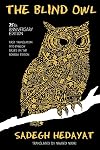
This is a fever-dream of a dark, compelling novel, and a reading experience that sucks one in until each moment is its own small psychological impact. A novel that was banned in Hedayat's home country of Iran, the work mounts gorgeous prose, a poetic sensibility, and a sometimes-style of repetition that makes one feel as if they're being sucked into a whirlpool of a story. It's a novel to be sucked into and experience...and perhaps to be read more than once if the darkness isn't too show more much.
Recommended. show less
Recommended. show less
The Blind Owl (Authorized by The Sadegh Hedayat Foundation - First Translation into English Based on the Bombay Edition) by Sadeq Hedayat
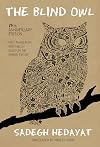
I had read various things about this book that left me with a feeling of trepidation about reading it. It apparently has a reputation for encouraging suicide. Some consider its portrayal of women to be misogynistic. It deals with madness, drug addiction and murder in violent terms.
I wasn't expecting to enjoy it, but I did. It reminded me of the passages in Crime and Punishment where we experience Raskolnikov's delirium. The repetition and nightmarish quality also made me think of Kafka.
The show more narrator is unreliable. From the start he tells us that he is an opium addict and an alcoholic. The story he tells is disjointed, jumbled, part hallucination, and it's never clear whether any of it is true, because we never hear from anyone else. He's talking to his shadow which makes the shape of an owl on the wall.
As a testimony of someone who is severely mentally ill, it is compelling. The narrator is imprisoned inside his own mind, and in the story he tells this is represented by the room in which he is quarantined during an illness that seems to start when his adoptive mother dies. From the experience of viewing her body all his paranoia stems.
He believes his wife to be unfaithful, but I'm not convinced he really has a wife. He refers to her as a whore because he believes she forced him to have intercourse with her alongside her dead mother's body. He is obsessed with the butcher's shop across the street, and tells us that he killed his wife having witnessed the butcher slaughtering sheep. He relates a family history that is part ancient myth, explaining that he doesn't know who his father is. His hallucinations recur around the vision of a young girl he believes to be his wife but also his mother, dancing for a peddler that he believes is his father and uncle and his wife's father and a beggar in the street.
The narration reads to me like mania, the ravings of someone who believes the things their corrupted mind is telling them about the people around them. The narrator's conviction that his wife is unfaithful made sense to me, in relation to his mental illness. I didn't think it was misogyny. For that to be true, the narrator would have to clearly state that all women were whores. His delusion only makes him believe that of his wife. He is not coherent in his narration. His mind is a jumble tipped out onto the page. His delusion is what dictates his violent actions, including what we see as the rape and murder of his wife, but that he only sees as her accidental killing in a moment he doesn't fully remember happening.
Perhaps the translation I read is different to the one most often discussed online. I read the 75th anniversary edition translated by Naveed Noori and authorised by the Sadegh Hedayat Foundation. The claim of the translator is that his is most true to meaning, based as it is on the earliest known manuscript and not on later, possibly corrupt, editions. He claims to have retained the sense of frenzy from the original, whereas other translators have favoured narrative flow and inadvertently made the narrator seem a more reasonable man. I might seek out the Costello translation from 1957 for comparison.
I have no idea whether Hedayat intended the book to be an allegory for Persia/Iran under Reza Shah. I have no cultural reference points to recognise any allusions Hedayat made in the text (although the footnotes helped at times). I have no idea whether Hedayat himself was mentally ill. I read the book purely as a story and I do know that The Blind Owl is one of the most interesting treatments of mental illness in fiction that I have read. show less
I wasn't expecting to enjoy it, but I did. It reminded me of the passages in Crime and Punishment where we experience Raskolnikov's delirium. The repetition and nightmarish quality also made me think of Kafka.
The show more narrator is unreliable. From the start he tells us that he is an opium addict and an alcoholic. The story he tells is disjointed, jumbled, part hallucination, and it's never clear whether any of it is true, because we never hear from anyone else. He's talking to his shadow which makes the shape of an owl on the wall.
As a testimony of someone who is severely mentally ill, it is compelling. The narrator is imprisoned inside his own mind, and in the story he tells this is represented by the room in which he is quarantined during an illness that seems to start when his adoptive mother dies. From the experience of viewing her body all his paranoia stems.
He believes his wife to be unfaithful, but I'm not convinced he really has a wife. He refers to her as a whore because he believes she forced him to have intercourse with her alongside her dead mother's body. He is obsessed with the butcher's shop across the street, and tells us that he killed his wife having witnessed the butcher slaughtering sheep. He relates a family history that is part ancient myth, explaining that he doesn't know who his father is. His hallucinations recur around the vision of a young girl he believes to be his wife but also his mother, dancing for a peddler that he believes is his father and uncle and his wife's father and a beggar in the street.
The narration reads to me like mania, the ravings of someone who believes the things their corrupted mind is telling them about the people around them. The narrator's conviction that his wife is unfaithful made sense to me, in relation to his mental illness. I didn't think it was misogyny. For that to be true, the narrator would have to clearly state that all women were whores. His delusion only makes him believe that of his wife. He is not coherent in his narration. His mind is a jumble tipped out onto the page. His delusion is what dictates his violent actions, including what we see as the rape and murder of his wife, but that he only sees as her accidental killing in a moment he doesn't fully remember happening.
Perhaps the translation I read is different to the one most often discussed online. I read the 75th anniversary edition translated by Naveed Noori and authorised by the Sadegh Hedayat Foundation. The claim of the translator is that his is most true to meaning, based as it is on the earliest known manuscript and not on later, possibly corrupt, editions. He claims to have retained the sense of frenzy from the original, whereas other translators have favoured narrative flow and inadvertently made the narrator seem a more reasonable man. I might seek out the Costello translation from 1957 for comparison.
I have no idea whether Hedayat intended the book to be an allegory for Persia/Iran under Reza Shah. I have no cultural reference points to recognise any allusions Hedayat made in the text (although the footnotes helped at times). I have no idea whether Hedayat himself was mentally ill. I read the book purely as a story and I do know that The Blind Owl is one of the most interesting treatments of mental illness in fiction that I have read. show less
This was enthralling though I didn’t understand a darn thing. Is this a hallucination of a man on drugs? Is this a picture of increasing madness culminating in murder? Is the wife an innocent party married to a paranoid lunatic? Did nothing at all actually happen? The Blind Owl is a catastrophe you can’t look away from.
Lists
Awards


You May Also Like


Associated Authors
Statistics
- Works
- 76
- Also by
- 3
- Members
- 1,935
- Popularity
- #13,309
- Rating
- 3.9
- Reviews
- 48
- ISBNs
- 128
- Languages
- 14
- Favorited
- 14