
Angélica Gorodischer (1928–2022)
Author of Kalpa Imperial: The Greatest Empire That Never Was
About the Author
Image credit: Ariadne Primavera
Works by Angélica Gorodischer
The Violet’s Embryos (short story) 3 copies
Esas Malditas Mujeres: Cuentos De Escritoras Latinoamericanas Contemporaneas (Spanish Edition) (1998) 2 copies
Prodiges 1 copy
Tirabuzón 1 copy
CUENTOS DE MISTERIO 1 copy
Associated Works
The Big Book of Science Fiction: The Ultimate Collection (2016) — Contributor — 522 copies, 8 reviews
Sisters of the Revolution: A Feminist Speculative Fiction Anthology (2015) — Contributor — 345 copies, 8 reviews
Cosmos Latinos: An Anthology of Science Fiction from Latin America and Spain (2003) — Contributor — 75 copies, 2 reviews
The House of Memory: Stories by Jewish Women Writers of Latin America (1999) — Contributor — 34 copies
Secret Weavers: Stories of the Fantastic by Women Writers of Argentina and Chile (1991) — Contributor — 25 copies
The Magazine of Fantasy and Science Fiction May/June 2013, Vol. 124, Nos. 5 & 6 (2013) — Contributor — 21 copies, 4 reviews
Cuentos fantásticos y de ciencia ficción en América Latina — Contributor — 1 copy
Tagged
Common Knowledge
- Canonical name
- Gorodischer, Angélica
- Legal name
- Arcal de Gorodischer, Angélica Beatriz del Rosario
- Birthdate
- 1928-07-28
- Date of death
- 2022-02-05
- Gender
- female
- Education
- Facultad de Filosofía y Letras de la Universidad Nacional del Litoral
Escuela Normal N° 2 de Profesoras, Rosario, Argentina - Occupations
- writer
- Awards and honors
- Premio Vea y Lea (1964)
Premio Club del Orden (1965)
Premio Más Allá y Poblet (1984)
Premio Emecé (1984-85)
Premio Sigfrido Radaelli (1985)
Premio Gigamesh en España (1986) (show all 18)
Premio Konex Diploma al Mérito (1984)
Premio Konex de Platino (1994)
Premio Dignidad de la APDH (1996-1997)
Premio Bullrich de la SADE (1998)
Premio Esteban Echeverría (2000)
Premio ILCH en California (2007)
World Fantasy Award for Life Achievement (2011)
Prix Imaginales (2018)
Premio Fondo Nacional de las Artes (2018)
Ciudadana Ilustre de Rosario (2007)
Personalidad Destacada de la Cultura de Buenos Aires (2012)
Doctorado Honoris Causa de la UNCuyo (2017) - Cause of death
- natural causes
- Nationality
- Argentina
- Birthplace
- Buenos Aires, Argentina
- Places of residence
- Rosario, Argentina
- Place of death
- Rosario, Argentina
- Associated Place (for map)
- Rosario, Argentina
Members
Reviews

Rating: 4* of five
The Publisher Says: Jaguars' Tomb is a novel in three parts, written by three interconnected characters. Part one, "Hidden Variables" by María Celina Igarzábal, is narrated by Bruno Seguer. Seguer in turn is the author of the second part, "Recounting from Zero" ("Contar desde zero"), in which Evelynne Harrington, author of the third, is a central character. Harrington, finally, is the author of "Uncertainty" ("La incertidumbre"), whose protagonist is the dying Igarzábal. show more Each of the three parts revolves around the octagonal room that is alternately the jaguars' tomb, the central space of the torture center, and the heart of an abandoned house that hides an adulterous affair.
The novel, by Argentine author Angélica Gorodischer, is both an intriguing puzzle and a meditation on how to write about, or through, violence, injustice, and loss. Among Gorodischer's many novels, Jaguars' Tomb most directly addresses the abductions and disappearances that occurred under the Argentine military dictatorship of 1976-83. This is the fourth of Gorodischer's books translated into English. The first, Kalpa Imperial—translated by Ursula Le Guin—was selected for the New York Times summer reading list in 2003.
I RECEIVED A DRC FROM THE PUBLISHER VIA EDELWEISS+. THANK YOU.
My Review: Y'all remember me talking up Kalpa Imperial, right? The link is above for refreshing of memories. This novel, made up of three novellas "by" three writer-characters, is like that collection of SFF stories in the sense that she is using the narrative form to make a bigger point that really means more than than it would if she just sat down and typed out the story.
Oh dear. That sounded like a rush to the exit.
The Dirty War against the Argentine military junta's enemies started almost fifty years ago...officially...but it won't really be over while there are survivors bearing scars. If you're wondering how long that will be...read A FLOWER TRAVELED IN MY BLOOD: The Incredible True Story of the Grandmothers Who Fought to Find a Stolen Generation of Children. These are nation-defining scars inflicted in the name of...what, greed? cruelty for its own sake?...these questions are the ones Author Gorodischer treats in these three novellas.
I think a lot of people, hearing that a novel is woven of shorter story-strands, aren't inclined to do more than nod absently that they've heard the description. Add another layer of artifice, fictional authors telling these fictional stories, and *click* out go the lights as brains head upstairs to bed.
Wake up now, drink some of Author Gorodischer's strong, bitter coffee, and think about what could cause so much pain that the story must be wrapped in a big layer cake of artifice in order to bring the impact down to bearable levels. That is the case with these intertwined tales of the horrors of life under a government that kidnaps, tortures, and kills its citizens who are guilty of nothing but disagreeing with the very government that is committing these horrible acts.
Layering, padding, defenses against the mere idea of direct head-on confrontation with the terrible subject...well, yeah, I think that would never be less than a helpful coping strategy. And as the layers are constructed they reveal what they were made to obscure. The very title of the novel is an uneasy nod to the avoided reality. There are many things this technique does well, eg making the empty space the center of the story's arc much as the absence of los desaparecidos is the center of those left behind's lives.
Like any technique, though, every benefit has a cost. Avoidance of difficult topics can end up with the literary equivalent of avoidant personality disorder. The bitterness of self-judgment, the harsh inner gaze that spotlights things not done, the Inquisition-level blaming of everyone especially the self for things not reasonably in their control, all so reasonably justified and so irrational on examination, all here. It's not an easy read though it's written in lovely prose. The depths of loss and rage...these are never easy topics to treat. It's greatly to Author Gorodischer's credit that she does not use her padding as a cop-out, a way of prettifying horrifying behavior.
It is inevitable that splitting the story into three narratives by three different people who are all writing about each other does not create deep investment in each character. While I can see this as a deliberate choice made to reinforce the central absence as painful, it also makes the read more effortful in the moment. I read this book to about the 33% mark during the Biden administration's extraordinary rendition kerfuffle (he'd publicly opposed it in 2007 but it continued as fact if not policy). It felt artificial, a stylistic tic to me then.
Come January 2025 and Kilmar Abrego García's travails, the idea seemed much more immediate, indeed urgent, to grapple with. I found myself unwilling to confront the horrors head-on, needing some space between myself and the topic's hyperreality.
Rather makes Author Gorodischer's case for her technical choice for her.
I'm hoping this desire to see what the behaviors we are tacitly, by silence, condoning today cost an earlier generation of a society that did then what we are doing now cost them in psychic suffering. show less
The Publisher Says: Jaguars' Tomb is a novel in three parts, written by three interconnected characters. Part one, "Hidden Variables" by María Celina Igarzábal, is narrated by Bruno Seguer. Seguer in turn is the author of the second part, "Recounting from Zero" ("Contar desde zero"), in which Evelynne Harrington, author of the third, is a central character. Harrington, finally, is the author of "Uncertainty" ("La incertidumbre"), whose protagonist is the dying Igarzábal. show more Each of the three parts revolves around the octagonal room that is alternately the jaguars' tomb, the central space of the torture center, and the heart of an abandoned house that hides an adulterous affair.
The novel, by Argentine author Angélica Gorodischer, is both an intriguing puzzle and a meditation on how to write about, or through, violence, injustice, and loss. Among Gorodischer's many novels, Jaguars' Tomb most directly addresses the abductions and disappearances that occurred under the Argentine military dictatorship of 1976-83. This is the fourth of Gorodischer's books translated into English. The first, Kalpa Imperial—translated by Ursula Le Guin—was selected for the New York Times summer reading list in 2003.
I RECEIVED A DRC FROM THE PUBLISHER VIA EDELWEISS+. THANK YOU.
My Review: Y'all remember me talking up Kalpa Imperial, right? The link is above for refreshing of memories. This novel, made up of three novellas "by" three writer-characters, is like that collection of SFF stories in the sense that she is using the narrative form to make a bigger point that really means more than than it would if she just sat down and typed out the story.
Oh dear. That sounded like a rush to the exit.
The Dirty War against the Argentine military junta's enemies started almost fifty years ago...officially...but it won't really be over while there are survivors bearing scars. If you're wondering how long that will be...read A FLOWER TRAVELED IN MY BLOOD: The Incredible True Story of the Grandmothers Who Fought to Find a Stolen Generation of Children. These are nation-defining scars inflicted in the name of...what, greed? cruelty for its own sake?...these questions are the ones Author Gorodischer treats in these three novellas.
I think a lot of people, hearing that a novel is woven of shorter story-strands, aren't inclined to do more than nod absently that they've heard the description. Add another layer of artifice, fictional authors telling these fictional stories, and *click* out go the lights as brains head upstairs to bed.
Wake up now, drink some of Author Gorodischer's strong, bitter coffee, and think about what could cause so much pain that the story must be wrapped in a big layer cake of artifice in order to bring the impact down to bearable levels. That is the case with these intertwined tales of the horrors of life under a government that kidnaps, tortures, and kills its citizens who are guilty of nothing but disagreeing with the very government that is committing these horrible acts.
Layering, padding, defenses against the mere idea of direct head-on confrontation with the terrible subject...well, yeah, I think that would never be less than a helpful coping strategy. And as the layers are constructed they reveal what they were made to obscure. The very title of the novel is an uneasy nod to the avoided reality. There are many things this technique does well, eg making the empty space the center of the story's arc much as the absence of los desaparecidos is the center of those left behind's lives.
Like any technique, though, every benefit has a cost. Avoidance of difficult topics can end up with the literary equivalent of avoidant personality disorder. The bitterness of self-judgment, the harsh inner gaze that spotlights things not done, the Inquisition-level blaming of everyone especially the self for things not reasonably in their control, all so reasonably justified and so irrational on examination, all here. It's not an easy read though it's written in lovely prose. The depths of loss and rage...these are never easy topics to treat. It's greatly to Author Gorodischer's credit that she does not use her padding as a cop-out, a way of prettifying horrifying behavior.
It is inevitable that splitting the story into three narratives by three different people who are all writing about each other does not create deep investment in each character. While I can see this as a deliberate choice made to reinforce the central absence as painful, it also makes the read more effortful in the moment. I read this book to about the 33% mark during the Biden administration's extraordinary rendition kerfuffle (he'd publicly opposed it in 2007 but it continued as fact if not policy). It felt artificial, a stylistic tic to me then.
Come January 2025 and Kilmar Abrego García's travails, the idea seemed much more immediate, indeed urgent, to grapple with. I found myself unwilling to confront the horrors head-on, needing some space between myself and the topic's hyperreality.
Rather makes Author Gorodischer's case for her technical choice for her.
I'm hoping this desire to see what the behaviors we are tacitly, by silence, condoning today cost an earlier generation of a society that did then what we are doing now cost them in psychic suffering. show less

There seems to be a bit of a dispute if Trafalgar is a novel or a stories collection. It can be either of them or it can be a mix between them. It does have an internal coherence though which makes it closer to a novel or a collection of linked stories. Small Beer Press called it a novel so this is how I am calling it as well.
Trafalgar Medrano is born in Rosario in 1936, an only child of the city's clinician and his wife. Nothing unusual about him - except that he decides to become a show more businessman (and merchant) and he has a gift of telling stories about the places he had been in. And those places are not on Earth - literary - Trafalgar travels between different worlds, with his trusty old clunker (his spaceship) and then when he is back, he likes telling people about those places and what he had seen and done. And he has one big vice - coffee - he drinks it by the gallon, almost like a comic relief in some parts of the novel.
This is the framework that Gorodischer uses to build her worlds - each chapter is a story from Trafalgar describing a new world - some of them imagined, some of them from the past of the Earth of 1492 (with Columbus, Isabella and Ferdinand, the Inquisition and the discovery of America), some of them based on local cultures (the castes of India for example). Each of these world fully formed, fully executed and totally believable. There is death and betrayal, there is love and sweetness, there is longing for home and thirst for adventure. And at the end of the book, the novel makes a circle, connecting the start with the end (and thus making it more a novel than just stories) - to show that no matter how interesting his adventures are, Trafalgar is still a normal guy.
There is a little problem of course - noone else had ever been on a trip to another planet and through the text, there is the question if these are imaginary stories or if it all happened. But the more you read, the more you realize that it does not matter - they could have happened or might not have happened - it is up to the reader to decide how to read and understand it. I choose to believe that Trafalgar had really traveled to other worlds - because this is what science fiction is all about after all. It is interesting that Gorodischer decides to introduce an aunt, a matron from the older generation to be the voice of reason (she cannot even imagine that these are space stories and tries to position them somewhere in Africa or close to India) while everyone else is open to the idea of space. How one wants to interpret this is up to the reader.
But those stories are not only about women and grand adventures - they are a way for Gorodischer to talk about the meaning of things, the time and the norms. Set the story on a foreign world and it does not sound as if you are talking about what is happening on Earth. There is two ways to read the book - at a face value, as the adventures of Trafalgar in space or as something a bit more, with looking for metaphors through it.
It a way it is also a meta novel - Gorodischer is a character in her own novel, the Argentina of the time and the manners of the ladies of the land are part of the novel, she even mentions one of her novels (the only other one that is translated into English really).
At the end I suspect that everyone will read and understand this book differently - depending on what they expected, what they felt while reading and what they are used to reading. And that is what makes it good literature - it has so many facets and so many possibilities - but without making it confusing or incomplete. It is highly readable, skillfully planned and executed book that ultimately shows what the science fiction can be (and what it had been for a while considering when the book was written). And the translator (which usually would be mentioned only if things had gone wrong) had done marvelous job here.
I am not surprised that Gorodischer is so popular amongst the readers of Spanish. I wish that someone will translate more of her work into English though... show less
Trafalgar Medrano is born in Rosario in 1936, an only child of the city's clinician and his wife. Nothing unusual about him - except that he decides to become a show more businessman (and merchant) and he has a gift of telling stories about the places he had been in. And those places are not on Earth - literary - Trafalgar travels between different worlds, with his trusty old clunker (his spaceship) and then when he is back, he likes telling people about those places and what he had seen and done. And he has one big vice - coffee - he drinks it by the gallon, almost like a comic relief in some parts of the novel.
This is the framework that Gorodischer uses to build her worlds - each chapter is a story from Trafalgar describing a new world - some of them imagined, some of them from the past of the Earth of 1492 (with Columbus, Isabella and Ferdinand, the Inquisition and the discovery of America), some of them based on local cultures (the castes of India for example). Each of these world fully formed, fully executed and totally believable. There is death and betrayal, there is love and sweetness, there is longing for home and thirst for adventure. And at the end of the book, the novel makes a circle, connecting the start with the end (and thus making it more a novel than just stories) - to show that no matter how interesting his adventures are, Trafalgar is still a normal guy.
There is a little problem of course - noone else had ever been on a trip to another planet and through the text, there is the question if these are imaginary stories or if it all happened. But the more you read, the more you realize that it does not matter - they could have happened or might not have happened - it is up to the reader to decide how to read and understand it. I choose to believe that Trafalgar had really traveled to other worlds - because this is what science fiction is all about after all. It is interesting that Gorodischer decides to introduce an aunt, a matron from the older generation to be the voice of reason (she cannot even imagine that these are space stories and tries to position them somewhere in Africa or close to India) while everyone else is open to the idea of space. How one wants to interpret this is up to the reader.
But those stories are not only about women and grand adventures - they are a way for Gorodischer to talk about the meaning of things, the time and the norms. Set the story on a foreign world and it does not sound as if you are talking about what is happening on Earth. There is two ways to read the book - at a face value, as the adventures of Trafalgar in space or as something a bit more, with looking for metaphors through it.
It a way it is also a meta novel - Gorodischer is a character in her own novel, the Argentina of the time and the manners of the ladies of the land are part of the novel, she even mentions one of her novels (the only other one that is translated into English really).
At the end I suspect that everyone will read and understand this book differently - depending on what they expected, what they felt while reading and what they are used to reading. And that is what makes it good literature - it has so many facets and so many possibilities - but without making it confusing or incomplete. It is highly readable, skillfully planned and executed book that ultimately shows what the science fiction can be (and what it had been for a while considering when the book was written). And the translator (which usually would be mentioned only if things had gone wrong) had done marvelous job here.
I am not surprised that Gorodischer is so popular amongst the readers of Spanish. I wish that someone will translate more of her work into English though... show less

Scrittura magnetica. Vengono descritte varie fasi dell'impero attraverso principalmente le voci dei cantastorie. Un sacco di interessanti riflessioni sulla società e sul potere, con alcuni regnanti veramente ben descritti.
Bell'intrattenimento, ma alla fine un po' la freddezza, un po' la frammentazione, non riesco a gridare al capolavoro come avrei voluto.
Bell'intrattenimento, ma alla fine un po' la freddezza, un po' la frammentazione, non riesco a gridare al capolavoro come avrei voluto.
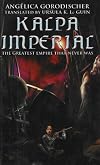
This mysterious Argentinian fantasy novel reminded me of Sylvia Townsend Warner’s [b:Kingdoms of Elfin|970443|Kingdoms of Elfin|Sylvia Townsend Warner|https://images.gr-assets.com/books/1395851905s/970443.jpg|955340], Mervyn Peake’s [b:Gormenghast|258392|Gormenghast (Gormenghast, #2)|Mervyn Peake|https://images.gr-assets.com/books/1480786154s/258392.jpg|3599885], M. John Harrison's [b:Viriconium|304217|Viriconium|M. John show more Harrison|https://images.gr-assets.com/books/1347891771s/304217.jpg|295248], and, inevitably, the stories of Borges. Angelica Gorodischer tells a series of tales from the long history of an Empire, full of allegories for colonialism, dictatorships, and other political developments. If I knew more about the history of Argentina, perhaps I’d be able to pinpoint them more precisely. Yet my instinct is that the allegories are oblique rather than direct. The stories occur in apparently non-linear sequence and deal with the rise and fall of dynasties. This is a not a fantasy world of magic, although at one point a dragon briefly appears. The fantastical element is the seeming lack of technological development driving political events. Despite mentions of buses, guns, and suchlike, in most of the stories the setting appears pre-industrial (or perhaps post-apocalyptic?) and inclined to absolute hereditary rule. Most of the stories centre on emperors and empresses, but take a similarly impersonal, timeless approach to [b:Kingdoms of Elfin|970443|Kingdoms of Elfin|Sylvia Townsend Warner|https://images.gr-assets.com/books/1395851905s/970443.jpg|955340]. Centuries appear to pass in a few paragraphs and characters who are introduced with seeming importance vanish, as the narrative moves on to their great-grandchildren.
Like [b:Severance|36348525|Severance|Ling Ma|https://images.gr-assets.com/books/1507060524s/36348525.jpg|58029884], ‘Kalpa Imperial’ is concerned with life in cities. My second favourite of the stories is titled ‘Concerning the Unchecked Growth of Cities’ and follows the development of a city from bandit hideout to artistic centre to oppressed victim and beyond. Throughout the book, the reader is made very aware of the storyteller’s voice and their determination to tell the stories in a particular way. This narrative conceit is especially notable in my favourite story, ‘Portrait of the Empress’, as the storyteller himself is a main character. I liked it best, though, because of the Empress and her policy of banning nearly all wheeled transport. Since I would strictly control car ownership if I happened to be an empress, this was delightful to come upon:
The Great Empress is a wonderful role model. She is the most vivid character in the book, as cities and dynasties largely obscure individuals. ‘Kalpa Imperial’ contains some strange, irreverent, and thought-provoking fairytales. While these are entertaining in their own right, they also invite the reader to contemplate historiography and the formation of myths. show less
Like [b:Severance|36348525|Severance|Ling Ma|https://images.gr-assets.com/books/1507060524s/36348525.jpg|58029884], ‘Kalpa Imperial’ is concerned with life in cities. My second favourite of the stories is titled ‘Concerning the Unchecked Growth of Cities’ and follows the development of a city from bandit hideout to artistic centre to oppressed victim and beyond. Throughout the book, the reader is made very aware of the storyteller’s voice and their determination to tell the stories in a particular way. This narrative conceit is especially notable in my favourite story, ‘Portrait of the Empress’, as the storyteller himself is a main character. I liked it best, though, because of the Empress and her policy of banning nearly all wheeled transport. Since I would strictly control car ownership if I happened to be an empress, this was delightful to come upon:
When the Great Empress prohibited all private transportation by wheeled vehicles, many people said she was crazy. Even I, who knew her well by then, looked at her in astonishment and asked her what could be the use of so absurd a measure.
“They increase delinquency,” she answered, “they’ve increased divorces and confinements for mental instability.”
“I confess I don’t understand you, ma’am,” I said. “What have wheeled vehicles got to do with all that? What you ought to do, surely, is institute measures against delinquency, divorces, and insanity.”
“And increase the size of the police force and extend their powers?” said she. “Make it even harder for people to get a divorce? Encourage doctors to study and treat the mad? How stupid. You wouldn’t be a good ruler, my dear friend, although I hope my sons will be. All we’d get by that would be more policemen full of pride and brutality, more lawyers full of red tape, more doctors full of fatuity, and hence more criminal assaults, more divorces, and more nut cases.”
“And by prohibiting private transportation-?” I enquired.
“We’ll see,” she told me.
She was right, of course. Cars and private planes disappeared. Only those who absolutely had to travel more than twenty kilometres were allowed to use public transportation on wheels. Most people walked, or rode donkeys, or, if they were wealthy, had themselves carried in litters. Life slowed down. People didn’t get anxious, because it wasn’t any use. The big centres of buying and selling and banking and industry disappeared, where everybody used to crowd in and push each other and get cross and curse each other out, and small shops opened, little places in every neighbourhood where every merchant and banker and businessman knew his customers and their families.
[...]
And the Great Empress smiled in satisifaction and I admitted to her she’d been right and told her the history of Sderemir the Borenid.
“Yes,” she said, “I know a lot of people say the world is complicated. The ones who say so are the ones who are kept anxious all the time by their work or their family, by a move or an illness, a storm, anything unexpected, anything at all; and then they make bad choices and when things turn out badly they blame it on the world for being complicated and not on their own low and imperfect standards. Why don’t they go further? Why say ‘the world is complicated’ and stop there? I say the world is complicated but not incomprehensible. Only you have to look at it steadily.”
The Great Empress is a wonderful role model. She is the most vivid character in the book, as cities and dynasties largely obscure individuals. ‘Kalpa Imperial’ contains some strange, irreverent, and thought-provoking fairytales. While these are entertaining in their own right, they also invite the reader to contemplate historiography and the formation of myths. show less
Lists
Awards


You May Also Like


Associated Authors
Statistics
- Works
- 35
- Also by
- 15
- Members
- 1,145
- Popularity
- #22,428
- Rating
- 3.7
- Reviews
- 35
- ISBNs
- 68
- Languages
- 4
- Favorited
- 3