

Ruth Padel
Author of 52 Ways of Looking at a Poem: A Poem for Every Week of the Year
About the Author
Image credit: Don't Stray from the Path...
Works by Ruth Padel
Associated Works
The Oresteia: Agamemnon, Women at the Graveside, Orestes in Athens (0458) — Introduction, some editions — 11,737 copies, 87 reviews
Answering Back: Living Poets Reply to the Poetry of the Past (2007) — Contributor — 119 copies, 1 review
Tagged
Common Knowledge
- Legal name
- Padel, Ruth Sophia
- Birthdate
- 1946-05-08
- Gender
- female
- Education
- University of Oxford (Lady Margaret Hall)
- Occupations
- poet
novelist
non-fiction writer - Organizations
- Oxford University (Bowra Research Fellow, Wadham College)
- Awards and honors
- Zoological Society of London (Fellow)
Royal Society of Literature (Fellow) - Relationships
- Padel, John (father)
Padel, Oliver J. (brother)
Barlow, Nora (grandmother)
Barlow, Horace (uncle)
Burnyeat, Myles (husband, divorced)
Darwin, Charles (great-great-grandfather) - Nationality
- UK
- Birthplace
- London, England, UK
- Places of residence
- London, England, UK
Crete, Greece - Map Location
- England, UK
Members
Reviews

How much do you know about Beethoven's life? Most people had heard at least some of his compositions and probably know that he lost his hearing but the rest had usually been reserved for music historians (and people who just happen to read a biography).
Ruth Padel grew up with Beethoven. Not literally - she is not that old but she grew up in a musician family, playing the viola and Beethoven was part of her life (plus there is a a grandfather with personal history with the composer). She show more splits his life into 4 periods (as most historians do) and writes 12 poems for each of them. Some are about the composer's life or music. Some are about Padel's own history with his music and about a trip through the places he lived in. And some are somewhere in the middle - mixing the history with the personal. A lot of the poems start with a quote - from one of Beethoven's books or from a biography or another book about him.
You do not need to know much about Beethoven - Padel's poetry does a pretty good job in guiding you through his life. Although the more you know, the more you will see in some of those poems. But you do not need to go and find another biography - at the end of the book, the poet adds a coda: Life-Notes (I am not sure if this section is supposed to be poetry or prose - I consider it prose but modern poetry can be weird and there is something poetic in the notes and especially the format).
If you are looking for an insightful biography, this book is not for you. But it actually works as a biography - marrying poetry and music is not new although usually it is the other way around - music describes and elevates poetry. Here it is the other way around.
It is a very personal book - while the history is all there, the personal connection is the guiding principle through the collection. Which makes it a stronger one than it would have been if it had tried to go for the history only - poetry without feelings cannot work.
One thing to be careful about if you read this as a biography - due to the format, the scholarly debates are only lightly touched on (for example Für Elise had always been a bit of a mystery - scholars are not entirely sure who it was written for. Padel thinks it was Therese Malfatti - despite the title of the work - and does not even touch on the other options. Historians have had different opinions through the centuries and the question is wide-open - together with the fact that this Elise may have been a transcription error some time back in the days...). And if you want to read more about the composer, Padel added a pretty good Further Reading at the end of the book (together with a list of selected works from the composer).
My biggest issue with this book is that now I cannot stop listening to recordings of Beethoven's music - I am partial to piano works at the best of days and he was a master of the form. Which is not such a hardship after all. show less
Ruth Padel grew up with Beethoven. Not literally - she is not that old but she grew up in a musician family, playing the viola and Beethoven was part of her life (plus there is a a grandfather with personal history with the composer). She show more splits his life into 4 periods (as most historians do) and writes 12 poems for each of them. Some are about the composer's life or music. Some are about Padel's own history with his music and about a trip through the places he lived in. And some are somewhere in the middle - mixing the history with the personal. A lot of the poems start with a quote - from one of Beethoven's books or from a biography or another book about him.
You do not need to know much about Beethoven - Padel's poetry does a pretty good job in guiding you through his life. Although the more you know, the more you will see in some of those poems. But you do not need to go and find another biography - at the end of the book, the poet adds a coda: Life-Notes (I am not sure if this section is supposed to be poetry or prose - I consider it prose but modern poetry can be weird and there is something poetic in the notes and especially the format).
If you are looking for an insightful biography, this book is not for you. But it actually works as a biography - marrying poetry and music is not new although usually it is the other way around - music describes and elevates poetry. Here it is the other way around.
It is a very personal book - while the history is all there, the personal connection is the guiding principle through the collection. Which makes it a stronger one than it would have been if it had tried to go for the history only - poetry without feelings cannot work.
One thing to be careful about if you read this as a biography - due to the format, the scholarly debates are only lightly touched on (for example Für Elise had always been a bit of a mystery - scholars are not entirely sure who it was written for. Padel thinks it was Therese Malfatti - despite the title of the work - and does not even touch on the other options. Historians have had different opinions through the centuries and the question is wide-open - together with the fact that this Elise may have been a transcription error some time back in the days...). And if you want to read more about the composer, Padel added a pretty good Further Reading at the end of the book (together with a list of selected works from the composer).
My biggest issue with this book is that now I cannot stop listening to recordings of Beethoven's music - I am partial to piano works at the best of days and he was a master of the form. Which is not such a hardship after all. show less
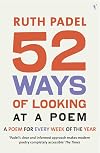
'(...) the point was not convincing anyone that my way of reading a poem was right, but giving people tools to help them to read the poem for themselves.'
I want to salute Ruth Padel's enterprise here for two reasons. First, because she offers a great snapshot of what the contemporary poetical landscape is, served by an introduction, incisive, succinct and brilliant, which is so far the best history I have ever read on British poetry today. Then, because she manages to teach poetical jargon show more illustrated in context without any fuss nor pretence, being always relevant and not needlessly pedantic.
Now, true, as everything dealing with critical analysis it can easily turn into intellectual babbling and, wordy, hers reads indeed at times like boring school homework. One doesn't have to agree with her comments, thought; as she herself rightly acknowledges. True, also, as with every compilation the poems being chosen can be highly subjective, and so confer a sense of unbalance to the whole. Sadly, this is where, personally, I have lost interest.
The thing is, I dislike most of established contemporary poetry with a passion. I find it needlessly pretentious, self-absorbed, as creative and moving as phonebooks put in stanzas and, yes, elitist. Hence, as she focuses on contemporary poetry, obviously most of the poems chosen are, well, as far as I am concerned... ! But it's a matter of personal taste and, considering mine, me not being able/willing to engage with most of them was frankly expected.
Should I dismiss this book then? Certainly not. It remains a great way to not only discover what most poetry is at these days but, also, a nice tool to help on how to read it, so... At least hat off for such a feat! show less
I want to salute Ruth Padel's enterprise here for two reasons. First, because she offers a great snapshot of what the contemporary poetical landscape is, served by an introduction, incisive, succinct and brilliant, which is so far the best history I have ever read on British poetry today. Then, because she manages to teach poetical jargon show more illustrated in context without any fuss nor pretence, being always relevant and not needlessly pedantic.
Now, true, as everything dealing with critical analysis it can easily turn into intellectual babbling and, wordy, hers reads indeed at times like boring school homework. One doesn't have to agree with her comments, thought; as she herself rightly acknowledges. True, also, as with every compilation the poems being chosen can be highly subjective, and so confer a sense of unbalance to the whole. Sadly, this is where, personally, I have lost interest.
The thing is, I dislike most of established contemporary poetry with a passion. I find it needlessly pretentious, self-absorbed, as creative and moving as phonebooks put in stanzas and, yes, elitist. Hence, as she focuses on contemporary poetry, obviously most of the poems chosen are, well, as far as I am concerned... ! But it's a matter of personal taste and, considering mine, me not being able/willing to engage with most of them was frankly expected.
Should I dismiss this book then? Certainly not. It remains a great way to not only discover what most poetry is at these days but, also, a nice tool to help on how to read it, so... At least hat off for such a feat! show less
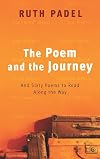
I took this book with me for a three month fieldwork trip. It not only continued to offer new things as I read and reread, it seeped into my experiences, offering words of comfort, hope and shared experience. I loved the fact that of the 60 poems Padel has chosen, I had only come across one in another anthology - and Padel had much more to say about it than Goodwin (as would be expected given their very different approaches to poetry). Particular favourites in the collection are hard to show more choose - and if I have a criticism it would be that Padel has not anthologised one of her own poems here. For me on my travels, the final poem on Orpheus in the underworld was strangely apt as I dealt with new approaches to death in a very different culture. Similarly, a poem about the art of poetry (but perhaps really about the art of keeping living) helped reassure me to keep going! I hope that Padel can continue to publish many more of these works (or even better, that she is again given a regular newspaper column). show less
https://nwhyte.livejournal.com/3121979.html
I am not especially well-read in poetry, so I learned a lot from this. It's a revision of Padel's weekly columns from the Independent on Sunday of almost twenty years ago, explaining what is going on in each poem, not at too great length but enough to make the reader feel (or at least this reader feel) that a better understanding of how poems work is possible.
From the structural point of view, I was struck by the fact that quite a lot of the poems show more Padel looks at are sonnets, or at least have fourteen lines with roughly five beats to each. She's also very good at looking at the way in which poets use sound as a way of conveying meaning, whether it be vowels or consonants, going beyond the basics of rhyme and alliteration that we were taught at school.
From the political point of view, she makes the strong assertion that poetry in Britain and Ireland has been urgently informed by the Troubles; Heaney, Muldoon, Mahon, Longley, McGuckian (the last two being those who I personally knew back in the days when I was a Fellow at the Institute of Irish Studies in Belfast). She cunningly front-loads the book with Northern Irish poets, so that we read the rest of the poems having started with an Ulster emphasis. I must say I hadn't dared think of my own corner of the woods having an outsize influence in any literary area; but I was ready to be convinced by her arguments.
Not every poem of Padel's selection worked for me, but enough of them did to rekindle my enthusiasm for the genre, which probably means it had the desired effect. show less
I am not especially well-read in poetry, so I learned a lot from this. It's a revision of Padel's weekly columns from the Independent on Sunday of almost twenty years ago, explaining what is going on in each poem, not at too great length but enough to make the reader feel (or at least this reader feel) that a better understanding of how poems work is possible.
From the structural point of view, I was struck by the fact that quite a lot of the poems show more Padel looks at are sonnets, or at least have fourteen lines with roughly five beats to each. She's also very good at looking at the way in which poets use sound as a way of conveying meaning, whether it be vowels or consonants, going beyond the basics of rhyme and alliteration that we were taught at school.
From the political point of view, she makes the strong assertion that poetry in Britain and Ireland has been urgently informed by the Troubles; Heaney, Muldoon, Mahon, Longley, McGuckian (the last two being those who I personally knew back in the days when I was a Fellow at the Institute of Irish Studies in Belfast). She cunningly front-loads the book with Northern Irish poets, so that we read the rest of the poems having started with an Ulster emphasis. I must say I hadn't dared think of my own corner of the woods having an outsize influence in any literary area; but I was ready to be convinced by her arguments.
Not every poem of Padel's selection worked for me, but enough of them did to rekindle my enthusiasm for the genre, which probably means it had the desired effect. show less
Lists
Awards


You May Also Like


Associated Authors
Statistics
- Works
- 29
- Also by
- 12
- Members
- 745
- Popularity
- #34,103
- Rating
- 4.1
- Reviews
- 13
- ISBNs
- 54
- Languages
- 2