
J. M. Coetzee
Author of Disgrace
About the Author
J.M. Coetzee's full name is John Michael Coetzee. Born in Cape Town, South Africa, in 1940, Coetzee is a writer and critic who uses the political situation in his homeland as a backdrop for many of his novels. Coetzee published his first work of fiction, Dusklands, in 1974. Another book, Boyhood, show more loosely chronicles an unhappy time in Coetzee's childhood when his family moved from Cape Town to the more remote and unenlightened city of Worcester. Other Coetzee novels are In the Heart of the Country and Waiting for the Barbarians. Coetzee's critical works include White Writing and Giving Offense: Essays on Censorship. Coetzee is a two-time recipient of the Booker Prize and in 2003, he won the Nobel Literature Award. (Bowker Author Biography) J. M. Coetzee's books include "Boyhood", "Dusklands", "In the Heart of the Country", "Waiting for the Barbarians", "Life & Times of Michael K", "Foe", & "The Master of Petersburg". A professor of general literature at the University of Cape Town, Coetzee has won many literary awards, including the CNA Prize (South Africa's premier literary award), the Booker Prize (twice), the Prix Etranger Femina, the Jerusalem Prize, the Lannan Literary Award, & The Irish Times International Fiction Prize. (Publisher Provided) show less
Series
Works by J. M. Coetzee
This Is Not a Border: Reportage & Reflection from the Palestine Festival of Literature (2017) 65 copies, 1 review
Cripplewood / Kreupelhout: 55th International Art Exhibition: The Venice Biennale (Mercatorfonds) (2013) — Author — 19 copies
O cio da terra 2 copies
Daniel Defoe, Robinson Crusoe 2 copies
Barbarları Beklerken 2 copies
Người chậm 1 copy
Ô nhục 1 copy
Polakken 1 copy
ELIZABETH COSTELLO 1 copy
Staklena klanica 1 copy
ASKUND 1 copy
Nadzieja 1 copy
Coetzee John Maxwell 1 copy
Scnes From A Provincial Life 1 copy
Slow Man 1 copy
'Irène Némirovsky: the dogs & the wolves' in NYRB 55/18, 20 Nov 2008 [review of Némirovsky's novels in Eng] (2008) 1 copy
'Storm Over Young Goethe' in NYRB, 26 April 2012 [review of Corngold's tr of 'The Sufferings of Young Werther'] (2012) 1 copy
A Walk in the Woods 1 copy
Позор 1 copy
Ett hus i Spanien 1 copy
Толстой, Беккет, Флобер и другие. 23 очерка о мировой литературе (Лучшее из лучшего. Книги лауреатов… (2019) 1 copy
Gioventù 1 copy
Associated Works
The Expedition to the Baobab Tree: A Novel (1981) — Translator, some editions — 126 copies, 4 reviews
The Poems, Short Fiction, and Criticism of Samuel Beckett: Volume IV of The Grove Centenary Editions (2006) — Introduction — 87 copies
New Beginnings: New Writing from Bestselling Authors Sold in Aid of the Indian Ocean Tsunami Earthquake Charities (2005) — Contributor — 48 copies
Translation and the Classic: Identity as Change in the History of Culture (2008) — Contributor — 17 copies
Ten years of the Caine Prize for African writing : plus J.M. Coetzee, Nadine Gordimer and Ben Okri (2009) — Contributor — 16 copies, 1 review
Nobel Lectures: 20 Years of the Nobel Prize for Literature Lectures (2007) — Contributor — 14 copies
Tagged
Common Knowledge
- Legal name
- Coetzee, John Maxwell
- Birthdate
- 1940-02-09
- Gender
- male
- Education
- University of Texas, Austin (Ph.D|1969 - Linguistics)
University of Cape Town (BA Hons|1960 - English; BA Hons|1961 - Mathematics; MA|1963 - Literature) - Occupations
- novelist
literary critic
translator
essayist
linguist - Organizations
- University of Cape Town
State University of New York at Buffalo - Awards and honors
- Nobel Prize (Literature ∙ 2003)
Royal Society of Literature (Fellow, 1988)
Jerusalem Prize (1987)
Lannan Literary Award (1998)
Order of Mapungubwe (Gold Class, 2005)
American Academy of Arts and Letters (2006) (show all 11)
CNA Prize (1977, 1980, 1983)
Prix Femina étranger (1985)
Australian Academy of the Humanities (Honorary Fellow, 2004)
Commonwealth Writers' Prize for Africa (1995, 2000)
American Philosophical Society (2006) - Agent
- Bruce Hunter (David Higham Associates)
- Relationships
- Driver, Dorothy (partner)
- Nationality
- South Africa (birth)
Australia (naturalized 2006) - Birthplace
- Cape Town, Union of South Africa
- Places of residence
- Adelaide, South Australia, Australia
- Associated Place (for map)
- Adelaide, South Australia, Australia
Members
Discussions
July 2013: J.M. Coetzee in Monthly Author Reads (July 2019)
Coetzee in November in 2015 Category Challenge (November 2015)
Reviews

A disagreeable, disappointing effort from J.M. Coetzee, who I’ve liked elsewhere (e.g. Life and Times of Michael K) and centered on Dostoevsky, an author I love. It imagines Dostoevsky traveling from Germany to Russia in 1869 because his stepson has died under suspicious circumstances, meeting the nihilist Sergey Nachaev, and wrestling with dark elements of the soul before beginning to work on his novel Demons. It’s a fascinating premise, but unfortunately in execution it’s quite a show more dull, dreary affair.
The bulk of the novel focuses so intently on Dostoevsky’s imagined grief and ventures into silly meanderings (“I am he and he is me”) that very little happens; there is just not enough escalation in the plot. The inspiration for the novel was undoubtedly Coetzee’s own 20-something year old son dying from a fall from his balcony, as in real life, Dostoevsky’s stepson did not die young, and on the contrary, he was a constant thorn in his side. It felt like a lot of transplanted wallowing that didn’t work because it didn’t feel authentic.
Compounding the novel’s problems are Coetzee making Dostoevsky out to be a pedophile in many passages – imagining himself to write anonymous works with children engaging in sex, imagining him to give Nachaev tips on cleaning up a child so she can be used as a prostitute to make money, imagining him wanting the 9-year-old daughter of his landlady or fantasizing through an early draft of his fiction having sex in front of her to groom her. It’s all repugnant, and whether it stems from Nikolay Strakhov’s discredited slander against Dostoevsky or conflation with a chapter Dostoevsky wrote but did not publish in Demons, it’s unforgivable. Coetzee should have known better.
There are lots of little winks to the reader here – references to Crime and Punishment (though curiously not The Idiot, which would have been written by then), and references to the generation struggle between “fathers and sons” that Turgenev would write about. While there is a nice bit of skewering of nihilism through the Nachaev’s dialogue, most of what Coetzee includes feels rather forced and shallow relative to the period.
I strongly suggest reading Leonid Tsypkin’s masterpiece Summer in Baden-Baden instead, and skipping this book entirely. show less
The bulk of the novel focuses so intently on Dostoevsky’s imagined grief and ventures into silly meanderings (“I am he and he is me”) that very little happens; there is just not enough escalation in the plot. The inspiration for the novel was undoubtedly Coetzee’s own 20-something year old son dying from a fall from his balcony, as in real life, Dostoevsky’s stepson did not die young, and on the contrary, he was a constant thorn in his side. It felt like a lot of transplanted wallowing that didn’t work because it didn’t feel authentic.
Compounding the novel’s problems are Coetzee making Dostoevsky out to be a pedophile in many passages – imagining himself to write anonymous works with children engaging in sex, imagining him to give Nachaev tips on cleaning up a child so she can be used as a prostitute to make money, imagining him wanting the 9-year-old daughter of his landlady or fantasizing through an early draft of his fiction having sex in front of her to groom her. It’s all repugnant, and whether it stems from Nikolay Strakhov’s discredited slander against Dostoevsky or conflation with a chapter Dostoevsky wrote but did not publish in Demons, it’s unforgivable. Coetzee should have known better.
There are lots of little winks to the reader here – references to Crime and Punishment (though curiously not The Idiot, which would have been written by then), and references to the generation struggle between “fathers and sons” that Turgenev would write about. While there is a nice bit of skewering of nihilism through the Nachaev’s dialogue, most of what Coetzee includes feels rather forced and shallow relative to the period.
I strongly suggest reading Leonid Tsypkin’s masterpiece Summer in Baden-Baden instead, and skipping this book entirely. show less

*** This review may contain spoilers ***
This was interesting more than engaging, but memorable nonetheless. The best summary I can think of is that "Disgrace" provides insight into the inner workings of an eloquent anti-feminist youtube commenter struggling with incomprehension and irrelevance.
David Lurie, an ageing literature professor in South Africa, strikes up a sexual relationship with one of his students and rapes her. When the affair is discovered, this, but curiously not the rape, show more lead to his forced resignation, since he can't apologize or admit wrongful behaviour in any but the most abstract, pseudo-philosophical way.
The book delves into the thought patterns and the literary allusions with which Lurie justifies his rape to himself and to the people who confront him with it: he was taken over by Eros' fire; denying one's own natural inclinations is inhuman, like punishing a dog for getting aroused by a bitch in heat. Soon his daughter's rape and retaliatory anti-white racism complicate matters, and still Lurie cannot change: he is convinced that he is too old, too set in his ways. He cannot break out of his worldview to meaningfully and significantly impact the changing world around him. show less
This was interesting more than engaging, but memorable nonetheless. The best summary I can think of is that "Disgrace" provides insight into the inner workings of an eloquent anti-feminist youtube commenter struggling with incomprehension and irrelevance.
David Lurie, an ageing literature professor in South Africa, strikes up a sexual relationship with one of his students and rapes her. When the affair is discovered, this, but curiously not the rape, show more lead to his forced resignation, since he can't apologize or admit wrongful behaviour in any but the most abstract, pseudo-philosophical way.
The book delves into the thought patterns and the literary allusions with which Lurie justifies his rape to himself and to the people who confront him with it: he was taken over by Eros' fire; denying one's own natural inclinations is inhuman, like punishing a dog for getting aroused by a bitch in heat. Soon his daughter's rape and retaliatory anti-white racism complicate matters, and still Lurie cannot change: he is convinced that he is too old, too set in his ways. He cannot break out of his worldview to meaningfully and significantly impact the changing world around him. show less
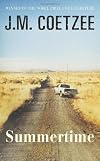
Summertime is the third fictionalized memoir about the young Coetzee, after Boyhood and Youth. It describes his life in South Africa from 1972-77, when he returns to South Africa after completing graduate studies in the US.
The famous writer John Coetzee, winner of the Nobel Prize, has recently died in Australia. Vincent, a British historian, reads Coetzee's papers and memoirs, and interviews several people that were friends and lovers of Coetzee from 1972-77.
The interviewees' descriptions of show more the young Coetzee, who is in his mid to late thirties and lives with his ailing father outside of Cape Town, are harsh and unflattering. Most describe him as socially inept and repressed, a "soft" man who has no sexual appeal to women, one whose lovemaking is "autistic" and focused more on atmosphere and music than on the woman that he is with.
The novel ends as it begins, with fragments written by the author, as Coetzee must decide whether to remain with his dying father, whom he does not love, or pursue other opportunities. The reader is left with the impression that another memoir will pick up the story from there.
This was a very enjoyable, brave, but peculiar read. I assume that most of the accounts written about Coetzee are based on fact, though I would assume that the characters are fictional. The stories are humorous but often made me cringe, and I frequently had the impression of vultures picking over a dead carcass and complaining about how bad the meat of the dead animal tasted. I'm curious about Coetzee's motivation in writing such a harshly critical story about himself. He, of course, is very much alive, though he continues to live as a recluse in Australia. I doubt that any biographer of Coetzee could write anything more harsh about him, and perhaps he wants to be the one to definitively tell his story, in his own peculiar way. show less
The famous writer John Coetzee, winner of the Nobel Prize, has recently died in Australia. Vincent, a British historian, reads Coetzee's papers and memoirs, and interviews several people that were friends and lovers of Coetzee from 1972-77.
The interviewees' descriptions of show more the young Coetzee, who is in his mid to late thirties and lives with his ailing father outside of Cape Town, are harsh and unflattering. Most describe him as socially inept and repressed, a "soft" man who has no sexual appeal to women, one whose lovemaking is "autistic" and focused more on atmosphere and music than on the woman that he is with.
The novel ends as it begins, with fragments written by the author, as Coetzee must decide whether to remain with his dying father, whom he does not love, or pursue other opportunities. The reader is left with the impression that another memoir will pick up the story from there.
This was a very enjoyable, brave, but peculiar read. I assume that most of the accounts written about Coetzee are based on fact, though I would assume that the characters are fictional. The stories are humorous but often made me cringe, and I frequently had the impression of vultures picking over a dead carcass and complaining about how bad the meat of the dead animal tasted. I'm curious about Coetzee's motivation in writing such a harshly critical story about himself. He, of course, is very much alive, though he continues to live as a recluse in Australia. I doubt that any biographer of Coetzee could write anything more harsh about him, and perhaps he wants to be the one to definitively tell his story, in his own peculiar way. show less
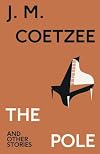
On the face of it, one might have imagined that Coetzee's publishers thought that 'The Pole' might be too slight as the sole offering and so looked around for other material to pad out the volume to a respectable length. I'm pleased to say that reading proves my cynical self wrong. This is an important addition to Coetzee's body of work for a number of reasons and actually (and appropriately given the subject matter of 'The Pole') the overall impression is of having attended an especially show more well planned recital where the pieces within illuminate each other. I might add a better recital than the one offered by the titular 'Pole' in the book where the combination of Haydn, Lutoslawski and the complete Chopin Preludes sounds somewhat indigestible.
'The Pole' itself is an interestingly structured (each chapter contains numbered paragraphs which move the story on a gradient but also creates an effective testamentary backdrop) story about an episode in the life of Beatriz., who after a recital 'becomes' the muse of Witold (the eponymous Pole). It is typical Coetzee in that from fairly minimal narrative ingredients a very honest moral fable is constructed. Overall we are offered a model of thoughtfulness and generosity in Beatriz and a lesson in showing that what is there in a relationship however apparently deficient can still be a cause for optimism, a reason for living. I found it touching - its deliberately fragmentary nature adding to the wistfulness that is ever present in a lot of late Coetzee.
The rest of the book contains four short episodes featuring Coetzee's key character Elizabeth Costello and a final apparently unconnected story, which I will come to. The Elizabeth Costello material in a way bridges a gap between some of the episodes in the novel of that name - which ends with Elizabeth in a truly Kafkaesque version of the afterlife. The earliest of the stories dates from 2003 and the creative time span then runs for approximately another ten years, all after the publication of the novel (so we don't seem to be dealing with unused fragments from the book). In broad terms they show Elizabeth's slow decline whilst stressing again her stubbornness, individuality and intellect. The final story in the book, 'The Dog', apparently unconnected, appears to offer a sort of dream of Elizabeth's where a refraction of her is concerned with her asserting her rights over that of the dog of the title, whereas animal rights themselves are a major concern of Elizabeth's (in the novel and the stories in this book) and of course Coetzee himself. It's extremely clever. show less
'The Pole' itself is an interestingly structured (each chapter contains numbered paragraphs which move the story on a gradient but also creates an effective testamentary backdrop) story about an episode in the life of Beatriz., who after a recital 'becomes' the muse of Witold (the eponymous Pole). It is typical Coetzee in that from fairly minimal narrative ingredients a very honest moral fable is constructed. Overall we are offered a model of thoughtfulness and generosity in Beatriz and a lesson in showing that what is there in a relationship however apparently deficient can still be a cause for optimism, a reason for living. I found it touching - its deliberately fragmentary nature adding to the wistfulness that is ever present in a lot of late Coetzee.
The rest of the book contains four short episodes featuring Coetzee's key character Elizabeth Costello and a final apparently unconnected story, which I will come to. The Elizabeth Costello material in a way bridges a gap between some of the episodes in the novel of that name - which ends with Elizabeth in a truly Kafkaesque version of the afterlife. The earliest of the stories dates from 2003 and the creative time span then runs for approximately another ten years, all after the publication of the novel (so we don't seem to be dealing with unused fragments from the book). In broad terms they show Elizabeth's slow decline whilst stressing again her stubbornness, individuality and intellect. The final story in the book, 'The Dog', apparently unconnected, appears to offer a sort of dream of Elizabeth's where a refraction of her is concerned with her asserting her rights over that of the dog of the title, whereas animal rights themselves are a major concern of Elizabeth's (in the novel and the stories in this book) and of course Coetzee himself. It's extremely clever. show less
Lists
Unread books (1)
Franklit (1)
2017 Goal (1)
Florida (1)
to get (1)
Shaking a Leg (1)
1990s (1)
Metafiction (1)
1980 great books (1)
Reading Globally (1)
hopes (1)
Parallel Novels (1)
Big Jubilee List (1)
1980s (1)
My TBR (6)
A Novel Cure (2)
Africa (2)
Five star books (2)
Booker Prize (5)
Folio Society (1)
Favourite Books (1)
. (1)
. (1)
Allie's Wishlist (1)
. (1)
Awards


You May Also Like


Associated Authors
Statistics
- Works
- 111
- Also by
- 30
- Members
- 42,131
- Popularity
- #410
- Rating
- 3.6
- Reviews
- 955
- ISBNs
- 1,226
- Languages
- 38
- Favorited
- 204

