

Lorraine Hansberry (1930–1965)
Author of A Raisin in the Sun
About the Author
American playwright Lorraine Hansberry was born on May 19, 1930 in Chicago. After attending the University of Wisconsin for two years and then studying painting in Chicago and Mexico, Hansberry moved to New York in 1950. There she held a number of odd jobs to make ends meet while trying to show more establish her writing career. Hansberry wrote her first play A Raisin in the Sun in 1959. The first drama by a black woman to be produced on Broadway. A Raisin in the Sun tells the story of a working-class black family in Chicago. The production won the New York Drama Critics' Circle Award, and in 1961, the film version, starring Sidney Poitier and Ruby Dee, received a special award at the Cannes Film Festival. Hansberry's next play, The Sign in Sidney Brustein's Window, a drama set in Greenwich Village, had a short run on Broadway in 1964. Hansberry's promising career was tragically cut short by her premature death on January 12, 1965. She was 34 years old. The plays To Be Young, Gifted and Black and Les Blancs were adapted from Hansberry's early writings by her ex-husband Robert Nemiroff. Both plays were produced off-Broadway, in 1969 and 1970 respectively. (Bowker Author Biography) show less
Works by Lorraine Hansberry
Les Blancs: The Collected Last Plays: The Drinking Gourd/What Use Are Flowers? (1972) 135 copies, 2 reviews
Lorraine Hansberry Audio Collection CD: Raisin in the Sun, To be Young, Gifted and Black and Lorraine Hansberry Speaks Out (2001) 14 copies, 1 review
What Use are Flowers? 3 copies
Associated Works
The Norton Anthology of African American Literature {2nd edition} (2003) — Contributor, some editions — 282 copies, 2 reviews
Words of Fire: An Anthology of African-American Feminist Thought (1995) — Contributor — 265 copies, 1 review
Daughters of Africa: An International Anthology of Words and Writings by Women of African Descent from the Ancient Egyptian to the Present (1992) — Contributor — 186 copies
African American History Collection, CD 2. The Negro in American Culture — Contributor — 1 copy
Tagged
Common Knowledge
- Legal name
- Hansberry, Lorraine Vivian
- Birthdate
- 1930-05-19
- Date of death
- 1965-01-12
- Gender
- female
- Education
- University of Wisconsin, Madison
The New School - Occupations
- playwright
- Awards and honors
- New York Drama Critics' Circle Award (1959)
Chicago Literary Hall of Fame (2010)
American Theater Hall of Fame (2013)
National Women's Hall of Fame (2017)
Chicago Gay and Lesbian Hall of Fame (1992)
Lorraine Hansberry Theatre (San Francisco, California, USA) - Relationships
- Robert Nemiroff (former spouse, 1953-1962)
- Short biography
- [from National Women's Hall of Fame website]
Groundbreaking playwright, essayist and advocate for change, Lorraine Hansberry authored A Raisin in the Sun, becoming the first Black woman to have a Broadway show produced, the first Black playwright and youngest American to receive the New York Drama Critics' Circle Award for Best American Play (1959), and the first Black American to win the Drama Desk Award. - Cause of death
- pancreatic cancer
- Nationality
- USA
- Birthplace
- Chicago, Illinois, USA
- Place of death
- New York, New York, USA
- Burial location
- Asbury United Methodist Church Cemetery, Croton-on-Hudson, New York, USA
- Associated Place (for map)
- New York, USA
Members
Reviews
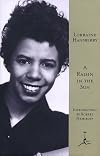
I will start by saying that I don’t generally enjoy reading plays – I prefer to see them performed – but this play, is extraordinary. I highly recommend reading it, if a live theater performance isn’t available.
The play was first produced on Broadway in 1959. The title comes from a poem by Langston Hughes, Harlem (or A Dream Deferred). The drama concerns the lives of an African American family living in an apartment on Chicago’s Southside, sometime between WWII and the mid-1950s. show more The Younger family consists of Mama, her two adult children (Beneatha and Walter Lee), her daughter-in-law Ruth, and her grandson Travis. They struggle to make do in crowded conditions, Travis having to sleep on the living room sofa. As the play opens the family is anxiously awaiting a check for $10,000 – the life insurance payment following the death of their husband/father/grandfather. Each of them has dreams of what s/he will do with that money. Those competing dreams form the central conflict.
The play is a product of its time, but has some themes that still ring true today. While there are no longer covenants excluding one racial group from housing in a particular neighborhood (or at least they are no longer enforceable), there is still evidence of racial stereotyping and prejudice. The themes of conflicting dreams and finding one’s moral compass are universal. As the characters traverse the path from despair to triumph (and the many points in between), they touch my own soul, causing me to examine my own dreams – both realized and deferred. show less
The play was first produced on Broadway in 1959. The title comes from a poem by Langston Hughes, Harlem (or A Dream Deferred). The drama concerns the lives of an African American family living in an apartment on Chicago’s Southside, sometime between WWII and the mid-1950s. show more The Younger family consists of Mama, her two adult children (Beneatha and Walter Lee), her daughter-in-law Ruth, and her grandson Travis. They struggle to make do in crowded conditions, Travis having to sleep on the living room sofa. As the play opens the family is anxiously awaiting a check for $10,000 – the life insurance payment following the death of their husband/father/grandfather. Each of them has dreams of what s/he will do with that money. Those competing dreams form the central conflict.
The play is a product of its time, but has some themes that still ring true today. While there are no longer covenants excluding one racial group from housing in a particular neighborhood (or at least they are no longer enforceable), there is still evidence of racial stereotyping and prejudice. The themes of conflicting dreams and finding one’s moral compass are universal. As the characters traverse the path from despair to triumph (and the many points in between), they touch my own soul, causing me to examine my own dreams – both realized and deferred. show less

Lorraine Hansberry's A raisin in the sun reads amazingly and perhaps sadly fresh. At its centre is the problem of the black man besieged and hampered by a hostile, racist society, who can't affirm himself as men are traditionally forced to--he can't take his family out of the poverty, and while they struggle, he can't find self-respect. A self-effacing female chorus assists, you could say, his birth.

It’s an absolute shame that Lorraine Hansberry died so young at 34. She was so intelligent and insightful, and as these last plays of hers show, quite a playwright. There are three plays in this collection, with substantial background and contextual material, and I’ll comment on each.
Les Blancs – finished by her ex-husband after she passed away, this play deals with colonialism in Africa. While it made people uncomfortable or delighted when it was first performed (often depending on show more their race, or at least, their political views), I found it quite balanced. She gives us African characters who are simmering with resentfulness for the exploitation their continent endured for centuries, but she also gives us one who left to travel and get educated in Europe, as well as another who converted to Christianity and sees the missionary’s perspective. She gives us Caucasian characters who are condescending and who thinly veil their racism, but she also gives us those who did charitable work for years, and one who seems to want to engage in dialogue. Hansberry had a knack for putting her finger right on the nub of issues, and it’s through this range of characters that she reveals racial and power dynamics. This passage was fantastic:
“I do not ‘hate’ all white men – but I desperately wish that I did. It would make everything infinitely easier! But I am afraid that, among other things, I have seen the slums of Liverpool and Dublin and the caves above Naples. I have seen Dachau and Anne Frank’s attic in Amsterdam. I have seen too many raw-knuckled Frenchmen coming out of the Metro at dawn and too many hungry Italian children to believe that those who raided Africa for three centuries ever ‘loved’ the white race either. I would like to be simple-minded for you, but … I cannot. I have … seen.”
You see in this comment the universality behind what seems to be a specific context. Additionally, while the play is set in Africa, the link to America is clear, especially when one character points out that the American South was itself an apartheid system, and then asks:
“And just why should we be able to ‘talk’ so easily? What is this marvelous nonsense with you Americans? For a handshake, a grin, a cigarette and half a glass of whiskey you want three hundred years to disappear – and in five minutes! Do you really think the rape of a continent dissolves in cigarette smoke?”
Later one of the white doctors makes this point: “They [the courts] are not ideal, if that is what you mean. But I expect our standards of jurisprudence in matters of race will compare favorably with America’s any day!”
It’s a play with a viewpoint to be clear, stating that those in power will never voluntarily give it up unless forced to in the quote by Frederick Douglass in the preface (which I extract below), and in the comment a white character makes towards the end that Africa needs warriors, because “a line goes on into infinity unless it is bisected.” Plays with viewpoints are likely to challenge or provoke us, and this one does that, and in very good ways. (4 stars)
The Drinking Gourd – this play was written originally on commission for a television event to honor the centennial of the Civil War, one that was ultimately cancelled as network executives feared offending Southern viewers and going near the powder keg of race issues that Americans had still not confronted (and haven’t fully to this day). I was blown away by how good this one was. Meticulously researched, Hansberry doesn’t simplistically give us just the physical cruelty of slavery, she also reveals the economic realities of life in the South, and engages in the psychology of all of her characters, black and white. She correctly understood that a critical aspect to keeping four million slaves and the system in place was to keep six to seven million poor whites in the mindset of protecting the system, even if it was one that also impoverished them (recognize any parallels to today?)
She doesn’t reduce any of her characters to simple types, and most tellingly, avoids even what may seem like positive African-American character types – for example, the ‘Mammy’ type. What I hadn’t fully appreciated was an aspect of psychology that went into the creation of this tough but sweet and forgiving character type, often by well-intentioned and liberal white writers. It is just so hard to confront the horror of slavery, to stare it completely in the face, and one of the coping mechanisms is to consciously or subconsciously make those who were so cruelly subjected to it somehow different from other people. An outright racist makes them lesser, inferior beings. A well-intentioned person might embrace the idea that these were simple, gentle people, steeped in Christianity, and had a deep wellspring of forgiveness. Either robs them of their humanity, and softens the blow for us today which should not be softened. Hansberry recognized this, and in a critical insight wrote:
“Guilt would to bear too swiftly and painfully if white America were really obliged quite suddenly to think of the Negro quite as he is, that is, simply as a human being. That would raise havoc … White America has to believe not only that the oppression of the Negro is unfortunate (because most of White American does believe that), but something else, to keep its sense of the unfortunate from turning into a sense of outrage … White America has to believe that Blacks are different, and not only so, but that, by the mystique of this difference, they actually profit in certain charming ways which escape the rest of us with all our engrossing complexities.”
The play was eye-opening to me and made me challenge the things I had grown up with and seen, even material that was trying to communicate that slavery and racism are wrong. The background material was also fantastic, and I quote from it extensively below. (4.5 stars)
What Use are Flowers? – This short play is set in a dystopian future where an old man who has been away for decades comes down out of the woods ala Rip van Winkle to find that civilization is gone, and only illiterate, animalistic children remain. It reminded me a little of Jack London’s ‘The Scarlet Plague’, and while the concept is solid and it served as a delivery vehicle for some of Hansberry’s deepest personal convictions about life despite all of its struggles, I just don’t think it was developed as well as it could have been. (3.5 stars)
Summing up - Hansberry was not resigned to despair, a pessimist, or an absurdist, despite all of the evil she had seen in life. In one speech she outlines this, saying “I have, like all of you, on a thousand occasions seen indescribable displays of man’s very real inhumanity to man, and I have come to maturity, as we all must, knowing that greed and malice and indifference to human misery and bigotry and corruption, brutality, and perhaps above all else, ignorance – the prime ancient and persistent enemy of man – abound in this world.”
In spite of all that, she was an optimist, writing so poignantly “I wish to live because life has within it that which is good, that which is beautiful and that which is love. Therefore, since I have known all of these things, I have found them to reason enough and – I wish to live. Moreover, because this is so, I wish others to live for generations and generations and generations.”
She was also an activist, and a fighter, one who fought with her intellect, words, and the unvarnished truth. She believed that honest dialogue would lead to clarity and then ultimately action, preferably peaceful action, but knowing that that wasn’t always possible.
Quotes:
On struggle and progress, from Frederick Douglass, quoted in the preface to Les Blancs:
“If there is no struggle there is no progress. Those who profess to favor freedom and yet deprecate agitation, are men who want crops without plowing up the ground, they want rain without thunder and lightning. They want the ocean without the awful roar of its many waters.
This struggle may be a moral one, or it may be a physical one, and it may be both moral and physical, but it must be a struggle. Power concedes nothing without a demand. It never did and it never will. Find out just what any people will quietly submit to and you have found out the exact measure of injustice and wrong which will be imposed upon them, and these will continue till they are resisted with either words or blows, or with both … Men may not get all they pay for in this world, but they must certainly pay for all they get. If we ever get free from the oppressions and wrongs heaped upon us, we must pay for their removal. We must do that by labor, by suffering, by sacrifice, and if needs be, by our lives and the lives of others.”
On slavery:
“Some scholars have estimated that in the three centuries that the European slave trade flourished, the African continent lost one hundred million of its people. No one, to my knowledge, has ever paid reparations to the descendants of black men; indeed, they have not yet really acknowledged the fact of the crime against humanity which was the conquest of Africa. But then – history has not yet been concluded … has it?”
And in this searing passage from a letter from January 11, 1964:
“But I have long since learned that it is difficult for the American mind to adjust to the realization that the Rhetts and Scarletts were as much monsters as the keepers of Buchenwald – they just dressed more attractively and their accents are softer. (I know I switched tenses.)”
On the Civil War and slavery, which I found far ahead of its time, and something we still see as a problem reaching a melting point today:
“And I am so profoundly interested to realize that in these 100 years since the Civil War very few of our countrymen have really believed that their Federal Union and the defeat of the slavocracy and the negation of slavery as an institution is an admirable fact of American life. So that it is now possible to get enormous books on the Civil War and to go through the back of them and not find the word ‘slavery,’ let alone ‘Negro.’
We’ve been trying very hard – this is what Jimmy and I mean when we speak of guilt – we’ve been trying very hard in America to pretend that this greatest conflict didn’t even have at its base the only thing it had as its base: where person after person will write a book today and insist that slavery was not the issue! You know, they tell you it was the ‘economy’ – as if that economy was not based on slavery. It’s become a great semantic game to try and get this particular blot out of our minds, and people spend volumes discussing the battles of the Civil War, and which army was crossing which river at five minutes to two, and how their swords were hanging, but the slavery issue we have tried to get rid of. To a point that while it has been perfectly popular, admirable, the thing to do – all my life since Gone with the Wind - to write anything you wanted about the slave system and beautiful ladies in big, fat dresses screaming as their houses burned down from the terrible, nasty, awful Yankees…” show less
Les Blancs – finished by her ex-husband after she passed away, this play deals with colonialism in Africa. While it made people uncomfortable or delighted when it was first performed (often depending on show more their race, or at least, their political views), I found it quite balanced. She gives us African characters who are simmering with resentfulness for the exploitation their continent endured for centuries, but she also gives us one who left to travel and get educated in Europe, as well as another who converted to Christianity and sees the missionary’s perspective. She gives us Caucasian characters who are condescending and who thinly veil their racism, but she also gives us those who did charitable work for years, and one who seems to want to engage in dialogue. Hansberry had a knack for putting her finger right on the nub of issues, and it’s through this range of characters that she reveals racial and power dynamics. This passage was fantastic:
“I do not ‘hate’ all white men – but I desperately wish that I did. It would make everything infinitely easier! But I am afraid that, among other things, I have seen the slums of Liverpool and Dublin and the caves above Naples. I have seen Dachau and Anne Frank’s attic in Amsterdam. I have seen too many raw-knuckled Frenchmen coming out of the Metro at dawn and too many hungry Italian children to believe that those who raided Africa for three centuries ever ‘loved’ the white race either. I would like to be simple-minded for you, but … I cannot. I have … seen.”
You see in this comment the universality behind what seems to be a specific context. Additionally, while the play is set in Africa, the link to America is clear, especially when one character points out that the American South was itself an apartheid system, and then asks:
“And just why should we be able to ‘talk’ so easily? What is this marvelous nonsense with you Americans? For a handshake, a grin, a cigarette and half a glass of whiskey you want three hundred years to disappear – and in five minutes! Do you really think the rape of a continent dissolves in cigarette smoke?”
Later one of the white doctors makes this point: “They [the courts] are not ideal, if that is what you mean. But I expect our standards of jurisprudence in matters of race will compare favorably with America’s any day!”
It’s a play with a viewpoint to be clear, stating that those in power will never voluntarily give it up unless forced to in the quote by Frederick Douglass in the preface (which I extract below), and in the comment a white character makes towards the end that Africa needs warriors, because “a line goes on into infinity unless it is bisected.” Plays with viewpoints are likely to challenge or provoke us, and this one does that, and in very good ways. (4 stars)
The Drinking Gourd – this play was written originally on commission for a television event to honor the centennial of the Civil War, one that was ultimately cancelled as network executives feared offending Southern viewers and going near the powder keg of race issues that Americans had still not confronted (and haven’t fully to this day). I was blown away by how good this one was. Meticulously researched, Hansberry doesn’t simplistically give us just the physical cruelty of slavery, she also reveals the economic realities of life in the South, and engages in the psychology of all of her characters, black and white. She correctly understood that a critical aspect to keeping four million slaves and the system in place was to keep six to seven million poor whites in the mindset of protecting the system, even if it was one that also impoverished them (recognize any parallels to today?)
She doesn’t reduce any of her characters to simple types, and most tellingly, avoids even what may seem like positive African-American character types – for example, the ‘Mammy’ type. What I hadn’t fully appreciated was an aspect of psychology that went into the creation of this tough but sweet and forgiving character type, often by well-intentioned and liberal white writers. It is just so hard to confront the horror of slavery, to stare it completely in the face, and one of the coping mechanisms is to consciously or subconsciously make those who were so cruelly subjected to it somehow different from other people. An outright racist makes them lesser, inferior beings. A well-intentioned person might embrace the idea that these were simple, gentle people, steeped in Christianity, and had a deep wellspring of forgiveness. Either robs them of their humanity, and softens the blow for us today which should not be softened. Hansberry recognized this, and in a critical insight wrote:
“Guilt would to bear too swiftly and painfully if white America were really obliged quite suddenly to think of the Negro quite as he is, that is, simply as a human being. That would raise havoc … White America has to believe not only that the oppression of the Negro is unfortunate (because most of White American does believe that), but something else, to keep its sense of the unfortunate from turning into a sense of outrage … White America has to believe that Blacks are different, and not only so, but that, by the mystique of this difference, they actually profit in certain charming ways which escape the rest of us with all our engrossing complexities.”
The play was eye-opening to me and made me challenge the things I had grown up with and seen, even material that was trying to communicate that slavery and racism are wrong. The background material was also fantastic, and I quote from it extensively below. (4.5 stars)
What Use are Flowers? – This short play is set in a dystopian future where an old man who has been away for decades comes down out of the woods ala Rip van Winkle to find that civilization is gone, and only illiterate, animalistic children remain. It reminded me a little of Jack London’s ‘The Scarlet Plague’, and while the concept is solid and it served as a delivery vehicle for some of Hansberry’s deepest personal convictions about life despite all of its struggles, I just don’t think it was developed as well as it could have been. (3.5 stars)
Summing up - Hansberry was not resigned to despair, a pessimist, or an absurdist, despite all of the evil she had seen in life. In one speech she outlines this, saying “I have, like all of you, on a thousand occasions seen indescribable displays of man’s very real inhumanity to man, and I have come to maturity, as we all must, knowing that greed and malice and indifference to human misery and bigotry and corruption, brutality, and perhaps above all else, ignorance – the prime ancient and persistent enemy of man – abound in this world.”
In spite of all that, she was an optimist, writing so poignantly “I wish to live because life has within it that which is good, that which is beautiful and that which is love. Therefore, since I have known all of these things, I have found them to reason enough and – I wish to live. Moreover, because this is so, I wish others to live for generations and generations and generations.”
She was also an activist, and a fighter, one who fought with her intellect, words, and the unvarnished truth. She believed that honest dialogue would lead to clarity and then ultimately action, preferably peaceful action, but knowing that that wasn’t always possible.
Quotes:
On struggle and progress, from Frederick Douglass, quoted in the preface to Les Blancs:
“If there is no struggle there is no progress. Those who profess to favor freedom and yet deprecate agitation, are men who want crops without plowing up the ground, they want rain without thunder and lightning. They want the ocean without the awful roar of its many waters.
This struggle may be a moral one, or it may be a physical one, and it may be both moral and physical, but it must be a struggle. Power concedes nothing without a demand. It never did and it never will. Find out just what any people will quietly submit to and you have found out the exact measure of injustice and wrong which will be imposed upon them, and these will continue till they are resisted with either words or blows, or with both … Men may not get all they pay for in this world, but they must certainly pay for all they get. If we ever get free from the oppressions and wrongs heaped upon us, we must pay for their removal. We must do that by labor, by suffering, by sacrifice, and if needs be, by our lives and the lives of others.”
On slavery:
“Some scholars have estimated that in the three centuries that the European slave trade flourished, the African continent lost one hundred million of its people. No one, to my knowledge, has ever paid reparations to the descendants of black men; indeed, they have not yet really acknowledged the fact of the crime against humanity which was the conquest of Africa. But then – history has not yet been concluded … has it?”
And in this searing passage from a letter from January 11, 1964:
“But I have long since learned that it is difficult for the American mind to adjust to the realization that the Rhetts and Scarletts were as much monsters as the keepers of Buchenwald – they just dressed more attractively and their accents are softer. (I know I switched tenses.)”
On the Civil War and slavery, which I found far ahead of its time, and something we still see as a problem reaching a melting point today:
“And I am so profoundly interested to realize that in these 100 years since the Civil War very few of our countrymen have really believed that their Federal Union and the defeat of the slavocracy and the negation of slavery as an institution is an admirable fact of American life. So that it is now possible to get enormous books on the Civil War and to go through the back of them and not find the word ‘slavery,’ let alone ‘Negro.’
We’ve been trying very hard – this is what Jimmy and I mean when we speak of guilt – we’ve been trying very hard in America to pretend that this greatest conflict didn’t even have at its base the only thing it had as its base: where person after person will write a book today and insist that slavery was not the issue! You know, they tell you it was the ‘economy’ – as if that economy was not based on slavery. It’s become a great semantic game to try and get this particular blot out of our minds, and people spend volumes discussing the battles of the Civil War, and which army was crossing which river at five minutes to two, and how their swords were hanging, but the slavery issue we have tried to get rid of. To a point that while it has been perfectly popular, admirable, the thing to do – all my life since Gone with the Wind - to write anything you wanted about the slave system and beautiful ladies in big, fat dresses screaming as their houses burned down from the terrible, nasty, awful Yankees…” show less
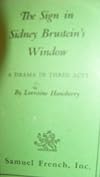
Lorraine Hansberry’s second play, ‘The Sign in Sidney Brustein’s Window,’ is much less well known than her first, the absolutely fantastic ‘A Raisin in the Sun,’ but it shows flashes of the same brilliance. It centers on Sidney Brustein, a married man in New York who’s had one business fail at the play’s opening and then plunges himself into another, a politically progressive newspaper. With his marriage going a little stale, and characters around him who are either cynical, show more in denial, or beaten down by life, he wrestles with making a difference in the world, and the idea of getting away from it all to lead a more authentic and pure existence. Interestingly, it’s compared at one point to the difference between the Thoreau of ‘Civil Disobedience’ and the Thoreau of ‘Walden.’
I love how Hansberry filled the work with cultural and literary references, and how balanced she was in presenting ideas from a diverse character set, including a gay playwright and black communist. The play strikes a balanced tone and an enlightened wisdom about the complexity of living in the modern world, most notably, how it’s possible to continue to be an optimist in spite of it all. The arc the main character goes through leads to a lovely, powerful ending, one that still resonates today amidst our own troubled times. Where the play fell a little short for me was in its other subplots, which didn’t seem that well integrated. It felt a little messy, maybe because life is messy, but for the purposes of a performance, it could have done with a tighter story. It’s still worth seeking out, and a poignant reminder of just how tragic it was that Hansberry died far too young at 34, with so much ahead of her.
Quotes:
On apathy:
“You see! There it is, man! We are confronted with the great disease of the modern bourgeois intellectual: ostrich-ism. I’ve been watching it happen to this one; the great sad withdrawal from the affairs of men.”
On capitalism:
Iris: “I just don’t have it. They say if you really have it – you stick with it no matter what – and that – that you’ll do anything-“
Sidney: “That is one of the great romantic and cruel ideas of our civilization. A lot of people ‘have it’ and they just get trampled to death by the mob trying to get up the same mountain.”
On confronting the problems of the world:
“In the ancient times, the good men among my ancestors, when they heard of evil, strapped a sword to their loins and strode into the desert; and when they found it, they cut it down – or were cut down and bloodied the earth with purifying death. But how does one confront these nameless faceless vapors that are the evil of our time?”
On divorce:
“Of course I decided against it. A divorce? For what? Because a marriage was violated? Ha! We’ve got three boys and their father is devoted to them; I guess he’s devoted to all four of his boys. And what would I do? There was no rush years ago at home to marry Mavis Parodus; there was just Fred then. In this world there are two kinds of loneliness and it is given to each of us to pick. I picked.”
On nature:
“Coming here makes me believe that the planet is mine again. In the primeval sense. Man and earth and earth and man and all that. You know. That we have just been born, the earth and me, and are just starting out. There is no pollution, no hurt; just me and this ball of minerals and gasses suddenly shot together out of the cosmos.”
On optimism in creating change; I love this one:
Wally: “You really are a fool.”
Sidney: “Always have been. (His eyes find his wife’s) A fool who believes that death is waste and love is sweet and that the earth turns and men change every day and that rivers run and that people wanna be better than they are and that flowers smell good and that I hurt terribly today, and that hurt is desperation and desperation is – energy and energy can move things…” show less
I love how Hansberry filled the work with cultural and literary references, and how balanced she was in presenting ideas from a diverse character set, including a gay playwright and black communist. The play strikes a balanced tone and an enlightened wisdom about the complexity of living in the modern world, most notably, how it’s possible to continue to be an optimist in spite of it all. The arc the main character goes through leads to a lovely, powerful ending, one that still resonates today amidst our own troubled times. Where the play fell a little short for me was in its other subplots, which didn’t seem that well integrated. It felt a little messy, maybe because life is messy, but for the purposes of a performance, it could have done with a tighter story. It’s still worth seeking out, and a poignant reminder of just how tragic it was that Hansberry died far too young at 34, with so much ahead of her.
Quotes:
On apathy:
“You see! There it is, man! We are confronted with the great disease of the modern bourgeois intellectual: ostrich-ism. I’ve been watching it happen to this one; the great sad withdrawal from the affairs of men.”
On capitalism:
Iris: “I just don’t have it. They say if you really have it – you stick with it no matter what – and that – that you’ll do anything-“
Sidney: “That is one of the great romantic and cruel ideas of our civilization. A lot of people ‘have it’ and they just get trampled to death by the mob trying to get up the same mountain.”
On confronting the problems of the world:
“In the ancient times, the good men among my ancestors, when they heard of evil, strapped a sword to their loins and strode into the desert; and when they found it, they cut it down – or were cut down and bloodied the earth with purifying death. But how does one confront these nameless faceless vapors that are the evil of our time?”
On divorce:
“Of course I decided against it. A divorce? For what? Because a marriage was violated? Ha! We’ve got three boys and their father is devoted to them; I guess he’s devoted to all four of his boys. And what would I do? There was no rush years ago at home to marry Mavis Parodus; there was just Fred then. In this world there are two kinds of loneliness and it is given to each of us to pick. I picked.”
On nature:
“Coming here makes me believe that the planet is mine again. In the primeval sense. Man and earth and earth and man and all that. You know. That we have just been born, the earth and me, and are just starting out. There is no pollution, no hurt; just me and this ball of minerals and gasses suddenly shot together out of the cosmos.”
On optimism in creating change; I love this one:
Wally: “You really are a fool.”
Sidney: “Always have been. (His eyes find his wife’s) A fool who believes that death is waste and love is sweet and that the earth turns and men change every day and that rivers run and that people wanna be better than they are and that flowers smell good and that I hurt terribly today, and that hurt is desperation and desperation is – energy and energy can move things…” show less
Lists
The Zora Canon (1)
Female Author (1)
Ambleside Books (1)
Overdue Podcast (1)
Zora Canon (2)
Plays I Like (1)
Nifty Fifties (1)
1950s (1)
Five star books (1)
AP Lit (1)
Black Authors (1)
Awards


You May Also Like


Associated Authors
Statistics
- Works
- 20
- Also by
- 18
- Members
- 8,128
- Popularity
- #2,977
- Rating
- 3.8
- Reviews
- 97
- ISBNs
- 117
- Languages
- 3
- Favorited
- 7


