
Ian Frazier
Author of Great Plains
About the Author
Writer and broadcaster Ian Frazier was born in Ohio and educated at Harvard University, where he wrote for the Harvard Lampoon. After his graduation he joined The New Yorker staff and frequently contributes to The Atlantic Monthly. His writing collections Dating Your Mom and Coyote V. Acme earned show more him a Thurber Prize for American Humor. The Great Plains won a 1990 Spur Award for Nonfiction from the Western Writers of America. Frazier has appeared on the National Public Radio Program A Prairie Home Companion and has acted in Smoke and Blue in the Face, both of which are Wayne Wang and Paul Auster films. (Bowker Author Biography) show less
Image credit: Ian Frazier at the 2010 Texas Book Festival, Austin, Texas, United States. By Larry D. Moore, CC BY-SA 3.0, https://commons.wikimedia.org/w/index.php?curid=11875242
Works by Ian Frazier
Humor Me: An Anthology of Funny Contemporary Writing (Plus Some Great Old Stuff Too) (2010) 51 copies, 1 review
Eulogy for Saul Steinberg 2 copies
Canal Street 2 copies
Associated Works
Fierce Pajamas: An Anthology of Humor Writing from The New Yorker (2001) — Contributor — 789 copies, 5 reviews
My Bookstore: Writers Celebrate Their Favorite Places to Browse, Read, and Shop (2012) — Contributor — 619 copies, 16 reviews
Forty-one False Starts: Essays on Artists and Writers (2013) — Introduction, some editions — 310 copies, 6 reviews
The 50 Funniest American Writers: An Anthology of Humor from Mark Twain to The Onion (2011) — Contributor — 286 copies, 3 reviews
Still Pictures: On Photography and Memory (2023) — Introduction, some editions — 150 copies, 2 reviews
My Favorite Plant: Writers and Gardeners on the Plants They Love (1998) — Contributor — 100 copies, 1 review
The Good Book: Writers Reflect on Favorite Bible Passages (2015) — Contributor — 44 copies, 3 reviews
Tagged
Common Knowledge
- Birthdate
- 1951
- Gender
- male
- Education
- Harvard University
- Organizations
- The New Yorker
- Awards and honors
- Whiting Writers' Award (1989)
- Relationships
- Carey, Jacqueline (wife) (2)
- Nationality
- USA
- Places of residence
- Hudson, Ohio, USA
New York, New York, USA
Montana, USA
Montclair, New Jersey, USA - Associated Place (for map)
- USA
Members
Reviews

A mostly delightful collection of pieces Frazier, a contributor at various times for The New Yorker and The Atlantic, among other publications, wrote between the 1970s and early 2000s. Some are very short and those were, by virtue of their brevity, the least engaging. But his longer pieces - about Canal Street, a typewriter repairman, and his walk along Route 3 in New Jersey (a road I travel frequently) - are wonderful. He captures, even in the shorter pieces, the dingy, gritty, universal show more charm of the city I love, as well as its humanity.
The foreword by Jamaica Kincaid is great, as well.
4.25 stars show less
The foreword by Jamaica Kincaid is great, as well.
4.25 stars show less
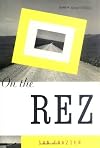
Sitting in a safe suburban envelope, people would be surprised to find a third world country existed just a short drive from their haven of ease and prosperity. In an age when the biggest concern for many is what the Kardashian’s posted, or capturing their most recent meal with a phone picture, it’s beyond comprehension that people would be living with dirt floors, no indoor plumbing, no running water, and no electricity. But such places exist. In some cases, what they lack in show more socio-economic status, they make up for in cultural or natural beauty. Though nothing can completely make up for the poverty and educational wasteland that is the modern-day Indian reservation – the rez.
If you’re liberal sensitivities bristle at the term “Indian” above, Ian Frazier’s [On the Rez] will set you straight. His experience is the same as mine – Native American or Indigenous People are not terms people on the rez use to refer to themselves. Indian is the proud label of choice, if you’re looking for one. And while Frazier focuses on the Pine Ridge rez, where the Oglala live – you know them as Sioux – he could be writing about any rez. The alcohol addiction and poverty and death rate is the same in South Dakota as it is in Nevada or New Mexico or New York. So is the cultural pride and gritty survival instinct and fierce family loyalty.
Frazier, as an outsider, can’t help but be struck by the incongruity of having an entire race relegated to confined tracks of land in a country known for being the “Home of the Free.” Free, yes, in theory, even if lacking in the things that modern civilizations now assume are part of that freedom. His rez, and most you’d visit, have more in common with the tribal lands in Afghanistan or Pakistan than the country where they exist. But Frazier, because of his own openness in developing and maintaining friendships, is granted a level of inclusion. And from this inside perspective, he documents the nobility of the people he finds on the rez, and the tragedy that often infects the life there.
[On the Rez] will give you a primer on history and US government relations in Indian Country, the nature of social unrest in the turbulent 1960’s, and changes on the rez with the advent of Indian gaming operations. Given the book’s date of publication, 2000, the latter could do with an update, as casinos were only just starting to affect the cultural and economic lives of most tribes at the time. But the most important thing Frazier does with the book is to put a deeply human face to places that most people only have stereotypical ideas about.
Bottom Line: Accurate and moving depiction of places that no one really knows about in America. Surprising in its humanity.
4 ½ bones!!!!! show less
If you’re liberal sensitivities bristle at the term “Indian” above, Ian Frazier’s [On the Rez] will set you straight. His experience is the same as mine – Native American or Indigenous People are not terms people on the rez use to refer to themselves. Indian is the proud label of choice, if you’re looking for one. And while Frazier focuses on the Pine Ridge rez, where the Oglala live – you know them as Sioux – he could be writing about any rez. The alcohol addiction and poverty and death rate is the same in South Dakota as it is in Nevada or New Mexico or New York. So is the cultural pride and gritty survival instinct and fierce family loyalty.
Frazier, as an outsider, can’t help but be struck by the incongruity of having an entire race relegated to confined tracks of land in a country known for being the “Home of the Free.” Free, yes, in theory, even if lacking in the things that modern civilizations now assume are part of that freedom. His rez, and most you’d visit, have more in common with the tribal lands in Afghanistan or Pakistan than the country where they exist. But Frazier, because of his own openness in developing and maintaining friendships, is granted a level of inclusion. And from this inside perspective, he documents the nobility of the people he finds on the rez, and the tragedy that often infects the life there.
[On the Rez] will give you a primer on history and US government relations in Indian Country, the nature of social unrest in the turbulent 1960’s, and changes on the rez with the advent of Indian gaming operations. Given the book’s date of publication, 2000, the latter could do with an update, as casinos were only just starting to affect the cultural and economic lives of most tribes at the time. But the most important thing Frazier does with the book is to put a deeply human face to places that most people only have stereotypical ideas about.
Bottom Line: Accurate and moving depiction of places that no one really knows about in America. Surprising in its humanity.
4 ½ bones!!!!! show less
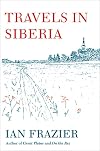
Ian Frazier's is a masterful writer and his Travels in Siberia may be his best work He weaves nuggets of history and geography with his intrepid travels through the land mass of Siberia--one-twelfth of the earth's land. Before making his first foray into the land, he approaches his subject from Alaska, never quite making it. In his second venture, he travels by van eastward into ever remote areas of the land. I especially appreciate his boyish enthusiasm for his adventures and the travelers show more like George Keenan, a fellow Midwesterner who went before him in the 1860s. Indeed, he remarks on how the Ohio natives and other Midwesterners make up a disproportionate number of American travelers who were drawn to Siberia. Frazier has the ability to bring the exotic world of Siberia to life with him back to New York where he finds sensory reminders of Siberia in sable coats and Russian gas stations. In a later trip he finds one of the hundreds of abandoned gulags connecting it as the physical symbol of Stalin's cruel mind. His powers of perception observe both incredible beauty in the land, women, and food as well as dark stores of horror by travelers driven mad from their travels. Read it. show less
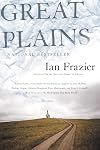
Having recently completed "Bad Lands" by Jonathan Raban, I found it impossible not to constantly compare the two works. Raban's work is much more focused on a particular time period, where Frazier seems to move (quite seamlessly) from Native American days to modern times to the early '20s to the era of westward expansion. I would describe Frazier as more "evocative" than Raban and, in that capacity, perhaps he is MORE successful at a style of writing that honors the horizontal vastness that show more is the Great Plains.
Really, I found Frazier at his best when he rambled...into the story of the death of Crazy Horse or of his visit to a Montana nuclear missile silo (and the attendant story of America's nuclear race with Russia) or of his discovery of the still-extant ghost-town of Nicodemus, Kansas.
As with most of the books I've read recently, I've been going at this by fits and starts with sizable time-gaps (sometimes weeks) between each rather brief encounter. But this is a book that rewards even that kind of intermittent reading and its easy rambling style almost best suits that sort of reading.
I picked up this book because it is about my home (born in Nebraska), and I am coming to realize more and more the formative impact of "place" upon who we are (this may also explain my fascination in my biblical studies with the effect of exile upon the national and spiritual identity of ancient Israel). I suppose the greatest recommendation I could give it is that, whenever I got the chance to pick it up again, within just a few minutes, I found myself transported again to a windswept rolling expanse of ruler-straight corn-rows, swaying grasses, and skies as blue and open as the wondering-eyes of a child. In other words, Frazier gave me the gift of home. show less
Really, I found Frazier at his best when he rambled...into the story of the death of Crazy Horse or of his visit to a Montana nuclear missile silo (and the attendant story of America's nuclear race with Russia) or of his discovery of the still-extant ghost-town of Nicodemus, Kansas.
As with most of the books I've read recently, I've been going at this by fits and starts with sizable time-gaps (sometimes weeks) between each rather brief encounter. But this is a book that rewards even that kind of intermittent reading and its easy rambling style almost best suits that sort of reading.
I picked up this book because it is about my home (born in Nebraska), and I am coming to realize more and more the formative impact of "place" upon who we are (this may also explain my fascination in my biblical studies with the effect of exile upon the national and spiritual identity of ancient Israel). I suppose the greatest recommendation I could give it is that, whenever I got the chance to pick it up again, within just a few minutes, I found myself transported again to a windswept rolling expanse of ruler-straight corn-rows, swaying grasses, and skies as blue and open as the wondering-eyes of a child. In other words, Frazier gave me the gift of home. show less
Lists
Awards


You May Also Like


Associated Authors
Statistics
- Works
- 29
- Also by
- 32
- Members
- 4,453
- Popularity
- #5,623
- Rating
- 3.9
- Reviews
- 89
- ISBNs
- 87
- Languages
- 3
- Favorited
- 9
