
Kenneth Koch (1925–2002)
Author of Talking to the Sun: An Illustrated Anthology of Poems for Young People
About the Author
Kenneth Koch was born in Cincinnati, Ohio and was educated at Harvard and Columbia Universities. Koch has been a faculty member at Columbia since 1959 and is also a member of the American Academy of Arts and Sciences and the American Academy of Arts and Letters. Koch has written works of fiction, show more poetry, essays and plays as well as Wishes, Lies and Dreams and Rose, Where Did You Get That Red, which are books on teaching poetry. (Bowker Author Biography) show less
Image credit: Larry Rivers
Works by Kenneth Koch
Sleeping on the Wing: An Anthology of Modern Poetry with Essays on Reading and Writing (1981) 246 copies, 1 review
Sleeping with Women 2 copies
Permanently 1 copy
Una hormiga es el principio de un nuevo universo: Leer y escribir poesía con niños y niñas (2022) 1 copy
Tysiąc sztuk awangardowych 1 copy
Associated Works
Holding your eight hands; an anthology of science fiction verse (1970) — Contributor — 25 copies, 1 review
Possibilities of Poetry: An Anthology of American Contemporaries (1970) — Contributor — 17 copies, 1 review
Sunlight on the River: Poems About Paintings, Paintings About Poems (2015) — Contributor — 11 copies, 2 reviews
Locus Solus I — Contributor — 5 copies
Locus Solus V — Contributor — 1 copy
Tagged
Common Knowledge
- Birthdate
- 1925-02-27
- Date of death
- 2002-07-06
- Gender
- male
- Education
- Harvard University (BA)
Columbia University (PhD) - Occupations
- poet
playwright
professor (English) - Organizations
- American Academy of Arts and Letters (Literature, 1996)
- Awards and honors
- Bollingen Prize (1995)
Shelley Memorial Award (1993/1994)
Rebekah Johnson Bobbitt National Prize for Poetry (1996)
American Academy of Arts and Letters Academy Award (Literature, 1976) - Short biography
- Associated with the New York School of poetry.
- Nationality
- USA
- Birthplace
- Cincinnati, Ohio, USA
- Place of death
- New York, New York, USA
- Associated Place (for map)
- USA
Members
Reviews

Kenneth Koch was like a 20th century Walt Whitman with a goofy sense of humor. The poems in this volume -- only eight of them! -- have rambling, expansive poems with titles like "The Art of Poetry" and "The Art of Love," and seem to contain every thought that flitted through Koch's head over the course of a long night of conviviality. His advice is comical but sincerely felt, as when he says "To learn of cunnilingus at age fifty speaks to a life ill-spent." He's uninhibited and wild to show more entertain you, though when he advises you to tie up your girlfriend and fold her into an airplane, perhaps you might think this a bit much (as I do). Small compaint, though, when it comes to a poet so inviting and so much fun to read. show less

If you ever want young people to become fascinated with poetry and art, this is the book for them. The poems, mostly short, wander through the world, gathering specimens from China, Japan, India, Africa and Native American and other cultures, while also including western voices from Dante and Shakespeare to Frank O'Hara and Gary Snyder. Typical for 1985, only 8 women poets are represented (minus one-half star). The poems are evocatively and exquisitely paired with works from the Met's show more collection, including sculpture and ceramics as well as painting, drawing and collage. Kenneth Koch was a great poetry teacher: his enthusiastic sensibility is on display here. I love this book! show less
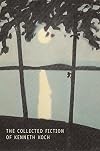
Village Voice
The Collected Fiction of Kenneth Koch
Edited by Jordan Davis, Karen Koch, and Ron Padgett
Coffee House Press, 387 pp., $18
Koch's fiction strings together impeccable sentences in ways that beat the boundaries of logic and genre. A seven-page Hardy Boys epic nestles next to a Proustian riff off a postcard; novels have a hard time deciding whether they're made up of chapters or stories. Koch wrote about one long work: "All the sentences were like the last sentences of novels or the show more first sentences of short stories." There's an innocence to all his orderings, and a great relief in not knowing whether we're reading grown-up literature for children ("He really loved the polenta, and so did his friend") or children's literature for grown-ups ("We have had such a good lunch that it makes me sad"). What's certain is a light and loving hand that wasn't afraid to do a little wavering. show less
The Collected Fiction of Kenneth Koch
Edited by Jordan Davis, Karen Koch, and Ron Padgett
Coffee House Press, 387 pp., $18
Koch's fiction strings together impeccable sentences in ways that beat the boundaries of logic and genre. A seven-page Hardy Boys epic nestles next to a Proustian riff off a postcard; novels have a hard time deciding whether they're made up of chapters or stories. Koch wrote about one long work: "All the sentences were like the last sentences of novels or the show more first sentences of short stories." There's an innocence to all his orderings, and a great relief in not knowing whether we're reading grown-up literature for children ("He really loved the polenta, and so did his friend") or children's literature for grown-ups ("We have had such a good lunch that it makes me sad"). What's certain is a light and loving hand that wasn't afraid to do a little wavering. show less
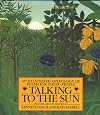
Don't underestimate children. Good poetry isn't meant to be consumed in one go, nor art to be looked at just one time.
Maybe the first time you read this together with your seven-year old, pick out a few neat animal or nature pictures and read (out loud!) the poems that accompany them. Pick the one that is most fun to say, even if you don't understand it. Memorize it, or a few lines from it. Read it again a few months later. Read some of the other poems in that section.
Maybe memorize Little show more Fish" by D.H. Lawrence:
The tiny fish enjoy themselves
in the sea.
Quick little splinters of life,
their little lives are fun to them
in the sea.
Try to figure out the connections between the art and the poems - sometimes they're easy to spot, and sometimes you'll have to be a detective, or use your imagination to interpret a commonality. Maybe some will stump you and your child, until the child is a little older and has an 'ah-hah' moment.
Sometimes you and your child can have fun imagining yourselves in a scene, and sometimes you have to work your brains to make a guess why someone would paint or make something that seems boring, or scary, or weird. Try to figure out why the artist felt motivated to create each work. Who was the intended audience; what idea was she trying to share; what point was he trying to make?
Consider, from 1870, 'The Bathers' - http://commons.wikimedia.org/wiki/File:Winslow_Homer_-_Eagle_Head,_Manchester,_M... by Winslow Homer. Can you imagine wearing all those clothes in the water? Maybe not. But look at the women - do they make you think that the people in the 'olden days' were weird? I don't think so....
There are brief commentaries attached to many of the works to help with appreciation.
There is an index of titles and authors, and another of first lines. There are also short essays at the beginning and end that give some gentle guidance. Unfortunately, there is no way to search for works of art or artists - for example if you wanted to quickly find which page the painting by Winslow Homer is on, or whether he has any other works included.
This is a beautiful book, and I wish I could find a good home for it.
" show less
Maybe the first time you read this together with your seven-year old, pick out a few neat animal or nature pictures and read (out loud!) the poems that accompany them. Pick the one that is most fun to say, even if you don't understand it. Memorize it, or a few lines from it. Read it again a few months later. Read some of the other poems in that section.
Maybe memorize Little show more Fish" by D.H. Lawrence:
The tiny fish enjoy themselves
in the sea.
Quick little splinters of life,
their little lives are fun to them
in the sea.
Try to figure out the connections between the art and the poems - sometimes they're easy to spot, and sometimes you'll have to be a detective, or use your imagination to interpret a commonality. Maybe some will stump you and your child, until the child is a little older and has an 'ah-hah' moment.
Sometimes you and your child can have fun imagining yourselves in a scene, and sometimes you have to work your brains to make a guess why someone would paint or make something that seems boring, or scary, or weird. Try to figure out why the artist felt motivated to create each work. Who was the intended audience; what idea was she trying to share; what point was he trying to make?
Consider, from 1870, 'The Bathers' - http://commons.wikimedia.org/wiki/File:Winslow_Homer_-_Eagle_Head,_Manchester,_M... by Winslow Homer. Can you imagine wearing all those clothes in the water? Maybe not. But look at the women - do they make you think that the people in the 'olden days' were weird? I don't think so....
There are brief commentaries attached to many of the works to help with appreciation.
There is an index of titles and authors, and another of first lines. There are also short essays at the beginning and end that give some gentle guidance. Unfortunately, there is no way to search for works of art or artists - for example if you wanted to quickly find which page the painting by Winslow Homer is on, or whether he has any other works included.
This is a beautiful book, and I wish I could find a good home for it.
" show less
Lists
Awards


You May Also Like


Associated Authors
Statistics
- Works
- 56
- Also by
- 24
- Members
- 2,599
- Popularity
- #9,880
- Rating
- 3.9
- Reviews
- 21
- ISBNs
- 94
- Languages
- 4
- Favorited
- 7