

Carl E. Rollyson
Author of American Isis: The Life and Art of Sylvia Plath
About the Author
Carl Rollyson is a professor of English at Baruch College, The City University of New York. He received his Ph.D. from the University of Toronto. He has written several biographies of prominent writers and has contributed essays to numerous reference works. He lives in Cape May, NJ. (Bowker Author show more Biography) show less
Image credit: www.carlrollyson.com/
Series
Works by Carl E. Rollyson
The Life of William Faulkner: The Past Is Never Dead, 1897-1934 (Volume 1) (2020) 39 copies, 1 review
Marilyn Monroe: A Life of the Actress, Revised and Updated (Hollywood Legends Series) (2014) 12 copies
A Real American Character: The Life of Walter Brennan (Hollywood Legends Series) (2015) 11 copies, 1 review
A Higher Form of Cannibalism?: Adventures in the Art and Politics of Biography (2005) 9 copies, 1 review
Critical Companion to Herman Melville: A Literary Reference to His Life and Work (Critical Companion to) (Critical Companion (Hardcover)) (2006) 8 copies
Critical Survey of Mystery & Detective Fiction: Topical Essays - Resources - Indexes (2008) 5 copies
Dana Andrews: Hollywood Enigma 3 copies
Marilyn Monroe 2 copies
Tagged
Common Knowledge
- Canonical name
- Rollyson, Carl E.
- Birthdate
- 1948-03-02
- Gender
- male
- Education
- University of Toronto (PhD)
- Occupations
- professor of English
biographer - Organizations
- Readerville
City University of New York
Baruch College - Places of residence
- Cape May County, New Jersey, USA
- Associated Place (for map)
- New Jersey, USA
Members
Reviews
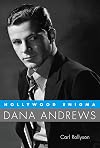
I’m way over a hundred pages into this biography and I’ve had enough; I’m calling it quits. That does not reflect the subject matter, but rather the biographer’s lifeless and tedious approach. I love Dana Andrews on screen. Films like Laura, State Fair, The Best Years of Our Lives, and Fallen Angel, cement him for me as a terrific actor with a quiet screen presence hard to ignore.
I already knew some of what’s in this bio, but some I didn’t. He was from Texas, though he was born show more in a small Mississippi town called Don't, which no longer exists. He was one of many sons born to a preacher who could be overzealous and hypocritical, a man who would wear out his welcome over time and inevitably start over somewhere else. But despite his father's deep flaws, he could be right in regard to his son’s pursuit of fame as an actor taking him away from God.
The huge family — and I do mean huge — was nearly all boys, and there was tragedy within the family because two sisters died young. Carver (Dana Andrews), even from a young age, exhibited charisma and a longing for something outside of a simple country life. Yet it was in that simple life where Carver would meet the girl who most probably was the true love of his life.
Carver remained in touch with Norma Felder by letter while far away, struggling to make it. They planned to marry; his family made it clear that they wanted nothing more than for Carver to abandon his ambitions — which, with some supporting evidence, seemed very selfish — and return to marry Norma. But Norma stood by him; their bond ran so deep that even after he confronted his inner conflicts and admitted to her — though later regretting it — there was no future for her with him, due to his acting dreams, the two of them remained in touch by letters for a very long time.
He would eventually marry and suffer tragedy when the woman who adored him to the point of worshiping him, but whom he only cared for but did not feel the same adoration — possibly due to leaving Norma behind in Texas — died young, leaving him with a son.
That relationship is at the heart of this tunnel-vision bio. While it helps explain to some degree Carver’s issues with drink, even after he married later on and found some real success, it is so tediously told and compiled that it feels like we are the researcher rather than the ones benefitting from the author’s research into the man movie fans knew as Dana Andrews.
Rarely has anyone more conflicted or complex, a real star and fine actor deserving of a good bio, been given one that fell as short as this one does in capturing its subject. Instead we get only veiled glimpses through a curtain so that we can’t quite make out the silhouette; not enough light is shed on a man who appears to be very decent at heart, but might very well have traded true happiness for a dream, and found it difficult to live with his choice.
This biography just lays there, is tedious to read for all the constant insertions of bits of letters and such that only give us narrow close-ups of a much wider screen shot. It’s a slog you keep hoping will get better at some point, yet it never does. The best part of this bio is the stunning cover shot of Carver when he was known to the world as Dana Andrews. Just as with Grace Kelly, who has yet to have a decent bio about her written, in my opinion, the same is true of Dana Andrews. This bio is, like the cover photo, stunning at a glance, but once we’re up close, we sadly realize it is only a cardboard cutout of a favorite actor. show less
I already knew some of what’s in this bio, but some I didn’t. He was from Texas, though he was born show more in a small Mississippi town called Don't, which no longer exists. He was one of many sons born to a preacher who could be overzealous and hypocritical, a man who would wear out his welcome over time and inevitably start over somewhere else. But despite his father's deep flaws, he could be right in regard to his son’s pursuit of fame as an actor taking him away from God.
The huge family — and I do mean huge — was nearly all boys, and there was tragedy within the family because two sisters died young. Carver (Dana Andrews), even from a young age, exhibited charisma and a longing for something outside of a simple country life. Yet it was in that simple life where Carver would meet the girl who most probably was the true love of his life.
Carver remained in touch with Norma Felder by letter while far away, struggling to make it. They planned to marry; his family made it clear that they wanted nothing more than for Carver to abandon his ambitions — which, with some supporting evidence, seemed very selfish — and return to marry Norma. But Norma stood by him; their bond ran so deep that even after he confronted his inner conflicts and admitted to her — though later regretting it — there was no future for her with him, due to his acting dreams, the two of them remained in touch by letters for a very long time.
He would eventually marry and suffer tragedy when the woman who adored him to the point of worshiping him, but whom he only cared for but did not feel the same adoration — possibly due to leaving Norma behind in Texas — died young, leaving him with a son.
That relationship is at the heart of this tunnel-vision bio. While it helps explain to some degree Carver’s issues with drink, even after he married later on and found some real success, it is so tediously told and compiled that it feels like we are the researcher rather than the ones benefitting from the author’s research into the man movie fans knew as Dana Andrews.
Rarely has anyone more conflicted or complex, a real star and fine actor deserving of a good bio, been given one that fell as short as this one does in capturing its subject. Instead we get only veiled glimpses through a curtain so that we can’t quite make out the silhouette; not enough light is shed on a man who appears to be very decent at heart, but might very well have traded true happiness for a dream, and found it difficult to live with his choice.
This biography just lays there, is tedious to read for all the constant insertions of bits of letters and such that only give us narrow close-ups of a much wider screen shot. It’s a slog you keep hoping will get better at some point, yet it never does. The best part of this bio is the stunning cover shot of Carver when he was known to the world as Dana Andrews. Just as with Grace Kelly, who has yet to have a decent bio about her written, in my opinion, the same is true of Dana Andrews. This bio is, like the cover photo, stunning at a glance, but once we’re up close, we sadly realize it is only a cardboard cutout of a favorite actor. show less
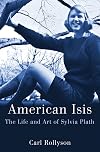
How many biographies have been written about Sylvia Plath? And how many will I read? Apparently the answer is all of them since the real person behind the poems continues to be elusive thanks to the obstacles set up for biographers by the Hughes family who have been the caretakers of her literary estate for the past 60 years.
Biographers are either in Camp Ted or Camp Sylvia and author Carl Rollyson is definitely in Camp Sylvia, but in a more balanced way than some of Plath's more strident show more feminist acolytes.
The portrait painted here is of a young woman who felt abandoned by her father's death when she was ten years old and also grateful, yet suffocated by her mother's self-sacrificing for her children. Clearly brilliant and ambitious, Plath started stacking up awards and recognition at an early age, only to succumb to a mental breakdown after being named as a guest editor at Mademoiselle magazine in 1953 which would become the material for her novel The Bell Jar currently celebrating it's 50th year of publication.
After treatment, Plath returned to Smith College where she graduates summa cum laude and won a Fulbright scholarship to Cambridge University in 1955. There she meets Ted Hughes an up & coming poet who she marries in 1956.
The fact that these two should never have married become eminently clear. Plath is drawn to Hughes as a protecting father figure as well as a brilliant poet (who was later named Poet Laureate in Britain) and Hughes was drawn to Plath for both her American glamor and her extreme intelligence. However, Hughes finds it hard to deal with Plath's mercurial moods and also feels threatened by her talent and ambition. Once two children arrive in fairly quick succession, his eye starts to roam. In July, 1962 Plath answers the phone & finds it's his lover at the other end - a woman they both know socially - and the marriage is over. Seven moths later, Plath will kill herself.
It's hard not to blame Ted Hughes, at least in part, for the disastrous outcome of the marriage, but the real villain in the piece is his sister Olwyn who appears to have an almost pathological attachment to her brother & who even now, 50 years later (based on an interview with The Guardian in January, 2013) is full of vitriol towards Plath. Ironically, she was named in Ted Hughes' will as the literary executor of all of Plath's writings.
The last chapter in this book, which takes place after Plath's suicide and deals with the various machinations of Ted Hughes and his sister to control both Plath's literary legacy and the story of the last years of her life, is thoe most interessting part of the book. Olwyn Hughes continues this efforts to this very day. In fact, I had to look her up after I finished this book since I could not believe that as biography with such an unflattering portrait of the woman could be published if she were still alive. Maybe once she's dead, the real story can be told. For now, I'm afraid we all just have to pick sides. show less
Biographers are either in Camp Ted or Camp Sylvia and author Carl Rollyson is definitely in Camp Sylvia, but in a more balanced way than some of Plath's more strident show more feminist acolytes.
The portrait painted here is of a young woman who felt abandoned by her father's death when she was ten years old and also grateful, yet suffocated by her mother's self-sacrificing for her children. Clearly brilliant and ambitious, Plath started stacking up awards and recognition at an early age, only to succumb to a mental breakdown after being named as a guest editor at Mademoiselle magazine in 1953 which would become the material for her novel The Bell Jar currently celebrating it's 50th year of publication.
After treatment, Plath returned to Smith College where she graduates summa cum laude and won a Fulbright scholarship to Cambridge University in 1955. There she meets Ted Hughes an up & coming poet who she marries in 1956.
The fact that these two should never have married become eminently clear. Plath is drawn to Hughes as a protecting father figure as well as a brilliant poet (who was later named Poet Laureate in Britain) and Hughes was drawn to Plath for both her American glamor and her extreme intelligence. However, Hughes finds it hard to deal with Plath's mercurial moods and also feels threatened by her talent and ambition. Once two children arrive in fairly quick succession, his eye starts to roam. In July, 1962 Plath answers the phone & finds it's his lover at the other end - a woman they both know socially - and the marriage is over. Seven moths later, Plath will kill herself.
It's hard not to blame Ted Hughes, at least in part, for the disastrous outcome of the marriage, but the real villain in the piece is his sister Olwyn who appears to have an almost pathological attachment to her brother & who even now, 50 years later (based on an interview with The Guardian in January, 2013) is full of vitriol towards Plath. Ironically, she was named in Ted Hughes' will as the literary executor of all of Plath's writings.
The last chapter in this book, which takes place after Plath's suicide and deals with the various machinations of Ted Hughes and his sister to control both Plath's literary legacy and the story of the last years of her life, is thoe most interessting part of the book. Olwyn Hughes continues this efforts to this very day. In fact, I had to look her up after I finished this book since I could not believe that as biography with such an unflattering portrait of the woman could be published if she were still alive. Maybe once she's dead, the real story can be told. For now, I'm afraid we all just have to pick sides. show less
The role of a biography is to narrate a story. And as a storyteller, the biographer reveals who the subject is to him/her. This is part of the biographer's agenda; and every biography has one. In American Isis: The Life and Art of Sylvia Plath, Carl Rollyson tells the story of who Sylvia Plath is to him, and he does so in a narrative style that is easy to read without being either stuffy or pretentious or essentially a bullet-pointed list of Plath's life. Rollyson is keenly aware of show more mid-century American society and popular culture. This awareness infuses who his Sylvia Plath was as a person who was--the same way we are today--influenced by that which surrounded her. As such, Rollyson expertly contextualizes some of the many aspects of life that directly impacted Sylvia Plath. To some that study Plath, this is very beneficial information because in turn it helps to understand her creative writing: the process by which she absorbed exterior stimuli and reprocessed it in her art.
The first full-length, full-life biography of Plath in more than 20 years (not counting re-issues), American Isis makes use of newly available archival information and interviews with people who have never spoken before on their relationship with Plath. Through interviews with Plath's former housemates and fellow students, Rollyson masterfully sets the scene, for example, of Smith College in the 1950s in a way that adds contextually to what Plath writes about in her published journals and letters. Rollyson shines brightest in American Isis in the last chapter, which explores Plath's posthumous career. His examination of the Plath Estate is exemplary; highlighting its mismanagement and the conflict of interest in the choice of executors, among other things. The book closes with four valuable appendices on Plath and Carl Jung, David Wevill, Elizabeth Sigmund, and passages Plath underlined, starred or annotated in books from her personal library.
A perfect biography of Plath isn't possible, and frankly I am not sure that I want one. It would mean no more mystery and possibly no reason to further investigate her life and her art. show less
The first full-length, full-life biography of Plath in more than 20 years (not counting re-issues), American Isis makes use of newly available archival information and interviews with people who have never spoken before on their relationship with Plath. Through interviews with Plath's former housemates and fellow students, Rollyson masterfully sets the scene, for example, of Smith College in the 1950s in a way that adds contextually to what Plath writes about in her published journals and letters. Rollyson shines brightest in American Isis in the last chapter, which explores Plath's posthumous career. His examination of the Plath Estate is exemplary; highlighting its mismanagement and the conflict of interest in the choice of executors, among other things. The book closes with four valuable appendices on Plath and Carl Jung, David Wevill, Elizabeth Sigmund, and passages Plath underlined, starred or annotated in books from her personal library.
A perfect biography of Plath isn't possible, and frankly I am not sure that I want one. It would mean no more mystery and possibly no reason to further investigate her life and her art. show less
When I was in school around 1970, we were told that Sylvia Plath committed suicide because her husband, poet Ted Hughes, was an arrogant egotist who used her as a typist and suppressed her creativity and that it was his infidelity that finally drove her to suicide; it was the feminist stand at the time. This new biography, which draws on sources that were unavailable until after Ted Hughes death, shows a very different and far more complex story. Plath was not a woman forced into the show more shadows; if she was ever in the shadows, she put herself there.
Plath based her life on an idealized image in her head, an image that not only had her cast as an over achieving writer but as perfect wife and mother-even, at age 20, making a suicide attempt when her academic career was not going as she planned. She suffered from (and was treated multiple times for) depression and yet found the energy to take care of a home and children, write as much as Hughes did, and type his work. She was a driven woman, fighting to stay on top of everything including her demons. And she was fragile. That Hughes’ infidelity finally drove her over the edge is probably true, but Hughes was not the monster he’s been made out to be. Nor was Plath the vicious madwoman that Hughes’ sister, Olwyn, has described.
Rollyson drew largely on the Ted Hughes archive at the British Library, which includes many letters between Plath and Hughes and other unpublished papers and on interviews with friends of Plath and Hughes, which has enabled a balanced picture of Plath to emerge from the dust. It’s easily readable and as gripping as any novel. The book is a great addition to the Plath biographies. show less
Plath based her life on an idealized image in her head, an image that not only had her cast as an over achieving writer but as perfect wife and mother-even, at age 20, making a suicide attempt when her academic career was not going as she planned. She suffered from (and was treated multiple times for) depression and yet found the energy to take care of a home and children, write as much as Hughes did, and type his work. She was a driven woman, fighting to stay on top of everything including her demons. And she was fragile. That Hughes’ infidelity finally drove her over the edge is probably true, but Hughes was not the monster he’s been made out to be. Nor was Plath the vicious madwoman that Hughes’ sister, Olwyn, has described.
Rollyson drew largely on the Ted Hughes archive at the British Library, which includes many letters between Plath and Hughes and other unpublished papers and on interviews with friends of Plath and Hughes, which has enabled a balanced picture of Plath to emerge from the dust. It’s easily readable and as gripping as any novel. The book is a great addition to the Plath biographies. show less
You May Also Like


Associated Authors
Statistics
- Works
- 99
- Members
- 918
- Popularity
- #27,945
- Rating
- 3.5
- Reviews
- 29
- ISBNs
- 250
- Languages
- 3
