
David Searcy
Author of Ordinary Horror
About the Author
David Searcy lives in Dallas, Texas. (Bowker Author Biography)
Works by David Searcy
Associated Works
Tagged
Common Knowledge
- Gender
- male
Members
Reviews
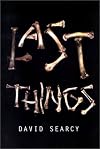
What if Flannery O’Connor and Stephen King had met, married and mated?
Their offspring would probably have resembled something like the novels of David Searcy: dark, tangled and lurking with ominous mysteries of the soul. These are books in which the Holy Spirit could very well be that misshapen Thing lurking beneath the basement stairs. In Searcy’s fiction, the violent not only bear it away, they leave a trail of slime in their wake.
Last Things, Searcy’s latest novel, begins with a show more scene which would make King sit up straight and O’Connor nod with recognition.
The simplest sort of horror story (and the most gratifying somehow) starts with the damage—something ruined in ways too peculiar to explain, glimpsed, say, at high speed along a country highway at dusk just at that rosy half-lit moment before one flips on the headlights: Little jerks of their eyes now to the right—hers then his, but then it’s gone and they fall silent watching the pink light leaving the tops of the pines: he looks back once in the mirror but everything’s shadowy against the sky like one of those black and orange silhouette landscapes schoolchildren produce at Halloween—such an easy effect yet so dramatic with all the particulars of the world hopelessly lost in the radiance.
“Was that a scarecrow?âÂ? she says at last.
A scarecrow? Wellâ¦yes and no. Searcy never comes out and fully describes the carcasses splayed out on cross-timbers around the countryside, but the woman in the car hurtling down the highway imagines it to be something dead, run over and tossed up onto a fence or a bush somehow, not a person but a deer, maybe a dog flattened by the impact like in a cartoon, unfolded, ears out sideways like a hat, all spread out and presented rose-colored in the sunlight in the corner of her eye, a scatter of teeth across its face.
ItâÂÂs just one of several strange sights that have been cropping up near the east Texas town of Gilmer where Luther HazlittâÂÂan odd, stoic man who lives by himself in an isolated trailer surrounded by grass, cattle, chickens and puppiesâÂÂis trying to sort out all the premonitions of things to come. A little girl vanishes, leaving behind âÂÂlittle bits of hair like in a barbershopâÂ? a chickenâÂÂs skeletonâÂÂevery bone intactâÂÂappears in a mailbox; âÂÂluminous green thunderstormsâÂ? boil on the horizon; and the county sheriff has just caught a monstrous fish which he promptly puts on display in the freezer down at JoeâÂÂs Big Juicy Hamburgers. Like OâÂÂConnorâÂÂs mummy in Wise Blood, the giant fish becomes an object of worship. ItâÂÂs not long before people are on their knees in prayer in front of JoeâÂÂs Big Juicy freezer. Wise BloodâÂÂs Hazel Motes and Enoch Emery in his gorilla suit are just around the corner.
And, given exquisitely gruesome passages like this, Stephen King is at the front door:
He [Luther] saw a rabbit onceâÂÂa cottontailâÂÂget run over; a truck just ran right over the top of it, the rabbit rolled a little ways and Luther walked over to where it wasâÂÂpretty much undamaged except it was dead and lying near it in the road was the rabbitâÂÂs heart, itself undamaged, beating away as if the rabbit and its life were separate things that might get along without each other; and for a moment you could see that. How the heart didnâÂÂt even know about the rabbit. It might be beating for a possum or a squirrel for all it knew or, as in this case, for nothing at all. You had this rabbit, then over here you had its heart and in between there was this distance, absolutely nothing.
Unfortunately, that same distance between heart and body is a problem that plagues the book itself. Searcy has created a fine, odd world and peopled it with equally odd characters (Luther, for instance, is literally trying to trap the Holy Spirit), but the overbloat of sentences fat with big words and languorous phrasing puts a dull edge on whatever suspense he manages to create. The menace is too indistinct, the violence too subtextual to raise anything but the most modest of goosebumps.
High-brow horror is a tricky thing to pull offâÂÂPeter Straub has managed to do it a couple of times. Most readers who come to the genre want the blood to flow, not seep. Searcy has all the right ingredients for what should make our veins run cold, but his extravagance of elegant language keeps our hearts beating on the side of the road, far from the body of the book.
ItâÂÂs a strange hybrid of a novel, unsure whether it wants to scare the hell out of us with those Children of the Corn-like scarecrows or scare the hell into us by turning the whole thing into a religious parable. Searcy reaches hard for OâÂÂConnor (including a tip of the hat in naming his character: Hazel Motes, Luther Hazlitt), but Last Things just doesnâÂÂt have the same propulsion of language which made FlanneryâÂÂs writing so superb (thereâÂÂs no Jesus moving from tree to tree in the back of his mind, a wild ragged figure motioning him to turn around no Church of Christ Without Christ, no prophet in a âÂÂglare-blue suitâÂ?). The writing in Last Things is too often redundant and purposefully obscure. Charitably, IâÂÂd have to say, sentence for sentence, itâÂÂs the most boring book IâÂÂve read this year.
And âÂÂboringâÂ? is not something it should beâÂÂnot when there are gutted-carcass scarecrows and miraculous monster fish in the freezerâÂÂnot to mention the Holy Spirit trapped in a cage. There is promise here, but very little delivery. As he writes near the end of the book, the truth is out there somewhere in the grass and coming closer, softly jingling like some change in someoneâÂÂs pocket. I only wish thereâÂÂd been a few more coins and Searcy walked a little faster. show less
Their offspring would probably have resembled something like the novels of David Searcy: dark, tangled and lurking with ominous mysteries of the soul. These are books in which the Holy Spirit could very well be that misshapen Thing lurking beneath the basement stairs. In Searcy’s fiction, the violent not only bear it away, they leave a trail of slime in their wake.
Last Things, Searcy’s latest novel, begins with a show more scene which would make King sit up straight and O’Connor nod with recognition.
The simplest sort of horror story (and the most gratifying somehow) starts with the damage—something ruined in ways too peculiar to explain, glimpsed, say, at high speed along a country highway at dusk just at that rosy half-lit moment before one flips on the headlights: Little jerks of their eyes now to the right—hers then his, but then it’s gone and they fall silent watching the pink light leaving the tops of the pines: he looks back once in the mirror but everything’s shadowy against the sky like one of those black and orange silhouette landscapes schoolchildren produce at Halloween—such an easy effect yet so dramatic with all the particulars of the world hopelessly lost in the radiance.
“Was that a scarecrow?âÂ? she says at last.
A scarecrow? Wellâ¦yes and no. Searcy never comes out and fully describes the carcasses splayed out on cross-timbers around the countryside, but the woman in the car hurtling down the highway imagines it to be something dead, run over and tossed up onto a fence or a bush somehow, not a person but a deer, maybe a dog flattened by the impact like in a cartoon, unfolded, ears out sideways like a hat, all spread out and presented rose-colored in the sunlight in the corner of her eye, a scatter of teeth across its face.
ItâÂÂs just one of several strange sights that have been cropping up near the east Texas town of Gilmer where Luther HazlittâÂÂan odd, stoic man who lives by himself in an isolated trailer surrounded by grass, cattle, chickens and puppiesâÂÂis trying to sort out all the premonitions of things to come. A little girl vanishes, leaving behind âÂÂlittle bits of hair like in a barbershopâÂ? a chickenâÂÂs skeletonâÂÂevery bone intactâÂÂappears in a mailbox; âÂÂluminous green thunderstormsâÂ? boil on the horizon; and the county sheriff has just caught a monstrous fish which he promptly puts on display in the freezer down at JoeâÂÂs Big Juicy Hamburgers. Like OâÂÂConnorâÂÂs mummy in Wise Blood, the giant fish becomes an object of worship. ItâÂÂs not long before people are on their knees in prayer in front of JoeâÂÂs Big Juicy freezer. Wise BloodâÂÂs Hazel Motes and Enoch Emery in his gorilla suit are just around the corner.
And, given exquisitely gruesome passages like this, Stephen King is at the front door:
He [Luther] saw a rabbit onceâÂÂa cottontailâÂÂget run over; a truck just ran right over the top of it, the rabbit rolled a little ways and Luther walked over to where it wasâÂÂpretty much undamaged except it was dead and lying near it in the road was the rabbitâÂÂs heart, itself undamaged, beating away as if the rabbit and its life were separate things that might get along without each other; and for a moment you could see that. How the heart didnâÂÂt even know about the rabbit. It might be beating for a possum or a squirrel for all it knew or, as in this case, for nothing at all. You had this rabbit, then over here you had its heart and in between there was this distance, absolutely nothing.
Unfortunately, that same distance between heart and body is a problem that plagues the book itself. Searcy has created a fine, odd world and peopled it with equally odd characters (Luther, for instance, is literally trying to trap the Holy Spirit), but the overbloat of sentences fat with big words and languorous phrasing puts a dull edge on whatever suspense he manages to create. The menace is too indistinct, the violence too subtextual to raise anything but the most modest of goosebumps.
High-brow horror is a tricky thing to pull offâÂÂPeter Straub has managed to do it a couple of times. Most readers who come to the genre want the blood to flow, not seep. Searcy has all the right ingredients for what should make our veins run cold, but his extravagance of elegant language keeps our hearts beating on the side of the road, far from the body of the book.
ItâÂÂs a strange hybrid of a novel, unsure whether it wants to scare the hell out of us with those Children of the Corn-like scarecrows or scare the hell into us by turning the whole thing into a religious parable. Searcy reaches hard for OâÂÂConnor (including a tip of the hat in naming his character: Hazel Motes, Luther Hazlitt), but Last Things just doesnâÂÂt have the same propulsion of language which made FlanneryâÂÂs writing so superb (thereâÂÂs no Jesus moving from tree to tree in the back of his mind, a wild ragged figure motioning him to turn around no Church of Christ Without Christ, no prophet in a âÂÂglare-blue suitâÂ?). The writing in Last Things is too often redundant and purposefully obscure. Charitably, IâÂÂd have to say, sentence for sentence, itâÂÂs the most boring book IâÂÂve read this year.
And âÂÂboringâÂ? is not something it should beâÂÂnot when there are gutted-carcass scarecrows and miraculous monster fish in the freezerâÂÂnot to mention the Holy Spirit trapped in a cage. There is promise here, but very little delivery. As he writes near the end of the book, the truth is out there somewhere in the grass and coming closer, softly jingling like some change in someoneâÂÂs pocket. I only wish thereâÂÂd been a few more coins and Searcy walked a little faster. show less
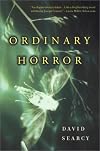
What places this among my favorite thrillers is that a distinct lack of contrived action combined with an entirely sympathetic and absolutely plausible narrative voice give the book room to grow a slow chill. It's terror in amber, turning slowly under a magnifying glass.
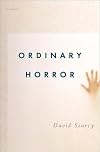
Oddly, although I read this in October, I plucked it out of a mountain of books at random and understood it was literary, not horror, despite the title. On one level, this story is excellent and for the first few chapters I was engrossed by the strange plant Mr Delabano puts in the ground, but by the halfway point I felt bombarded by a sense of isolation. No doubt this may be what the author intended, as the book is about the isolation of suburban life, but the style weighs heavily and show more didn’t seem to follow any path. The pace varies, plodding, sometimes enjoyable. If you’re looking for riveting and exciting, this may not be the book for you. It’s more one of social commentary. The writing likely deserves a 4/5 even though the author goes too much in to the minutiae of Mr Delabano’s life, but my personal enjoyment lingers around a mere 2. As for the grand payoff I’d heard about, I was disappointed. At one point, I wondered if the old man would end up killing his often unwelcome neighbours, but this didn’t happen. A lot is obscure. I’m sure there are many passages that will speak to some but bore and confuse others. You’ll never really know if the strange plant influences Mr Delabano’s neighbourhood, or if he is simply going mad under the weight of loneliness. show less
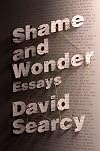
Shame and Wonder by David Searcy is a highly recommended collection of twenty-one essays that seek connections between wildly different things and ideas.
In this well written collection, Searcy discovers connections between wildly different subjects and while recalling past events. He is observant, honest, and engaging as he shares his recollections and his often meandering thoughts that are all somehow now interconnected with the event or memory. Many of these essays bring to mind a show more discussion between friends, where one topic meanders onto another, but there is a connection in the overall theme.
Contents:
The Hudson River School: Searcy learns of a rancher who used a tape of his infant daughter's cries to lure in and ambush the coyotes who had been killing his lambs.
El Camino Doloroso: An ordinary truck is transformed into a custom car, but sold after an unfortunate accident.
Mad Science: Remembering "dorky" kids in the 50's who made real models/machines that worked, like a seismograph out of a record player or, more impressively, rockets.
A Futuristic Writing Desk: Thoughts while hiking/climbing on and around the 400 foot high granite Enchanted Rock near Fredericksberg, Texas.
Sexy Girls Near Dallas: While looking online for a new car an ad pops up.
Didelphis Nuncius: A recollection of moving his son and two daughters to a new neighborhood after a divorce and Rocky the dog's skill and proclivity for killing possums.
The Depth of Baseball Sadness: Reflecting on his childhood in the 50's when it was a requirement for boys to know how to play baseball, Searcy realizes it was a skill he lacked.
Santa in Anatolia: Searcy visits Turkey where the legends of Saint Nicholas originated.
How to Color the Grass: Searcy notes how there is a first time to discover everything as a child as he recalls being taken outside to draw the playground at school.
Science Fictions #1: Reflections on electron microscopy and those who conceived and build the instruments.
Science Fictions #2 (for C.W.): The 100 acre Trinity River Bottoms Homeless Park and Astronomical Observatory is discussed.
Science Fictions #3: A friend, Bob (poet Robert Trammell), goes to live under Mary Kay's Pink Cadillac.
Nameless: What artist Doug MacWithey left behind after his death and the tragedy of a Jewish tightrope walker crushed in a fall in Corsicana, Tex., in 1884.
On Watching the Ken Burns and Dayton Duncan Documentary About Lewis and Clark on PBS: musings on the show.
Love in Space: Understanding space as a seven-year-old in the 50's.
An Enchanted Tree near Fredericksburg: Contemplating the oak tree that was growing on the top Enchanted Rock, Searcy's reflects on the hearts people carved into the bark.
Cereal Prizes: Reminiscing about the prizes found in cereal boxes.
Paper Airplane Fundamentals: A proper thinking person in this world needs to know how to make a functional paper airplane.
Three Cartoons: Krazy Kat, December 18, 1918; Koko's Earth Control, animated, 1928; Uncle Scrooge Comics #6, 1954.
Always Shall Have Been: Remembering an incursion into the hilly, lightly forested, empty realm of a ravine in a city while toting weapons, homemade double pea-shooters.
Still-Life Painting: While cleaning out a storage shed with twenty years of stuff, a small painting done by Searcy's mother is found.
Disclosure: My Kindle edition was courtesy of Random House for review purposes.
show less
In this well written collection, Searcy discovers connections between wildly different subjects and while recalling past events. He is observant, honest, and engaging as he shares his recollections and his often meandering thoughts that are all somehow now interconnected with the event or memory. Many of these essays bring to mind a show more discussion between friends, where one topic meanders onto another, but there is a connection in the overall theme.
Contents:
The Hudson River School: Searcy learns of a rancher who used a tape of his infant daughter's cries to lure in and ambush the coyotes who had been killing his lambs.
El Camino Doloroso: An ordinary truck is transformed into a custom car, but sold after an unfortunate accident.
Mad Science: Remembering "dorky" kids in the 50's who made real models/machines that worked, like a seismograph out of a record player or, more impressively, rockets.
A Futuristic Writing Desk: Thoughts while hiking/climbing on and around the 400 foot high granite Enchanted Rock near Fredericksberg, Texas.
Sexy Girls Near Dallas: While looking online for a new car an ad pops up.
Didelphis Nuncius: A recollection of moving his son and two daughters to a new neighborhood after a divorce and Rocky the dog's skill and proclivity for killing possums.
The Depth of Baseball Sadness: Reflecting on his childhood in the 50's when it was a requirement for boys to know how to play baseball, Searcy realizes it was a skill he lacked.
Santa in Anatolia: Searcy visits Turkey where the legends of Saint Nicholas originated.
How to Color the Grass: Searcy notes how there is a first time to discover everything as a child as he recalls being taken outside to draw the playground at school.
Science Fictions #1: Reflections on electron microscopy and those who conceived and build the instruments.
Science Fictions #2 (for C.W.): The 100 acre Trinity River Bottoms Homeless Park and Astronomical Observatory is discussed.
Science Fictions #3: A friend, Bob (poet Robert Trammell), goes to live under Mary Kay's Pink Cadillac.
Nameless: What artist Doug MacWithey left behind after his death and the tragedy of a Jewish tightrope walker crushed in a fall in Corsicana, Tex., in 1884.
On Watching the Ken Burns and Dayton Duncan Documentary About Lewis and Clark on PBS: musings on the show.
Love in Space: Understanding space as a seven-year-old in the 50's.
An Enchanted Tree near Fredericksburg: Contemplating the oak tree that was growing on the top Enchanted Rock, Searcy's reflects on the hearts people carved into the bark.
Cereal Prizes: Reminiscing about the prizes found in cereal boxes.
Paper Airplane Fundamentals: A proper thinking person in this world needs to know how to make a functional paper airplane.
Three Cartoons: Krazy Kat, December 18, 1918; Koko's Earth Control, animated, 1928; Uncle Scrooge Comics #6, 1954.
Always Shall Have Been: Remembering an incursion into the hilly, lightly forested, empty realm of a ravine in a city while toting weapons, homemade double pea-shooters.
Still-Life Painting: While cleaning out a storage shed with twenty years of stuff, a small painting done by Searcy's mother is found.
Disclosure: My Kindle edition was courtesy of Random House for review purposes.
show less
Awards


You May Also Like


Associated Authors
Statistics
- Works
- 4
- Also by
- 1
- Members
- 211
- Popularity
- #105,255
- Rating
- 3.1
- Reviews
- 8
- ISBNs
- 12