
Jennifer Brozek
Author of Shattered Shields
About the Author
Image credit: Jennifer Brozek
Series
Works by Jennifer Brozek
Chicks Dig Gaming: A Celebration of All Things Gaming by the Women Who Love It (2014) — Editor — 24 copies
Star Realms: Rescue Run 2 copies
Discordance {short story} 1 copy
Snipe Hunting 1 copy
Gudnak: Gudnak Means War 1 copy
Gudnak Means War 1 copy
Eulogy For Muffin 1 copy
Colonial Gothic: Plymouth 1 copy
Associated Works
Uncanny Magazine Issue 24: September/October 2018 (Disabled People Destroy Science Fiction) (2018) — Contributor — 53 copies
Subversion: Science Fiction & Fantasy Tales of Challenging the Norm (2011) — Foreword — 47 copies, 12 reviews
Tagged
Common Knowledge
- Legal name
- Brozek, Jennifer Lynn
- Birthdate
- 1970-12-09
- Gender
- female
- Occupations
- editor
author
Tie-in Writer
Software QA Engineer - Organizations
- Horror Writers Association
International Association of Media Tie-In Writers
Science Fiction and Fantasy Writers of America - Awards and honors
- Hugo Nominee (Editor - short form, 2026)
- Relationships
- Brozek, John (father)
- Short biography
- Jennifer Brozek is a multi-talented author, editor, and tie-in writer whose nominations and awards include: two Bram Stoker nominations, a Hugo nomination, a Scribe Award, and an Australian Shadows Award.
- Nationality
- USA
- Birthplace
- Anchorage, Alaska, USA
- Places of residence
- Bothell, Washington, USA
- Associated Place (for map)
- USA
Members
Reviews

This Arkham Horror novella is the one trained on psychologist Carolyn Fern, and it takes her from Arkham Sanitarium to the Dreamlands, a milieu that H.P. Lovecraft highjacked from Lord Dunsany, and which has featured occasionally in Cthulhvian gaming over the last few decades. Author Jennifer Brozek handles the story nicely, composing it in the form of Carolyn's journal, as she moves through the events that demonstrate to her that it's not her patient that's pathological--reality is!
Despite show more the incidental presence of Arkham Horror characters, this story has less in common with the other novellas in its series than it does with The Dream-Quest of Vellitt Boe, a short novel by Kij Johnson published a couple of years earlier. In both stories the protagonist is a woman, and there is an important focus on the heroine's relationship to a younger woman who helps to define the heroic task. Johnson offers a little explicit commentary on her own feminine appropriation of the Dreamlands, relative to their prior status under the domination of masculine authors and characters, while Brozek simply tells a story centered on women in the Dreamlands. (Both books pass the Bechdel test with flying colors, of course.)
The "Black Wind" of the title turns out to be a cover-name for an Elder God of great notoriety and familiarity to readers in this genre. Lovecraft's Cats of Ulthar are conspicuous in this book: they talk, and they have individual names reflecting attributes that they embody or foster, such as Comfort and Foolishness. Brozek also uses the notion of "Ulthar" as the deity worshiped in Ulthar--a scarce conceit evidently not original here, but originating in the Sussex Manuscript of mythos votary Fred L. Pelton.
The glossy trompe-l'œil scrapbook pages at the back of the book (a standard feature of this series) are for the most part fairly continuous with the body text, since the larger part of them are just more of Carolyn's journal. Foolishness the cat turns out to be one of the alternate signature cards for the Carolyn Fern character in Arkham Horror: The Card Game. Like Norman Withers in his novella Ire of the Void, these cards are for a character not yet otherwise available for the game. Carolyn is a healer who gets bonuses whenever she restores sanity to herself or another character, and I suspect she will be most useful in games featuring three or four investigators where she can play a focused supporting role. Still, I think that my daughter will want to try Carolyn out in one of our two-player games; the dream cat is likely to prove irresistible. show less
Despite show more the incidental presence of Arkham Horror characters, this story has less in common with the other novellas in its series than it does with The Dream-Quest of Vellitt Boe, a short novel by Kij Johnson published a couple of years earlier. In both stories the protagonist is a woman, and there is an important focus on the heroine's relationship to a younger woman who helps to define the heroic task. Johnson offers a little explicit commentary on her own feminine appropriation of the Dreamlands, relative to their prior status under the domination of masculine authors and characters, while Brozek simply tells a story centered on women in the Dreamlands. (Both books pass the Bechdel test with flying colors, of course.)
The "Black Wind" of the title turns out to be a cover-name for an Elder God of great notoriety and familiarity to readers in this genre. Lovecraft's Cats of Ulthar are conspicuous in this book: they talk, and they have individual names reflecting attributes that they embody or foster, such as Comfort and Foolishness. Brozek also uses the notion of "Ulthar" as the deity worshiped in Ulthar--a scarce conceit evidently not original here, but originating in the Sussex Manuscript of mythos votary Fred L. Pelton.
The glossy trompe-l'œil scrapbook pages at the back of the book (a standard feature of this series) are for the most part fairly continuous with the body text, since the larger part of them are just more of Carolyn's journal. Foolishness the cat turns out to be one of the alternate signature cards for the Carolyn Fern character in Arkham Horror: The Card Game. Like Norman Withers in his novella Ire of the Void, these cards are for a character not yet otherwise available for the game. Carolyn is a healer who gets bonuses whenever she restores sanity to herself or another character, and I suspect she will be most useful in games featuring three or four investigators where she can play a focused supporting role. Still, I think that my daughter will want to try Carolyn out in one of our two-player games; the dream cat is likely to prove irresistible. show less
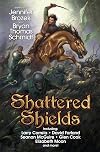
If you're on my Christmas gift list and you read fantasy, I'm sending you a copy of Shattered Shields. It's just that good of a collection.
One of the most surprising and enjoyable selections on my reading list this year, Shattered Shields has something for everyone. In addition to providing hours of enjoyable reading, the collection of stories from authors like Larry Correia, David Farland, Glen Cook, and Seanan McGuire is full of bite-sized portions of fantastical adventure. If commitment show more is a problem for you, each story gives you a full dose of adventure and daring. If you're looking for new authors, then you'll be pleasantly surprised at high number of quality stories in the collection, including at least a few authors you've not read before.
Jennifer Brozek and Bryan Thomas Schmidt deserve serious credit for finding and curating the collection of thrilling, exciting, and thought provoking tales. Not a single one is a loser and some are among the best short stories I've read.
The premise behind Shattered Shields is simple, but leads to incredible results: a look at the soldiers—"ordinary and otherwise–struggling against extraordinary odds to survive the day."
In "Ashes and Starlight," David Farland turns to his Runelords series to tell a story about an outcast who must betray his own to survive.
Seanan McGuire's "The Fixed Stars" turns to Irish folktales for a story as heartbreaking as it is moving, weaving myth and mystery.
"The Keeper of the Names" by Larry Correia is his first foray into high fantasy and, as far as I can tell, it bodes well for the novel that the story presages.
"The Smaller We Are" is tragedy done right, and John Helfers puts the spotlight on the very lowest of the soldiers in a fight much bigger than themselves without losing perspective.
"Invictus," by Annie Bellet, was perhaps the most intriguing world in the collection, for me, mixing something of Patrick O'Brian with otherworldly creatures to show a battle on the waves.
If dragons are your thing, then "Rising Above" by Sarah A. Hoyt, which places the legendary beasts in a World War I setting, will prick your interest. I'm sure there are more tales where Hoyt got this one.
"A Cup of Wisdom" by Joseph Zieja takes a step back from the glorification of violence and measures the weight of war on the soldier.
"Words of Power" by Wendy N. Wagner is a gritty and well-spun story from the perspective of a golem mechanic who finds herself closer to the front than she wants to be.
In "Lightweaver in Shadow," Gray Rinehart creates a magic system and a hero whose resourcefulness and wits keep him alive when the battle seems to turn against him.
"Hoofsore and Weary" by Cat Rambo is about centaurs caught behind enemy lines, but more, it addresses the conflict and friction between commanders and their new recruits.
"Vengeance" by Robin Wayne Bailey is one of my favorite stories from this collection. In a world that reminded me of Conan the Barbarian's Hyborian Age, Samidar seeks justice and revenge for the destruction of a village.
"Deadfall" by Nancy Fulda follows a soldier on the frontier of the empire as he tries to get to the heart of a threat that seems to be growing in strength. Between floating cities and addictive magic dust, Fulda spins a solid tale and creates fight scenes that were vivid and colorful.
"Yael of the Strings" by John R. Fultz was very fun to read, but left me frustrated at how tidily everything wrapped up. Maybe I wanted the result to be just a little more gray, but Fultz made it just a bit too easy. The story is beautiful, weaving in the importance of music over arms.
Dark and grim, "The Gleaners" by Dave Ross does not end well...for the protagonists. As a story. it's full of awesome and I'll be adding Gross to my list of authors to read more frequently.
"Bonded Men" by James L. Sutter has one of the most innovative ideas I've ever seen in military or fantasy fiction: a military unit entirely composed of gays and their partners. Sutter proceeds on the assumption that they would fight differently than soldiers who have a family to go home to, and while I'm not sure that I agree, it's an interesting idea.
I've never read Glen Cook before, but his "Bone Candy" selection in Shattered Shields was curious enough to get me interested. Long time fans will enjoy this story set in his Black Company universe.
"First Blood" by Elizabeth Moon is a truly wonderful story, a hero's origin tale that I loved from the start. It asks the question common to each soldier: will you rise to the challenge when you are tested? If there's one story you read from the collection, this should be it.
But read them all. Shattered Shields is full of great writing, interesting stories, and gripping action. It's well worth adding to your collection or your Kindle. show less
One of the most surprising and enjoyable selections on my reading list this year, Shattered Shields has something for everyone. In addition to providing hours of enjoyable reading, the collection of stories from authors like Larry Correia, David Farland, Glen Cook, and Seanan McGuire is full of bite-sized portions of fantastical adventure. If commitment show more is a problem for you, each story gives you a full dose of adventure and daring. If you're looking for new authors, then you'll be pleasantly surprised at high number of quality stories in the collection, including at least a few authors you've not read before.
Jennifer Brozek and Bryan Thomas Schmidt deserve serious credit for finding and curating the collection of thrilling, exciting, and thought provoking tales. Not a single one is a loser and some are among the best short stories I've read.
The premise behind Shattered Shields is simple, but leads to incredible results: a look at the soldiers—"ordinary and otherwise–struggling against extraordinary odds to survive the day."
In "Ashes and Starlight," David Farland turns to his Runelords series to tell a story about an outcast who must betray his own to survive.
Seanan McGuire's "The Fixed Stars" turns to Irish folktales for a story as heartbreaking as it is moving, weaving myth and mystery.
"The Keeper of the Names" by Larry Correia is his first foray into high fantasy and, as far as I can tell, it bodes well for the novel that the story presages.
"The Smaller We Are" is tragedy done right, and John Helfers puts the spotlight on the very lowest of the soldiers in a fight much bigger than themselves without losing perspective.
"Invictus," by Annie Bellet, was perhaps the most intriguing world in the collection, for me, mixing something of Patrick O'Brian with otherworldly creatures to show a battle on the waves.
If dragons are your thing, then "Rising Above" by Sarah A. Hoyt, which places the legendary beasts in a World War I setting, will prick your interest. I'm sure there are more tales where Hoyt got this one.
"A Cup of Wisdom" by Joseph Zieja takes a step back from the glorification of violence and measures the weight of war on the soldier.
"Words of Power" by Wendy N. Wagner is a gritty and well-spun story from the perspective of a golem mechanic who finds herself closer to the front than she wants to be.
In "Lightweaver in Shadow," Gray Rinehart creates a magic system and a hero whose resourcefulness and wits keep him alive when the battle seems to turn against him.
"Hoofsore and Weary" by Cat Rambo is about centaurs caught behind enemy lines, but more, it addresses the conflict and friction between commanders and their new recruits.
"Vengeance" by Robin Wayne Bailey is one of my favorite stories from this collection. In a world that reminded me of Conan the Barbarian's Hyborian Age, Samidar seeks justice and revenge for the destruction of a village.
"Deadfall" by Nancy Fulda follows a soldier on the frontier of the empire as he tries to get to the heart of a threat that seems to be growing in strength. Between floating cities and addictive magic dust, Fulda spins a solid tale and creates fight scenes that were vivid and colorful.
"Yael of the Strings" by John R. Fultz was very fun to read, but left me frustrated at how tidily everything wrapped up. Maybe I wanted the result to be just a little more gray, but Fultz made it just a bit too easy. The story is beautiful, weaving in the importance of music over arms.
Dark and grim, "The Gleaners" by Dave Ross does not end well...for the protagonists. As a story. it's full of awesome and I'll be adding Gross to my list of authors to read more frequently.
"Bonded Men" by James L. Sutter has one of the most innovative ideas I've ever seen in military or fantasy fiction: a military unit entirely composed of gays and their partners. Sutter proceeds on the assumption that they would fight differently than soldiers who have a family to go home to, and while I'm not sure that I agree, it's an interesting idea.
I've never read Glen Cook before, but his "Bone Candy" selection in Shattered Shields was curious enough to get me interested. Long time fans will enjoy this story set in his Black Company universe.
"First Blood" by Elizabeth Moon is a truly wonderful story, a hero's origin tale that I loved from the start. It asks the question common to each soldier: will you rise to the challenge when you are tested? If there's one story you read from the collection, this should be it.
But read them all. Shattered Shields is full of great writing, interesting stories, and gripping action. It's well worth adding to your collection or your Kindle. show less

Really wanted to like this collection. The idea of it, a look at fairy tales from the flip side, is appealing. But the reality left me wanting something entirely different. Most of the stories are grim, no pun intended. And not just in the traditional cautionary tale sense. They lack... depth and feeling, perhaps? And more than a couple stretch pretty thin to make their points. As always with a collection like this, the purchase is a gamble. This time sadly, I lost.
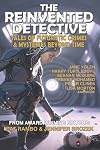
The Reinvented Detective is a collection of short detective stories set in science fiction or fantasy worlds. There are 22 works in the collection, arranged in sections called “Reports”, “Artifacts”, and “Judgements”. Each of the three sections starts with a poem, leaving 19 detective stories in the book.
Science fiction short stories collections have a long history. Many of the most famous twentieth-century sci-fi writers got their start writing short stories for pulp magazines show more like Astounding Stories, Other Worlds or The Magazine of Fantasy and Science Fiction. Robert Heinlein, Issac Asimov and Arthur C. Clarke all got their start writing short stories for these and other pulp magazines. Later these short stories would be gathered up and published in book form for a new generation of readers (folks born in the 1960s or later, like me.)
Cat Rambo, one of the editors of The Reinvented Detective was co-editor from 2007 to 2011 of Fantasy Magazine, an online successor to those early pulp magazines. She also writes fantasy herself, as does Jennifer Brozek, the other editor of today’s book.
Rambo and Brozek set out to collect detective stories from 23 mostly science fiction and fantasy authors (a few stories are co-authored, thus more authors than stories). Most, if not all, of the stories were purpose-written for this collection. Writing detective stories is not necessarily in these authors’ wheelhouses, though in the short author bios at the end of the collection at least one confessed to a lifelong love of cozy mysteries.
As with any collection of stories, you are going to like some more than others. Personal favorites for me included The Gardner’s Mystery: Notes from a Journal, Overclocked Holmes and In the Shadow of the Great Days. The first, by Lisa Morton, is the story set in a bio-engineered caste society, where a “Level 4” gardener, plays detective against her caste. The second, co-authored by Sarah Day and Tim Pratt, tells the story of an Holmesian AI detective who meets her Moriarty in another AI. The third story, by Harry Turtledove, is set in a future dystopian Boston where the mystery is just one aspect of a multi-layered story.
And Go Ask A.L.I.C.E. was a lot of fun too. By Lydia Morehouse, it’s the story of what happens after a run-in between a cop and a “real girl” streetwalker in a time where in-person sex work is restricted to robots.
I’d happily read book length stories based on the characters and settings of these four. Others are perfect as short stories. Some tried to capture a noir detective vibe, others went for the big city cop story, others took their own direction, but all blended sci-fi with some sort of mystery story. I have to say I found them all enjoyable.
The great thing about short story collections is you can read one story, go off and live your life, then come back and read another and not worry that you’ve lost the thread of the book. Perfect for winter nights in front of the fire interrupted by episodes of Star Fleet Academy or A Knight of the Seven Kingdoms, or the English detective show (on PBS of course) Bookish. show less
Science fiction short stories collections have a long history. Many of the most famous twentieth-century sci-fi writers got their start writing short stories for pulp magazines show more like Astounding Stories, Other Worlds or The Magazine of Fantasy and Science Fiction. Robert Heinlein, Issac Asimov and Arthur C. Clarke all got their start writing short stories for these and other pulp magazines. Later these short stories would be gathered up and published in book form for a new generation of readers (folks born in the 1960s or later, like me.)
Cat Rambo, one of the editors of The Reinvented Detective was co-editor from 2007 to 2011 of Fantasy Magazine, an online successor to those early pulp magazines. She also writes fantasy herself, as does Jennifer Brozek, the other editor of today’s book.
Rambo and Brozek set out to collect detective stories from 23 mostly science fiction and fantasy authors (a few stories are co-authored, thus more authors than stories). Most, if not all, of the stories were purpose-written for this collection. Writing detective stories is not necessarily in these authors’ wheelhouses, though in the short author bios at the end of the collection at least one confessed to a lifelong love of cozy mysteries.
As with any collection of stories, you are going to like some more than others. Personal favorites for me included The Gardner’s Mystery: Notes from a Journal, Overclocked Holmes and In the Shadow of the Great Days. The first, by Lisa Morton, is the story set in a bio-engineered caste society, where a “Level 4” gardener, plays detective against her caste. The second, co-authored by Sarah Day and Tim Pratt, tells the story of an Holmesian AI detective who meets her Moriarty in another AI. The third story, by Harry Turtledove, is set in a future dystopian Boston where the mystery is just one aspect of a multi-layered story.
And Go Ask A.L.I.C.E. was a lot of fun too. By Lydia Morehouse, it’s the story of what happens after a run-in between a cop and a “real girl” streetwalker in a time where in-person sex work is restricted to robots.
I’d happily read book length stories based on the characters and settings of these four. Others are perfect as short stories. Some tried to capture a noir detective vibe, others went for the big city cop story, others took their own direction, but all blended sci-fi with some sort of mystery story. I have to say I found them all enjoyable.
The great thing about short story collections is you can read one story, go off and live your life, then come back and read another and not worry that you’ve lost the thread of the book. Perfect for winter nights in front of the fire interrupted by episodes of Star Fleet Academy or A Knight of the Seven Kingdoms, or the English detective show (on PBS of course) Bookish. show less
Lists
Awards


You May Also Like


Associated Authors
Statistics
- Works
- 75
- Also by
- 40
- Members
- 703
- Popularity
- #36,024
- Rating
- 3.7
- Reviews
- 24
- ISBNs
- 99
- Languages
- 1