
Joanne Greenberg
Author of I Never Promised You a Rose Garden
About the Author
Image credit: Macmillan
Works by Joanne Greenberg
Greenberg, Joanne Archive 1 copy
Associated Works
In the Stacks: Short Stories about Libraries and Librarians (2002) — Contributor — 547 copies, 13 reviews
High Fantastic: Colorado's Fantasy, Dark Fantasy and Science Fiction (1995) — Contributor — 7 copies
Tagged
Common Knowledge
- Legal name
- Greenberg, Joanne
- Other names
- Green, Hannah (pseudonym)
- Birthdate
- 1932-09-24
- Gender
- female
- Occupations
- novelist
short story writer
Professor of Creative Writing - Organizations
- Colorado School of Mines
- Relationships
- Fromm-Reichmann, Frieda (doctor)
- Nationality
- USA
- Birthplace
- Brooklyn, New York, USA
- Associated Place (for map)
- New York, USA
Members
Reviews

Deborah Blau is a 16-year-old Jewish girl living in a wealthy household with everything going for her, except for the fact that she’s schizophrenic and very, very ill indeed. So ill, in fact, that much as her parents want to deny the truth, they are eventually persuaded to send her to a private mental hospital for treatment. Once there, Deborah quickly escalates until she is sent to D Ward, where the most extreme crazies are locked up; and once *there*, she finally begins to heal, with the show more aid of a famous and deeply empathetic psychiatrist….This is a multiple-time re-read for me; I think with all the craziness going on in the real world these days, I just felt an urge to dive into an unreal crazy world for a respite. Although published in 1964 and set, I think, more in the late 1950s, the story holds up very well some 56 years later. The imagery, both in terms of how the D Ward is portrayed and the very poetic fantasy world of Yr that Deborah inhabits, still feels very credible and true, and the characters of inmates and staff also ring true. This is one of my all-time favourite books about madness, and well worth searching out if it’s still in print; recommended. show less
In This Sign: The Highly Acclaimed Novel of a Family Whose Love and Courage Enable Them to Survive in the Silent World of the Deaf (Owl Books) by Joanne Greenberg
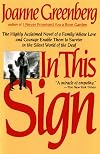
The novel follows a deaf couple – Abel and Janice – through their lives from shortly after WWI to the mid 1960s. They start out confident and sure, having gone to a “Deaf school” to learn trades which will assure them of work, Abel in a print shop, Janice as a seamstress in a cap factory. But they soon discover that despite learning to read lips they are woefully ignorant of the World of the Hearing.
I read this novel back in the mid 1970s, shortly after it was originally released. I show more had read Greenberg’s earlier novel – I Never Promised You a Rose Garden (written as Hannah Green) – when I was in high school and enjoyed that exploration of mental illness and recovery. A challenge to read a book featuring a deaf character made me remember this little gem and I went searching for it.
I find myself conflicted in my feelings for Abel and Janice. I feel sad that they are so lost and truly “dis”-abled by their deafness. I want to befriend them and welcome them to the community. I want to throttle the people (landlady, boss, car salesman, etc) who take advantage of them. At the same time, I feel angry with Abel and Janice for being so prideful and refusing any sort of help. Janice, especially, is so paralyzed by fear of what others will think of her that she nearly alienates her only daughter and husband.
The way they rely on the child Margaret (who is Hearing) to interpret for them mirrors the way many immigrant families rely on their children to help them navigate interactions with businesses, doctors, teachers, etc. They never recognize the burden this places on their daughter, or that merely being able to hear the words does not equal understanding concepts unfamiliar to the child. Here is Margaret coming home from school after getting a disappointing grade on a test:
“If she had been called stupid or a failure, she would have felt less weakened. This weakening was of a kind she did not understand. Miss Lester’s hand on her arm had been comforting and gentle and those words which she had understood were praising and not for blame. … A single word could have a dozen meanings; it could mean the opposite of what it said, and when it was most a game, it was the most serious. The hearing of the words was not enough. Her parents thought that hearing was everything. How could they know that she, with all her hearing, was suffering death by thirst even as she sat in school, lost in a meaningless tide of words?”
As Margaret grows up she begins to resent more and more the way her parents rely on her to be their voice; she struggles to find her own life in face of the duty she feels to help her parents. Here is her father talking about what it means to lose her to marriage:
“When Hearing have a child and she grows to be a woman and is married, the parents cry at the wedding because she is leaving them and they know they will be lonely for her. When Deaf have such a child, a Hearing child, she grows up in the Hearing world, and when she is married, mother and father do not cry. When the Hearing child leaves the house of the Deaf, their mouths also are taken away from them and their ears are taken away and the child also, whom they love. For this, tears are not enough.”
There are many such passages in the book which made me think – and rethink – my impressions, reactions, and assumptions about the Deaf and others who are faced with obstacles that most of us never even see. I’m so glad I re-read it. It is poignant, eye-opening, and thought-provoking.
In 1985, the book was adapted into a TV movie – Love Is Never Silent – which starred Mare Winningham as Margaret.
show less
I read this novel back in the mid 1970s, shortly after it was originally released. I show more had read Greenberg’s earlier novel – I Never Promised You a Rose Garden (written as Hannah Green) – when I was in high school and enjoyed that exploration of mental illness and recovery. A challenge to read a book featuring a deaf character made me remember this little gem and I went searching for it.
I find myself conflicted in my feelings for Abel and Janice. I feel sad that they are so lost and truly “dis”-abled by their deafness. I want to befriend them and welcome them to the community. I want to throttle the people (landlady, boss, car salesman, etc) who take advantage of them. At the same time, I feel angry with Abel and Janice for being so prideful and refusing any sort of help. Janice, especially, is so paralyzed by fear of what others will think of her that she nearly alienates her only daughter and husband.
The way they rely on the child Margaret (who is Hearing) to interpret for them mirrors the way many immigrant families rely on their children to help them navigate interactions with businesses, doctors, teachers, etc. They never recognize the burden this places on their daughter, or that merely being able to hear the words does not equal understanding concepts unfamiliar to the child. Here is Margaret coming home from school after getting a disappointing grade on a test:
“If she had been called stupid or a failure, she would have felt less weakened. This weakening was of a kind she did not understand. Miss Lester’s hand on her arm had been comforting and gentle and those words which she had understood were praising and not for blame. … A single word could have a dozen meanings; it could mean the opposite of what it said, and when it was most a game, it was the most serious. The hearing of the words was not enough. Her parents thought that hearing was everything. How could they know that she, with all her hearing, was suffering death by thirst even as she sat in school, lost in a meaningless tide of words?”
As Margaret grows up she begins to resent more and more the way her parents rely on her to be their voice; she struggles to find her own life in face of the duty she feels to help her parents. Here is her father talking about what it means to lose her to marriage:
“When Hearing have a child and she grows to be a woman and is married, the parents cry at the wedding because she is leaving them and they know they will be lonely for her. When Deaf have such a child, a Hearing child, she grows up in the Hearing world, and when she is married, mother and father do not cry. When the Hearing child leaves the house of the Deaf, their mouths also are taken away from them and their ears are taken away and the child also, whom they love. For this, tears are not enough.”
There are many such passages in the book which made me think – and rethink – my impressions, reactions, and assumptions about the Deaf and others who are faced with obstacles that most of us never even see. I’m so glad I re-read it. It is poignant, eye-opening, and thought-provoking.
In 1985, the book was adapted into a TV movie – Love Is Never Silent – which starred Mare Winningham as Margaret.
show less

It's about a teenager suffering from schizophrenia... experiencing a complex, detailed inner world where other personae speak to her... This young woman- Deoborah- is sent by her family to a mental hospital where she receives therapy and lives on a ward with other patients. Use of medication is crude and rudimentary- it seems to be limited to sedatives. I have to make myself remember that the book is placed squarely in its time- it was written in the sixties, and the story takes place during show more the forties. So please note if you read it that people worked with the knowledge they had, at the time. In the book, a lot of emphasis is placed on the importance of therapy- Deobrah's therapist spends hours digging through her memories to sift out the cause of her withdrawl from the world, the reason the people in her head censor her actions and punish her, the traumas she may have suffered when very young that marred her psyche. I don't think it quite works like that? As far as I can understand, medication treats the condition and therapy helps, but the cause is not a childhood trauma as this story implies.
Regardless, it's very well-written and the characters are vivid- not just Deborah, but the other patients she interacts with, the staff at the hospital, her fierce and compassionate therapist. As a younger reader, I was fascinated with and baffled by the demanding, inscrutable 'gods' that peopled Deborah's inner world- now I found them more easy to see through. I still enjoy the wordplay, the often-beautiful way Deborah spoke in metaphors. I noticed this book delves into what the family went through at home- what to tell relatives, how to deal with their own guilt and worry. It even has a few chapters from the therapist's point of view. And I appreciated that the main character realizes at the end that while there is no permanent cure for her condition, there can be a great alleviation of suffering, and the capability of leading a productive life. Deobrah's story felt a bit rushed at the end- while it did address the very different struggles she had to integrate back into the regular world when her stay at the hospital was over, it went through that without much depth, compared to all the pages spent on therapy sessions and conversations with fellow patients.
Still, a good read, if you keep in mind how long ago it was written. At first, the frequency of the author telling stuff irritated me, but I got used to it as a style of the writing and was okay with it later on (something I often can't tolerate in more modern books). The voice overall does feel surprisingly relevant and current, in spite of its timeframe.
more at the Dogear Diary show less
Regardless, it's very well-written and the characters are vivid- not just Deborah, but the other patients she interacts with, the staff at the hospital, her fierce and compassionate therapist. As a younger reader, I was fascinated with and baffled by the demanding, inscrutable 'gods' that peopled Deborah's inner world- now I found them more easy to see through. I still enjoy the wordplay, the often-beautiful way Deborah spoke in metaphors. I noticed this book delves into what the family went through at home- what to tell relatives, how to deal with their own guilt and worry. It even has a few chapters from the therapist's point of view. And I appreciated that the main character realizes at the end that while there is no permanent cure for her condition, there can be a great alleviation of suffering, and the capability of leading a productive life. Deobrah's story felt a bit rushed at the end- while it did address the very different struggles she had to integrate back into the regular world when her stay at the hospital was over, it went through that without much depth, compared to all the pages spent on therapy sessions and conversations with fellow patients.
Still, a good read, if you keep in mind how long ago it was written. At first, the frequency of the author telling stuff irritated me, but I got used to it as a style of the writing and was okay with it later on (something I often can't tolerate in more modern books). The voice overall does feel surprisingly relevant and current, in spite of its timeframe.
more at the Dogear Diary show less

I've read and re-read this book since I was a teenager. Every time I gain something from reading it, whether it's the young woman's journey, or the details of the insane asylum where she lives, or the lives of the other women with whom she's housed. It's a frightening and sometimes difficult read, as the images stay with you, but it says a lot about why the mentally ill need good, clean, compassionate living conditions with help and therapy.
Lists
Awards


You May Also Like


Associated Authors
Statistics
- Works
- 30
- Also by
- 12
- Members
- 3,982
- Popularity
- #6,337
- Rating
- 3.7
- Reviews
- 58
- ISBNs
- 197
- Languages
- 10
- Favorited
- 4